VA Loan Assumptions in San Antonio: A Guide for Buyers and Sellers
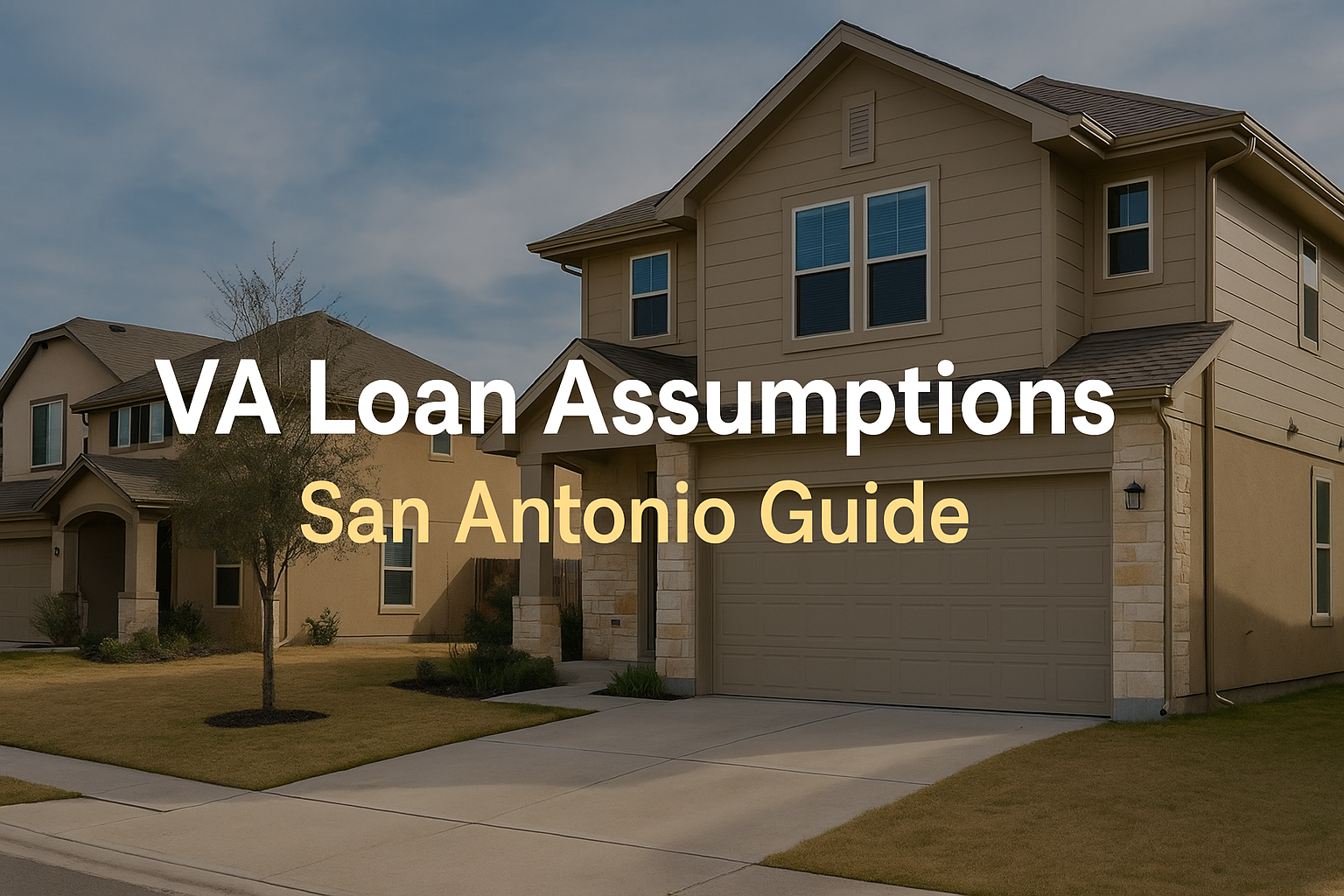
When interest rates rise, buyers face higher monthly payments that reduce purchasing power and strain budgets. In this environment, assumable mortgages offer a compelling alternative that many buyers and sellers overlook. VA loans, available to eligible veterans and service members, carry an assumption feature that allows qualified buyers to take over an existing loan at its original interest rate and terms.
For buyers and sellers in San Antonio, Boerne, Helotes, Fair Oaks Ranch, Cibolo, Schertz, and Converse, VA loan assumptions present opportunities worth exploring. The significant military presence around Joint Base San Antonio means numerous homes carry VA financing that could potentially transfer to new owners.
This guide explains how VA loan assumptions work, who benefits from them, what the process involves, and important considerations for both buyers and sellers navigating this specialized transaction type.
What Is a VA Loan Assumption?
A VA loan assumption occurs when a buyer takes over the seller's existing VA mortgage rather than obtaining new financing. The loan transfers to the new owner with its original interest rate, remaining balance, and payment terms intact.
How Does Assumption Differ From Traditional Financing?
In a traditional purchase, buyers obtain new mortgages at current market rates. The seller's existing loan pays off at closing, and the buyer's new loan funds the purchase. Current interest rates determine the buyer's payment and total borrowing cost.
With assumption, the seller's loan continues rather than paying off. The buyer steps into the seller's position, making payments on the existing loan going forward. The original interest rate remains in effect regardless of where current rates stand.
This distinction matters most when rates have risen since the seller obtained their loan. A buyer assuming a 3% mortgage when current rates exceed 6% or 7% gains significant payment savings compared to new financing at market rates.
Who Can Assume a VA Loan?
Both veterans and non-veterans can assume VA loans, though important differences apply. The VA must approve all assumptions, and buyers must demonstrate creditworthiness and ability to make payments.
When a veteran assumes the loan, the selling veteran's entitlement can be restored after closing, freeing their benefit for future use. When a non-veteran assumes, the selling veteran's entitlement remains tied to the property until the loan pays off, limiting their ability to use VA financing again.
Buyers do not need VA eligibility to assume a VA loan. This opens assumable VA mortgages to a broader pool of potential buyers, including those who would not otherwise qualify for VA financing.
Why Do VA Loan Assumptions Appeal to Buyers?
The financial advantages of assuming a below-market-rate mortgage can be substantial, making this option attractive for qualified buyers.
How Much Can Buyers Save With Assumption?
The savings depend on the difference between the assumed rate and current market rates. On a loan with a remaining balance of several hundred thousand dollars, even a two or three percentage point rate difference translates to hundreds of dollars monthly and tens of thousands over the remaining loan term.
Beyond payment savings, buyers benefit from reduced interest costs over time. The total amount paid toward interest decreases significantly with a lower rate, building equity faster and reducing the true cost of homeownership.
Assumption also eliminates certain costs associated with new financing. VA funding fees, which can add thousands to loan costs, do not apply to assumptions. Some closing costs decrease as well, though assumption fees and other expenses still apply.
What Are the Challenges Buyers Face?
The primary challenge involves covering the difference between the assumed loan balance and the purchase price. If a home sells for more than the remaining mortgage balance, buyers must fund the gap.
For example, if a home sells for a certain price but the assumable loan balance is significantly lower, the buyer needs cash or secondary financing to cover the difference. This equity gap can be substantial, particularly for homes purchased years ago when prices were lower.
Some buyers use second mortgages, home equity lines, or other financing to bridge the gap. Others bring larger down payments. The availability and cost of gap financing affects whether assumption makes financial sense compared to traditional financing.
Why Might Sellers Consider Offering Assumable Terms?
Sellers with assumable VA loans hold a marketing advantage that can attract buyers and potentially support stronger sale terms.
How Does Assumability Benefit Sellers?
In higher rate environments, homes with assumable low-rate mortgages stand out from competing listings. Buyers actively seek assumption opportunities, and properties offering this option attract attention that other listings may not receive.
This competitive advantage can translate to faster sales, stronger offers, or both. Some sellers successfully negotiate higher prices because buyers calculate total savings and willingness to pay more upfront for long-term rate benefits.
Marketing the assumable loan expands the buyer pool beyond those comfortable with current rates. Buyers priced out of certain ranges at market rates may afford the same homes with assumed lower-rate financing.
What Risks Should Sellers Understand?
The primary concern for selling veterans involves entitlement. When a non-veteran assumes the loan, the seller's VA entitlement remains committed until the loan pays off. This limits the veteran's ability to use VA financing for their next purchase.
Entitlement restoration requires either the assuming buyer to be an eligible veteran who substitutes their entitlement, or for the assumed loan to eventually pay off. Sellers planning to use VA financing again should carefully consider how assumption affects their future options.
The assumption process also takes longer than traditional transactions. Lender processing, VA approval, and documentation requirements extend timelines. Sellers needing quick closings may find assumption impractical regardless of other benefits.
What Does the VA Loan Assumption Process Involve?
Understanding the step-by-step process helps buyers and sellers prepare for what can be a lengthy and document-intensive transaction.
What Steps Must Buyers Complete?
Buyers begin by applying to the existing loan servicer for assumption approval. The servicer evaluates creditworthiness, income, employment, and ability to make payments. This underwriting process resembles qualifying for a new loan, though some requirements differ.
Credit requirements for assumption vary by servicer but generally expect scores in the mid-600s or higher. Income verification, employment documentation, and debt-to-income analysis follow standard lending practices.
The VA must also approve the assumption, reviewing the transaction and the assuming buyer's qualifications. This adds a layer of approval beyond the servicer's underwriting.
Assumption fees apply, typically around 0.5% of the loan balance plus administrative costs. While lower than origination costs for new loans, these fees still require budgeting.
What Timeline Should Parties Expect?
VA loan assumptions typically take 45 to 90 days or longer to complete. The extended timeline reflects servicer processing, VA review, and documentation requirements that exceed standard purchase transactions.
Parties should build this timeline into contract terms and expectations. Sellers needing to close quickly for job relocations, military PCS orders, or other time-sensitive reasons may find the assumption timeline challenging.
Communication with the servicer throughout the process helps identify delays and address documentation requests promptly. Working with professionals experienced in assumptions reduces friction and keeps transactions moving.
How Do Assumptions Affect Military Families?
Given San Antonio's concentration of military personnel and veterans, VA loan assumptions carry particular relevance for the local market.
What Should PCS Sellers Know?
Military families facing PCS moves often need to sell quickly, which can conflict with assumption timelines. However, offering assumable terms may attract buyers willing to work within required timeframes, particularly when the rate advantage is substantial.
VA loan assumptions and PCS moves require careful coordination. Understanding orders timing, reporting dates, and flexibility helps determine whether assumption is practical for a given situation.
Entitlement considerations matter especially for service members who will need VA financing at their next duty station. If entitlement remains tied to an assumed loan, securing VA financing for the next purchase becomes complicated or impossible.
How Can Veteran Buyers Benefit?
Veteran buyers assuming VA loans from other veterans may enable entitlement substitution, benefiting both parties. The selling veteran regains their entitlement while the buying veteran uses theirs to support the assumption.
This arrangement requires both parties to be VA-eligible and the buying veteran to have sufficient entitlement available. When possible, entitlement substitution resolves the seller's concern about tied-up benefits while still providing the buyer with assumption advantages.
Veterans should verify entitlement status and availability before pursuing assumption strategies that depend on substitution.
What Documentation Supports a Successful Assumption?
Thorough preparation accelerates the assumption process and reduces complications.
What Should Buyers Gather?
Buyers need documentation similar to new loan applications:
- Income verification including pay stubs, W-2s, and tax returns
- Employment verification and history
- Bank statements showing assets and reserves
- Credit authorization for the servicer to pull reports
- Identification documents
- Gift letters if receiving funds from family
Having documents organized and readily available when the servicer requests them prevents delays that extend already lengthy timelines.
What Must Sellers Provide?
Sellers need current loan statements, payment history, and contact information for their servicer. Documentation showing the loan is current and in good standing supports the assumption process.
The original note and security instruments establish the loan terms being assumed. Sellers should locate these documents or request copies from the servicer if unavailable.
Any modifications, forbearance agreements, or special arrangements affecting the loan require disclosure and documentation. Assumptions require transferring the loan as it currently exists, including any modifications.
What Are Common Mistakes in VA Loan Assumptions?
Avoiding pitfalls that derail assumptions helps parties achieve successful closings.
What Buyer Mistakes Cause Problems?
Underestimating the equity gap leads to transactions that cannot close. Buyers must realistically assess their ability to cover the difference between purchase price and assumed loan balance before committing.
Assuming credit approval will be easy creates risk. Servicers conduct genuine underwriting, and buyers with credit issues, high debt ratios, or income concerns may not qualify. Preliminary assessment before contract helps avoid wasted time.
Ignoring timeline realities frustrates all parties. Buyers pushing for quick closings when assumption requires months of processing set transactions up for failure or cancellation.
What Seller Mistakes Create Issues?
Failing to understand entitlement implications leads to regret. Sellers who assume their entitlement automatically restores discover later that it remains committed. Understanding the distinction between veteran and non-veteran assumptions prevents surprises.
Not marketing the assumable loan misses opportunity. Some sellers do not realize their loan is assumable or underestimate its value to buyers. Highlighting this feature attracts buyers specifically seeking assumption opportunities.
Accepting contracts without appropriate assumption contingencies and timelines creates conflict. Contracts should reflect realistic assumption processing periods and protect both parties if approval fails.
Expert Insight from Tami Price, REALTOR®
"VA loan assumptions require more patience and expertise than standard transactions, but the savings can be significant for buyers and the marketing advantage real for sellers. Having completed multiple assumptions, I know what to expect and how to keep these transactions on track."
Tami Price, REALTOR®, Broker Associate, and USAF Veteran, brings specialized experience with VA loan assumptions to clients on both sides of these transactions. Her MRP (Military Relocation Professional) certification and personal military background provide understanding of how assumptions fit into broader military family housing decisions. With 8 VA loan assumptions completed in 2025, Tami offers current, practical experience with this specialized transaction type.
Three Key Takeaways
- VA loans are assumable by both veterans and non-veterans. This feature provides valuable options when current interest rates exceed the rate on an existing VA mortgage.
- Assumption involves tradeoffs for both parties. Buyers gain rate advantages but must cover equity gaps. Sellers gain marketing advantages but may have entitlement tied up until loan payoff.
- The process requires patience and expertise. Longer timelines, detailed documentation, and dual approval from servicer and VA demand experienced guidance to navigate successfully.
Frequently Asked Questions
Q: Can any buyer assume a VA loan?
A: Yes, both veterans and non-veterans can assume VA loans with lender and VA approval. However, when non-veterans assume, the selling veteran's entitlement remains tied to the property until the loan pays off. Veteran buyers may substitute their entitlement, restoring the seller's benefit.
Q: How long does a VA loan assumption take?
A: Most VA loan assumptions require 45 to 90 days or longer. The timeline reflects servicer underwriting, VA approval requirements, and documentation processing. Building realistic timeframes into contracts prevents frustration and failed transactions.
Q: What credit score do I need to assume a VA loan?
A: Credit requirements vary by servicer but generally expect scores in the mid-600s or higher. Servicers evaluate creditworthiness similarly to new loan applications, including income verification, debt-to-income ratios, and payment history.
Q: Does the seller remain liable after assumption?
A: With proper VA approval and release, sellers transfer liability to the assuming buyer. However, if proper procedures are not followed, sellers may retain contingent liability. Ensuring the assumption includes formal release protects selling veterans.
Q: Can I assume a VA loan if the seller is behind on payments?
A: Loans must generally be current for assumption. Delinquent loans present complications that may prevent assumption or require bringing the loan current as part of the transaction. Verifying loan status early identifies potential issues.
Q: What fees apply to VA loan assumptions?
A: Assumption fees typically run around 0.5% of the loan balance plus administrative costs. While lower than new loan origination costs, these fees plus other closing expenses still require budgeting. VA funding fees do not apply to assumptions.
The Bottom Line
VA loan assumptions offer valuable opportunities for buyers seeking below-market interest rates and sellers looking to stand out in competitive markets. The process requires more time and expertise than traditional transactions, but the potential benefits justify the additional complexity for many parties.
Understanding how assumptions work, what they require, and what tradeoffs they involve helps buyers and sellers make informed decisions. Not every situation suits assumption, but those that do can produce significant financial benefits and successful transactions.
For military families and veterans throughout San Antonio and surrounding communities, VA loan assumptions represent one more tool in the housing toolkit. Knowing when and how to use this tool expands options and creates opportunities that might otherwise go unexplored.

Contact Tami Price, REALTOR®
Buyers and sellers interested in exploring VA loan assumptions can connect with Tami Price, REALTOR®, Broker Associate, and USAF Veteran. With hands-on experience completing VA loan assumptions and deep understanding of military family housing needs, Tami provides the specialized guidance these transactions require.
From evaluating whether assumption makes sense through navigating the approval process and closing, Tami offers expertise tailored to this unique transaction type. Her commitment to education and transparent communication helps clients understand every step of the process.
Recognized as a RealTrends Verified top San Antonio agent and backed by 646+ five-star reviews and recommendations across multiple platforms, Tami delivers results clients trust.
Tami Price, REALTOR®, Broker Associate
📞 210 620 6681
🌐 TamiPrice.com
Tami Price's Specialties
- VA loan assumptions and transactions
- Military relocation and PCS moves
- VA loan home buying
- First time and move up buyers
- Home sellers in San Antonio and surrounding areas
- New construction representation
Disclaimer
This blog post is intended for general informational purposes only and does not constitute legal, financial, or professional advice. VA loan assumptions involve complex considerations that vary based on individual circumstances, loan terms, and lender requirements. Readers should consult with qualified professionals including licensed real estate agents, mortgage professionals, and VA loan specialists before making decisions about loan assumptions. Loan programs, requirements, and processes may change over time. The information provided reflects general practices and may not apply in all situations.
Categories
- All Blogs (943)
- Home Buying (20)
- Neighborhood Guides (45)
- 10 Incentive and Rate Buydown Questions (1)
- 10 Military Neighborhood (1)
- 10 Mistakes Sellers Make (1)
- 10 Strategies to Coordinate a Same Day Close (1)
- 12 Lifestyle Questions to Move In (1)
- 12 PCS What Ifs (1)
- 12 Photos and Marketing Assets (1)
- 13 PCS Hunting Trip Tips (1)
- 14 Design Center Decisions (1)
- 15 Red Flags Touring Home in San Antonio (1)
- 2026 Market (1)
- 30 days after closing your home (1)
- 7 Offer Terms Beyond Price (1)
- 7 VA Specific Questions (1)
- 78015 Ranked One (1)
- 8 Bridge (1)
- 8 Myths Buyers Believe about Down Payments (1)
- 8 Reasons VA Buyers Love New Construction (1)
- 9 Mistakes Move Up Buyers Make (1)
- 9 Questions to Decide If You Keep Your PCS Home (1)
- 9 Timeline Questions Every Buyer Need to Ask (1)
- 9 Warranty Questions to Ask (1)
- 9 Ways to Attract VA & Military Buyers (1)
- 90 days before your move (1)
- About Tami Price (6)
- Active Adult Homes (1)
- Affordable Communities (2)
- Affordable Housing & Community Development (5)
- Agent Qualifications and Credentials (1)
- Agent Qualifications and Experience (1)
- Agent Recognition (3)
- Agent Selection (1)
- AI and Real Estate Tools (1)
- Alamo Heights (5)
- Alamo Heights ISD (1)
- Alamo Heights Real Estate (1)
- Alamo Ranch (3)
- Amenities in Helotes, Texas (3)
- Apartment Market (1)
- Appraisals (1)
- Arts and Culture (1)
- Awards and Recognition (7)
- Balcones Creek (1)
- Best Neighborhoods to Live in Cibolo, TX (3)
- Best Neighborhoods to Live in San Antonio (16)
- Best Places to Live in Leon Valley: A Neighborhood Guide (1)
- Best Places to Live in Northeast Inner Loop: A Neighborhood Guide (1)
- Bexar County Property Tax (1)
- Bexar County Real Estate (3)
- Blue Tape Walkthrough (1)
- Boerne Home Sellers (1)
- Boerne Neighborhoods (2)
- Boerne Texas (9)
- Broadway Corridor Development (1)
- Build-to-Rent Communities (1)
- Builder Contracts & Warranties (3)
- Builder Incentives (1)
- Builder Warranties (1)
- Buyer (97)
- Buyer Activity San Antonio (1)
- Buyer and Seller Guidance (4)
- Buyer Due Diligence (1)
- Buyer Education (46)
- Buyer Guide (9)
- Buyer Guides (7)
- Buyer Protection Strategies (1)
- Buyer Representation (1)
- Buyer Representation Expertise (1)
- Buyer Resources (90)
- Buyer Strategy (2)
- Buyers (13)
- Buyers Agent (1)
- Buying a Foreclosed Home in San Antonio (10)
- Buying a Home (3)
- Buying a Home in San Antonio (6)
- Buying Near JBSA (1)
- Buying Timeline (1)
- Buying vs Renting (1)
- Castroville, TX (8)
- Central San Antonio (1)
- Central San Antonio Development (2)
- Central Texas Growth (1)
- Choosing a Real Estate Agent (1)
- Choosing an Agent (1)
- Cibolo Communities (1)
- Cibolo Home Sellers (1)
- Cibolo TX (15)
- Client Reviews and Testimonials (1)
- Client Satisfaction (1)
- Client Stories (1)
- Client Testimonial (4)
- Clients review (4)
- Closing (1)
- Cobblestone (1)
- Comal County (1)
- Commercial & Retail Development (27)
- Commercial Development (13)
- Commercial Development Impact on Home Values (1)
- Commercial Real Estate (1)
- Community (1)
- Community Amenities (2)
- Community Development (23)
- Community Development and Real Estate (3)
- Community Events & Development (1)
- Community Guides (1)
- Community Infrastructure (1)
- Community Investment Impact (2)
- Community Landmarks (1)
- Community News (4)
- Community Planning (2)
- Community Revitalization (1)
- Community Spotlights (1)
- Commuter Neighborhoods (1)
- Cons of Living in Helotes, TX (4)
- Conservation Communities (1)
- Contingency Questions (1)
- Converse Home Sellers (1)
- Converse Homes For Sale (3)
- Converse Real Estate (1)
- Converse TX (10)
- Converse TX Real Estate (1)
- Cost of Living Guides (1)
- Cost of Living in San Antonio TX (25)
- CPS Energy Programs (1)
- Custom Homes (5)
- Davis Ranch (1)
- Days on Market (1)
- Deco District San Antonio (1)
- Denver Heights (1)
- Down Payment Assistance (1)
- Downtown Boerne (1)
- Downtown Development (3)
- Downtown Living (1)
- Downtown Revitalization (14)
- Downtown San Antonio (2)
- Downtown San Antonio Real Estate (5)
- Downtown San Antonio Revitalization (1)
- Dual Military (1)
- East Side Living (1)
- East Side Neighborhoods (1)
- East Side San Antonio (4)
- Economic Development (3)
- Economic Growth & Industry (1)
- Education, Texas Hill Country (1)
- Emerald Pointe (1)
- Employment (1)
- Employment Corridors (1)
- Encino Forest (1)
- Entertainment Economy (1)
- Equity and Pricing Strategy (2)
- Equity Q&A (1)
- Established Communities (3)
- Events in San Antonio (207)
- Expert Advice from Tami Price, Realtor® (10)
- Fair Oak Ranch (1)
- Family Activities (2)
- Family Homes (3)
- Family Living in San Antonio (1)
- FAQ (1)
- Far Northwest San Antonio (1)
- Far West San Antonio (1)
- Far Westside Real Estate (4)
- Farmer Markets in San Antonio (1)
- Fastest Growing Zip Codes in America (1)
- Featured Homes for Sale (2)
- Featured Properties (1)
- Final Walkthrough (1)
- Financial Planning (11)
- Financing Strategy (1)
- First Time Buyers (23)
- First Time Sellers (1)
- First-Time Buyers (6)
- First-Time Homebuyer Resources (4)
- First-Time Homebuyer Tips (2)
- First-Time Homebuyers (6)
- First-Time Investors (1)
- Fort Sam Houston (3)
- Fort Sam Houston Real Estate (1)
- Fort Sam Houston, TX (2)
- Fox Grove (1)
- FSBO vs Agent Representation (1)
- Future Rental (1)
- Gated Communities (5)
- Golf Communities (1)
- Great Northwest (1)
- Greater San Antonio Housing Trends (2)
- Greater San Antonio Real Estate (5)
- Green Home Upgrades (1)
- Growth and Development (11)
- Healthcare (1)
- HELOC (1)
- Helotes Home Sellers (1)
- Highway 151 Corridor Growth (1)
- Hill Country Business (1)
- Hill Country Communities (2)
- Hill Country Development (3)
- Hill Country Homes for Sale (1)
- Hill Country Living (3)
- Hill Country Market Updates (1)
- Hill Country Real Estate (4)
- Hill Country Retreat (1)
- Historic Districts (5)
- Historic Neighborhoods (4)
- Historic Preservation (2)
- Holiday Attractions (1)
- Holiday Guide (1)
- Home Buying (7)
- Home Buying Education (3)
- Home Buying Guide (7)
- Home Buying Process (8)
- Home Buying Strategy (2)
- Home Buying Tips (6)
- Home Energy Efficiency San Antonio (5)
- Home Financing (2)
- Home Improvement ROI (1)
- Home Inspections (3)
- Home Maintenance (1)
- Home Preparation (2)
- Home Pricing Strategy (14)
- Home Renovation for Resale (1)
- Home Selling (12)
- Home Selling Guide (11)
- Home Selling Strategies (3)
- Home Selling Strategy (3)
- Home Selling Tips (22)
- Home Staging and Updates (2)
- Home Values (2)
- Homebuyer Education (15)
- Homebuyer Resources (1)
- Homebuying Guide (1)
- Homebuying Tips (3)
- Homeowner (38)
- Homeowner Tax Benefits (1)
- Homeownership Costs (1)
- Homes for Sale (2)
- Homes for sale near Lackland AFB (4)
- Homes Near Military Bases (1)
- Homestead amenities (1)
- Horizon Pointe (1)
- House Hunting Guide (1)
- Housing (1)
- Housing Community Development (1)
- Housing Development (2)
- Housing Market Updates (3)
- How to Buy a House in San Antonio TX (48)
- Huebner Oaks shopping center (1)
- Hunters Ranch (1)
- Hybrid (1)
- I-10 Corridor (1)
- I-35 Corridor (1)
- In Person (1)
- Incorporated Cities (6)
- Industrial Investment Impact (1)
- Industry News (2)
- Industry Recognition (1)
- Infrastructure & Growth Projects (26)
- Infrastructure and Sustainability (1)
- Infrastructure Development (1)
- Infrastructure Investment (1)
- Infrastructure Updates (2)
- Interest Rates (2)
- Invest in San Antonio (46)
- Investment Opportunities (3)
- Investment Property San Antonio (4)
- JBSA (9)
- JBSA Housing (11)
- JBSA Real Estate (4)
- JBSA Resources (7)
- Joint Base San Antonio (5)
- Joint Base San Antonio Housing (1)
- Judson ISD (2)
- Kendall County (1)
- La Cantera Retail Development (1)
- Lackland AFB (7)
- Lackland AFB Housing (1)
- Land Conservation (1)
- Land Use Planning (1)
- Lera MLS (15)
- Lifestyle & Community Growth (18)
- Lifestyle & Local Growth (12)
- Lifestyle Amenities (1)
- Lifestyle Communities (1)
- Listing Preparation (1)
- Listing Strategy (1)
- Live Oak (1)
- Living in San Antonio, TX (52)
- Living Near Randolph AFB (7)
- Loan Programs (1)
- Local Attractions (3)
- Local Business (1)
- Local Business & Development (9)
- Local Business & Economy (3)
- Local Business Spotlight (20)
- Local Business Support (5)
- Local Development (4)
- Local Development News (9)
- Local Market Insights (5)
- Local News (2)
- Local News Around San Antonio (2)
- Local Policy Changes (1)
- Local Real Estate News (1)
- Loop 1604 Corridor Growth (2)
- Loop 410 Corridor Development (1)
- Luxury Communities (3)
- Luxury Homes (2)
- Luxury Real Estate (1)
- Luxury Retail San Antonio (1)
- MacArthur Park (1)
- Major Developments (2)
- Making Offers on Homes (1)
- Market Analysis (26)
- Market Conditions (47)
- Market Expertise (1)
- Market Insights (5)
- Market Strategy (1)
- Market Timing (2)
- Market Trends (10)
- Market Trends & Insights (2)
- Market Update (18)
- Market Update 2026 (1)
- Market Updates (22)
- Master Planned Communities (12)
- Medical Center Area Real Estate (1)
- Medina Valley ISD (2)
- Midtown Living (1)
- Military & Economic Impact (3)
- Military Buyers (3)
- Military Communities (1)
- Military Families (1)
- Military Family Resources (1)
- Military Heritage (1)
- Military Homebuying (3)
- Military Homeownership (1)
- Military Housing (3)
- Military Housing Market in Texas (16)
- Military Life in San Antonio (2)
- Military Neighborhoods (1)
- Military PCS Relocations (3)
- Military Real Estate (2)
- Military Relocation (100)
- Military Relocation & VA Loans (10)
- Military Relocation San Antonio (4)
- Military Relocation Services (3)
- Military Relocation to San Antonio (50)
- Military Relocations (20)
- Military Relocations & VA Home Loans (5)
- Mixed-Income Housing (1)
- MLS Accuracy & Data Transparency (1)
- Mortgage Programs (1)
- Mothers Day in San Antonio (1)
- Move to Boerne TX (18)
- Move to Castroville TX (11)
- Move to Converse TX (16)
- Move to New Braunfels (1)
- Move to North San Antonio (19)
- Move to San Antonio TX (73)
- Move to Selma TX (19)
- Move to Shertz TX (13)
- Move to Texas (53)
- Move Up Buyer Resources (1)
- Move Up Buyers (23)
- Move-In Ready Homes (3)
- Move-In Ready Homes San Antonio (2)
- Move-Up Buyers (2)
- Moving to Helotes, TX (17)
- Moving to San Antonio (69)
- MUD Taxes (1)
- Natalia Homes For Sale (1)
- Near East Side Living (1)
- Negotiation Strategy (2)
- Neighborhood Amenities (1)
- Neighborhood Development (1)
- Neighborhood Guides (7)
- Neighborhood Investment (1)
- Neighborhood News (2)
- Neighborhood Revitalization (2)
- Neighborhood Spotlights (12)
- Neighborhood Updates (1)
- Neighborhoods near Randolph AFB (12)
- New Braunfels (6)
- New Braunfels Homes For Sale (1)
- New Braunfels News (3)
- New Braunfels Real Estate (3)
- New Businesses (2)
- New Construction (63)
- New Construction Communities (1)
- New Construction Homes (13)
- New Construction Homes San Antonio (5)
- New Construction vs Resale (2)
- New Construction Without Customization (1)
- New Construction Without the Wait (1)
- New Contruction Cost (1)
- New Development (3)
- New Listing (19)
- New Restaurants (3)
- News (211)
- News & updates (213)
- No HOA Homes (1)
- North Central San Antonio (5)
- North East ISD (4)
- North San Antonio (9)
- North San Antonio Real Estate (3)
- North Side Neighborhoods (1)
- North Side San Antonio Development (2)
- Northeast Inner Loop (1)
- Northeast Inner Loop Neighborhoods (1)
- Northeast San Antonio (3)
- Northside ISD (5)
- Northwest San Antonio (9)
- Northwest San Antonio Development (1)
- Northwest San Antonio Growth (1)
- Northwest San Antonio Real Estate (3)
- Northwood (1)
- Olympia Hills (1)
- One-Story Homes (1)
- Outdoor Living (1)
- Parks and Recreation (2)
- PCS and JBSA (2)
- PCS checklist (1)
- PCS Guide (4)
- PCS Moves (12)
- PCS Moves to Joint Base San Antonio (4)
- PCS Planning (16)
- PCS Randolph AFB (17)
- PCS Relocation (1)
- PCS Resources (6)
- PCS San Antonio (46)
- PCS to San Antonio (42)
- Pearl District Area Real Estate (2)
- PID Assessments (1)
- Pinon Creek (1)
- Pipe Creek (1)
- Places to Eat Near Randolph AFB (1)
- Pool Homes (1)
- Pre Approval (1)
- Pre-Listing Preparation (2)
- Pre-Listing Process (1)
- Prescott Oaks (1)
- Pricing and Marketing Strategy (3)
- Professional Awards and Achievements (2)
- Professional Real Estate Representation (1)
- Property Tax Exemptions Texas (1)
- Property Value Enhancement (1)
- pros and cons living in Converse TX (3)
- Pros and Cons Living in Selma TX (6)
- Pros and Cons of Living in Castroville, TX (4)
- Pros and Cons of Living in San Antonio (33)
- PT500 List (1)
- Purchase Negotiation (1)
- Quality of Life (1)
- Quick Close Real Estate (1)
- Randolph AFB Neighborhoods (2)
- Real Estate (1)
- Real Estate Advice (1)
- Real Estate Agent Recognition (6)
- Real Estate Agent Selection (2)
- Real Estate Agent Value (1)
- Real Estate Consultation (1)
- Real Estate Finance (1)
- Real Estate Financing (1)
- Real Estate Impact (1)
- Real Estate Investment San Antonio (2)
- Real Estate Legal Issues (1)
- Real Estate Market Insights (2)
- Real Estate Market Trends (5)
- Real Estate Professional Designations (1)
- Real Estate Strategy (1)
- Real Estate Technology & Trends (2)
- Real Estate Tips (1)
- Real Estate Tips and Guides (2)
- Real Estate Trends (4)
- RealTrends Verified (1)
- Regional Development (1)
- Regional Real Estate (2)
- Relocating to San Antonio (2)
- Relocation (4)
- Relocation Resources (2)
- Relocation to San Antonio (55)
- Remote Homebuying (1)
- Rental Housing (1)
- Rental Property (1)
- Rental Strategy (1)
- Resale Properties (1)
- Retail Development (2)
- Retire in Boerne TX (11)
- Retire in San Antonio (37)
- Retirement Communities (1)
- Reviews and Recognition (1)
- Rockwall Ranch (1)
- Rural Living (2)
- SABOR (28)
- San Antonio Area Listings (1)
- San Antonio Business Growth (1)
- San Antonio Buyer Resources (2)
- San Antonio Communities (3)
- San Antonio Community Events (1)
- San Antonio Community News (1)
- San Antonio Data Center Development (1)
- San Antonio Development (5)
- San Antonio Development & East Side Real Estate (1)
- San Antonio Dining and Lifestyle (3)
- San Antonio East Side Development (1)
- San Antonio Employment Growth (1)
- San Antonio Food & Community Development (2)
- San Antonio Growth (8)
- San Antonio Home Buying and Selling (2)
- San Antonio Home Buying Guide (5)
- San Antonio Home Improvement (2)
- San antonio home prices (3)
- San Antonio Home Sellers (3)
- San Antonio Homeowner Guide (1)
- San Antonio Homeowner Resources (1)
- San Antonio Homes for Sale (12)
- San Antonio Housing Market (2)
- San Antonio Housing Market & Mortgage Financing (2)
- San Antonio Housing Market Analysis (2)
- San Antonio Housing Trends & Market Analysis (4)
- San Antonio Industrial Development (1)
- San Antonio Industrial Policy (1)
- San Antonio Investment Properties (2)
- San Antonio Job Market (1)
- San Antonio Lifestyle Amenities (2)
- San Antonio Listing (1)
- San Antonio Living (1)
- San Antonio Market (3)
- San Antonio Market Updates (18)
- San Antonio Military Relocation (3)
- San Antonio Neighborhoods (67)
- San Antonio New Construction & Master-Planned Communities (4)
- San Antonio New Home Communities (1)
- San Antonio News (229)
- San Antonio North Side Development (1)
- San Antonio Parks (1)
- San Antonio Property Investment (1)
- San Antonio Property Taxes (2)
- San Antonio Real Estate (164)
- San Antonio Real Estate Agents (6)
- San Antonio Real Estate Excellence (1)
- San Antonio Real Estate Guide (6)
- San Antonio Real Estate Market (41)
- San Antonio Real Estate Market Analysis (6)
- San Antonio Real Estate News (2)
- San Antonio REALTOR Awards (1)
- San Antonio Restaurant News (2)
- San Antonio Restaurant Openings (1)
- San Antonio Seller Resources (2)
- San Antonio Sellers (1)
- San Antonio Spec Homes (1)
- San Antonio Spurs Community Programs (1)
- San Antonio Suburbs (1)
- San Antonio Transportation (2)
- San Antonio University Area Housing (1)
- San Antonio Urban Living (7)
- San Antonio West Side Development (2)
- San Antonio Zoning Policy (1)
- Scenic Loop (1)
- Schertz Home Sellers (1)
- Schertz Real Estate (1)
- Schertz, TX (13)
- School Districts (1)
- School Information (1)
- SCUCISD Schools (1)
- Secured Quick Offer (1)
- Sell Home In San Antonio TX (64)
- Seller (83)
- Seller Education (24)
- Seller Guide (4)
- Seller Guides (1)
- Seller Representation Expertise (1)
- Seller Resources (68)
- Seller Should Understand (1)
- Seller Strategy (3)
- Seller Tips (2)
- Sellers (10)
- Selling A Home in San Antonio (62)
- Selling Your San Antonio Home (3)
- Selma TX (9)
- Single-Story Homes (4)
- Smart Homes (1)
- Solar Homes (3)
- South San Antonio Real Estate (1)
- South Side Economic Growth (1)
- South Side San Antonio (1)
- Southtown (2)
- Southwest San Antonio Real Estate (1)
- Spec Homes and Inventory Homes (2)
- Spurs Arena Project Marvel (1)
- Stone Oak (2)
- Stone Oak Community News (5)
- Suburban Housing Growth (12)
- Suburban Living (2)
- Talise De Culebra (1)
- Technology Growth (3)
- Technology Sector Growth (1)
- Terrell Hills (3)
- Texas Acreage Properties (3)
- Texas Homestead Exemption (1)
- The Dominion Real Estate (1)
- The Rim Area Real Estate (1)
- Things to do in San Antonio TX (22)
- Things to do Near Randolph AFB (4)
- Time Planning (1)
- Time-Sensitive Home Buying (1)
- Timing Strategy (1)
- Tips for Buying New Construction (9)
- Tobin Hill Neighborhoods (2)
- Top Real Estate Agent in San Antonio (3)
- Tourism and Economic Development (1)
- Traders's Joe San Antonio (1)
- Transaction Coordination (1)
- Transportation Infrastructure (1)
- Two-Story Homes (2)
- Universal City (1)
- Updated Homes (2)
- Upscale Communities (1)
- Urban Communities (2)
- Urban Corridor Real Estate (1)
- Urban Development (5)
- Urban Living (3)
- Urban Neighborhoods (4)
- Urban Real Estate (1)
- Urban Renewal Projects (1)
- Urban Revitalization San Antonio (1)
- Utility Cost Reduction (1)
- UTSA Campus Development (1)
- VA Buyers (1)
- VA Home Loan Benefits (3)
- VA Loan Assumptions (3)
- VA loan benefits (27)
- VA Loan Guidance (1)
- VA Loan Home Buying Assistance (2)
- VA Loans (71)
- VA Loans and Military Benefits (3)
- VA Loans and Military Home Buying (3)
- VA Loans San Antonio (43)
- VET Benefits Living in San Antonio (3)
- Veterans Resources (3)
- Village Northwest (1)
- Virtual Buyers (1)
- Walkable Communities (1)
- week in sales (41)
- Weekly Sales Report (42)
- West San Antonio (2)
- West San Antonio Development (1)
- West San Antonio Real Estate (3)
- West San Antonio Real Estate Market (2)
- West Side Infrastructure Planning (1)
- West Side Real Estate (1)
- West Side San Antonio (2)
- Windcrest Homes for Sale (1)
Recent Posts