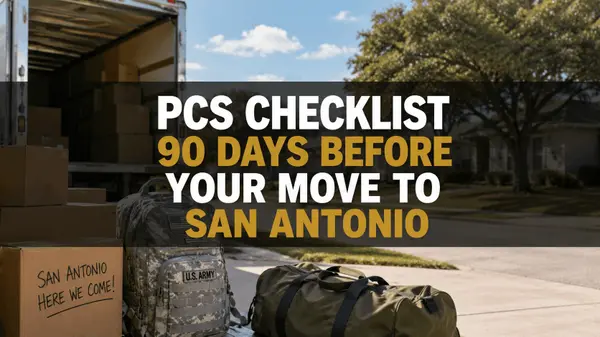
The Complete PCS Guide: Relocating to San Antonio in 2026

Receiving Permanent Change of Station orders to San Antonio marks the beginning of an exciting chapter for military families. As home to Joint Base San Antonio—the largest joint military installation in the Department of Defense—the Alamo City offers a unique blend of military support, cultural richness, and strong economic opportunity. With over 80,000 active-duty military personnel and their families calling the San Antonio area home, understanding the PCS process specific to this region becomes crucial for a successful transition.
Whether reporting to JBSA-Lackland, JBSA-Randolph, JBSA-Fort Sam Houston, or Camp Bullis, military families face important decisions about housing, schools, neighborhoods, and financial planning. This comprehensive guide provides actionable steps and current 2025 data to help servicemembers and their families navigate the PCS process with confidence. From maximizing moving allowances to choosing the right community near base, this resource addresses the specific considerations that make San Antonio relocations unique.
Why This Matters for San Antonio Military Families
San Antonio’s military community continues to grow in 2025, creating both opportunities and challenges for incoming PCS families. According to recent data from the San Antonio Board of REALTORS® (SABOR), the median home price in Bexar County reached $312,500 in early 2025, representing a competitive market where preparation and local expertise make significant differences in outcomes.
The city’s status as “Military City USA” means resources abound, but housing demand remains high. Current inventory levels show approximately 2.8 months of supply—still favoring sellers and requiring military buyers to act decisively. For PCS families working within tight timelines and specific budget constraints tied to Basic Allowance for Housing (BAH) rates, understanding local market dynamics becomes essential.
Additionally, San Antonio offers distinct advantages for military families including no state income tax in Texas, multiple VA-friendly lenders, numerous military spouse employment opportunities, and extensive support networks. The city consistently ranks among the top destinations for veteran retention, with many servicemembers choosing to remain in San Antonio after separation or retirement.
Understanding Your PCS Orders to San Antonio
What Your Orders Include
PCS orders to San Antonio contain critical information including your report date, losing and gaining commands, authorized travel time, and dependent status. Joint Base San Antonio encompasses three primary installations, each with distinct missions:
- JBSA-Lackland: Home to Basic Military Training for the Air Force and multiple training commands
- JBSA-Randolph: Known as the “Showplace of the Air Force” and headquarters for Air Education and Training Command
- JBSA-Fort Sam Houston: Army installation and home to U.S. Army North, the Institute of Surgical Research, and Brooke Army Medical Center
Understanding which installation becomes your primary duty station affects housing location decisions, commute planning, and school district selection. Traffic patterns between installations and surrounding communities vary significantly, making location strategy an important early consideration.
Timeline Considerations for San Antonio PCS
Most servicemembers receive 30 to 90 days’ notice for CONUS PCS moves, though timelines can compress based on mission requirements. San Antonio’s competitive housing market means early planning provides substantial advantages. Military families who begin their housing search and mortgage pre-approval process immediately upon receiving orders typically secure better options and experience less stress during transition.
The city experiences peak PCS season during summer months, coinciding with school transitions. This seasonal demand can temporarily reduce available inventory and increase competition for rental properties and homes for purchase.
Step 1: Attend Your Levy Briefing and Connect with Support Services
Mandatory Briefings at JBSA
Each JBSA installation conducts mandatory levy briefings or newcomer orientations that provide installation-specific information, local procedures, and resource connections. These briefings cover:
- Installation access and security requirements
- Available base services and facilities
- Medical and dental enrollment procedures
- School liaison officer introductions
- Housing office consultations
- Financial counseling availability
Schedule these briefings immediately upon receiving orders, even if attending virtually from your current duty station. Many critical PCS decisions depend on information provided during these sessions.
Military and Family Support Centers
JBSA’s Military and Family Support Centers offer personalized relocation assistance including:
- One-on-one PCS counseling
- Installation welcome packets with community information
- Spouse employment resources and networking
- Financial planning services
- Lending library with household items during transition periods
Taking advantage of these free resources significantly reduces PCS stress and provides connections to the local military community before arrival.
Step 2: Plan Your Move with San Antonio-Specific Resources
Defense Personal Property System (DPS)
Schedule your household goods move through DPS as early as possible. San Antonio’s large military population means transportation service providers book quickly, especially during peak PCS season from May through August. Key considerations include:
- Weight allowances: Verify your authorized weight based on rank and dependent status
- Prohibited items: Texas heat requires special attention to temperature-sensitive items
- Delivery windows: San Antonio’s size means delivery addresses significantly impact scheduling
- Storage options: If housing isn’t immediately available, arrange temporary storage through DPS
Personally Procured Moves (PPM) in San Antonio
Some military families choose PPM (formerly DITY moves) to maximize reimbursement and maintain control over belongings. San Antonio’s central Texas location makes this viable for families moving from many CONUS locations. Calculate potential reimbursement using the Defense Finance and Accounting Service (DFAS) PPM calculator and consider factors like truck rental availability, fuel costs, and physical demands of self-moving.
Popular San Antonio Neighborhoods for Military Families
Understanding San Antonio’s geography helps narrow housing searches efficiently:
Northeast Sector (Near JBSA-Randolph):
- Schertz: Family-friendly with excellent schools, median home price around $315,000
- Cibolo: Newer construction and growing rapidly, strong Schertz-Cibolo-Universal City ISD
- Live Oak: More affordable options, convenient access to I-35 and I-410
- Windcrest: Established community with smaller lot sizes, closer to Randolph
Northwest Sector (Near JBSA-Lackland):
- Helotes: Hill Country setting, larger lots, higher price points averaging $425,000+
- Leon Valley: More affordable access to northwest amenities
- Lackland Terrace: Adjacent to base with military-focused community
North Central (Near JBSA-Fort Sam Houston):
- Terrell Hills: Established neighborhood, excellent schools, higher price range
- Alamo Heights: Premium district with strong resale values
- Universal City: Convenient to Randolph, moderate pricing, established infrastructure
Outlying Communities:
- New Braunfels: Growing rapidly, good schools, 30-45 minute commute depending on base
- Boerne: Hill Country charm, premium pricing, longer commute but desirable lifestyle
- Converse: Affordable options, improving rapidly, good access to Randolph
Each area offers distinct advantages in price, commute time, school quality, and community character. Working with a realtor who understands military needs and these neighborhoods helps identify the best fit for each family’s priorities.
Step 3: Maximize Your Military Moving Allowances for San Antonio PCS
Dislocation Allowance (DLA)
DLA helps offset PCS costs including temporary lodging, vehicle shipping, and other relocation expenses not covered by other allowances. For 2025, DLA rates range from approximately $2,800 for junior enlisted without dependents to $4,900 for senior officers with dependents, with exact amounts varying by rank and family status.
San Antonio’s cost of living remains moderate compared to many military locations, but DLA provides important financial cushion during transition. Budget for deposits on utilities, rental applications, or earnest money for home purchases.
Temporary Lodging Expense (TLE)
TLE covers lodging and meals during initial arrival and final departure periods. Standard authorization provides up to 10 days, with extensions possible if housing unavailability is documented. Current TLE rates for San Antonio are $157 per day without dependents and up to $226 with dependents, varying by family size.
San Antonio offers numerous hotels near JBSA installations with military rates. Popular options include extended-stay properties that maximize TLE benefits while families complete house-hunting and wait for household goods delivery.
Basic Allowance for Housing (BAH) Rates
BAH rates for San Antonio reflect local housing costs and vary by rank and dependency status. For 2025, example rates include:

These rates provide baseline budgets for housing searches. Many military families find they can purchase homes within BAH constraints, especially when utilizing VA loan benefits that require no down payment.
Mileage and Per Diem Allowances
For servicemembers driving to San Antonio, mileage reimbursement and per diem help offset travel costs. Current rates provide $0.67 per mile (subject to annual adjustment) plus per diem for authorized travel days. Plan routes and overnight stops strategically to maximize reimbursement while ensuring safe travel.
Step 4: Housing Considerations Specific to San Antonio
On-Base Housing at JBSA
Each JBSA installation offers family housing managed by privatized housing companies. Key points include:
- Availability: Limited inventory means waiting lists exist for most home sizes
- Application process: Apply through installation housing offices immediately upon receiving orders
- Rent structure: BAH goes directly to housing company, with utilities typically included
- Pet policies: Restrictions apply; verify before relocation with pets
On-base housing eliminates commute concerns and provides immediate military community connection, making it attractive despite potential wait times. However, many families prefer off-base options for additional space, investment opportunities, and neighborhood selection flexibility.
Off-Base Military-Friendly Communities
San Antonio’s extensive off-base housing market offers diverse options across price ranges and community types. Current market conditions show:
- Median home price: $312,500 (Bexar County)
- Average rent (3BR): $1,750-$2,200 depending on location and amenities
- Inventory levels: Approximately 2.8 months supply (seller’s market)
- Days on market: 35-45 days average, with competitive properties moving faster
The table below shows typical price ranges by popular military areas:

VA Loan Advantages in San Antonio
San Antonio’s strong VA loan market provides significant advantages for military buyers:
- Zero down payment: Purchase without depleting savings
- No PMI requirement: Lower monthly payments compared to conventional loans
- Competitive interest rates: Often lower than conventional financing
- VA funding fee: Can be financed into loan amount
- Flexible qualifying: Service-related benefits considered in underwriting
Additionally, Texas offers no state income tax, reducing overall tax burden and improving affordability calculations. San Antonio’s robust network of VA-approved lenders understands military timelines and common PCS challenges.
VA Loan Assumptions: Hidden Opportunity
One underutilized benefit in San Antonio’s market involves VA loan assumptions. When purchasing a home from a seller with an existing VA loan, qualified buyers may assume that loan—potentially securing interest rates significantly lower than current market rates if the original loan was established during 2020-2021’s historic low-rate environment.
Requirements include:
- Buyer must be VA loan eligible
- Lender approval of buyer’s creditworthiness and income
- Seller’s entitlement remains tied to loan until paid off (unless buyer is also VA-eligible)
- Assumption processing typically 45-60 days
Working with a realtor experienced in VA loan assumptions helps identify these opportunities and navigate the process efficiently.
Rental Market Considerations
Military families choosing to rent during San Antonio assignments find a competitive but accessible market. Rental inventory includes:
- Single-family homes: $1,600-$2,800/month for 3-4 bedrooms
- Apartments/townhomes: $1,200-$2,000/month depending on location and amenities
- Military-specific communities: Purpose-built rentals understanding PCS flexibility needs
Most landlords in San Antonio are familiar with military tenants and understand PCS clauses in leases. The Servicemembers Civil Relief Act (SCRA) provides additional lease termination protections for PCS or deployment situations.
Step 5: School Enrollment and Education Options
San Antonio’s diverse school districts offer quality education options for military children. Popular districts among military families include:
Northside ISD
- Largest district in Bexar County with over 100,000 students
- Strong academic programs and extracurricular options
- Covers much of northwest San Antonio near JBSA-Lackland
- Multiple high school options with specialized programs
North East ISD
- Consistently high-performing district
- Strong college preparation focus
- Serves areas popular with military families near Randolph
- Highly rated elementaries and middles schools
Judson ISD
- Serves Converse, Live Oak, and Universal City areas
- Strong military family support programs
- Diverse student population reflecting base community
- Good athletic and arts programs
Schertz-Cibolo-Universal City ISD
- Rapidly growing district serving northeast communities
- New facilities and expanding programs
- Strong community involvement
- Convenient to JBSA-Randolph
Military Interstate Children’s Compact (MIC3)
Texas participates in MIC3, easing school transitions for military children through:
- Flexible enrollment procedures
- Comparable course placement
- Graduation requirement flexibility
- Extracurricular eligibility exemptions
Contact school district enrollment offices early—preferably before PCS—to initiate records transfers and understand registration requirements. Most San Antonio districts employ military liaison coordinators who assist with these transitions.
Alternative Education Options
San Antonio also offers:
- Department of Defense Education Activity (DoDEA) schools: Limited availability on JBSA installations
- Private and parochial schools: Numerous options across all areas
- Homeschool networks: Active military homeschool community with co-ops and support groups
- Charter schools: Various charter options with different educational approaches
Step 6: Arrival and Integration into San Antonio’s Military Community
Newcomers Orientation at JBSA
Each JBSA installation conducts newcomers orientations providing:
- Installation maps and facility locations
- ID card and DEERS enrollment information
- Medical and dental clinic registration
- Child and youth programs overview
- Recreation and fitness facility tours
- Community resources directory
Attend these orientations within the first week of arrival. They provide foundational knowledge and helpful connections that ease the transition period.
Medical Care and Enrollment
San Antonio’s military health system includes:
- Brooke Army Medical Center (BAMC): Major military hospital at Fort Sam Houston providing comprehensive services
- JBSA-Lackland clinics: Primary care and specialty services
- JBSA-Randolph clinics: Family medicine and dental care
- TRICARE network: Extensive civilian provider network if preferring off-base care
Enroll in the Defense Enrollment Eligibility Reporting System (DEERS) immediately upon arrival and schedule initial appointments, as some clinics have waiting periods for new patients.
Community Support Networks
San Antonio’s large military population sustains numerous support organizations:
- Military spouse groups: Installation-specific and branch-specific organizations
- Military OneSource: Free counseling, financial planning, and resource navigation
- USO San Antonio: Programs and services for transitioning servicemembers
- Veteran service organizations: VFW, American Legion, and others with active chapters
- Faith-based military ministries: Various denominations with military-focused congregations
These networks provide friendship, practical advice, and community connection that significantly improve PCS adjustment.

Expert Insight from Tami Price, Realtor®
As a USAF Veteran and San Antonio military relocation specialist, Tami Price understands the unique pressures and timelines facing PCS families. “Military families face compressed decision-making timelines that civilian buyers simply don’t experience,” Price explains. “Understanding how to maximize BAH, leverage VA loan benefits, and identify the right neighborhood based on duty station and family priorities makes an enormous difference in both immediate satisfaction and long-term outcomes.”
Price emphasizes the importance of early preparation: “Servicemembers who connect with a military-focused realtor immediately upon receiving orders—even before arriving in San Antonio—gain significant advantages. We can conduct virtual tours, monitor inventory, coordinate with preferred VA lenders, and position them to act decisively when they arrive for house-hunting trips.”
Regarding San Antonio’s current market, Price notes, “The competitive conditions in 2025 require preparation and clear priorities. Military buyers who have loan pre-approval, understand their must-haves versus nice-to-haves, and work with agents who know how to write competitive offers that respect military timelines consistently achieve better results. The goal is securing the right home without overstretching budgets or compromising family needs.”
Price also highlights often-overlooked opportunities: “VA loan assumptions represent a fantastic but underutilized tool in today’s higher interest rate environment. I actively work with military buyers to identify assumable VA loans on listings, potentially saving them thousands annually in interest costs. Additionally, understanding seasonal market patterns helps families time purchases strategically when possible within PCS constraints.”
For families considering rental options first, Price advises, “Renting initially makes sense for some families—it provides time to learn neighborhoods, understand schools firsthand, and make purchase decisions without PCS pressure. However, San Antonio’s strong rental market and current BAH rates often support purchase decisions that build equity rather than funding a landlord’s investment. Running both scenarios with actual numbers helps families make informed choices aligned with their financial goals.”
Three Key Takeaways for San Antonio PCS Success
1. Start Planning Immediately Upon Receiving Orders
Time represents the most valuable resource during PCS. Military families who begin planning immediately—securing levy briefing attendance, researching neighborhoods, connecting with realtors and lenders, and exploring school options—experience significantly less stress and achieve better outcomes. Even three or four weeks of additional preparation time dramatically improves the quality of housing decisions and reduces costly mistakes.
2. Leverage Military-Specific Benefits and Resources
San Antonio’s status as Military City USA means extensive resources exist specifically for servicemembers. From specialized VA lenders who understand compressed timelines to school districts with dedicated military liaisons, from housing allowances designed to support local markets to installation support services providing free counseling—utilizing these military-specific advantages maximizes PCS success while minimizing out-of-pocket costs.
3. Work with Military Relocation Specialists
The complexity of coordinating PCS timelines, VA loan processes, competitive markets, and family needs while potentially managing a long-distance transaction requires expertise. Realtors who specialize in military relocations understand these unique factors and provide value that extends far beyond typical buyer representation. They serve as advocates, educators, and coordinators who protect military families’ interests during one of life’s most stressful transitions.
Frequently Asked Questions
How early should I start my housing search for San Antonio PCS?
Ideally, begin researching neighborhoods and connecting with a military relocation specialist within days of receiving orders. Most families conduct serious house-hunting 30-45 days before report date, but earlier preparation provides better inventory awareness and decision-making quality. For purchases, initiate lender pre-approval at least 60 days before desired closing.
Can I buy a home sight-unseen for San Antonio PCS?
While possible through virtual tours and video walkthroughs, most military families prefer making purchase decisions after in-person viewing. Many families conduct concentrated house-hunting trips over 3-4 days using TLE, viewing pre-selected properties identified through prior research with their realtor. Some situations—particularly when current market inventory is very low—may warrant offers on virtually-toured properties, but include appropriate inspection contingencies.
What if base housing isn’t available when I arrive?
Apply for base housing immediately when receiving orders, but simultaneously prepare off-base alternatives. Many families use TLE for initial lodging while conducting house-hunting or finalizing rental applications. Extended-stay hotels near JBSA offer monthly rates that work within TLE budgets. Your installation housing office can provide current wait-time estimates for different home sizes.
How does BAH work if I buy a home below my BAH rate?
You receive your full BAH entitlement regardless of actual housing costs. If mortgage payments (including taxes and insurance) total less than BAH, you retain the difference. This creates opportunity for positive cash flow and makes San Antonio particularly attractive since many areas offer solid homes within BAH constraints. Conversely, if costs exceed BAH, you cover the difference from base pay.
Are there special programs for military first-time homebuyers in San Antonio?
Beyond VA loan benefits, military buyers may qualify for additional programs including Texas Veterans Land Board loans (though these now focus primarily on land purchases), local first-time buyer programs through the city or county, and lender-specific military buyer assistance. Some builders offer military incentives during promotional periods. A military relocation specialist can identify currently available programs matching your situation.
What happens to my lease if I receive PCS orders before it expires?
The Servicemembers Civil Relief Act (SCRA) allows active-duty servicemembers to terminate leases early for PCS of at least 90 days. Provide written notice and orders copy to your landlord with proper notice period (typically 30 days). Most San Antonio landlords familiar with military tenants understand this process. Including military clauses in leases at signing provides additional clarity.
Should I rent or buy for my San Antonio assignment?
This depends on multiple factors including assignment length, financial goals, local market conditions, and personal preferences. Assignments of three years or more typically favor buying, especially with VA loan benefits and current San Antonio appreciation rates. Shorter assignments or those with high follow-on PCS probability might favor renting. Analyze both scenarios with actual numbers including transaction costs, potential appreciation, tax benefits, and rental rates to make informed decisions.
How competitive is San Antonio’s housing market for military buyers?
San Antonio’s current market favors sellers with approximately 2.8 months of inventory, but remains more balanced than many markets. Military buyers with pre-approval, clear priorities, and experienced representation compete effectively. Acting quickly on desirable properties, writing clean offers, and leveraging VA appraisal protections while remaining competitive on terms positions military buyers well. Markets vary by neighborhood and price point.
The Bottom Line
Relocating to San Antonio for PCS represents both a significant transition and an exciting opportunity for military families. Joint Base San Antonio’s status as the DoD’s largest joint installation ensures robust military support infrastructure, while the city’s culture, economy, and quality of life make it a destination where many servicemembers choose to remain after military careers conclude.
Success during San Antonio PCS depends on understanding the process, leveraging available military benefits, making informed housing decisions, and connecting with experienced professionals who specialize in military relocations. From maximizing moving allowances to identifying the right neighborhood based on duty station and family priorities, from navigating VA loan advantages to integrating children smoothly into excellent school districts—each element contributes to overall transition success.
San Antonio’s moderate cost of living, absence of state income tax, growing economy, and welcoming military community create conditions where military families can thrive both during service and potentially for decades afterward. The city consistently ranks among the best places for military families and veterans, reflecting these combined advantages.
Starting PCS planning immediately upon receiving orders, utilizing installation support resources, working with military relocation specialists, and understanding local market conditions positions families for smooth transitions and positive long-term outcomes. The investment in proper planning pays dividends in reduced stress, better housing decisions, and faster community integration.

Ready to make your San Antonio PCS smooth and successful? Contact Tami Price, Realtor® at 210-620-6681 or visit TamiPrice.com. As a USAF Veteran and military relocation specialist with Real Broker, LLC, Tami understands your unique timeline and priorities. Get expert guidance on San Antonio neighborhoods, VA loan processes, and housing strategies designed specifically for military families. Your PCS deserves experienced advocacy—let’s connect today.
Disclaimer
This blog post is for informational purposes only and does not constitute financial, legal, or military advice. PCS allowances, BAH rates, and military policies are subject to change. Always verify current information through official military channels and consult with appropriate professionals for specific situations. Real estate data represents market conditions at time of writing and may fluctuate. Tami Price, Realtor® is licensed in Texas with Real Broker, LLC. Equal Housing Opportunity.
Categories
- All Blogs (942)
- Home Buying (19)
- Neighborhood Guides (45)
- 10 Incentive and Rate Buydown Questions (1)
- 10 Military Neighborhood (1)
- 10 Mistakes Sellers Make (1)
- 10 Strategies to Coordinate a Same Day Close (1)
- 12 Lifestyle Questions to Move In (1)
- 12 PCS What Ifs (1)
- 12 Photos and Marketing Assets (1)
- 13 PCS Hunting Trip Tips (1)
- 14 Design Center Decisions (1)
- 15 Red Flags Touring Home in San Antonio (1)
- 2026 Market (1)
- 30 days after closing your home (1)
- 7 Offer Terms Beyond Price (1)
- 7 VA Specific Questions (1)
- 78015 Ranked One (1)
- 8 Bridge (1)
- 8 Myths Buyers Believe about Down Payments (1)
- 8 Reasons VA Buyers Love New Construction (1)
- 9 Mistakes Move Up Buyers Make (1)
- 9 Questions to Decide If You Keep Your PCS Home (1)
- 9 Timeline Questions Every Buyer Need to Ask (1)
- 9 Warranty Questions to Ask (1)
- 9 Ways to Attract VA & Military Buyers (1)
- 90 days before your move (1)
- About Tami Price (6)
- Active Adult Homes (1)
- Affordable Communities (2)
- Affordable Housing & Community Development (5)
- Agent Qualifications and Credentials (1)
- Agent Qualifications and Experience (1)
- Agent Recognition (3)
- Agent Selection (1)
- AI and Real Estate Tools (1)
- Alamo Heights (5)
- Alamo Heights ISD (1)
- Alamo Heights Real Estate (1)
- Alamo Ranch (3)
- Amenities in Helotes, Texas (3)
- Apartment Market (1)
- Appraisals (1)
- Arts and Culture (1)
- Awards and Recognition (7)
- Balcones Creek (1)
- Best Neighborhoods to Live in Cibolo, TX (3)
- Best Neighborhoods to Live in San Antonio (16)
- Best Places to Live in Leon Valley: A Neighborhood Guide (1)
- Best Places to Live in Northeast Inner Loop: A Neighborhood Guide (1)
- Bexar County Property Tax (1)
- Bexar County Real Estate (3)
- Blue Tape Walkthrough (1)
- Boerne Home Sellers (1)
- Boerne Neighborhoods (2)
- Boerne Texas (9)
- Broadway Corridor Development (1)
- Build-to-Rent Communities (1)
- Builder Contracts & Warranties (3)
- Builder Incentives (1)
- Builder Warranties (1)
- Buyer (97)
- Buyer Activity San Antonio (1)
- Buyer and Seller Guidance (4)
- Buyer Due Diligence (1)
- Buyer Education (46)
- Buyer Guide (9)
- Buyer Guides (7)
- Buyer Protection Strategies (1)
- Buyer Representation (1)
- Buyer Representation Expertise (1)
- Buyer Resources (90)
- Buyer Strategy (2)
- Buyers (13)
- Buyers Agent (1)
- Buying a Foreclosed Home in San Antonio (10)
- Buying a Home (3)
- Buying a Home in San Antonio (6)
- Buying Near JBSA (1)
- Buying Timeline (1)
- Buying vs Renting (1)
- Castroville, TX (8)
- Central San Antonio (1)
- Central San Antonio Development (2)
- Central Texas Growth (1)
- Choosing a Real Estate Agent (1)
- Choosing an Agent (1)
- Cibolo Communities (1)
- Cibolo Home Sellers (1)
- Cibolo TX (15)
- Client Reviews and Testimonials (1)
- Client Satisfaction (1)
- Client Stories (1)
- Client Testimonial (4)
- Clients review (4)
- Closing (1)
- Cobblestone (1)
- Comal County (1)
- Commercial & Retail Development (27)
- Commercial Development (13)
- Commercial Development Impact on Home Values (1)
- Commercial Real Estate (1)
- Community (1)
- Community Amenities (2)
- Community Development (23)
- Community Development and Real Estate (3)
- Community Events & Development (1)
- Community Guides (1)
- Community Infrastructure (1)
- Community Investment Impact (2)
- Community Landmarks (1)
- Community News (4)
- Community Planning (2)
- Community Revitalization (1)
- Community Spotlights (1)
- Commuter Neighborhoods (1)
- Cons of Living in Helotes, TX (4)
- Conservation Communities (1)
- Contingency Questions (1)
- Converse Home Sellers (1)
- Converse Homes For Sale (3)
- Converse Real Estate (1)
- Converse TX (10)
- Converse TX Real Estate (1)
- Cost of Living Guides (1)
- Cost of Living in San Antonio TX (25)
- CPS Energy Programs (1)
- Custom Homes (5)
- Davis Ranch (1)
- Days on Market (1)
- Deco District San Antonio (1)
- Denver Heights (1)
- Down Payment Assistance (1)
- Downtown Boerne (1)
- Downtown Development (3)
- Downtown Living (1)
- Downtown Revitalization (14)
- Downtown San Antonio (2)
- Downtown San Antonio Real Estate (5)
- Downtown San Antonio Revitalization (1)
- Dual Military (1)
- East Side Living (1)
- East Side Neighborhoods (1)
- East Side San Antonio (4)
- Economic Development (3)
- Economic Growth & Industry (1)
- Education, Texas Hill Country (1)
- Emerald Pointe (1)
- Employment (1)
- Employment Corridors (1)
- Encino Forest (1)
- Entertainment Economy (1)
- Equity and Pricing Strategy (2)
- Equity Q&A (1)
- Established Communities (3)
- Events in San Antonio (207)
- Expert Advice from Tami Price, Realtor® (10)
- Fair Oak Ranch (1)
- Family Activities (2)
- Family Homes (3)
- Family Living in San Antonio (1)
- FAQ (1)
- Far Northwest San Antonio (1)
- Far West San Antonio (1)
- Far Westside Real Estate (4)
- Farmer Markets in San Antonio (1)
- Fastest Growing Zip Codes in America (1)
- Featured Homes for Sale (2)
- Featured Properties (1)
- Final Walkthrough (1)
- Financial Planning (11)
- Financing Strategy (1)
- First Time Buyers (23)
- First Time Sellers (1)
- First-Time Buyers (6)
- First-Time Homebuyer Resources (4)
- First-Time Homebuyer Tips (2)
- First-Time Homebuyers (6)
- First-Time Investors (1)
- Fort Sam Houston (3)
- Fort Sam Houston Real Estate (1)
- Fort Sam Houston, TX (2)
- Fox Grove (1)
- FSBO vs Agent Representation (1)
- Future Rental (1)
- Gated Communities (5)
- Golf Communities (1)
- Great Northwest (1)
- Greater San Antonio Housing Trends (2)
- Greater San Antonio Real Estate (5)
- Green Home Upgrades (1)
- Growth and Development (11)
- Healthcare (1)
- HELOC (1)
- Helotes Home Sellers (1)
- Highway 151 Corridor Growth (1)
- Hill Country Business (1)
- Hill Country Communities (2)
- Hill Country Development (3)
- Hill Country Homes for Sale (1)
- Hill Country Living (3)
- Hill Country Market Updates (1)
- Hill Country Real Estate (4)
- Hill Country Retreat (1)
- Historic Districts (5)
- Historic Neighborhoods (4)
- Historic Preservation (2)
- Holiday Attractions (1)
- Holiday Guide (1)
- Home Buying (7)
- Home Buying Education (3)
- Home Buying Guide (7)
- Home Buying Process (8)
- Home Buying Strategy (2)
- Home Buying Tips (6)
- Home Energy Efficiency San Antonio (5)
- Home Financing (2)
- Home Improvement ROI (1)
- Home Inspections (3)
- Home Preparation (2)
- Home Pricing Strategy (14)
- Home Renovation for Resale (1)
- Home Selling (12)
- Home Selling Guide (11)
- Home Selling Strategies (3)
- Home Selling Strategy (3)
- Home Selling Tips (22)
- Home Staging and Updates (2)
- Home Values (2)
- Homebuyer Education (15)
- Homebuyer Resources (1)
- Homebuying Guide (1)
- Homebuying Tips (3)
- Homeowner (37)
- Homeowner Tax Benefits (1)
- Homeownership Costs (1)
- Homes for Sale (2)
- Homes for sale near Lackland AFB (4)
- Homes Near Military Bases (1)
- Homestead amenities (1)
- Horizon Pointe (1)
- House Hunting Guide (1)
- Housing (1)
- Housing Community Development (1)
- Housing Development (2)
- Housing Market Updates (3)
- How to Buy a House in San Antonio TX (48)
- Huebner Oaks shopping center (1)
- Hunters Ranch (1)
- Hybrid (1)
- I-10 Corridor (1)
- I-35 Corridor (1)
- In Person (1)
- Incorporated Cities (6)
- Industrial Investment Impact (1)
- Industry News (2)
- Industry Recognition (1)
- Infrastructure & Growth Projects (26)
- Infrastructure and Sustainability (1)
- Infrastructure Development (1)
- Infrastructure Investment (1)
- Infrastructure Updates (2)
- Interest Rates (2)
- Invest in San Antonio (46)
- Investment Opportunities (3)
- Investment Property San Antonio (4)
- JBSA (9)
- JBSA Housing (11)
- JBSA Real Estate (4)
- JBSA Resources (7)
- Joint Base San Antonio (5)
- Joint Base San Antonio Housing (1)
- Judson ISD (2)
- Kendall County (1)
- La Cantera Retail Development (1)
- Lackland AFB (7)
- Lackland AFB Housing (1)
- Land Conservation (1)
- Land Use Planning (1)
- Lera MLS (15)
- Lifestyle & Community Growth (18)
- Lifestyle & Local Growth (12)
- Lifestyle Amenities (1)
- Lifestyle Communities (1)
- Listing Preparation (1)
- Listing Strategy (1)
- Live Oak (1)
- Living in San Antonio, TX (52)
- Living Near Randolph AFB (7)
- Loan Programs (1)
- Local Attractions (3)
- Local Business (1)
- Local Business & Development (9)
- Local Business & Economy (3)
- Local Business Spotlight (20)
- Local Business Support (5)
- Local Development (4)
- Local Development News (9)
- Local Market Insights (5)
- Local News (2)
- Local News Around San Antonio (2)
- Local Policy Changes (1)
- Local Real Estate News (1)
- Loop 1604 Corridor Growth (2)
- Loop 410 Corridor Development (1)
- Luxury Communities (3)
- Luxury Homes (2)
- Luxury Real Estate (1)
- Luxury Retail San Antonio (1)
- MacArthur Park (1)
- Major Developments (2)
- Making Offers on Homes (1)
- Market Analysis (26)
- Market Conditions (47)
- Market Expertise (1)
- Market Insights (5)
- Market Strategy (1)
- Market Timing (2)
- Market Trends (10)
- Market Trends & Insights (2)
- Market Update (18)
- Market Update 2026 (1)
- Market Updates (22)
- Master Planned Communities (12)
- Medical Center Area Real Estate (1)
- Medina Valley ISD (2)
- Midtown Living (1)
- Military & Economic Impact (3)
- Military Buyers (3)
- Military Communities (1)
- Military Families (1)
- Military Family Resources (1)
- Military Heritage (1)
- Military Homebuying (3)
- Military Homeownership (1)
- Military Housing (3)
- Military Housing Market in Texas (16)
- Military Life in San Antonio (2)
- Military Neighborhoods (1)
- Military PCS Relocations (3)
- Military Real Estate (2)
- Military Relocation (100)
- Military Relocation & VA Loans (10)
- Military Relocation San Antonio (4)
- Military Relocation Services (3)
- Military Relocation to San Antonio (50)
- Military Relocations (20)
- Military Relocations & VA Home Loans (5)
- Mixed-Income Housing (1)
- MLS Accuracy & Data Transparency (1)
- Mortgage Programs (1)
- Mothers Day in San Antonio (1)
- Move to Boerne TX (18)
- Move to Castroville TX (11)
- Move to Converse TX (16)
- Move to New Braunfels (1)
- Move to North San Antonio (19)
- Move to San Antonio TX (73)
- Move to Selma TX (19)
- Move to Shertz TX (13)
- Move to Texas (53)
- Move Up Buyer Resources (1)
- Move Up Buyers (23)
- Move-In Ready Homes (3)
- Move-In Ready Homes San Antonio (2)
- Move-Up Buyers (2)
- Moving to Helotes, TX (17)
- Moving to San Antonio (69)
- MUD Taxes (1)
- Natalia Homes For Sale (1)
- Near East Side Living (1)
- Negotiation Strategy (2)
- Neighborhood Amenities (1)
- Neighborhood Development (1)
- Neighborhood Guides (7)
- Neighborhood Investment (1)
- Neighborhood News (2)
- Neighborhood Revitalization (2)
- Neighborhood Spotlights (12)
- Neighborhood Updates (1)
- Neighborhoods near Randolph AFB (12)
- New Braunfels (6)
- New Braunfels Homes For Sale (1)
- New Braunfels News (3)
- New Braunfels Real Estate (3)
- New Businesses (2)
- New Construction (63)
- New Construction Communities (1)
- New Construction Homes (13)
- New Construction Homes San Antonio (5)
- New Construction vs Resale (2)
- New Construction Without Customization (1)
- New Construction Without the Wait (1)
- New Contruction Cost (1)
- New Development (3)
- New Listing (19)
- New Restaurants (3)
- News (211)
- News & updates (213)
- No HOA Homes (1)
- North Central San Antonio (5)
- North East ISD (4)
- North San Antonio (9)
- North San Antonio Real Estate (3)
- North Side Neighborhoods (1)
- North Side San Antonio Development (2)
- Northeast Inner Loop (1)
- Northeast Inner Loop Neighborhoods (1)
- Northeast San Antonio (3)
- Northside ISD (5)
- Northwest San Antonio (9)
- Northwest San Antonio Development (1)
- Northwest San Antonio Growth (1)
- Northwest San Antonio Real Estate (3)
- Northwood (1)
- Olympia Hills (1)
- One-Story Homes (1)
- Outdoor Living (1)
- Parks and Recreation (2)
- PCS and JBSA (2)
- PCS checklist (1)
- PCS Guide (4)
- PCS Moves (12)
- PCS Moves to Joint Base San Antonio (4)
- PCS Planning (16)
- PCS Randolph AFB (17)
- PCS Relocation (1)
- PCS Resources (6)
- PCS San Antonio (46)
- PCS to San Antonio (42)
- Pearl District Area Real Estate (2)
- PID Assessments (1)
- Pinon Creek (1)
- Pipe Creek (1)
- Places to Eat Near Randolph AFB (1)
- Pool Homes (1)
- Pre Approval (1)
- Pre-Listing Preparation (2)
- Pre-Listing Process (1)
- Prescott Oaks (1)
- Pricing and Marketing Strategy (3)
- Professional Awards and Achievements (2)
- Professional Real Estate Representation (1)
- Property Tax Exemptions Texas (1)
- Property Value Enhancement (1)
- pros and cons living in Converse TX (3)
- Pros and Cons Living in Selma TX (6)
- Pros and Cons of Living in Castroville, TX (4)
- Pros and Cons of Living in San Antonio (33)
- PT500 List (1)
- Purchase Negotiation (1)
- Quality of Life (1)
- Quick Close Real Estate (1)
- Randolph AFB Neighborhoods (2)
- Real Estate (1)
- Real Estate Advice (1)
- Real Estate Agent Recognition (6)
- Real Estate Agent Selection (2)
- Real Estate Agent Value (1)
- Real Estate Consultation (1)
- Real Estate Finance (1)
- Real Estate Financing (1)
- Real Estate Impact (1)
- Real Estate Investment San Antonio (2)
- Real Estate Legal Issues (1)
- Real Estate Market Insights (2)
- Real Estate Market Trends (5)
- Real Estate Professional Designations (1)
- Real Estate Strategy (1)
- Real Estate Technology & Trends (2)
- Real Estate Tips (1)
- Real Estate Tips and Guides (2)
- Real Estate Trends (4)
- RealTrends Verified (1)
- Regional Development (1)
- Regional Real Estate (2)
- Relocating to San Antonio (2)
- Relocation (4)
- Relocation Resources (2)
- Relocation to San Antonio (55)
- Remote Homebuying (1)
- Rental Housing (1)
- Rental Property (1)
- Rental Strategy (1)
- Resale Properties (1)
- Retail Development (2)
- Retire in Boerne TX (11)
- Retire in San Antonio (37)
- Retirement Communities (1)
- Reviews and Recognition (1)
- Rockwall Ranch (1)
- Rural Living (2)
- SABOR (28)
- San Antonio Area Listings (1)
- San Antonio Business Growth (1)
- San Antonio Buyer Resources (2)
- San Antonio Communities (3)
- San Antonio Community Events (1)
- San Antonio Community News (1)
- San Antonio Data Center Development (1)
- San Antonio Development (5)
- San Antonio Development & East Side Real Estate (1)
- San Antonio Dining and Lifestyle (3)
- San Antonio East Side Development (1)
- San Antonio Employment Growth (1)
- San Antonio Food & Community Development (2)
- San Antonio Growth (8)
- San Antonio Home Buying and Selling (2)
- San Antonio Home Buying Guide (5)
- San Antonio Home Improvement (2)
- San antonio home prices (3)
- San Antonio Home Sellers (3)
- San Antonio Homeowner Guide (1)
- San Antonio Homeowner Resources (1)
- San Antonio Homes for Sale (12)
- San Antonio Housing Market (2)
- San Antonio Housing Market & Mortgage Financing (2)
- San Antonio Housing Market Analysis (2)
- San Antonio Housing Trends & Market Analysis (4)
- San Antonio Industrial Development (1)
- San Antonio Industrial Policy (1)
- San Antonio Investment Properties (2)
- San Antonio Job Market (1)
- San Antonio Lifestyle Amenities (2)
- San Antonio Listing (1)
- San Antonio Living (1)
- San Antonio Market (3)
- San Antonio Market Updates (18)
- San Antonio Military Relocation (3)
- San Antonio Neighborhoods (67)
- San Antonio New Construction & Master-Planned Communities (4)
- San Antonio New Home Communities (1)
- San Antonio News (229)
- San Antonio North Side Development (1)
- San Antonio Parks (1)
- San Antonio Property Investment (1)
- San Antonio Property Taxes (2)
- San Antonio Real Estate (163)
- San Antonio Real Estate Agents (6)
- San Antonio Real Estate Excellence (1)
- San Antonio Real Estate Guide (6)
- San Antonio Real Estate Market (41)
- San Antonio Real Estate Market Analysis (6)
- San Antonio Real Estate News (2)
- San Antonio REALTOR Awards (1)
- San Antonio Restaurant News (2)
- San Antonio Restaurant Openings (1)
- San Antonio Seller Resources (2)
- San Antonio Sellers (1)
- San Antonio Spec Homes (1)
- San Antonio Spurs Community Programs (1)
- San Antonio Suburbs (1)
- San Antonio Transportation (2)
- San Antonio University Area Housing (1)
- San Antonio Urban Living (7)
- San Antonio West Side Development (2)
- San Antonio Zoning Policy (1)
- Scenic Loop (1)
- Schertz Home Sellers (1)
- Schertz Real Estate (1)
- Schertz, TX (13)
- School Districts (1)
- School Information (1)
- SCUCISD Schools (1)
- Secured Quick Offer (1)
- Sell Home In San Antonio TX (64)
- Seller (83)
- Seller Education (24)
- Seller Guide (4)
- Seller Guides (1)
- Seller Representation Expertise (1)
- Seller Resources (68)
- Seller Should Understand (1)
- Seller Strategy (3)
- Seller Tips (2)
- Sellers (10)
- Selling A Home in San Antonio (62)
- Selling Your San Antonio Home (3)
- Selma TX (9)
- Single-Story Homes (4)
- Smart Homes (1)
- Solar Homes (3)
- South San Antonio Real Estate (1)
- South Side Economic Growth (1)
- South Side San Antonio (1)
- Southtown (2)
- Southwest San Antonio Real Estate (1)
- Spec Homes and Inventory Homes (2)
- Spurs Arena Project Marvel (1)
- Stone Oak (2)
- Stone Oak Community News (5)
- Suburban Housing Growth (12)
- Suburban Living (2)
- Talise De Culebra (1)
- Technology Growth (3)
- Technology Sector Growth (1)
- Terrell Hills (3)
- Texas Acreage Properties (3)
- Texas Homestead Exemption (1)
- The Dominion Real Estate (1)
- The Rim Area Real Estate (1)
- Things to do in San Antonio TX (22)
- Things to do Near Randolph AFB (4)
- Time Planning (1)
- Time-Sensitive Home Buying (1)
- Timing Strategy (1)
- Tips for Buying New Construction (9)
- Tobin Hill Neighborhoods (2)
- Top Real Estate Agent in San Antonio (3)
- Tourism and Economic Development (1)
- Traders's Joe San Antonio (1)
- Transaction Coordination (1)
- Transportation Infrastructure (1)
- Two-Story Homes (2)
- Universal City (1)
- Updated Homes (2)
- Upscale Communities (1)
- Urban Communities (2)
- Urban Corridor Real Estate (1)
- Urban Development (5)
- Urban Living (3)
- Urban Neighborhoods (4)
- Urban Real Estate (1)
- Urban Renewal Projects (1)
- Urban Revitalization San Antonio (1)
- Utility Cost Reduction (1)
- UTSA Campus Development (1)
- VA Buyers (1)
- VA Home Loan Benefits (3)
- VA Loan Assumptions (3)
- VA loan benefits (27)
- VA Loan Guidance (1)
- VA Loan Home Buying Assistance (2)
- VA Loans (71)
- VA Loans and Military Benefits (3)
- VA Loans and Military Home Buying (3)
- VA Loans San Antonio (43)
- VET Benefits Living in San Antonio (3)
- Veterans Resources (3)
- Village Northwest (1)
- Virtual Buyers (1)
- Walkable Communities (1)
- week in sales (41)
- Weekly Sales Report (42)
- West San Antonio (2)
- West San Antonio Development (1)
- West San Antonio Real Estate (3)
- West San Antonio Real Estate Market (2)
- West Side Infrastructure Planning (1)
- West Side Real Estate (1)
- West Side San Antonio (2)
- Windcrest Homes for Sale (1)
Recent Posts