San Antonio Zoo Congo Falls Brings Gorillas Back After 35 Years
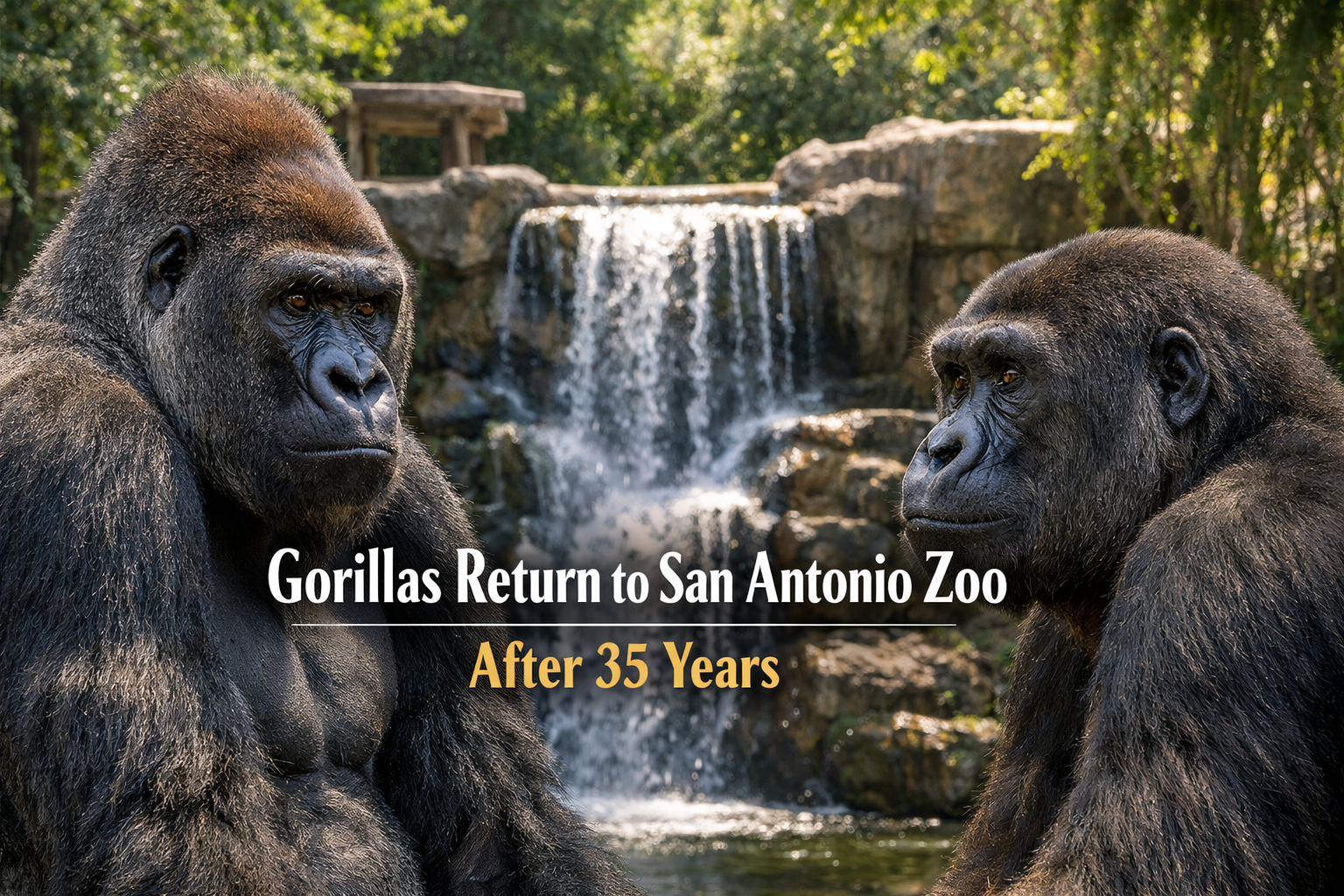
The San Antonio Zoo has made history with the opening of Congo Falls, a state of the art two acre habitat that has brought western lowland gorillas back to the city after more than 35 years. The response has been remarkable, with ticket sales doubling since the exhibit opened, demonstrating the community's enthusiasm for this significant addition to one of San Antonio's most beloved family destinations. Seven gorillas now call San Antonio home, offering visitors immersive experiences that combine conservation education with world class animal care.
The investment in Congo Falls represents more than just a new zoo exhibit; it reflects institutional confidence in San Antonio's growth and commitment to providing families with exceptional cultural and educational amenities. Major attraction developments like this one contribute to the quality of life factors that influence where households choose to live, particularly families with children who value access to educational entertainment and outdoor recreation opportunities.
For those considering buying a home in San Antonio, understanding how cultural amenities affect neighborhood appeal provides valuable context for evaluating different areas. The San Antonio Zoo anchors the Brackenridge Park area near several of San Antonio's most sought after central neighborhoods including Alamo Heights, Monte Vista, and Mahncke Park. Proximity to attractions like the enhanced zoo adds to the lifestyle advantages these neighborhoods offer beyond just housing characteristics.
This guide explores what Congo Falls brings to the San Antonio Zoo, why the community response has been so strong, how major attractions affect surrounding neighborhood appeal, what the Brackenridge Park corridor offers families, and how cultural amenities factor into home buying decisions. Whether you have family members eager to meet the gorillas, are evaluating central San Antonio neighborhoods, or appreciate how community investments shape city character, this development merits attention.
What Is Congo Falls and What Does It Offer?
Congo Falls represents the San Antonio Zoo's most significant habitat development in decades, creating purpose built environment for seven western lowland gorillas while providing visitors with immersive viewing experiences. Understanding what the exhibit offers helps appreciate why community response has been so enthusiastic. The investment level and design approach distinguish this habitat from typical zoo exhibits.
The two acre habitat was designed to set new standards in gorilla care, innovation, guest experience, and conservation storytelling according to Zoo CEO Tim Morrow. This comprehensive approach addresses animal welfare, visitor engagement, and educational mission simultaneously rather than prioritizing any single element. The result creates experiences that serve both the gorillas' needs and visitors' desire for meaningful wildlife encounters.
Q: What viewing experiences does Congo Falls provide for visitors?
A: Dual level pathways allow visitors to observe the gorillas from ground level and from elevated positions above the habitat. This 360 degree viewing approach enables families to watch the animals as they explore, climb, eat, and interact with each other from multiple perspectives. The varied vantage points create different experiences throughout a single visit and encourage repeat visits as gorilla behaviors vary.
The habitat design emphasizes naturalistic environment that supports gorilla physical and psychological wellbeing while creating visually engaging spaces for visitors. Climbing structures, vegetation, water features, and varied terrain give the gorillas opportunities for natural behaviors that zoo guests can observe. This alignment between animal care and visitor experience reflects contemporary zoo design principles.
Congo Falls features:
- Two acre purpose built habitat
- Seven western lowland gorillas
- Dual level visitor pathways
- Ground level and elevated viewing
- 360 degree observation opportunities
- Naturalistic environment design
- Conservation storytelling integration
- World class animal care standards
Who Are the Gorillas Now Calling San Antonio Home?
The seven gorillas residing at Congo Falls came from respected zoos across the United States, bringing established social relationships and individual personalities to San Antonio. Understanding the gorillas' backgrounds helps appreciate the coordination required to create the new troop and the professional relationships between accredited zoos that make such transfers possible.
The gorillas arrived from three different institutions, each contributing animals to form the San Antonio troop. Anaka, Andi, and Merry came from Zoo Atlanta, which has one of the country's most established gorilla programs. B'wenzi, Juba, and Shana transferred from the Dallas Zoo. Ajari arrived from the Houston Zoo, meaning Texas now hosts this gorilla at a third major zoo within the state.
Q: Why do zoos transfer animals between institutions?
A: Accredited zoos coordinate animal transfers through Species Survival Plans that manage genetic diversity and social groupings across institutions. These transfers ensure healthy populations, appropriate social structures, and optimal care conditions for animals. The gorillas coming to San Antonio were selected based on compatibility assessments and the new habitat's ability to support their needs. This cooperative approach among zoos serves conservation goals while providing animals with appropriate environments.
Each gorilla brings individual history and personality that visitors can learn about through zoo educational programming. The conservation storytelling aspect of Congo Falls includes information about the individual animals, their species' status in the wild, and what visitors can do to support gorilla conservation efforts.
Congo Falls gorillas:
- Anaka from Zoo Atlanta
- Andi from Zoo Atlanta
- Merry from Zoo Atlanta
- B'wenzi from Dallas Zoo
- Juba from Dallas Zoo
- Shana from Dallas Zoo
- Ajari from Houston Zoo
- Species Survival Plan coordination
- Compatibility assessed transfers
Why Has Community Response Been So Strong?
The doubling of ticket sales since Congo Falls opened demonstrates exceptional community enthusiasm that exceeds typical new exhibit responses. Understanding why San Antonio families have responded so strongly helps appreciate what the development means for the community. Several factors contribute to the remarkable attendance surge.
Gorillas hold particular fascination for zoo visitors due to their intelligence, social complexity, and obvious similarities to humans. The species' charisma creates visitor interest that many other animals cannot match. San Antonio had not hosted gorillas for over 35 years, meaning the species return represents genuinely new experience for most current residents including entire generations who have never seen gorillas at the local zoo.
Q: What makes the Congo Falls experience particularly meaningful for families?
A: Families visiting during the grand opening and since have described experiences that transcend typical zoo visits. Parents appreciate the educational value as children learn about great apes, conservation, and wildlife while being genuinely engaged rather than passively observing. The immersive design allows even young children to see the gorillas clearly from various vantage points. Birthday visits, milestone moments, and family traditions are already forming around the new habitat.
The quality of the exhibit itself contributes to response strength. Visitors recognize when institutions have invested in truly exceptional experiences rather than minimal additions. Congo Falls clearly represents major commitment that the community appreciates and wants to support through attendance and membership.
Strong community response factors:
- Gorilla charisma and human connection
- 35 year absence creating novelty
- Generational first experiences
- Educational value for children
- Immersive design enabling engagement
- Quality investment recognition
- Family tradition formation
- Community appreciation for commitment
How Does the San Antonio Zoo Anchor the Brackenridge Park Area?
The San Antonio Zoo occupies central position within Brackenridge Park, one of San Antonio's most significant public green spaces. Understanding the zoo's role within the broader park context helps appreciate how the attraction contributes to surrounding neighborhood character. The zoo serves as anchor institution that helps define the area.
Brackenridge Park encompasses over 340 acres along the San Antonio River, providing extensive recreational space within minutes of downtown. The park predates many surrounding neighborhoods, with its establishment in the late 1800s influencing how adjacent areas developed. The zoo, Japanese Tea Garden, Witte Museum, and other attractions within the park create cultural concentration that distinguishes this area from other parts of San Antonio.
Q: How does anchor institution presence affect surrounding neighborhoods?
A: Major attractions like the San Antonio Zoo generate ongoing activity that keeps areas vibrant and attracts continued investment. The millions of visitors annually who come to the zoo and surrounding attractions support nearby businesses and demonstrate area appeal. This activity creates positive perception that influences how people view surrounding neighborhoods when considering where to live.
The institutional presence also provides stability that purely residential areas may lack. The zoo, museums, and park infrastructure represent long term commitments that will remain even as surrounding neighborhoods experience normal real estate cycles. This permanence provides assurance about area character that affects buyer confidence.
Brackenridge Park area characteristics:
- Over 340 acres of green space
- San Antonio River corridor
- Multiple cultural attractions
- Japanese Tea Garden proximity
- Witte Museum nearby
- Millions of annual visitors
- Long term institutional presence
- Area character stability
What Neighborhoods Surround the San Antonio Zoo?
Several of San Antonio's most desirable central neighborhoods surround Brackenridge Park and the zoo, offering residents proximity to these amenities. Understanding these neighborhoods helps buyers evaluate options in this part of the city. Each neighborhood offers distinct characteristics while sharing zoo and park accessibility.
Alamo Heights, the independent city within San Antonio surrounded by San Antonio proper, sits adjacent to Brackenridge Park with some of the region's most sought after housing and highly regarded schools. Monte Vista, a designated historic district, features architectural diversity and established neighborhood character northwest of the park. Mahncke Park provides more accessible price points while maintaining proximity to zoo and park amenities.
Q: What other central neighborhoods offer Brackenridge Park proximity?
A: Tobin Hill to the south provides urban character with increasing investment and dining options. Government Hill and Dignowity Hill to the east offer historic homes and revitalization momentum. The broader Midtown area provides various housing options within reasonable distance of the park. Each neighborhood serves different buyer profiles based on priorities including architecture preferences, price points, and specific amenity access.
The diversity of options surrounding Brackenridge Park means families can find housing matching various needs while maintaining access to the zoo and park amenities. This variety distinguishes the area from suburban locations where housing options may be more homogeneous.
Surrounding neighborhoods:
- Alamo Heights with premier status
- Monte Vista historic district
- Mahncke Park accessible options
- Tobin Hill urban character
- Government Hill historic homes
- Dignowity Hill revitalization
- Midtown diverse housing
- Varied price points and styles
How Do Cultural Amenities Affect Property Appeal?
Understanding relationships between cultural amenities and property dynamics helps buyers appreciate why proximity to attractions like the San Antonio Zoo matters for real estate. These connections operate through various mechanisms affecting both desirability and value. The relationships extend beyond simple convenience to affect neighborhood character.
Neighborhoods near significant cultural amenities attract buyers who prioritize access to educational, recreational, and entertainment opportunities. Families with children particularly value proximity to zoos, museums, and parks that provide activities enriching childhood. This demand concentration in amenity rich areas affects property dynamics through increased buyer interest.
Q: Do major attractions directly increase nearby property values?
A: Research shows complex relationships where quality amenities generally correlate with property premiums, though isolating specific attraction effects proves difficult. Areas with comprehensive amenity packages including parks, cultural institutions, and recreational facilities typically command higher prices than similar housing in less amenitized locations. The zoo's enhancement through Congo Falls strengthens an already substantial amenity package rather than creating new appeal where none existed.
The signaling effect of institutional investment also matters. When the San Antonio Zoo makes major investment in facilities, it demonstrates confidence in the area's future and commits to continued presence. This institutional stability provides assurance that amenity access will continue, supporting buyer confidence in the area's long term appeal.
Cultural amenities and property dynamics:
- Buyer attraction to amenity access
- Family priority for educational activities
- Demand concentration in amenity areas
- Comprehensive packages commanding premiums
- Enhancement strengthening existing appeal
- Institutional investment signaling confidence
- Stability assurance from commitment
- Long term appeal support
What Does Zoo Investment Signal About San Antonio?
The substantial investment in Congo Falls reflects and reinforces San Antonio's position as growing city investing in quality of life amenities. Understanding what such investments signal helps appreciate broader context beyond the specific attraction. Cities investing in cultural infrastructure demonstrate priorities that affect resident experience.
Major exhibit development requires years of planning, significant capital, and institutional confidence in continued community support. The San Antonio Zoo's decision to pursue Congo Falls indicates assessment that the community will respond positively, that attendance will justify investment, and that the institution's future in San Antonio warrants major commitment. These assessments prove correct when attendance doubles.
Q: How does cultural investment relate to city growth and development?
A: Growing cities often prioritize cultural amenities as quality of life factors that attract and retain residents, particularly educated professionals and families. San Antonio's investments in zoo facilities, museum expansion, park improvements, and cultural programming compete with other cities for residents who evaluate such factors when choosing where to live. Success in attracting and retaining these residents supports continued growth and investment.
The zoo's enhancement also supports tourism that brings visitor spending into the local economy. Hotels, restaurants, and retail establishments benefit when major attractions draw visitors who spend beyond just admission fees. This economic activity supports employment and tax revenue that benefit the broader community.
Zoo investment signals:
- Institutional confidence in community
- Years of planning demonstrated
- Capital commitment made
- Community support assessment validated
- Attendance response confirming
- Quality of life priority
- Resident attraction competition
- Tourism economic support
Why Do Families Prioritize Proximity to Attractions Like the Zoo?
Understanding why families value living near attractions like the San Antonio Zoo helps appreciate the demand dynamics affecting surrounding neighborhoods. Family priorities influence housing decisions in specific ways that affect certain areas more than others. The zoo's enhancement strengthens appeal for family focused buyers.
Families with children seek environments that support childhood development, provide activities, and create memorable experiences. Proximity to educational attractions like zoos allows frequent visits that become part of childhood rather than occasional special trips. The convenience of nearby access increases utilization, transforming attraction proximity from theoretical benefit to practical lifestyle advantage.
Q: How does frequent access change the value proposition of nearby living?
A: When attractions require substantial travel, visits become events requiring planning, travel time, and often expense beyond admission. When attractions are nearby, visits can happen spontaneously on weekend mornings, after school, or as regular family activities. This frequency transforms relationship from occasional outing to ongoing resource. Zoo memberships become practical for nearby residents who visit often enough to justify annual pass costs.
The San Antonio Zoo's doubling attendance demonstrates that when quality improves, utilization increases. Families living nearby will have enhanced resource available for regular use. This improved amenity strengthens the value proposition for living in surrounding neighborhoods where frequent access is practical.
Family proximity priorities:
- Childhood development support
- Frequent visit enabling
- Memorable experience creation
- Convenience increasing utilization
- Spontaneous visit possibility
- Regular family activity integration
- Membership value realization
- Enhanced amenity access benefit
How Does the Zoo Contribute to San Antonio Tourism?
The San Antonio Zoo serves as significant tourism attraction drawing visitors from beyond San Antonio who contribute to the local economy. Understanding tourism dynamics helps appreciate economic effects that extend beyond neighborhood property considerations. Congo Falls has strengthened an already important tourism asset.
Tourism generates economic activity through visitor spending on admission, food, lodging, transportation, and ancillary purchases. Visitors traveling to San Antonio specifically for zoo visits or including the zoo in broader trips spend throughout their stay. This spending supports employment and generates tax revenue that benefits the community beyond just the zoo itself.
Q: How does attraction enhancement affect tourism competitiveness?
A: Cities compete for tourist visits based on attraction quality and variety. San Antonio's tourism portfolio includes the River Walk, historic missions, theme parks, and cultural institutions. The zoo's enhancement through Congo Falls strengthens this portfolio, potentially influencing visitor decisions about whether to visit San Antonio versus alternative destinations. The doubled attendance suggests success in attracting increased visitation.
The tourism economic impact extends to neighborhoods near attractions through business activity serving visitors. Restaurants, shops, and services near Brackenridge Park benefit when zoo attendance increases. This business vitality contributes to neighborhood appeal while providing employment for area residents.
Zoo tourism contributions:
- Significant attraction drawing visitors
- Visitor spending beyond admission
- Employment support from tourism
- Tax revenue generation
- Tourism portfolio strengthening
- Destination competitiveness enhancement
- Near attraction business benefits
- Neighborhood vitality contribution
What Quality of Life Factors Does Central San Antonio Offer?
The Brackenridge Park area exemplifies quality of life advantages that central San Antonio locations provide compared to suburban alternatives. Understanding these factors helps buyers evaluate tradeoffs between central and suburban options. Location advantages extend beyond just zoo proximity.
Central San Antonio locations provide proximity to employment centers, cultural attractions, dining and entertainment, and urban amenities that suburban locations require more travel to access. The ability to reach downtown, museums, restaurants, and entertainment without extensive driving creates convenience that many households value. This accessibility has lifestyle benefits that affect daily experience.
Q: What specific advantages does the Brackenridge corridor offer?
A: Beyond zoo and park access, the corridor provides proximity to the Witte Museum, Japanese Tea Garden, San Antonio Botanical Garden, and extensive trail systems. Multiple dining options serve the area without requiring travel to restaurant districts. Schools in nearby Alamo Heights and San Antonio ISD provide various educational options. Healthcare facilities are accessible throughout the central city. This comprehensive amenity concentration creates self sufficient area where most needs can be met locally.
The urban character of central neighborhoods differs from suburban environments in ways that appeal to certain buyer profiles. Walkability, architectural variety, established trees and landscaping, and neighborhood history create character that newer suburban development cannot replicate.
Central San Antonio quality of life:
- Employment center proximity
- Cultural attraction access
- Dining and entertainment nearby
- Urban amenity convenience
- Museum and garden proximity
- Trail system access
- School options available
- Healthcare accessibility
How Should Buyers Evaluate Proximity to Attractions?
Those exploring homes for sale in San Antonio benefit from understanding how to evaluate attraction proximity when making housing decisions. Proximity matters differently for different households based on priorities and lifestyles. Recognizing personal relevance helps buyers weight this factor appropriately.
Families with young children typically derive most value from zoo proximity since children represent primary zoo audience. Households without children or with adult children may value zoo proximity less directly, though they may still appreciate park access, area character, and neighborhood vitality that zoo presence supports. Individual circumstances should guide how heavily buyers weight attraction proximity.
Q: What questions help buyers evaluate attraction proximity importance?
A: Consider how often you would realistically visit if living nearby and whether that frequency justifies any location premium. Evaluate whether other attractions and amenities in the area provide value beyond just the specific attraction. Assess whether the neighborhood characteristics independent of attractions match your housing preferences. Consider long term plans and whether attraction relevance might change as household composition evolves.
Proximity provides option value even when not actively utilized. Living near the zoo means visits are always possible without requiring planning or travel commitment. This optionality has value that buyers should recognize even if they do not expect weekly visits.
Attraction proximity evaluation:
- Family composition relevance
- Realistic visit frequency
- Area amenity package assessment
- Neighborhood characteristics beyond attractions
- Housing preference alignment
- Long term household evolution
- Option value recognition
- Appropriate factor weighting
What Makes the Brackenridge Park Corridor Family Friendly?
The concentration of family oriented amenities in the Brackenridge Park corridor creates environment specifically suited to households with children. Understanding what makes the area family friendly helps buyers with children evaluate whether the location matches their needs. Multiple factors combine to create family appeal.
Beyond the zoo and park, the corridor provides multiple attractions that serve families with children of various ages. The Witte Museum offers science and natural history exhibits engaging children alongside adults. The Japanese Tea Garden provides peaceful outdoor space suitable for family visits. The Doseum children's museum sits nearby. This concentration means families can vary activities while staying within the same general area.
Q: How do schools factor into family friendliness of the corridor?
A: School options vary across the neighborhoods surrounding Brackenridge Park. Alamo Heights Independent School District serves properties within the City of Alamo Heights and is highly regarded. San Antonio ISD serves other nearby areas with varying school options. Families prioritizing specific schools should verify school zone boundaries for properties of interest since boundaries do not always align with neighborhood names or general location descriptions.
The park itself provides outdoor recreation space that families with children particularly value. Playgrounds, open spaces for running and playing, trails for walking and cycling, and natural areas for exploration give families outdoor options beyond structured attractions. This combination of structured and unstructured activities serves various family recreation preferences.
Brackenridge corridor family features:
- Multiple family attractions concentrated
- Witte Museum science and history
- Japanese Tea Garden peaceful space
- Doseum children's museum nearby
- Activity variety within area
- Alamo Heights ISD option
- San Antonio ISD schools
- Park recreation space
How Has Zoo Attendance Growth Affected the Area?
The doubling of attendance since Congo Falls opened creates increased activity in the Brackenridge Park area that affects surrounding neighborhoods. Understanding attendance growth effects helps residents and potential buyers appreciate how the enhanced zoo influences area dynamics. Increased visitation has various implications.
More visitors means more activity in the area including traffic, parking demand, and pedestrian presence particularly during peak zoo hours and seasons. Residents of nearby neighborhoods may notice these effects, especially those living on routes commonly used to access the zoo. Weekend and holiday periods typically see highest visitation.
Q: How does increased activity affect nearby neighborhood experience?
A: Increased activity creates both positive and potentially challenging effects. More visitors support nearby businesses, contribute to area vitality, and create vibrant atmosphere. However, traffic and parking during peak times may create inconvenience for residents. Different households will experience these tradeoffs differently based on their routines, parking situations, and tolerance for activity.
Properties immediately adjacent to the zoo may experience more noticeable effects than those several blocks away in surrounding neighborhoods. Buyers should consider their specific property's relationship to zoo access routes and parking areas when evaluating potential effects.
Attendance growth effects:
- Increased area activity
- Traffic and parking demand
- Pedestrian presence increase
- Peak period concentration
- Business support from visitors
- Area vitality contribution
- Potential congestion during peaks
- Location specific variation
Expert Insight from Tami Price
"I am always watching what makes a neighborhood really thrive, and local attractions are a huge part of that," says Tami Price, REALTOR® and Broker Associate with Real Broker, LLC. "Congo Falls is a perfect example of how San Antonio blends education, wildlife, and family fun. When the zoo makes this kind of investment and attendance doubles in response, it demonstrates the community's appetite for quality family amenities. If you are looking to move near parks, culture, and great schools, this part of town deserves a closer look."
Price brings nearly two decades of experience and approximately 1,000 closed transactions to her work with buyers and sellers throughout San Antonio, Schertz, Cibolo, Helotes, Converse, and Boerne. Her understanding of how neighborhood amenities affect property dynamics helps clients evaluate options throughout central San Antonio and the broader metropolitan area.
"The Brackenridge Park corridor offers something that newer suburban areas simply cannot replicate," Price explains. "You have established neighborhoods with mature character, proximity to the zoo and multiple museums, extensive park space, and urban convenience all combined. Families can walk to the zoo on membership visits, explore park trails regularly, and live in neighborhoods with genuine history and character."
Her recognition as a RealTrends Verified Top Agent and 14-time Five Star Professional Award Winner reflects consistent client satisfaction serving buyers and sellers navigating diverse San Antonio neighborhoods.
"For families considering central San Antonio, Congo Falls adds to an already compelling case for the area," Price notes. "The zoo's enhancement demonstrates institutional commitment to quality that will benefit the area for years to come. Whether you are prioritizing schools, park access, or just want to take your kids to see gorillas regularly, the neighborhoods around Brackenridge Park offer lifestyle that suburban alternatives struggle to match."
Three Key Takeaways
1. The San Antonio Zoo's Congo Falls Has Brought Gorillas Back After 35 Years with a Two Acre Habitat Featuring Seven Western Lowland Gorillas and Immersive Visitor Experiences
The state of the art exhibit has doubled zoo attendance since opening, demonstrating community enthusiasm for the major enhancement. Gorillas from Zoo Atlanta, Dallas Zoo, and Houston Zoo now call San Antonio home. The investment represents the zoo's most significant habitat development in decades.
2. Major Attraction Enhancement Strengthens the Appeal of Surrounding Neighborhoods Including Alamo Heights, Monte Vista, and Mahncke Park
The San Antonio Zoo anchors the Brackenridge Park area near several of San Antonio's most desirable central neighborhoods. Proximity to enhanced cultural amenities affects property desirability as families prioritize access to educational entertainment and outdoor recreation. The doubling attendance confirms community value of the improved facility.
3. Families Evaluating Central San Antonio Find Comprehensive Amenity Packages That Suburban Locations Cannot Replicate
Those considering buying a home in San Antonio near Brackenridge Park gain access to the zoo, Witte Museum, Japanese Tea Garden, extensive park trails, and established neighborhood character. This concentration of family amenities combined with urban convenience creates lifestyle advantages that affect housing decisions for households prioritizing such factors.
Frequently Asked Questions
Q: Where is Congo Falls located?
A: Congo Falls is located inside the San Antonio Zoo within Brackenridge Park. The zoo sits near several central San Antonio neighborhoods including Alamo Heights, Monte Vista, and Mahncke Park.
Q: How many gorillas are at the San Antonio Zoo now?
A: Seven western lowland gorillas now reside at the San Antonio Zoo in the Congo Falls habitat. The gorillas were relocated from Zoo Atlanta, Dallas Zoo, and Houston Zoo.
Q: What makes the Congo Falls habitat special?
A: The two acre habitat offers dual level viewing pathways allowing visitors to observe gorillas from ground level and elevated positions. The design emphasizes both world class animal care and immersive visitor experience with conservation storytelling throughout.
Q: How has attendance changed since Congo Falls opened?
A: Ticket sales have doubled since Congo Falls opened, demonstrating exceptional community response to the new exhibit. This attendance surge exceeds typical new exhibit responses.
Q: What neighborhoods are near the San Antonio Zoo?
A: Several desirable neighborhoods surround the zoo and Brackenridge Park including Alamo Heights, Monte Vista, Mahncke Park, Tobin Hill, and other central San Antonio communities. Each offers different characteristics at various price points.
Q: How long had it been since the San Antonio Zoo had gorillas?
A: The San Antonio Zoo had not housed gorillas for more than 35 years before Congo Falls opened. The species return represents genuinely new experience for most current San Antonio residents.
Q: Is the Brackenridge Park area good for families?
A: The area offers exceptional family amenities including the zoo, Witte Museum, Japanese Tea Garden, Doseum children's museum, and extensive park space. School options vary by specific location with highly regarded Alamo Heights ISD serving some areas.
Q: How does zoo proximity affect property values?
A: Quality amenities generally correlate with property appeal, though isolating specific effects proves difficult. Areas with comprehensive amenity packages including parks and cultural institutions typically attract family buyers who value such access.
The Bottom Line
Congo Falls has returned gorillas to San Antonio after 35 years and generated community response that doubled zoo attendance, demonstrating the value residents place on quality family amenities. The San Antonio Zoo's major investment strengthens an already significant cultural institution while enhancing the appeal of surrounding neighborhoods where families can enjoy frequent access to the improved facility.
The Brackenridge Park corridor offers lifestyle advantages that combine urban convenience, cultural amenities, park access, and established neighborhood character in ways that suburban alternatives cannot replicate. For families prioritizing educational attractions, outdoor recreation, and walkable neighborhoods with history and character, the area surrounding the San Antonio Zoo provides compelling option within the broader San Antonio housing landscape.
Working with experienced representation helps buyers evaluate how amenity proximity and neighborhood characteristics align with their priorities when considering central San Antonio options.

Contact Tami Price, REALTOR®
Whether exploring central San Antonio neighborhoods near Brackenridge Park, evaluating family friendly communities throughout the metropolitan area, or navigating any home buying or selling process, working with an experienced REALTOR® provides guidance through complex decisions. Tami Price brings local market knowledge and professional expertise to help clients understand how neighborhood amenities affect property dynamics and find homes matching their priorities.
From families seeking zoo proximity to those evaluating various San Antonio options, personalized service makes the difference in successful transactions.
Tami Price, REALTOR®, Broker Associate
📞 210-620-6681
Tami Price's Specialties
- Comprehensive Buyer and Seller Representation
- Military Relocations and PCS Moves
- VA Loan Guidance and Assumptions
- New Construction Navigation
- Strategic Pricing and Market Analysis
- Professional Property Marketing
- First Time Buyer Education
- Move Up and Downsizing Transitions
- Residential Real Estate Throughout San Antonio, Schertz, Cibolo, Helotes, Converse, and Boerne
Disclaimer
This blog post is provided for informational purposes only and should not be construed as guarantees regarding property values, zoo operations, or neighborhood characteristics. Information about San Antonio Zoo and Congo Falls reflects publicly available details as of the publication date and is subject to change. Zoo hours, exhibits, and programming are determined by the zoo and may be modified without notice. Real estate decisions should be based on individual circumstances, professional guidance, and current market conditions. School boundaries and assignments should be verified independently. Tami Price, REALTOR®, and Real Broker, LLC make no warranties regarding accuracy, completeness, or applicability of information to specific circumstances.
Categories
- All Blogs (923)
- Home Buying (11)
- Neighborhood Guides (44)
- 10 Military Neighborhood (1)
- 10 Mistakes Sellers Make (1)
- 10 Strategies to Coordinate a Same Day Close (1)
- 12 Lifestyle Questions to Move In (1)
- 12 PCS What Ifs (1)
- 12 Photos and Marketing Assets (1)
- 13 PCS Hunting Trip Tips (1)
- 15 Red Flags Touring Home in San Antonio (1)
- 2026 Market (1)
- 30 days after closing your home (1)
- 7 Offer Terms Beyond Price (1)
- 78015 Ranked One (1)
- 8 Bridge (1)
- 8 Myths Buyers Believe about Down Payments (1)
- 8 Reasons VA Buyers Love New Construction (1)
- 9 Mistakes Move Up Buyers Make (1)
- 9 Questions to Decide If You Keep Your PCS Home (1)
- 9 Timeline Questions Every Buyer Need to Ask (1)
- 9 Warranty Questions to Ask (1)
- 9 Ways to Attract VA & Military Buyers (1)
- About Tami Price (6)
- Affordable Communities (2)
- Affordable Housing & Community Development (5)
- Agent Qualifications and Credentials (1)
- Agent Qualifications and Experience (1)
- Agent Recognition (3)
- Agent Selection (1)
- AI and Real Estate Tools (1)
- Alamo Heights (5)
- Alamo Heights ISD (1)
- Alamo Heights Real Estate (1)
- Alamo Ranch (2)
- Amenities in Helotes, Texas (3)
- Apartment Market (1)
- Appraisals (1)
- Arts and Culture (1)
- Awards and Recognition (7)
- Balcones Creek (1)
- Best Neighborhoods to Live in Cibolo, TX (3)
- Best Neighborhoods to Live in San Antonio (16)
- Best Places to Live in Leon Valley: A Neighborhood Guide (1)
- Best Places to Live in Northeast Inner Loop: A Neighborhood Guide (1)
- Bexar County Property Tax (1)
- Bexar County Real Estate (3)
- Boerne Home Sellers (1)
- Boerne Neighborhoods (2)
- Boerne Texas (9)
- Broadway Corridor Development (1)
- Build-to-Rent Communities (1)
- Builder Contracts & Warranties (3)
- Builder Incentives (1)
- Builder Warranties (1)
- Buyer (97)
- Buyer Activity San Antonio (1)
- Buyer and Seller Guidance (4)
- Buyer Due Diligence (1)
- Buyer Education (46)
- Buyer Guide (9)
- Buyer Guides (7)
- Buyer Protection Strategies (1)
- Buyer Representation (1)
- Buyer Representation Expertise (1)
- Buyer Resources (86)
- Buyer Strategy (2)
- Buyers (13)
- Buyers Agent (1)
- Buying a Foreclosed Home in San Antonio (10)
- Buying a Home (2)
- Buying a Home in San Antonio (6)
- Buying Timeline (1)
- Buying vs Renting (1)
- Castroville, TX (8)
- Central San Antonio (1)
- Central San Antonio Development (2)
- Central Texas Growth (1)
- Choosing a Real Estate Agent (1)
- Choosing an Agent (1)
- Cibolo Communities (1)
- Cibolo Home Sellers (1)
- Cibolo TX (15)
- Client Reviews and Testimonials (1)
- Client Satisfaction (1)
- Client Stories (1)
- Client Testimonial (4)
- Clients review (4)
- Cobblestone (1)
- Comal County (1)
- Commercial & Retail Development (27)
- Commercial Development (13)
- Commercial Development Impact on Home Values (1)
- Commercial Real Estate (1)
- Community (1)
- Community Amenities (2)
- Community Development (23)
- Community Development and Real Estate (3)
- Community Events & Development (1)
- Community Infrastructure (1)
- Community Investment Impact (2)
- Community Landmarks (1)
- Community News (4)
- Community Planning (2)
- Community Revitalization (1)
- Community Spotlights (1)
- Commuter Neighborhoods (1)
- Cons of Living in Helotes, TX (4)
- Conservation Communities (1)
- Contingency Questions (1)
- Converse Home Sellers (1)
- Converse Homes For Sale (3)
- Converse Real Estate (1)
- Converse TX (10)
- Converse TX Real Estate (1)
- Cost of Living Guides (1)
- Cost of Living in San Antonio TX (25)
- CPS Energy Programs (1)
- Custom Homes (5)
- Davis Ranch (1)
- Days on Market (1)
- Deco District San Antonio (1)
- Denver Heights (1)
- Down Payment Assistance (1)
- Downtown Boerne (1)
- Downtown Development (3)
- Downtown Living (1)
- Downtown Revitalization (14)
- Downtown San Antonio (2)
- Downtown San Antonio Real Estate (5)
- Downtown San Antonio Revitalization (1)
- East Side Living (1)
- East Side Neighborhoods (1)
- East Side San Antonio (4)
- Economic Development (3)
- Economic Growth & Industry (1)
- Education, Texas Hill Country (1)
- Emerald Pointe (1)
- Employment (1)
- Employment Corridors (1)
- Encino Forest (1)
- Entertainment Economy (1)
- Equity and Pricing Strategy (2)
- Equity Q&A (1)
- Established Communities (3)
- Events in San Antonio (207)
- Expert Advice from Tami Price, Realtor® (10)
- Fair Oak Ranch (1)
- Family Activities (2)
- Family Homes (3)
- Family Living in San Antonio (1)
- FAQ (1)
- Far Northwest San Antonio (1)
- Far West San Antonio (1)
- Far Westside Real Estate (4)
- Fastest Growing Zip Codes in America (1)
- Featured Homes for Sale (2)
- Featured Properties (1)
- Financial Planning (10)
- Financing Strategy (1)
- First Time Buyers (22)
- First Time Sellers (1)
- First-Time Buyers (6)
- First-Time Homebuyer Resources (4)
- First-Time Homebuyer Tips (2)
- First-Time Homebuyers (6)
- First-Time Investors (1)
- Fort Sam Houston (3)
- Fort Sam Houston Real Estate (1)
- Fort Sam Houston, TX (2)
- Fox Grove (1)
- FSBO vs Agent Representation (1)
- Gated Communities (5)
- Golf Communities (1)
- Great Northwest (1)
- Greater San Antonio Housing Trends (2)
- Greater San Antonio Real Estate (5)
- Green Home Upgrades (1)
- Growth and Development (11)
- Healthcare (1)
- HELOC (1)
- Helotes Home Sellers (1)
- Highway 151 Corridor Growth (1)
- Hill Country Business (1)
- Hill Country Communities (2)
- Hill Country Development (3)
- Hill Country Homes for Sale (1)
- Hill Country Living (3)
- Hill Country Market Updates (1)
- Hill Country Real Estate (4)
- Historic Districts (5)
- Historic Neighborhoods (4)
- Historic Preservation (2)
- Holiday Attractions (1)
- Holiday Guide (1)
- Home Buying (7)
- Home Buying Education (3)
- Home Buying Guide (7)
- Home Buying Process (8)
- Home Buying Strategy (2)
- Home Buying Tips (6)
- Home Energy Efficiency San Antonio (4)
- Home Financing (2)
- Home Improvement ROI (1)
- Home Inspections (1)
- Home Preparation (2)
- Home Pricing Strategy (13)
- Home Renovation for Resale (1)
- Home Selling (9)
- Home Selling Guide (10)
- Home Selling Strategies (3)
- Home Selling Strategy (3)
- Home Selling Tips (22)
- Home Staging and Updates (2)
- Home Values (2)
- Homebuyer Education (15)
- Homebuyer Resources (1)
- Homebuying Guide (1)
- Homebuying Tips (3)
- Homeowner (35)
- Homeowner Tax Benefits (1)
- Homeownership Costs (1)
- Homes for Sale (2)
- Homes for sale near Lackland AFB (4)
- Homes Near Military Bases (1)
- Homestead amenities (1)
- Horizon Pointe (1)
- House Hunting Guide (1)
- Housing (1)
- Housing Community Development (1)
- Housing Development (2)
- Housing Market Updates (3)
- How to Buy a House in San Antonio TX (48)
- Huebner Oaks shopping center (1)
- Hunters Ranch (1)
- Hybrid (1)
- I-10 Corridor (1)
- I-35 Corridor (1)
- In Person (1)
- Incorporated Cities (6)
- Industrial Investment Impact (1)
- Industry News (2)
- Industry Recognition (1)
- Infrastructure & Growth Projects (26)
- Infrastructure and Sustainability (1)
- Infrastructure Development (1)
- Infrastructure Investment (1)
- Infrastructure Updates (2)
- Interest Rates (2)
- Invest in San Antonio (46)
- Investment Opportunities (2)
- Investment Property San Antonio (4)
- JBSA (9)
- JBSA Housing (11)
- JBSA Real Estate (4)
- JBSA Resources (7)
- Joint Base San Antonio (5)
- Joint Base San Antonio Housing (1)
- Judson ISD (2)
- Kendall County (1)
- La Cantera Retail Development (1)
- Lackland AFB (7)
- Lackland AFB Housing (1)
- Land Conservation (1)
- Land Use Planning (1)
- Lera MLS (14)
- Lifestyle & Community Growth (18)
- Lifestyle & Local Growth (12)
- Lifestyle Amenities (1)
- Lifestyle Communities (1)
- Listing Preparation (1)
- Listing Strategy (1)
- Live Oak (1)
- Living in San Antonio, TX (52)
- Living Near Randolph AFB (7)
- Loan Programs (1)
- Local Attractions (3)
- Local Business (1)
- Local Business & Development (9)
- Local Business & Economy (3)
- Local Business Spotlight (20)
- Local Business Support (5)
- Local Development (4)
- Local Development News (9)
- Local Market Insights (5)
- Local News (2)
- Local News Around San Antonio (2)
- Local Policy Changes (1)
- Local Real Estate News (1)
- Loop 1604 Corridor Growth (2)
- Loop 410 Corridor Development (1)
- Luxury Communities (3)
- Luxury Homes (2)
- Luxury Real Estate (1)
- Luxury Retail San Antonio (1)
- MacArthur Park (1)
- Major Developments (2)
- Making Offers on Homes (1)
- Market Analysis (26)
- Market Conditions (47)
- Market Expertise (1)
- Market Insights (5)
- Market Strategy (1)
- Market Timing (2)
- Market Trends (10)
- Market Trends & Insights (2)
- Market Update (15)
- Market Update 2026 (1)
- Market Updates (21)
- Master Planned Communities (12)
- Medical Center Area Real Estate (1)
- Medina Valley ISD (2)
- Midtown Living (1)
- Military & Economic Impact (3)
- Military Buyers (2)
- Military Communities (1)
- Military Families (1)
- Military Family Resources (1)
- Military Heritage (1)
- Military Homebuying (3)
- Military Homeownership (1)
- Military Housing (3)
- Military Housing Market in Texas (16)
- Military Life in San Antonio (2)
- Military Neighborhoods (1)
- Military PCS Relocations (3)
- Military Real Estate (2)
- Military Relocation (93)
- Military Relocation & VA Loans (10)
- Military Relocation San Antonio (4)
- Military Relocation Services (3)
- Military Relocation to San Antonio (50)
- Military Relocations (19)
- Military Relocations & VA Home Loans (5)
- Mixed-Income Housing (1)
- MLS Accuracy & Data Transparency (1)
- Mortgage Programs (1)
- Mothers Day in San Antonio (1)
- Move to Boerne TX (18)
- Move to Castroville TX (11)
- Move to Converse TX (16)
- Move to New Braunfels (1)
- Move to North San Antonio (19)
- Move to San Antonio TX (73)
- Move to Selma TX (19)
- Move to Shertz TX (13)
- Move to Texas (53)
- Move Up Buyer Resources (1)
- Move Up Buyers (20)
- Move-In Ready Homes (3)
- Move-In Ready Homes San Antonio (2)
- Move-Up Buyers (2)
- Moving to Helotes, TX (17)
- Moving to San Antonio (69)
- MUD Taxes (1)
- Natalia Homes For Sale (1)
- Near East Side Living (1)
- Negotiation Strategy (2)
- Neighborhood Amenities (1)
- Neighborhood Development (1)
- Neighborhood Guides (7)
- Neighborhood Investment (1)
- Neighborhood News (2)
- Neighborhood Revitalization (2)
- Neighborhood Spotlights (12)
- Neighborhood Updates (1)
- Neighborhoods near Randolph AFB (12)
- New Braunfels (6)
- New Braunfels Homes For Sale (1)
- New Braunfels News (3)
- New Braunfels Real Estate (3)
- New Businesses (2)
- New Construction (57)
- New Construction Communities (1)
- New Construction Homes (13)
- New Construction Homes San Antonio (5)
- New Construction vs Resale (1)
- New Construction Without Customization (1)
- New Construction Without the Wait (1)
- New Contruction Cost (1)
- New Development (3)
- New Listing (19)
- New Restaurants (3)
- News (211)
- News & updates (213)
- No HOA Homes (1)
- North Central San Antonio (5)
- North East ISD (4)
- North San Antonio (9)
- North San Antonio Real Estate (3)
- North Side Neighborhoods (1)
- North Side San Antonio Development (2)
- Northeast Inner Loop (1)
- Northeast Inner Loop Neighborhoods (1)
- Northeast San Antonio (3)
- Northside ISD (5)
- Northwest San Antonio (9)
- Northwest San Antonio Development (1)
- Northwest San Antonio Growth (1)
- Northwest San Antonio Real Estate (3)
- Northwood (1)
- Olympia Hills (1)
- One-Story Homes (1)
- Outdoor Living (1)
- Parks and Recreation (2)
- PCS and JBSA (2)
- PCS Guide (3)
- PCS Moves (12)
- PCS Moves to Joint Base San Antonio (4)
- PCS Planning (15)
- PCS Randolph AFB (17)
- PCS Relocation (1)
- PCS Resources (6)
- PCS San Antonio (46)
- PCS to San Antonio (42)
- Pearl District Area Real Estate (2)
- PID Assessments (1)
- Pinon Creek (1)
- Pipe Creek (1)
- Places to Eat Near Randolph AFB (1)
- Pool Homes (1)
- Pre Approval (1)
- Pre-Listing Preparation (2)
- Pre-Listing Process (1)
- Prescott Oaks (1)
- Pricing and Marketing Strategy (3)
- Professional Awards and Achievements (2)
- Professional Real Estate Representation (1)
- Property Tax Exemptions Texas (1)
- Property Value Enhancement (1)
- pros and cons living in Converse TX (3)
- Pros and Cons Living in Selma TX (6)
- Pros and Cons of Living in Castroville, TX (4)
- Pros and Cons of Living in San Antonio (33)
- PT500 List (1)
- Purchase Negotiation (1)
- Quality of Life (1)
- Quick Close Real Estate (1)
- Randolph AFB Neighborhoods (2)
- Real Estate (1)
- Real Estate Advice (1)
- Real Estate Agent Recognition (6)
- Real Estate Agent Selection (2)
- Real Estate Agent Value (1)
- Real Estate Consultation (1)
- Real Estate Finance (1)
- Real Estate Financing (1)
- Real Estate Impact (1)
- Real Estate Investment San Antonio (2)
- Real Estate Legal Issues (1)
- Real Estate Market Insights (2)
- Real Estate Market Trends (5)
- Real Estate Professional Designations (1)
- Real Estate Strategy (1)
- Real Estate Technology & Trends (2)
- Real Estate Tips (1)
- Real Estate Tips and Guides (2)
- Real Estate Trends (4)
- RealTrends Verified (1)
- Regional Development (1)
- Regional Real Estate (2)
- Relocating to San Antonio (2)
- Relocation (4)
- Relocation Resources (2)
- Relocation to San Antonio (55)
- Remote Homebuying (1)
- Rental Housing (1)
- Rental Property (1)
- Rental Strategy (1)
- Resale Properties (1)
- Retail Development (2)
- Retire in Boerne TX (11)
- Retire in San Antonio (37)
- Reviews and Recognition (1)
- Rockwall Ranch (1)
- Rural Living (2)
- SABOR (27)
- San Antonio Area Listings (1)
- San Antonio Business Growth (1)
- San Antonio Buyer Resources (2)
- San Antonio Communities (3)
- San Antonio Community Events (1)
- San Antonio Community News (1)
- San Antonio Data Center Development (1)
- San Antonio Development (5)
- San Antonio Development & East Side Real Estate (1)
- San Antonio Dining and Lifestyle (3)
- San Antonio East Side Development (1)
- San Antonio Employment Growth (1)
- San Antonio Food & Community Development (2)
- San Antonio Growth (8)
- San Antonio Home Buying and Selling (2)
- San Antonio Home Buying Guide (5)
- San Antonio Home Improvement (2)
- San antonio home prices (3)
- San Antonio Home Sellers (3)
- San Antonio Homeowner Guide (1)
- San Antonio Homeowner Resources (1)
- San Antonio Homes for Sale (11)
- San Antonio Housing Market (2)
- San Antonio Housing Market & Mortgage Financing (2)
- San Antonio Housing Market Analysis (2)
- San Antonio Housing Trends & Market Analysis (4)
- San Antonio Industrial Development (1)
- San Antonio Industrial Policy (1)
- San Antonio Investment Properties (2)
- San Antonio Job Market (1)
- San Antonio Lifestyle Amenities (1)
- San Antonio Listing (1)
- San Antonio Living (1)
- San Antonio Market (3)
- San Antonio Market Updates (18)
- San Antonio Military Relocation (2)
- San Antonio Neighborhoods (67)
- San Antonio New Construction & Master-Planned Communities (4)
- San Antonio New Home Communities (1)
- San Antonio News (229)
- San Antonio North Side Development (1)
- San Antonio Parks (1)
- San Antonio Property Investment (1)
- San Antonio Property Taxes (2)
- San Antonio Real Estate (148)
- San Antonio Real Estate Agents (6)
- San Antonio Real Estate Excellence (1)
- San Antonio Real Estate Guide (6)
- San Antonio Real Estate Market (41)
- San Antonio Real Estate Market Analysis (6)
- San Antonio Real Estate News (2)
- San Antonio REALTOR Awards (1)
- San Antonio Restaurant News (2)
- San Antonio Restaurant Openings (1)
- San Antonio Seller Resources (2)
- San Antonio Sellers (1)
- San Antonio Spec Homes (1)
- San Antonio Spurs Community Programs (1)
- San Antonio Suburbs (1)
- San Antonio Transportation (2)
- San Antonio University Area Housing (1)
- San Antonio Urban Living (7)
- San Antonio West Side Development (2)
- San Antonio Zoning Policy (1)
- Scenic Loop (1)
- Schertz Home Sellers (1)
- Schertz Real Estate (1)
- Schertz, TX (13)
- School Districts (1)
- School Information (1)
- SCUCISD Schools (1)
- Secured Quick Offer (1)
- Sell Home In San Antonio TX (64)
- Seller (83)
- Seller Education (24)
- Seller Guide (4)
- Seller Guides (1)
- Seller Representation Expertise (1)
- Seller Resources (66)
- Seller Should Understand (1)
- Seller Strategy (3)
- Seller Tips (2)
- Sellers (10)
- Selling A Home in San Antonio (62)
- Selling Your San Antonio Home (3)
- Selma TX (9)
- Single-Story Homes (4)
- Smart Homes (1)
- Solar Homes (2)
- South San Antonio Real Estate (1)
- South Side Economic Growth (1)
- South Side San Antonio (1)
- Southtown (2)
- Southwest San Antonio Real Estate (1)
- Spec Homes and Inventory Homes (1)
- Spurs Arena Project Marvel (1)
- Stone Oak (2)
- Stone Oak Community News (5)
- Suburban Housing Growth (12)
- Suburban Living (2)
- Talise De Culebra (1)
- Technology Growth (3)
- Technology Sector Growth (1)
- Terrell Hills (3)
- Texas Acreage Properties (3)
- Texas Homestead Exemption (1)
- The Dominion Real Estate (1)
- The Rim Area Real Estate (1)
- Things to do in San Antonio TX (21)
- Things to do Near Randolph AFB (4)
- Time Planning (1)
- Time-Sensitive Home Buying (1)
- Timing Strategy (1)
- Tips for Buying New Construction (9)
- Tobin Hill Neighborhoods (2)
- Top Real Estate Agent in San Antonio (3)
- Tourism and Economic Development (1)
- Traders's Joe San Antonio (1)
- Transaction Coordination (1)
- Transportation Infrastructure (1)
- Two-Story Homes (2)
- Universal City (1)
- Updated Homes (2)
- Upscale Communities (1)
- Urban Communities (2)
- Urban Corridor Real Estate (1)
- Urban Development (5)
- Urban Living (3)
- Urban Neighborhoods (4)
- Urban Real Estate (1)
- Urban Renewal Projects (1)
- Urban Revitalization San Antonio (1)
- Utility Cost Reduction (1)
- UTSA Campus Development (1)
- VA Buyers (1)
- VA Home Loan Benefits (3)
- VA Loan Assumptions (3)
- VA loan benefits (27)
- VA Loan Guidance (1)
- VA Loan Home Buying Assistance (2)
- VA Loans (67)
- VA Loans and Military Benefits (3)
- VA Loans and Military Home Buying (3)
- VA Loans San Antonio (43)
- VET Benefits Living in San Antonio (3)
- Veterans Resources (3)
- Village Northwest (1)
- Virtual Buyers (1)
- Walkable Communities (1)
- week in sales (39)
- Weekly Sales Report (40)
- West San Antonio (2)
- West San Antonio Development (1)
- West San Antonio Real Estate (3)
- West San Antonio Real Estate Market (2)
- West Side Infrastructure Planning (1)
- West Side Real Estate (1)
- West Side San Antonio (2)
- Windcrest Homes for Sale (1)
Recent Posts