San Antonio Housing Market December 2025: What Buyers and Sellers Should Know
What Does December 2025 Data Reveal About San Antonio Housing Market Conditions?
Weekly sales data from late December 2025 provides insight into market dynamics that both buyers and sellers can factor into housing decisions. The San Antonio real estate market closed out the year with seasonal patterns reflecting holiday adjustments while underlying pricing remained relatively stable. For those evaluating homes for sale in San Antonio or considering selling a home in San Antonio, understanding what recent trends signal about market conditions helps inform timing and strategy decisions.
According to Tami Price, REALTOR®, December data illustrates seasonal patterns that create different opportunities for buyers and sellers compared to peak market periods.
LERA MLS data for San Antonio across three consecutive December weeks shows how transaction volume and pricing shifted during the holiday period. These patterns provide context for both buyers assessing current conditions and sellers evaluating timing for market entry.
Key December 2025 observations:
- Transaction volume following expected seasonal patterns
- Median pricing remaining relatively stable across weeks
- Average pricing fluctuating with changing sales mix
- Holiday period creating distinct market dynamics
- Opportunities emerging from seasonal adjustments
Q: Why does weekly data matter for housing decisions?
A: Weekly data reveals short-term patterns that monthly or quarterly statistics can obscure. Understanding how markets behave during specific periods helps buyers and sellers calibrate expectations and identify timing opportunities. December patterns differ significantly from spring and summer dynamics, creating distinct considerations for those active during holiday periods.
What Did Weekly Sales Data Show for Late December 2025?
Examining three consecutive weeks provides snapshot of how market activity shifted as the year concluded. Both buyers and sellers benefit from understanding these patterns when evaluating current conditions.
December 8-14, 2025: San Antonio recorded 391 closed home sales with average sales price of $432,875 and median sales price of $325,000. This week reflected solid activity for December standards, with buyers actively closing before the holidays.
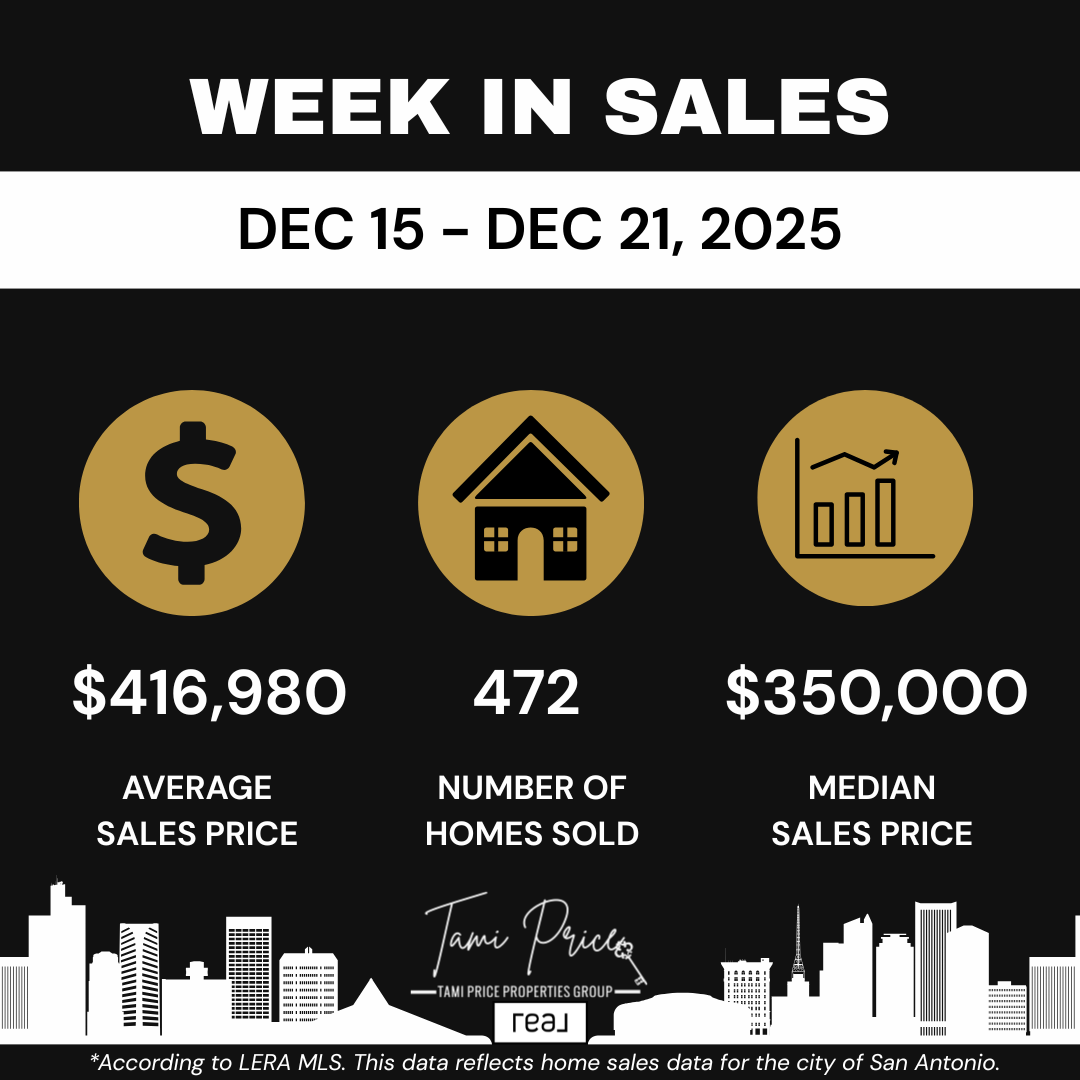
December 15-21, 2025: Transaction volume increased to 472 homes sold. Average sales price adjusted to $416,980 while median sales price rose to $350,000. The higher median alongside lower average suggests strong mid-range activity with successful closings in that segment.
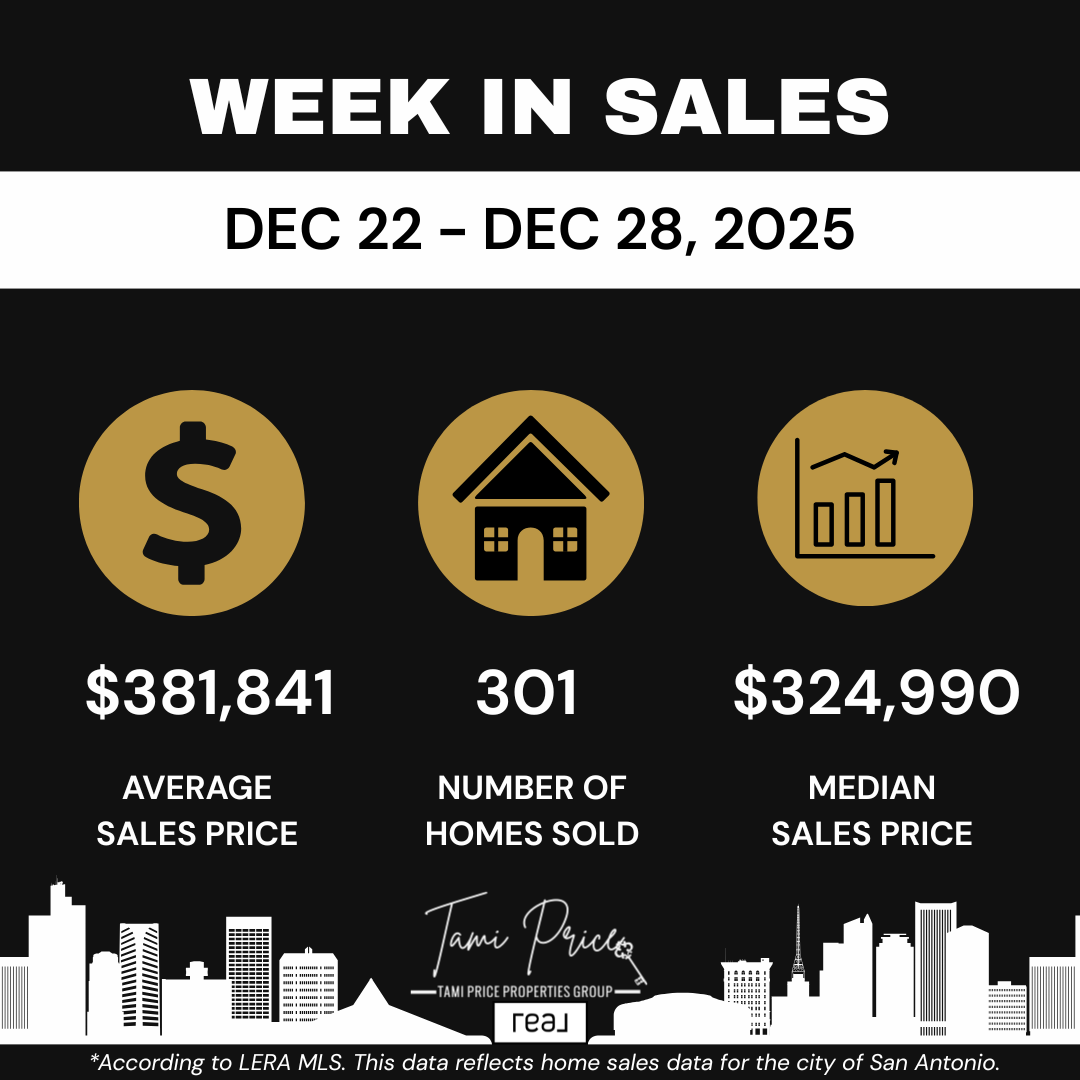
December 22-28, 2025: Holiday week showed expected slowdown with 301 closed sales. Average sales price declined to $381,841 while median held steady at $324,990, indicating price stability despite reduced volume.
Weekly data summary:
- Week 1: 391 sales, $432,875 average, $325,000 median
- Week 2: 472 sales, $416,980 average, $350,000 median
- Week 3: 301 sales, $381,841 average, $324,990 median
- Volume following seasonal holiday patterns
- Median pricing remaining relatively stable
Q: What explains the difference between average and median price movements?
A: Average prices reflect total sales value divided by transaction count, making them sensitive to high-end or low-end sales mix. Median prices represent the middle transaction, providing more stable indication of typical market activity. When average declines while median holds steady, it often indicates fewer luxury sales rather than broad price deterioration.
How Should Buyers Interpret December Market Conditions?
Understanding what seasonal patterns mean for purchase strategy helps buyers evaluate whether current conditions create opportunity. December dynamics differ from peak market periods in ways affecting buyer positioning.
Lower transaction volume during holiday periods often correlates with reduced competition. Fewer active buyers means less likelihood of multiple offer situations that can drive prices above asking and limit negotiating flexibility. Buyers active during seasonal slowdowns may find more room for negotiation.
The stable median pricing across December weeks suggests sellers maintained realistic expectations rather than aggressive positioning. Properties priced appropriately continued selling even during holiday slowdowns, indicating market functionality rather than distress.
Buyer considerations from December data:
- Reduced competition from lower buyer activity
- Negotiating opportunity from seasonal dynamics
- Stable pricing indicating realistic seller expectations
- Available inventory without peak-season pressure
- Strategic timing opportunity for serious buyers
Q: Should buyers wait for spring or act during slower periods?
A: Both approaches have merit depending on circumstances. Slower periods often provide negotiating leverage and reduced competition but may offer less inventory selection. Spring typically brings more listings but also more competing buyers. Evaluate your priorities regarding selection versus negotiation leverage when timing purchase activity.
How Should Sellers Interpret December Market Conditions?
Understanding what seasonal patterns mean for selling strategy helps homeowners evaluate timing and positioning. December data provides context for both current sellers and those planning 2026 market entry.
The increase in median sales price during mid-December indicates that well-positioned properties continued attracting buyers and closing successfully. Properties aligned with market expectations found buyers even during holiday periods when overall activity declined.
However, the late December volume decline underscores buyer selectivity during holiday weeks. Properties requiring aggressive pricing or lacking competitive positioning were more likely to wait for renewed activity. Sellers evaluating timing should consider whether their properties can compete effectively during slower periods.
Seller considerations from December data:
- Well-positioned properties continuing to sell
- Buyer selectivity increasing during slowdowns
- Pricing alignment essential for holiday-period success
- Preparation opportunity for early 2026 market entry
- Strategic positioning mattering more during slower periods
Q: Should sellers list during holidays or wait for spring?
A: Listing timing depends on property characteristics and personal circumstances. Well-prepared, competitively priced properties can succeed during any season. However, sellers with flexibility may benefit from spring's increased buyer activity. Those needing to sell during slower periods should ensure exceptional positioning to compete for reduced buyer attention.
What Does Stable Median Pricing Indicate About Market Health?
Understanding what pricing stability signals helps both buyers and sellers evaluate broader market conditions. The December data shows patterns worth considering for housing decisions.
Median pricing holding relatively steady across weeks despite volume fluctuations suggests underlying market stability rather than distress. Prices did not collapse during holiday slowdowns, indicating that fundamental demand supports current value levels even when transaction activity decreases.
This stability provides confidence for both audiences. Buyers can evaluate purchases knowing prices reflect genuine market equilibrium rather than artificial inflation or panic discounting. Sellers can plan listings knowing that appropriately priced properties find buyers across seasonal variations.
Pricing stability indicators:
- Median holding steady despite volume changes
- No distress pricing during slowdowns
- Fundamental demand supporting values
- Market equilibrium rather than volatility
- Confidence foundation for buyer and seller decisions
Q: Does stable pricing mean the market favors buyers or sellers?
A: Stable pricing typically indicates balanced conditions rather than strong advantage for either side. Balanced markets require both buyers and sellers to approach transactions realistically. Neither audience should expect dramatic leverage from current conditions, but both can transact with confidence in market functionality.
How Do Seasonal Patterns Affect Buyer Strategy?
Understanding how seasonal dynamics create opportunities helps buyers develop effective approaches. December patterns illustrate principles applicable across calendar cycles.
Seasonal slowdowns often create negotiating opportunities unavailable during peak periods. Sellers with holiday-period listings may have motivation creating flexibility. Reduced competing buyer activity means offers receive more attention and negotiation becomes more feasible.
Buyers willing to search during slower periods may find properties that would generate multiple offers during spring. The same property attracting three competing buyers in April might receive single offers in December, fundamentally changing negotiating dynamics.
Seasonal strategy for buyers:
- Slowdowns creating negotiating opportunity
- Seller motivation potentially increased during holidays
- Reduced competition from fewer active buyers
- Properties available without peak-period pressure
- Strategic advantage from counter-cyclical activity
Q: What are the tradeoffs of buying during slower periods?
A: Slower periods typically offer negotiating leverage and reduced competition but may provide smaller inventory selection as some sellers wait for spring. Weather and holiday schedules can complicate showing logistics. Evaluate whether negotiating advantages outweigh potential inventory limitations for your specific search criteria.
How Do Seasonal Patterns Affect Seller Strategy?
Understanding how seasonal dynamics affect marketing helps sellers develop effective approaches. December patterns provide lessons applicable to timing and positioning decisions.
Holiday-period sales data confirms that well-prepared properties find buyers regardless of season. The mid-December median price increase demonstrates that strong properties in desirable ranges continued attracting competitive activity. Preparation and positioning matter more than timing alone.
Sellers planning early 2026 market entry can use December data strategically. Understanding buyer behavior during slowdowns helps calibrate pricing and positioning for renewed activity. Properties entering spring markets with strong preparation capitalize on increased buyer attention.
Seasonal strategy for sellers:
- Preparation mattering more than timing alone
- Well-positioned properties succeeding across seasons
- Holiday data informing spring positioning
- Buyer behavior patterns guiding strategy
- Early 2026 preparation opportunity from current data
Q: How should sellers prepare for early 2026 market entry?
A: Use slower periods for property preparation including repairs, updates, staging decisions, and marketing planning. Research comparable sales to understand competitive positioning. Develop pricing strategy based on current data rather than assumptions. Enter spring markets with professional preparation that capitalizes on increased buyer activity.
What Questions Should Buyers Ask When Evaluating Current Conditions?
Buyers benefit from asking specific questions revealing how market conditions affect their purchase approach. Systematic evaluation helps develop effective strategy.
Assess how current competition levels affect your search. December's reduced activity may provide opportunities in your target areas and price ranges. Evaluate whether properties you are considering would attract multiple offers during peak periods.
Consider your timeline flexibility and how it affects strategy. Buyers with flexibility can time activity strategically. Those with fixed timelines must adapt strategy to conditions regardless of seasonal positioning.
Buyer evaluation questions:
- How does current competition affect my search?
- Would target properties attract multiple offers in spring?
- What timeline flexibility do I have?
- How should I calibrate offer strategy for current conditions?
- What negotiating leverage might current conditions provide?
Q: How can buyers assess competition levels in specific areas?
A: Monitor days on market for listings in your target areas. Review recent sales to understand offer-to-close timelines. Ask representation about current showing activity and offer situations. Compare listing absorption rates across different periods. Work with experienced representation who can provide real-time market intelligence.
What Questions Should Sellers Ask When Evaluating Current Conditions?
Sellers benefit from asking specific questions revealing how market conditions affect their strategy. Systematic evaluation helps develop effective positioning.
Assess how your property compares to recent December sales. Understanding where your home fits within current market activity helps establish realistic pricing and timeline expectations. Properties similar to those selling during slowdowns may succeed; those requiring peak-period demand may benefit from waiting.
Consider your timeline requirements and how they affect strategy options. Sellers with flexibility can optimize timing. Those needing to sell during specific periods must position properties competitively for current conditions.
Seller evaluation questions:
- How does my property compare to recent December sales?
- What buyer profiles are active in my price range?
- What timeline flexibility do I have?
- How should I position pricing for current conditions?
- What preparation would enhance competitive positioning?
Q: How can sellers assess whether to list now or wait?
A: Compare your property to those successfully selling during current conditions. Evaluate whether your home competes effectively for current buyer attention or benefits from increased spring activity. Consider personal circumstances including timeline requirements, carrying costs, and flexibility. Professional market analysis helps evaluate timing tradeoffs.
What Does This Data Mean for Different Buyer and Seller Profiles?
Different profiles should interpret market data according to their specific circumstances. Understanding how conditions affect various situations helps develop appropriate strategies.
First-time buyers may find December conditions advantageous due to reduced competition and potential negotiating leverage. Less pressure allows thorough evaluation and deliberate decision-making.
Move-up buyers balancing sale and purchase may find seasonal patterns helpful for coordinating timing. Selling in one season while purchasing in another can create strategic advantages.
Sellers with timeline flexibility can use December data to prepare for optimized spring market entry. Understanding current buyer behavior informs positioning strategy.
Sellers needing immediate sales should focus on competitive positioning to attract available buyers. Exceptional preparation and realistic pricing become essential during slower periods.
Profile considerations:
- First-time buyers benefiting from reduced competition
- Move-up buyers coordinating seasonal timing
- Flexible sellers preparing for spring optimization
- Immediate sellers focusing on competitive positioning
- Different strategies for different circumstances
Q: How should military families interpret seasonal market data?
A: Military families often face timeline constraints from PCS orders that limit seasonal flexibility. Understanding market conditions helps calibrate expectations and strategy within required timelines. Work with representation experienced in military relocation who can navigate transactions efficiently regardless of seasonal positioning.
What Does December Data Suggest About 2026 Market Direction?
While December data provides current snapshot rather than prediction, patterns offer context for evaluating near-term conditions. Both buyers and sellers benefit from understanding what recent trends may suggest.
Stable pricing during seasonal slowdown suggests underlying market equilibrium rather than building pressure in either direction. Neither significant appreciation nor depreciation characterized late 2025 activity, indicating balanced conditions likely continuing into early 2026.
Transaction volume followed expected seasonal patterns without unusual deviation. Normal seasonal behavior suggests market functioning predictably, providing foundation for strategic planning based on typical annual cycles.
2026 context from December data:
- Stable pricing suggesting market equilibrium
- Normal seasonal patterns indicating market functionality
- Balanced conditions likely continuing near-term
- Typical annual cycles providing planning foundation
- No unusual signals requiring strategy adjustment
Q: Should buyers or sellers expect significant market changes in early 2026?
A: December data does not suggest imminent significant changes. Markets typically see increased activity in spring following holiday slowdowns. Both buyers and sellers should plan for relatively stable conditions while remaining attentive to broader economic factors that could affect housing markets. Base decisions on current conditions while monitoring developments.
How Does Local Market Knowledge Affect Housing Decisions?
Understanding San Antonio-specific dynamics helps both buyers and sellers develop effective strategies. General market trends provide context, but local knowledge enables precise decision-making.
San Antonio's diverse submarkets behave differently across seasonal cycles. Some neighborhoods maintain consistent activity while others show more pronounced seasonal variation. Understanding specific area dynamics helps calibrate expectations and strategy.
Local transaction experience provides pattern recognition unavailable from statistics alone. Understanding how buyers and sellers behave in specific situations, what motivates decisions, and how negotiations typically proceed requires market immersion beyond data analysis.
Local knowledge advantages:
- Submarket variation requiring specific understanding
- Neighborhood-level dynamics differing from citywide trends
- Transaction pattern recognition from experience
- Negotiation insight from local practice
- Strategy calibration from market immersion
Q: How does working with experienced local representation help?
A: Experienced local representation provides context that statistics cannot capture. Understanding how specific neighborhoods behave, what buyer profiles seek particular areas, and how transactions typically proceed helps develop effective strategies. Market data informs decisions, but local expertise translates data into actionable strategy.
Expert Insight from Tami Price
"December market data illustrates why understanding seasonal patterns matters for both buyers and sellers," says Tami Price, REALTOR® and Broker Associate with Real Broker, LLC. "The stable median pricing alongside expected volume fluctuations shows a market functioning normally through its seasonal cycle. Both audiences can factor these patterns into strategy without concern about underlying instability."
Price brings nearly two decades of experience and approximately 1,000 closed transactions to her work with buyers and sellers throughout San Antonio, Schertz, Cibolo, Helotes, Converse, and Boerne. Her understanding of how market data connects to practical strategy helps clients on both sides of transactions make informed decisions.
"Buyers entering the market during slower seasonal periods often gain leverage that simply is not available during peak spring and summer cycles," Price explains. "Reduced competition and potentially motivated sellers create opportunities for those willing to search during holiday periods. The December data confirms that buyers remained active and found success even during slowdowns."
Her recognition as a RealTrends Verified Top Agent and 14-time Five Star Professional Award Winner with more than 650 five-star reviews and recommendations reflects consistent client satisfaction serving buyers and sellers navigating San Antonio market conditions.
"For sellers, the data confirms that preparation and positioning matter more than timing alone," Price notes. "Well-prepared, competitively priced properties continued selling throughout December. Those planning early 2026 market entry can use this information to develop pricing strategy and positioning that capitalizes on increased spring activity."
Three Key Takeaways
1. December 2025 San Antonio Market Data Shows Stable Pricing Despite Expected Seasonal Volume Fluctuations, Indicating Market Equilibrium
Median pricing remained relatively steady across three consecutive weeks while transaction volume followed expected holiday patterns. For buyers evaluating homes for sale in San Antonio, this stability suggests confident purchasing environment. For those selling a home in San Antonio, it confirms that appropriately positioned properties find buyers across seasonal variations.
2. Seasonal Slowdowns Create Different Opportunities for Buyers and Sellers That Strategic Timing Can Leverage
Reduced buyer activity during holiday periods often provides negotiating leverage and less competition for purchasers. Sellers benefit from understanding that well-prepared properties succeed regardless of season while those requiring peak-period demand may benefit from spring timing. Both audiences can develop strategy based on seasonal patterns.
3. Market Data Informs Strategy, But Local Knowledge and Professional Guidance Translate Information Into Effective Action
Statistics provide context, but San Antonio's diverse submarkets require specific understanding for precise decision-making. Working with experienced representation like Tami Price, recognized as one of the best real estate agents in San Antonio, helps both buyers and sellers interpret data within local context and develop strategies aligned with individual circumstances.
Frequently Asked Questions
Q: What were San Antonio home prices in December 2025?
A: December 2025 median sales prices ranged from $324,990 to $350,000 across the three weeks measured. Average prices ranged from $381,841 to $432,875, reflecting varying sales mix across weeks.
Q: How many homes sold in San Antonio in late December 2025?
A: Weekly sales ranged from 301 to 472 homes across the three measured weeks, with volume declining during the final holiday week as expected from seasonal patterns.
Q: Is December a good time to buy in San Antonio?
A: December can offer advantages including reduced competition and potential negotiating leverage. However, inventory selection may be smaller than spring periods. Evaluate whether negotiating advantages outweigh potential inventory limitations for your specific situation.
Q: Is December a good time to sell in San Antonio?
A: Well-prepared, competitively priced properties continued selling in December 2025. Sellers with flexibility may benefit from spring's increased activity, while those needing immediate sales should focus on exceptional positioning for current conditions.
Q: What does stable pricing indicate about market direction?
A: Stable pricing during seasonal slowdown suggests market equilibrium rather than pressure in either direction. Balanced conditions likely continue into early 2026 based on December patterns.
Q: Does Tami Price help interpret market data for clients?
A: Yes. Tami Price provides market analysis helping both buyers and sellers understand how data affects their specific situations. Professional interpretation translates statistics into actionable strategy.
Q: How do I start working with Tami Price?
A: Book a consultation to discuss your situation, whether buying or selling. Understanding your circumstances enables personalized guidance through the home buying process or selling strategy development.
Q: Where can I search current San Antonio listings?
A: Search current homes for sale in San Antonio through TamiPrice.com, with options to filter by location, price, and property characteristics.
The Bottom Line
December 2025 San Antonio housing market data shows seasonal patterns functioning normally with stable underlying pricing. Transaction volume followed expected holiday decline while median prices remained relatively steady, indicating market equilibrium rather than volatility or distress.
Both buyers and sellers can factor seasonal patterns into strategy development. Buyers may find negotiating opportunities during slower periods when competition decreases. Sellers should focus on preparation and positioning, understanding that well-prepared properties succeed across seasons while optimal timing can enhance results for those with flexibility.
Market data provides foundation for informed decisions, but local knowledge translates statistics into effective strategy. Understanding how San Antonio's diverse submarkets behave and how seasonal patterns affect specific situations requires experience that complements data analysis.

Contact Tami Price, REALTOR®
Whether evaluating current market conditions for purchase timing, planning 2026 listing strategy, or seeking to understand how San Antonio market trends affect your specific situation, working with an experienced REALTOR® provides guidance translating data into action. Tami Price brings local market knowledge and professional expertise to help clients make informed housing decisions.
From buyers seeking negotiating leverage to sellers positioning for market entry, personalized service makes the difference in successful transactions.
Tami Price, REALTOR®, Broker Associate
📞 210-620-6681
Tami Price's Specialties
- Comprehensive Buyer and Seller Representation
- Military Relocations and PCS Moves
- VA Loan Guidance and Assumptions
- New Construction Navigation
- Strategic Pricing and Market Analysis
- Professional Property Marketing
- First-Time Buyer Education
- Move-Up and Downsizing Transitions
- Residential Real Estate Throughout San Antonio, Schertz, Cibolo, Helotes, Converse, and Boerne
Disclaimer
This blog post is provided for informational purposes only and should not be construed as guarantees regarding property values, market conditions, or transaction outcomes. Market data reflects LERA MLS information for specific periods noted and is subject to revision. Past market performance does not predict future results. Real estate markets are influenced by numerous factors including economic conditions, interest rates, inventory levels, and buyer behavior that can change rapidly. Real estate decisions should be based on individual circumstances, professional guidance, and current market conditions. Tami Price, REALTOR®, and Real Broker, LLC make no warranties regarding accuracy, completeness, or applicability of information to specific circumstances.
Categories
- All Blogs (644)
- Home Buying (21)
- Neighborhood Guides (41)
- 10 Incentive and Rate Buydown Questions (1)
- 10 Military Neighborhood (1)
- 10 Mistakes Sellers Make (1)
- 10 Strategies to Coordinate a Same Day Close (1)
- 12 Lifestyle Questions to Move In (1)
- 12 PCS What Ifs (1)
- 12 Photos and Marketing Assets (1)
- 13 PCS Hunting Trip Tips (1)
- 14 Design Center Decisions (1)
- 15 Red Flags Touring Home in San Antonio (1)
- 2026 Market (1)
- 30 days after closing your home (1)
- 7 Offer Terms Beyond Price (1)
- 7 VA Specific Questions (1)
- 78015 Ranked One (1)
- 8 Bridge (1)
- 8 Myths Buyers Believe about Down Payments (1)
- 8 Reasons VA Buyers Love New Construction (1)
- 9 Mistakes Move Up Buyers Make (1)
- 9 Questions to Decide If You Keep Your PCS Home (1)
- 9 Timeline Questions Every Buyer Need to Ask (1)
- 9 Warranty Questions to Ask (1)
- 9 Ways to Attract VA & Military Buyers (1)
- 90 days before your move (1)
- About Tami Price (6)
- Active Adult Homes (1)
- Affordable Communities (2)
- Affordable Homes (1)
- Affordable Housing & Community Development (3)
- Agent Qualifications and Credentials (1)
- Agent Qualifications and Experience (1)
- Agent Recognition (3)
- Agent Selection (1)
- AI and Real Estate Tools (1)
- Alamo Heights (4)
- Alamo Heights ISD (1)
- Alamo Ranch (2)
- Amenities in Helotes, Texas (3)
- Appraisals (1)
- Arts and Culture (1)
- Awards and Recognition (7)
- Balcones Creek (1)
- Best Neighborhoods to Live in Cibolo, TX (3)
- Best Neighborhoods to Live in San Antonio (15)
- Best Places to Live in Northeast Inner Loop: A Neighborhood Guide (1)
- Bexar County Property Tax (1)
- Bexar County Real Estate (3)
- Blue Tape Walkthrough (1)
- Boerne Home Sellers (1)
- Boerne Texas (4)
- Builder Contracts & Warranties (3)
- Builder Incentives (1)
- Builder Warranties (1)
- Buyer (64)
- Buyer Activity San Antonio (1)
- Buyer and Seller Guidance (3)
- Buyer Due Diligence (1)
- Buyer Education (45)
- Buyer Guide (9)
- Buyer Guides (7)
- Buyer Protection Strategies (1)
- Buyer Representation (1)
- Buyer Representation Expertise (1)
- Buyer Resources (91)
- Buyer Strategy (2)
- Buyers (13)
- Buyers Agent (1)
- Buying a Foreclosed Home in San Antonio (10)
- Buying a Home (4)
- Buying a Home in San Antonio (6)
- Buying Near JBSA (1)
- Buying Timeline (1)
- Buying vs Renting (1)
- Castroville, TX (8)
- Central Texas Growth (1)
- Choosing a Real Estate Agent (1)
- Choosing an Agent (1)
- Cibolo Communities (1)
- Cibolo Home Sellers (1)
- Cibolo TX (12)
- Client Reviews and Testimonials (1)
- Client Satisfaction (1)
- Client Stories (1)
- Client Testimonial (4)
- Clients review (4)
- Closing (1)
- Cobblestone (1)
- Comal County (1)
- Commercial & Retail Development (2)
- Commercial Development (1)
- Community (1)
- Community Development (2)
- Community Development and Real Estate (1)
- Community Guides (1)
- Community Investment Impact (1)
- Community Spotlights (1)
- Commuter Neighborhoods (1)
- Cons of Living in Helotes, TX (4)
- Conservation Communities (1)
- Contingency Questions (1)
- Converse Home Sellers (1)
- Converse Homes For Sale (3)
- Converse Real Estate (1)
- Converse TX (10)
- Cost of Living Guides (1)
- Cost of Living in San Antonio TX (23)
- Custom Homes (5)
- Davis Ranch (1)
- Days on Market (1)
- Down Payment Assistance (1)
- Downtown Revitalization (1)
- Downtown San Antonio (2)
- Dual Military (1)
- East Side Living (1)
- Economic Development (1)
- Education, Texas Hill Country (1)
- Emerald Pointe (1)
- Employment (1)
- Employment Corridors (1)
- Encino Forest (1)
- Equity and Pricing Strategy (2)
- Equity Q&A (1)
- Established Communities (3)
- Events in San Antonio (34)
- Expert Advice from Tami Price, Realtor® (7)
- Fair Oak Ranch (1)
- Family Homes (3)
- FAQ (1)
- Far Northwest San Antonio (1)
- Far West San Antonio (1)
- Farmer Markets in San Antonio (1)
- Fastest Growing Zip Codes in America (1)
- Featured Homes for Sale (2)
- Featured Properties (1)
- Final Walkthrough (1)
- Financial Planning (11)
- Financing Strategy (1)
- First Time Buyers (23)
- First Time Sellers (1)
- First-Time Buyers (6)
- First-Time Homebuyer Resources (4)
- First-Time Homebuyer Tips (2)
- First-Time Homebuyers (6)
- First-Time Investors (1)
- Fort Sam Houston (3)
- Fort Sam Houston Real Estate (1)
- Fort Sam Houston, TX (2)
- Fox Grove (1)
- FSBO vs Agent Representation (1)
- Future Rental (1)
- Gated Communities (5)
- Golf Communities (1)
- Great Northwest (1)
- Greater San Antonio Housing Trends (2)
- Greater San Antonio Real Estate (5)
- Growth and Development (11)
- HELOC (1)
- Helotes Home Sellers (1)
- Hill Country (1)
- Hill Country Communities (2)
- Hill Country Development (1)
- Hill Country Homes for Sale (1)
- Hill Country Real Estate (2)
- Hill Country Retreat (1)
- Historic Districts (5)
- Historic Neighborhoods (4)
- Holiday Guide (1)
- Home Buyers (1)
- Home Buying (7)
- Home Buying Education (3)
- Home Buying Guide (7)
- Home Buying Process (8)
- Home Buying Strategy (2)
- Home Buying Tips (5)
- Home Energy Efficiency San Antonio (5)
- Home Financing (3)
- Home Improvement ROI (1)
- Home Inspections (3)
- Home Maintenance (1)
- Home Preparation (2)
- Home Pricing Strategy (14)
- Home Renovation for Resale (1)
- Home Sellers (1)
- Home Selling (12)
- Home Selling Guide (12)
- Home Selling Strategies (3)
- Home Selling Strategy (3)
- Home Selling Tips (23)
- Home Staging and Updates (2)
- Home Values (2)
- Homebuyer Education (15)
- Homebuyer Resources (1)
- Homebuying Guide (1)
- Homebuying Tips (3)
- Homeowner (32)
- Homeowner Tax Benefits (1)
- Homeownership Costs (1)
- Homes for Sale (2)
- Homes for sale near Lackland AFB (2)
- Homestead amenities (1)
- Horizon Pointe (1)
- House Hunting Guide (1)
- Housing Development (1)
- Housing Market Updates (3)
- How to Buy a House in San Antonio TX (43)
- Hunters Ranch (1)
- Hybrid (1)
- In Person (1)
- Incorporated Cities (6)
- Industry News (2)
- Industry Recognition (1)
- Infrastructure & Growth Projects (2)
- Interest Rates (2)
- Invest in San Antonio (32)
- Investment Opportunities (1)
- Investment Property San Antonio (3)
- JBSA (8)
- JBSA Housing (11)
- JBSA Real Estate (2)
- JBSA Resources (7)
- Joint Base San Antonio (4)
- Joint Base San Antonio Housing (1)
- Judson ISD (2)
- Lackland AFB (5)
- Lackland AFB Housing (1)
- Land Use Planning (1)
- Lera MLS (15)
- Lifestyle & Community Growth (2)
- Lifestyle & Local Growth (1)
- Lifestyle Communities (1)
- Listing Preparation (1)
- Listing Strategy (1)
- Live Oak (1)
- Living in San Antonio, TX (44)
- Living Near Randolph AFB (5)
- Loan Programs (1)
- Local Development News (2)
- Local Market Insights (4)
- Local News Around San Antonio (1)
- Luxury Communities (3)
- Luxury Homes (4)
- Luxury Real Estate (2)
- MacArthur Park (1)
- Making Offers on Homes (1)
- Market Analysis (24)
- Market Conditions (47)
- Market Expertise (1)
- Market Insights (5)
- Market Strategy (2)
- Market Timing (2)
- Market Trends (6)
- Market Trends & Insights (2)
- Market Update (17)
- Market Update 2026 (1)
- Market Updates (17)
- Master Planned Communities (12)
- Medical Center Area Real Estate (1)
- Medina Valley ISD (2)
- Midtown Living (1)
- Military & Economic Impact (3)
- Military Buyers (3)
- Military Communities (1)
- Military Families (1)
- Military Family Resources (1)
- Military Homebuying (3)
- Military Homeownership (1)
- Military Housing (2)
- Military Housing Market in Texas (14)
- Military Life in San Antonio (2)
- Military Neighborhoods (1)
- Military PCS Relocations (3)
- Military Real Estate (2)
- Military Relocation (100)
- Military Relocation & VA Loans (10)
- Military Relocation San Antonio (4)
- Military Relocation Services (3)
- Military Relocation to San Antonio (46)
- Military Relocations (18)
- Military Relocations & VA Home Loans (5)
- MLS Accuracy & Data Transparency (1)
- Mortgage Programs (1)
- Mothers Day in San Antonio (1)
- Move to Boerne TX (15)
- Move to Castroville TX (9)
- Move to Converse TX (14)
- Move to New Braunfels (1)
- Move to North San Antonio (16)
- Move to San Antonio TX (64)
- Move to Selma TX (17)
- Move to Shertz TX (10)
- Move to Texas (45)
- Move Up Buyer Resources (1)
- Move Up Buyers (24)
- Move-In Ready Homes (3)
- Move-In Ready Homes San Antonio (2)
- Move-Up Buyers (2)
- Moving to Helotes, TX (14)
- Moving to San Antonio (61)
- MUD Taxes (1)
- Natalia Homes For Sale (1)
- Near East Side Living (1)
- Negotiation Strategy (2)
- Neighborhood Amenities (1)
- Neighborhood Guides (7)
- Neighborhood Spotlights (3)
- Neighborhoods near Randolph AFB (9)
- New Braunfels (4)
- New Braunfels Homes For Sale (1)
- New Braunfels News (2)
- New Braunfels Real Estate (2)
- New Construction (63)
- New Construction Communities (1)
- New Construction Homes (12)
- New Construction Homes San Antonio (5)
- New Construction vs Resale (2)
- New Construction Without Customization (1)
- New Construction Without the Wait (1)
- New Contruction Cost (1)
- New Listing (13)
- News (21)
- News & updates (23)
- No City Tax (1)
- No HOA Homes (1)
- North Central San Antonio (5)
- North East ISD (4)
- North San Antonio (7)
- North Side Neighborhoods (1)
- North Side San Antonio Development (1)
- Northeast Inner Loop (1)
- Northeast Inner Loop Neighborhoods (1)
- Northeast San Antonio (1)
- Northside ISD (5)
- Northwest San Antonio (6)
- Northwest San Antonio Real Estate (2)
- Northwood (1)
- Olympia Hills (1)
- One-Story Homes (1)
- Outdoor Living (1)
- PCS and JBSA (2)
- PCS checklist (1)
- PCS Guide (4)
- PCS Moves (12)
- PCS Moves to Joint Base San Antonio (4)
- PCS Planning (16)
- PCS Randolph AFB (15)
- PCS Relocation (1)
- PCS Resources (6)
- PCS San Antonio (42)
- PCS to San Antonio (38)
- PID Assessments (1)
- Pinon Creek (1)
- Pipe Creek (1)
- Places to Eat Near Randolph AFB (1)
- Pool Homes (1)
- Pre Approval (1)
- Pre-Listing Preparation (2)
- Pre-Listing Process (1)
- Prescott Oaks (1)
- Preserve at Medina (1)
- Pricing and Marketing Strategy (3)
- Professional Awards and Achievements (2)
- Professional Real Estate Representation (1)
- Property Tax Exemptions Texas (1)
- pros and cons living in Converse TX (3)
- Pros and Cons Living in Selma TX (6)
- Pros and Cons of Living in Castroville, TX (4)
- Pros and Cons of Living in San Antonio (30)
- PT500 List (1)
- Purchase Negotiation (1)
- Quick Close Real Estate (1)
- Randolph AFB Neighborhoods (2)
- Real Estate (1)
- Real Estate Advice (1)
- Real Estate Agent Recognition (6)
- Real Estate Agent Selection (2)
- Real Estate Agent Value (1)
- Real Estate Consultation (1)
- Real Estate Finance (1)
- Real Estate Financing (1)
- Real Estate Impact (1)
- Real Estate Investment San Antonio (1)
- Real Estate Market Trends (3)
- Real Estate Professional Designations (1)
- Real Estate Strategy (1)
- Real Estate Technology & Trends (1)
- Real Estate Tips (1)
- Real Estate Tips and Guides (2)
- Real Estate Trends (2)
- RealTrends Verified (1)
- Relocating to San Antonio (2)
- Relocation (4)
- Relocation Resources (2)
- Relocation to San Antonio (49)
- Remote Homebuying (1)
- Rental Housing (1)
- Rental Property (1)
- Rental Strategy (1)
- Resale Properties (1)
- Retail Development (1)
- Retire in Boerne TX (10)
- Retire in San Antonio (31)
- Retirement Communities (1)
- Reviews and Recognition (1)
- Rockwall Ranch (1)
- Rural Living (2)
- Ryland Homes (1)
- SABOR (27)
- San Antonio Buyer Resources (2)
- San Antonio Communities (3)
- San Antonio Community Events (1)
- San Antonio Growth (1)
- San Antonio Home Buying and Selling (2)
- San Antonio Home Buying Guide (5)
- San Antonio Home Improvement (1)
- San antonio home prices (3)
- San Antonio Home Sellers (3)
- San Antonio Homeowner Guide (1)
- San Antonio Homes for Sale (13)
- San Antonio Housing Market (2)
- San Antonio Housing Market & Mortgage Financing (1)
- San Antonio Housing Market Analysis (1)
- San Antonio Housing Trends & Market Analysis (3)
- San Antonio Lifestyle Amenities (1)
- San Antonio Listing (1)
- San Antonio Living (1)
- San Antonio Market (3)
- San Antonio Market Updates (7)
- San Antonio Military Relocation (3)
- San Antonio Neighborhoods (48)
- San Antonio New Construction & Master-Planned Communities (2)
- San Antonio New Home Communities (1)
- San Antonio News (22)
- San Antonio Property Taxes (2)
- San Antonio Real Estate (164)
- San Antonio Real Estate Agents (6)
- San Antonio Real Estate Excellence (1)
- San Antonio Real Estate Guide (6)
- San Antonio Real Estate Market (32)
- San Antonio Real Estate Market Analysis (2)
- San Antonio REALTOR Awards (1)
- San Antonio Seller Resources (2)
- San Antonio Sellers (1)
- San Antonio Spec Homes (1)
- San Antonio Spurs Community Programs (1)
- San Antonio Urban Living (1)
- Scenic Loop (1)
- Schertz Home Sellers (1)
- Schertz Real Estate (1)
- Schertz, TX (11)
- School Information (1)
- SCUCISD Schools (1)
- Secured Quick Offer (1)
- Sell Home In San Antonio TX (50)
- Seller (50)
- Seller Education (24)
- Seller Guide (4)
- Seller Guides (1)
- Seller Representation Expertise (1)
- Seller Resources (69)
- Seller Should Understand (1)
- Seller Strategy (3)
- Seller Tips (2)
- Sellers (10)
- Selling A Home in San Antonio (49)
- Selling Your San Antonio Home (3)
- Selma TX (9)
- Single-Story Homes (4)
- Smart Homes (1)
- Solar Homes (3)
- Southtown (1)
- Spec Homes and Inventory Homes (2)
- Stone Oak (2)
- Suburban Housing Growth (2)
- Suburban Living (2)
- Talise De Culebra (1)
- Terrell Hills (2)
- Texas Acreage Properties (4)
- Texas Homestead Exemption (1)
- Things to do in San Antonio TX (16)
- Things to do Near Randolph AFB (3)
- Time Planning (1)
- Time-Sensitive Home Buying (1)
- Timing Strategy (1)
- Tips for Buying New Construction (9)
- Top Real Estate Agent in San Antonio (3)
- Transaction Coordination (1)
- Transportation Infrastructure (1)
- Two-Story Homes (2)
- Universal City (1)
- Updated Homes (2)
- Upscale Communities (1)
- Urban Communities (2)
- Urban Living (1)
- Urban Neighborhoods (4)
- VA Buyers (1)
- VA Home Loan Benefits (3)
- VA Loan Assumptions (3)
- VA loan benefits (27)
- VA Loan Guidance (1)
- VA Loan Home Buying Assistance (2)
- VA Loans (71)
- VA Loans and Military Benefits (3)
- VA Loans and Military Home Buying (3)
- VA Loans San Antonio (41)
- VET Benefits Living in San Antonio (3)
- Veterans Resources (3)
- Village Northwest (1)
- Virtual Buyers (1)
- Von Ormy Homes For Sale (1)
- week in sales (41)
- Weekly Sales Report (42)
- West San Antonio (2)
- West San Antonio Real Estate (1)
- Westover Hills Employment Corridor (1)
- Westover Valley (1)
- Windcrest Homes for Sale (1)
Recent Posts