San Antonio housing market update September 2026
What is happening in the San Antonio housing market in September 2026?
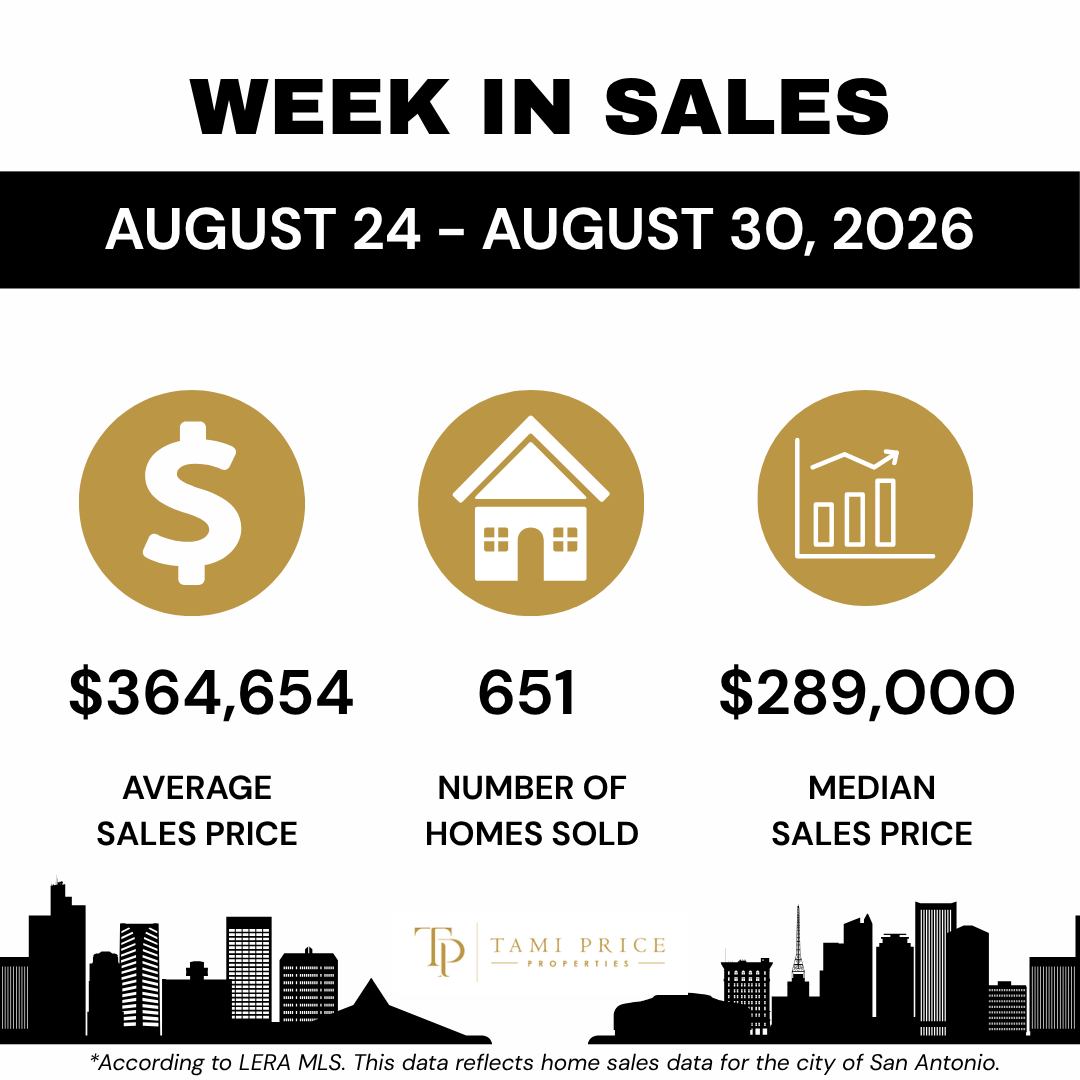
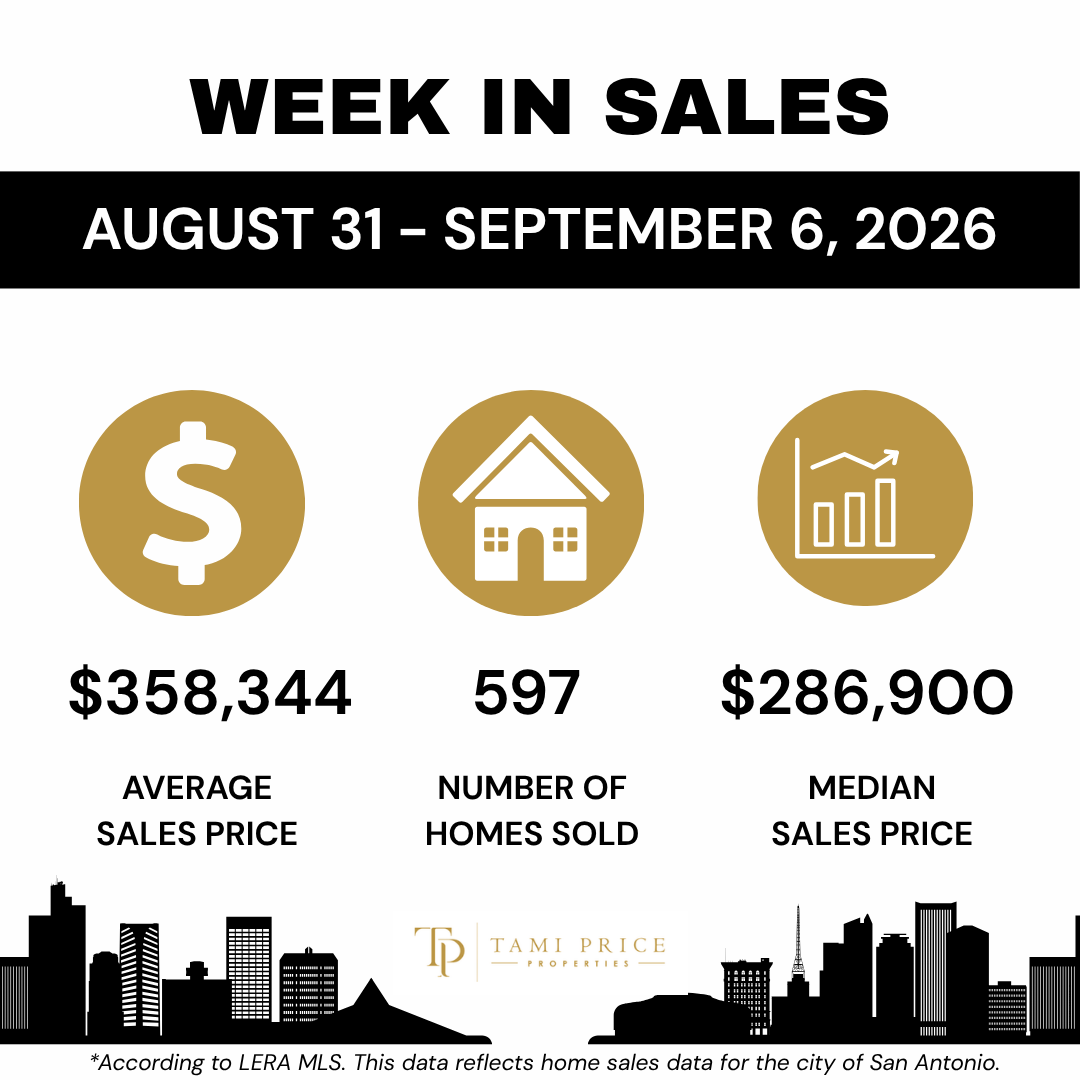
The San Antonio housing market opened September 2026 with fewer closed sales and modestly lower pricing. LERA MLS® data shows 597 homes sold in the City of San Antonio from August 31 through September 6, 2026, compared with 651 the previous week, a decrease of approximately 8.3 percent. The average sales price moved from $364,654 to $358,344, and the median moved from $289,000 to $286,900. Weekly figures reflect which homes happened to close, so they describe activity rather than the value of one property.
The San Antonio housing market entered September 2026 with fewer weekly closed sales and modestly lower pricing. LERA MLS® data shows 597 homes sold from August 31 through September 6, 2026, compared with 651 the prior week, while the average sales price moved from $364,654 to $358,344 and the median moved from $289,000 to $286,900. Those shifts matter for households buying and selling in San Antonio, Schertz, Cibolo, Helotes, Converse, Boerne, and New Braunfels, because pricing strategy and negotiating leverage depend on how one home compares with the alternatives a buyer sees today. Tami Price, Broker Owner of Tami Price Properties and a San Antonio real estate agent with two decades of experience, notes that a week of citywide data describes a city, not a property.
What Do the Latest San Antonio Weekly Home Sales Numbers Show?
Both weeks draw on LERA MLS® data for the City of San Antonio. All three measurements moved lower, though by different amounts.
- August 31 through September 6, 2026: 597 homes sold, average sales price $358,344, median sales price $286,900
- August 24 through August 30, 2026: 651 homes sold, average sales price $364,654, median sales price $289,000
- Closed sales decreased by 54 homes, or approximately 8.3 percent
- The average sales price decreased $6,310, or approximately 1.7 percent
- The median sales price decreased $2,100, or approximately 0.7 percent
The gap between the two price declines is the most useful detail here. The average fell more than twice as fast in percentage terms as the median, which points toward a change in the mix of homes that closed rather than a slide in values. Current inventory appears in the San Antonio home search.
Q: Does a drop of 54 closed sales in one week signal a slowdown?
A: Not by itself. Weekly volume moves with contract timing, financing schedules, and how many transactions funded that week. A trend requires several periods moving the same direction.
Are San Antonio Home Prices Falling Across the City?
These figures should not be read to mean that every San Antonio home lost value. Weekly statistics fluctuate with the number, location, size, condition, and price range of the homes that happen to close. A few higher priced closings in one week and a few lower priced closings in the next can move the citywide average without any individual home changing in value.
- A shift toward smaller or lower priced closings pulls the average down
- Neither shift proves that values changed for a specific property
- Condition, upgrades, lot position, and location still drive individual pricing
Why Does the Median Sales Price Matter When Weekly Numbers Move?
The median is the midpoint of the week's closed sales, so half of the homes sold above it and half below. It moved from $289,000 to $286,900, a difference of only $2,100, far less than many buyers and sellers assume when they hear that prices are down. Reading several weeks together produces a more reliable picture, which is why earlier weekly updates and analysis of a more balanced market work best as a series.
Q: Which number should a seller watch, the average or the median?
A: The median gives a steadier read on the middle of the market. Both remain citywide figures, so neither replaces a neighborhood specific comparative market analysis.
What Does the Current San Antonio Housing Market Mean for Buyers?
Current conditions call for a different strategy than the pandemic era market required. Buyers can often evaluate more choices before writing an offer, and depending on condition, days on market, and seller motivation, there may be room to negotiate. Price is not the only negotiable term, which is why the home buying process deserves early attention.
- Seller contributions toward closing costs change the cash required at closing
- Repair negotiations after inspections affect total cost
- Property taxes, insurance, and homeowners association dues vary by subdivision
- Anticipated maintenance on an older roof, water heater, or HVAC belongs in the budget
A home that looks less expensive on paper may carry higher ongoing costs, while one priced slightly higher can deliver better value. Guidance on making an offer and on inspections and appraisals helps buyers weigh the full picture.
What Should San Antonio Home Sellers Know Right Now?
The latest numbers reinforce the importance of competitive pricing. Buyers compare price, condition, square footage, upgrades, location, and days on market before scheduling a showing. Sellers therefore compete with every reasonable alternative inside a buyer's search criteria, not only the house next door. That reality shapes seller representation and pricing a San Antonio home.
- Recent closed sales in the immediate neighborhood outweigh citywide averages
- Pending sales signal what buyers are currently willing to accept
- New competing listings can change a home's position within days
- Price reductions among competitors reveal where buyer resistance is forming
Online views without showings usually reflect price. Showings without offers reflect condition, layout, or perceived value. Strong marketing creates visibility, and strategic pricing and what buyers want in 2026 set expectations.
How Does New Construction Affect Resale Pricing in San Antonio?
Resale sellers should account for new construction when evaluating competition. A buyer searching for an existing home often tours newly built homes in the same area and price range that weekend. Builders structure incentives differently than an individual homeowner can, so buyers compare more than the advertised price.
- Builder incentives may include rate buydown structures, closing cost help, or upgrades
- Warranty coverage on a new home differs from a resale seller's
- Resale homes counter with mature neighborhoods, established landscaping, and location
- Builder contracts are standardized and non-negotiable before signing, so pre-contract review is the only real protection
- Representation should be arranged before the first builder visit, under a buyer representation agreement that sets compensation terms
Buyers weighing both paths can review buying new construction in San Antonio and the costs buyers often overlook.
Q: Does builder competition mean a resale home cannot compete?
A: No. Resale homes often offer established neighborhoods, completed landscaping, and proximity advantages newer subdivisions cannot match yet. Pricing against those alternatives makes the difference.
Why Do Neighborhood and Price Range Matter More Than Citywide Numbers?
San Antonio is too large and varied for one citywide statistic to establish the value of an individual home. Conditions differ between subdivisions and again between price segments. One neighborhood may have several similar homes competing for a limited buyer pool, while another has almost none.
- A $250,000 home and a $500,000 home draw different buyer pools and financing profiles
- Days on market vary between adjacent subdivisions
- Sellers benefit from a comparative market analysis prepared by a local real estate agent
- Buyers benefit from comparable sales that test the asking price
Local comparisons appear on the San Antonio market page and suburban pages for Schertz, Cibolo, Boerne, and Converse, plus the neighborhoods and communities guide.
What Do These Numbers Mean for Military Families Relocating to JBSA?
Military households on orders work against a fixed calendar. A family with a report date cannot wait to see whether citywide averages keep drifting, so attention shifts to inventory within commuting range of the installation. Price ranges near Lackland AFB, Fort Sam Houston, Randolph AFB, and Camp Bullis differ from one corridor to the next.
- Softer conditions can create room to request seller paid closing costs
- VA loan buyers should confirm eligibility and entitlement early in the PCS timeline
- Commute time to the gate often matters more than a small price difference
- Service members selling during a PCS face the same pricing pressure other sellers do
Families managing a move can review military relocation services, the complete PCS guide, and VA homebuying in San Antonio in 2026. A JBSA relocation REALTOR® tracking weekly data alongside installation specific inventory helps a PCS household act quickly.
Q: Do citywide price shifts change VA loan strategy for a PCS buyer?
A: Not directly, although added inventory can improve the odds of negotiating seller paid closing costs. Entitlement, appraisal timing, and report dates still drive most PCS decisions.
What Does Tami Price Say About the September 2026 San Antonio Market?
Tami Price is the Broker Owner of Tami Price Properties, a U.S. Air Force veteran, and a San Antonio real estate agent with two decades of experience and approximately 1,000 career closed transactions. She holds the Military Relocation Professional designation, has been named multiple times as a Top 50 Real Estate Agent, and has earned over 650 five star reviews and recommendations across Google, Zillow, Realtor.com, FastExpert, and Real Satisfied.
The distinction matters most at the negotiating table. A buyer who believes citywide prices are falling may write an offer that a well priced listing in a low inventory neighborhood will not support. A seller who assumes the opposite may hold a price the current buyer pool has already passed over. Both outcomes cost time, and time on market carries its own price in reduced leverage.
Buyers and sellers also read the same data differently. Buyers see softer averages and expect flexibility, while sellers see recent sales on their street and expect strength. Both can be correct, because a citywide figure blends dozens of submarkets that are not behaving identically.
What Are the Three Key Takeaways for San Antonio Buyers and Sellers?
- The average fell faster than the median, and that gap is the story. The average sales price decreased approximately 1.7 percent while the median decreased approximately 0.7 percent. That spread points toward a change in which homes closed rather than a broad decline in values. Buyers and sellers who react to the average alone risk mispricing an offer or a listing.
- Competition is measured against every alternative a buyer can see. Buyers weigh price, condition, days on market, carrying costs, and builder incentives before scheduling a showing. Sellers compete with resale listings, new construction, and any home offering a similar monthly investment. Pricing accurately in the first two weeks preserves leverage that discounting later rarely recovers.
- Citywide statistics are a starting point, never a valuation tool. A $250,000 home does not compete against a $500,000 home simply because both sit inside city limits. Sellers need a neighborhood specific comparative market analysis, and buyers need comparable sales to test an asking price. Military households add commute and report date pressure.
Frequently Asked Questions About the San Antonio Housing Market
Q. How many homes sold in San Antonio during the week of August 31 through September 6, 2026?
A. LERA MLS® data shows 597 closed sales, compared with 651 the previous week, a decrease of 54 homes or approximately 8.3 percent.
Q. What was the median home price in San Antonio in early September 2026?
A. The median sales price was $286,900, compared with $289,000 the previous week, a decrease of approximately 0.7 percent.
Q. Are San Antonio home values declining?
A. Weekly citywide figures reflect the mix of homes that closed rather than a uniform change in values. Determining whether a particular home gained or lost value requires a comparative market analysis for that neighborhood.
Q. Is this a good market for buying a home in San Antonio?
A. Conditions generally give buyers more time to compare properties and, depending on the listing, room to negotiate. The better measure is whether a specific home represents good value based on condition, location, and comparable sales.
Q. How should a seller price a San Antonio home now?
A. Pricing should reflect recent closed sales nearby, pending activity, competing listings, and condition relative to those alternatives. Overpricing early costs more than it gains.
Q. What does this mean for a family with a PCS to San Antonio?
A. Households on orders should focus on inventory within a workable commute of Lackland AFB, Fort Sam Houston, Randolph AFB, or Camp Bullis rather than citywide averages. Softer conditions can support requests for seller paid closing costs.
The Bottom Line
The San Antonio housing market began September 2026 with 597 closed home sales, down approximately 8.3 percent from the previous week's 651 sales. The average sales price moved from $364,654 to $358,344, while the median decreased more modestly from $289,000 to $286,900. For buyers, those conditions may create opportunities to compare more homes and negotiate when circumstances support it. For sellers, the numbers reinforce the value of realistic pricing, strong condition, and a clear view of how a home competes against today's available choices. Neither side benefits from treating one week as a forecast.
Citywide statistics remain a starting point rather than a valuation tool, and the market for a specific home depends on its neighborhood, price range, condition, comparable sales, and competition. Buyers can begin with buyer representation services, and sellers preparing to list can start with a pre-listing consultation. Tami Price, a top real estate agent in San Antonio, provides neighborhood level analysis.
Contact Tami Price | San Antonio, TX
Tami Price is a San Antonio REALTOR® providing buyer and seller representation, military relocation support, and new construction guidance. Details appear on the About Tami Price page.
Tami PriceBroker-Owner Tami Price PropertiesU.S. Air Force Veteran | Military Relocation Professional
📞 210-620-6681
✉️ tami@tamiprice.com
What Are Tami Price's Specialties?
- Military Relocations and PCS Moves
- VA Loan Guidance
- Buyer and Seller Representation
- New Construction
- First Time Home Buyers
- Joint Base San Antonio, San Antonio, Schertz, Cibolo, Helotes, Converse, Boerne, and New Braunfels
Disclaimer
This blog is for informational purposes only and does not constitute legal, financial, or real estate advice. Market statistics come from LERA MLS® data for the City of San Antonio and reflect closed sales during the period noted. Market conditions change, and individual circumstances vary. Readers should consult qualified professionals before making real estate decisions. Military households should confirm VA eligibility and entitlement with their lender. Tami Price is licensed in Texas and is the Broker Owner of Tami Price Properties. Fair Housing principles apply.
Categories
- All Blogs (644)
- Home Buying (21)
- Neighborhood Guides (41)
- 10 Incentive and Rate Buydown Questions (1)
- 10 Military Neighborhood (1)
- 10 Mistakes Sellers Make (1)
- 10 Strategies to Coordinate a Same Day Close (1)
- 12 Lifestyle Questions to Move In (1)
- 12 PCS What Ifs (1)
- 12 Photos and Marketing Assets (1)
- 13 PCS Hunting Trip Tips (1)
- 14 Design Center Decisions (1)
- 15 Red Flags Touring Home in San Antonio (1)
- 2026 Market (1)
- 30 days after closing your home (1)
- 7 Offer Terms Beyond Price (1)
- 7 VA Specific Questions (1)
- 78015 Ranked One (1)
- 8 Bridge (1)
- 8 Myths Buyers Believe about Down Payments (1)
- 8 Reasons VA Buyers Love New Construction (1)
- 9 Mistakes Move Up Buyers Make (1)
- 9 Questions to Decide If You Keep Your PCS Home (1)
- 9 Timeline Questions Every Buyer Need to Ask (1)
- 9 Warranty Questions to Ask (1)
- 9 Ways to Attract VA & Military Buyers (1)
- 90 days before your move (1)
- About Tami Price (6)
- Active Adult Homes (1)
- Affordable Communities (2)
- Affordable Homes (1)
- Affordable Housing & Community Development (3)
- Agent Qualifications and Credentials (1)
- Agent Qualifications and Experience (1)
- Agent Recognition (3)
- Agent Selection (1)
- AI and Real Estate Tools (1)
- Alamo Heights (4)
- Alamo Heights ISD (1)
- Alamo Ranch (2)
- Amenities in Helotes, Texas (3)
- Appraisals (1)
- Arts and Culture (1)
- Awards and Recognition (7)
- Balcones Creek (1)
- Best Neighborhoods to Live in Cibolo, TX (3)
- Best Neighborhoods to Live in San Antonio (15)
- Best Places to Live in Northeast Inner Loop: A Neighborhood Guide (1)
- Bexar County Property Tax (1)
- Bexar County Real Estate (3)
- Blue Tape Walkthrough (1)
- Boerne Home Sellers (1)
- Boerne Texas (4)
- Builder Contracts & Warranties (3)
- Builder Incentives (1)
- Builder Warranties (1)
- Buyer (64)
- Buyer Activity San Antonio (1)
- Buyer and Seller Guidance (3)
- Buyer Due Diligence (1)
- Buyer Education (45)
- Buyer Guide (9)
- Buyer Guides (7)
- Buyer Protection Strategies (1)
- Buyer Representation (1)
- Buyer Representation Expertise (1)
- Buyer Resources (91)
- Buyer Strategy (2)
- Buyers (13)
- Buyers Agent (1)
- Buying a Foreclosed Home in San Antonio (10)
- Buying a Home (4)
- Buying a Home in San Antonio (6)
- Buying Near JBSA (1)
- Buying Timeline (1)
- Buying vs Renting (1)
- Castroville, TX (8)
- Central Texas Growth (1)
- Choosing a Real Estate Agent (1)
- Choosing an Agent (1)
- Cibolo Communities (1)
- Cibolo Home Sellers (1)
- Cibolo TX (12)
- Client Reviews and Testimonials (1)
- Client Satisfaction (1)
- Client Stories (1)
- Client Testimonial (4)
- Clients review (4)
- Closing (1)
- Cobblestone (1)
- Comal County (1)
- Commercial & Retail Development (2)
- Commercial Development (1)
- Community (1)
- Community Development (2)
- Community Development and Real Estate (1)
- Community Guides (1)
- Community Investment Impact (1)
- Community Spotlights (1)
- Commuter Neighborhoods (1)
- Cons of Living in Helotes, TX (4)
- Conservation Communities (1)
- Contingency Questions (1)
- Converse Home Sellers (1)
- Converse Homes For Sale (3)
- Converse Real Estate (1)
- Converse TX (10)
- Cost of Living Guides (1)
- Cost of Living in San Antonio TX (23)
- Custom Homes (5)
- Davis Ranch (1)
- Days on Market (1)
- Down Payment Assistance (1)
- Downtown Revitalization (1)
- Downtown San Antonio (2)
- Dual Military (1)
- East Side Living (1)
- Economic Development (1)
- Education, Texas Hill Country (1)
- Emerald Pointe (1)
- Employment (1)
- Employment Corridors (1)
- Encino Forest (1)
- Equity and Pricing Strategy (2)
- Equity Q&A (1)
- Established Communities (3)
- Events in San Antonio (34)
- Expert Advice from Tami Price, Realtor® (7)
- Fair Oak Ranch (1)
- Family Homes (3)
- FAQ (1)
- Far Northwest San Antonio (1)
- Far West San Antonio (1)
- Farmer Markets in San Antonio (1)
- Fastest Growing Zip Codes in America (1)
- Featured Homes for Sale (2)
- Featured Properties (1)
- Final Walkthrough (1)
- Financial Planning (11)
- Financing Strategy (1)
- First Time Buyers (23)
- First Time Sellers (1)
- First-Time Buyers (6)
- First-Time Homebuyer Resources (4)
- First-Time Homebuyer Tips (2)
- First-Time Homebuyers (6)
- First-Time Investors (1)
- Fort Sam Houston (3)
- Fort Sam Houston Real Estate (1)
- Fort Sam Houston, TX (2)
- Fox Grove (1)
- FSBO vs Agent Representation (1)
- Future Rental (1)
- Gated Communities (5)
- Golf Communities (1)
- Great Northwest (1)
- Greater San Antonio Housing Trends (2)
- Greater San Antonio Real Estate (5)
- Growth and Development (11)
- HELOC (1)
- Helotes Home Sellers (1)
- Hill Country (1)
- Hill Country Communities (2)
- Hill Country Development (1)
- Hill Country Homes for Sale (1)
- Hill Country Real Estate (2)
- Hill Country Retreat (1)
- Historic Districts (5)
- Historic Neighborhoods (4)
- Holiday Guide (1)
- Home Buyers (1)
- Home Buying (7)
- Home Buying Education (3)
- Home Buying Guide (7)
- Home Buying Process (8)
- Home Buying Strategy (2)
- Home Buying Tips (5)
- Home Energy Efficiency San Antonio (5)
- Home Financing (3)
- Home Improvement ROI (1)
- Home Inspections (3)
- Home Maintenance (1)
- Home Preparation (2)
- Home Pricing Strategy (14)
- Home Renovation for Resale (1)
- Home Sellers (1)
- Home Selling (12)
- Home Selling Guide (12)
- Home Selling Strategies (3)
- Home Selling Strategy (3)
- Home Selling Tips (23)
- Home Staging and Updates (2)
- Home Values (2)
- Homebuyer Education (15)
- Homebuyer Resources (1)
- Homebuying Guide (1)
- Homebuying Tips (3)
- Homeowner (32)
- Homeowner Tax Benefits (1)
- Homeownership Costs (1)
- Homes for Sale (2)
- Homes for sale near Lackland AFB (2)
- Homestead amenities (1)
- Horizon Pointe (1)
- House Hunting Guide (1)
- Housing Development (1)
- Housing Market Updates (3)
- How to Buy a House in San Antonio TX (43)
- Hunters Ranch (1)
- Hybrid (1)
- In Person (1)
- Incorporated Cities (6)
- Industry News (2)
- Industry Recognition (1)
- Infrastructure & Growth Projects (2)
- Interest Rates (2)
- Invest in San Antonio (32)
- Investment Opportunities (1)
- Investment Property San Antonio (3)
- JBSA (8)
- JBSA Housing (11)
- JBSA Real Estate (2)
- JBSA Resources (7)
- Joint Base San Antonio (4)
- Joint Base San Antonio Housing (1)
- Judson ISD (2)
- Lackland AFB (5)
- Lackland AFB Housing (1)
- Land Use Planning (1)
- Lera MLS (15)
- Lifestyle & Community Growth (2)
- Lifestyle & Local Growth (1)
- Lifestyle Communities (1)
- Listing Preparation (1)
- Listing Strategy (1)
- Live Oak (1)
- Living in San Antonio, TX (44)
- Living Near Randolph AFB (5)
- Loan Programs (1)
- Local Development News (2)
- Local Market Insights (4)
- Local News Around San Antonio (1)
- Luxury Communities (3)
- Luxury Homes (4)
- Luxury Real Estate (2)
- MacArthur Park (1)
- Making Offers on Homes (1)
- Market Analysis (24)
- Market Conditions (47)
- Market Expertise (1)
- Market Insights (5)
- Market Strategy (2)
- Market Timing (2)
- Market Trends (6)
- Market Trends & Insights (2)
- Market Update (17)
- Market Update 2026 (1)
- Market Updates (17)
- Master Planned Communities (12)
- Medical Center Area Real Estate (1)
- Medina Valley ISD (2)
- Midtown Living (1)
- Military & Economic Impact (3)
- Military Buyers (3)
- Military Communities (1)
- Military Families (1)
- Military Family Resources (1)
- Military Homebuying (3)
- Military Homeownership (1)
- Military Housing (2)
- Military Housing Market in Texas (14)
- Military Life in San Antonio (2)
- Military Neighborhoods (1)
- Military PCS Relocations (3)
- Military Real Estate (2)
- Military Relocation (100)
- Military Relocation & VA Loans (10)
- Military Relocation San Antonio (4)
- Military Relocation Services (3)
- Military Relocation to San Antonio (46)
- Military Relocations (18)
- Military Relocations & VA Home Loans (5)
- MLS Accuracy & Data Transparency (1)
- Mortgage Programs (1)
- Mothers Day in San Antonio (1)
- Move to Boerne TX (15)
- Move to Castroville TX (9)
- Move to Converse TX (14)
- Move to New Braunfels (1)
- Move to North San Antonio (16)
- Move to San Antonio TX (64)
- Move to Selma TX (17)
- Move to Shertz TX (10)
- Move to Texas (45)
- Move Up Buyer Resources (1)
- Move Up Buyers (24)
- Move-In Ready Homes (3)
- Move-In Ready Homes San Antonio (2)
- Move-Up Buyers (2)
- Moving to Helotes, TX (14)
- Moving to San Antonio (61)
- MUD Taxes (1)
- Natalia Homes For Sale (1)
- Near East Side Living (1)
- Negotiation Strategy (2)
- Neighborhood Amenities (1)
- Neighborhood Guides (7)
- Neighborhood Spotlights (3)
- Neighborhoods near Randolph AFB (9)
- New Braunfels (4)
- New Braunfels Homes For Sale (1)
- New Braunfels News (2)
- New Braunfels Real Estate (2)
- New Construction (63)
- New Construction Communities (1)
- New Construction Homes (12)
- New Construction Homes San Antonio (5)
- New Construction vs Resale (2)
- New Construction Without Customization (1)
- New Construction Without the Wait (1)
- New Contruction Cost (1)
- New Listing (13)
- News (21)
- News & updates (23)
- No City Tax (1)
- No HOA Homes (1)
- North Central San Antonio (5)
- North East ISD (4)
- North San Antonio (7)
- North Side Neighborhoods (1)
- North Side San Antonio Development (1)
- Northeast Inner Loop (1)
- Northeast Inner Loop Neighborhoods (1)
- Northeast San Antonio (1)
- Northside ISD (5)
- Northwest San Antonio (6)
- Northwest San Antonio Real Estate (2)
- Northwood (1)
- Olympia Hills (1)
- One-Story Homes (1)
- Outdoor Living (1)
- PCS and JBSA (2)
- PCS checklist (1)
- PCS Guide (4)
- PCS Moves (12)
- PCS Moves to Joint Base San Antonio (4)
- PCS Planning (16)
- PCS Randolph AFB (15)
- PCS Relocation (1)
- PCS Resources (6)
- PCS San Antonio (42)
- PCS to San Antonio (38)
- PID Assessments (1)
- Pinon Creek (1)
- Pipe Creek (1)
- Places to Eat Near Randolph AFB (1)
- Pool Homes (1)
- Pre Approval (1)
- Pre-Listing Preparation (2)
- Pre-Listing Process (1)
- Prescott Oaks (1)
- Preserve at Medina (1)
- Pricing and Marketing Strategy (3)
- Professional Awards and Achievements (2)
- Professional Real Estate Representation (1)
- Property Tax Exemptions Texas (1)
- pros and cons living in Converse TX (3)
- Pros and Cons Living in Selma TX (6)
- Pros and Cons of Living in Castroville, TX (4)
- Pros and Cons of Living in San Antonio (30)
- PT500 List (1)
- Purchase Negotiation (1)
- Quick Close Real Estate (1)
- Randolph AFB Neighborhoods (2)
- Real Estate (1)
- Real Estate Advice (1)
- Real Estate Agent Recognition (6)
- Real Estate Agent Selection (2)
- Real Estate Agent Value (1)
- Real Estate Consultation (1)
- Real Estate Finance (1)
- Real Estate Financing (1)
- Real Estate Impact (1)
- Real Estate Investment San Antonio (1)
- Real Estate Market Trends (3)
- Real Estate Professional Designations (1)
- Real Estate Strategy (1)
- Real Estate Technology & Trends (1)
- Real Estate Tips (1)
- Real Estate Tips and Guides (2)
- Real Estate Trends (2)
- RealTrends Verified (1)
- Relocating to San Antonio (2)
- Relocation (4)
- Relocation Resources (2)
- Relocation to San Antonio (49)
- Remote Homebuying (1)
- Rental Housing (1)
- Rental Property (1)
- Rental Strategy (1)
- Resale Properties (1)
- Retail Development (1)
- Retire in Boerne TX (10)
- Retire in San Antonio (31)
- Retirement Communities (1)
- Reviews and Recognition (1)
- Rockwall Ranch (1)
- Rural Living (2)
- Ryland Homes (1)
- SABOR (27)
- San Antonio Buyer Resources (2)
- San Antonio Communities (3)
- San Antonio Community Events (1)
- San Antonio Growth (1)
- San Antonio Home Buying and Selling (2)
- San Antonio Home Buying Guide (5)
- San Antonio Home Improvement (1)
- San antonio home prices (3)
- San Antonio Home Sellers (3)
- San Antonio Homeowner Guide (1)
- San Antonio Homes for Sale (13)
- San Antonio Housing Market (2)
- San Antonio Housing Market & Mortgage Financing (1)
- San Antonio Housing Market Analysis (1)
- San Antonio Housing Trends & Market Analysis (3)
- San Antonio Lifestyle Amenities (1)
- San Antonio Listing (1)
- San Antonio Living (1)
- San Antonio Market (3)
- San Antonio Market Updates (7)
- San Antonio Military Relocation (3)
- San Antonio Neighborhoods (48)
- San Antonio New Construction & Master-Planned Communities (2)
- San Antonio New Home Communities (1)
- San Antonio News (22)
- San Antonio Property Taxes (2)
- San Antonio Real Estate (164)
- San Antonio Real Estate Agents (6)
- San Antonio Real Estate Excellence (1)
- San Antonio Real Estate Guide (6)
- San Antonio Real Estate Market (32)
- San Antonio Real Estate Market Analysis (2)
- San Antonio REALTOR Awards (1)
- San Antonio Seller Resources (2)
- San Antonio Sellers (1)
- San Antonio Spec Homes (1)
- San Antonio Spurs Community Programs (1)
- San Antonio Urban Living (1)
- Scenic Loop (1)
- Schertz Home Sellers (1)
- Schertz Real Estate (1)
- Schertz, TX (11)
- School Information (1)
- SCUCISD Schools (1)
- Secured Quick Offer (1)
- Sell Home In San Antonio TX (50)
- Seller (50)
- Seller Education (24)
- Seller Guide (4)
- Seller Guides (1)
- Seller Representation Expertise (1)
- Seller Resources (69)
- Seller Should Understand (1)
- Seller Strategy (3)
- Seller Tips (2)
- Sellers (10)
- Selling A Home in San Antonio (49)
- Selling Your San Antonio Home (3)
- Selma TX (9)
- Single-Story Homes (4)
- Smart Homes (1)
- Solar Homes (3)
- Southtown (1)
- Spec Homes and Inventory Homes (2)
- Stone Oak (2)
- Suburban Housing Growth (2)
- Suburban Living (2)
- Talise De Culebra (1)
- Terrell Hills (2)
- Texas Acreage Properties (4)
- Texas Homestead Exemption (1)
- Things to do in San Antonio TX (16)
- Things to do Near Randolph AFB (3)
- Time Planning (1)
- Time-Sensitive Home Buying (1)
- Timing Strategy (1)
- Tips for Buying New Construction (9)
- Top Real Estate Agent in San Antonio (3)
- Transaction Coordination (1)
- Transportation Infrastructure (1)
- Two-Story Homes (2)
- Universal City (1)
- Updated Homes (2)
- Upscale Communities (1)
- Urban Communities (2)
- Urban Living (1)
- Urban Neighborhoods (4)
- VA Buyers (1)
- VA Home Loan Benefits (3)
- VA Loan Assumptions (3)
- VA loan benefits (27)
- VA Loan Guidance (1)
- VA Loan Home Buying Assistance (2)
- VA Loans (71)
- VA Loans and Military Benefits (3)
- VA Loans and Military Home Buying (3)
- VA Loans San Antonio (41)
- VET Benefits Living in San Antonio (3)
- Veterans Resources (3)
- Village Northwest (1)
- Virtual Buyers (1)
- Von Ormy Homes For Sale (1)
- week in sales (41)
- Weekly Sales Report (42)
- West San Antonio (2)
- West San Antonio Real Estate (1)
- Westover Hills Employment Corridor (1)
- Westover Valley (1)
- Windcrest Homes for Sale (1)
Recent Posts