McCombs Family Mixed-Use Development to Transform San Antonio's Museum Reach Corridor
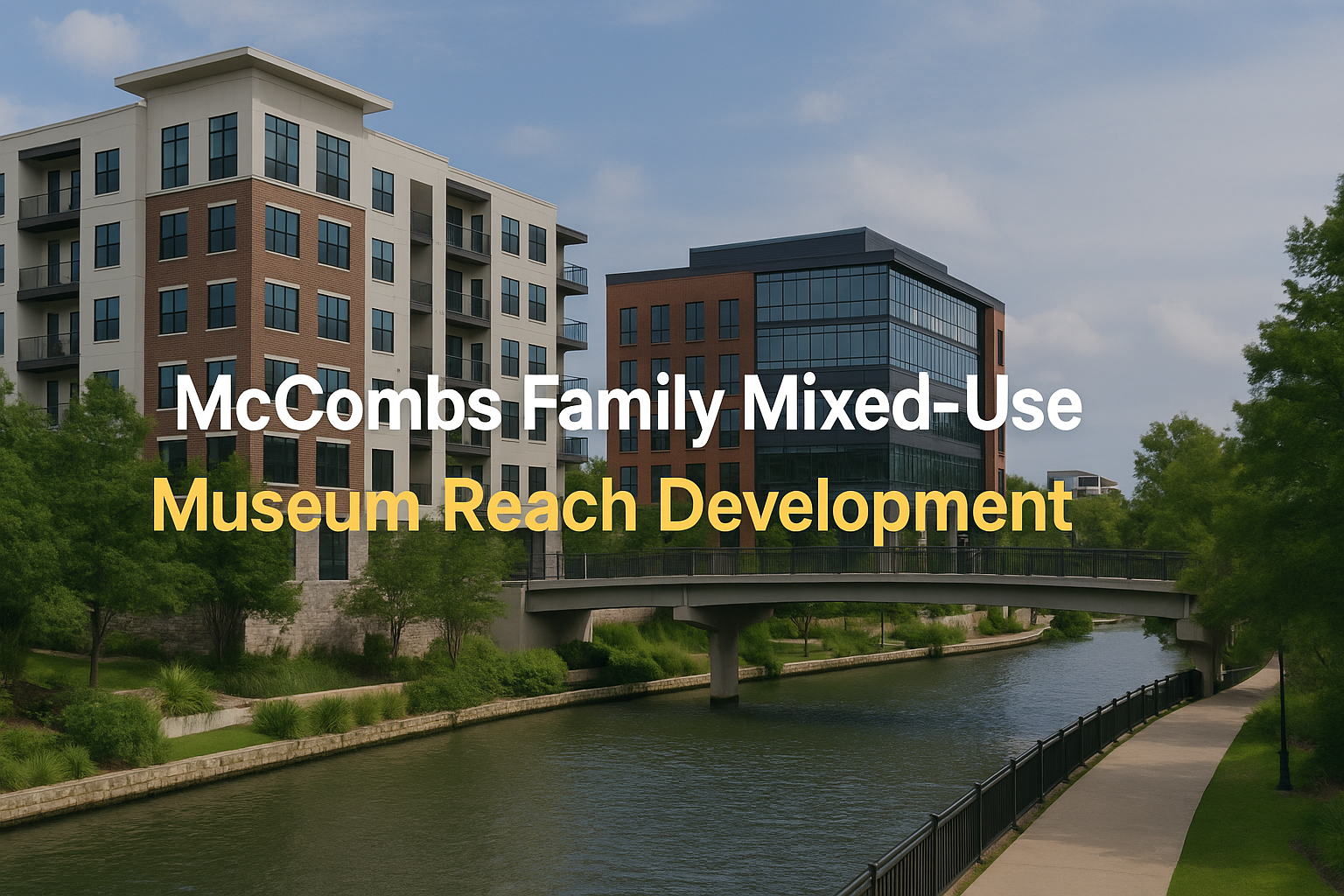
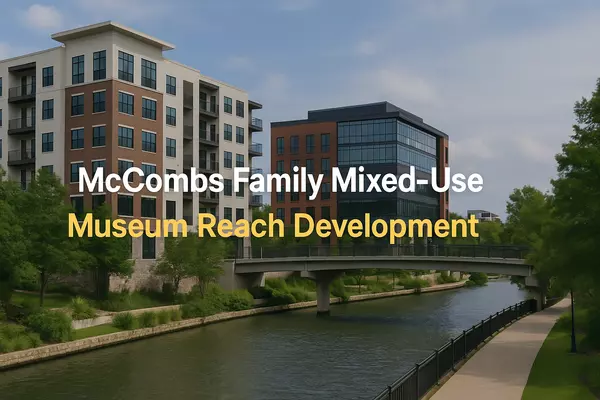
Downtown San Antonio is preparing for what could become one of its most significant urban developments in recent years. The McCombs family, continuing the legacy of the late Red McCombs, is advancing plans for a major mixed use project that would reshape the Museum Reach corridor along the San Antonio River Walk. The proposed development would create a substantial urban destination connecting the San Antonio Museum of Art area with the thriving Pearl District, potentially accelerating the transformation of this stretch of the river into a continuously active urban corridor.
The scale of the proposed project distinguishes it from typical infill development. Plans filed with the city describe eight new buildings spanning more than 780,000 square feet, including a 17 story apartment tower with 390 units, substantial office space, restaurants, retail, fitness facilities, and structured parking. The site along West Jones Avenue and Camden Street would create a mixed use environment where residents, workers, and visitors interact throughout the day, activating an area that has historically seen less intensity than the Pearl to its north.
For those considering buying a home in San Antonio or interested in how urban development affects different parts of the city, understanding projects of this magnitude provides valuable context. Major mixed use developments can influence surrounding neighborhoods, affect housing supply dynamics, and reshape how people experience urban areas. The Museum Reach project represents the type of substantial investment that signals confidence in downtown San Antonio's trajectory.
This guide explores what the McCombs family development proposes, why the Museum Reach location matters, how mixed use projects affect urban environments, what the development might mean for downtown housing dynamics, and what timeline and approval processes lie ahead. Whether interested in downtown living, urban investment, or simply understanding how San Antonio continues evolving, this proposed development merits attention as one of the most significant projects on the city's horizon.
What Does the Proposed McCombs Family Development Include?
The development plans filed with the City of San Antonio describe a comprehensive mixed use project spanning multiple buildings and uses. Understanding the specific components helps appreciate the project's scale and how it would function as an integrated urban environment. The variety of uses creates the activity and vibrancy that distinguish successful mixed use developments from single purpose projects.
The residential component centers on a 17 story apartment tower containing 390 units. This housing addition would bring significant new rental inventory to an area where housing demand has grown as the Pearl District and surrounding neighborhoods have attracted interest. The tower's height would create a visual landmark while the unit count adds meaningful supply to the downtown rental market.
Q: What commercial components are included in the development plans?
A: The plans describe approximately 265,000 square feet of office space distributed across the project's buildings. More than 60,000 square feet of restaurant and retail space would activate ground floor areas and create destinations drawing visitors beyond just residents and office workers. A fitness facility and multi level parking structures would support the various uses. The combination creates a self contained environment where daily needs can be met within the development.
The eight building configuration distributes uses across the site rather than concentrating everything in a single structure. This approach creates varied streetscapes, multiple entry points, and the urban texture that walkable districts require. The integration of different building types and uses throughout the site should produce a more interesting environment than monolithic development approaches.
Proposed development components:
- 17 story apartment tower with 390 residential units
- Approximately 265,000 square feet of office space
- More than 60,000 square feet of restaurant and retail space
- Fitness facility serving residents, workers, and visitors
- Multi level parking structures supporting various uses
- Eight buildings distributed across the site
- Total development exceeding 780,000 square feet
- Location along West Jones Avenue and Camden Street
Why Does the Museum Reach Location Matter for This Development?
The Museum Reach corridor occupies a strategic position within San Antonio's urban geography that makes it particularly suitable for transformative development. Understanding why this location matters helps appreciate the project's potential significance and how it relates to broader downtown development patterns. The site's characteristics create opportunities that other locations might not offer.
The Museum Reach represents the northern extension of the San Antonio River Walk, connecting the traditional downtown tourist areas with the Pearl District. This stretch of the river features the San Antonio Museum of Art as its anchor cultural institution, providing the name and artistic character that distinguish the area. The river itself creates the linear park and pedestrian environment that make the River Walk one of San Antonio's most valuable urban assets.
Q: How does this location relate to the Pearl District?
A: The proposed development site lies between the San Antonio Museum of Art and the Pearl District, creating potential for a continuous urban corridor connecting these destinations. Currently, pedestrians walking along the Museum Reach experience transitions between developed and undeveloped areas. A substantial development in this gap could create seamless connectivity that enhances the entire corridor's appeal. This connection would benefit both the new development and existing destinations.
The area has historically seen less development intensity than the Pearl to its north or downtown to its south. This relative underdevelopment created the opportunity for large scale projects that built out areas cannot accommodate. The availability of sites suitable for major development distinguishes this location from other River Walk adjacent areas where existing buildings limit what can be constructed.
Museum Reach location advantages:
- Strategic position between downtown and Pearl District
- River Walk frontage providing pedestrian connectivity
- San Antonio Museum of Art establishing cultural anchor
- Relative underdevelopment enabling large scale projects
- Site availability for comprehensive mixed use development
- Potential for corridor connectivity enhancement
- Urban geography supporting walkable development
How Has the Pearl District's Success Influenced Surrounding Areas?
Understanding the Pearl District's evolution provides context for why development interest in adjacent areas like the Museum Reach has grown. The Pearl's transformation from abandoned brewery to thriving urban destination demonstrates what thoughtful development can achieve in San Antonio's urban core. This success story influences how developers, investors, and city planners think about nearby opportunities.
The Pearl District has become San Antonio's most celebrated urban success story, transforming the historic Pearl Brewery complex into a mixed use destination featuring restaurants, retail, residential, hospitality, and cultural programming. The development's emphasis on local businesses, culinary excellence, and community gathering has created an environment that attracts both San Antonio residents and visitors. This success has enhanced property values and development interest throughout the surrounding area.
Q: What lessons from the Pearl might apply to Museum Reach development?
A: The Pearl demonstrated that San Antonio's urban market can support high quality mixed use development emphasizing walkability, local character, and experiential offerings. The district proved that developments creating genuine destinations rather than just buildings can generate sustained interest and economic activity. These lessons likely inform how developers approach nearby sites, including the Museum Reach corridor.
The Pearl's success created spillover effects that have influenced adjacent neighborhoods. Areas that once saw limited investment now attract development interest as the Pearl's gravity extends outward. The Museum Reach project could be understood partly as response to opportunities the Pearl's success has created by demonstrating market acceptance of urban mixed use development in San Antonio.
Pearl District influence on surrounding development:
- Demonstration that San Antonio supports quality urban development
- Proof of market acceptance for mixed use walkable environments
- Property value enhancement in surrounding areas
- Spillover development interest in adjacent sites
- Model for integrating local character with new construction
- Evidence that destination development attracts sustained activity
- Confidence building for major urban investment decisions
What Does Mixed Use Development Mean for Urban Environments?
Understanding how mixed use development functions helps appreciate what the Museum Reach project might bring to its location. Mixed use represents a development approach that combines different activity types within single projects, creating environments where living, working, shopping, dining, and recreation occur in close proximity. This integration produces different urban experiences than single use development.
Mixed use development creates activity throughout the day as different uses generate traffic at different times. Residents leave for work in mornings while office workers arrive. Lunch brings activity to restaurants. Evenings see residents returning while diners and visitors arrive. This temporal distribution keeps areas active across extended hours rather than experiencing the vacancy that single use areas can show during off peak times.
Q: What makes mixed use development successful?
A: Successful mixed use requires appropriate use combinations, thoughtful design enabling different uses to coexist without conflict, sufficient density to generate activity, and locations where multiple uses find markets. The integration must feel natural rather than forced, with ground floor retail and dining activating streets while residential and office uses occupy upper floors. Parking, loading, and service functions must be managed to avoid conflicts with pedestrian environments.
The Museum Reach project's combination of residential, office, retail, dining, and fitness uses represents the classic mixed use formula that successful urban developments employ. The 390 residential units create built in customers for ground floor businesses. Office workers add weekday activity. Restaurants and retail draw visitors from beyond the development itself. This combination should produce the vitality that makes urban locations appealing.
Mixed use development characteristics:
- Multiple use types integrated within single projects
- Activity distribution across different times of day
- Residential creating built in customer base
- Office adding weekday daytime activity
- Retail and dining drawing external visitors
- Ground floor activation creating pedestrian interest
- Upper floor uses benefiting from location amenities
- Density generating critical mass for vibrancy
How Might This Development Affect Downtown Housing Supply?
The residential component of the Museum Reach project, with 390 proposed apartment units, would represent a meaningful addition to downtown San Antonio's housing inventory. Understanding how this supply addition relates to market dynamics helps appreciate one dimension of the project's significance. Housing supply affects availability, pricing, and options for those seeking downtown living.
Downtown San Antonio has experienced increased housing development as urban living has attracted residents seeking walkability, amenities, and alternatives to suburban patterns. This demand has supported new apartment construction throughout the urban core. Additional supply like the Museum Reach units would add options for those seeking downtown living while potentially moderating pricing pressure in a growing market.
Q: What type of housing would the development provide?
A: The plans describe apartment units rather than for sale condominiums, meaning the residential component would serve the rental market. The development's location, amenities, and new construction quality suggest positioning for residents seeking premium urban living. The mix of unit sizes and specific amenities would affect which market segments the development serves. Details about unit configurations typically emerge as projects advance through approvals.
The location adjacent to the Pearl and Museum of Art would likely appeal to residents attracted to San Antonio's most urban environments. Proximity to cultural institutions, dining, and the River Walk creates lifestyle benefits that command premiums in rental markets. The development would compete with other high quality urban apartments while expanding total options available.
Housing supply considerations:
- 390 apartment units adding to downtown inventory
- Rental housing serving lease rather than ownership market
- Premium positioning suggested by location and amenities
- Addition to options for downtown living seekers
- Potential moderating effect on market pressure
- Competition with existing high quality urban apartments
- Location appeal for urban lifestyle oriented residents
What Employment and Economic Activity Might the Development Generate?
Beyond housing, the Museum Reach project's commercial components would create employment and economic activity affecting the downtown economy. Understanding these effects helps appreciate the project's broader significance beyond its physical presence. Economic contributions represent one way large developments affect their communities.
The approximately 265,000 square feet of office space would house businesses and their employees, creating daytime population that supports surrounding retail and dining. Office employment generates economic activity through worker spending, business services needs, and the various transactions that commercial activity produces. The specific employment depends on which tenants occupy the space, but substantial office square footage typically supports meaningful job concentrations.
Q: What employment would the retail, restaurant, and service components create?
A: Ground floor retail and restaurant space exceeding 60,000 square feet would require staffing for sales, service, food preparation, and management functions. The fitness facility would employ trainers, front desk personnel, and maintenance staff. Building management, maintenance, and security functions would require additional workers. These employment categories serve local workforce seeking service and hospitality positions.
Construction employment during the development phase would also create economic activity. Projects of this scale require substantial construction workforces over extended periods. While temporary, construction employment provides income that circulates through the local economy. The multi year development timeline would support construction jobs throughout the building process.
Economic activity considerations:
- Office space housing businesses and creating daytime employment
- Retail and restaurant operations requiring service staffing
- Fitness and amenity facilities employing service workers
- Building operations creating ongoing employment
- Construction phase generating temporary employment
- Worker spending supporting surrounding businesses
- Business activity contributing to local economy
What Approval Process Must the Development Navigate?
Major developments like the Museum Reach project must navigate approval processes that determine whether and how projects can proceed. Understanding these processes helps calibrate expectations about timelines and the factors that affect project advancement. City approvals represent critical milestones that developments must clear.
The rezoning process currently underway represents one essential approval step. The site's existing zoning may not permit the uses and densities the development proposes, requiring zoning changes that the city must approve. Rezoning involves public notice, planning commission review, and ultimately City Council action. Opposition or concerns raised during this process can affect outcomes and timelines.
Q: What other approvals might the project require?
A: Beyond zoning, developments typically require site plan approval addressing specific design and layout elements, building permits for construction, and various other regulatory clearances. Environmental reviews may be required depending on site conditions. Historic considerations could apply given the area's history. The River Walk adjacency likely triggers coordination with agencies overseeing that resource. Each approval step adds to timelines and creates potential for modifications.
The approval process timeline depends on various factors including city staff capacity, public input, council priorities, and how smoothly applications move through review. Major projects sometimes encounter delays from technical issues, community concerns, or other factors that extend timelines. Developers typically begin some approvals while others remain pending, advancing projects incrementally.
Approval process elements:
- Rezoning addressing land use and density permissions
- Planning commission and City Council review
- Site plan approval for specific design elements
- Building permits for construction activities
- Environmental and historic reviews where applicable
- River Walk coordination for adjacent development
- Multiple approval steps affecting overall timeline
- Various factors potentially extending processes
What Timeline Should Residents Expect for This Development?
Understanding realistic timelines helps residents calibrate expectations about when the Museum Reach development might actually materialize. Major projects move through extended timelines from initial planning through completion. The current early stage status means substantial time will pass before residents see finished buildings.
The development remains in approval phases, meaning construction has not begun and specific construction timelines have not been finalized. The rezoning process currently underway represents an early approval step that must be completed before construction can proceed. Additional approvals, detailed design work, and construction financing would follow successful rezoning before construction could begin.
Q: How long do major mixed use developments typically take to complete?
A: Projects of this scale typically require years from initial planning through completion. Approval processes can span a year or more depending on complexity and any issues that arise. Construction of multiple buildings exceeding 780,000 square feet would require multiple years even after ground breaking. Phased construction might see some buildings complete before others. Total timelines from current status through full completion likely span several years at minimum.
Residents should expect the development's physical presence to emerge gradually rather than suddenly. Early construction activities might begin after approvals complete, but visible building construction would follow site preparation. Different buildings might complete on different schedules if phased construction is employed. The transformation this development represents will unfold over an extended period.
Timeline considerations:
- Current status in approval phases before construction
- Rezoning representing early approval step
- Additional approvals required following zoning
- Construction financing and detailed design preceding ground breaking
- Multi year construction timeline for project of this scale
- Potential phasing with different building completion dates
- Extended overall timeline from current status through completion
How Does This Development Relate to San Antonio's Urban Growth Trajectory?
Placing the Museum Reach project within San Antonio's broader urban development context helps understand its significance. The city has experienced sustained interest in urban living and downtown investment that this project extends. Understanding these trends provides perspective on what the development represents for San Antonio's evolution.
San Antonio's downtown and urban core have attracted increasing development interest as urban living has gained appeal nationally. The Pearl District's success demonstrated that San Antonio's market can support high quality urban development. Subsequent projects throughout downtown and surrounding neighborhoods have built on this foundation. The Museum Reach proposal represents continuation and expansion of this urban investment pattern.
Q: What does this project signal about downtown San Antonio's trajectory?
A: Major investment proposals indicate developer confidence that market conditions support the substantial commitments required for large projects. The McCombs family's willingness to advance a development of this scale reflects assessment that San Antonio's downtown has reached maturity levels supporting premium mixed use development. This confidence from experienced developers provides external validation of downtown's trajectory that market participants may find informative.
The project's scale distinguishes it from incremental infill development. While smaller projects contribute to urban growth through cumulative effect, large developments can accelerate transformation by creating critical mass in single moves. The Museum Reach project's potential to connect the Pearl and Museum of Art areas through substantial development could advance corridor development significantly compared to gradual infill.
Urban growth trajectory context:
- Sustained development interest in San Antonio urban core
- Pearl District success establishing market acceptance
- Subsequent projects building on urban investment pattern
- Museum Reach representing continuation and expansion
- Developer confidence indicating market maturity assessment
- Scale distinguishing from incremental infill
- Potential for accelerated corridor transformation
What Neighborhoods Surround the Museum Reach Area?
Understanding the residential context around the Museum Reach development site helps appreciate who might be affected by the project and what housing options exist nearby. Several distinctive San Antonio neighborhoods occupy areas adjacent to or near the proposed development. Each offers different characteristics while sharing urban or semi urban positioning.
Tobin Hill lies near the development area, representing one of San Antonio's historic neighborhoods that has experienced revitalization as urban living interest has grown. The neighborhood features older housing stock with character that appeals to residents seeking alternatives to suburban construction. Proximity to the Pearl and downtown has enhanced Tobin Hill's appeal while changing its character as new development has occurred.
Q: What other neighborhoods exist near the Museum Reach?
A: Beacon Hill occupies an area west of the development site, representing another historic neighborhood with distinctive character. Government Hill to the east offers additional housing options near downtown. The broader Midtown area encompasses various neighborhoods experiencing different degrees of urban transformation. Each offers somewhat different housing options, price points, and neighborhood character while sharing relative proximity to downtown and the Pearl.
The Museum Reach development would add housing options for those seeking urban living in this area. Current residents of nearby neighborhoods would gain access to new retail, dining, and amenities the development creates. The interaction between the new development and existing neighborhoods would shape how the area evolves, with effects flowing in both directions.
Surrounding neighborhood context:
- Tobin Hill historic neighborhood experiencing revitalization
- Beacon Hill offering distinctive residential character
- Government Hill providing options east of downtown
- Midtown area encompassing various urban neighborhoods
- Each neighborhood offering different characteristics
- Development adding housing options in the area
- New amenities accessible to existing nearby residents
How Should Buyers Evaluate Urban Developments When Considering Locations?
Those exploring downtown San Antonio or urban neighborhoods near developments like Museum Reach benefit from understanding how to evaluate the effects of major projects on surrounding areas. New development creates both opportunities and changes that affect neighborhoods differently depending on perspective. Systematic evaluation helps buyers make informed decisions.
Consider how development timelines align with your own plans. Projects requiring years to complete might not affect your near term living experience significantly if you plan shorter term residence. Those planning longer term residence might see substantial changes as developments proceed from plans through completion. Understanding timeline alignment helps assess relevance for your decisions.
Q: What factors should buyers consider about nearby development?
A: Evaluate construction impacts during building phases, including noise, traffic, and disruption that can affect daily life temporarily. Consider how completed development might change neighborhood character, traffic patterns, and activity levels. Assess whether new amenities the development brings represent benefits or whether you prefer current conditions. Recognize that development can affect property values in both directions depending on circumstances. These considerations help buyers decide whether developing areas match their preferences.
Some buyers actively seek areas with development activity, viewing transformation as opportunity. Others prefer stability and established character. Neither preference is inherently correct. Understanding your own preferences helps identify appropriate locations rather than discovering misalignment after purchase.
Factors for evaluating nearby development:
- Timeline alignment with your residential plans
- Construction phase impacts on daily experience
- Potential neighborhood character changes
- Traffic and activity level effects
- New amenity benefits versus existing condition preferences
- Property value implications in either direction
- Personal preference for transformation versus stability
- Decision alignment with your priorities
What Does the McCombs Family Legacy Mean for This Project?
The McCombs family's involvement lends significance to this development beyond its physical characteristics. Understanding who is behind the project provides context for evaluating the seriousness of the proposal and the capacity to execute. Developer track records affect how market participants assess project viability.
Red McCombs built a significant business legacy in San Antonio spanning automotive dealerships, sports team ownership, and various investments that made him one of the city's most prominent business figures. His family's continued involvement in major projects following his passing extends this legacy of significant San Antonio investment. This continuity provides track record context that pure financial analysis might not capture.
Q: How does developer reputation affect project assessment?
A: Experienced developers with successful track records provide confidence that projects have realistic prospects for completion and quality execution. First time developers or those with problematic histories create more uncertainty about whether plans will materialize as proposed. The McCombs family's long San Antonio presence and business accomplishment provides reputation that supports project credibility.
The family's existing relationships with city officials, financial institutions, and development partners may facilitate project advancement in ways that newer market entrants might not achieve. These relationship advantages can affect timelines, financing, and various aspects of project execution. Understanding who stands behind projects helps assess execution probability.
McCombs family involvement significance:
- Red McCombs legacy as prominent San Antonio business figure
- Family continuation of significant local investment
- Track record providing execution confidence
- Long local presence establishing relationships
- Reputation supporting project credibility assessment
- Relationship advantages potentially facilitating advancement
- Developer identity affecting project viability assessment
How Might This Development Affect Walkability in the Area?
The Museum Reach project's potential to enhance walkability represents one of its most significant urban design contributions. Understanding how developments affect pedestrian environments helps appreciate their value beyond just the buildings themselves. Walkability has become increasingly important for urban residents seeking alternatives to car dependent lifestyles.
The current Museum Reach corridor includes gaps between developed areas where pedestrians encounter less activity and interest. A substantial development filling one of these gaps would create continuous pedestrian environments where walkers experience consistent engagement rather than transitioning through inactive zones. This connectivity enhancement benefits both the new development and existing destinations at either end of the corridor.
Q: What elements contribute to walkable urban environments?
A: Successful walkability requires continuous pedestrian routes without barriers, ground floor activity creating interest and safety through eyes on the street, destinations within walking distance providing reasons to walk, and comfortable environments with appropriate scale and design. The Museum Reach project's mixed use configuration with ground floor retail and restaurants along the River Walk would contribute multiple walkability elements. The connection to existing walkable destinations at the Pearl and Museum of Art would extend pedestrian networks.
For residents seeking walkable living, development that enhances pedestrian connectivity provides genuine lifestyle value. The ability to accomplish daily needs through walking rather than driving affects time use, transportation costs, health, and environmental impact. Developments contributing to walkable networks provide benefits extending beyond their immediate occupants.
Walkability considerations:
- Gap filling creating continuous pedestrian environments
- Ground floor activity generating interest and safety
- Destinations within walking distance enabling car free errands
- Connection to existing walkable areas extending networks
- Mixed use providing multiple walking destinations
- River Walk integration enhancing pedestrian experience
- Lifestyle value for residents prioritizing walkability
What Cultural Amenities Exist Near the Development Site?
The Museum Reach location provides proximity to cultural institutions and amenities that distinguish it from purely commercial areas. Understanding the cultural context helps appreciate the distinctive character the development would inhabit. Cultural amenities contribute to quality of life in ways that commercial and residential uses alone cannot replicate.
The San Antonio Museum of Art anchors the corridor, providing world class art collections in a distinctive building that formerly served as a brewery. The museum draws visitors to the area while contributing to neighborhood identity. Proximity to this institution would provide development residents and workers with convenient cultural access.
Q: What other cultural amenities exist in the broader area?
A: The Pearl District's programming includes farmers markets, cultural events, and various community activities that create ongoing engagement opportunities. The River Walk itself functions as a cultural amenity providing recreational and scenic value. Downtown San Antonio's concentration of theaters, museums, and venues lies within reasonable distance. The overall cultural density exceeds what most suburban locations can offer.
For residents attracted to urban living partly for cultural access, the Museum Reach location provides genuine advantages. The ability to walk to museums, events, and cultural programming without driving represents lifestyle benefits that location in this corridor would provide. These amenities complement the commercial and residential offerings the development itself would create.
Cultural amenities near the development:
- San Antonio Museum of Art as anchor institution
- Pearl District events and programming nearby
- River Walk recreational and scenic amenities
- Downtown theaters and cultural venues accessible
- Farmers markets and community activities at Pearl
- Concentrated cultural density exceeding suburban options
- Walkable access to multiple cultural offerings
Expert Insight from Tami Price
"This is the kind of forward thinking development San Antonio needs more of," says Tami Price, REALTOR® and Broker Associate with Real Broker, LLC. "It blends walkability, housing, culture, and commerce in one of our city's most exciting areas. The combination of the Museum of Art, River Walk, and Pearl proximity creates a location that few other sites can match. It is a big deal for anyone watching how the downtown core is evolving."
Price brings nearly two decades of experience and approximately 1,000 closed transactions to her work with buyers and sellers throughout San Antonio, Schertz, Cibolo, Helotes, Converse, and Boerne. Her understanding of how major developments affect San Antonio's real estate landscape helps clients evaluate options across the metropolitan area.
"The McCombs family's involvement brings credibility and capacity to a project of this scale," Price explains. "Major developments require substantial resources and expertise to execute successfully. When experienced developers with proven track records advance significant proposals, it provides confidence that plans have realistic prospects for becoming reality."
Her recognition as a RealTrends Verified Top Agent and 14-time Five Star Professional Award Winner reflects consistent client satisfaction. This track record demonstrates the value of working with experienced representation when evaluating urban markets and understanding how developments affect different areas.
"For buyers interested in urban living, understanding major developments like this helps identify areas that may see significant transformation," Price notes. "The Museum Reach corridor could evolve considerably if this project advances as proposed. Those drawn to walkable, culturally rich urban environments should pay attention to how downtown San Antonio continues developing."
Three Key Takeaways
1. The McCombs Family Is Advancing Plans for a Major Mixed Use Development Along San Antonio's Museum Reach Corridor Near the Pearl District
The proposed project includes eight buildings spanning more than 780,000 square feet, featuring a 17 story apartment tower with 390 units, approximately 265,000 square feet of office space, more than 60,000 square feet of restaurant and retail space, fitness facilities, and structured parking. The location along West Jones Avenue and Camden Street would connect the San Antonio Museum of Art area with the Pearl District, potentially creating a continuous urban corridor along this stretch of the River Walk.
2. The Development Could Significantly Affect Downtown San Antonio's Housing Supply, Employment Base, and Walkable Urban Environment
The 390 apartment units would add meaningful rental inventory to downtown's housing market. Commercial space would create employment and economic activity. Ground floor retail and restaurants would activate streets and create destinations. The project's scale could accelerate transformation of the Museum Reach corridor from its current state into a vibrant mixed use environment. These effects would unfold over the extended timeline required for development and construction.
3. The Project Remains in Approval Phases with Rezoning Underway and Construction Timeline Not Yet Finalized
Those considering buying a home in San Antonio or evaluating downtown areas should understand that major developments require years from planning through completion. The current early stage status means substantial time will pass before the development materially changes the Museum Reach area. Monitoring progress through approval phases provides updates about project advancement and potential timeline.
Frequently Asked Questions
Q: When will construction start on the Museum Reach development?
A: Construction timing has not been finalized as the project remains in approval phases. Rezoning and other city approvals must be completed before construction can proceed. Additional steps including detailed design work and construction financing would follow successful approvals. Specific construction start dates will depend on how the approval process unfolds.
Q: Where exactly is this development being built?
A: The proposed site is located at West Jones Avenue and Camden Street, near the San Antonio Museum of Art and south of the Pearl District. The location provides River Walk frontage along the Museum Reach corridor.
Q: Who is behind the development project?
A: The McCombs family is leading the development, continuing the legacy of Red McCombs who was one of San Antonio's most prominent business figures before his passing. The family's long local presence and business track record provide context for the project's credibility.
Q: How many apartments will the development include?
A: Plans describe a 17 story apartment tower with 390 units. These would be rental apartments rather than for sale condominiums. Specific unit configurations and amenities would be determined as the project advances through detailed design phases.
Q: What retail and restaurants will be in the development?
A: Specific tenants have not been announced at this stage. The plans describe more than 60,000 square feet of restaurant and retail space that would be leased to operators as the project advances. Tenant mix typically becomes clearer as developments approach completion.
Q: How does this relate to the Pearl District?
A: The development site lies between the San Antonio Museum of Art and the Pearl District, potentially creating a continuous urban corridor connecting these destinations. The project could enhance walkability and activity throughout the Museum Reach corridor while benefiting from proximity to the Pearl's established appeal.
Q: Will this development affect nearby property values?
A: Major developments can affect surrounding areas in various ways depending on specific circumstances. New development can enhance neighborhood appeal through amenity additions while also bringing construction impacts and changes to neighborhood character. Many factors affect property values, and individual circumstances determine specific effects. Buyers and sellers should evaluate based on their specific situations.
Q: How can residents follow the project's progress through approvals?
A: City planning and zoning processes involve public meetings and records that interested residents can monitor. Local news coverage typically reports on significant developments as they advance through approvals. Real estate professionals tracking the market often share relevant development news with clients.
The Bottom Line
The McCombs family's proposed mixed use development along San Antonio's Museum Reach corridor represents one of the most significant urban projects on the city's horizon. The scale encompassing eight buildings, 390 apartments, substantial office space, and extensive retail and dining would transform a gap in the urban fabric between the San Antonio Museum of Art and the Pearl District into a vibrant mixed use destination. The project's advancement through approvals and eventual construction would mark a significant chapter in downtown San Antonio's ongoing evolution.
The development's timeline extends over years from current approval phases through eventual completion. Residents and market participants should calibrate expectations accordingly, recognizing that the transformation this project represents will unfold gradually rather than suddenly. The rezoning process currently underway represents an early step in a longer journey that major developments require.
For those interested in urban San Antonio, whether as potential residents, investors, or observers of how the city develops, the Museum Reach project provides a significant development to monitor. The combination of location quality, development scale, and developer credibility creates conditions for potential success that could influence surrounding areas and downtown's overall trajectory. Working with experienced representation helps buyers and sellers understand how developments of this magnitude relate to real estate decisions throughout the metropolitan area.

Contact Tami Price, REALTOR®
Whether exploring downtown San Antonio, evaluating urban neighborhoods, or considering communities throughout the greater metropolitan area, working with an experienced REALTOR® provides guidance through the home buying or selling process. Tami Price brings local market knowledge and professional expertise to help clients understand how major developments affect different areas and find properties matching their priorities.
From buyers seeking walkable urban living to sellers positioning properties in evolving markets, personalized service makes the difference in successful transactions.
Tami Price, REALTOR®, Broker Associate
📞 210-620-6681
Tami Price's Specialties
- Comprehensive Buyer and Seller Representation
- Military Relocations and PCS Moves
- VA Loan Guidance and Assumptions
- New Construction Navigation
- Strategic Pricing and Market Analysis
- Professional Property Marketing
- First Time Buyer Education
- Move Up and Downsizing Transitions
- Residential Real Estate Throughout San Antonio, Schertz, Cibolo, Helotes, Converse, and Boerne
Disclaimer
This blog post is provided for informational purposes only and should not be construed as guarantees regarding development outcomes, approval results, property values, or project timelines. Information about the proposed Museum Reach development reflects publicly available details as of the publication date and is subject to change. Development plans may be modified during approval processes, and projects may not proceed as initially proposed. Real estate decisions should be based on individual circumstances, professional guidance, and current market conditions. Tami Price, REALTOR®, and Real Broker, LLC make no warranties regarding accuracy, completeness, or applicability of information to specific circumstances.
Categories
- All Blogs (613)
- Neighborhood Guides (9)
- About Tami Price (1)
- Affordable Housing & Community Development (2)
- Agent Qualifications and Credentials (1)
- Agent Qualifications and Experience (1)
- AI and Real Estate Tools (1)
- Alamo Heights (5)
- Alamo Heights Real Estate (1)
- Alamo Ranch (1)
- Amenities in Helotes, Texas (3)
- Apartment Market (1)
- Arts and Culture (1)
- Awards and Recognition (1)
- Best Neighborhoods to Live in Cibolo, TX (2)
- Best Neighborhoods to Live in San Antonio (16)
- Best Places to Live in Leon Valley: A Neighborhood Guide (1)
- Best Places to Live in Northeast Inner Loop: A Neighborhood Guide (1)
- Bexar County Property Tax (1)
- Boerne Home Sellers (1)
- Boerne Neighborhoods (2)
- Boerne Texas (5)
- Broadway Corridor Development (1)
- Build-to-Rent Communities (1)
- Builder Contracts & Warranties (1)
- Builder Warranties (1)
- Buyer (96)
- Buyer Due Diligence (1)
- Buyer Education (8)
- Buyer Guide (1)
- Buyer Protection Strategies (1)
- Buyer Representation (1)
- Buyer Representation Expertise (1)
- Buyer Resources (6)
- Buying a Foreclosed Home in San Antonio (10)
- Buying a Home (1)
- Buying a Home in San Antonio (5)
- Castroville, TX (9)
- Central San Antonio Development (2)
- Choosing a Real Estate Agent (1)
- Cibolo Home Sellers (1)
- Cibolo TX (14)
- Client Satisfaction (1)
- Client Testimonial (4)
- Clients review (4)
- Comal County (1)
- Commercial & Retail Development (25)
- Commercial Development (9)
- Commercial Development Impact on Home Values (1)
- Commercial Real Estate (1)
- Community Amenities (1)
- Community Development (20)
- Community Development and Real Estate (3)
- Community Events & Development (1)
- Community Investment Impact (2)
- Community News (4)
- Community Planning (1)
- Community Revitalization (1)
- Commuter Neighborhoods (1)
- Cons of Living in Helotes, TX (5)
- Converse Home Sellers (1)
- Converse TX (11)
- Converse TX Real Estate (1)
- Cost of Living Guides (1)
- Cost of Living in San Antonio TX (26)
- CPS Energy Programs (1)
- Deco District San Antonio (1)
- Down Payment Assistance (1)
- Downtown Development (2)
- Downtown Living (1)
- Downtown Revitalization (14)
- Downtown San Antonio Real Estate (5)
- Downtown San Antonio Revitalization (1)
- East Side Neighborhoods (1)
- East Side San Antonio (2)
- Economic Development (2)
- Economic Growth & Industry (1)
- Education, Texas Hill Country (1)
- Employment Corridors (1)
- Entertainment Economy (1)
- Established Communities (2)
- Events in San Antonio (208)
- Expert Advice from Tami Price, Realtor® (9)
- Family Activities (1)
- Family Living in San Antonio (1)
- Far Northwest San Antonio (1)
- Far Westside Real Estate (3)
- Featured Properties (1)
- Financial Planning (1)
- First-Time Buyers (1)
- First-Time Homebuyer Resources (3)
- First-Time Homebuyer Tips (2)
- First-Time Homebuyers (5)
- First-Time Investors (1)
- Fort Sam Houston (2)
- Fort Sam Houston Real Estate (1)
- Fort Sam Houston, TX (2)
- FSBO vs Agent Representation (1)
- Gated Communities (1)
- Green Home Upgrades (1)
- Helotes Home Sellers (1)
- Highway 151 Corridor Growth (1)
- Hill Country Development (1)
- Hill Country Living (3)
- Hill Country Market Updates (1)
- Hill Country Real Estate (2)
- Historic Districts (1)
- Holiday Attractions (1)
- Holiday Guide (1)
- Home Buying (6)
- Home Buying Guide (6)
- Home Buying Process (3)
- Home Buying Strategy (1)
- Home Buying Tips (3)
- Home Energy Efficiency San Antonio (1)
- Home Financing (2)
- Home Improvement ROI (1)
- Home Preparation (1)
- Home Pricing Strategy (1)
- Home Renovation for Resale (1)
- Home Selling (2)
- Home Selling Guide (5)
- Home Selling Strategies (2)
- Home Selling Strategy (1)
- Home Selling Tips (6)
- Home Staging and Updates (2)
- Homebuyer Education (3)
- Homebuyer Resources (1)
- Homebuying Tips (3)
- Homeowner (36)
- Homeowner Tax Benefits (1)
- Homeownership Costs (1)
- Homes for Sale (1)
- Homes for sale near Lackland AFB (5)
- Homes Near Military Bases (1)
- Housing (1)
- Housing Market Updates (2)
- How to Buy a House in San Antonio TX (49)
- I-10 Corridor (1)
- Incorporated Cities (4)
- Industrial Investment Impact (1)
- Industry News (2)
- Infrastructure & Growth Projects (26)
- Infrastructure and Sustainability (1)
- Infrastructure Development (1)
- Infrastructure Investment (1)
- Infrastructure Updates (2)
- Invest in San Antonio (47)
- Investment Opportunities (2)
- Investment Property San Antonio (1)
- JBSA (4)
- JBSA Real Estate (4)
- Joint Base San Antonio (5)
- Joint Base San Antonio Housing (1)
- La Cantera Retail Development (1)
- Lackland AFB (6)
- Lackland AFB Housing (1)
- Lera MLS (1)
- Lifestyle & Community Growth (16)
- Lifestyle & Local Growth (12)
- Lifestyle Amenities (1)
- Lifestyle Communities (1)
- Listing Preparation (1)
- Live Oak (2)
- Living in San Antonio, TX (53)
- Living Near Randolph AFB (6)
- Local Attractions (2)
- Local Business & Development (9)
- Local Business & Economy (3)
- Local Business Spotlight (17)
- Local Business Support (4)
- Local Development (3)
- Local Market Insights (3)
- Local News (1)
- Local News Around San Antonio (1)
- Local Real Estate News (1)
- Loop 1604 Corridor Growth (2)
- Loop 410 Corridor Development (1)
- Luxury Communities (1)
- Luxury Retail San Antonio (1)
- Major Developments (1)
- Making Offers on Homes (1)
- Market Analysis (1)
- Market Conditions (7)
- Market Timing (1)
- Market Trends (7)
- Market Update (4)
- Market Updates (9)
- Master Planned Communities (6)
- Medical Center Area Real Estate (1)
- Military & Economic Impact (3)
- Military Family Resources (1)
- Military Homebuying (1)
- Military Housing (2)
- Military Housing Market in Texas (17)
- Military Life in San Antonio (2)
- Military PCS Relocations (1)
- Military Real Estate (1)
- Military Relocation (3)
- Military Relocation & VA Loans (9)
- Military Relocation San Antonio (3)
- Military Relocation Services (3)
- Military Relocation to San Antonio (50)
- Military Relocations (17)
- Military Relocations & VA Home Loans (5)
- Mixed-Income Housing (1)
- MLS Accuracy & Data Transparency (1)
- Mortgage Programs (1)
- Mothers Day in San Antonio (2)
- Move to Boerne TX (19)
- Move to Castroville TX (12)
- Move to Converse TX (17)
- Move to New Braunfels (1)
- Move to North San Antonio (19)
- Move to San Antonio TX (74)
- Move to Selma TX (20)
- Move to Shertz TX (14)
- Move to Texas (54)
- Move-In Ready Homes (1)
- Move-In Ready Homes San Antonio (2)
- Move-Up Buyers (1)
- Moving to Helotes, TX (18)
- Moving to San Antonio (70)
- Neighborhood Amenities (1)
- Neighborhood Guides (7)
- Neighborhood Investment (1)
- Neighborhood News (2)
- Neighborhood Revitalization (2)
- Neighborhood Updates (1)
- Neighborhoods near Randolph AFB (13)
- New Braunfels (3)
- New Braunfels Real Estate (1)
- New Construction (21)
- New Construction Homes (5)
- New Construction Homes San Antonio (1)
- New Construction Without Customization (1)
- New Construction Without the Wait (1)
- New Development (3)
- New Listing (8)
- New Restaurants (2)
- News (211)
- News & updates (213)
- North Central San Antonio (4)
- North San Antonio (6)
- North San Antonio Real Estate (3)
- North Side Neighborhoods (1)
- North Side San Antonio Development (1)
- Northeast Inner Loop (1)
- Northeast Inner Loop Neighborhoods (1)
- Northeast San Antonio (1)
- Northwest San Antonio (6)
- Northwest San Antonio Development (1)
- Northwest San Antonio Growth (1)
- Northwest San Antonio Real Estate (1)
- Northwood (2)
- Olympia Hills (2)
- Parks and Recreation (2)
- PCS Guide (2)
- PCS Moves (2)
- PCS Moves to Joint Base San Antonio (2)
- PCS Planning (1)
- PCS Randolph AFB (18)
- PCS Relocation (1)
- PCS San Antonio (47)
- PCS to San Antonio (43)
- Pearl District Area Real Estate (1)
- Places to Eat Near Randolph AFB (2)
- Pre-Listing Preparation (2)
- Pre-Listing Process (1)
- Pricing and Marketing Strategy (1)
- Professional Awards and Achievements (1)
- Professional Real Estate Representation (1)
- Property Tax Exemptions Texas (1)
- Property Value Enhancement (1)
- pros and cons living in Converse TX (4)
- Pros and Cons Living in Selma TX (7)
- Pros and Cons of Living in Castroville, TX (5)
- Pros and Cons of Living in San Antonio (34)
- Purchase Negotiation (1)
- Quick Close Real Estate (1)
- Randolph AFB Neighborhoods (1)
- Real Estate (1)
- Real Estate Agent Recognition (1)
- Real Estate Agent Selection (2)
- Real Estate Agent Value (1)
- Real Estate Consultation (1)
- Real Estate Finance (1)
- Real Estate Financing (1)
- Real Estate Impact (1)
- Real Estate Investment San Antonio (2)
- Real Estate Legal Issues (1)
- Real Estate Market Insights (2)
- Real Estate Market Trends (3)
- Real Estate Professional Designations (1)
- Real Estate Technology & Trends (2)
- Real Estate Tips and Guides (2)
- Real Estate Trends (4)
- RealTrends Verified (1)
- Regional Real Estate (1)
- Relocating to San Antonio (2)
- Relocation Resources (1)
- Relocation to San Antonio (56)
- Resale Properties (1)
- Retire in Boerne TX (12)
- Retire in San Antonio (38)
- SABOR (21)
- San Antonio Area Listings (1)
- San Antonio Business Growth (1)
- San Antonio Buyer Resources (2)
- San Antonio Communities (2)
- San Antonio Community Events (1)
- San Antonio Community News (1)
- San Antonio Data Center Development (1)
- San Antonio Development (5)
- San Antonio Development & East Side Real Estate (1)
- San Antonio Dining and Lifestyle (2)
- San Antonio East Side Development (1)
- San Antonio Employment Growth (1)
- San Antonio Food & Community Development (2)
- San Antonio Growth (8)
- San Antonio Home Buying and Selling (2)
- San Antonio Home Buying Guide (4)
- San Antonio Home Improvement (2)
- San Antonio Home Sellers (2)
- San Antonio Homeowner Guide (1)
- San Antonio Homeowner Resources (1)
- San Antonio Housing Market & Mortgage Financing (2)
- San Antonio Housing Market Analysis (1)
- San Antonio Housing Trends & Market Analysis (3)
- San Antonio Industrial Development (1)
- San Antonio Industrial Policy (1)
- San Antonio Investment Properties (2)
- San Antonio Job Market (1)
- San Antonio Lifestyle Amenities (1)
- San Antonio Listing (1)
- San Antonio Market (1)
- San Antonio Military Relocation (2)
- San Antonio Neighborhoods (38)
- San Antonio New Construction & Master-Planned Communities (4)
- San Antonio New Home Communities (1)
- San Antonio News (220)
- San Antonio North Side Development (1)
- San Antonio Parks (1)
- San Antonio Property Investment (1)
- San Antonio Property Taxes (1)
- San Antonio Real Estate (35)
- San Antonio Real Estate Agents (2)
- San Antonio Real Estate Excellence (1)
- San Antonio Real Estate Guide (3)
- San Antonio Real Estate Market (29)
- San Antonio Real Estate Market Analysis (6)
- San Antonio Real Estate News (2)
- San Antonio Restaurant News (2)
- San Antonio Restaurant Openings (1)
- San Antonio Seller Resources (1)
- San Antonio Spec Homes (1)
- San Antonio Spurs Community Programs (1)
- San Antonio Suburbs (1)
- San Antonio Transportation (2)
- San Antonio University Area Housing (1)
- San Antonio Urban Living (7)
- San Antonio West Side Development (2)
- San Antonio Zoning Policy (1)
- Schertz Home Sellers (1)
- Schertz, TX (13)
- School Districts (1)
- Sell Home In San Antonio TX (63)
- Seller (83)
- Seller Education (5)
- Seller Guide (1)
- Seller Representation Expertise (1)
- Seller Resources (5)
- Seller Strategy (2)
- Seller Tips (1)
- Sellers (1)
- Selling A Home in San Antonio (61)
- Selling Your San Antonio Home (3)
- Selma TX (10)
- Single-Story Homes (1)
- South San Antonio Real Estate (1)
- South Side Economic Growth (1)
- Southtown (1)
- Southwest San Antonio Real Estate (1)
- Spec Homes and Inventory Homes (1)
- Spurs Arena Project Marvel (1)
- Stone Oak Community News (3)
- Suburban Housing Growth (12)
- Suburban Living (1)
- Technology Growth (3)
- Technology Sector Growth (1)
- Terrell Hills (4)
- Texas Homestead Exemption (1)
- The Dominion Real Estate (1)
- The Rim Area Real Estate (1)
- Things to do in San Antonio TX (22)
- Things to do Near Randolph AFB (5)
- Time-Sensitive Home Buying (1)
- Tips for Buying New Construction (8)
- Tobin Hill Neighborhoods (1)
- Top Real Estate Agent in San Antonio (3)
- Tourism and Economic Development (1)
- Transportation Infrastructure (1)
- Universal City (2)
- Urban Corridor Real Estate (1)
- Urban Development (3)
- Urban Living (2)
- Urban Real Estate (1)
- Urban Renewal Projects (1)
- Urban Revitalization San Antonio (1)
- Utility Cost Reduction (1)
- UTSA Campus Development (1)
- VA Home Loan Benefits (2)
- VA Loan Assumptions (3)
- VA loan benefits (26)
- VA Loan Guidance (1)
- VA Loans (10)
- VA Loans and Military Benefits (2)
- VA Loans and Military Home Buying (2)
- VA Loans San Antonio (44)
- VET Benefits Living in San Antonio (4)
- Veterans Resources (1)
- Village Northwest (1)
- Walkable Communities (1)
- week in sales (21)
- Weekly Sales Report (21)
- West San Antonio (2)
- West San Antonio Development (1)
- West San Antonio Real Estate (3)
- West San Antonio Real Estate Market (2)
- West Side Infrastructure Planning (1)
- West Side Real Estate (1)
- West Side San Antonio (2)
Recent Posts