Days on Market: What San Antonio Sellers Need to Know
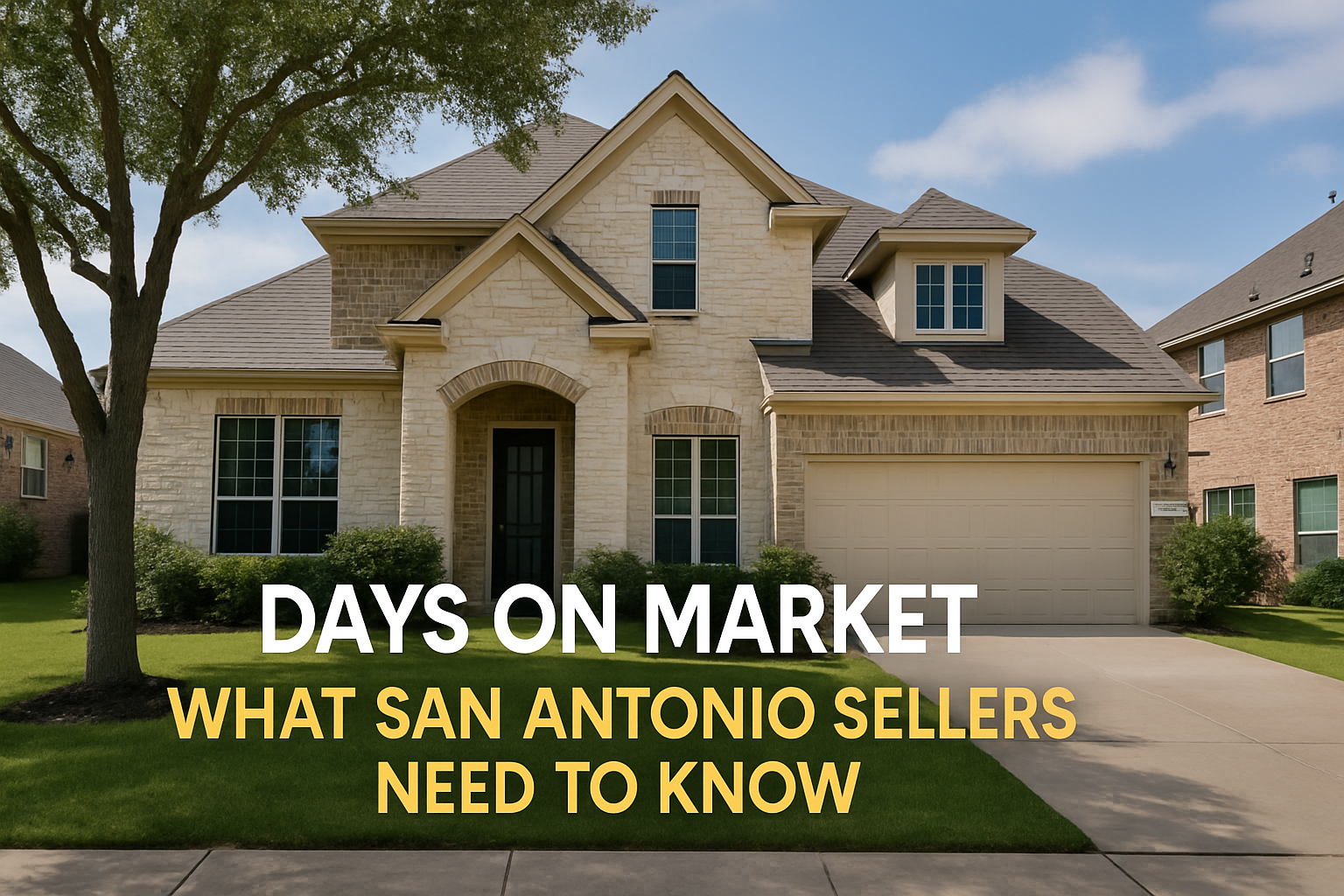
When a home hits the market, a timer begins counting. Days on market, commonly abbreviated as DOM, tracks how long a property has been actively listed for sale. This seemingly simple metric carries significant weight in how buyers, agents, and even appraisers perceive a listing. Understanding what DOM means, how it affects seller outcomes, and what influences it helps San Antonio homeowners approach selling with realistic expectations and effective strategies.
For sellers in San Antonio, Boerne, Helotes, Fair Oaks Ranch, Cibolo, Schertz, and Converse, local market conditions shape what constitutes normal DOM in different neighborhoods and price ranges. What sells quickly in one area may take longer in another. What moves fast in spring may linger in winter. Context matters as much as the number itself.
This guide explores the significance of days on market, what influences how long homes take to sell, and strategies sellers can employ to minimize time on market while maximizing sale price.
Why Does Days on Market Matter?
DOM serves as more than a simple count of elapsed time. It functions as a signal that buyers and their agents interpret when evaluating listings.
How Do Buyers Perceive Extended DOM?
Buyers shopping for homes develop intuition about what normal market time looks like. When they encounter a listing that has been active significantly longer than comparable properties, questions arise. They wonder why other buyers passed on the home. They suspect problems invisible in photos or descriptions. They question whether the price reflects reality.
This skepticism intensifies as DOM climbs higher. A home on market for a week generates little concern. A month prompts questions. Multiple months triggers assumptions that something is wrong, even when the only issue was initial overpricing that has since been corrected.
The psychological impact affects not just whether buyers show interest but how they structure offers. Extended DOM signals negotiating room. Buyers assume motivated sellers willing to accept less. Even if the seller remains firm, extended DOM invites lower offers and harder negotiation.
How Does DOM Affect Agent Perception?
Real estate agents guide their clients toward properties likely to result in successful transactions. Listings with extended DOM raise flags that agents cannot ignore. They may wonder about undisclosed issues, difficult sellers, or unrealistic expectations that will make the transaction challenging.
Some agents actively steer clients away from listings with high DOM, preferring newer listings with fresher inventory and presumably more motivated, realistic sellers. This means extended DOM can reduce not just buyer interest but showing activity as agents prioritize other properties.
When agents do show high-DOM listings, they often coach buyers to make lower offers, citing the extended market time as evidence of overpricing or problems. The listing becomes a target for bargain hunters rather than buyers willing to pay fair market value.
What Is Considered Normal DOM in San Antonio?
Normal days on market varies by location, price point, property type, and current market conditions. Understanding local norms helps sellers set realistic expectations.
How Do Different Areas Compare?
Across the San Antonio metropolitan area, DOM varies by neighborhood and community. Established neighborhoods with consistent demand may see faster sales than developing areas still building reputation. Suburban communities with strong schools and amenities often outperform areas lacking those attractions.
Price point significantly affects expected DOM. Entry-level homes appealing to first-time buyers and investors typically sell faster due to larger buyer pools. Luxury properties with fewer qualified buyers naturally take longer. Mid-range homes fall somewhere between these extremes.
Properties in Boerne, Fair Oaks Ranch, and other Hill Country communities may have different DOM patterns than homes in Schertz, Cibolo, or Converse. Each micro-market operates with its own supply and demand dynamics that influence how quickly homes sell.
How Do Market Conditions Affect DOM?
Market conditions shift over time, affecting what constitutes normal DOM during any given period. In strong seller's markets with limited inventory and high demand, homes sell faster. DOM decreases across the board as buyers compete for available properties.
When markets slow due to rising interest rates, economic uncertainty, or increased inventory, DOM extends. Properties take longer to sell even when priced appropriately. What sold in days during peak conditions may require weeks or months in softer markets.
Seasonal patterns also influence DOM. Spring and summer traditionally see more buyer activity, often resulting in faster sales. Fall and winter slowdowns extend average DOM as fewer buyers actively search.
What Factors Influence How Long a Home Takes to Sell?
Multiple variables determine whether a home sells quickly or lingers on the market. Understanding these factors helps sellers address what they can control.
How Critical Is Pricing?
Pricing stands as the single most influential factor determining DOM. Homes priced correctly for current market conditions attract immediate interest and often sell quickly. Overpriced homes sit while buyers choose better values among competing listings.
The market provides feedback quickly. A properly priced home generates showings, interest, and offers within the first weeks. A home attracting few showings and no offers sends a clear signal about pricing regardless of what the seller believes the property is worth.
Each week of inactivity compounds the problem. The home accumulates DOM that raises buyer concerns while the pool of potential buyers who have already seen and rejected the listing grows. Eventually, price reductions become necessary, but they occur after damage to perception has already happened.
How Does Condition Affect Selling Speed?
Home condition and presentation influence buyer interest and willingness to make offers. Homes that show well, photograph beautifully, and appear move-in ready attract more attention and sell faster than properties needing work or imagination.
Deferred maintenance, dated finishes, clutter, and poor presentation extend DOM by reducing buyer enthusiasm. Each showing that fails to generate an offer represents a missed opportunity that adds to market time.
Pre-listing preparation including cleaning, decluttering, repairs, and staging reduces DOM by ensuring the home makes strong first impressions. The investment in preparation typically returns through faster sales and stronger offers.
What Role Does Marketing Play?
Effective marketing exposes listings to the maximum number of qualified buyers. Professional photography, compelling descriptions, strategic online placement, and agent networking all contribute to visibility and interest.
Homes with poor photos, inadequate descriptions, or limited marketing reach fewer potential buyers. Reduced exposure translates to fewer showings and longer DOM even when price and condition are appropriate.
The first days and weeks on market represent the period of maximum visibility. New listings appear in buyer searches and alert notifications. Strong marketing during this window capitalizes on initial attention before the listing becomes stale inventory.
How Can Sellers Minimize Days on Market?
Strategic decisions before and during the listing period help sellers achieve faster sales.
What Pre-Listing Steps Reduce DOM?
Preparation before listing sets the foundation for fast sales. Working with an experienced REALTOR® to evaluate the home, identify issues, and develop pricing strategy positions the property for success from day one.
Completing repairs, deep cleaning, decluttering, and staging before photography ensures the home presents its best from the first moment buyers see it online. Rushed listings with incomplete preparation sacrifice the critical early period when buyer attention peaks.
Obtaining a pre-listing inspection identifies issues that might surface later and derail transactions. Addressing problems proactively or pricing to reflect known conditions prevents surprises that extend DOM through failed contracts and relisting.
How Does Pricing Strategy Affect DOM?
Pricing correctly from the start rather than testing the market with optimistic pricing minimizes DOM. Buyers and agents recognize overpriced listings and often wait for price reductions rather than engaging immediately.
Some sellers prefer aggressive pricing slightly below market to generate multiple offers and create competition. This strategy can result in very short DOM and sometimes prices above initial list price, though it carries risks if expected competition does not materialize.
Conservative pricing that acknowledges current market conditions rather than hoping for improvement positions homes to sell within normal timeframes. Working with a REALTOR® who provides honest pricing guidance based on comparable sales and current buyer activity helps sellers avoid the extended DOM trap.
When Should Sellers Consider Price Adjustments?
If a home is not generating expected showing activity and offers within the first few weeks, price adjustment deserves consideration. Waiting months before responding to market feedback accumulates DOM damage that becomes increasingly difficult to overcome.
The market provides signals through showing activity, buyer feedback, and offer activity. Interpreting these signals requires honesty about what buyers are communicating through their behavior. An experienced agent helps sellers understand feedback and respond appropriately.
Price adjustments should be meaningful enough to attract new attention. Small reductions may not change buyer perception, while significant adjustments signal genuine motivation and value reconsideration. Strategic reduction timing and magnitude maximize the impact of necessary adjustments.
What Happens When DOM Extends Beyond Normal Ranges?
Extended DOM creates challenges that require strategic response to overcome.
How Should Sellers Respond to Extended Market Time?
When DOM climbs beyond normal ranges for the property type and market conditions, sellers must reassess strategy. Continuing without change while expecting different results rarely produces improvement.
Honest evaluation of pricing, condition, and marketing identifies what might be deterring buyers. Sometimes a single issue drives extended DOM. Other times multiple factors combine to limit interest. Identifying the actual problems enables targeted response.
Price reduction often becomes necessary, but other adjustments may help as well. Enhanced photography, virtual tours, staging, or cosmetic improvements can refresh a listing and attract renewed attention. Timing adjustments to coincide with seasonal improvements in buyer activity may also help.
Should Sellers Consider Withdrawing and Relisting?
Withdrawing a listing and relisting after a period allows DOM to reset, presenting the property as fresh inventory rather than stale listing. This strategy has both advantages and limitations sellers should understand.
MLS® rules regarding withdrawal and relisting vary, and some systems track cumulative DOM regardless of listing status changes. Buyers and agents may remember the property from its previous listing period, limiting the effectiveness of the reset.
When significant changes occur between listings, such as meaningful price reduction, condition improvements, or changed market conditions, relisting makes more sense. Simply resetting the clock without addressing underlying issues rarely produces different results.
How Does DOM Affect Negotiations and Appraisals?
The implications of DOM extend beyond marketing into transaction dynamics and valuation.
How Do Buyers Use DOM in Negotiations?
Buyers and their agents view extended DOM as negotiating leverage. They assume sellers with homes sitting unsold will accept lower offers to achieve a sale. Whether this assumption is accurate or not, it influences buyer behavior and offer strategy.
Sellers with high DOM face more aggressive negotiation even if they remain firm on price. Multiple lowball offers become more common as buyers test seller motivation. The psychological position shifts from seller strength to buyer advantage as DOM accumulates.
Counteracting this perception requires either accepting the negotiating disadvantage or taking steps to change the dynamic. Price adjustments, improvements, or other changes that demonstrate value can help sellers negotiate from less disadvantaged positions.
Do Appraisers Consider DOM?
Appraisers evaluating comparable sales as part of the valuation process note DOM for properties they use as comparisons. Extended DOM on comparables may indicate market conditions or property-specific factors that affect how appraisers weight those sales.
For the subject property, extended DOM may prompt appraiser questions about condition, marketability, or pricing. While appraisers focus primarily on comparable sales data, context about the subject property's market reception can influence their analysis.
Sellers hoping to achieve prices above what extended DOM suggests the market supports may face appraisal challenges when buyers use financing. Lenders rely on appraisals, and values that do not support contract prices create transaction complications.
Expert Insight from Tami Price, REALTOR®
"Days on market tells a story, and sellers want that story to be short and successful. The homes that sell quickly share common traits: realistic pricing, excellent presentation, and strategic marketing from day one. Waiting to see what happens almost always extends DOM unnecessarily."
Tami Price, REALTOR®, Broker Associate, and USAF Veteran, brings nearly two decades of experience helping San Antonio sellers achieve efficient sales. Her PSA (Pricing Strategy Advisor) certification reflects specialized training in property valuation and pricing strategy, helping sellers position their homes to minimize DOM while maximizing proceeds.
Three Key Takeaways
- DOM functions as a signal to buyers and agents. Extended market time raises questions about price, condition, or other factors that deter interest and weaken negotiating position.
- Pricing correctly from the start minimizes DOM. Testing the market with optimistic pricing accumulates days that become increasingly difficult to overcome, even with later reductions.
- Preparation and marketing matter. Homes that show well, photograph beautifully, and reach maximum buyer exposure sell faster than those rushed to market without proper preparation.
Frequently Asked Questions
Q: What is considered a long time on market in San Antonio?
A: Normal DOM varies by price point, location, and current market conditions. Generally, homes priced appropriately for current conditions should attract serious interest within two to four weeks. DOM extending beyond 60 to 90 days raises concerns for most property types, though luxury homes and unique properties may have naturally longer marketing periods.
Q: Does DOM reset if I take my home off the market temporarily?
A: MLS® rules vary regarding how DOM is tracked after withdrawal and relisting. Some systems reset the displayed DOM while tracking cumulative days separately. Buyers and agents may remember the property regardless of displayed DOM. Relisting works best when accompanied by meaningful changes rather than simply resetting the clock.
Q: Should I reduce my price if my home has not sold in a month?
A: One month without a sale does not automatically indicate overpricing, but lack of showings or offers during that period suggests the market is providing feedback. Evaluate showing activity, buyer feedback, and comparison to similar homes that have sold. If signals point to pricing concerns, adjustment sooner rather than later limits accumulated DOM damage.
Q: How does seasonality affect DOM in San Antonio?
A: Spring and summer traditionally see higher buyer activity, often resulting in faster sales. Fall and winter typically slow down, extending average DOM. However, San Antonio's mild climate and military relocation patterns create year-round activity that moderates seasonal effects compared to markets with more extreme weather variations.
Q: Can staging really reduce days on market?
A: Yes, properly staged homes typically sell faster than unstaged properties. Staging helps buyers visualize living in the space, photographs better for online marketing, and creates emotional connections that motivate offers. The investment in staging often returns through faster sales and sometimes higher prices.
Q: Does overpricing always lead to extended DOM?
A: Overpricing is the most common cause of extended DOM. Buyers compare options and recognize when pricing does not align with value. They either skip the property entirely or wait for price reductions. Even well-presented homes in excellent condition sit when priced above what the market supports.
The Bottom Line
Days on market provides valuable information for sellers willing to interpret it honestly. The metric reflects how the market responds to a property's combination of price, condition, presentation, and marketing. Sellers who pay attention to what DOM signals and respond appropriately achieve better outcomes than those who ignore market feedback and hope for different results.
Minimizing DOM requires strategic preparation before listing, realistic pricing based on current conditions, professional presentation and marketing, and willingness to adjust when the market provides feedback. The goal is not merely selling quickly but achieving the best combination of price and timing that meets seller objectives.
For sellers throughout San Antonio and surrounding communities, understanding DOM context helps set realistic expectations and develop effective strategies. What matters is not hitting some arbitrary number but rather understanding what the market is communicating and responding in ways that achieve successful sales.

Contact Tami Price, REALTOR®
Sellers seeking expert guidance on pricing strategy and minimizing days on market can connect with Tami Price, REALTOR®, Broker Associate, and USAF Veteran. With extensive experience helping San Antonio sellers achieve efficient sales at strong prices, Tami provides the market knowledge and strategic insight clients need.
From initial pre-listing consultation through closing, Tami offers personalized service tailored to each seller's property, goals, and timeline. Her commitment to education and transparent communication helps sellers understand every step of the process.
Recognized as a RealTrends Verified top San Antonio agent and backed by 646+ five-star reviews and recommendations across multiple platforms, Tami delivers results clients trust.
Tami Price, REALTOR®, Broker Associate
📞 210 620 6681
🌐 TamiPrice.com
Tami Price's Specialties
- Home sellers in San Antonio and surrounding areas
- Pricing strategy and market analysis
- Pre-listing preparation guidance
- Homes requiring strategic repositioning
- Military relocation and PCS moves
- First time sellers and experienced sellers
Disclaimer
This blog post is intended for general informational purposes only and does not constitute legal, financial, or professional advice. Real estate transactions involve complex considerations that vary based on individual circumstances. Market conditions, days on market norms, and buyer behavior change over time and differ by location and property type. Readers should consult with qualified professionals including licensed real estate agents before making decisions about listing, pricing, or selling property. The information provided reflects general practices in the San Antonio, Texas market and may not apply in all situations.
Categories
- All Blogs (644)
- Home Buying (21)
- Neighborhood Guides (41)
- 10 Incentive and Rate Buydown Questions (1)
- 10 Military Neighborhood (1)
- 10 Mistakes Sellers Make (1)
- 10 Strategies to Coordinate a Same Day Close (1)
- 12 Lifestyle Questions to Move In (1)
- 12 PCS What Ifs (1)
- 12 Photos and Marketing Assets (1)
- 13 PCS Hunting Trip Tips (1)
- 14 Design Center Decisions (1)
- 15 Red Flags Touring Home in San Antonio (1)
- 2026 Market (1)
- 30 days after closing your home (1)
- 7 Offer Terms Beyond Price (1)
- 7 VA Specific Questions (1)
- 78015 Ranked One (1)
- 8 Bridge (1)
- 8 Myths Buyers Believe about Down Payments (1)
- 8 Reasons VA Buyers Love New Construction (1)
- 9 Mistakes Move Up Buyers Make (1)
- 9 Questions to Decide If You Keep Your PCS Home (1)
- 9 Timeline Questions Every Buyer Need to Ask (1)
- 9 Warranty Questions to Ask (1)
- 9 Ways to Attract VA & Military Buyers (1)
- 90 days before your move (1)
- About Tami Price (6)
- Active Adult Homes (1)
- Affordable Communities (2)
- Affordable Homes (1)
- Affordable Housing & Community Development (3)
- Agent Qualifications and Credentials (1)
- Agent Qualifications and Experience (1)
- Agent Recognition (3)
- Agent Selection (1)
- AI and Real Estate Tools (1)
- Alamo Heights (4)
- Alamo Heights ISD (1)
- Alamo Ranch (2)
- Amenities in Helotes, Texas (3)
- Appraisals (1)
- Arts and Culture (1)
- Awards and Recognition (7)
- Balcones Creek (1)
- Best Neighborhoods to Live in Cibolo, TX (3)
- Best Neighborhoods to Live in San Antonio (15)
- Best Places to Live in Northeast Inner Loop: A Neighborhood Guide (1)
- Bexar County Property Tax (1)
- Bexar County Real Estate (3)
- Blue Tape Walkthrough (1)
- Boerne Home Sellers (1)
- Boerne Texas (4)
- Builder Contracts & Warranties (3)
- Builder Incentives (1)
- Builder Warranties (1)
- Buyer (64)
- Buyer Activity San Antonio (1)
- Buyer and Seller Guidance (3)
- Buyer Due Diligence (1)
- Buyer Education (45)
- Buyer Guide (9)
- Buyer Guides (7)
- Buyer Protection Strategies (1)
- Buyer Representation (1)
- Buyer Representation Expertise (1)
- Buyer Resources (91)
- Buyer Strategy (2)
- Buyers (13)
- Buyers Agent (1)
- Buying a Foreclosed Home in San Antonio (10)
- Buying a Home (4)
- Buying a Home in San Antonio (6)
- Buying Near JBSA (1)
- Buying Timeline (1)
- Buying vs Renting (1)
- Castroville, TX (8)
- Central Texas Growth (1)
- Choosing a Real Estate Agent (1)
- Choosing an Agent (1)
- Cibolo Communities (1)
- Cibolo Home Sellers (1)
- Cibolo TX (12)
- Client Reviews and Testimonials (1)
- Client Satisfaction (1)
- Client Stories (1)
- Client Testimonial (4)
- Clients review (4)
- Closing (1)
- Cobblestone (1)
- Comal County (1)
- Commercial & Retail Development (2)
- Commercial Development (1)
- Community (1)
- Community Development (2)
- Community Development and Real Estate (1)
- Community Guides (1)
- Community Investment Impact (1)
- Community Spotlights (1)
- Commuter Neighborhoods (1)
- Cons of Living in Helotes, TX (4)
- Conservation Communities (1)
- Contingency Questions (1)
- Converse Home Sellers (1)
- Converse Homes For Sale (3)
- Converse Real Estate (1)
- Converse TX (10)
- Cost of Living Guides (1)
- Cost of Living in San Antonio TX (23)
- Custom Homes (5)
- Davis Ranch (1)
- Days on Market (1)
- Down Payment Assistance (1)
- Downtown Revitalization (1)
- Downtown San Antonio (2)
- Dual Military (1)
- East Side Living (1)
- Economic Development (1)
- Education, Texas Hill Country (1)
- Emerald Pointe (1)
- Employment (1)
- Employment Corridors (1)
- Encino Forest (1)
- Equity and Pricing Strategy (2)
- Equity Q&A (1)
- Established Communities (3)
- Events in San Antonio (34)
- Expert Advice from Tami Price, Realtor® (7)
- Fair Oak Ranch (1)
- Family Homes (3)
- FAQ (1)
- Far Northwest San Antonio (1)
- Far West San Antonio (1)
- Farmer Markets in San Antonio (1)
- Fastest Growing Zip Codes in America (1)
- Featured Homes for Sale (2)
- Featured Properties (1)
- Final Walkthrough (1)
- Financial Planning (11)
- Financing Strategy (1)
- First Time Buyers (23)
- First Time Sellers (1)
- First-Time Buyers (6)
- First-Time Homebuyer Resources (4)
- First-Time Homebuyer Tips (2)
- First-Time Homebuyers (6)
- First-Time Investors (1)
- Fort Sam Houston (3)
- Fort Sam Houston Real Estate (1)
- Fort Sam Houston, TX (2)
- Fox Grove (1)
- FSBO vs Agent Representation (1)
- Future Rental (1)
- Gated Communities (5)
- Golf Communities (1)
- Great Northwest (1)
- Greater San Antonio Housing Trends (2)
- Greater San Antonio Real Estate (5)
- Growth and Development (11)
- HELOC (1)
- Helotes Home Sellers (1)
- Hill Country (1)
- Hill Country Communities (2)
- Hill Country Development (1)
- Hill Country Homes for Sale (1)
- Hill Country Real Estate (2)
- Hill Country Retreat (1)
- Historic Districts (5)
- Historic Neighborhoods (4)
- Holiday Guide (1)
- Home Buyers (1)
- Home Buying (7)
- Home Buying Education (3)
- Home Buying Guide (7)
- Home Buying Process (8)
- Home Buying Strategy (2)
- Home Buying Tips (5)
- Home Energy Efficiency San Antonio (5)
- Home Financing (3)
- Home Improvement ROI (1)
- Home Inspections (3)
- Home Maintenance (1)
- Home Preparation (2)
- Home Pricing Strategy (14)
- Home Renovation for Resale (1)
- Home Sellers (1)
- Home Selling (12)
- Home Selling Guide (12)
- Home Selling Strategies (3)
- Home Selling Strategy (3)
- Home Selling Tips (23)
- Home Staging and Updates (2)
- Home Values (2)
- Homebuyer Education (15)
- Homebuyer Resources (1)
- Homebuying Guide (1)
- Homebuying Tips (3)
- Homeowner (32)
- Homeowner Tax Benefits (1)
- Homeownership Costs (1)
- Homes for Sale (2)
- Homes for sale near Lackland AFB (2)
- Homestead amenities (1)
- Horizon Pointe (1)
- House Hunting Guide (1)
- Housing Development (1)
- Housing Market Updates (3)
- How to Buy a House in San Antonio TX (43)
- Hunters Ranch (1)
- Hybrid (1)
- In Person (1)
- Incorporated Cities (6)
- Industry News (2)
- Industry Recognition (1)
- Infrastructure & Growth Projects (2)
- Interest Rates (2)
- Invest in San Antonio (32)
- Investment Opportunities (1)
- Investment Property San Antonio (3)
- JBSA (8)
- JBSA Housing (11)
- JBSA Real Estate (2)
- JBSA Resources (7)
- Joint Base San Antonio (4)
- Joint Base San Antonio Housing (1)
- Judson ISD (2)
- Lackland AFB (5)
- Lackland AFB Housing (1)
- Land Use Planning (1)
- Lera MLS (15)
- Lifestyle & Community Growth (2)
- Lifestyle & Local Growth (1)
- Lifestyle Communities (1)
- Listing Preparation (1)
- Listing Strategy (1)
- Live Oak (1)
- Living in San Antonio, TX (44)
- Living Near Randolph AFB (5)
- Loan Programs (1)
- Local Development News (2)
- Local Market Insights (4)
- Local News Around San Antonio (1)
- Luxury Communities (3)
- Luxury Homes (4)
- Luxury Real Estate (2)
- MacArthur Park (1)
- Making Offers on Homes (1)
- Market Analysis (24)
- Market Conditions (47)
- Market Expertise (1)
- Market Insights (5)
- Market Strategy (2)
- Market Timing (2)
- Market Trends (6)
- Market Trends & Insights (2)
- Market Update (17)
- Market Update 2026 (1)
- Market Updates (17)
- Master Planned Communities (12)
- Medical Center Area Real Estate (1)
- Medina Valley ISD (2)
- Midtown Living (1)
- Military & Economic Impact (3)
- Military Buyers (3)
- Military Communities (1)
- Military Families (1)
- Military Family Resources (1)
- Military Homebuying (3)
- Military Homeownership (1)
- Military Housing (2)
- Military Housing Market in Texas (14)
- Military Life in San Antonio (2)
- Military Neighborhoods (1)
- Military PCS Relocations (3)
- Military Real Estate (2)
- Military Relocation (100)
- Military Relocation & VA Loans (10)
- Military Relocation San Antonio (4)
- Military Relocation Services (3)
- Military Relocation to San Antonio (46)
- Military Relocations (18)
- Military Relocations & VA Home Loans (5)
- MLS Accuracy & Data Transparency (1)
- Mortgage Programs (1)
- Mothers Day in San Antonio (1)
- Move to Boerne TX (15)
- Move to Castroville TX (9)
- Move to Converse TX (14)
- Move to New Braunfels (1)
- Move to North San Antonio (16)
- Move to San Antonio TX (64)
- Move to Selma TX (17)
- Move to Shertz TX (10)
- Move to Texas (45)
- Move Up Buyer Resources (1)
- Move Up Buyers (24)
- Move-In Ready Homes (3)
- Move-In Ready Homes San Antonio (2)
- Move-Up Buyers (2)
- Moving to Helotes, TX (14)
- Moving to San Antonio (61)
- MUD Taxes (1)
- Natalia Homes For Sale (1)
- Near East Side Living (1)
- Negotiation Strategy (2)
- Neighborhood Amenities (1)
- Neighborhood Guides (7)
- Neighborhood Spotlights (3)
- Neighborhoods near Randolph AFB (9)
- New Braunfels (4)
- New Braunfels Homes For Sale (1)
- New Braunfels News (2)
- New Braunfels Real Estate (2)
- New Construction (63)
- New Construction Communities (1)
- New Construction Homes (12)
- New Construction Homes San Antonio (5)
- New Construction vs Resale (2)
- New Construction Without Customization (1)
- New Construction Without the Wait (1)
- New Contruction Cost (1)
- New Listing (13)
- News (21)
- News & updates (23)
- No City Tax (1)
- No HOA Homes (1)
- North Central San Antonio (5)
- North East ISD (4)
- North San Antonio (7)
- North Side Neighborhoods (1)
- North Side San Antonio Development (1)
- Northeast Inner Loop (1)
- Northeast Inner Loop Neighborhoods (1)
- Northeast San Antonio (1)
- Northside ISD (5)
- Northwest San Antonio (6)
- Northwest San Antonio Real Estate (2)
- Northwood (1)
- Olympia Hills (1)
- One-Story Homes (1)
- Outdoor Living (1)
- PCS and JBSA (2)
- PCS checklist (1)
- PCS Guide (4)
- PCS Moves (12)
- PCS Moves to Joint Base San Antonio (4)
- PCS Planning (16)
- PCS Randolph AFB (15)
- PCS Relocation (1)
- PCS Resources (6)
- PCS San Antonio (42)
- PCS to San Antonio (38)
- PID Assessments (1)
- Pinon Creek (1)
- Pipe Creek (1)
- Places to Eat Near Randolph AFB (1)
- Pool Homes (1)
- Pre Approval (1)
- Pre-Listing Preparation (2)
- Pre-Listing Process (1)
- Prescott Oaks (1)
- Preserve at Medina (1)
- Pricing and Marketing Strategy (3)
- Professional Awards and Achievements (2)
- Professional Real Estate Representation (1)
- Property Tax Exemptions Texas (1)
- pros and cons living in Converse TX (3)
- Pros and Cons Living in Selma TX (6)
- Pros and Cons of Living in Castroville, TX (4)
- Pros and Cons of Living in San Antonio (30)
- PT500 List (1)
- Purchase Negotiation (1)
- Quick Close Real Estate (1)
- Randolph AFB Neighborhoods (2)
- Real Estate (1)
- Real Estate Advice (1)
- Real Estate Agent Recognition (6)
- Real Estate Agent Selection (2)
- Real Estate Agent Value (1)
- Real Estate Consultation (1)
- Real Estate Finance (1)
- Real Estate Financing (1)
- Real Estate Impact (1)
- Real Estate Investment San Antonio (1)
- Real Estate Market Trends (3)
- Real Estate Professional Designations (1)
- Real Estate Strategy (1)
- Real Estate Technology & Trends (1)
- Real Estate Tips (1)
- Real Estate Tips and Guides (2)
- Real Estate Trends (2)
- RealTrends Verified (1)
- Relocating to San Antonio (2)
- Relocation (4)
- Relocation Resources (2)
- Relocation to San Antonio (49)
- Remote Homebuying (1)
- Rental Housing (1)
- Rental Property (1)
- Rental Strategy (1)
- Resale Properties (1)
- Retail Development (1)
- Retire in Boerne TX (10)
- Retire in San Antonio (31)
- Retirement Communities (1)
- Reviews and Recognition (1)
- Rockwall Ranch (1)
- Rural Living (2)
- Ryland Homes (1)
- SABOR (27)
- San Antonio Buyer Resources (2)
- San Antonio Communities (3)
- San Antonio Community Events (1)
- San Antonio Growth (1)
- San Antonio Home Buying and Selling (2)
- San Antonio Home Buying Guide (5)
- San Antonio Home Improvement (1)
- San antonio home prices (3)
- San Antonio Home Sellers (3)
- San Antonio Homeowner Guide (1)
- San Antonio Homes for Sale (13)
- San Antonio Housing Market (2)
- San Antonio Housing Market & Mortgage Financing (1)
- San Antonio Housing Market Analysis (1)
- San Antonio Housing Trends & Market Analysis (3)
- San Antonio Lifestyle Amenities (1)
- San Antonio Listing (1)
- San Antonio Living (1)
- San Antonio Market (3)
- San Antonio Market Updates (7)
- San Antonio Military Relocation (3)
- San Antonio Neighborhoods (48)
- San Antonio New Construction & Master-Planned Communities (2)
- San Antonio New Home Communities (1)
- San Antonio News (22)
- San Antonio Property Taxes (2)
- San Antonio Real Estate (164)
- San Antonio Real Estate Agents (6)
- San Antonio Real Estate Excellence (1)
- San Antonio Real Estate Guide (6)
- San Antonio Real Estate Market (32)
- San Antonio Real Estate Market Analysis (2)
- San Antonio REALTOR Awards (1)
- San Antonio Seller Resources (2)
- San Antonio Sellers (1)
- San Antonio Spec Homes (1)
- San Antonio Spurs Community Programs (1)
- San Antonio Urban Living (1)
- Scenic Loop (1)
- Schertz Home Sellers (1)
- Schertz Real Estate (1)
- Schertz, TX (11)
- School Information (1)
- SCUCISD Schools (1)
- Secured Quick Offer (1)
- Sell Home In San Antonio TX (50)
- Seller (50)
- Seller Education (24)
- Seller Guide (4)
- Seller Guides (1)
- Seller Representation Expertise (1)
- Seller Resources (69)
- Seller Should Understand (1)
- Seller Strategy (3)
- Seller Tips (2)
- Sellers (10)
- Selling A Home in San Antonio (49)
- Selling Your San Antonio Home (3)
- Selma TX (9)
- Single-Story Homes (4)
- Smart Homes (1)
- Solar Homes (3)
- Southtown (1)
- Spec Homes and Inventory Homes (2)
- Stone Oak (2)
- Suburban Housing Growth (2)
- Suburban Living (2)
- Talise De Culebra (1)
- Terrell Hills (2)
- Texas Acreage Properties (4)
- Texas Homestead Exemption (1)
- Things to do in San Antonio TX (16)
- Things to do Near Randolph AFB (3)
- Time Planning (1)
- Time-Sensitive Home Buying (1)
- Timing Strategy (1)
- Tips for Buying New Construction (9)
- Top Real Estate Agent in San Antonio (3)
- Transaction Coordination (1)
- Transportation Infrastructure (1)
- Two-Story Homes (2)
- Universal City (1)
- Updated Homes (2)
- Upscale Communities (1)
- Urban Communities (2)
- Urban Living (1)
- Urban Neighborhoods (4)
- VA Buyers (1)
- VA Home Loan Benefits (3)
- VA Loan Assumptions (3)
- VA loan benefits (27)
- VA Loan Guidance (1)
- VA Loan Home Buying Assistance (2)
- VA Loans (71)
- VA Loans and Military Benefits (3)
- VA Loans and Military Home Buying (3)
- VA Loans San Antonio (41)
- VET Benefits Living in San Antonio (3)
- Veterans Resources (3)
- Village Northwest (1)
- Virtual Buyers (1)
- Von Ormy Homes For Sale (1)
- week in sales (41)
- Weekly Sales Report (42)
- West San Antonio (2)
- West San Antonio Real Estate (1)
- Westover Hills Employment Corridor (1)
- Westover Valley (1)
- Windcrest Homes for Sale (1)
Recent Posts