New Retail Center Coming to Talley and Potranco on San Antonio's Far West Side
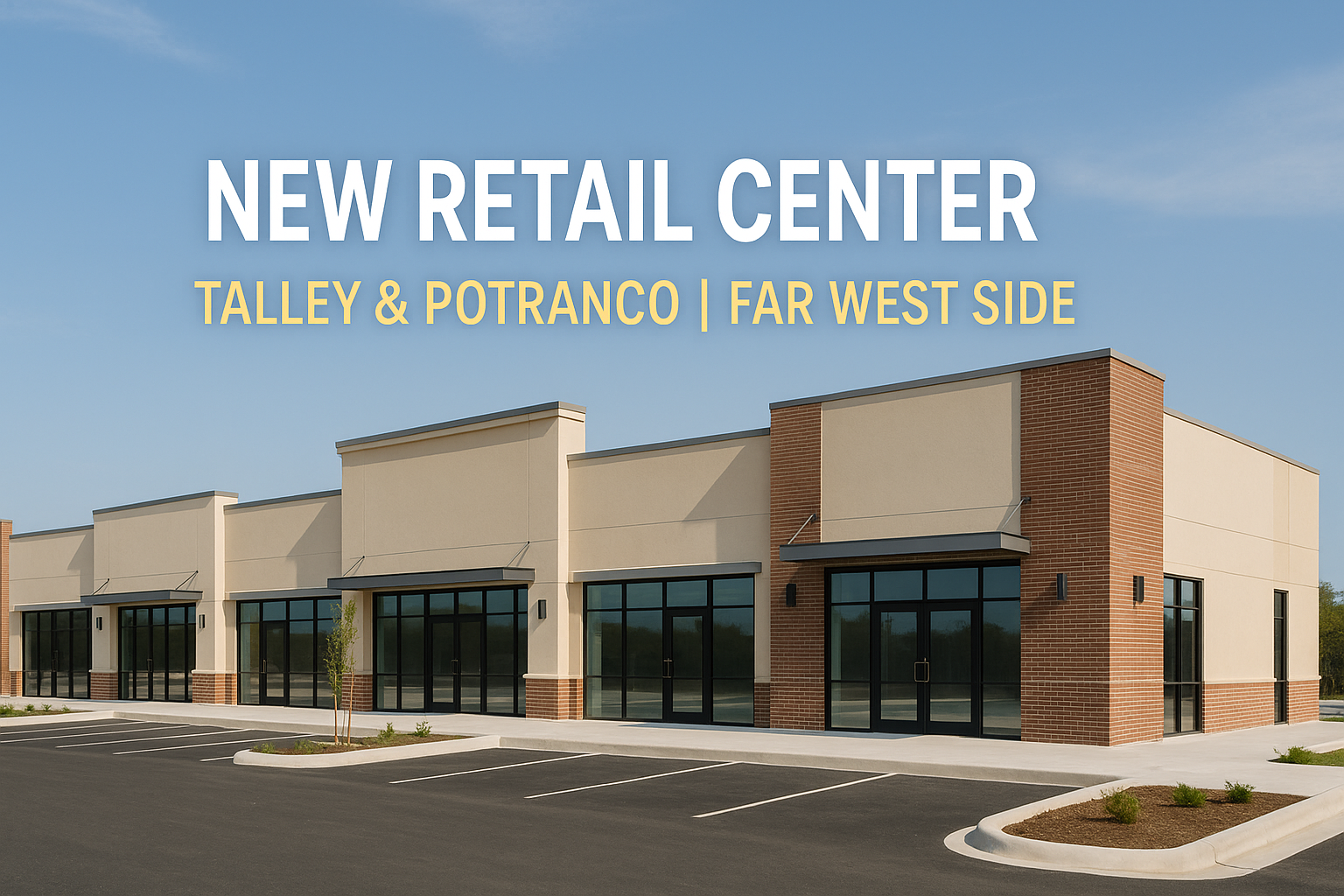
San Antonio's Far West Side continues evolving as commercial development responds to years of rapid residential growth. A new shopping plaza planned for the intersection of Talley Road and Potranco Road will bring retail, dining, and services closer to the thousands of households that have moved into surrounding subdivisions. For residents who have watched their neighborhoods expand while commercial amenities remained distant, this development addresses a gap that has shaped daily life in Far West communities.
The Potranco Road corridor has experienced substantial residential construction over recent years, with builders developing subdivisions including Ladera, Redbird Ranch, Arcadia Ridge, and Weston Oaks among others. This housing growth has created population density that commercial developers now find attractive for retail investment. The pattern follows typical suburban development sequences where residential construction precedes commercial development by several years as customer bases accumulate to levels supporting business operations.
For those considering buying a home in San Antonio or already living in Far West Side communities, understanding how commercial development affects neighborhood convenience and character provides valuable context. The addition of nearby retail and services changes how residents experience their communities, potentially reducing travel times for routine errands while adding amenities that contribute to lifestyle satisfaction. These factors influence both current resident experiences and future buyer interest in the area.
This guide explores what the Talley and Potranco retail development will bring to the Far West Side, why commercial growth follows residential expansion patterns, what the surrounding communities offer, how retail proximity factors into real estate considerations, and what the development signals about the corridor's continued evolution. Whether you live nearby or are evaluating Far West Side communities, this commercial addition merits attention.
What Is Planned for the Talley and Potranco Intersection?
The planned shopping plaza at Talley Road and Potranco Road will bring commercial development to an intersection surrounded by substantial residential growth. While specific tenants have not been announced, developments of this type typically attract a mix of quick service restaurants, retail shops, service providers, and convenience oriented businesses serving nearby households. The location positions the development to serve multiple subdivisions within convenient driving distance.
Retail developments at major intersections in growing suburban areas typically anchor with recognizable brands that draw consistent traffic, then fill remaining spaces with complementary tenants. Coffee shops, fast food restaurants, dental and medical clinics, fitness centers, salons, and similar service providers commonly occupy these centers. The tenant mix usually emerges as the development progresses through leasing phases closer to completion.
Q: Why hasn't the developer announced specific tenants yet?
A: Retail leasing often proceeds in phases, with anchor tenants committed early while smaller spaces fill as construction advances. Developers may announce major tenants to generate interest while keeping flexibility for remaining spaces. Some tenants prefer not to announce until closer to opening dates. The absence of specific announcements does not indicate problems but reflects normal development timelines where details emerge progressively.
The intersection's location along Potranco Road provides visibility and access that retailers value. Traffic volumes through the intersection have grown alongside residential development, creating the customer exposure that commercial tenants require. The site's position serving multiple subdivisions rather than a single community expands the potential customer base that retailers can project.
Planned development characteristics:
- Shopping plaza at Talley Road and Potranco Road intersection
- Specific tenants to be announced as leasing progresses
- Mix of retail, dining, and service providers anticipated
- Location serving multiple Far West Side subdivisions
- Development responding to residential growth in the corridor
- Typical tenant categories including restaurants, services, and convenience retail
Why Has the Far West Side Experienced Such Rapid Residential Growth?
Understanding why the Far West Side has attracted extensive residential development helps explain the commercial growth now following. The corridor's expansion reflects factors including land availability, affordability relative to other San Antonio areas, transportation access, and builder activity responding to buyer demand. These conditions created the population growth that now supports commercial development.
Land availability in the Far West Side has enabled large scale subdivision development that more built out areas cannot accommodate. Developers can acquire parcels sufficient for master planned communities with hundreds or thousands of homes. This scale supports infrastructure investment and amenity development that individual lot construction cannot achieve. The availability of developable land attracted builders seeking growth opportunities.
Q: How does Far West Side affordability compare to other San Antonio areas?
A: The Far West Side has generally offered more home for the money compared to established areas like Stone Oak or neighborhoods closer to downtown. New construction from production builders provides contemporary homes at price points accessible to first time buyers, young families, and households seeking value. This relative affordability has attracted buyers who might be priced out of other submarkets.
Transportation improvements including Loop 1604 expansion and Potranco Road development have enhanced connectivity to employment centers. Commute times to major employers have become more manageable as infrastructure has improved. This accessibility makes the Far West Side viable for households working throughout the metropolitan area while benefiting from the area's housing options.
Factors driving Far West Side residential growth:
- Land availability enabling large scale subdivision development
- Relative affordability compared to established San Antonio areas
- New construction providing contemporary homes at accessible prices
- Transportation improvements enhancing employment center connectivity
- Builder activity responding to sustained buyer demand
- Master planned communities offering amenities and infrastructure
What Subdivisions Surround the Planned Development?
The Talley and Potranco intersection serves multiple residential communities that have developed throughout the Far West Side corridor. Understanding these subdivisions helps appreciate the customer base the retail development will serve and provides context for those evaluating the area for potential home purchases. Each community offers somewhat different characteristics while sharing the corridor's overall growth trajectory.
Redbird Ranch represents one of the substantial subdivisions near the planned development, featuring new construction from multiple builders serving various price points and buyer profiles. The community has grown significantly, adding households that contribute to the area's population base. Amenities within the subdivision complement what the new retail development will add to the broader area.
Q: What other subdivisions exist near the Talley and Potranco intersection?
A: Ladera, Arcadia Ridge, Weston Oaks, and numerous other communities have developed throughout the Potranco corridor. Builders including DR Horton, Perry Homes, Highland Homes, and Lennar have been active in various subdivisions, providing inventory across price ranges. The collective population from these communities creates the customer base that supports commercial development at the intersection.
Northside Independent School District serves many of these communities, with campuses including Brennan High School and Luna Middle School among facilities serving Far West Side students. School access matters to families evaluating the area, and NISD's presence provides educational options that buyers consider alongside housing and amenity factors.
Subdivisions and features near the development:
- Redbird Ranch featuring new construction from multiple builders
- Ladera offering master planned community amenities
- Arcadia Ridge and Weston Oaks adding to corridor housing stock
- Multiple builders active including DR Horton, Perry Homes, Highland Homes, and Lennar
- NISD schools serving Far West Side communities
- Collective population creating commercial development customer base
How Does Commercial Development Typically Follow Residential Growth?
Understanding the relationship between residential and commercial development helps residents appreciate why amenities sometimes lag behind housing in growing areas. The pattern visible on the Far West Side reflects dynamics common throughout suburban development where commercial investment waits for population to reach levels supporting profitable operations. Recognizing this pattern helps calibrate expectations about how communities evolve.
Commercial developers and retailers evaluate potential locations based on population density, household incomes, traffic patterns, and competitive landscape. Sites in newly developing areas may not meet threshold requirements until sufficient housing has been built and occupied. This creates lag periods where residents move into subdivisions before commercial amenities arrive nearby. The Talley and Potranco development reflects the corridor reaching maturity levels that now attract commercial investment.
Q: How long does the lag between residential and commercial development typically last?
A: The timeline varies based on development pace, site availability, and market conditions, but residential areas often wait several years before substantial commercial development arrives. Initial retail may include only convenience stores or fast food, with more complete commercial development following as population grows. The Far West Side's commercial expansion now reflects population accumulated over years of residential construction.
The chicken and egg dynamic between residential and commercial development creates challenges for early residents. Households moving into new subdivisions may lack convenient retail and services, requiring longer drives for routine errands. As commercial development catches up, convenience improves for both existing residents and future buyers evaluating the area. Understanding this progression helps buyers assess communities at different development stages.
Residential and commercial development relationship:
- Commercial investment waiting for population thresholds
- Retailers requiring customer density to project profitability
- Lag periods between housing and amenity development
- Initial commercial often limited to basic convenience retail
- More complete commercial following population accumulation
- Early residents experiencing amenity gaps that later close
What Amenity Gaps Has the Far West Side Experienced?
Residents of Far West Side communities have experienced the amenity gaps typical of rapidly growing suburban areas where housing development outpaces commercial construction. Understanding what has been lacking helps appreciate what new commercial development addresses and provides context for evaluating how the corridor continues evolving. The retail development at Talley and Potranco responds to needs residents have identified.
Grocery store access has been among the gaps Far West Side residents have noted. While some grocery options exist along the corridor, the ratio of stores to population has meant longer drives or crowded conditions compared to more established areas. Additional grocery development, whether at this specific location or elsewhere in the corridor, would address a practical need affecting household routines.
Q: What other services have Far West Side residents lacked convenient access to?
A: Quick service and sit down restaurants have been limited relative to population, requiring residents to travel outside the immediate area for dining variety. Medical and dental services, daycare facilities, fitness centers, and personal services like salons have also been underrepresented. The types of everyday services that established neighborhoods take for granted have required Far West Side residents to travel further for access.
The amenity gap experience shapes how residents evaluate their communities and affects satisfaction with location choices. Some households accept the tradeoffs of newer construction and relative affordability in exchange for temporary amenity limitations. Others find the inconvenience more challenging than anticipated. As commercial development catches up, the value proposition of Far West Side communities strengthens.
Amenity gaps the Far West Side has experienced:
- Grocery store access relative to population density
- Quick service and sit down restaurant variety
- Medical and dental clinic availability
- Daycare and childcare facility options
- Fitness center and recreational service access
- Personal services including salons and similar providers
How Should Buyers Evaluate Areas with Developing Commercial Infrastructure?
Those exploring homes for sale in San Antonio in growing areas like the Far West Side benefit from understanding how to evaluate communities where commercial infrastructure is still developing. Balancing current conditions against development trajectory helps buyers make decisions aligned with their priorities and tolerance for temporary inconveniences. These evaluations require considering both present circumstances and likely evolution.
Assess current amenity availability honestly. Drive the routes you would use for grocery shopping, dining, and routine errands. Note distances and travel times during the hours you would typically make these trips. Understanding current reality prevents surprises after purchase. Some buyers find amenity gaps more tolerable than others based on lifestyle and expectations.
Q: How can buyers assess whether commercial development will actually arrive?
A: Look for indicators including approved or announced developments, construction activity on commercial sites, population growth supporting commercial investment, and corridor development patterns suggesting continued expansion. Developments with specific site plans, permits, and announced timelines provide more certainty than general area growth expectations. However, even announced projects can experience delays or changes.
Consider your timeline and tolerance for waiting. If commercial development is announced but several years away, evaluate whether you can accept current conditions during that period. Households with flexibility may find value in areas poised for improvement. Those needing immediate amenity access might prefer established areas where infrastructure already exists.
Factors for evaluating areas with developing commercial:
- Current amenity availability assessed through actual driving
- Distance and travel times for routine errands
- Announced or approved commercial developments providing certainty
- Construction activity indicating near term additions
- Population trends supporting commercial investment projections
- Personal tolerance for temporary amenity gaps
- Timeline alignment between development and household needs
What Does This Development Signal About the Potranco Corridor?
The Talley and Potranco retail development signals continued commercial confidence in the corridor's growth trajectory. Understanding what the project indicates helps residents and potential buyers appreciate how external observers assess the area. Commercial investment decisions emerge from professional analysis that provides perspective beyond individual experiences or impressions.
Developers commit capital to projects based on projections that customer bases can support profitable operations. The decision to develop retail at this intersection indicates assessment that surrounding population and traffic justify investment. This professional evaluation provides external validation of the corridor's development that residents may find informative when considering their own real estate decisions.
Q: Does one retail development indicate broader commercial expansion will follow?
A: Individual projects cannot guarantee additional development, but successful commercial activity often attracts further investment as developers observe performance and recognize opportunities. Commercial development tends to cluster as complementary businesses locate near each other. The Talley and Potranco project may encourage additional commercial interest in the corridor if it performs well.
The pattern of commercial following residential development suggests the Far West Side has reached a maturation point where more commercial activity becomes viable. Areas that have accumulated population over years of residential construction now present opportunities that developers are recognizing. This trajectory should continue as population growth proceeds.
Signals from this commercial development:
- Developer confidence in corridor population and traffic
- Professional assessment validating residential growth
- Maturation indicating threshold levels supporting retail
- Potential catalyst for additional commercial interest
- Pattern suggesting continued commercial expansion likely
- External validation of corridor development trajectory
How Does Retail Proximity Factor into Home Buying Decisions?
Understanding how retail proximity affects home buying decisions helps both buyers evaluating options and sellers positioning properties. While retail access should not dominate purchasing decisions, it contributes to lifestyle considerations that influence satisfaction and can affect future marketability. Recognizing these dynamics helps approach real estate decisions comprehensively.
Convenience matters for daily life. Households that can accomplish routine errands quickly have more time for other activities. Proximity to grocery stores, restaurants, and services reduces the time and effort required for tasks that must be completed regularly. This practical convenience affects how residents experience their neighborhoods and their satisfaction with location choices.
Q: How much should retail proximity weigh in home buying decisions?
A: Retail access represents one factor among many including schools, commute times, property features, neighborhood character, and price. For most buyers, fundamental factors should take precedence. However, households where convenience heavily affects lifestyle satisfaction might weight retail proximity more significantly. Balance considerations based on your specific priorities and circumstances.
Future marketability also merits consideration. Properties in areas with developing or established commercial infrastructure may appeal to broader buyer pools when eventually sold. The Talley and Potranco development could enhance marketability for homes in surrounding subdivisions by adding amenities that future buyers will value. This potential benefit complements immediate convenience improvements for current residents.
Retail proximity considerations for home buyers:
- Convenience affecting daily life quality and time allocation
- Routine errand efficiency improving with nearby options
- Balance against fundamental factors like schools and commute
- Household specific priorities determining appropriate weighting
- Future marketability potentially enhanced by commercial development
- Comprehensive evaluation considering multiple factors
What New Construction Options Exist in Far West Side Communities?
The Far West Side offers substantial new construction inventory from multiple builders serving various buyer profiles and price points. Understanding these options helps buyers evaluating the corridor determine whether available homes match their needs. The combination of new construction choices with improving commercial infrastructure creates a value proposition worth examining.
Production builders including DR Horton, Perry Homes, Highland Homes, and Lennar have been active throughout Far West Side subdivisions. Each builder offers different floor plans, standard features, and price points. Comparing offerings across builders helps buyers identify options that best match their priorities. Working with representation experienced in new construction helps navigate builder processes and negotiations.
Q: What should buyers understand about purchasing new construction on the Far West Side?
A: New construction involves different processes than resale purchases. Builder contracts differ from standard purchase agreements and merit careful review. Design center selections and upgrade decisions affect final pricing. Builder warranties provide coverage but have limitations buyers should understand. Construction timelines vary and can extend beyond initial estimates. Experienced representation helps buyers navigate these considerations.
The availability of move in ready homes versus to be built options varies by community and market conditions. Some buyers prefer selecting lots and customizing through the construction process. Others prioritize immediate move in availability. Understanding which options exist in target communities helps buyers identify appropriate opportunities.
Far West Side new construction considerations:
- Multiple builders offering varied floor plans and price points
- DR Horton, Perry Homes, Highland Homes, and Lennar among active builders
- Builder contracts differing from standard purchase agreements
- Design center selections affecting final pricing
- Construction timelines varying and potentially extending
- Move in ready versus to be built options depending on community
- Experienced representation helping navigate builder processes
What Schools Serve the Far West Side Communities?
Families evaluating the Far West Side typically consider school options alongside housing and amenity factors. Northside Independent School District serves many Far West Side communities, providing educational options that influence where families choose to purchase. Understanding school access helps buyers with children evaluate whether the corridor meets their needs.
NISD operates campuses throughout the Far West Side including elementary, middle, and high school facilities. Brennan High School and Luna Middle School represent campuses serving portions of the corridor. Specific school assignments depend on property addresses within district boundaries. Buyers should verify which campuses serve properties they are considering rather than assuming based on general area descriptions.
Q: How can buyers verify school assignments for specific properties?
A: District websites typically provide tools for checking school assignments based on property addresses. Real estate professionals can assist with verification. School assignments can change as districts add facilities or adjust boundaries to manage enrollment. Confirming current assignments and understanding potential for future changes helps buyers make informed decisions.
School quality perceptions vary and families should evaluate based on factors important to their specific situations. Test scores, extracurricular offerings, class sizes, and program availability all matter differently to different families. Visiting campuses and speaking with current families provides perspectives beyond published statistics.
School considerations for Far West Side buyers:
- Northside ISD serving many Far West Side communities
- Brennan High School and Luna Middle School among serving campuses
- Specific assignments depending on property addresses
- District websites providing assignment verification tools
- School boundaries potentially changing over time
- Individual family priorities determining evaluation criteria
- Campus visits and parent input supplementing published information
How Does Traffic Factor into Far West Side Living?
Traffic conditions affect daily life for Far West Side residents and merit consideration for those evaluating the corridor. Understanding current conditions and how they may evolve as development continues helps buyers assess whether commute patterns align with their lifestyles. New retail development will generate some additional traffic while also reducing resident trips to more distant destinations.
The Potranco Road corridor experiences traffic volumes that have grown alongside residential development. Morning and evening commute periods create congestion at major intersections. Travel times to employment centers vary based on specific routes, times, and destinations. Buyers should drive intended commute routes during representative times before committing to purchases.
Q: How might the new retail development affect traffic?
A: Commercial development generates customer traffic that adds vehicles to surrounding roads and intersections. Site plans typically include access improvements and may incorporate traffic management features. The net effect depends on site design, tenant types, and operating hours. Some traffic increase is inevitable with any commercial development, though effects vary based on specific circumstances.
Offsetting this additional traffic, nearby retail reduces trips residents currently make to more distant destinations. A household that previously drove several miles for errands might make shorter trips to nearby commercial, potentially reducing total vehicle miles traveled even if local intersection traffic increases. These dynamics create complex traffic effects that differ by perspective.
Traffic considerations for the Far West Side:
- Corridor traffic growing with residential development
- Commute time congestion at major intersections
- Employment center connectivity depending on routes and times
- Commercial development generating customer traffic
- Access improvements typically included in site plans
- Nearby retail potentially reducing resident trips to distant destinations
- Complex net effects varying by perspective
What Timeline Should Residents Expect for the Development?
Understanding development timelines helps residents calibrate expectations about when new amenities will become available. Commercial development proceeds through phases from planning through construction to tenant occupancy that span months or years depending on project scope and circumstances. Monitoring progress provides updates as the project advances.
Development phases typically include site planning and permitting, site preparation and infrastructure work, building construction, tenant buildout, and opening. Each phase takes time and can experience delays from various causes. Weather, supply chain issues, permitting complications, and financing considerations can all affect schedules. Projects rarely complete faster than projected and sometimes take longer.
Q: How can residents track development progress?
A: Monitoring construction activity at the site provides direct evidence of progress. Local news coverage may report on significant milestones. City planning and permitting records document approvals and inspections. Developer communications, when available, share official updates. Real estate professionals tracking the area often share relevant development news.
Patience serves residents well when awaiting commercial development. Projects that seem imminent sometimes extend considerably. Managing expectations prevents frustration when timelines shift. The eventual benefit of completed development provides value regardless of whether it arrives on initially projected schedules.
Development timeline considerations:
- Multiple phases from planning through tenant occupancy
- Site preparation, construction, and buildout all requiring time
- Various factors potentially causing delays
- Weather, supply chains, permitting, and financing affecting schedules
- Construction observation providing direct progress evidence
- Official communications and news coverage sharing updates
- Patience appropriate given typical timeline variability
What Other Commercial Development Is Occurring on the Far West Side?
The Talley and Potranco project represents one component of broader commercial development activity throughout the Far West Side corridor. Understanding this broader context helps residents appreciate cumulative improvements occurring across the area. Multiple projects together create more complete commercial infrastructure than any individual development provides.
Commercial development along Potranco Road extends beyond the Talley intersection, with various projects at different stages throughout the corridor. New restaurant locations, service providers, and retail establishments have opened or are planned in multiple locations. This distributed development gradually fills amenity gaps that Far West Side residents have experienced.
Q: What categories of commercial development are occurring beyond retail?
A: Healthcare facilities including medical and dental offices continue expanding to serve growing populations. Educational facilities beyond public schools including childcare and tutoring services address family needs. Professional services, financial services, and various other categories establish presence as population supports demand. The commercial ecosystem becoming more complete over time.
The cumulative effect of multiple commercial projects transforms the Far West Side from a primarily residential area into a more complete community. This evolution improves convenience for current residents while enhancing the area's appeal for future buyers. The trajectory suggests continued commercial expansion as population growth proceeds.
Broader Far West Side commercial development:
- Multiple retail and dining projects throughout the corridor
- Healthcare facilities expanding to serve growing population
- Educational and childcare services addressing family needs
- Professional and financial services establishing presence
- Distributed development filling various amenity gaps
- Cumulative effect creating more complete community
- Continued expansion likely as population grows
Expert Insight from Tami Price
"This is exactly the kind of development buyers are asking for," says Tami Price, REALTOR® and Broker Associate with Real Broker, LLC. "Families want to live near what they need, not just in nice homes but in complete communities. Potranco and Talley are finally catching up to the demand that residential growth created years ago. This commercial development validates what residents have been experiencing as the corridor matures."
Price brings nearly two decades of experience and approximately 1,000 closed transactions to her work with buyers and sellers throughout San Antonio, Schertz, Cibolo, Helotes, Converse, and Boerne. Her understanding of how commercial development connects to residential market dynamics helps clients evaluate options throughout the metropolitan area.
"When I work with buyers considering the Far West Side, we discuss both current conditions and development trajectory," Price explains. "Understanding what exists now versus what is coming helps buyers make decisions aligned with their timelines and tolerance for evolving amenities. The commercial investment happening along Potranco signals that the corridor has reached maturity levels that justify serious consideration."
Her recognition as a RealTrends Verified Top Agent reflects consistent client satisfaction. Designations including the Accredited Buyer's Representative (ABR®) demonstrate specialized expertise helping buyers navigate markets including growing areas like the Far West Side.
"Commercial development catching up to residential growth strengthens the value proposition of Far West Side communities," Price notes. "For buyers seeking new construction at accessible price points with improving amenities, the corridor offers compelling options worth evaluating."
Three Key Takeaways
1. A New Shopping Plaza Is Planned for the Talley Road and Potranco Road Intersection, Bringing Retail and Services to the Growing Far West Side
The development will add commercial amenities to a corridor that has experienced years of residential growth without corresponding retail infrastructure. While specific tenants have not been announced, developments of this type typically attract restaurants, retail shops, and service providers serving nearby households. The location positions the plaza to serve multiple subdivisions including Redbird Ranch, Ladera, Arcadia Ridge, and Weston Oaks.
2. Commercial Development Following Residential Growth Reflects the Far West Side Corridor Reaching Maturity Levels That Support Retail Investment
The pattern of commercial development lagging residential construction by several years is common in suburban growth areas. Retailers wait for population density to reach levels supporting profitable operations. The Talley and Potranco development indicates the corridor has accumulated sufficient customer base to attract commercial investment. This maturation improves conditions for current residents while enhancing appeal for future buyers.
3. Buyers Evaluating Far West Side Communities Should Consider Both Current Conditions and Development Trajectory When Making Decisions
Those considering buying a home in San Antonio in growing areas like the Far West Side benefit from understanding what amenities exist now versus what is coming. New construction options from multiple builders offer contemporary homes at accessible prices. Commercial development adding convenience improves the value proposition over time. Balancing current realities against likely evolution helps buyers identify communities matching their priorities.
Frequently Asked Questions
Q: What stores are going into the plaza?
A: Specific tenants have not been announced. Retail developments of this type typically attract quick service restaurants, coffee shops, dental and medical clinics, fitness centers, salons, and similar service providers. Anchor tenants often commit early while smaller spaces fill as construction advances. Tenant announcements will likely emerge as the project progresses toward completion.
Q: Will this increase traffic congestion?
A: Commercial development generates customer traffic that adds vehicles to surrounding roads. Some traffic increase is expected with any retail development. Site plans typically include access improvements and traffic management features to mitigate impacts. Nearby retail may also reduce trips residents currently make to more distant destinations, creating complex net effects.
Q: When will the development open?
A: Specific timeline information has not been detailed. Commercial development proceeds through planning, permitting, construction, and tenant buildout phases that span months or years. Monitoring construction activity and local news provides progress updates. Development timelines can extend beyond initial projections due to various factors.
Q: What subdivisions will the retail serve?
A: The location at Talley and Potranco positions the development to serve multiple subdivisions including Redbird Ranch, Ladera, Arcadia Ridge, Weston Oaks, and other communities throughout the corridor. The collective population from these subdivisions creates the customer base supporting commercial development.
Q: Is this part of a bigger commercial push in the area?
A: Yes, the Far West Side is experiencing broader commercial development beyond this specific project. Multiple retail and dining developments have opened or are planned throughout the Potranco corridor. Healthcare, educational, and service facilities continue expanding. The cumulative effect creates more complete commercial infrastructure serving the growing population.
Q: What schools serve the Far West Side?
A: Northside Independent School District serves many Far West Side communities. Campuses including Brennan High School and Luna Middle School are among facilities serving the area. Specific school assignments depend on property addresses within district boundaries. Buyers should verify assignments for properties they are considering.
Q: Are home prices on the Far West Side affordable?
A: The Far West Side has generally offered relative value compared to more established San Antonio areas. New construction from production builders provides contemporary homes at price points accessible to various buyer profiles. Specific pricing varies by builder, community, and home features. Working with experienced representation helps identify options within budget parameters.
Q: What builders are active in Far West Side subdivisions?
A: Multiple builders including DR Horton, Perry Homes, Highland Homes, and Lennar have been active throughout the corridor. Each offers different floor plans, features, and price points. Comparing offerings across builders and communities helps buyers identify appropriate options. New construction involves different processes than resale purchases that merit understanding.
The Bottom Line
The planned retail development at Talley Road and Potranco Road represents commercial investment catching up to years of residential growth on San Antonio's Far West Side. For residents who have experienced the amenity gaps typical of rapidly developing suburban areas, the project brings shopping, dining, and services closer to home. The development signals that the corridor has matured to levels where commercial operators see viable opportunities.
Buyers evaluating Far West Side communities can consider both current conditions and development trajectory when making decisions. New construction from multiple builders offers contemporary homes at accessible price points. Commercial development adding convenience improves the value proposition over time. Understanding how residential and commercial growth relate helps assess communities at different development stages.
Working with experienced representation helps navigate growing markets where current conditions and future projections both matter for decision making. The Far West Side's combination of new construction options and improving commercial infrastructure creates a value proposition worth examining for buyers seeking the right balance of home quality, price, and community amenities.

Contact Tami Price, REALTOR®
Whether exploring Far West Side communities or evaluating options throughout greater San Antonio, working with an experienced REALTOR® provides guidance through the home buying process. Tami Price brings local market knowledge and professional expertise to help buyers understand how development patterns affect different areas and find homes matching their priorities.
From first time buyers to experienced homeowners, personalized service makes the difference in successful transactions.
Tami Price, REALTOR®, Broker Associate
📞 210-620-6681
Tami Price's Specialties
- Comprehensive Buyer and Seller Representation
- Military Relocations and PCS Moves
- VA Loan Guidance and Assumptions
- New Construction Navigation
- Strategic Pricing and Market Analysis
- Professional Property Marketing
- First Time Buyer Education
- Move Up and Downsizing Transitions
- Residential Real Estate Throughout San Antonio, Schertz, Cibolo, Helotes, Converse, and Boerne
Disclaimer
This blog post is provided for informational purposes only and should not be construed as guarantees regarding development outcomes, property values, or commercial tenant announcements. Information about the planned retail development reflects publicly available details as of the publication date and is subject to change. Development timelines, tenant mixes, and project features are determined by developers and may be modified without notice. Real estate decisions should be based on individual circumstances, professional guidance, and current market conditions. Tami Price, REALTOR®, and Real Broker, LLC make no warranties regarding accuracy, completeness, or applicability of information to specific circumstances.
Categories
- All Blogs (942)
- Home Buying (19)
- Neighborhood Guides (45)
- 10 Incentive and Rate Buydown Questions (1)
- 10 Military Neighborhood (1)
- 10 Mistakes Sellers Make (1)
- 10 Strategies to Coordinate a Same Day Close (1)
- 12 Lifestyle Questions to Move In (1)
- 12 PCS What Ifs (1)
- 12 Photos and Marketing Assets (1)
- 13 PCS Hunting Trip Tips (1)
- 14 Design Center Decisions (1)
- 15 Red Flags Touring Home in San Antonio (1)
- 2026 Market (1)
- 30 days after closing your home (1)
- 7 Offer Terms Beyond Price (1)
- 7 VA Specific Questions (1)
- 78015 Ranked One (1)
- 8 Bridge (1)
- 8 Myths Buyers Believe about Down Payments (1)
- 8 Reasons VA Buyers Love New Construction (1)
- 9 Mistakes Move Up Buyers Make (1)
- 9 Questions to Decide If You Keep Your PCS Home (1)
- 9 Timeline Questions Every Buyer Need to Ask (1)
- 9 Warranty Questions to Ask (1)
- 9 Ways to Attract VA & Military Buyers (1)
- 90 days before your move (1)
- About Tami Price (6)
- Active Adult Homes (1)
- Affordable Communities (2)
- Affordable Housing & Community Development (5)
- Agent Qualifications and Credentials (1)
- Agent Qualifications and Experience (1)
- Agent Recognition (3)
- Agent Selection (1)
- AI and Real Estate Tools (1)
- Alamo Heights (5)
- Alamo Heights ISD (1)
- Alamo Heights Real Estate (1)
- Alamo Ranch (3)
- Amenities in Helotes, Texas (3)
- Apartment Market (1)
- Appraisals (1)
- Arts and Culture (1)
- Awards and Recognition (7)
- Balcones Creek (1)
- Best Neighborhoods to Live in Cibolo, TX (3)
- Best Neighborhoods to Live in San Antonio (16)
- Best Places to Live in Leon Valley: A Neighborhood Guide (1)
- Best Places to Live in Northeast Inner Loop: A Neighborhood Guide (1)
- Bexar County Property Tax (1)
- Bexar County Real Estate (3)
- Blue Tape Walkthrough (1)
- Boerne Home Sellers (1)
- Boerne Neighborhoods (2)
- Boerne Texas (9)
- Broadway Corridor Development (1)
- Build-to-Rent Communities (1)
- Builder Contracts & Warranties (3)
- Builder Incentives (1)
- Builder Warranties (1)
- Buyer (97)
- Buyer Activity San Antonio (1)
- Buyer and Seller Guidance (4)
- Buyer Due Diligence (1)
- Buyer Education (46)
- Buyer Guide (9)
- Buyer Guides (7)
- Buyer Protection Strategies (1)
- Buyer Representation (1)
- Buyer Representation Expertise (1)
- Buyer Resources (90)
- Buyer Strategy (2)
- Buyers (13)
- Buyers Agent (1)
- Buying a Foreclosed Home in San Antonio (10)
- Buying a Home (3)
- Buying a Home in San Antonio (6)
- Buying Near JBSA (1)
- Buying Timeline (1)
- Buying vs Renting (1)
- Castroville, TX (8)
- Central San Antonio (1)
- Central San Antonio Development (2)
- Central Texas Growth (1)
- Choosing a Real Estate Agent (1)
- Choosing an Agent (1)
- Cibolo Communities (1)
- Cibolo Home Sellers (1)
- Cibolo TX (15)
- Client Reviews and Testimonials (1)
- Client Satisfaction (1)
- Client Stories (1)
- Client Testimonial (4)
- Clients review (4)
- Closing (1)
- Cobblestone (1)
- Comal County (1)
- Commercial & Retail Development (27)
- Commercial Development (13)
- Commercial Development Impact on Home Values (1)
- Commercial Real Estate (1)
- Community (1)
- Community Amenities (2)
- Community Development (23)
- Community Development and Real Estate (3)
- Community Events & Development (1)
- Community Guides (1)
- Community Infrastructure (1)
- Community Investment Impact (2)
- Community Landmarks (1)
- Community News (4)
- Community Planning (2)
- Community Revitalization (1)
- Community Spotlights (1)
- Commuter Neighborhoods (1)
- Cons of Living in Helotes, TX (4)
- Conservation Communities (1)
- Contingency Questions (1)
- Converse Home Sellers (1)
- Converse Homes For Sale (3)
- Converse Real Estate (1)
- Converse TX (10)
- Converse TX Real Estate (1)
- Cost of Living Guides (1)
- Cost of Living in San Antonio TX (25)
- CPS Energy Programs (1)
- Custom Homes (5)
- Davis Ranch (1)
- Days on Market (1)
- Deco District San Antonio (1)
- Denver Heights (1)
- Down Payment Assistance (1)
- Downtown Boerne (1)
- Downtown Development (3)
- Downtown Living (1)
- Downtown Revitalization (14)
- Downtown San Antonio (2)
- Downtown San Antonio Real Estate (5)
- Downtown San Antonio Revitalization (1)
- Dual Military (1)
- East Side Living (1)
- East Side Neighborhoods (1)
- East Side San Antonio (4)
- Economic Development (3)
- Economic Growth & Industry (1)
- Education, Texas Hill Country (1)
- Emerald Pointe (1)
- Employment (1)
- Employment Corridors (1)
- Encino Forest (1)
- Entertainment Economy (1)
- Equity and Pricing Strategy (2)
- Equity Q&A (1)
- Established Communities (3)
- Events in San Antonio (207)
- Expert Advice from Tami Price, Realtor® (10)
- Fair Oak Ranch (1)
- Family Activities (2)
- Family Homes (3)
- Family Living in San Antonio (1)
- FAQ (1)
- Far Northwest San Antonio (1)
- Far West San Antonio (1)
- Far Westside Real Estate (4)
- Farmer Markets in San Antonio (1)
- Fastest Growing Zip Codes in America (1)
- Featured Homes for Sale (2)
- Featured Properties (1)
- Final Walkthrough (1)
- Financial Planning (11)
- Financing Strategy (1)
- First Time Buyers (23)
- First Time Sellers (1)
- First-Time Buyers (6)
- First-Time Homebuyer Resources (4)
- First-Time Homebuyer Tips (2)
- First-Time Homebuyers (6)
- First-Time Investors (1)
- Fort Sam Houston (3)
- Fort Sam Houston Real Estate (1)
- Fort Sam Houston, TX (2)
- Fox Grove (1)
- FSBO vs Agent Representation (1)
- Future Rental (1)
- Gated Communities (5)
- Golf Communities (1)
- Great Northwest (1)
- Greater San Antonio Housing Trends (2)
- Greater San Antonio Real Estate (5)
- Green Home Upgrades (1)
- Growth and Development (11)
- Healthcare (1)
- HELOC (1)
- Helotes Home Sellers (1)
- Highway 151 Corridor Growth (1)
- Hill Country Business (1)
- Hill Country Communities (2)
- Hill Country Development (3)
- Hill Country Homes for Sale (1)
- Hill Country Living (3)
- Hill Country Market Updates (1)
- Hill Country Real Estate (4)
- Hill Country Retreat (1)
- Historic Districts (5)
- Historic Neighborhoods (4)
- Historic Preservation (2)
- Holiday Attractions (1)
- Holiday Guide (1)
- Home Buying (7)
- Home Buying Education (3)
- Home Buying Guide (7)
- Home Buying Process (8)
- Home Buying Strategy (2)
- Home Buying Tips (6)
- Home Energy Efficiency San Antonio (5)
- Home Financing (2)
- Home Improvement ROI (1)
- Home Inspections (3)
- Home Preparation (2)
- Home Pricing Strategy (14)
- Home Renovation for Resale (1)
- Home Selling (12)
- Home Selling Guide (11)
- Home Selling Strategies (3)
- Home Selling Strategy (3)
- Home Selling Tips (22)
- Home Staging and Updates (2)
- Home Values (2)
- Homebuyer Education (15)
- Homebuyer Resources (1)
- Homebuying Guide (1)
- Homebuying Tips (3)
- Homeowner (37)
- Homeowner Tax Benefits (1)
- Homeownership Costs (1)
- Homes for Sale (2)
- Homes for sale near Lackland AFB (4)
- Homes Near Military Bases (1)
- Homestead amenities (1)
- Horizon Pointe (1)
- House Hunting Guide (1)
- Housing (1)
- Housing Community Development (1)
- Housing Development (2)
- Housing Market Updates (3)
- How to Buy a House in San Antonio TX (48)
- Huebner Oaks shopping center (1)
- Hunters Ranch (1)
- Hybrid (1)
- I-10 Corridor (1)
- I-35 Corridor (1)
- In Person (1)
- Incorporated Cities (6)
- Industrial Investment Impact (1)
- Industry News (2)
- Industry Recognition (1)
- Infrastructure & Growth Projects (26)
- Infrastructure and Sustainability (1)
- Infrastructure Development (1)
- Infrastructure Investment (1)
- Infrastructure Updates (2)
- Interest Rates (2)
- Invest in San Antonio (46)
- Investment Opportunities (3)
- Investment Property San Antonio (4)
- JBSA (9)
- JBSA Housing (11)
- JBSA Real Estate (4)
- JBSA Resources (7)
- Joint Base San Antonio (5)
- Joint Base San Antonio Housing (1)
- Judson ISD (2)
- Kendall County (1)
- La Cantera Retail Development (1)
- Lackland AFB (7)
- Lackland AFB Housing (1)
- Land Conservation (1)
- Land Use Planning (1)
- Lera MLS (15)
- Lifestyle & Community Growth (18)
- Lifestyle & Local Growth (12)
- Lifestyle Amenities (1)
- Lifestyle Communities (1)
- Listing Preparation (1)
- Listing Strategy (1)
- Live Oak (1)
- Living in San Antonio, TX (52)
- Living Near Randolph AFB (7)
- Loan Programs (1)
- Local Attractions (3)
- Local Business (1)
- Local Business & Development (9)
- Local Business & Economy (3)
- Local Business Spotlight (20)
- Local Business Support (5)
- Local Development (4)
- Local Development News (9)
- Local Market Insights (5)
- Local News (2)
- Local News Around San Antonio (2)
- Local Policy Changes (1)
- Local Real Estate News (1)
- Loop 1604 Corridor Growth (2)
- Loop 410 Corridor Development (1)
- Luxury Communities (3)
- Luxury Homes (2)
- Luxury Real Estate (1)
- Luxury Retail San Antonio (1)
- MacArthur Park (1)
- Major Developments (2)
- Making Offers on Homes (1)
- Market Analysis (26)
- Market Conditions (47)
- Market Expertise (1)
- Market Insights (5)
- Market Strategy (1)
- Market Timing (2)
- Market Trends (10)
- Market Trends & Insights (2)
- Market Update (18)
- Market Update 2026 (1)
- Market Updates (22)
- Master Planned Communities (12)
- Medical Center Area Real Estate (1)
- Medina Valley ISD (2)
- Midtown Living (1)
- Military & Economic Impact (3)
- Military Buyers (3)
- Military Communities (1)
- Military Families (1)
- Military Family Resources (1)
- Military Heritage (1)
- Military Homebuying (3)
- Military Homeownership (1)
- Military Housing (3)
- Military Housing Market in Texas (16)
- Military Life in San Antonio (2)
- Military Neighborhoods (1)
- Military PCS Relocations (3)
- Military Real Estate (2)
- Military Relocation (100)
- Military Relocation & VA Loans (10)
- Military Relocation San Antonio (4)
- Military Relocation Services (3)
- Military Relocation to San Antonio (50)
- Military Relocations (20)
- Military Relocations & VA Home Loans (5)
- Mixed-Income Housing (1)
- MLS Accuracy & Data Transparency (1)
- Mortgage Programs (1)
- Mothers Day in San Antonio (1)
- Move to Boerne TX (18)
- Move to Castroville TX (11)
- Move to Converse TX (16)
- Move to New Braunfels (1)
- Move to North San Antonio (19)
- Move to San Antonio TX (73)
- Move to Selma TX (19)
- Move to Shertz TX (13)
- Move to Texas (53)
- Move Up Buyer Resources (1)
- Move Up Buyers (23)
- Move-In Ready Homes (3)
- Move-In Ready Homes San Antonio (2)
- Move-Up Buyers (2)
- Moving to Helotes, TX (17)
- Moving to San Antonio (69)
- MUD Taxes (1)
- Natalia Homes For Sale (1)
- Near East Side Living (1)
- Negotiation Strategy (2)
- Neighborhood Amenities (1)
- Neighborhood Development (1)
- Neighborhood Guides (7)
- Neighborhood Investment (1)
- Neighborhood News (2)
- Neighborhood Revitalization (2)
- Neighborhood Spotlights (12)
- Neighborhood Updates (1)
- Neighborhoods near Randolph AFB (12)
- New Braunfels (6)
- New Braunfels Homes For Sale (1)
- New Braunfels News (3)
- New Braunfels Real Estate (3)
- New Businesses (2)
- New Construction (63)
- New Construction Communities (1)
- New Construction Homes (13)
- New Construction Homes San Antonio (5)
- New Construction vs Resale (2)
- New Construction Without Customization (1)
- New Construction Without the Wait (1)
- New Contruction Cost (1)
- New Development (3)
- New Listing (19)
- New Restaurants (3)
- News (211)
- News & updates (213)
- No HOA Homes (1)
- North Central San Antonio (5)
- North East ISD (4)
- North San Antonio (9)
- North San Antonio Real Estate (3)
- North Side Neighborhoods (1)
- North Side San Antonio Development (2)
- Northeast Inner Loop (1)
- Northeast Inner Loop Neighborhoods (1)
- Northeast San Antonio (3)
- Northside ISD (5)
- Northwest San Antonio (9)
- Northwest San Antonio Development (1)
- Northwest San Antonio Growth (1)
- Northwest San Antonio Real Estate (3)
- Northwood (1)
- Olympia Hills (1)
- One-Story Homes (1)
- Outdoor Living (1)
- Parks and Recreation (2)
- PCS and JBSA (2)
- PCS checklist (1)
- PCS Guide (4)
- PCS Moves (12)
- PCS Moves to Joint Base San Antonio (4)
- PCS Planning (16)
- PCS Randolph AFB (17)
- PCS Relocation (1)
- PCS Resources (6)
- PCS San Antonio (46)
- PCS to San Antonio (42)
- Pearl District Area Real Estate (2)
- PID Assessments (1)
- Pinon Creek (1)
- Pipe Creek (1)
- Places to Eat Near Randolph AFB (1)
- Pool Homes (1)
- Pre Approval (1)
- Pre-Listing Preparation (2)
- Pre-Listing Process (1)
- Prescott Oaks (1)
- Pricing and Marketing Strategy (3)
- Professional Awards and Achievements (2)
- Professional Real Estate Representation (1)
- Property Tax Exemptions Texas (1)
- Property Value Enhancement (1)
- pros and cons living in Converse TX (3)
- Pros and Cons Living in Selma TX (6)
- Pros and Cons of Living in Castroville, TX (4)
- Pros and Cons of Living in San Antonio (33)
- PT500 List (1)
- Purchase Negotiation (1)
- Quality of Life (1)
- Quick Close Real Estate (1)
- Randolph AFB Neighborhoods (2)
- Real Estate (1)
- Real Estate Advice (1)
- Real Estate Agent Recognition (6)
- Real Estate Agent Selection (2)
- Real Estate Agent Value (1)
- Real Estate Consultation (1)
- Real Estate Finance (1)
- Real Estate Financing (1)
- Real Estate Impact (1)
- Real Estate Investment San Antonio (2)
- Real Estate Legal Issues (1)
- Real Estate Market Insights (2)
- Real Estate Market Trends (5)
- Real Estate Professional Designations (1)
- Real Estate Strategy (1)
- Real Estate Technology & Trends (2)
- Real Estate Tips (1)
- Real Estate Tips and Guides (2)
- Real Estate Trends (4)
- RealTrends Verified (1)
- Regional Development (1)
- Regional Real Estate (2)
- Relocating to San Antonio (2)
- Relocation (4)
- Relocation Resources (2)
- Relocation to San Antonio (55)
- Remote Homebuying (1)
- Rental Housing (1)
- Rental Property (1)
- Rental Strategy (1)
- Resale Properties (1)
- Retail Development (2)
- Retire in Boerne TX (11)
- Retire in San Antonio (37)
- Retirement Communities (1)
- Reviews and Recognition (1)
- Rockwall Ranch (1)
- Rural Living (2)
- SABOR (28)
- San Antonio Area Listings (1)
- San Antonio Business Growth (1)
- San Antonio Buyer Resources (2)
- San Antonio Communities (3)
- San Antonio Community Events (1)
- San Antonio Community News (1)
- San Antonio Data Center Development (1)
- San Antonio Development (5)
- San Antonio Development & East Side Real Estate (1)
- San Antonio Dining and Lifestyle (3)
- San Antonio East Side Development (1)
- San Antonio Employment Growth (1)
- San Antonio Food & Community Development (2)
- San Antonio Growth (8)
- San Antonio Home Buying and Selling (2)
- San Antonio Home Buying Guide (5)
- San Antonio Home Improvement (2)
- San antonio home prices (3)
- San Antonio Home Sellers (3)
- San Antonio Homeowner Guide (1)
- San Antonio Homeowner Resources (1)
- San Antonio Homes for Sale (12)
- San Antonio Housing Market (2)
- San Antonio Housing Market & Mortgage Financing (2)
- San Antonio Housing Market Analysis (2)
- San Antonio Housing Trends & Market Analysis (4)
- San Antonio Industrial Development (1)
- San Antonio Industrial Policy (1)
- San Antonio Investment Properties (2)
- San Antonio Job Market (1)
- San Antonio Lifestyle Amenities (2)
- San Antonio Listing (1)
- San Antonio Living (1)
- San Antonio Market (3)
- San Antonio Market Updates (18)
- San Antonio Military Relocation (3)
- San Antonio Neighborhoods (67)
- San Antonio New Construction & Master-Planned Communities (4)
- San Antonio New Home Communities (1)
- San Antonio News (229)
- San Antonio North Side Development (1)
- San Antonio Parks (1)
- San Antonio Property Investment (1)
- San Antonio Property Taxes (2)
- San Antonio Real Estate (163)
- San Antonio Real Estate Agents (6)
- San Antonio Real Estate Excellence (1)
- San Antonio Real Estate Guide (6)
- San Antonio Real Estate Market (41)
- San Antonio Real Estate Market Analysis (6)
- San Antonio Real Estate News (2)
- San Antonio REALTOR Awards (1)
- San Antonio Restaurant News (2)
- San Antonio Restaurant Openings (1)
- San Antonio Seller Resources (2)
- San Antonio Sellers (1)
- San Antonio Spec Homes (1)
- San Antonio Spurs Community Programs (1)
- San Antonio Suburbs (1)
- San Antonio Transportation (2)
- San Antonio University Area Housing (1)
- San Antonio Urban Living (7)
- San Antonio West Side Development (2)
- San Antonio Zoning Policy (1)
- Scenic Loop (1)
- Schertz Home Sellers (1)
- Schertz Real Estate (1)
- Schertz, TX (13)
- School Districts (1)
- School Information (1)
- SCUCISD Schools (1)
- Secured Quick Offer (1)
- Sell Home In San Antonio TX (64)
- Seller (83)
- Seller Education (24)
- Seller Guide (4)
- Seller Guides (1)
- Seller Representation Expertise (1)
- Seller Resources (68)
- Seller Should Understand (1)
- Seller Strategy (3)
- Seller Tips (2)
- Sellers (10)
- Selling A Home in San Antonio (62)
- Selling Your San Antonio Home (3)
- Selma TX (9)
- Single-Story Homes (4)
- Smart Homes (1)
- Solar Homes (3)
- South San Antonio Real Estate (1)
- South Side Economic Growth (1)
- South Side San Antonio (1)
- Southtown (2)
- Southwest San Antonio Real Estate (1)
- Spec Homes and Inventory Homes (2)
- Spurs Arena Project Marvel (1)
- Stone Oak (2)
- Stone Oak Community News (5)
- Suburban Housing Growth (12)
- Suburban Living (2)
- Talise De Culebra (1)
- Technology Growth (3)
- Technology Sector Growth (1)
- Terrell Hills (3)
- Texas Acreage Properties (3)
- Texas Homestead Exemption (1)
- The Dominion Real Estate (1)
- The Rim Area Real Estate (1)
- Things to do in San Antonio TX (22)
- Things to do Near Randolph AFB (4)
- Time Planning (1)
- Time-Sensitive Home Buying (1)
- Timing Strategy (1)
- Tips for Buying New Construction (9)
- Tobin Hill Neighborhoods (2)
- Top Real Estate Agent in San Antonio (3)
- Tourism and Economic Development (1)
- Traders's Joe San Antonio (1)
- Transaction Coordination (1)
- Transportation Infrastructure (1)
- Two-Story Homes (2)
- Universal City (1)
- Updated Homes (2)
- Upscale Communities (1)
- Urban Communities (2)
- Urban Corridor Real Estate (1)
- Urban Development (5)
- Urban Living (3)
- Urban Neighborhoods (4)
- Urban Real Estate (1)
- Urban Renewal Projects (1)
- Urban Revitalization San Antonio (1)
- Utility Cost Reduction (1)
- UTSA Campus Development (1)
- VA Buyers (1)
- VA Home Loan Benefits (3)
- VA Loan Assumptions (3)
- VA loan benefits (27)
- VA Loan Guidance (1)
- VA Loan Home Buying Assistance (2)
- VA Loans (71)
- VA Loans and Military Benefits (3)
- VA Loans and Military Home Buying (3)
- VA Loans San Antonio (43)
- VET Benefits Living in San Antonio (3)
- Veterans Resources (3)
- Village Northwest (1)
- Virtual Buyers (1)
- Walkable Communities (1)
- week in sales (41)
- Weekly Sales Report (42)
- West San Antonio (2)
- West San Antonio Development (1)
- West San Antonio Real Estate (3)
- West San Antonio Real Estate Market (2)
- West Side Infrastructure Planning (1)
- West Side Real Estate (1)
- West Side San Antonio (2)
- Windcrest Homes for Sale (1)
Recent Posts