NewBuild Appraisal Gaps in 2026: How San Antonio Buyers Reduce Risk With Incentives and Comps
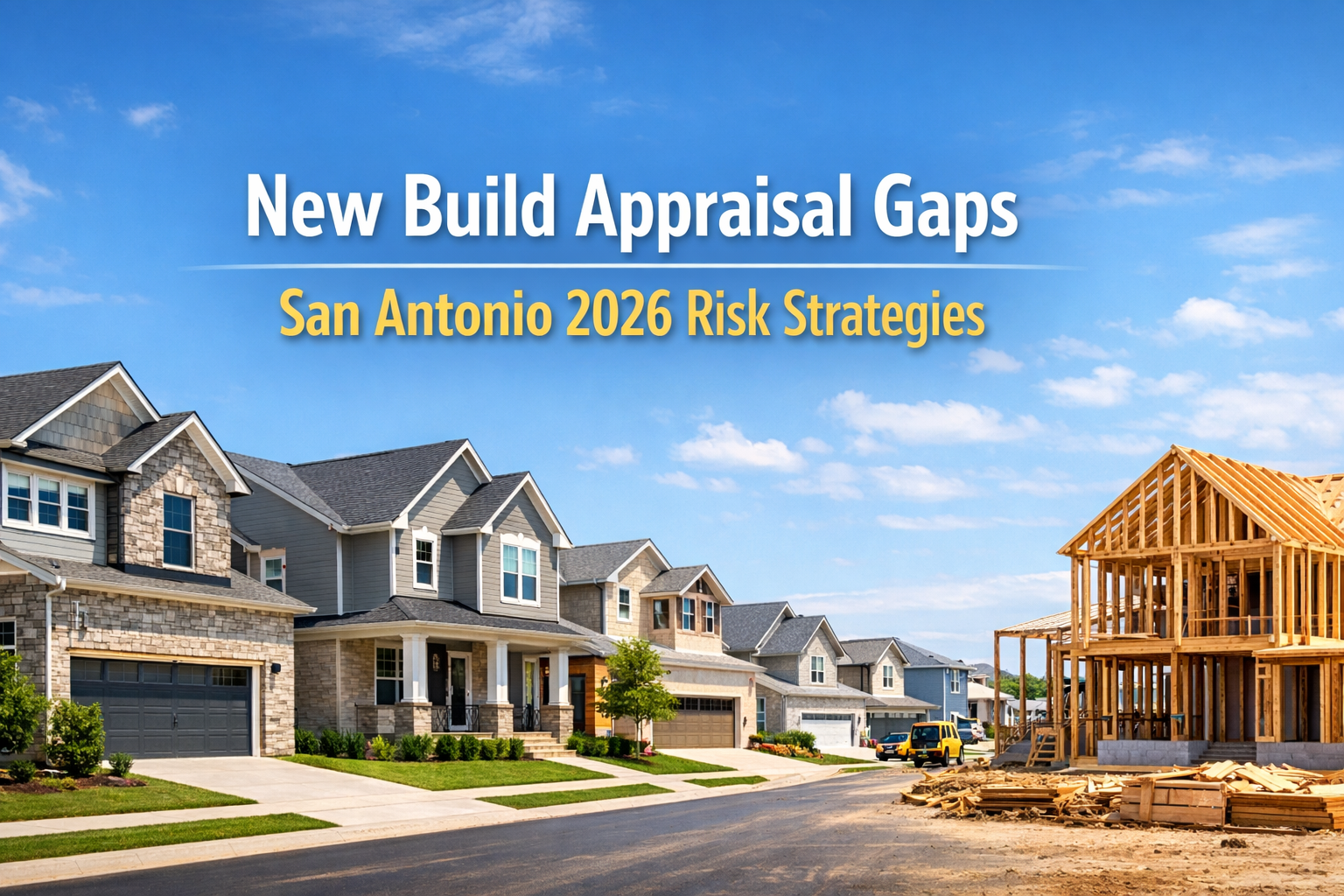
In 2026, appraisal gaps remain one of the most misunderstood risks facing buyers purchasing new construction in San Antonio. This is especially true for military families using VA loans, long-distance buyers relocating to Joint Base San Antonio, and move-up buyers who are transitioning from resale homes into builder inventory with limited new construction experience.
New homes often feel safer initially. They are new, energy efficient, and backed by builder warranties covering major systems. However, when incentives are layered into pricing structures, the contract price and the appraised value do not always align perfectly. That gap can delay a closing, force renegotiation under timeline pressure, or require additional cash from buyers if it is not planned for early in the transaction process. This guide explains why new build appraisal gaps happen, how incentives affect value, how VA appraisals differ from conventional, and how experienced buyers in San Antonio reduce risk using data-driven strategies.
What Exactly Is an Appraisal Gap in New Construction?
An appraisal gap occurs when the appraised value of a home comes in lower than the agreed contract price between buyer and builder. In resale homes, this often happens when buyers offer above asking price in competitive situations. In new construction, the cause is usually different and related to incentive structures rather than buyer competition.
Builders frequently use incentives to close homes and maintain sales velocity. These incentives can include below-market interest rates through preferred lender buydowns, closing cost assistance ranging from $10,000 to $25,000, appliance packages or upgraded features, blinds, garage openers, or landscaping included in base price, and price reductions that are not always transparent in marketing materials.
The fundamental issue is that incentives do not always translate directly into appraised value despite their real value to buyers. Appraisers rely on closed sales data and market evidence, not marketing concessions or builder promotions. When the contract price reflects layered incentives rather than true market value supported by comparable sales, a gap can occur between contract price and appraisal outcome.
Q: How common are appraisal gaps in San Antonio new construction in 2026?
A: Appraisal gap frequency varies by builder, community, and incentive structure, but buyers purchasing homes with $20,000+ in stacked incentives face higher risk. Homes priced within 3 to 5 percent of recent closed comparables typically appraise successfully, while those exceeding recent sales by 7 to 10 percent often encounter gaps.
Why Are Appraisal Gaps More Common in 2026?
Several market dynamics in 2026 are increasing appraisal risk in San Antonio new construction communities compared to peak years when rapid appreciation supported higher valuations.
Incentives Are Deeper and More Complex
Builders are competing aggressively for qualified buyers in a market with more inventory options than peak years. Rate buydowns reducing payments by $200 to $400 monthly, closing cost credits of $15,000 to $25,000, and design center upgrade packages are common. While these help buyer affordability significantly, they also complicate valuation when appraisers must determine whether contract prices reflect actual market value or incentive-inflated pricing.
An appraiser may see a $420,000 contract price on paper, but if $30,000 of that value is tied to rate incentives, closing cost credits, or included upgrades, the comparable sales without those incentives may support only $390,000 to $400,000 in actual market value.
Appraisals Look Backward While Builders Price Forward
Appraisals are based on closed sales data from the previous 90-180 days typically. Builders price homes based on future demand projections, absorption goals, and competitive positioning. When builder pricing moves faster than closed data accumulates to support those prices, the appraisal can lag behind by weeks or months creating gaps.
This disconnect between builder pricing strategy anticipating future market conditions and historical closed comparable sales is one of the most common triggers for appraisal issues that surprise buyers unfamiliar with new construction valuation.
VA Appraisals Are Conservative by Design
VA appraisals are not more difficult than conventional appraisals, but they are more structured with specific Minimum Property Requirements. They focus heavily on market support through comparable sales and property condition meeting health and safety standards. This protects VA buyers from overpaying, but it also means inflated pricing tied to heavy incentives is more likely to be flagged and adjusted downward.
How Do New Construction Appraisals Work in San Antonio?
Understanding how appraisals are ordered, conducted, and reviewed helps buyers reduce risk through strategic planning before contracts are executed.
The Appraiser Uses Comparable Sales Data
The appraiser looks at recent closed sales in the same community or nearby neighborhoods within the past 90 days typically. These comparable sales are adjusted for differences in size, lot placement, upgrades, and features creating adjusted values.
If a builder is offering large incentive packages that were not present in prior sales six months ago, the appraiser cannot simply match the current contract price without supporting market evidence demonstrating that prices have increased to that level.
Builder Incentives Are Scrutinized Carefully
Appraisers are required to note seller concessions and incentives in appraisal reports. If incentives exceed market norms or typical concession levels, appraisers may adjust value downward to reflect the true cash equivalent price that the property would command without those inducements.
This is one reason two buyers can purchase the same floor plan at different times at different prices, but receive different appraisal outcomes based on incentive structures and comparable sales available at each appraisal date.
Inventory Homes vs To-Be-Built Homes
Inventory homes that are complete or near completion are easier to appraise accurately because there are often recent closings of similar homes in the same community providing strong comparable sales data. To-be-built contracts carry more appraisal risk because the appraiser must rely on older comparable sales or less precise comps from different communities when the home being appraised will not be complete for 6 to 9 months.
Q: Do VA appraisals take longer than conventional appraisals for new construction?
A: Not necessarily longer, but VA appraisals include additional inspections for Minimum Property Requirements including HVAC functionality, water heater installation, and safety features. This can add 3 to 5 days to the appraisal process compared to conventional appraisals that focus primarily on value without condition requirements.
Why Do Military and VA Buyers Need Different Appraisal Strategies?
Military families relocating to San Antonio face additional pressure and constraints that make appraisal gap risk more consequential than for conventional buyers with flexible timelines.
VA Loans Do Not Allow Required Appraisal Gap Coverage
VA buyers cannot be required to bring additional funds to cover an appraisal gap without a formal written waiver and amendment. This is a consumer protection built into VA loan regulations, but it also means the contract must be structured carefully upfront rather than assuming gaps can be covered easily if they occur.
Tight PCS Timelines Increase Risk Exposure
When a family is PCSing to Joint Base San Antonio, delays from appraisal gaps can impact housing allowances, temporary lodging arrangements, and school transition timelines. Reducing appraisal risk early through strategic contract structuring is not optional for military buyers. It is essential for successful PCS coordination.
What Strategies Reduce Appraisal Risk in New Construction?
Buyers who work with an experienced local real estate agent use specific strategies to reduce or eliminate appraisal gaps in new construction transactions.
Strategy One: Separate Incentives From Base Price
The most effective approach is to negotiate incentives separately from base purchase price whenever possible. Instead of accepting a higher contract price of $450,000 with $25,000 in credits, buyers often negotiate a reduced purchase price of $430,000 with $5,000 in credits, keeping the contract price closer to market value supported by comparable sales.
This keeps the contract price closer to appraised value while still capturing builder incentives through closing cost assistance or rate buydowns structured outside the purchase price.
Strategy Two: Use True Comparable Sales Not Model Pricing
Model homes and advertised base prices are not comparable sales that appraisers use. Closed sales with actual transaction data are the only reliable indicators of value. A data-driven real estate agent will review closed inventory home sales in the community from the past 90 days, adjusted net prices after accounting for all incentives and concessions, and nearby resale homes competing with the builder in the same price range.
This analysis helps determine whether the builder's price is supported by actual market data before the contract is signed, preventing surprises during the appraisal process.
Strategy Three: Choose Inventory Homes Strategically
Inventory homes that mirror recent closings with similar features and lot placement are far less likely to appraise low than custom builds with unique features or to-be-built contracts without recent comparable sales. Buyers who need certainty, particularly VA buyers and long-distance purchasers, often prioritize these inventory homes over custom builds.
This is especially important for military families with firm PCS timelines who cannot accommodate delays from appraisal gaps requiring renegotiation.
Q: Can buyers negotiate lower base prices instead of accepting large builder incentives?
A: Sometimes. Builders prefer incentive structures that maintain advertised base prices for marketing purposes, but cash buyers or experienced negotiators can sometimes negotiate reduced base prices instead. This approach reduces appraisal gap risk by keeping contract prices closer to comparable sales.
How Does Tami Price Approach New Construction Appraisal Risk?
Tami Price, REALTOR®, is a San Antonio-based real estate professional and Air Force Veteran with extensive experience representing military families, VA buyers, and new construction clients. Her approach to appraisal risk is proactive through pre-contract analysis, not reactive after gaps occur.
Pre-Contract Appraisal Analysis
Before a buyer signs a binding contract, Tami evaluates net effective price after accounting for all incentives, closed comparable sales inside and outside the builder community, builder competition in the same price range offering different incentive structures, and appraisal trends with specific builders based on recent transaction experience.
This analysis often determines whether a deal is worth pursuing or whether the buyer should focus on different communities or floor plans with better appraisal support.
Builder Negotiation That Protects Buyers
Builders negotiate daily with multiple buyers and have standard contract terms favorable to their interests. Most buyers negotiate new construction contracts once or twice in their lives. Tami structures offers that limit appraisal exposure through strategic price positioning, preserve buyer leverage through appropriate contingencies, avoid unnecessary escalation clauses that inflate contract prices, and align contract pricing with appraised support based on comparable sales analysis.
This is particularly valuable for military families relocating from outside Texas who lack local market knowledge and cannot easily tour multiple builder communities.
Why Pre-Contract Analysis Matters More Than Contract Modifications
Unlike resale homes where buyers can negotiate contract terms and add protective clauses, builder contracts are standardized, non-negotiable documents. Buyers cannot modify language, add custom contingencies, or negotiate appraisal gap clauses into builder agreements.
This reality makes pre-contract analysis and due diligence critical for avoiding appraisal gaps rather than trying to protect against them after signing.
What Buyers Cannot Change in Builder Contracts
Builder contracts include standard terms that buyers must accept as-is including fixed appraisal contingency language, predetermined dispute resolution processes, non-modifiable closing timelines and conditions, and standard warranty and defect remedy procedures.
Attempting to modify builder contracts typically results in builders refusing to proceed or voiding agreements entirely.
How to Protect Against Appraisal Gaps Without Contract Modifications
Since contract modifications are not possible, buyers must protect themselves through pre-contract strategies including comprehensive comparable sales analysis before signing verifying pricing is supported, selecting inventory homes with recent similar sales rather than custom builds without comparable data, negotiating incentives as separate concessions rather than inflated base prices when possible, and working with real estate agents who track builder-specific appraisal outcomes and can warn about problematic pricing.
The time to address appraisal risk is before signing builder contracts, not after when options are limited to accepting gaps, terminating under financing contingencies, or attempting to renegotiate with builders who have little incentive to reduce prices.
How Do Appraisal Gaps Impact Builders and Resale Sellers?
Appraisal gaps do not only affect buyers negatively. Builders and resale sellers feel the impact through market dynamics and competition.
Builders May Need to Adjust Strategy
When appraisals consistently come in low across multiple transactions, builders often shift from base price increases to incentive-heavy marketing maintaining advertised prices. This cycle can repeat unless pricing realigns with closed data, creating ongoing appraisal challenges.
Resale Sellers Compete With Incentives
Sellers competing with new construction must understand that buyers compare net monthly costs including rate buydowns, not just purchase prices. Homes that are well-prepared, properly priced, and offering strategic concessions continue to sell even when builders offer heavy incentives.
Q: Do all San Antonio builders experience similar appraisal gap rates?
A: No. Builders with conservative pricing aligned to closed sales experience fewer gaps than those using aggressive pricing with heavy incentives. Buyers should research builder-specific appraisal outcomes before committing to contracts with unfamiliar builders in new communities.
How Do San Antonio Neighborhood Dynamics Affect Appraisals?
Appraisal outcomes vary significantly by area and community type. Master-planned communities with high sales absorption and multiple recent closings tend to appraise more consistently than scattered infill developments with limited comparable sales data.
Buyers relocating to areas near Fort Sam Houston, Lackland Air Force Base, or Randolph Air Force Base should pay close attention to neighborhood-specific appraisal trends and builder pricing patterns in military buyer communities.
Local expertise matters because appraisal support is hyperlocal, varying by zip code and even by specific subdivision within larger metropolitan areas.
What Should Buyers Do Before Writing New Construction Contracts?
Buyers considering new construction in San Antonio should take specific steps before signing binding contracts to reduce appraisal gap risk.
Request a full written incentive breakdown showing base price versus total incentives. Ask how recent homes in the community appraised relative to contract prices. Compare net pricing across multiple builders offering similar floor plans. Understand VA appraisal protections and Minimum Property Requirements. Work with a real estate agent who tracks builder-specific appraisal trends through transaction experience.
These steps reduce surprises during the appraisal process and protect long-term affordability by ensuring contract prices align with supportable market values.
Expert Insight from Tami Price, REALTOR®
Tami Price, REALTOR®, is a San Antonio-based real estate professional and Air Force Veteran with nearly two decades of experience helping buyers navigate new construction appraisal challenges. With approximately 1,000 closed transactions and recognition as a RealTrends Verified Top Agent and 15-time Five Star Professional Award winner, she specializes in protecting buyers from appraisal gaps.
"The biggest mistake I see is military buyers who fall in love with a model home, accept the builder's first offer with $25,000 in stacked incentives, and never ask whether the $450,000 contract price is actually supported by closed sales in that community," Tami explains. "When the appraisal comes in at $425,000 three weeks before their PCS report date, they're forced to renegotiate under pressure or walk away losing earnest money and option fees. That entire situation is preventable with 30 minutes of comparable sales analysis before signing the contract."
Tami emphasizes that builder incentives serve important purposes but must be structured carefully. "Incentives reduce buyer costs genuinely, but when they're layered into inflated base prices instead of applied as separate concessions, they create appraisal risk. I negotiate with builders to structure $20,000 in incentives as closing cost assistance on a $420,000 base price rather than a $440,000 price with credits, keeping the contract price within appraised value range. This protects VA buyers who can't be required to cover gaps and prevents delays for families with PCS timelines that can't accommodate renegotiation."
Three Key Takeaways
1. Builder Incentives Exceeding $20,000 Create Appraisal Gap Risk When Layered Into Inflated Base Prices
Stacked incentives including rate buydowns, closing cost assistance, and upgrade packages totaling $20,000 to $30,000 create appraisal risk when added to base prices instead of structured as separate concessions. Appraisers evaluate market value based on closed comparable sales without those incentives, often supporting prices 5 to 10 percent below contract prices with heavy incentive structures. Strategic buyers negotiate incentives separately from base purchase price whenever possible, keeping contract prices within 3 to 5 percent of recent closed sales to ensure appraisal alignment and prevent gaps requiring renegotiation or additional cash.
2. VA Appraisals Include Minimum Property Requirements and Consumer Protections That Conventional Appraisals Do Not
VA appraisals evaluate both market value and property condition meeting health and safety standards including functional HVAC, proper water heater installation, and adequate handrails on stairs. VA buyers cannot be required to cover appraisal gaps without formal waivers, making upfront contract pricing aligned to comparable sales essential rather than optional. Military families using VA financing should prioritize inventory homes with recent closed sales supporting contract prices over to-be-built contracts relying on older comparable data that may not support builder pricing expectations.
3. Pre-Contract Comparable Sales Analysis Prevents Appraisal Gaps More Effectively Than Post-Gap Renegotiation
Analyzing closed sales data before signing builder contracts reveals whether pricing is supported by actual market evidence or inflated by incentive structures creating gap risk. Real estate agents with builder transaction experience provide comparable sales analysis showing net effective prices after incentives, appraisal trends in specific communities, and pricing patterns across competing builders. This proactive analysis prevents signing contracts at unsupported prices requiring later renegotiation under timeline pressure when military PCS report dates or temporary lodging limits create urgency that eliminates buyer leverage.
Frequently Asked Questions
Q. How common are appraisal gaps in San Antonio new construction in 2026?
A. Appraisal gap frequency varies by builder and incentive structure, but buyers purchasing homes with $20,000+ in stacked incentives face higher risk. Homes priced within 3 to 5 percent of recent closed comparables typically appraise successfully, while those exceeding recent sales by 7 to 10 percent often encounter gaps.
Q. Do VA appraisals take longer than conventional appraisals for new construction?
A. Not necessarily longer, but VA appraisals include additional inspections for Minimum Property Requirements which can add 3 to 5 days to the process compared to conventional appraisals focusing primarily on value without condition requirements.
Q. Can buyers negotiate lower base prices instead of accepting large builder incentives?
A. Sometimes. Builders prefer incentive structures maintaining advertised base prices for marketing, but cash buyers or experienced negotiators can sometimes negotiate reduced base prices instead, reducing appraisal gap risk.
Q. What happens if a VA appraisal comes in below contract price?
A. VA buyers cannot be required to cover the gap without formal waivers. Typically builders reduce price to appraisal value, buyers and builders split the difference through negotiation, or buyers terminate contracts under financing contingency if gap cannot be resolved.
Q. Do all San Antonio builders experience similar appraisal gap rates?
A. No. Builders with conservative pricing aligned to closed sales experience fewer gaps than those using aggressive pricing with heavy incentives. Buyers should research builder-specific appraisal outcomes before committing to contracts.
Q. Should buyers waive appraisal contingencies in new construction?
A. Generally no, especially for VA buyers. Appraisal contingencies protect buyers from overpaying when market values don't support contract prices. Waiving this protection creates significant financial risk if appraisals come in low.
Q. How much do builder incentives affect appraisal outcomes?
A. Incentives exceeding $20,000 typically create appraisal risk when layered into base prices. Appraisers adjust values downward when incentives exceed market norms, creating gaps between contract prices and appraised values.
Q. Can buyers switch builders if appraisal gaps seem likely?
A. Yes, before signing binding contracts. After signing, buyers are typically committed unless financing contingencies allow termination. This is why pre-contract comparable sales analysis with experienced real estate agents is essential.
The Bottom Line
New build appraisal gaps in 2026 are not a sign that buyers should avoid new construction entirely. They are a sign that strategy, comparable sales analysis, and proper contract structuring matter significantly for protecting buyer interests and preventing delays.
In San Antonio, builder incentives, pricing strategies, and appraisal data must align through careful planning before contracts are executed. Military families, VA buyers, and move-up buyers who understand how appraisals work and who structure contracts intentionally reduce risk and close with confidence rather than facing last-minute renegotiation under timeline pressure.
Working with experienced real estate agents who track builder-specific appraisal trends, analyze comparable sales data, and negotiate strategic incentive structures provides protection that buyers attempting to navigate new construction purchases alone cannot replicate through online research or builder sales representatives.

Contact Tami Price, REALTOR® | San Antonio, TX
Whether you're purchasing new construction, need appraisal gap risk analysis, or want guidance on builder incentive negotiation, Tami Price provides experienced representation focused on protecting buyer interests through strategic planning.
📞 210 620 6681
Tami Price's Specialties
- Buyer and Seller Representation
- Military Relocations and PCS Moves
- VA Loan Guidance and Assumptions
- New Construction
- First-Time Home Buyers
- Move-Up Buyers
- Downsizing and Rightsizing
- Strategic Pricing and Market Analysis
- San Antonio, Schertz, Cibolo, Helotes, Converse, and Boerne
Disclaimer
This blog is for informational purposes only and does not constitute legal, financial, or real estate advice. Market conditions change, and individual circumstances vary. Readers should consult qualified professionals before making real estate decisions. Tami Price, REALTOR®, is licensed in Texas and affiliated with Real Broker, LLC. Fair Housing principles apply to all content.
Categories
- All Blogs (847)
- Home Buying (9)
- Neighborhood Guides (40)
- 2026 Market (1)
- About Tami Price (3)
- Affordable Communities (1)
- Affordable Housing & Community Development (4)
- Agent Qualifications and Credentials (1)
- Agent Qualifications and Experience (1)
- Agent Selection (1)
- AI and Real Estate Tools (1)
- Alamo Heights (5)
- Alamo Heights ISD (1)
- Alamo Heights Real Estate (1)
- Alamo Ranch (2)
- Amenities in Helotes, Texas (3)
- Apartment Market (1)
- Appraisals (1)
- Arts and Culture (1)
- Awards and Recognition (3)
- Best Neighborhoods to Live in Cibolo, TX (3)
- Best Neighborhoods to Live in San Antonio (16)
- Best Places to Live in Leon Valley: A Neighborhood Guide (1)
- Best Places to Live in Northeast Inner Loop: A Neighborhood Guide (1)
- Bexar County Property Tax (1)
- Bexar County Real Estate (3)
- Boerne Home Sellers (1)
- Boerne Neighborhoods (2)
- Boerne Texas (7)
- Broadway Corridor Development (1)
- Build-to-Rent Communities (1)
- Builder Contracts & Warranties (3)
- Builder Incentives (1)
- Builder Warranties (1)
- Buyer (97)
- Buyer Activity San Antonio (1)
- Buyer and Seller Guidance (3)
- Buyer Due Diligence (1)
- Buyer Education (46)
- Buyer Guide (9)
- Buyer Guides (1)
- Buyer Protection Strategies (1)
- Buyer Representation (1)
- Buyer Representation Expertise (1)
- Buyer Resources (53)
- Buyer Strategy (2)
- Buyers (8)
- Buying a Foreclosed Home in San Antonio (10)
- Buying a Home (1)
- Buying a Home in San Antonio (6)
- Buying Timeline (1)
- Castroville, TX (8)
- Central San Antonio (1)
- Central San Antonio Development (2)
- Central Texas Growth (1)
- Choosing a Real Estate Agent (1)
- Choosing an Agent (1)
- Cibolo Communities (1)
- Cibolo Home Sellers (1)
- Cibolo TX (15)
- Client Reviews and Testimonials (1)
- Client Satisfaction (1)
- Client Testimonial (4)
- Clients review (4)
- Comal County (1)
- Commercial & Retail Development (27)
- Commercial Development (13)
- Commercial Development Impact on Home Values (1)
- Commercial Real Estate (1)
- Community (1)
- Community Amenities (2)
- Community Development (23)
- Community Development and Real Estate (3)
- Community Events & Development (1)
- Community Infrastructure (1)
- Community Investment Impact (2)
- Community Landmarks (1)
- Community News (4)
- Community Planning (2)
- Community Revitalization (1)
- Commuter Neighborhoods (1)
- Cons of Living in Helotes, TX (4)
- Conservation Communities (1)
- Converse Home Sellers (1)
- Converse Real Estate (1)
- Converse TX (10)
- Converse TX Real Estate (1)
- Cost of Living Guides (1)
- Cost of Living in San Antonio TX (25)
- CPS Energy Programs (1)
- Custom Homes (2)
- Days on Market (1)
- Deco District San Antonio (1)
- Denver Heights (1)
- Down Payment Assistance (1)
- Downtown Boerne (1)
- Downtown Development (3)
- Downtown Living (1)
- Downtown Revitalization (14)
- Downtown San Antonio (2)
- Downtown San Antonio Real Estate (5)
- Downtown San Antonio Revitalization (1)
- East Side Living (1)
- East Side Neighborhoods (1)
- East Side San Antonio (4)
- Economic Development (3)
- Economic Growth & Industry (1)
- Education, Texas Hill Country (1)
- Emerald Pointe (1)
- Employment (1)
- Employment Corridors (1)
- Encino Forest (1)
- Entertainment Economy (1)
- Equity and Pricing Strategy (2)
- Established Communities (3)
- Events in San Antonio (207)
- Expert Advice from Tami Price, Realtor® (10)
- Family Activities (2)
- Family Homes (1)
- Family Living in San Antonio (1)
- FAQ (1)
- Far Northwest San Antonio (1)
- Far West San Antonio (1)
- Far Westside Real Estate (4)
- Featured Homes for Sale (2)
- Featured Properties (1)
- Financial Planning (2)
- Financing Strategy (1)
- First Time Buyers (12)
- First Time Sellers (1)
- First-Time Buyers (5)
- First-Time Homebuyer Resources (3)
- First-Time Homebuyer Tips (2)
- First-Time Homebuyers (6)
- First-Time Investors (1)
- Fort Sam Houston (2)
- Fort Sam Houston Real Estate (1)
- Fort Sam Houston, TX (2)
- FSBO vs Agent Representation (1)
- Gated Communities (3)
- Golf Communities (1)
- Great Northwest (1)
- Greater San Antonio Housing Trends (2)
- Greater San Antonio Real Estate (4)
- Green Home Upgrades (1)
- Growth and Development (11)
- Healthcare (1)
- Helotes Home Sellers (1)
- Highway 151 Corridor Growth (1)
- Hill Country Business (1)
- Hill Country Communities (2)
- Hill Country Development (3)
- Hill Country Homes for Sale (1)
- Hill Country Living (3)
- Hill Country Market Updates (1)
- Hill Country Real Estate (4)
- Historic Districts (5)
- Historic Neighborhoods (4)
- Historic Preservation (2)
- Holiday Attractions (1)
- Holiday Guide (1)
- Home Buying (7)
- Home Buying Education (3)
- Home Buying Guide (7)
- Home Buying Process (8)
- Home Buying Strategy (2)
- Home Buying Tips (6)
- Home Energy Efficiency San Antonio (1)
- Home Financing (2)
- Home Improvement ROI (1)
- Home Preparation (1)
- Home Pricing Strategy (8)
- Home Renovation for Resale (1)
- Home Selling (7)
- Home Selling Guide (10)
- Home Selling Strategies (3)
- Home Selling Strategy (3)
- Home Selling Tips (22)
- Home Staging and Updates (2)
- Home Values (2)
- Homebuyer Education (15)
- Homebuyer Resources (1)
- Homebuying Guide (1)
- Homebuying Tips (3)
- Homeowner (35)
- Homeowner Tax Benefits (1)
- Homeownership Costs (1)
- Homes for Sale (1)
- Homes for sale near Lackland AFB (4)
- Homes Near Military Bases (1)
- Homestead amenities (1)
- House Hunting Guide (1)
- Housing (1)
- Housing Community Development (1)
- Housing Development (2)
- Housing Market Updates (3)
- How to Buy a House in San Antonio TX (48)
- Huebner Oaks shopping center (1)
- Hunters Ranch (1)
- I-10 Corridor (1)
- I-35 Corridor (1)
- Incorporated Cities (6)
- Industrial Investment Impact (1)
- Industry News (2)
- Industry Recognition (1)
- Infrastructure & Growth Projects (26)
- Infrastructure and Sustainability (1)
- Infrastructure Development (1)
- Infrastructure Investment (1)
- Infrastructure Updates (2)
- Interest Rates (1)
- Invest in San Antonio (46)
- Investment Opportunities (2)
- Investment Property San Antonio (3)
- JBSA (6)
- JBSA Housing (10)
- JBSA Real Estate (4)
- JBSA Resources (7)
- Joint Base San Antonio (5)
- Joint Base San Antonio Housing (1)
- Kendall County (1)
- La Cantera Retail Development (1)
- Lackland AFB (6)
- Lackland AFB Housing (1)
- Land Conservation (1)
- Land Use Planning (1)
- Lera MLS (10)
- Lifestyle & Community Growth (18)
- Lifestyle & Local Growth (12)
- Lifestyle Amenities (1)
- Lifestyle Communities (1)
- Listing Preparation (1)
- Listing Strategy (1)
- Live Oak (1)
- Living in San Antonio, TX (52)
- Living Near Randolph AFB (5)
- Loan Programs (1)
- Local Attractions (3)
- Local Business (1)
- Local Business & Development (9)
- Local Business & Economy (3)
- Local Business Spotlight (20)
- Local Business Support (5)
- Local Development (4)
- Local Development News (9)
- Local Market Insights (5)
- Local News (2)
- Local News Around San Antonio (2)
- Local Policy Changes (1)
- Local Real Estate News (1)
- Loop 1604 Corridor Growth (2)
- Loop 410 Corridor Development (1)
- Luxury Communities (2)
- Luxury Homes (1)
- Luxury Retail San Antonio (1)
- Major Developments (2)
- Making Offers on Homes (1)
- Market Analysis (22)
- Market Conditions (30)
- Market Expertise (1)
- Market Insights (4)
- Market Strategy (1)
- Market Timing (2)
- Market Trends (10)
- Market Trends & Insights (2)
- Market Update (9)
- Market Update 2026 (1)
- Market Updates (19)
- Master Planned Communities (12)
- Medical Center Area Real Estate (1)
- Medina Valley ISD (2)
- Midtown Living (1)
- Military & Economic Impact (3)
- Military Buyers (2)
- Military Communities (1)
- Military Family Resources (1)
- Military Heritage (1)
- Military Homebuying (2)
- Military Homeownership (1)
- Military Housing (3)
- Military Housing Market in Texas (16)
- Military Life in San Antonio (2)
- Military Neighborhoods (1)
- Military PCS Relocations (3)
- Military Real Estate (2)
- Military Relocation (62)
- Military Relocation & VA Loans (9)
- Military Relocation San Antonio (4)
- Military Relocation Services (3)
- Military Relocation to San Antonio (50)
- Military Relocations (17)
- Military Relocations & VA Home Loans (5)
- Mixed-Income Housing (1)
- MLS Accuracy & Data Transparency (1)
- Mortgage Programs (1)
- Mothers Day in San Antonio (1)
- Move to Boerne TX (18)
- Move to Castroville TX (11)
- Move to Converse TX (16)
- Move to New Braunfels (1)
- Move to North San Antonio (19)
- Move to San Antonio TX (73)
- Move to Selma TX (19)
- Move to Shertz TX (13)
- Move to Texas (53)
- Move Up Buyers (11)
- Move-In Ready Homes (2)
- Move-In Ready Homes San Antonio (2)
- Move-Up Buyers (2)
- Moving to Helotes, TX (17)
- Moving to San Antonio (69)
- Near East Side Living (1)
- Negotiation Strategy (1)
- Neighborhood Amenities (1)
- Neighborhood Development (1)
- Neighborhood Guides (7)
- Neighborhood Investment (1)
- Neighborhood News (2)
- Neighborhood Revitalization (2)
- Neighborhood Spotlights (12)
- Neighborhood Updates (1)
- Neighborhoods near Randolph AFB (12)
- New Braunfels (6)
- New Braunfels News (3)
- New Braunfels Real Estate (1)
- New Businesses (2)
- New Construction (44)
- New Construction Communities (1)
- New Construction Homes (12)
- New Construction Homes San Antonio (5)
- New Construction Without Customization (1)
- New Construction Without the Wait (1)
- New Development (3)
- New Listing (14)
- New Restaurants (3)
- News (211)
- News & updates (213)
- North Central San Antonio (5)
- North East ISD (3)
- North San Antonio (8)
- North San Antonio Real Estate (3)
- North Side Neighborhoods (1)
- North Side San Antonio Development (2)
- Northeast Inner Loop (1)
- Northeast Inner Loop Neighborhoods (1)
- Northeast San Antonio (3)
- Northside ISD (2)
- Northwest San Antonio (6)
- Northwest San Antonio Development (1)
- Northwest San Antonio Growth (1)
- Northwest San Antonio Real Estate (3)
- Northwood (1)
- Olympia Hills (1)
- One-Story Homes (1)
- Parks and Recreation (2)
- PCS and JBSA (1)
- PCS Guide (3)
- PCS Moves (9)
- PCS Moves to Joint Base San Antonio (4)
- PCS Planning (6)
- PCS Randolph AFB (17)
- PCS Relocation (1)
- PCS Resources (6)
- PCS San Antonio (46)
- PCS to San Antonio (42)
- Pearl District Area Real Estate (2)
- Pipe Creek (1)
- Places to Eat Near Randolph AFB (1)
- Pre-Listing Preparation (2)
- Pre-Listing Process (1)
- Pricing and Marketing Strategy (1)
- Professional Awards and Achievements (1)
- Professional Real Estate Representation (1)
- Property Tax Exemptions Texas (1)
- Property Value Enhancement (1)
- pros and cons living in Converse TX (3)
- Pros and Cons Living in Selma TX (6)
- Pros and Cons of Living in Castroville, TX (4)
- Pros and Cons of Living in San Antonio (33)
- Purchase Negotiation (1)
- Quality of Life (1)
- Quick Close Real Estate (1)
- Randolph AFB Neighborhoods (1)
- Real Estate (1)
- Real Estate Advice (1)
- Real Estate Agent Recognition (4)
- Real Estate Agent Selection (2)
- Real Estate Agent Value (1)
- Real Estate Consultation (1)
- Real Estate Finance (1)
- Real Estate Financing (1)
- Real Estate Impact (1)
- Real Estate Investment San Antonio (2)
- Real Estate Legal Issues (1)
- Real Estate Market Insights (2)
- Real Estate Market Trends (5)
- Real Estate Professional Designations (1)
- Real Estate Technology & Trends (2)
- Real Estate Tips (1)
- Real Estate Tips and Guides (2)
- Real Estate Trends (4)
- RealTrends Verified (1)
- Regional Development (1)
- Regional Real Estate (2)
- Relocating to San Antonio (2)
- Relocation (4)
- Relocation Resources (2)
- Relocation to San Antonio (55)
- Remote Homebuying (1)
- Rental Housing (1)
- Rental Property (1)
- Rental Strategy (1)
- Resale Properties (1)
- Retail Development (2)
- Retire in Boerne TX (11)
- Retire in San Antonio (37)
- Reviews and Recognition (1)
- Rural Living (1)
- SABOR (24)
- San Antonio Area Listings (1)
- San Antonio Business Growth (1)
- San Antonio Buyer Resources (2)
- San Antonio Communities (3)
- San Antonio Community Events (1)
- San Antonio Community News (1)
- San Antonio Data Center Development (1)
- San Antonio Development (5)
- San Antonio Development & East Side Real Estate (1)
- San Antonio Dining and Lifestyle (3)
- San Antonio East Side Development (1)
- San Antonio Employment Growth (1)
- San Antonio Food & Community Development (2)
- San Antonio Growth (8)
- San Antonio Home Buying and Selling (2)
- San Antonio Home Buying Guide (5)
- San Antonio Home Improvement (2)
- San antonio home prices (3)
- San Antonio Home Sellers (3)
- San Antonio Homeowner Guide (1)
- San Antonio Homeowner Resources (1)
- San Antonio Homes for Sale (5)
- San Antonio Housing Market (1)
- San Antonio Housing Market & Mortgage Financing (2)
- San Antonio Housing Market Analysis (2)
- San Antonio Housing Trends & Market Analysis (4)
- San Antonio Industrial Development (1)
- San Antonio Industrial Policy (1)
- San Antonio Investment Properties (2)
- San Antonio Job Market (1)
- San Antonio Lifestyle Amenities (1)
- San Antonio Listing (1)
- San Antonio Living (1)
- San Antonio Market (3)
- San Antonio Market Updates (18)
- San Antonio Military Relocation (2)
- San Antonio Neighborhoods (66)
- San Antonio New Construction & Master-Planned Communities (4)
- San Antonio New Home Communities (1)
- San Antonio News (229)
- San Antonio North Side Development (1)
- San Antonio Parks (1)
- San Antonio Property Investment (1)
- San Antonio Property Taxes (1)
- San Antonio Real Estate (132)
- San Antonio Real Estate Agents (5)
- San Antonio Real Estate Excellence (1)
- San Antonio Real Estate Guide (6)
- San Antonio Real Estate Market (41)
- San Antonio Real Estate Market Analysis (6)
- San Antonio Real Estate News (2)
- San Antonio REALTOR Awards (1)
- San Antonio Restaurant News (2)
- San Antonio Restaurant Openings (1)
- San Antonio Seller Resources (2)
- San Antonio Sellers (1)
- San Antonio Spec Homes (1)
- San Antonio Spurs Community Programs (1)
- San Antonio Suburbs (1)
- San Antonio Transportation (2)
- San Antonio University Area Housing (1)
- San Antonio Urban Living (7)
- San Antonio West Side Development (2)
- San Antonio Zoning Policy (1)
- Schertz Home Sellers (1)
- Schertz Real Estate (1)
- Schertz, TX (13)
- School Districts (1)
- School Information (1)
- SCUCISD Schools (1)
- Sell Home In San Antonio TX (64)
- Seller (83)
- Seller Education (24)
- Seller Guide (4)
- Seller Representation Expertise (1)
- Seller Resources (42)
- Seller Strategy (3)
- Seller Tips (2)
- Sellers (7)
- Selling A Home in San Antonio (62)
- Selling Your San Antonio Home (3)
- Selma TX (9)
- Single-Story Homes (2)
- South San Antonio Real Estate (1)
- South Side Economic Growth (1)
- South Side San Antonio (1)
- Southtown (2)
- Southwest San Antonio Real Estate (1)
- Spec Homes and Inventory Homes (1)
- Spurs Arena Project Marvel (1)
- Stone Oak (1)
- Stone Oak Community News (5)
- Suburban Housing Growth (12)
- Suburban Living (2)
- Technology Growth (3)
- Technology Sector Growth (1)
- Terrell Hills (3)
- Texas Acreage Properties (1)
- Texas Homestead Exemption (1)
- The Dominion Real Estate (1)
- The Rim Area Real Estate (1)
- Things to do in San Antonio TX (21)
- Things to do Near Randolph AFB (4)
- Time Planning (1)
- Time-Sensitive Home Buying (1)
- Timing Strategy (1)
- Tips for Buying New Construction (9)
- Tobin Hill Neighborhoods (2)
- Top Real Estate Agent in San Antonio (3)
- Tourism and Economic Development (1)
- Traders's Joe San Antonio (1)
- Transaction Coordination (1)
- Transportation Infrastructure (1)
- Universal City (1)
- Updated Homes (1)
- Upscale Communities (1)
- Urban Communities (2)
- Urban Corridor Real Estate (1)
- Urban Development (5)
- Urban Living (3)
- Urban Neighborhoods (4)
- Urban Real Estate (1)
- Urban Renewal Projects (1)
- Urban Revitalization San Antonio (1)
- Utility Cost Reduction (1)
- UTSA Campus Development (1)
- VA Buyers (1)
- VA Home Loan Benefits (3)
- VA Loan Assumptions (3)
- VA loan benefits (27)
- VA Loan Guidance (1)
- VA Loan Home Buying Assistance (2)
- VA Loans (48)
- VA Loans and Military Benefits (3)
- VA Loans and Military Home Buying (3)
- VA Loans San Antonio (43)
- VET Benefits Living in San Antonio (3)
- Veterans Resources (1)
- Village Northwest (1)
- Walkable Communities (1)
- week in sales (33)
- Weekly Sales Report (34)
- West San Antonio (2)
- West San Antonio Development (1)
- West San Antonio Real Estate (3)
- West San Antonio Real Estate Market (2)
- West Side Infrastructure Planning (1)
- West Side Real Estate (1)
- West Side San Antonio (2)
- Windcrest Homes for Sale (1)
Recent Posts