Buying Near JBSA in a Balanced Market: How to Negotiate Seller Concessions Without Losing the Deal
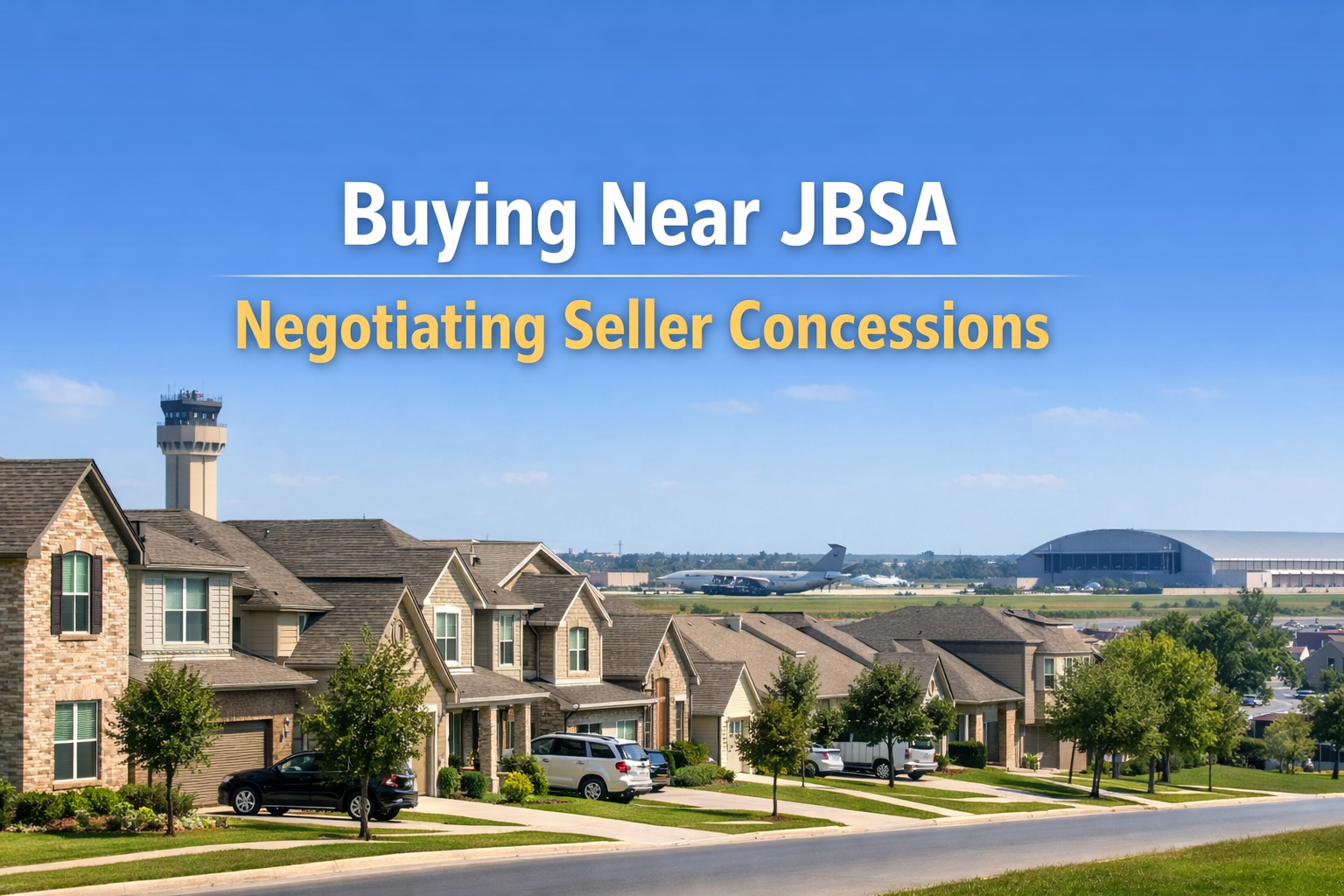
Relocating to San Antonio on military orders has always required planning and coordination across multiple moving parts. In 2026, that planning matters even more as buyers navigate a balanced real estate market where leverage exists for informed buyers, but strategy determines outcomes rather than market momentum alone. Buyers moving near Joint Base San Antonio are navigating a balanced real estate market where leverage exists, but strategy determines outcomes. Military families PCSing to Joint Base San Antonio including Fort Sam Houston, Lackland Air Force Base, and Randolph Air Force Base are asking the same critical question during home searches and offer preparation: How do you negotiate seller concessions without losing the house you want?
The answer is not aggressive offers demanding everything possible or blanket requests without market justification. It is data-driven negotiation using recent comparable sales, local market knowledge understanding neighborhood-specific dynamics, and a clear understanding of how sellers, builders, and lenders are responding in a balanced market. This guide explains how concessions work in 2026, where leverage exists for buyers, and how experienced guidance helps military buyers protect both their contract acceptance and their long-term finances through strategic negotiation.
What Does a Balanced Market Really Mean in San Antonio?
A balanced market is often misunderstood by buyers and sellers who experienced only peak seller's markets or buyer's markets without understanding the middle ground. It does not mean prices are dropping across the board creating immediate equity opportunities, and it does not mean buyers can demand unlimited concessions without consequence or risk to contract acceptance.
In San Antonio, a balanced market typically reflects inventory levels that give buyers options including multiple homes to compare rather than scarcity-driven urgency, homes spending more time on market compared to peak years when any reasonably priced home sold within days, sellers becoming more flexible on terms including concessions and possession rather than just on price, and builders competing with resale homes through incentives rather than base list price cuts that affect appraisal values.
For buyers near JBSA, this creates genuine opportunity for negotiation leverage. For sellers, it requires realistic pricing and thoughtful negotiation rather than holding firm on peak market expectations. The key is knowing which concessions are reasonable in which situations based on property type, location, and market position.
Q: What percentage of sellers are offering concessions in San Antonio's 2026 balanced market?
A: Approximately 40 to 60 percent of resale sellers offer some form of concession including closing cost assistance, repair credits, or rate buydown contributions, particularly on homes exceeding 30 days on market. New construction builders offer incentives on 70 to 90 percent of inventory, though structures vary by builder.
Why Do Seller Concessions Matter More Than Price in 2026?
Many military buyers focus first on purchase price as the primary negotiation point. In a balanced market, concessions often have a bigger impact on monthly payment and cash needed to close than modest price reductions affecting long-term costs more than immediate affordability.
Seller concessions can be used strategically to offset closing costs including lender fees, title charges, and recording costs, fund interest rate buydowns reducing monthly payments by $100 to $300, cover prepaid taxes and insurance reducing cash to close, address inspection-related repairs discovered during due diligence, and reduce out-of-pocket expenses at closing preserving cash reserves for moving and furnishings.
For VA buyers in particular, concessions can significantly reduce the cash required upfront during expensive PCS relocations. However, VA guidelines and appraisal rules require precision. Asking for too much, or structuring concessions incorrectly, can derail financing or create appraisal complications that delay closings.
What VA Loan Rules Affect Concession Negotiations?
VA loans remain one of the strongest tools for military families offering zero down payment and competitive rates, but they come with guardrails that shape negotiation strategies and limit what sellers can contribute.
Key VA considerations include seller concessions are capped at 4 percent of purchase price under VA guidelines, certain fees including VA funding fees cannot be paid by sellers, the appraised value must support the contract price without concession-inflated pricing, and repairs required for safety or livability under Minimum Property Requirements must be completed before closing.
In a balanced market, sellers are often open to concessions within these limits, but they must be structured correctly. A concession that exceeds VA limits or attempts to mask price inflation through excessive credits can trigger appraisal issues or lender scrutiny that jeopardizes transactions.
This is where experience with VA transactions and local market knowledge matters significantly.
Q: What is the maximum seller concession allowed on VA loans?
A: VA loans allow seller concessions up to 4 percent of the purchase price. For a $400,000 home, this means $16,000 maximum in seller-paid concessions. Requesting amounts exceeding this cap violates VA guidelines and can jeopardize loan approval.
How Do New Construction and Resale Concessions Differ?
Not all concessions are created equal or negotiated the same way. The negotiation strategy depends heavily on whether the home is new construction or resale inventory with different seller motivations and constraints.
New Construction Incentives
Builders near JBSA often offer incentives such as interest rate buydowns reducing rates by 1 to 2 percentage points temporarily, closing cost credits of $10,000 to $25,000 reducing cash to close, appliance packages or design center upgrade credits, and included features like blinds, garage openers, or upgraded landscaping.
These incentives are typically tied to the builder's preferred lender and title company creating package requirements. While they can provide strong value reducing total transaction costs, they are not always flexible or negotiable beyond standard offerings.
A common mistake buyers make is assuming builder incentives are guaranteed regardless of market conditions. In a balanced market, they are common and competitive, but they are still negotiable based on inventory levels, build stage, and seasonal timing when builders adjust strategies.
Resale Home Concessions
Resale sellers may offer closing cost assistance typically $5,000 to $15,000 depending on price point, repair credits addressing inspection findings, price adjustments after inspection revealing unexpected issues, and flexible possession timelines accommodating buyer PCS schedules.
Unlike builders, resale sellers feel market pressure more directly through showing feedback and days on market accumulation. Homes with longer days on market often signal opportunity for concessions, especially if pricing is already competitive with recent comparable sales.
How Should Buyers Ask for Concessions Without Losing Deals?
The strongest concession requests share three critical traits: data-backed justification, strategic restraint, and appropriate timing that strengthens rather than weakens offers.
Use Data Not Emotion
Successful negotiations rely on objective facts rather than feelings or assumptions. Comparable sales showing pricing pressure in the neighborhood, days on market trends indicating seller motivation, active competition from new construction affecting resale demand, and inspection findings supporting credits or repairs provide justification.
A data-backed request positions concessions as reasonable market adjustments, not opportunistic attempts to exploit seller circumstances.
Prioritize What Matters Most
Asking for everything often leads to getting nothing as sellers perceive buyers as unreasonable or difficult. Strong offers focus on closing cost assistance that preserves cash during expensive PCS relocations, rate buydowns that improve monthly affordability making homes more sustainable long-term, and safety or functional repairs rather than cosmetic items that don't affect habitability.
This approach signals seriousness and keeps sellers engaged rather than defensive or resistant to negotiation.
Structure Clean Offers
Military buyers sometimes lose homes not because of price or concession amounts, but because offers appear complex or risky to sellers. Clean offers include clear concession amounts within VA limits avoiding confusion, reasonable option periods of 10 to 14 days, financing terms that match lender timelines, and limited contingencies when appropriate based on property condition.
Clarity builds confidence for sellers even when concessions are requested, making acceptance more likely.
Q: Should VA buyers request maximum 4 percent concessions on all offers?
A: No. Strategic buyers request concessions matching actual needs and market conditions. Requesting maximum concessions on competitively priced homes with multiple interested buyers weakens offers, while requesting appropriate amounts based on closing cost estimates and market leverage strengthens negotiating positions.
How Do Appraisals Affect Concession Strategy?
In a balanced market, appraisal risk does not disappear despite less competition than peak years. Problems arise when concessions inflate the effective price beyond supported market value, sales rely on outdated peak market comparables that no longer reflect current conditions, and new construction incentives distort perceived value without corresponding comparable sales support.
If an appraisal comes in low, buyers may face tough decisions including covering gaps with cash, renegotiating purchase price downward, or terminating contracts under financing contingencies. Experienced guidance helps buyers structure concessions in ways that align with current appraisal trends, reducing the likelihood of renegotiation or contract termination through strategic pricing and concession balance.
How Do PCS Timelines Affect Negotiation Strategy?
Military moves add a layer of complexity to negotiation strategy that civilian buyers rarely face. PCS timelines are fixed by orders and command requirements, but seller timelines are often flexible creating potential leverage points.
Smart negotiation accounts for report-no-later-than dates that cannot be negotiated or extended, temporary lodging costs consuming cash when delays occur, lease overlap concerns at current duty stations, and seller possession needs when they haven't found replacement housing.
In some cases, flexibility on closing dates or possession timing can be traded for concessions creating value for both parties. In others, firm timelines require tighter negotiation to avoid delays that jeopardize PCS coordination and military reporting requirements.
Understanding how to balance these factors is critical for military families relocating to San Antonio under compressed timelines with limited flexibility.
What Are Sellers Near JBSA Willing to Offer in 2026?
Seller behavior in 2026's balanced market is more pragmatic than emotional compared to peak years when sellers could be inflexible. Many sellers are willing to contribute to buyer closing costs within reasonable limits, address inspection issues proactively rather than fighting over minor items, and adjust pricing after extended market time when homes don't attract offers at initial list prices.
However, sellers are less willing to enter prolonged renegotiations consuming weeks without progress, agree to excessive cosmetic requests that don't affect functionality, or absorb unlimited concessions without corresponding price support from comparable sales data.
Buyers who respect these boundaries and negotiate reasonably tend to secure better outcomes than those making aggressive demands without market justification.
Q: How long should homes be on market before buyers request significant concessions?
A: This varies by price range and season, but homes exceeding 30 to 45 days on market typically signal seller flexibility for concessions. Homes under 14 days may have less flexibility unless priced above market or showing condition issues discovered during showings.
What Common Mistakes Should Military Buyers Avoid?
Even in a balanced market favoring informed buyers, mistakes can cost opportunities and create unnecessary complications. Common pitfalls include asking for maximum concessions without market justification or closing cost estimates, ignoring appraisal realities when contract prices exceed recent comparable sales, overlooking VA-specific rules including 4 percent concession caps, comparing builder incentives to resale homes inaccurately without accounting for package requirements, and focusing solely on price instead of net cost including all concessions and monthly payments.
Avoiding these mistakes requires local knowledge understanding San Antonio neighborhood dynamics and experience with military transactions coordinating PCS timelines with real estate closings.
Why Does Local Expertise Matter for JBSA Buyers?
Buying near JBSA is not the same as buying elsewhere in Texas or at other military installations with different market dynamics. Each base has unique dynamics affecting negotiation leverage. Fort Sam Houston buyers often prioritize proximity and established neighborhoods creating different demand patterns. Lackland buyers may weigh commute times and new construction options more heavily. Randolph buyers often focus on school districts and long-term resale value affecting price sensitivity.
Negotiation strategy changes depending on location, inventory levels, and buyer profiles dominating specific areas. Working with real estate agents who understand these nuances prevents mistakes and maximizes concession success rates.
Expert Insight from Tami Price, REALTOR®
Tami Price, REALTOR®, is a San Antonio-based real estate professional and Air Force Veteran with nearly two decades of experience helping military buyers negotiate concessions successfully. With approximately 1,000 closed transactions and recognition as a RealTrends Verified Top Agent and 15-time Five Star Professional Award winner, she specializes in balanced market negotiation.
"The biggest mistake I see is military buyers who assume balanced markets mean sellers will accept any concession request without pushback," Tami explains. "They request maximum 4 percent concessions on homes priced competitively with multiple showings, then lose to buyers who requested appropriate $8,000 to $12,000 concessions matching actual closing costs. Strategic buyers request what they need based on lender estimates, not what guidelines allow as maximum, making their offers stronger and more likely to be accepted."
Tami emphasizes that timing matters in concession requests. "I structure offers with clear concession amounts upfront when we can justify them through market data like 45 days on market or competing builder incentives. But I also maintain inspection contingencies allowing buyers to request repair credits if significant issues are discovered. This two-step approach gets contracts accepted while preserving the right to adjust based on what inspections reveal. Buyers who demand everything upfront without inspection justification often lose homes to cleaner competing offers."
Three Key Takeaways
1. VA Concession Caps of 4 Percent Require Strategic Requests Matching Actual Closing Costs Rather Than Maximum Allowed Amounts
VA loans allow seller concessions up to 4 percent of purchase price, meaning $16,000 maximum on $400,000 homes, but strategic buyers request amounts matching actual closing cost estimates from lenders rather than automatically requesting maximums. Requesting appropriate amounts like $10,000 to $12,000 when closing costs total that amount strengthens offers compared to requesting $16,000 appearing opportunistic. Sellers are more receptive to justified requests backed by lender estimates than blanket maximum concession demands without cost breakdown supporting the amounts requested.
2. Data-Driven Concession Requests Using Days on Market and Comparable Sales Create Stronger Justification Than Emotional Appeals
Successful concession negotiations rely on objective market data including days on market exceeding 30 to 45 days signaling seller flexibility, comparable sales showing pricing pressure in neighborhoods, and builder incentive competition affecting resale demand. Buyers presenting data showing a home at 50 days on market when similar homes sell in 20 days justify concession requests more effectively than asking without context. Real estate agents with local market knowledge provide this data strengthening negotiation positions and increasing concession acceptance rates.
3. Balancing Concession Requests With Clean Offer Terms Increases Acceptance Rates More Than Aggressive All-or-Nothing Approaches
Military buyers structure strongest offers by requesting reasonable concessions within market norms while maintaining clean terms including appropriate option periods, realistic closing timelines, and limited contingencies when property condition supports streamlined terms. Offers requesting $12,000 concessions with 14-day option periods and 30-day closings outperform offers requesting $20,000 concessions with 21-day options and 60-day closings appearing complicated and risky to sellers. Strategic restraint on both concession amounts and contract complexity maximizes acceptance rates in competitive situations.
Frequently Asked Questions
Q. What is the maximum seller concession allowed on VA loans?
A. VA loans allow seller concessions up to 4 percent of the purchase price. For a $400,000 home, this means $16,000 maximum in seller-paid concessions. Requesting amounts exceeding this cap violates VA guidelines and can jeopardize loan approval.
Q. Should VA buyers request maximum 4 percent concessions on all offers?
A. No. Strategic buyers request concessions matching actual needs and market conditions. Requesting maximum concessions on competitively priced homes with multiple interested buyers weakens offers, while requesting appropriate amounts based on closing cost estimates strengthens positions.
Q. What percentage of sellers are offering concessions in San Antonio's 2026 balanced market?
A. Approximately 40 to 60 percent of resale sellers offer some concessions including closing cost assistance, repair credits, or rate buydown contributions, particularly on homes exceeding 30 days on market. New construction builders offer incentives on 70 to 90 percent of inventory.
Q. How long should homes be on market before buyers request significant concessions?
A. This varies by price range and season, but homes exceeding 30 to 45 days on market typically signal seller flexibility for concessions. Homes under 14 days may have less flexibility unless priced above market or showing condition issues.
Q. Can military buyers request both price reductions and seller concessions?
A. Yes, though success depends on market conditions and days on market. Homes significantly overpriced may require price adjustments before concessions are negotiated. Well-priced homes may accept concessions without price changes, while homes with extended market time may accommodate both.
Q. Do new construction builders negotiate concessions differently than resale sellers?
A. Yes. Builders offer structured incentive packages tied to preferred lenders rather than custom negotiated concessions. Resale sellers have more flexibility to customize concession structures based on buyer needs and market conditions.
Q. What closing costs can seller concessions cover for VA buyers?
A. Seller concessions can cover lender fees, title charges, prepaid taxes and insurance, appraisal fees, inspection costs, and interest rate buydowns. They cannot cover VA funding fees, which must be paid by buyers or financed into loan amounts.
Q. Should military buyers work with real estate agents experienced in VA concession negotiations?
A. Yes. Real estate agents with VA transaction experience understand 4 percent caps, know how to structure concessions within guidelines, and can justify requests using market data, increasing acceptance rates while preventing violations that jeopardize financing approval.
The Bottom Line
A balanced market creates genuine opportunity for informed negotiation, but only for buyers who negotiate with precision using data rather than emotion and strategy rather than aggressive demands. For military families buying near Joint Base San Antonio, seller concessions can reduce cash to close significantly, improve monthly affordability through rate buydowns, and create long-term financial stability during expensive PCS relocations.
The key is knowing what to ask for based on actual closing costs and market conditions, how to structure requests within VA guidelines, and when to push for concessions versus when to protect deal acceptance through clean offer terms. In 2026, successful negotiations are not about being aggressive or demanding everything possible. They are about being informed through local market knowledge, strategic in balancing requests with offer strength, and realistic about what sellers will accept in competitive situations.
Working with experienced real estate agents who understand VA loan concession rules, local market dynamics near JBSA installations, and military buyer needs helps families negotiate effectively while protecting contract acceptance and long-term financial outcomes.

Contact Tami Price, REALTOR® | San Antonio, TX
Whether you're buying near Joint Base San Antonio, need seller concession strategy guidance, or want help navigating balanced market negotiations, Tami Price provides experienced representation focused on helping military families negotiate successfully.
📞 210 620 6681
Tami Price's Specialties
- Buyer and Seller Representation
- Military Relocations and PCS Moves
- VA Loan Guidance and Assumptions
- New Construction
- First-Time Home Buyers
- Move-Up Buyers
- Downsizing and Rightsizing
- Strategic Pricing and Market Analysis
- San Antonio, Schertz, Cibolo, Helotes, Converse, and Boerne
Disclaimer
This blog is for informational purposes only and does not constitute legal, financial, or real estate advice. Market conditions change, and individual circumstances vary. Readers should consult qualified professionals before making real estate decisions. Tami Price, REALTOR®, is licensed in Texas and affiliated with Real Broker, LLC. Fair Housing principles apply to all content.
Categories
- All Blogs (929)
- Home Buying (13)
- Neighborhood Guides (44)
- 10 Incentive and Rate Buydown Questions (1)
- 10 Military Neighborhood (1)
- 10 Mistakes Sellers Make (1)
- 10 Strategies to Coordinate a Same Day Close (1)
- 12 Lifestyle Questions to Move In (1)
- 12 PCS What Ifs (1)
- 12 Photos and Marketing Assets (1)
- 13 PCS Hunting Trip Tips (1)
- 15 Red Flags Touring Home in San Antonio (1)
- 2026 Market (1)
- 30 days after closing your home (1)
- 7 Offer Terms Beyond Price (1)
- 7 VA Specific Questions (1)
- 78015 Ranked One (1)
- 8 Bridge (1)
- 8 Myths Buyers Believe about Down Payments (1)
- 8 Reasons VA Buyers Love New Construction (1)
- 9 Mistakes Move Up Buyers Make (1)
- 9 Questions to Decide If You Keep Your PCS Home (1)
- 9 Timeline Questions Every Buyer Need to Ask (1)
- 9 Warranty Questions to Ask (1)
- 9 Ways to Attract VA & Military Buyers (1)
- About Tami Price (6)
- Active Adult Homes (1)
- Affordable Communities (2)
- Affordable Housing & Community Development (5)
- Agent Qualifications and Credentials (1)
- Agent Qualifications and Experience (1)
- Agent Recognition (3)
- Agent Selection (1)
- AI and Real Estate Tools (1)
- Alamo Heights (5)
- Alamo Heights ISD (1)
- Alamo Heights Real Estate (1)
- Alamo Ranch (3)
- Amenities in Helotes, Texas (3)
- Apartment Market (1)
- Appraisals (1)
- Arts and Culture (1)
- Awards and Recognition (7)
- Balcones Creek (1)
- Best Neighborhoods to Live in Cibolo, TX (3)
- Best Neighborhoods to Live in San Antonio (16)
- Best Places to Live in Leon Valley: A Neighborhood Guide (1)
- Best Places to Live in Northeast Inner Loop: A Neighborhood Guide (1)
- Bexar County Property Tax (1)
- Bexar County Real Estate (3)
- Boerne Home Sellers (1)
- Boerne Neighborhoods (2)
- Boerne Texas (9)
- Broadway Corridor Development (1)
- Build-to-Rent Communities (1)
- Builder Contracts & Warranties (3)
- Builder Incentives (1)
- Builder Warranties (1)
- Buyer (97)
- Buyer Activity San Antonio (1)
- Buyer and Seller Guidance (4)
- Buyer Due Diligence (1)
- Buyer Education (46)
- Buyer Guide (9)
- Buyer Guides (7)
- Buyer Protection Strategies (1)
- Buyer Representation (1)
- Buyer Representation Expertise (1)
- Buyer Resources (87)
- Buyer Strategy (2)
- Buyers (13)
- Buyers Agent (1)
- Buying a Foreclosed Home in San Antonio (10)
- Buying a Home (3)
- Buying a Home in San Antonio (6)
- Buying Timeline (1)
- Buying vs Renting (1)
- Castroville, TX (8)
- Central San Antonio (1)
- Central San Antonio Development (2)
- Central Texas Growth (1)
- Choosing a Real Estate Agent (1)
- Choosing an Agent (1)
- Cibolo Communities (1)
- Cibolo Home Sellers (1)
- Cibolo TX (15)
- Client Reviews and Testimonials (1)
- Client Satisfaction (1)
- Client Stories (1)
- Client Testimonial (4)
- Clients review (4)
- Cobblestone (1)
- Comal County (1)
- Commercial & Retail Development (27)
- Commercial Development (13)
- Commercial Development Impact on Home Values (1)
- Commercial Real Estate (1)
- Community (1)
- Community Amenities (2)
- Community Development (23)
- Community Development and Real Estate (3)
- Community Events & Development (1)
- Community Infrastructure (1)
- Community Investment Impact (2)
- Community Landmarks (1)
- Community News (4)
- Community Planning (2)
- Community Revitalization (1)
- Community Spotlights (1)
- Commuter Neighborhoods (1)
- Cons of Living in Helotes, TX (4)
- Conservation Communities (1)
- Contingency Questions (1)
- Converse Home Sellers (1)
- Converse Homes For Sale (3)
- Converse Real Estate (1)
- Converse TX (10)
- Converse TX Real Estate (1)
- Cost of Living Guides (1)
- Cost of Living in San Antonio TX (25)
- CPS Energy Programs (1)
- Custom Homes (5)
- Davis Ranch (1)
- Days on Market (1)
- Deco District San Antonio (1)
- Denver Heights (1)
- Down Payment Assistance (1)
- Downtown Boerne (1)
- Downtown Development (3)
- Downtown Living (1)
- Downtown Revitalization (14)
- Downtown San Antonio (2)
- Downtown San Antonio Real Estate (5)
- Downtown San Antonio Revitalization (1)
- East Side Living (1)
- East Side Neighborhoods (1)
- East Side San Antonio (4)
- Economic Development (3)
- Economic Growth & Industry (1)
- Education, Texas Hill Country (1)
- Emerald Pointe (1)
- Employment (1)
- Employment Corridors (1)
- Encino Forest (1)
- Entertainment Economy (1)
- Equity and Pricing Strategy (2)
- Equity Q&A (1)
- Established Communities (3)
- Events in San Antonio (207)
- Expert Advice from Tami Price, Realtor® (10)
- Fair Oak Ranch (1)
- Family Activities (2)
- Family Homes (3)
- Family Living in San Antonio (1)
- FAQ (1)
- Far Northwest San Antonio (1)
- Far West San Antonio (1)
- Far Westside Real Estate (4)
- Fastest Growing Zip Codes in America (1)
- Featured Homes for Sale (2)
- Featured Properties (1)
- Financial Planning (10)
- Financing Strategy (1)
- First Time Buyers (23)
- First Time Sellers (1)
- First-Time Buyers (6)
- First-Time Homebuyer Resources (4)
- First-Time Homebuyer Tips (2)
- First-Time Homebuyers (6)
- First-Time Investors (1)
- Fort Sam Houston (3)
- Fort Sam Houston Real Estate (1)
- Fort Sam Houston, TX (2)
- Fox Grove (1)
- FSBO vs Agent Representation (1)
- Future Rental (1)
- Gated Communities (5)
- Golf Communities (1)
- Great Northwest (1)
- Greater San Antonio Housing Trends (2)
- Greater San Antonio Real Estate (5)
- Green Home Upgrades (1)
- Growth and Development (11)
- Healthcare (1)
- HELOC (1)
- Helotes Home Sellers (1)
- Highway 151 Corridor Growth (1)
- Hill Country Business (1)
- Hill Country Communities (2)
- Hill Country Development (3)
- Hill Country Homes for Sale (1)
- Hill Country Living (3)
- Hill Country Market Updates (1)
- Hill Country Real Estate (4)
- Hill Country Retreat (1)
- Historic Districts (5)
- Historic Neighborhoods (4)
- Historic Preservation (2)
- Holiday Attractions (1)
- Holiday Guide (1)
- Home Buying (7)
- Home Buying Education (3)
- Home Buying Guide (7)
- Home Buying Process (8)
- Home Buying Strategy (2)
- Home Buying Tips (6)
- Home Energy Efficiency San Antonio (4)
- Home Financing (2)
- Home Improvement ROI (1)
- Home Inspections (1)
- Home Preparation (2)
- Home Pricing Strategy (13)
- Home Renovation for Resale (1)
- Home Selling (9)
- Home Selling Guide (11)
- Home Selling Strategies (3)
- Home Selling Strategy (3)
- Home Selling Tips (22)
- Home Staging and Updates (2)
- Home Values (2)
- Homebuyer Education (15)
- Homebuyer Resources (1)
- Homebuying Guide (1)
- Homebuying Tips (3)
- Homeowner (36)
- Homeowner Tax Benefits (1)
- Homeownership Costs (1)
- Homes for Sale (2)
- Homes for sale near Lackland AFB (4)
- Homes Near Military Bases (1)
- Homestead amenities (1)
- Horizon Pointe (1)
- House Hunting Guide (1)
- Housing (1)
- Housing Community Development (1)
- Housing Development (2)
- Housing Market Updates (3)
- How to Buy a House in San Antonio TX (48)
- Huebner Oaks shopping center (1)
- Hunters Ranch (1)
- Hybrid (1)
- I-10 Corridor (1)
- I-35 Corridor (1)
- In Person (1)
- Incorporated Cities (6)
- Industrial Investment Impact (1)
- Industry News (2)
- Industry Recognition (1)
- Infrastructure & Growth Projects (26)
- Infrastructure and Sustainability (1)
- Infrastructure Development (1)
- Infrastructure Investment (1)
- Infrastructure Updates (2)
- Interest Rates (2)
- Invest in San Antonio (46)
- Investment Opportunities (3)
- Investment Property San Antonio (4)
- JBSA (9)
- JBSA Housing (11)
- JBSA Real Estate (4)
- JBSA Resources (7)
- Joint Base San Antonio (5)
- Joint Base San Antonio Housing (1)
- Judson ISD (2)
- Kendall County (1)
- La Cantera Retail Development (1)
- Lackland AFB (7)
- Lackland AFB Housing (1)
- Land Conservation (1)
- Land Use Planning (1)
- Lera MLS (14)
- Lifestyle & Community Growth (18)
- Lifestyle & Local Growth (12)
- Lifestyle Amenities (1)
- Lifestyle Communities (1)
- Listing Preparation (1)
- Listing Strategy (1)
- Live Oak (1)
- Living in San Antonio, TX (52)
- Living Near Randolph AFB (7)
- Loan Programs (1)
- Local Attractions (3)
- Local Business (1)
- Local Business & Development (9)
- Local Business & Economy (3)
- Local Business Spotlight (20)
- Local Business Support (5)
- Local Development (4)
- Local Development News (9)
- Local Market Insights (5)
- Local News (2)
- Local News Around San Antonio (2)
- Local Policy Changes (1)
- Local Real Estate News (1)
- Loop 1604 Corridor Growth (2)
- Loop 410 Corridor Development (1)
- Luxury Communities (3)
- Luxury Homes (2)
- Luxury Real Estate (1)
- Luxury Retail San Antonio (1)
- MacArthur Park (1)
- Major Developments (2)
- Making Offers on Homes (1)
- Market Analysis (26)
- Market Conditions (47)
- Market Expertise (1)
- Market Insights (5)
- Market Strategy (1)
- Market Timing (2)
- Market Trends (10)
- Market Trends & Insights (2)
- Market Update (16)
- Market Update 2026 (1)
- Market Updates (21)
- Master Planned Communities (12)
- Medical Center Area Real Estate (1)
- Medina Valley ISD (2)
- Midtown Living (1)
- Military & Economic Impact (3)
- Military Buyers (3)
- Military Communities (1)
- Military Families (1)
- Military Family Resources (1)
- Military Heritage (1)
- Military Homebuying (3)
- Military Homeownership (1)
- Military Housing (3)
- Military Housing Market in Texas (16)
- Military Life in San Antonio (2)
- Military Neighborhoods (1)
- Military PCS Relocations (3)
- Military Real Estate (2)
- Military Relocation (96)
- Military Relocation & VA Loans (10)
- Military Relocation San Antonio (4)
- Military Relocation Services (3)
- Military Relocation to San Antonio (50)
- Military Relocations (19)
- Military Relocations & VA Home Loans (5)
- Mixed-Income Housing (1)
- MLS Accuracy & Data Transparency (1)
- Mortgage Programs (1)
- Mothers Day in San Antonio (1)
- Move to Boerne TX (18)
- Move to Castroville TX (11)
- Move to Converse TX (16)
- Move to New Braunfels (1)
- Move to North San Antonio (19)
- Move to San Antonio TX (73)
- Move to Selma TX (19)
- Move to Shertz TX (13)
- Move to Texas (53)
- Move Up Buyer Resources (1)
- Move Up Buyers (21)
- Move-In Ready Homes (3)
- Move-In Ready Homes San Antonio (2)
- Move-Up Buyers (2)
- Moving to Helotes, TX (17)
- Moving to San Antonio (69)
- MUD Taxes (1)
- Natalia Homes For Sale (1)
- Near East Side Living (1)
- Negotiation Strategy (2)
- Neighborhood Amenities (1)
- Neighborhood Development (1)
- Neighborhood Guides (7)
- Neighborhood Investment (1)
- Neighborhood News (2)
- Neighborhood Revitalization (2)
- Neighborhood Spotlights (12)
- Neighborhood Updates (1)
- Neighborhoods near Randolph AFB (12)
- New Braunfels (6)
- New Braunfels Homes For Sale (1)
- New Braunfels News (3)
- New Braunfels Real Estate (3)
- New Businesses (2)
- New Construction (59)
- New Construction Communities (1)
- New Construction Homes (13)
- New Construction Homes San Antonio (5)
- New Construction vs Resale (1)
- New Construction Without Customization (1)
- New Construction Without the Wait (1)
- New Contruction Cost (1)
- New Development (3)
- New Listing (19)
- New Restaurants (3)
- News (211)
- News & updates (213)
- No HOA Homes (1)
- North Central San Antonio (5)
- North East ISD (4)
- North San Antonio (9)
- North San Antonio Real Estate (3)
- North Side Neighborhoods (1)
- North Side San Antonio Development (2)
- Northeast Inner Loop (1)
- Northeast Inner Loop Neighborhoods (1)
- Northeast San Antonio (3)
- Northside ISD (5)
- Northwest San Antonio (9)
- Northwest San Antonio Development (1)
- Northwest San Antonio Growth (1)
- Northwest San Antonio Real Estate (3)
- Northwood (1)
- Olympia Hills (1)
- One-Story Homes (1)
- Outdoor Living (1)
- Parks and Recreation (2)
- PCS and JBSA (2)
- PCS Guide (3)
- PCS Moves (12)
- PCS Moves to Joint Base San Antonio (4)
- PCS Planning (15)
- PCS Randolph AFB (17)
- PCS Relocation (1)
- PCS Resources (6)
- PCS San Antonio (46)
- PCS to San Antonio (42)
- Pearl District Area Real Estate (2)
- PID Assessments (1)
- Pinon Creek (1)
- Pipe Creek (1)
- Places to Eat Near Randolph AFB (1)
- Pool Homes (1)
- Pre Approval (1)
- Pre-Listing Preparation (2)
- Pre-Listing Process (1)
- Prescott Oaks (1)
- Pricing and Marketing Strategy (3)
- Professional Awards and Achievements (2)
- Professional Real Estate Representation (1)
- Property Tax Exemptions Texas (1)
- Property Value Enhancement (1)
- pros and cons living in Converse TX (3)
- Pros and Cons Living in Selma TX (6)
- Pros and Cons of Living in Castroville, TX (4)
- Pros and Cons of Living in San Antonio (33)
- PT500 List (1)
- Purchase Negotiation (1)
- Quality of Life (1)
- Quick Close Real Estate (1)
- Randolph AFB Neighborhoods (2)
- Real Estate (1)
- Real Estate Advice (1)
- Real Estate Agent Recognition (6)
- Real Estate Agent Selection (2)
- Real Estate Agent Value (1)
- Real Estate Consultation (1)
- Real Estate Finance (1)
- Real Estate Financing (1)
- Real Estate Impact (1)
- Real Estate Investment San Antonio (2)
- Real Estate Legal Issues (1)
- Real Estate Market Insights (2)
- Real Estate Market Trends (5)
- Real Estate Professional Designations (1)
- Real Estate Strategy (1)
- Real Estate Technology & Trends (2)
- Real Estate Tips (1)
- Real Estate Tips and Guides (2)
- Real Estate Trends (4)
- RealTrends Verified (1)
- Regional Development (1)
- Regional Real Estate (2)
- Relocating to San Antonio (2)
- Relocation (4)
- Relocation Resources (2)
- Relocation to San Antonio (55)
- Remote Homebuying (1)
- Rental Housing (1)
- Rental Property (1)
- Rental Strategy (1)
- Resale Properties (1)
- Retail Development (2)
- Retire in Boerne TX (11)
- Retire in San Antonio (37)
- Retirement Communities (1)
- Reviews and Recognition (1)
- Rockwall Ranch (1)
- Rural Living (2)
- SABOR (27)
- San Antonio Area Listings (1)
- San Antonio Business Growth (1)
- San Antonio Buyer Resources (2)
- San Antonio Communities (3)
- San Antonio Community Events (1)
- San Antonio Community News (1)
- San Antonio Data Center Development (1)
- San Antonio Development (5)
- San Antonio Development & East Side Real Estate (1)
- San Antonio Dining and Lifestyle (3)
- San Antonio East Side Development (1)
- San Antonio Employment Growth (1)
- San Antonio Food & Community Development (2)
- San Antonio Growth (8)
- San Antonio Home Buying and Selling (2)
- San Antonio Home Buying Guide (5)
- San Antonio Home Improvement (2)
- San antonio home prices (3)
- San Antonio Home Sellers (3)
- San Antonio Homeowner Guide (1)
- San Antonio Homeowner Resources (1)
- San Antonio Homes for Sale (12)
- San Antonio Housing Market (2)
- San Antonio Housing Market & Mortgage Financing (2)
- San Antonio Housing Market Analysis (2)
- San Antonio Housing Trends & Market Analysis (4)
- San Antonio Industrial Development (1)
- San Antonio Industrial Policy (1)
- San Antonio Investment Properties (2)
- San Antonio Job Market (1)
- San Antonio Lifestyle Amenities (1)
- San Antonio Listing (1)
- San Antonio Living (1)
- San Antonio Market (3)
- San Antonio Market Updates (18)
- San Antonio Military Relocation (2)
- San Antonio Neighborhoods (67)
- San Antonio New Construction & Master-Planned Communities (4)
- San Antonio New Home Communities (1)
- San Antonio News (229)
- San Antonio North Side Development (1)
- San Antonio Parks (1)
- San Antonio Property Investment (1)
- San Antonio Property Taxes (2)
- San Antonio Real Estate (152)
- San Antonio Real Estate Agents (6)
- San Antonio Real Estate Excellence (1)
- San Antonio Real Estate Guide (6)
- San Antonio Real Estate Market (41)
- San Antonio Real Estate Market Analysis (6)
- San Antonio Real Estate News (2)
- San Antonio REALTOR Awards (1)
- San Antonio Restaurant News (2)
- San Antonio Restaurant Openings (1)
- San Antonio Seller Resources (2)
- San Antonio Sellers (1)
- San Antonio Spec Homes (1)
- San Antonio Spurs Community Programs (1)
- San Antonio Suburbs (1)
- San Antonio Transportation (2)
- San Antonio University Area Housing (1)
- San Antonio Urban Living (7)
- San Antonio West Side Development (2)
- San Antonio Zoning Policy (1)
- Scenic Loop (1)
- Schertz Home Sellers (1)
- Schertz Real Estate (1)
- Schertz, TX (13)
- School Districts (1)
- School Information (1)
- SCUCISD Schools (1)
- Secured Quick Offer (1)
- Sell Home In San Antonio TX (64)
- Seller (83)
- Seller Education (24)
- Seller Guide (4)
- Seller Guides (1)
- Seller Representation Expertise (1)
- Seller Resources (66)
- Seller Should Understand (1)
- Seller Strategy (3)
- Seller Tips (2)
- Sellers (10)
- Selling A Home in San Antonio (62)
- Selling Your San Antonio Home (3)
- Selma TX (9)
- Single-Story Homes (4)
- Smart Homes (1)
- Solar Homes (2)
- South San Antonio Real Estate (1)
- South Side Economic Growth (1)
- South Side San Antonio (1)
- Southtown (2)
- Southwest San Antonio Real Estate (1)
- Spec Homes and Inventory Homes (2)
- Spurs Arena Project Marvel (1)
- Stone Oak (2)
- Stone Oak Community News (5)
- Suburban Housing Growth (12)
- Suburban Living (2)
- Talise De Culebra (1)
- Technology Growth (3)
- Technology Sector Growth (1)
- Terrell Hills (3)
- Texas Acreage Properties (3)
- Texas Homestead Exemption (1)
- The Dominion Real Estate (1)
- The Rim Area Real Estate (1)
- Things to do in San Antonio TX (21)
- Things to do Near Randolph AFB (4)
- Time Planning (1)
- Time-Sensitive Home Buying (1)
- Timing Strategy (1)
- Tips for Buying New Construction (9)
- Tobin Hill Neighborhoods (2)
- Top Real Estate Agent in San Antonio (3)
- Tourism and Economic Development (1)
- Traders's Joe San Antonio (1)
- Transaction Coordination (1)
- Transportation Infrastructure (1)
- Two-Story Homes (2)
- Universal City (1)
- Updated Homes (2)
- Upscale Communities (1)
- Urban Communities (2)
- Urban Corridor Real Estate (1)
- Urban Development (5)
- Urban Living (3)
- Urban Neighborhoods (4)
- Urban Real Estate (1)
- Urban Renewal Projects (1)
- Urban Revitalization San Antonio (1)
- Utility Cost Reduction (1)
- UTSA Campus Development (1)
- VA Buyers (1)
- VA Home Loan Benefits (3)
- VA Loan Assumptions (3)
- VA loan benefits (27)
- VA Loan Guidance (1)
- VA Loan Home Buying Assistance (2)
- VA Loans (69)
- VA Loans and Military Benefits (3)
- VA Loans and Military Home Buying (3)
- VA Loans San Antonio (43)
- VET Benefits Living in San Antonio (3)
- Veterans Resources (3)
- Village Northwest (1)
- Virtual Buyers (1)
- Walkable Communities (1)
- week in sales (39)
- Weekly Sales Report (40)
- West San Antonio (2)
- West San Antonio Development (1)
- West San Antonio Real Estate (3)
- West San Antonio Real Estate Market (2)
- West Side Infrastructure Planning (1)
- West Side Real Estate (1)
- West Side San Antonio (2)
- Windcrest Homes for Sale (1)
Recent Posts