Historic Preservation Investment Signals New Braunfels Community Values
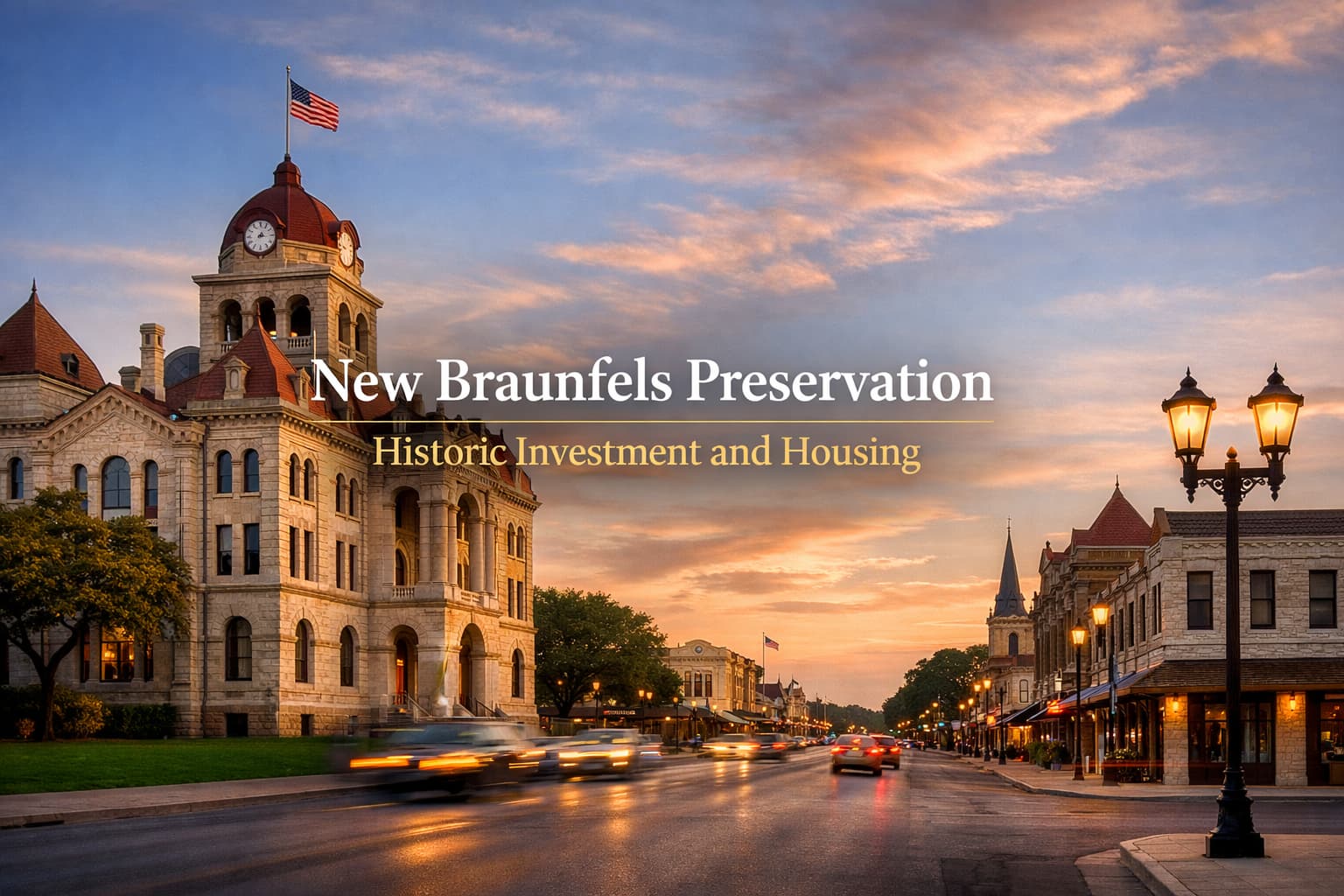
What Does Historic Preservation Investment Signal for Home Buyers?
When investors commit significant capital to restoring historic landmarks rather than demolishing and replacing them, their decisions reveal community dynamics that affect long-term livability and property markets. The Faust Hotel, a century-old downtown New Braunfels landmark, is undergoing a $4.5 million renovation with plans to reopen in spring 2026. For buyers evaluating homes for sale in San Antonio and surrounding communities, understanding what preservation investment signals about community values provides valuable context for housing decisions.
According to Tami Price, REALTOR®, communities where investors choose restoration over demolition often demonstrate the character commitment that supports long-term property market stability and resident satisfaction.
The preservation approach reflects recognition that some buildings carry significance beyond functional real estate value. Rather than viewing an aging structure as obstacle requiring demolition, investors concluded that restoration serves both economic and community interests. This calculation provides insight into New Braunfels' development dynamics that buyers should consider when evaluating where to purchase.
Key implications for home buyers:
- Preservation investment indicating community character value
- Restoration over demolition signaling development philosophy
- Downtown vitality supporting surrounding residential areas
- Community values revealed through capital allocation decisions
Q: Why should home buyers consider preservation investment when evaluating communities?
A: Preservation investment reveals that property owners and investors believe community character warrants protection and can generate returns. This belief suggests market dynamics where character contributes to value, conditions that often support residential property markets. Communities attracting preservation investment typically maintain qualities that support buyer interest over time.
How Does Preservation Philosophy Affect Community Trajectory?
Understanding what preservation-oriented development indicates about community trajectory helps buyers evaluate long-term implications. The choice between restoration and replacement involves considerations beyond immediate economics that shape how communities evolve.
Preservation-focused approaches maintain architectural and cultural character that replacement construction cannot replicate. Century-old buildings carry history, craftsmanship, and community memory that new construction, regardless of quality, cannot match. When investors choose to preserve rather than replace, they signal assessment that this irreplaceable character holds value worth maintaining.
Communities where preservation investment occurs regularly often develop identity associated with character protection. This identity attracts residents and businesses specifically seeking these qualities, creating reinforcing dynamics where preservation-minded population supports continued preservation. The pattern shapes community trajectory in ways affecting long-term living experience.
Preservation philosophy and trajectory:
- Irreplaceable character maintained through restoration
- History and craftsmanship preserved
- Community memory honored rather than erased
- Preservation identity attracting compatible residents
- Reinforcing dynamics supporting continued protection
- Long-term trajectory shaped by development choices
Q: How reliable is current preservation activity as predictor of future community character?
A: Preservation investment provides meaningful signals about community dynamics, though not guarantees. Significant capital commitments like the Faust Hotel restoration indicate investor confidence that preservation generates returns in this market. Multiple preservation projects over time provide stronger indication than isolated examples. Consider preservation activity as one factor among many when evaluating community trajectory.
What Does Downtown Investment Mean for Surrounding Residential Areas?
Understanding connections between downtown vitality and residential market dynamics helps buyers appreciate why commercial preservation matters for housing decisions. Downtown health affects surrounding neighborhoods in ways extending beyond immediate proximity.
Vibrant downtown districts provide walkable amenities, cultural attractions, and economic activity benefiting nearby residential areas. When historic preservation maintains downtown character and vitality, these benefits flow to surrounding neighborhoods. Residents can access distinctive shopping, dining, and experiences that generic commercial development cannot provide.
Historic hotel restoration specifically supports downtown economics through visitor activity. Guests staying downtown walk to surrounding businesses, generating economic circulation throughout the area. This distributed benefit strengthens the downtown environment that residential areas share.
Downtown investment and residential areas:
- Walkable amenities for nearby residents
- Cultural attractions enhancing neighborhoods
- Economic activity supporting local businesses
- Visitor spending circulating through downtown
- Distinctive experiences unavailable in generic commercial
- Downtown vitality benefiting surrounding areas
Q: How close to downtown should buyers be to benefit from downtown vitality?
A: Benefits extend beyond immediately adjacent properties to neighborhoods within reasonable access distance. Residents who can easily walk, bike, or briefly drive to downtown access its amenities even without direct proximity. However, immediately adjacent areas typically experience greatest effect from downtown activity. Evaluate your likely use patterns when assessing how much downtown proximity matters for your circumstances.
How Should Buyers Evaluate Preservation-Oriented Communities?
Those exploring homes in Central Texas communities benefit from understanding how to assess preservation orientation. Systematic evaluation helps identify whether communities genuinely prioritize character protection or simply claim preservation values without supporting action.
Look for evidence of multiple preservation projects rather than isolated examples. Single restorations may reflect individual owner decisions rather than community-wide values. When multiple properties throughout a community receive preservation investment over time, the pattern indicates broader market dynamics favoring character protection.
Assess the quality and authenticity of preservation work visible throughout the community. Superficial historic styling applied to new construction differs from genuine restoration of historic structures. Communities with authentic preservation show buildings reflecting their actual historical periods rather than theme-park interpretations.
Preservation community evaluation:
- Multiple projects indicating pattern not exception
- Investment over time demonstrating sustained commitment
- Authentic restoration versus superficial styling
- Genuine historic structures preserved
- Community-wide values supporting preservation
- Market dynamics favoring character protection
Q: What distinguishes genuine preservation from superficial historic styling?
A: Genuine preservation restores actual historic structures, maintaining original materials, craftsmanship, and architectural integrity. Superficial styling applies historic-looking elements to new construction without authentic connection to history. Genuine preservation is visible in building details, materials quality, and architectural consistency that styling cannot replicate. Experienced observation of building stock helps distinguish authentic preservation communities.
What Does New Braunfels Offer Buyers Seeking Character-Rich Communities?
Understanding New Braunfels' broader characteristics helps buyers evaluate whether the community matches their priorities. The city offers distinct positioning that creates appeal for specific household profiles while preservation activity signals community values.
New Braunfels has built its identity on qualities requiring time to develop. Historic downtown, German cultural heritage, river recreation, and community traditions distinguish the city from communities that could exist anywhere. These qualities attracted residents initially and continue shaping community appeal.
The city's position between San Antonio and Austin creates employment access while offering distinctly different living environment. Households willing to commute can enjoy character that suburban locations in either metropolitan area typically cannot match. This positioning serves buyers seeking authentic community identity alongside regional connectivity.
New Braunfels buyer considerations:
- Historic downtown with authentic character
- German cultural heritage and traditions
- River recreation and outdoor lifestyle
- Community identity built over generations
- San Antonio and Austin employment access
- Distinctive character versus metropolitan suburbs
Q: How does New Braunfels compare to San Antonio suburbs for buyers seeking character?
A: New Braunfels offers historic identity and community character that most San Antonio suburbs cannot match. The tradeoff typically involves commute considerations for San Antonio employment, different commercial infrastructure, and market dynamics reflecting desirability. Buyers should evaluate whether distinctive character justifies any tradeoffs for their specific circumstances and priorities.
How Does Preservation Investment Relate to Property Market Dynamics?
Understanding relationships between preservation and property markets helps buyers appreciate why community character matters for housing decisions. While direct causation requires caution, patterns in preservation-oriented communities merit consideration.
Communities with strong historic character often maintain property value stability because character creates differentiation from generic alternatives. When many areas offer similar contemporary development, communities with distinctive preserved character stand out. This differentiation can support demand from buyers specifically seeking preserved environments.
Preservation investment itself indicates investor confidence that character contributes to property values. Investors committing $4.5 million to restore a historic hotel rather than building new generic construction conclude that historic character generates returns in this market. These professional assessments provide external perspective on market dynamics.
Preservation and property dynamics:
- Differentiation from generic alternatives
- Character-seeking buyer demand
- Investor confidence in character value
- Professional assessment of market dynamics
- Value stability through distinctiveness
- Preservation indicating positive market signals
Q: Does preservation guarantee property value appreciation?
A: No. Many factors affect property values beyond community character. However, preservation creates conditions often supporting market stability by differentiating communities from generic alternatives and attracting buyers who specifically value character. Consider preservation as supportive factor indicating positive market dynamics rather than guarantee of specific outcomes.
What Tradeoffs Come with Preservation-Focused Communities?
Honest evaluation of preservation-oriented communities requires understanding tradeoffs alongside benefits. These considerations help buyers assess whether preservation communities match their priorities and circumstances.
Preservation-focused communities may have development regulations affecting property modifications. Historic districts, design review processes, and compatibility requirements can create approval processes that communities without preservation focus do not require. These regulations protect character but may limit property owner flexibility.
Housing supply in preservation communities may be more constrained than in areas allowing unrestricted development. Preservation philosophy often extends to limiting new construction that might conflict with established character. This constraint can affect housing availability and pricing.
Preservation community tradeoffs:
- Development regulations affecting modifications
- Design review processes requiring approvals
- Compatibility requirements for changes
- Potentially constrained housing supply
- Character protection limiting some development
- Flexibility versus protection tradeoff
Q: How restrictive are regulations in preservation-oriented communities?
A: Restrictions vary significantly among preservation-focused communities. Some have formal historic districts with detailed requirements while others rely on informal community standards and market preferences. Research specific requirements in communities you are considering. Evaluate whether you would want to make modifications that regulations might affect. For many buyers, regulations protecting community character represent benefit rather than burden.
How Should Sellers Position Properties in Preservation-Active Communities?
For those selling a home in San Antonio or surrounding communities with preservation activity, understanding how to communicate community advantages helps optimize marketing positioning. Buyers seeking character-rich communities respond to evidence of preservation commitment.
Sellers can reference community preservation investment as part of property appeal. The Faust Hotel restoration and similar projects demonstrate community values that character-seeking buyers appreciate. Marketing addressing these community-level factors resonates with buyers prioritizing long-term character protection.
Emphasize how properties benefit from community-level character maintenance. Individual properties gain from neighborhood and community preservation protecting surroundings from incompatible development. This community benefit extends value beyond individual property characteristics.
Seller positioning in preservation communities:
- Reference preservation investment demonstrating values
- Highlight community commitment to character
- Connect property value to community protection
- Target buyers seeking preserved environments
- Emphasize long-term character stability
- Professional representation optimizing positioning
Q: What buyer profiles should sellers target in preservation-focused communities?
A: Target buyers specifically seeking character and preservation over maximum development flexibility. These include households relocating from areas with stronger character, buyers frustrated by generic suburban development, those seeking long-term stability, and families wanting predictable community evolution. Experienced representation helps identify which buyer profiles properties attract and how to position effectively.
What Does the $4.5 Million Investment Specifically Indicate?
Understanding the significance of substantial preservation investment helps buyers appreciate what capital commitment signals about community dynamics. The investment level in the Faust Hotel restoration carries meaning for market assessment.
A $4.5 million restoration commitment indicates investor confidence that historic character generates returns in New Braunfels. Investors would not commit this capital without concluding that the market values preserved character over generic replacement. This professional assessment provides external validation of community dynamics.
The choice to restore rather than demolish and build new reflects specific market calculation. New construction typically costs less and generates faster returns than historic restoration. Choosing the more difficult preservation path indicates assessment that character premium justifies additional investment and complexity.
Investment significance:
- Substantial capital indicating serious commitment
- Investor confidence in character value
- Market assessment favoring preservation
- Professional validation of community dynamics
- Restoration chosen over easier replacement
- Character premium justifying additional investment
Q: How should buyers interpret commercial preservation investment for residential decisions?
A: Commercial preservation investment indicates that sophisticated investors assess the community as valuing character in ways supporting property values. While commercial and residential markets differ, they share underlying community dynamics. Investor willingness to commit preservation capital suggests market conditions where character contributes to value across property types.
How Does Historic Character Contribute to Community Identity?
Understanding how preserved landmarks shape community identity helps buyers appreciate why preservation matters beyond individual buildings. Community identity affects living experience and property market dynamics in interconnected ways.
Landmarks like the Faust Hotel serve as physical embodiments of community history and identity. Their presence connects current residents to past generations who experienced the same structures. This continuity creates sense of place that communities lacking historic landmarks cannot easily develop.
Community identity built on preserved heritage attracts residents specifically seeking these qualities. This selective attraction brings people who value and will maintain community character. The resulting population composition supports continued preservation and character protection.
Historic character and community identity:
- Landmarks embodying community history
- Connection between current and past residents
- Sense of place from historic continuity
- Identity attracting compatible residents
- Population composition supporting preservation
- Reinforcing dynamics protecting character
Q: Can communities develop strong identity without historic buildings?
A: Communities can develop identity through various means, but historic preservation provides foundation that other approaches cannot replicate. New communities must build identity over time through events, culture, and accumulated experience. Preserved historic communities have this foundation already established through buildings carrying generations of memory. The character depth differs fundamentally.
What Questions Should Buyers Ask When Evaluating New Braunfels?
Buyers considering New Braunfels benefit from asking specific questions revealing whether the community matches their priorities. Systematic evaluation helps assess fit with individual circumstances and preferences.
Ask about development patterns and how the community balances growth with character protection. Understanding planning approaches provides insight into how the community will evolve as population continues growing. Evidence of balanced approach suggests character protection will continue.
Evaluate commute patterns carefully for your likely employment destinations. New Braunfels' position provides access to both San Antonio and Austin, but specific commute times depend on destination and timing. Drive actual routes during relevant commute times to understand realistic conditions.
Questions for New Braunfels evaluation:
- How does the community balance growth with preservation?
- What are realistic commute times to my employment?
- What housing options exist within my budget?
- How has the community changed over recent years?
- What downtown amenities would I actually use?
- Does the community character match my priorities?
Q: How can buyers experience New Braunfels before committing to purchase?
A: Spend extended time in the community at different times and days. Walk downtown and visit residential neighborhoods. Attend community events if possible. Talk with current residents about their experiences. Consider extended rental period before purchasing if uncertain about fit. This immersion provides perspective that brief visits cannot match.
How Does Downtown Vitality Affect Residential Quality of Life?
Understanding connections between downtown health and residential experience helps buyers appreciate why commercial preservation matters for housing decisions. Downtown vitality contributes to overall community livability in ways affecting daily life.
Vibrant downtown districts provide experiences and amenities that suburban commercial cannot replicate. Walkable access to distinctive restaurants, shops, and cultural venues enriches residential living. Communities with healthy downtowns offer lifestyle options that communities without such cores lack.
Historic hotel restoration specifically contributes by bringing visitor activity that supports downtown businesses. The economic circulation from hospitality helps sustain the shops, restaurants, and venues that residents also enjoy. Commercial and residential interests align in supporting downtown health.
Downtown vitality and residential quality:
- Walkable access to distinctive experiences
- Restaurants and shops enriching daily life
- Cultural venues providing entertainment
- Visitor activity supporting businesses residents use
- Commercial-residential interest alignment
- Downtown health benefiting all community members
Q: How much should downtown access factor into residential location decisions?
A: This depends on your lifestyle and priorities. Households who frequently use downtown amenities benefit from convenient access. Those primarily focused on home and immediate neighborhood may find downtown less relevant. Honestly assess your likely downtown use patterns when evaluating how much proximity matters for your circumstances.
Expert Insight from Tami Price
"Historic preservation investment like the Faust Hotel restoration tells us something important about community values," says Tami Price, REALTOR® and Broker Associate with Real Broker, LLC. "When investors commit $4.5 million to restore a century-old landmark rather than demolishing and building new, they are signaling confidence that this community values its character in ways that support property markets. Buyers evaluating where to purchase should pay attention to these signals."
Price brings nearly two decades of experience and approximately 1,000 closed transactions to her work with buyers and sellers throughout San Antonio, Schertz, Cibolo, Helotes, Converse, and Boerne. Her understanding of how community development patterns affect residential markets helps clients evaluate options throughout the greater San Antonio region.
"New Braunfels has built its appeal on qualities that take time to develop," Price explains. "The historic downtown, German heritage, river recreation, and community traditions distinguish it from places that could exist anywhere. When preservation investment flows into maintaining these qualities rather than replacing them, it reinforces what makes the community worth choosing."
Her recognition as a RealTrends Verified Top Agent and 14-time Five Star Professional Award Winner reflects consistent client satisfaction serving buyers and sellers navigating diverse Central Texas community options.
"For buyers considering preservation-focused communities, understanding both benefits and tradeoffs helps make informed decisions," Price notes. "Character protection often comes with development regulations that some buyers embrace and others find limiting. Honest assessment of your priorities helps identify communities where you will thrive long-term."
Three Key Takeaways
1. The $4.5 Million Faust Hotel Restoration Signals Investor Confidence That New Braunfels Values Historic Character in Ways Supporting Property Markets
Substantial preservation investment indicates professional assessment that community character generates returns justifying restoration over easier demolition and replacement. This capital commitment provides external validation of market dynamics that buyers can factor into community evaluation. For those considering homes for sale in San Antonio and surrounding areas, preservation investment signals community values affecting long-term trajectory.
2. Downtown Preservation Supports Surrounding Residential Areas Through Walkable Amenities, Economic Activity, and Community Identity
Historic hotel restoration brings visitor activity supporting downtown businesses that residents also use. Vibrant downtown districts provide experiences and amenities that suburban commercial cannot replicate. The connection between downtown health and residential quality of life means commercial preservation matters for housing decisions beyond just those immediately adjacent to downtown.
3. Preservation-Focused Communities Offer Character Stability with Tradeoffs Buyers Should Evaluate Against Their Priorities
Communities demonstrating preservation commitment often maintain qualities attracting residents initially while potentially having regulations affecting property modifications and development. Working with experienced representation like Tami Price, recognized as one of the best real estate agents in San Antonio, helps buyers evaluate how preservation philosophy affects different communities and which options align with their priorities.
Frequently Asked Questions
Q: What is the Faust Hotel?
A: The Faust Hotel is a century-old landmark in downtown New Braunfels currently undergoing a $4.5 million renovation with plans to reopen in spring 2026. The property has served the community for generations and represents significant local heritage.
Q: Why does historic preservation matter for home buyers?
A: Preservation investment signals community values affecting long-term character and property market dynamics. Communities where investors choose restoration over demolition often maintain qualities supporting resident satisfaction and property value stability.
Q: How does downtown preservation affect residential areas?
A: Vibrant downtown districts provide walkable amenities, cultural attractions, and economic activity benefiting nearby residential neighborhoods. Downtown health affects quality of life for residents who access its shops, restaurants, and experiences.
Q: What tradeoffs come with preservation-focused communities?
A: Preservation communities may have development regulations affecting property modifications, design review processes requiring approvals, and potentially constrained housing supply. These tradeoffs accompany character protection benefits.
Q: How does New Braunfels compare to other Central Texas options?
A: New Braunfels offers historic character, German heritage, and river recreation that distinguish it from generic suburban development. The tradeoff involves commute considerations for metropolitan employment and different commercial infrastructure than larger communities provide.
Q: When will the Faust Hotel reopen?
A: The planned reopening is spring 2026. This timeline allows for extensive restoration work. Actual completion depends on factors emerging during restoration, and dates may adjust as work proceeds.
Q: Does Tami Price work with buyers in New Braunfels?
A: Yes. Tami Price provides comprehensive buyer representation throughout San Antonio and surrounding communities. Her nearly two decades of experience includes familiarity with Central Texas communities and their varying development approaches.
Q: How do I start working with Tami Price?
A: Book a consultation to discuss your priorities, timeline, and target areas. Understanding your circumstances enables personalized guidance through the home buying process.
The Bottom Line
The Faust Hotel restoration provides tangible evidence of investor confidence in New Braunfels' character value. When sophisticated investors commit $4.5 million to restore a century-old landmark rather than pursuing easier demolition and replacement, their decision signals market dynamics that buyers should consider. The preservation approach reflects assessment that community character generates returns justifying additional investment complexity.
For buyers evaluating Central Texas communities, preservation activity provides one indicator of community values affecting long-term trajectory. Communities where preservation investment occurs regularly often maintain the distinctive qualities that attracted residents initially while supporting property market stability through differentiation from generic alternatives.
Understanding both benefits and tradeoffs of preservation-focused communities helps buyers make informed decisions. Working with experienced representation provides guidance about how development philosophy affects different communities and which options align with individual priorities for character, stability, and long-term satisfaction.

Contact Tami Price, REALTOR®
Whether exploring New Braunfels, evaluating communities throughout greater San Antonio, or navigating any home buying or selling process, working with an experienced REALTOR® provides guidance through complex decisions. Tami Price brings local market knowledge and professional expertise to help clients understand how community development patterns affect different areas and find homes matching their priorities.
From buyers seeking communities with historic character to those evaluating growing areas throughout the region, personalized service makes the difference in successful transactions.
Tami Price, REALTOR®, Broker Associate
📞 210-620-6681
Tami Price's Specialties
- Comprehensive Buyer and Seller Representation
- Military Relocations and PCS Moves
- VA Loan Guidance and Assumptions
- New Construction Navigation
- Strategic Pricing and Market Analysis
- Professional Property Marketing
- First-Time Buyer Education
- Move-Up and Downsizing Transitions
- Residential Real Estate Throughout San Antonio, Schertz, Cibolo, Helotes, Converse, and Boerne
Disclaimer
This blog post is provided for informational purposes only and should not be construed as guarantees regarding property values, development outcomes, or community characteristics. Information about the Faust Hotel renovation reflects publicly available details as of the publication date and is subject to change. Renovation timelines and specifications are determined by the development team and may be modified without notice. Real estate decisions should be based on individual circumstances, professional guidance, and current market conditions. Tami Price, REALTOR®, and Real Broker, LLC make no warranties regarding accuracy, completeness, or applicability of information to specific circumstances.
Categories
- All Blogs (932)
- Home Buying (14)
- Neighborhood Guides (44)
- 10 Incentive and Rate Buydown Questions (1)
- 10 Military Neighborhood (1)
- 10 Mistakes Sellers Make (1)
- 10 Strategies to Coordinate a Same Day Close (1)
- 12 Lifestyle Questions to Move In (1)
- 12 PCS What Ifs (1)
- 12 Photos and Marketing Assets (1)
- 13 PCS Hunting Trip Tips (1)
- 15 Red Flags Touring Home in San Antonio (1)
- 2026 Market (1)
- 30 days after closing your home (1)
- 7 Offer Terms Beyond Price (1)
- 7 VA Specific Questions (1)
- 78015 Ranked One (1)
- 8 Bridge (1)
- 8 Myths Buyers Believe about Down Payments (1)
- 8 Reasons VA Buyers Love New Construction (1)
- 9 Mistakes Move Up Buyers Make (1)
- 9 Questions to Decide If You Keep Your PCS Home (1)
- 9 Timeline Questions Every Buyer Need to Ask (1)
- 9 Warranty Questions to Ask (1)
- 9 Ways to Attract VA & Military Buyers (1)
- About Tami Price (6)
- Active Adult Homes (1)
- Affordable Communities (2)
- Affordable Housing & Community Development (5)
- Agent Qualifications and Credentials (1)
- Agent Qualifications and Experience (1)
- Agent Recognition (3)
- Agent Selection (1)
- AI and Real Estate Tools (1)
- Alamo Heights (5)
- Alamo Heights ISD (1)
- Alamo Heights Real Estate (1)
- Alamo Ranch (3)
- Amenities in Helotes, Texas (3)
- Apartment Market (1)
- Appraisals (1)
- Arts and Culture (1)
- Awards and Recognition (7)
- Balcones Creek (1)
- Best Neighborhoods to Live in Cibolo, TX (3)
- Best Neighborhoods to Live in San Antonio (16)
- Best Places to Live in Leon Valley: A Neighborhood Guide (1)
- Best Places to Live in Northeast Inner Loop: A Neighborhood Guide (1)
- Bexar County Property Tax (1)
- Bexar County Real Estate (3)
- Boerne Home Sellers (1)
- Boerne Neighborhoods (2)
- Boerne Texas (9)
- Broadway Corridor Development (1)
- Build-to-Rent Communities (1)
- Builder Contracts & Warranties (3)
- Builder Incentives (1)
- Builder Warranties (1)
- Buyer (97)
- Buyer Activity San Antonio (1)
- Buyer and Seller Guidance (4)
- Buyer Due Diligence (1)
- Buyer Education (46)
- Buyer Guide (9)
- Buyer Guides (7)
- Buyer Protection Strategies (1)
- Buyer Representation (1)
- Buyer Representation Expertise (1)
- Buyer Resources (88)
- Buyer Strategy (2)
- Buyers (13)
- Buyers Agent (1)
- Buying a Foreclosed Home in San Antonio (10)
- Buying a Home (3)
- Buying a Home in San Antonio (6)
- Buying Near JBSA (1)
- Buying Timeline (1)
- Buying vs Renting (1)
- Castroville, TX (8)
- Central San Antonio (1)
- Central San Antonio Development (2)
- Central Texas Growth (1)
- Choosing a Real Estate Agent (1)
- Choosing an Agent (1)
- Cibolo Communities (1)
- Cibolo Home Sellers (1)
- Cibolo TX (15)
- Client Reviews and Testimonials (1)
- Client Satisfaction (1)
- Client Stories (1)
- Client Testimonial (4)
- Clients review (4)
- Cobblestone (1)
- Comal County (1)
- Commercial & Retail Development (27)
- Commercial Development (13)
- Commercial Development Impact on Home Values (1)
- Commercial Real Estate (1)
- Community (1)
- Community Amenities (2)
- Community Development (23)
- Community Development and Real Estate (3)
- Community Events & Development (1)
- Community Infrastructure (1)
- Community Investment Impact (2)
- Community Landmarks (1)
- Community News (4)
- Community Planning (2)
- Community Revitalization (1)
- Community Spotlights (1)
- Commuter Neighborhoods (1)
- Cons of Living in Helotes, TX (4)
- Conservation Communities (1)
- Contingency Questions (1)
- Converse Home Sellers (1)
- Converse Homes For Sale (3)
- Converse Real Estate (1)
- Converse TX (10)
- Converse TX Real Estate (1)
- Cost of Living Guides (1)
- Cost of Living in San Antonio TX (25)
- CPS Energy Programs (1)
- Custom Homes (5)
- Davis Ranch (1)
- Days on Market (1)
- Deco District San Antonio (1)
- Denver Heights (1)
- Down Payment Assistance (1)
- Downtown Boerne (1)
- Downtown Development (3)
- Downtown Living (1)
- Downtown Revitalization (14)
- Downtown San Antonio (2)
- Downtown San Antonio Real Estate (5)
- Downtown San Antonio Revitalization (1)
- Dual Military (1)
- East Side Living (1)
- East Side Neighborhoods (1)
- East Side San Antonio (4)
- Economic Development (3)
- Economic Growth & Industry (1)
- Education, Texas Hill Country (1)
- Emerald Pointe (1)
- Employment (1)
- Employment Corridors (1)
- Encino Forest (1)
- Entertainment Economy (1)
- Equity and Pricing Strategy (2)
- Equity Q&A (1)
- Established Communities (3)
- Events in San Antonio (207)
- Expert Advice from Tami Price, Realtor® (10)
- Fair Oak Ranch (1)
- Family Activities (2)
- Family Homes (3)
- Family Living in San Antonio (1)
- FAQ (1)
- Far Northwest San Antonio (1)
- Far West San Antonio (1)
- Far Westside Real Estate (4)
- Fastest Growing Zip Codes in America (1)
- Featured Homes for Sale (2)
- Featured Properties (1)
- Financial Planning (10)
- Financing Strategy (1)
- First Time Buyers (23)
- First Time Sellers (1)
- First-Time Buyers (6)
- First-Time Homebuyer Resources (4)
- First-Time Homebuyer Tips (2)
- First-Time Homebuyers (6)
- First-Time Investors (1)
- Fort Sam Houston (3)
- Fort Sam Houston Real Estate (1)
- Fort Sam Houston, TX (2)
- Fox Grove (1)
- FSBO vs Agent Representation (1)
- Future Rental (1)
- Gated Communities (5)
- Golf Communities (1)
- Great Northwest (1)
- Greater San Antonio Housing Trends (2)
- Greater San Antonio Real Estate (5)
- Green Home Upgrades (1)
- Growth and Development (11)
- Healthcare (1)
- HELOC (1)
- Helotes Home Sellers (1)
- Highway 151 Corridor Growth (1)
- Hill Country Business (1)
- Hill Country Communities (2)
- Hill Country Development (3)
- Hill Country Homes for Sale (1)
- Hill Country Living (3)
- Hill Country Market Updates (1)
- Hill Country Real Estate (4)
- Hill Country Retreat (1)
- Historic Districts (5)
- Historic Neighborhoods (4)
- Historic Preservation (2)
- Holiday Attractions (1)
- Holiday Guide (1)
- Home Buying (7)
- Home Buying Education (3)
- Home Buying Guide (7)
- Home Buying Process (8)
- Home Buying Strategy (2)
- Home Buying Tips (6)
- Home Energy Efficiency San Antonio (4)
- Home Financing (2)
- Home Improvement ROI (1)
- Home Inspections (1)
- Home Preparation (2)
- Home Pricing Strategy (14)
- Home Renovation for Resale (1)
- Home Selling (10)
- Home Selling Guide (11)
- Home Selling Strategies (3)
- Home Selling Strategy (3)
- Home Selling Tips (22)
- Home Staging and Updates (2)
- Home Values (2)
- Homebuyer Education (15)
- Homebuyer Resources (1)
- Homebuying Guide (1)
- Homebuying Tips (3)
- Homeowner (36)
- Homeowner Tax Benefits (1)
- Homeownership Costs (1)
- Homes for Sale (2)
- Homes for sale near Lackland AFB (4)
- Homes Near Military Bases (1)
- Homestead amenities (1)
- Horizon Pointe (1)
- House Hunting Guide (1)
- Housing (1)
- Housing Community Development (1)
- Housing Development (2)
- Housing Market Updates (3)
- How to Buy a House in San Antonio TX (48)
- Huebner Oaks shopping center (1)
- Hunters Ranch (1)
- Hybrid (1)
- I-10 Corridor (1)
- I-35 Corridor (1)
- In Person (1)
- Incorporated Cities (6)
- Industrial Investment Impact (1)
- Industry News (2)
- Industry Recognition (1)
- Infrastructure & Growth Projects (26)
- Infrastructure and Sustainability (1)
- Infrastructure Development (1)
- Infrastructure Investment (1)
- Infrastructure Updates (2)
- Interest Rates (2)
- Invest in San Antonio (46)
- Investment Opportunities (3)
- Investment Property San Antonio (4)
- JBSA (9)
- JBSA Housing (11)
- JBSA Real Estate (4)
- JBSA Resources (7)
- Joint Base San Antonio (5)
- Joint Base San Antonio Housing (1)
- Judson ISD (2)
- Kendall County (1)
- La Cantera Retail Development (1)
- Lackland AFB (7)
- Lackland AFB Housing (1)
- Land Conservation (1)
- Land Use Planning (1)
- Lera MLS (15)
- Lifestyle & Community Growth (18)
- Lifestyle & Local Growth (12)
- Lifestyle Amenities (1)
- Lifestyle Communities (1)
- Listing Preparation (1)
- Listing Strategy (1)
- Live Oak (1)
- Living in San Antonio, TX (52)
- Living Near Randolph AFB (7)
- Loan Programs (1)
- Local Attractions (3)
- Local Business (1)
- Local Business & Development (9)
- Local Business & Economy (3)
- Local Business Spotlight (20)
- Local Business Support (5)
- Local Development (4)
- Local Development News (9)
- Local Market Insights (5)
- Local News (2)
- Local News Around San Antonio (2)
- Local Policy Changes (1)
- Local Real Estate News (1)
- Loop 1604 Corridor Growth (2)
- Loop 410 Corridor Development (1)
- Luxury Communities (3)
- Luxury Homes (2)
- Luxury Real Estate (1)
- Luxury Retail San Antonio (1)
- MacArthur Park (1)
- Major Developments (2)
- Making Offers on Homes (1)
- Market Analysis (26)
- Market Conditions (47)
- Market Expertise (1)
- Market Insights (5)
- Market Strategy (1)
- Market Timing (2)
- Market Trends (10)
- Market Trends & Insights (2)
- Market Update (17)
- Market Update 2026 (1)
- Market Updates (22)
- Master Planned Communities (12)
- Medical Center Area Real Estate (1)
- Medina Valley ISD (2)
- Midtown Living (1)
- Military & Economic Impact (3)
- Military Buyers (3)
- Military Communities (1)
- Military Families (1)
- Military Family Resources (1)
- Military Heritage (1)
- Military Homebuying (3)
- Military Homeownership (1)
- Military Housing (3)
- Military Housing Market in Texas (16)
- Military Life in San Antonio (2)
- Military Neighborhoods (1)
- Military PCS Relocations (3)
- Military Real Estate (2)
- Military Relocation (97)
- Military Relocation & VA Loans (10)
- Military Relocation San Antonio (4)
- Military Relocation Services (3)
- Military Relocation to San Antonio (50)
- Military Relocations (19)
- Military Relocations & VA Home Loans (5)
- Mixed-Income Housing (1)
- MLS Accuracy & Data Transparency (1)
- Mortgage Programs (1)
- Mothers Day in San Antonio (1)
- Move to Boerne TX (18)
- Move to Castroville TX (11)
- Move to Converse TX (16)
- Move to New Braunfels (1)
- Move to North San Antonio (19)
- Move to San Antonio TX (73)
- Move to Selma TX (19)
- Move to Shertz TX (13)
- Move to Texas (53)
- Move Up Buyer Resources (1)
- Move Up Buyers (21)
- Move-In Ready Homes (3)
- Move-In Ready Homes San Antonio (2)
- Move-Up Buyers (2)
- Moving to Helotes, TX (17)
- Moving to San Antonio (69)
- MUD Taxes (1)
- Natalia Homes For Sale (1)
- Near East Side Living (1)
- Negotiation Strategy (2)
- Neighborhood Amenities (1)
- Neighborhood Development (1)
- Neighborhood Guides (7)
- Neighborhood Investment (1)
- Neighborhood News (2)
- Neighborhood Revitalization (2)
- Neighborhood Spotlights (12)
- Neighborhood Updates (1)
- Neighborhoods near Randolph AFB (12)
- New Braunfels (6)
- New Braunfels Homes For Sale (1)
- New Braunfels News (3)
- New Braunfels Real Estate (3)
- New Businesses (2)
- New Construction (59)
- New Construction Communities (1)
- New Construction Homes (13)
- New Construction Homes San Antonio (5)
- New Construction vs Resale (1)
- New Construction Without Customization (1)
- New Construction Without the Wait (1)
- New Contruction Cost (1)
- New Development (3)
- New Listing (19)
- New Restaurants (3)
- News (211)
- News & updates (213)
- No HOA Homes (1)
- North Central San Antonio (5)
- North East ISD (4)
- North San Antonio (9)
- North San Antonio Real Estate (3)
- North Side Neighborhoods (1)
- North Side San Antonio Development (2)
- Northeast Inner Loop (1)
- Northeast Inner Loop Neighborhoods (1)
- Northeast San Antonio (3)
- Northside ISD (5)
- Northwest San Antonio (9)
- Northwest San Antonio Development (1)
- Northwest San Antonio Growth (1)
- Northwest San Antonio Real Estate (3)
- Northwood (1)
- Olympia Hills (1)
- One-Story Homes (1)
- Outdoor Living (1)
- Parks and Recreation (2)
- PCS and JBSA (2)
- PCS Guide (3)
- PCS Moves (12)
- PCS Moves to Joint Base San Antonio (4)
- PCS Planning (15)
- PCS Randolph AFB (17)
- PCS Relocation (1)
- PCS Resources (6)
- PCS San Antonio (46)
- PCS to San Antonio (42)
- Pearl District Area Real Estate (2)
- PID Assessments (1)
- Pinon Creek (1)
- Pipe Creek (1)
- Places to Eat Near Randolph AFB (1)
- Pool Homes (1)
- Pre Approval (1)
- Pre-Listing Preparation (2)
- Pre-Listing Process (1)
- Prescott Oaks (1)
- Pricing and Marketing Strategy (3)
- Professional Awards and Achievements (2)
- Professional Real Estate Representation (1)
- Property Tax Exemptions Texas (1)
- Property Value Enhancement (1)
- pros and cons living in Converse TX (3)
- Pros and Cons Living in Selma TX (6)
- Pros and Cons of Living in Castroville, TX (4)
- Pros and Cons of Living in San Antonio (33)
- PT500 List (1)
- Purchase Negotiation (1)
- Quality of Life (1)
- Quick Close Real Estate (1)
- Randolph AFB Neighborhoods (2)
- Real Estate (1)
- Real Estate Advice (1)
- Real Estate Agent Recognition (6)
- Real Estate Agent Selection (2)
- Real Estate Agent Value (1)
- Real Estate Consultation (1)
- Real Estate Finance (1)
- Real Estate Financing (1)
- Real Estate Impact (1)
- Real Estate Investment San Antonio (2)
- Real Estate Legal Issues (1)
- Real Estate Market Insights (2)
- Real Estate Market Trends (5)
- Real Estate Professional Designations (1)
- Real Estate Strategy (1)
- Real Estate Technology & Trends (2)
- Real Estate Tips (1)
- Real Estate Tips and Guides (2)
- Real Estate Trends (4)
- RealTrends Verified (1)
- Regional Development (1)
- Regional Real Estate (2)
- Relocating to San Antonio (2)
- Relocation (4)
- Relocation Resources (2)
- Relocation to San Antonio (55)
- Remote Homebuying (1)
- Rental Housing (1)
- Rental Property (1)
- Rental Strategy (1)
- Resale Properties (1)
- Retail Development (2)
- Retire in Boerne TX (11)
- Retire in San Antonio (37)
- Retirement Communities (1)
- Reviews and Recognition (1)
- Rockwall Ranch (1)
- Rural Living (2)
- SABOR (28)
- San Antonio Area Listings (1)
- San Antonio Business Growth (1)
- San Antonio Buyer Resources (2)
- San Antonio Communities (3)
- San Antonio Community Events (1)
- San Antonio Community News (1)
- San Antonio Data Center Development (1)
- San Antonio Development (5)
- San Antonio Development & East Side Real Estate (1)
- San Antonio Dining and Lifestyle (3)
- San Antonio East Side Development (1)
- San Antonio Employment Growth (1)
- San Antonio Food & Community Development (2)
- San Antonio Growth (8)
- San Antonio Home Buying and Selling (2)
- San Antonio Home Buying Guide (5)
- San Antonio Home Improvement (2)
- San antonio home prices (3)
- San Antonio Home Sellers (3)
- San Antonio Homeowner Guide (1)
- San Antonio Homeowner Resources (1)
- San Antonio Homes for Sale (12)
- San Antonio Housing Market (2)
- San Antonio Housing Market & Mortgage Financing (2)
- San Antonio Housing Market Analysis (2)
- San Antonio Housing Trends & Market Analysis (4)
- San Antonio Industrial Development (1)
- San Antonio Industrial Policy (1)
- San Antonio Investment Properties (2)
- San Antonio Job Market (1)
- San Antonio Lifestyle Amenities (1)
- San Antonio Listing (1)
- San Antonio Living (1)
- San Antonio Market (3)
- San Antonio Market Updates (18)
- San Antonio Military Relocation (2)
- San Antonio Neighborhoods (67)
- San Antonio New Construction & Master-Planned Communities (4)
- San Antonio New Home Communities (1)
- San Antonio News (229)
- San Antonio North Side Development (1)
- San Antonio Parks (1)
- San Antonio Property Investment (1)
- San Antonio Property Taxes (2)
- San Antonio Real Estate (155)
- San Antonio Real Estate Agents (6)
- San Antonio Real Estate Excellence (1)
- San Antonio Real Estate Guide (6)
- San Antonio Real Estate Market (41)
- San Antonio Real Estate Market Analysis (6)
- San Antonio Real Estate News (2)
- San Antonio REALTOR Awards (1)
- San Antonio Restaurant News (2)
- San Antonio Restaurant Openings (1)
- San Antonio Seller Resources (2)
- San Antonio Sellers (1)
- San Antonio Spec Homes (1)
- San Antonio Spurs Community Programs (1)
- San Antonio Suburbs (1)
- San Antonio Transportation (2)
- San Antonio University Area Housing (1)
- San Antonio Urban Living (7)
- San Antonio West Side Development (2)
- San Antonio Zoning Policy (1)
- Scenic Loop (1)
- Schertz Home Sellers (1)
- Schertz Real Estate (1)
- Schertz, TX (13)
- School Districts (1)
- School Information (1)
- SCUCISD Schools (1)
- Secured Quick Offer (1)
- Sell Home In San Antonio TX (64)
- Seller (83)
- Seller Education (24)
- Seller Guide (4)
- Seller Guides (1)
- Seller Representation Expertise (1)
- Seller Resources (67)
- Seller Should Understand (1)
- Seller Strategy (3)
- Seller Tips (2)
- Sellers (10)
- Selling A Home in San Antonio (62)
- Selling Your San Antonio Home (3)
- Selma TX (9)
- Single-Story Homes (4)
- Smart Homes (1)
- Solar Homes (2)
- South San Antonio Real Estate (1)
- South Side Economic Growth (1)
- South Side San Antonio (1)
- Southtown (2)
- Southwest San Antonio Real Estate (1)
- Spec Homes and Inventory Homes (2)
- Spurs Arena Project Marvel (1)
- Stone Oak (2)
- Stone Oak Community News (5)
- Suburban Housing Growth (12)
- Suburban Living (2)
- Talise De Culebra (1)
- Technology Growth (3)
- Technology Sector Growth (1)
- Terrell Hills (3)
- Texas Acreage Properties (3)
- Texas Homestead Exemption (1)
- The Dominion Real Estate (1)
- The Rim Area Real Estate (1)
- Things to do in San Antonio TX (21)
- Things to do Near Randolph AFB (4)
- Time Planning (1)
- Time-Sensitive Home Buying (1)
- Timing Strategy (1)
- Tips for Buying New Construction (9)
- Tobin Hill Neighborhoods (2)
- Top Real Estate Agent in San Antonio (3)
- Tourism and Economic Development (1)
- Traders's Joe San Antonio (1)
- Transaction Coordination (1)
- Transportation Infrastructure (1)
- Two-Story Homes (2)
- Universal City (1)
- Updated Homes (2)
- Upscale Communities (1)
- Urban Communities (2)
- Urban Corridor Real Estate (1)
- Urban Development (5)
- Urban Living (3)
- Urban Neighborhoods (4)
- Urban Real Estate (1)
- Urban Renewal Projects (1)
- Urban Revitalization San Antonio (1)
- Utility Cost Reduction (1)
- UTSA Campus Development (1)
- VA Buyers (1)
- VA Home Loan Benefits (3)
- VA Loan Assumptions (3)
- VA loan benefits (27)
- VA Loan Guidance (1)
- VA Loan Home Buying Assistance (2)
- VA Loans (70)
- VA Loans and Military Benefits (3)
- VA Loans and Military Home Buying (3)
- VA Loans San Antonio (43)
- VET Benefits Living in San Antonio (3)
- Veterans Resources (3)
- Village Northwest (1)
- Virtual Buyers (1)
- Walkable Communities (1)
- week in sales (40)
- Weekly Sales Report (41)
- West San Antonio (2)
- West San Antonio Development (1)
- West San Antonio Real Estate (3)
- West San Antonio Real Estate Market (2)
- West Side Infrastructure Planning (1)
- West Side Real Estate (1)
- West Side San Antonio (2)
- Windcrest Homes for Sale (1)
Recent Posts