SAISD Brewer Academy Redevelopment Brings New Housing to San Antonio South Side
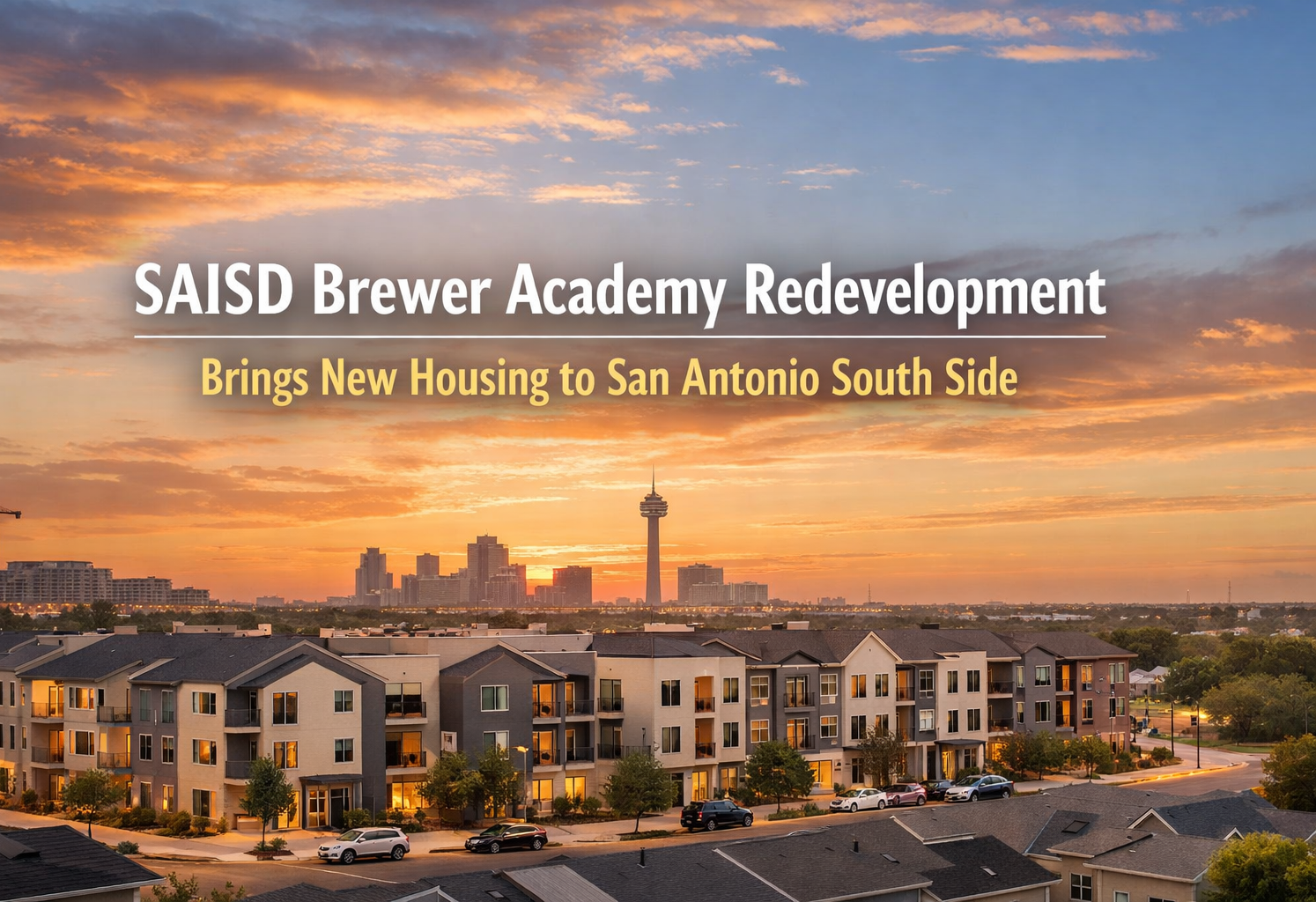
San Antonio Independent School District is transforming how it approaches properties that no longer serve educational purposes, and the former Brewer Academy campus on the South Side represents this evolving strategy in action. Rather than allowing closed school facilities to sit vacant or selling land without consideration for community impact, SAISD plans to redevelop the Brewer Academy site into approximately 80 affordable homes. The project demonstrates how public institutions can contribute to housing solutions while maintaining productive use of community assets.
The redevelopment reflects broader patterns affecting school districts throughout San Antonio and beyond. Enrollment shifts have left some campuses underutilized or closed entirely, creating both challenges and opportunities for communities. Vacant school buildings can become maintenance burdens, visual concerns, and missed opportunities for neighborhoods that could benefit from reinvestment. Converting these properties to housing addresses multiple needs simultaneously.
For those considering buying a home in San Antonio, understanding how redevelopment projects like Brewer Academy affect different neighborhoods provides valuable context. The South Side has long standing community character and established infrastructure that makes reinvestment projects particularly significant. New housing on formerly institutional land adds options for buyers while strengthening existing neighborhoods rather than extending development outward.
This guide explores what SAISD plans for the Brewer Academy site, why school districts are repurposing closed campuses, how South Side location affects the project's significance, what infrastructure advantages school site redevelopment offers, and how this project connects to broader San Antonio housing dynamics. Whether you live on the South Side, are evaluating neighborhood options, or want to understand how public land decisions affect housing markets, this redevelopment merits attention.
What Is Planned for the Former Brewer Academy Site?
SAISD plans to redevelop the former Brewer Academy campus into approximately 80 affordable homes as part of the district's broader approach to managing properties that no longer serve educational functions. Understanding the project scope helps residents appreciate what the redevelopment will bring to the South Side. The transformation converts inactive institutional property to active residential use.
The project represents part of SAISD's rightsizing strategy, which focuses on adapting school owned properties to reflect current enrollment levels and community demand. Rather than maintaining campuses that no longer serve students or selling land without consideration for neighborhood impact, the district is pursuing redevelopment that keeps properties productive and aligned with community needs.
Q: Will SAISD sell the land or maintain involvement in the project?
A: The approach involves redevelopment rather than simple land sale, suggesting ongoing consideration for how the property serves community interests. The specific structure of any partnership between SAISD, developers, and other entities was not detailed in available information. The focus on affordable housing indicates priority beyond just maximizing sale proceeds.
The housing will be built on an existing campus footprint that already has access to streets, utilities, and nearby services. This infrastructure readiness reduces development complexity and cost compared to building on undeveloped land. Construction timeline and final site layout details have not been released.
Brewer Academy redevelopment plans:
- Approximately 80 affordable homes planned
- Part of SAISD rightsizing strategy
- Existing campus footprint with infrastructure
- Redevelopment rather than vacant property
- Affordable housing focus
- Construction timeline not yet announced
- Final layout details pending
Why Is SAISD Repurposing Closed School Campuses?
Understanding why school districts are converting closed campuses to other uses helps appreciate the broader context for the Brewer Academy project. Enrollment shifts throughout San Antonio have created mismatches between facilities and actual educational needs. Districts face choices about how to manage properties that no longer serve their original purpose.
San Antonio has experienced steady population shifts across different parts of the city over recent decades. Some neighborhoods have grown with young families requiring school capacity, while others have seen enrollment decline as demographics change. These patterns create situations where some campuses have more capacity than students while others face crowding.
Q: What challenges do vacant school properties create for districts and neighborhoods?
A: Closed campuses require ongoing maintenance even when not serving students, creating costs without corresponding educational benefit. Vacant buildings can deteriorate, affecting neighborhood appearance and potentially creating safety concerns. Unused properties represent missed opportunities for communities that could benefit from productive use of the land. These challenges motivate districts to pursue alternatives to simply maintaining closed facilities indefinitely.
By repurposing closed campuses, SAISD can reduce maintenance costs, generate long term value from property assets, and contribute to broader citywide housing goals without requiring acquisition of new land. The approach transforms liabilities into community assets while aligning district resources with actual educational needs.
Reasons for school property repurposing:
- Enrollment shifts creating facility mismatches
- Maintenance costs for unused buildings
- Vacant property deterioration concerns
- Missed opportunity costs from idle assets
- Housing contribution without new land acquisition
- Resource alignment with actual educational needs
- Community benefit from productive property use
Why Does the South Side Location Matter for This Project?
The Brewer Academy site location on San Antonio's South Side carries specific significance for understanding what the redevelopment represents. The South Side has distinct characteristics that affect how new housing contributes to neighborhood dynamics. Location context helps appreciate the project's community impact.
The South Side features established neighborhoods with long standing community ties, multi generational residents, and distinct cultural identity. Development in these areas typically involves reinvestment within existing community fabric rather than expansion into previously undeveloped land. This reinvestment approach strengthens existing neighborhoods rather than shifting activity and investment elsewhere.
Q: How does South Side development differ from suburban expansion?
A: South Side projects build within established neighborhoods where infrastructure, services, and community patterns already exist. This differs from suburban expansion that requires new roads, extended utilities, and creates communities from previously undeveloped land. Reinvestment projects like Brewer Academy redevelopment leverage existing public investments while strengthening neighborhoods that have served residents for generations.
Proximity to major employment corridors provides South Side residents with job access that affects housing demand and neighborhood stability. The area's established character and community institutions create identity that new development in other areas must build over time. Housing added in established areas supports nearby businesses and makes better use of existing public resources.
South Side location significance:
- Established neighborhoods with community ties
- Multi generational resident presence
- Reinvestment rather than expansion approach
- Existing infrastructure and services
- Proximity to employment corridors
- Community identity and cultural character
- Public resource utilization through reinvestment
How Does School Property Redevelopment Impact Communities?
When schools close, effects can linger in communities long after educational activities end. Understanding these impacts helps appreciate why redevelopment offers advantages over allowing properties to remain vacant. The transition from closed campus to active housing creates different community dynamics.
Vacant campuses can become maintenance burdens that strain district resources without providing educational benefit. Visual blight from deteriorating buildings affects neighborhood perception and resident pride. Security concerns may emerge when buildings sit unused. These negative effects accumulate the longer properties remain inactive.
Q: How does converting closed schools to housing benefit surrounding neighborhoods?
A: Redevelopment shifts properties from inactive status to active residential use, increasing foot traffic, supporting nearby services, and creating renewed purpose for familiar community landmarks. New residents become customers for local businesses and participants in community life. Maintained properties improve neighborhood appearance compared to deteriorating vacant buildings. The transformation replaces negative vacancy effects with positive active use benefits.
Projects like Brewer Academy redevelopment also demonstrate how public agencies can collaborate with developers and city planners to align land use with evolving needs. These partnerships ensure that public land serves community interests rather than simply being sold to highest bidders without consideration for neighborhood impact.
Community impacts of school redevelopment:
- Elimination of vacant building maintenance burden
- Visual improvement from active versus deteriorating property
- Security concerns addressed through occupancy
- Foot traffic supporting local businesses
- New residents participating in community life
- Purpose restored to familiar landmarks
- Public private collaboration for community benefit
What Infrastructure Advantages Does School Site Redevelopment Offer?
One significant advantage of redeveloping former school sites involves infrastructure readiness that reduces development complexity and cost. Understanding these advantages helps appreciate why school properties attract housing development interest. The practical benefits affect both project feasibility and community impact.
Schools are typically built in locations with established roads, water, sewer, and utility connections because educational facilities require these services for students and staff. This infrastructure presence means redevelopment can proceed without major new infrastructure construction. The existing connections reduce costs that would otherwise increase housing prices or require public investment.
Q: How does infrastructure readiness affect housing development feasibility?
A: Development on sites with existing infrastructure faces lower costs and shorter timelines than projects requiring new roads, utility extensions, or service installations. These savings can translate to more affordable housing prices or enable projects that might not be financially viable on raw land requiring extensive infrastructure investment. The practical advantages make school sites attractive for housing development.
From a planning perspective, utilizing existing infrastructure supports more efficient land use and helps limit sprawl. Rather than extending services to previously undeveloped areas, redevelopment concentrates housing where public investment already exists. This efficiency benefits both individual projects and broader community planning objectives.
Infrastructure advantages:
- Established roads providing access
- Existing water and sewer connections
- Utility infrastructure already in place
- Reduced development costs
- Shorter project timelines possible
- No new public infrastructure investment required
- Sprawl limitation through infill development
How Does This Project Fit Into San Antonio's Housing Landscape?
Housing remains a significant topic across San Antonio as the city balances growth, affordability, and neighborhood preservation. Understanding how the Brewer Academy project connects to broader housing dynamics helps appreciate its significance. Individual projects contribute to larger patterns affecting housing availability and affordability.
San Antonio's population growth has created sustained housing demand that affects availability and pricing throughout the market. While no single project can resolve housing challenges, multiple smaller scale solutions working together can meaningfully affect conditions. The Brewer Academy redevelopment represents one such contribution focused on affordable housing.
Q: What advantages does using publicly owned land for housing provide?
A: Development on publicly owned land can proceed without competing in the private land market where prices reflect speculative value and development potential. Public ownership enables consideration of community goals beyond purely market driven outcomes. Land cost represents significant portion of housing development expenses, so reduced or eliminated land cost can improve affordability for eventual residents.
SAISD's approach shows how institutions beyond city government can contribute to addressing local housing needs. School districts, other public agencies, and similar entities own properties throughout San Antonio that could potentially serve housing purposes. The Brewer Academy project demonstrates one model for converting public property to housing use.
Project within San Antonio housing context:
- Population growth creating sustained demand
- Multiple solutions needed for meaningful impact
- Publicly owned land avoiding private market competition
- Community goals consideration beyond market outcomes
- Land cost reduction improving affordability
- Institutional contribution beyond city government
- Model for public property conversion to housing
What Does Affordable Housing Mean for This Project?
Understanding what affordable housing designation implies helps residents appreciate who the Brewer Academy development aims to serve. The term carries specific meaning in housing development that affects project design, financing, and resident eligibility. These characteristics distinguish affordable housing from market rate development.
Affordable housing typically refers to units priced for households earning below area median income levels. Various programs define affordability thresholds differently, but the general concept involves housing accessible to households who might struggle to afford market rate options. Income limits and rent or purchase price restrictions often accompany affordable housing designations.
Q: How do affordable housing projects differ from market rate development?
A: Affordable housing projects often involve financing mechanisms, tax credits, or other incentives that enable reduced pricing for qualified residents. These projects may have income verification requirements ensuring units serve intended populations. Design and amenity choices may balance cost efficiency with livability to maintain affordability. Market rate development faces different financial structures and targets households regardless of income level.
The approximately 80 homes planned for Brewer Academy represent meaningful affordable housing addition for the South Side. While not solving broader affordability challenges alone, the project contributes to inventory accessible for households who might otherwise face limited options. The location within an established neighborhood provides community context that new suburban affordable developments may lack.
Affordable housing characteristics:
- Pricing for households below median income
- Various program definitions of affordability
- Income limits for resident eligibility
- Financing mechanisms enabling reduced pricing
- Tax credits and incentives supporting projects
- Cost efficiency balanced with livability
- Inventory addition for limited option households
How Does This Redevelopment Differ from New Subdivision Development?
Understanding distinctions between redevelopment projects and new subdivision construction helps appreciate what the Brewer Academy project represents. Different development approaches create different community effects and neighborhood dynamics. Recognizing these differences provides context for evaluating housing projects.
New subdivision development typically occurs on previously undeveloped land, creating neighborhoods where none existed before. These projects require new roads, utility extensions, and service provisions. The resulting communities lack established character and must build identity over time through resident occupation and community development.
Q: What advantages does redevelopment within established neighborhoods offer?
A: Redevelopment projects like Brewer Academy build within existing community fabric where neighbors, businesses, and institutions already exist. New residents join established communities rather than creating new ones from scratch. Existing infrastructure eliminates extension costs and utilizes previous public investment. Neighborhood character and services are established rather than developing over years.
The project adds housing within a South Side context that has developed over generations. New residents will have immediate access to neighborhood networks, local businesses, community institutions, and social infrastructure that new subdivisions must develop gradually. This integration provides different living experience than isolated new construction.
Redevelopment versus new subdivision:
- Existing versus undeveloped land use
- Established versus new community context
- Infrastructure utilization versus extension
- Immediate versus developing neighborhood character
- Integration with versus creation of community
- Previous public investment leverage
- Different living experience and dynamics
What Should Nearby Residents Understand About the Project?
Residents living near the former Brewer Academy site will experience the redevelopment most directly. Understanding what the project means for nearby neighborhoods helps residents evaluate how the change affects their community. The transition involves considerations specific to adjacent property owners and residents.
The redevelopment brings change but not drastic shift in land use character. The property moves from vacant institutional use to active residential use, maintaining residential character consistent with surrounding neighborhoods. Development scaled to fit within existing neighborhood framework ensures compatibility rather than dramatic contrast with adjacent properties.
Q: What visual and activity changes might neighbors experience?
A: Instead of a vacant campus, neighbors will see new homes, maintained landscaping, and ongoing residential activity. This transition typically improves perceptions of safety and property upkeep compared to vacant institutional buildings. Activity levels will increase as residents occupy homes, but residential activity differs from institutional traffic patterns that schools generate.
The source did not provide details on architectural style, community amenities, or specific design elements that would affect visual integration with surrounding properties. As the project advances through planning and development, additional details about design and layout will likely emerge for community review and comment.
Nearby resident considerations:
- Residential character maintained
- Scale fitting neighborhood framework
- Vacant campus replaced with active housing
- Improved safety and upkeep perceptions
- Residential versus institutional activity patterns
- Design details to emerge through planning
- Community review opportunities likely
How Does Public Land Utilization Affect Housing Development?
Understanding relationships between public land ownership and housing development helps appreciate what the Brewer Academy project demonstrates. Public entities own substantial property throughout San Antonio that could potentially serve housing purposes. The approach SAISD is taking provides one model for converting public assets to housing use.
Public land ownership removes one significant cost from housing development, namely land acquisition in competitive private markets. When public entities contribute land to housing projects, the financial structure differs from projects requiring market rate land purchases. This difference can enable affordability that purely private development cannot match.
Q: What considerations should guide public land conversion to housing?
A: Public land represents community assets that warrant thoughtful utilization serving community interests. Converting public property to housing should consider neighborhood compatibility, affordability goals, community input, and long term value rather than simply maximizing immediate financial returns. The SAISD approach of pursuing affordable housing rather than selling to highest bidder reflects these broader considerations.
Various public entities throughout San Antonio own properties that might serve housing purposes. School districts, city agencies, county government, and other public bodies hold land that enrollment shifts, facility consolidation, or changed priorities have made available. The Brewer Academy model could inform how other public properties are approached.
Public land and housing development:
- Land cost removal from development equation
- Financial structure differences from private development
- Affordability enablement through public contribution
- Community interest consideration in utilization
- Neighborhood compatibility evaluation
- Long term value versus immediate return
- Model for other public property decisions
What Questions Remain About the Brewer Academy Project?
Several details about the Brewer Academy redevelopment have not been released, leaving questions that will be answered as the project advances. Understanding what remains unknown helps residents follow the project appropriately and identify information to watch for. Transparency about unknowns prevents premature conclusions.
Construction timeline has not been announced, leaving uncertainty about when residents might see work begin and homes completed. Major development projects typically require extended periods from planning through construction completion. Residents should expect a timeline measured in years rather than months for full buildout.
Q: What other significant details remain unannounced?
A: The developer or development team has not been identified in available information, leaving unclear who will actually construct the housing. Architectural style and design details that affect neighborhood visual integration have not been released. Community amenities, if any, remain unspecified. Income eligibility requirements and specific affordability parameters have not been detailed. These elements will likely emerge as the project advances through development stages.
Monitoring local news and SAISD announcements will provide updates as planning progresses. Community input opportunities may arise during development review processes that allow residents to learn details and provide feedback. Patience with the information timeline while remaining engaged serves residents well.
Outstanding project questions:
- Construction start date and timeline
- Developer or development team identity
- Architectural style and design details
- Community amenities if planned
- Income eligibility requirements
- Specific affordability parameters
- Community input opportunity timing
How Does This Project Relate to San Antonio Growth Patterns?
Understanding how the Brewer Academy redevelopment connects to broader San Antonio growth patterns helps appreciate its significance beyond the individual project. The city's development trajectory affects how individual projects contribute to overall housing dynamics. Context matters for evaluating project importance.
San Antonio has experienced sustained population growth that has shifted development patterns across the metropolitan area. Suburban expansion has created new communities on previously undeveloped land while some older neighborhoods have seen demographic change including enrollment declines that affect schools. These interconnected patterns create both challenges and opportunities throughout the city.
Q: How does infill development like Brewer Academy relate to suburban expansion?
A: Infill development adds housing within established areas rather than extending development outward. This approach utilizes existing infrastructure, strengthens established neighborhoods, and limits sprawl that consumes undeveloped land. While suburban expansion will likely continue meeting some housing demand, infill projects like Brewer Academy provide alternatives that serve different purposes and different household preferences.
The balance between infill development and suburban expansion affects transportation patterns, infrastructure costs, environmental impact, and community character throughout the metropolitan area. Projects demonstrating viable infill models help expand the range of approaches available for addressing housing needs.
Growth pattern connections:
- Population growth shifting development patterns
- Suburban expansion on undeveloped land
- Older neighborhood demographic changes
- Enrollment declines affecting school properties
- Infill utilizing existing infrastructure
- Established neighborhood strengthening
- Sprawl limitation through alternatives
What Does This Project Mean for South Side Real Estate?
Understanding potential effects on South Side real estate helps residents and potential buyers evaluate the project's significance. Housing development can affect surrounding property dynamics in various ways depending on project characteristics and market conditions. Context specific evaluation matters more than general assumptions.
New housing development typically increases local housing inventory, providing more options for households seeking to buy or rent in an area. The approximately 80 homes at Brewer Academy add to South Side housing supply, potentially affecting availability for households seeking options in established South Side neighborhoods.
Q: How might affordable housing development affect surrounding property values?
A: Research on affordable housing effects shows varied results depending on project quality, design, and integration with surrounding areas. Well designed affordable housing that maintains neighborhood compatibility often shows neutral or positive effects on nearby property values. Concerns about negative effects typically relate to poorly designed or managed projects rather than affordable housing inherently. Quality matters more than affordability designation.
The transformation from vacant institutional property to occupied residential use generally improves neighborhood perception and can positively affect surrounding properties. Active homes with maintained yards create different neighborhood character than deteriorating vacant buildings. This activity transition may prove more significant than the affordable housing designation itself.
South Side real estate considerations:
- Housing inventory increase from new homes
- Supply addition for households seeking options
- Quality and design affecting neighborhood integration
- Well designed projects showing neutral or positive effects
- Vacancy to occupancy transition improving perception
- Active maintenance versus deterioration
- Activity change potentially more significant than designation
Expert Insight from Tami Price
"Projects like this are a reminder that redevelopment does not always mean tearing everything down and starting over," says Tami Price, REALTOR® and Broker Associate with Real Broker, LLC. "Repurposing existing sites within established neighborhoods is one way San Antonio can grow thoughtfully while respecting the character of the area. The South Side has deep community roots, and adding housing through reinvestment rather than expansion keeps development connected to what already makes these neighborhoods strong."
Price brings nearly two decades of experience and approximately 1,000 closed transactions to her work with buyers and sellers throughout San Antonio, Schertz, Cibolo, Helotes, Converse, and Boerne. Her understanding of how development patterns affect different neighborhoods helps clients evaluate options throughout the metropolitan area.
"When school districts and other public entities repurpose properties for housing, they are contributing to solutions in ways that purely private development cannot always match," Price explains. "Using land that is already publicly owned, already connected to infrastructure, and already part of established neighborhoods creates opportunities for housing that serves community needs. The Brewer Academy project shows how these opportunities can be realized."
Her recognition as a RealTrends Verified Top Agent with more than 600 five star reviews across platforms reflects consistent client satisfaction serving buyers and sellers navigating diverse San Antonio neighborhoods.
"For buyers considering the South Side or any established San Antonio neighborhood, I encourage looking at how reinvestment is occurring," Price notes. "Projects that add quality housing within existing communities often strengthen neighborhoods in ways that benefit everyone. The Brewer Academy redevelopment is worth watching as one example of how public land can serve housing needs."
Three Key Takeaways
1. SAISD Plans to Redevelop the Closed Brewer Academy Campus into Approximately 80 Affordable Homes on San Antonio's South Side
The project transforms an unused school property into active residential use as part of the district's broader strategy for adapting properties to reflect current enrollment levels and community needs. Rather than leaving the campus vacant or selling without community consideration, SAISD is pursuing redevelopment that maintains productive property use while contributing to housing inventory.
2. School Site Redevelopment Offers Infrastructure Advantages and Neighborhood Reinvestment Benefits Compared to New Suburban Development
The existing campus footprint already has access to roads, utilities, and nearby services, reducing development costs and complexity. Building within an established South Side neighborhood strengthens existing community fabric rather than extending development outward. This infill approach utilizes previous public infrastructure investment while limiting sprawl.
3. The Project Demonstrates How Public Institutions Can Contribute to Housing Solutions Beyond City Government Initiatives
Those considering buying a home in San Antonio can view public land redevelopment as one approach contributing to housing availability. School districts and other public entities own properties throughout San Antonio that could potentially serve housing purposes. The Brewer Academy model shows how public property can be converted to housing use while considering community interests and affordability goals.
Frequently Asked Questions
Q: When will construction begin on the Brewer Academy redevelopment?
A: The construction start date has not been announced. Major redevelopment projects typically require extended planning periods before construction begins. Residents should monitor SAISD and local news announcements for timeline updates as the project advances.
Q: Who will develop the housing project?
A: The developer or development team has not been identified in available information. This detail will likely emerge as the project advances through planning and procurement processes.
Q: How many homes are planned for the site?
A: Approximately 80 affordable homes are planned for the former Brewer Academy campus. The final site layout and exact home count may adjust as planning proceeds.
Q: Will this project affect nearby active SAISD schools?
A: No, the redevelopment involves a closed campus that no longer serves students. The project does not affect active SAISD schools or educational operations.
Q: Where is Brewer Academy located?
A: The campus is located on San Antonio's South Side within an established residential neighborhood with existing infrastructure and community ties.
Q: What does affordable housing mean for this project?
A: Affordable housing typically refers to units priced for households earning below area median income levels. Specific income requirements and affordability parameters for the Brewer Academy project have not been released.
Q: Why is SAISD repurposing closed campuses for housing?
A: Enrollment shifts have left some campuses underutilized, creating maintenance costs without educational benefit. Redevelopment allows SAISD to reduce costs, generate value from property assets, and contribute to housing goals while aligning resources with actual educational needs.
Q: How will this project affect the surrounding neighborhood?
A: The project converts a vacant campus to active residential use, typically improving neighborhood perception compared to deteriorating vacant buildings. Development scaled to fit within existing neighborhood framework ensures compatibility with surrounding properties.
The Bottom Line
The Brewer Academy redevelopment highlights how San Antonio is rethinking the use of public land to address community needs. Instead of leaving closed school campuses vacant and deteriorating, SAISD is exploring ways to convert these properties to productive uses aligned with current community priorities. The approximately 80 affordable homes planned for the South Side site represent meaningful housing addition within an established neighborhood context.
The project demonstrates several principles worth noting for San Antonio's housing landscape: public institutions can contribute to housing solutions beyond city government initiatives, existing infrastructure on school sites reduces development costs and complexity, and reinvestment within established neighborhoods strengthens existing community fabric rather than extending sprawl. These principles may inform how other public properties throughout San Antonio are approached.
For residents watching growth and change across the city, the Brewer Academy redevelopment represents one model for converting public assets to housing use while considering community interests. Working with experienced representation helps buyers and sellers understand how development patterns affect different neighborhoods throughout San Antonio.

Contact Tami Price, REALTOR®
Whether exploring South Side neighborhoods, evaluating communities throughout San Antonio, or navigating any home buying or selling process, working with an experienced REALTOR® provides guidance through complex decisions. Tami Price brings local market knowledge and professional expertise to help clients understand how development patterns affect different areas and find homes matching their priorities.
From first time buyers to those seeking established neighborhood character, personalized service makes the difference in successful transactions.
Tami Price, REALTOR®, Broker Associate
📞 210-620-6681
Tami Price's Specialties
- Comprehensive Buyer and Seller Representation
- Military Relocations and PCS Moves
- VA Loan Guidance and Assumptions
- New Construction Navigation
- Strategic Pricing and Market Analysis
- Professional Property Marketing
- First Time Buyer Education
- Move Up and Downsizing Transitions
- Residential Real Estate Throughout San Antonio, Schertz, Cibolo, Helotes, Converse, and Boerne
Disclaimer
This blog post is provided for informational purposes only and should not be construed as guarantees regarding property values, development outcomes, or housing availability. Information about the SAISD Brewer Academy redevelopment reflects publicly available details as of the publication date and is subject to change. Development timelines, home counts, affordability requirements, and project specifications are determined by SAISD and development partners and may be modified without notice. Real estate decisions should be based on individual circumstances, professional guidance, and current market conditions. Tami Price, REALTOR®, and Real Broker, LLC make no warranties regarding accuracy, completeness, or applicability of information to specific circumstances.
Categories
- All Blogs (942)
- Home Buying (19)
- Neighborhood Guides (45)
- 10 Incentive and Rate Buydown Questions (1)
- 10 Military Neighborhood (1)
- 10 Mistakes Sellers Make (1)
- 10 Strategies to Coordinate a Same Day Close (1)
- 12 Lifestyle Questions to Move In (1)
- 12 PCS What Ifs (1)
- 12 Photos and Marketing Assets (1)
- 13 PCS Hunting Trip Tips (1)
- 14 Design Center Decisions (1)
- 15 Red Flags Touring Home in San Antonio (1)
- 2026 Market (1)
- 30 days after closing your home (1)
- 7 Offer Terms Beyond Price (1)
- 7 VA Specific Questions (1)
- 78015 Ranked One (1)
- 8 Bridge (1)
- 8 Myths Buyers Believe about Down Payments (1)
- 8 Reasons VA Buyers Love New Construction (1)
- 9 Mistakes Move Up Buyers Make (1)
- 9 Questions to Decide If You Keep Your PCS Home (1)
- 9 Timeline Questions Every Buyer Need to Ask (1)
- 9 Warranty Questions to Ask (1)
- 9 Ways to Attract VA & Military Buyers (1)
- 90 days before your move (1)
- About Tami Price (6)
- Active Adult Homes (1)
- Affordable Communities (2)
- Affordable Housing & Community Development (5)
- Agent Qualifications and Credentials (1)
- Agent Qualifications and Experience (1)
- Agent Recognition (3)
- Agent Selection (1)
- AI and Real Estate Tools (1)
- Alamo Heights (5)
- Alamo Heights ISD (1)
- Alamo Heights Real Estate (1)
- Alamo Ranch (3)
- Amenities in Helotes, Texas (3)
- Apartment Market (1)
- Appraisals (1)
- Arts and Culture (1)
- Awards and Recognition (7)
- Balcones Creek (1)
- Best Neighborhoods to Live in Cibolo, TX (3)
- Best Neighborhoods to Live in San Antonio (16)
- Best Places to Live in Leon Valley: A Neighborhood Guide (1)
- Best Places to Live in Northeast Inner Loop: A Neighborhood Guide (1)
- Bexar County Property Tax (1)
- Bexar County Real Estate (3)
- Blue Tape Walkthrough (1)
- Boerne Home Sellers (1)
- Boerne Neighborhoods (2)
- Boerne Texas (9)
- Broadway Corridor Development (1)
- Build-to-Rent Communities (1)
- Builder Contracts & Warranties (3)
- Builder Incentives (1)
- Builder Warranties (1)
- Buyer (97)
- Buyer Activity San Antonio (1)
- Buyer and Seller Guidance (4)
- Buyer Due Diligence (1)
- Buyer Education (46)
- Buyer Guide (9)
- Buyer Guides (7)
- Buyer Protection Strategies (1)
- Buyer Representation (1)
- Buyer Representation Expertise (1)
- Buyer Resources (90)
- Buyer Strategy (2)
- Buyers (13)
- Buyers Agent (1)
- Buying a Foreclosed Home in San Antonio (10)
- Buying a Home (3)
- Buying a Home in San Antonio (6)
- Buying Near JBSA (1)
- Buying Timeline (1)
- Buying vs Renting (1)
- Castroville, TX (8)
- Central San Antonio (1)
- Central San Antonio Development (2)
- Central Texas Growth (1)
- Choosing a Real Estate Agent (1)
- Choosing an Agent (1)
- Cibolo Communities (1)
- Cibolo Home Sellers (1)
- Cibolo TX (15)
- Client Reviews and Testimonials (1)
- Client Satisfaction (1)
- Client Stories (1)
- Client Testimonial (4)
- Clients review (4)
- Closing (1)
- Cobblestone (1)
- Comal County (1)
- Commercial & Retail Development (27)
- Commercial Development (13)
- Commercial Development Impact on Home Values (1)
- Commercial Real Estate (1)
- Community (1)
- Community Amenities (2)
- Community Development (23)
- Community Development and Real Estate (3)
- Community Events & Development (1)
- Community Guides (1)
- Community Infrastructure (1)
- Community Investment Impact (2)
- Community Landmarks (1)
- Community News (4)
- Community Planning (2)
- Community Revitalization (1)
- Community Spotlights (1)
- Commuter Neighborhoods (1)
- Cons of Living in Helotes, TX (4)
- Conservation Communities (1)
- Contingency Questions (1)
- Converse Home Sellers (1)
- Converse Homes For Sale (3)
- Converse Real Estate (1)
- Converse TX (10)
- Converse TX Real Estate (1)
- Cost of Living Guides (1)
- Cost of Living in San Antonio TX (25)
- CPS Energy Programs (1)
- Custom Homes (5)
- Davis Ranch (1)
- Days on Market (1)
- Deco District San Antonio (1)
- Denver Heights (1)
- Down Payment Assistance (1)
- Downtown Boerne (1)
- Downtown Development (3)
- Downtown Living (1)
- Downtown Revitalization (14)
- Downtown San Antonio (2)
- Downtown San Antonio Real Estate (5)
- Downtown San Antonio Revitalization (1)
- Dual Military (1)
- East Side Living (1)
- East Side Neighborhoods (1)
- East Side San Antonio (4)
- Economic Development (3)
- Economic Growth & Industry (1)
- Education, Texas Hill Country (1)
- Emerald Pointe (1)
- Employment (1)
- Employment Corridors (1)
- Encino Forest (1)
- Entertainment Economy (1)
- Equity and Pricing Strategy (2)
- Equity Q&A (1)
- Established Communities (3)
- Events in San Antonio (207)
- Expert Advice from Tami Price, Realtor® (10)
- Fair Oak Ranch (1)
- Family Activities (2)
- Family Homes (3)
- Family Living in San Antonio (1)
- FAQ (1)
- Far Northwest San Antonio (1)
- Far West San Antonio (1)
- Far Westside Real Estate (4)
- Farmer Markets in San Antonio (1)
- Fastest Growing Zip Codes in America (1)
- Featured Homes for Sale (2)
- Featured Properties (1)
- Final Walkthrough (1)
- Financial Planning (11)
- Financing Strategy (1)
- First Time Buyers (23)
- First Time Sellers (1)
- First-Time Buyers (6)
- First-Time Homebuyer Resources (4)
- First-Time Homebuyer Tips (2)
- First-Time Homebuyers (6)
- First-Time Investors (1)
- Fort Sam Houston (3)
- Fort Sam Houston Real Estate (1)
- Fort Sam Houston, TX (2)
- Fox Grove (1)
- FSBO vs Agent Representation (1)
- Future Rental (1)
- Gated Communities (5)
- Golf Communities (1)
- Great Northwest (1)
- Greater San Antonio Housing Trends (2)
- Greater San Antonio Real Estate (5)
- Green Home Upgrades (1)
- Growth and Development (11)
- Healthcare (1)
- HELOC (1)
- Helotes Home Sellers (1)
- Highway 151 Corridor Growth (1)
- Hill Country Business (1)
- Hill Country Communities (2)
- Hill Country Development (3)
- Hill Country Homes for Sale (1)
- Hill Country Living (3)
- Hill Country Market Updates (1)
- Hill Country Real Estate (4)
- Hill Country Retreat (1)
- Historic Districts (5)
- Historic Neighborhoods (4)
- Historic Preservation (2)
- Holiday Attractions (1)
- Holiday Guide (1)
- Home Buying (7)
- Home Buying Education (3)
- Home Buying Guide (7)
- Home Buying Process (8)
- Home Buying Strategy (2)
- Home Buying Tips (6)
- Home Energy Efficiency San Antonio (5)
- Home Financing (2)
- Home Improvement ROI (1)
- Home Inspections (3)
- Home Preparation (2)
- Home Pricing Strategy (14)
- Home Renovation for Resale (1)
- Home Selling (12)
- Home Selling Guide (11)
- Home Selling Strategies (3)
- Home Selling Strategy (3)
- Home Selling Tips (22)
- Home Staging and Updates (2)
- Home Values (2)
- Homebuyer Education (15)
- Homebuyer Resources (1)
- Homebuying Guide (1)
- Homebuying Tips (3)
- Homeowner (37)
- Homeowner Tax Benefits (1)
- Homeownership Costs (1)
- Homes for Sale (2)
- Homes for sale near Lackland AFB (4)
- Homes Near Military Bases (1)
- Homestead amenities (1)
- Horizon Pointe (1)
- House Hunting Guide (1)
- Housing (1)
- Housing Community Development (1)
- Housing Development (2)
- Housing Market Updates (3)
- How to Buy a House in San Antonio TX (48)
- Huebner Oaks shopping center (1)
- Hunters Ranch (1)
- Hybrid (1)
- I-10 Corridor (1)
- I-35 Corridor (1)
- In Person (1)
- Incorporated Cities (6)
- Industrial Investment Impact (1)
- Industry News (2)
- Industry Recognition (1)
- Infrastructure & Growth Projects (26)
- Infrastructure and Sustainability (1)
- Infrastructure Development (1)
- Infrastructure Investment (1)
- Infrastructure Updates (2)
- Interest Rates (2)
- Invest in San Antonio (46)
- Investment Opportunities (3)
- Investment Property San Antonio (4)
- JBSA (9)
- JBSA Housing (11)
- JBSA Real Estate (4)
- JBSA Resources (7)
- Joint Base San Antonio (5)
- Joint Base San Antonio Housing (1)
- Judson ISD (2)
- Kendall County (1)
- La Cantera Retail Development (1)
- Lackland AFB (7)
- Lackland AFB Housing (1)
- Land Conservation (1)
- Land Use Planning (1)
- Lera MLS (15)
- Lifestyle & Community Growth (18)
- Lifestyle & Local Growth (12)
- Lifestyle Amenities (1)
- Lifestyle Communities (1)
- Listing Preparation (1)
- Listing Strategy (1)
- Live Oak (1)
- Living in San Antonio, TX (52)
- Living Near Randolph AFB (7)
- Loan Programs (1)
- Local Attractions (3)
- Local Business (1)
- Local Business & Development (9)
- Local Business & Economy (3)
- Local Business Spotlight (20)
- Local Business Support (5)
- Local Development (4)
- Local Development News (9)
- Local Market Insights (5)
- Local News (2)
- Local News Around San Antonio (2)
- Local Policy Changes (1)
- Local Real Estate News (1)
- Loop 1604 Corridor Growth (2)
- Loop 410 Corridor Development (1)
- Luxury Communities (3)
- Luxury Homes (2)
- Luxury Real Estate (1)
- Luxury Retail San Antonio (1)
- MacArthur Park (1)
- Major Developments (2)
- Making Offers on Homes (1)
- Market Analysis (26)
- Market Conditions (47)
- Market Expertise (1)
- Market Insights (5)
- Market Strategy (1)
- Market Timing (2)
- Market Trends (10)
- Market Trends & Insights (2)
- Market Update (18)
- Market Update 2026 (1)
- Market Updates (22)
- Master Planned Communities (12)
- Medical Center Area Real Estate (1)
- Medina Valley ISD (2)
- Midtown Living (1)
- Military & Economic Impact (3)
- Military Buyers (3)
- Military Communities (1)
- Military Families (1)
- Military Family Resources (1)
- Military Heritage (1)
- Military Homebuying (3)
- Military Homeownership (1)
- Military Housing (3)
- Military Housing Market in Texas (16)
- Military Life in San Antonio (2)
- Military Neighborhoods (1)
- Military PCS Relocations (3)
- Military Real Estate (2)
- Military Relocation (100)
- Military Relocation & VA Loans (10)
- Military Relocation San Antonio (4)
- Military Relocation Services (3)
- Military Relocation to San Antonio (50)
- Military Relocations (20)
- Military Relocations & VA Home Loans (5)
- Mixed-Income Housing (1)
- MLS Accuracy & Data Transparency (1)
- Mortgage Programs (1)
- Mothers Day in San Antonio (1)
- Move to Boerne TX (18)
- Move to Castroville TX (11)
- Move to Converse TX (16)
- Move to New Braunfels (1)
- Move to North San Antonio (19)
- Move to San Antonio TX (73)
- Move to Selma TX (19)
- Move to Shertz TX (13)
- Move to Texas (53)
- Move Up Buyer Resources (1)
- Move Up Buyers (23)
- Move-In Ready Homes (3)
- Move-In Ready Homes San Antonio (2)
- Move-Up Buyers (2)
- Moving to Helotes, TX (17)
- Moving to San Antonio (69)
- MUD Taxes (1)
- Natalia Homes For Sale (1)
- Near East Side Living (1)
- Negotiation Strategy (2)
- Neighborhood Amenities (1)
- Neighborhood Development (1)
- Neighborhood Guides (7)
- Neighborhood Investment (1)
- Neighborhood News (2)
- Neighborhood Revitalization (2)
- Neighborhood Spotlights (12)
- Neighborhood Updates (1)
- Neighborhoods near Randolph AFB (12)
- New Braunfels (6)
- New Braunfels Homes For Sale (1)
- New Braunfels News (3)
- New Braunfels Real Estate (3)
- New Businesses (2)
- New Construction (63)
- New Construction Communities (1)
- New Construction Homes (13)
- New Construction Homes San Antonio (5)
- New Construction vs Resale (2)
- New Construction Without Customization (1)
- New Construction Without the Wait (1)
- New Contruction Cost (1)
- New Development (3)
- New Listing (19)
- New Restaurants (3)
- News (211)
- News & updates (213)
- No HOA Homes (1)
- North Central San Antonio (5)
- North East ISD (4)
- North San Antonio (9)
- North San Antonio Real Estate (3)
- North Side Neighborhoods (1)
- North Side San Antonio Development (2)
- Northeast Inner Loop (1)
- Northeast Inner Loop Neighborhoods (1)
- Northeast San Antonio (3)
- Northside ISD (5)
- Northwest San Antonio (9)
- Northwest San Antonio Development (1)
- Northwest San Antonio Growth (1)
- Northwest San Antonio Real Estate (3)
- Northwood (1)
- Olympia Hills (1)
- One-Story Homes (1)
- Outdoor Living (1)
- Parks and Recreation (2)
- PCS and JBSA (2)
- PCS checklist (1)
- PCS Guide (4)
- PCS Moves (12)
- PCS Moves to Joint Base San Antonio (4)
- PCS Planning (16)
- PCS Randolph AFB (17)
- PCS Relocation (1)
- PCS Resources (6)
- PCS San Antonio (46)
- PCS to San Antonio (42)
- Pearl District Area Real Estate (2)
- PID Assessments (1)
- Pinon Creek (1)
- Pipe Creek (1)
- Places to Eat Near Randolph AFB (1)
- Pool Homes (1)
- Pre Approval (1)
- Pre-Listing Preparation (2)
- Pre-Listing Process (1)
- Prescott Oaks (1)
- Pricing and Marketing Strategy (3)
- Professional Awards and Achievements (2)
- Professional Real Estate Representation (1)
- Property Tax Exemptions Texas (1)
- Property Value Enhancement (1)
- pros and cons living in Converse TX (3)
- Pros and Cons Living in Selma TX (6)
- Pros and Cons of Living in Castroville, TX (4)
- Pros and Cons of Living in San Antonio (33)
- PT500 List (1)
- Purchase Negotiation (1)
- Quality of Life (1)
- Quick Close Real Estate (1)
- Randolph AFB Neighborhoods (2)
- Real Estate (1)
- Real Estate Advice (1)
- Real Estate Agent Recognition (6)
- Real Estate Agent Selection (2)
- Real Estate Agent Value (1)
- Real Estate Consultation (1)
- Real Estate Finance (1)
- Real Estate Financing (1)
- Real Estate Impact (1)
- Real Estate Investment San Antonio (2)
- Real Estate Legal Issues (1)
- Real Estate Market Insights (2)
- Real Estate Market Trends (5)
- Real Estate Professional Designations (1)
- Real Estate Strategy (1)
- Real Estate Technology & Trends (2)
- Real Estate Tips (1)
- Real Estate Tips and Guides (2)
- Real Estate Trends (4)
- RealTrends Verified (1)
- Regional Development (1)
- Regional Real Estate (2)
- Relocating to San Antonio (2)
- Relocation (4)
- Relocation Resources (2)
- Relocation to San Antonio (55)
- Remote Homebuying (1)
- Rental Housing (1)
- Rental Property (1)
- Rental Strategy (1)
- Resale Properties (1)
- Retail Development (2)
- Retire in Boerne TX (11)
- Retire in San Antonio (37)
- Retirement Communities (1)
- Reviews and Recognition (1)
- Rockwall Ranch (1)
- Rural Living (2)
- SABOR (28)
- San Antonio Area Listings (1)
- San Antonio Business Growth (1)
- San Antonio Buyer Resources (2)
- San Antonio Communities (3)
- San Antonio Community Events (1)
- San Antonio Community News (1)
- San Antonio Data Center Development (1)
- San Antonio Development (5)
- San Antonio Development & East Side Real Estate (1)
- San Antonio Dining and Lifestyle (3)
- San Antonio East Side Development (1)
- San Antonio Employment Growth (1)
- San Antonio Food & Community Development (2)
- San Antonio Growth (8)
- San Antonio Home Buying and Selling (2)
- San Antonio Home Buying Guide (5)
- San Antonio Home Improvement (2)
- San antonio home prices (3)
- San Antonio Home Sellers (3)
- San Antonio Homeowner Guide (1)
- San Antonio Homeowner Resources (1)
- San Antonio Homes for Sale (12)
- San Antonio Housing Market (2)
- San Antonio Housing Market & Mortgage Financing (2)
- San Antonio Housing Market Analysis (2)
- San Antonio Housing Trends & Market Analysis (4)
- San Antonio Industrial Development (1)
- San Antonio Industrial Policy (1)
- San Antonio Investment Properties (2)
- San Antonio Job Market (1)
- San Antonio Lifestyle Amenities (2)
- San Antonio Listing (1)
- San Antonio Living (1)
- San Antonio Market (3)
- San Antonio Market Updates (18)
- San Antonio Military Relocation (3)
- San Antonio Neighborhoods (67)
- San Antonio New Construction & Master-Planned Communities (4)
- San Antonio New Home Communities (1)
- San Antonio News (229)
- San Antonio North Side Development (1)
- San Antonio Parks (1)
- San Antonio Property Investment (1)
- San Antonio Property Taxes (2)
- San Antonio Real Estate (163)
- San Antonio Real Estate Agents (6)
- San Antonio Real Estate Excellence (1)
- San Antonio Real Estate Guide (6)
- San Antonio Real Estate Market (41)
- San Antonio Real Estate Market Analysis (6)
- San Antonio Real Estate News (2)
- San Antonio REALTOR Awards (1)
- San Antonio Restaurant News (2)
- San Antonio Restaurant Openings (1)
- San Antonio Seller Resources (2)
- San Antonio Sellers (1)
- San Antonio Spec Homes (1)
- San Antonio Spurs Community Programs (1)
- San Antonio Suburbs (1)
- San Antonio Transportation (2)
- San Antonio University Area Housing (1)
- San Antonio Urban Living (7)
- San Antonio West Side Development (2)
- San Antonio Zoning Policy (1)
- Scenic Loop (1)
- Schertz Home Sellers (1)
- Schertz Real Estate (1)
- Schertz, TX (13)
- School Districts (1)
- School Information (1)
- SCUCISD Schools (1)
- Secured Quick Offer (1)
- Sell Home In San Antonio TX (64)
- Seller (83)
- Seller Education (24)
- Seller Guide (4)
- Seller Guides (1)
- Seller Representation Expertise (1)
- Seller Resources (68)
- Seller Should Understand (1)
- Seller Strategy (3)
- Seller Tips (2)
- Sellers (10)
- Selling A Home in San Antonio (62)
- Selling Your San Antonio Home (3)
- Selma TX (9)
- Single-Story Homes (4)
- Smart Homes (1)
- Solar Homes (3)
- South San Antonio Real Estate (1)
- South Side Economic Growth (1)
- South Side San Antonio (1)
- Southtown (2)
- Southwest San Antonio Real Estate (1)
- Spec Homes and Inventory Homes (2)
- Spurs Arena Project Marvel (1)
- Stone Oak (2)
- Stone Oak Community News (5)
- Suburban Housing Growth (12)
- Suburban Living (2)
- Talise De Culebra (1)
- Technology Growth (3)
- Technology Sector Growth (1)
- Terrell Hills (3)
- Texas Acreage Properties (3)
- Texas Homestead Exemption (1)
- The Dominion Real Estate (1)
- The Rim Area Real Estate (1)
- Things to do in San Antonio TX (22)
- Things to do Near Randolph AFB (4)
- Time Planning (1)
- Time-Sensitive Home Buying (1)
- Timing Strategy (1)
- Tips for Buying New Construction (9)
- Tobin Hill Neighborhoods (2)
- Top Real Estate Agent in San Antonio (3)
- Tourism and Economic Development (1)
- Traders's Joe San Antonio (1)
- Transaction Coordination (1)
- Transportation Infrastructure (1)
- Two-Story Homes (2)
- Universal City (1)
- Updated Homes (2)
- Upscale Communities (1)
- Urban Communities (2)
- Urban Corridor Real Estate (1)
- Urban Development (5)
- Urban Living (3)
- Urban Neighborhoods (4)
- Urban Real Estate (1)
- Urban Renewal Projects (1)
- Urban Revitalization San Antonio (1)
- Utility Cost Reduction (1)
- UTSA Campus Development (1)
- VA Buyers (1)
- VA Home Loan Benefits (3)
- VA Loan Assumptions (3)
- VA loan benefits (27)
- VA Loan Guidance (1)
- VA Loan Home Buying Assistance (2)
- VA Loans (71)
- VA Loans and Military Benefits (3)
- VA Loans and Military Home Buying (3)
- VA Loans San Antonio (43)
- VET Benefits Living in San Antonio (3)
- Veterans Resources (3)
- Village Northwest (1)
- Virtual Buyers (1)
- Walkable Communities (1)
- week in sales (41)
- Weekly Sales Report (42)
- West San Antonio (2)
- West San Antonio Development (1)
- West San Antonio Real Estate (3)
- West San Antonio Real Estate Market (2)
- West Side Infrastructure Planning (1)
- West Side Real Estate (1)
- West Side San Antonio (2)
- Windcrest Homes for Sale (1)
Recent Posts