Appraisal Readiness for San Antonio Home Sellers
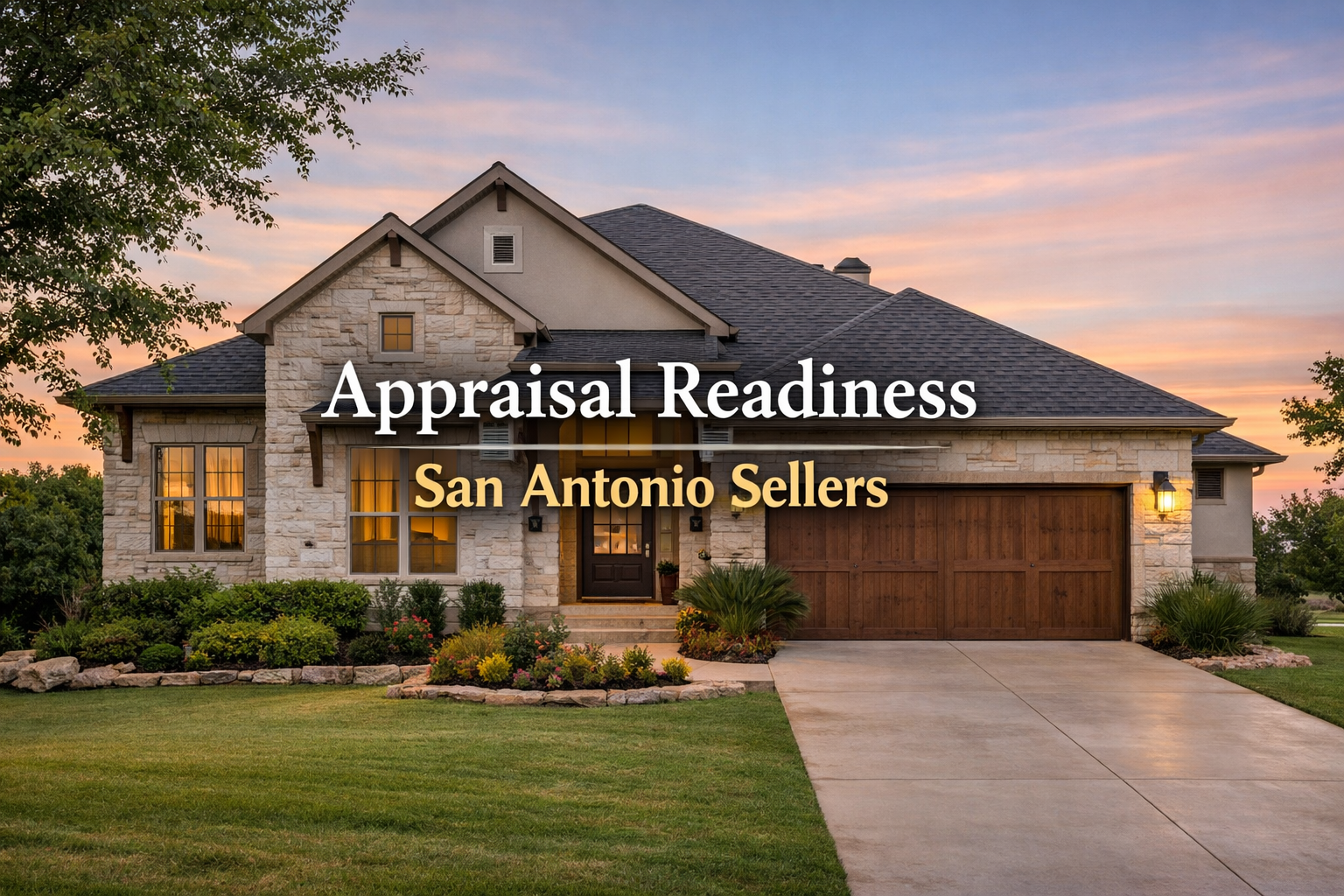
Appraisal Readiness for San Antonio Home Sellers
Meta Title: Appraisal Readiness for San Antonio Sellers | Tami Price REALTOR®
Meta Description: Prepare your San Antonio home for appraisal success. Learn what appraisers evaluate and how to support strong valuations.
Meta Keywords: home appraisal San Antonio, appraisal tips sellers, preparing for appraisal, San Antonio REALTOR®, home value appraisal, selling a home in San Antonio
URL Slug: appraisal-readiness-san-antonio-home-sellers
Category Suggestions: Seller Education, Home Selling Tips, San Antonio Real Estate
Target Keywords: home appraisal San Antonio, preparing for appraisal, appraisal tips sellers, San Antonio REALTOR®, selling a home in San Antonio
Introduction: Protecting Your Sale Price at the Appraisal Stage
After accepting an offer on a San Antonio home, sellers often feel the hard work is done. The reality is that a critical hurdle remains: the appraisal. When buyers use financing, their lender requires an independent appraisal to confirm the home's value supports the loan amount. If the appraisal falls short of the contract price, the transaction faces complications that can reduce the final sale price, delay closing, or even cause the deal to collapse.
Understanding what appraisers evaluate, how they reach their conclusions, and what sellers can do to support accurate valuations helps protect the agreed-upon price. Preparation before the appraiser arrives and documentation that supports value claims contribute to successful appraisals that keep transactions on track.
For sellers in San Antonio, Boerne, Helotes, Fair Oaks Ranch, Cibolo, Schertz, and Converse, local market knowledge matters in the appraisal process. Comparable sales, neighborhood trends, and area-specific factors all influence how appraisers evaluate properties. This guide explains the appraisal process, what sellers can control, and strategies for achieving valuations that support contract prices.
What Is the Purpose of a Home Appraisal?
Appraisals serve a specific function in financed real estate transactions that differs from how sellers typically think about their home's worth.
Why Do Lenders Require Appraisals?
Lenders provide significant funds to enable home purchases, and the property serves as collateral securing the loan. If a borrower defaults, the lender must recover their investment by selling the property. Lending more than a property is worth creates risk that the lender cannot recover full value in a foreclosure sale.
The appraisal provides independent, professional opinion of market value that protects the lender's position. Appraisers have no stake in whether transactions close and no incentive to inflate values. Their objectivity gives lenders confidence that collateral supports loan amounts.
This protective function means appraisers approach valuation conservatively. They seek evidence supporting value rather than accepting claims at face value. Understanding this perspective helps sellers appreciate why documentation and presentation matter.
How Does Appraised Value Differ From List Price or Sale Price?
List prices reflect what sellers hope to achieve, influenced by their goals, agent advice, and market optimism. Sale prices reflect what specific buyers agreed to pay under particular circumstances, potentially influenced by emotion, competition, or unique motivation.
Appraised value represents what a property would likely sell for under normal market conditions based on comparable evidence. Appraisers look at what similar properties have actually sold for rather than what buyers might theoretically pay. This evidence-based approach can produce values different from contract prices, particularly in rapidly changing markets or for unique properties.
When appraised value meets or exceeds the contract price, financing proceeds normally. When appraised value falls short, the gap between price and value must be resolved before closing can occur.
What Do Appraisers Evaluate During Their Visit?
Appraisers conduct systematic evaluations considering multiple factors that contribute to market value.
What Property Characteristics Affect Value?
Physical characteristics form the foundation of appraisal analysis. Square footage, bedroom and bathroom counts, lot size, and overall layout establish baseline comparisons with other properties. Appraisers measure or verify dimensions rather than relying solely on listed information.
Age and condition significantly influence value. Newer homes with modern systems command different values than older properties requiring updates. Appraisers assess current condition including deferred maintenance, wear, and functional issues that affect marketability.
Quality of construction and materials matters as well. Custom features, upgraded finishes, and premium materials add value compared to builder-grade alternatives. Appraisers note quality levels and adjust comparisons accordingly.
Improvements and updates receive attention during appraisal visits. Renovated kitchens, updated bathrooms, new roofing, replaced HVAC systems, and similar investments potentially add value. However, appraisers evaluate whether improvements align with neighborhood norms and buyer expectations.
How Does Location Factor Into Appraisal?
Location influences value at multiple levels. Regional position within the San Antonio metropolitan area establishes general market context. Neighborhood characteristics including reputation, schools, and amenities affect desirability. Specific site factors like lot position, views, traffic exposure, and adjacent properties create individual property adjustments.
Appraisers cannot change location-related factors, but they evaluate how location affects the subject property relative to comparables. A home on a busy street may receive adjustment compared to similar homes on quiet cul-de-sacs. Properties adjacent to commercial uses or other detractors face similar considerations.
Neighborhood conformity matters in appraisal analysis. Homes that significantly exceed neighborhood norms may not appraise for full improvement cost because buyers in that area seek a certain value range. Understanding this dynamic helps sellers set realistic expectations about how upgrades translate to appraised value.
How Do Appraisers Determine Value?
The valuation process follows established methodology that sellers benefit from understanding.
What Is the Sales Comparison Approach?
For residential properties, appraisers primarily use the sales comparison approach, analyzing recent sales of similar properties to estimate subject property value. This method reflects actual market behavior rather than theoretical calculations.
Appraisers identify comparable sales sharing key characteristics with the subject property. Ideal comparables are similar in size, age, condition, and location, and have sold recently. The more similar the comparable, the more reliable the indication of value.
Since no two properties are identical, appraisers make adjustments for differences. If a comparable sold for a certain price but had one fewer bathroom than the subject, the appraiser adds value to reflect what that comparable would have sold for with the additional bathroom. These adjustments require professional judgment about how the local market values various features.
The adjusted values of multiple comparables establish a range within which the subject property's value falls. Appraisers reconcile this range to reach a final value opinion, weighting comparables based on similarity and reliability.
What Challenges Affect Comparable Selection?
Finding ideal comparables becomes difficult in certain situations. Unique properties with unusual features may lack truly similar sales. Rural or low-volume markets may have few recent transactions. Rapidly changing markets may make older sales less relevant indicators of current value.
In these situations, appraisers must use less-than-ideal comparables and make larger adjustments, introducing more judgment into the analysis. Sellers of unique properties should expect appraisal complexity and prepare supporting documentation.
Active listings and pending sales provide context even though they are not closed transactions. Appraisers consider current market competition when evaluating where the subject property fits within the market.
What Can Sellers Do Before the Appraisal?
Preparation influences appraisal outcomes more than many sellers realize. Taking steps before the appraiser arrives supports accurate valuation.
How Should Sellers Prepare the Property?
The home should be clean, accessible, and presentable when the appraiser visits. While appraisers evaluate objective characteristics rather than staging, a well-maintained appearance supports perceptions of good condition. Clutter, deferred maintenance, and disrepair create negative impressions that can influence condition assessments.
Ensure all areas are accessible for measurement and evaluation. Appraisers need to access the garage, attic spaces, mechanical systems, and all rooms. Locked areas or obstacles that prevent inspection create complications.
Address minor repairs before the appraisal if possible. Dripping faucets, missing hardware, damaged screens, and similar issues suggest deferred maintenance. While individually minor, cumulative evidence of neglect affects condition ratings.
Curb appeal matters for appraisals just as it does for showings. The exterior creates first impressions and demonstrates maintenance standards. Mowed lawns, trimmed landscaping, and clean exteriors support positive assessments.
What Documentation Helps Support Value?
Providing relevant documentation helps appraisers understand the property and supports value claims:
- List of improvements with dates and costs documents upgrades the appraiser should consider. New roof installation, HVAC replacement, kitchen renovation, and similar investments deserve attention.
- Permits for completed work demonstrate that improvements met code requirements and were properly inspected. Unpermitted work may receive less credit or raise concerns.
- Property survey clarifies boundaries, lot size, and site characteristics. This proves particularly helpful for larger or irregular lots.
- HOA information including fees and amenities helps appraisers understand community context and any value contributions from association features.
- Comparable sales information from your REALTOR® provides data the appraiser may consider. While appraisers conduct independent research, relevant sales they might not find on their own can support value.
Organize documentation clearly and provide copies to leave with the appraiser. A folder containing relevant information makes the appraiser's job easier and ensures important factors receive consideration.
What Happens When Appraisals Come In Low?
Despite preparation, appraisals sometimes fall below contract prices. Understanding options helps sellers navigate this challenging situation.
What Causes Low Appraisals?
Market timing often contributes to appraisal gaps. In rapidly appreciating markets, comparable sales from months prior may not reflect current values. Buyers competing and paying premium prices create contracts that available evidence may not fully support.
Contract prices influenced by bidding wars or buyer emotion sometimes exceed what comparables demonstrate. When multiple buyers compete, prices can exceed supportable value based on sold evidence.
Overpricing from the start leads to appraisal issues even without competitive bidding. Sellers who list high and negotiate down to contract prices may still end up above appraised value if the negotiated price remains optimistic.
Appraiser unfamiliarity with the specific market or property type can produce low values in some cases. Appraisers covering broad geographic areas may not fully understand micro-market nuances or unique property features.
What Options Exist When Appraisals Fall Short?
Several paths forward exist when appraised value does not support the contract price:
- Seller reduces price to appraised value. This option keeps the transaction together but costs the seller the difference between contract and appraised value.
- Buyer pays the difference in cash. The buyer brings additional funds to cover the gap between loan amount based on appraised value and the contract price. This requires buyer willingness and ability to provide extra cash.
- Parties negotiate a compromise. Seller and buyer share the gap, with each contributing to bridge the difference. This requires flexibility from both sides.
- Request reconsideration of value. If the appraiser missed relevant comparables or made errors, the agent can submit additional information requesting the appraiser reconsider. Success depends on providing genuinely relevant data the appraiser did not consider.
- Order a second appraisal. Some loan programs allow second appraisals, though this adds cost and time with no guarantee of a better outcome.
- Cancel the transaction. If no resolution satisfies both parties, the contract may terminate. Appraisal contingencies typically allow buyers to exit without penalty when appraisals fall short.
Working with an experienced REALTOR® helps sellers evaluate options and negotiate effectively when appraisal challenges arise.
How Does Pricing Strategy Affect Appraisal Risk?
The pricing decisions made when listing directly influence appraisal risk once a contract is reached.
Why Does Realistic Pricing Reduce Appraisal Problems?
Homes priced appropriately based on comparable sales evidence start from supportable positions. If the list price reflects what similar properties have sold for, offers near that price should appraise successfully assuming condition and features are accurately represented.
Overpricing forces sellers into one of two outcomes: either the home does not sell because buyers recognize the price exceeds value, or a buyer agrees to an unsupportable price that appraisals then challenge. Neither outcome serves seller interests.
Agents who recommend inflated list prices to win listings set sellers up for appraisal problems down the road. Honest pricing guidance based on comparable evidence protects sellers from this delayed disappointment.
How Do Multiple Offers Affect Appraisal Risk?
Competitive situations producing multiple offers and prices above list create appraisal risk that sellers should understand before accepting. The excitement of escalating offers can produce contract prices that appraisals may not support.
Evaluating buyer financing and appraisal gap coverage as part of offer review helps identify buyers prepared to handle potential shortfalls. Cash buyers face no appraisal requirements. Financed buyers offering to cover appraisal gaps in cash demonstrate commitment and ability to close at the contract price regardless of appraised value.
Selecting offers with appraisal gap coverage or stronger cash positions over slightly higher offers without such protection may produce better outcomes when appraisal risk exists.
Expert Insight from Tami Price, REALTOR®
"I prepare a comparable sales package for every listing and make it available to the appraiser. Providing solid data supporting our pricing strategy helps appraisers understand the value and often supports stronger valuations. Preparation makes a real difference in appraisal outcomes."
Tami Price, REALTOR®, Broker Associate, and USAF Veteran, brings nearly two decades of experience helping San Antonio sellers navigate appraisals successfully. Her PSA (Pricing Strategy Advisor) certification reflects specialized training in valuation and pricing, helping sellers position their homes for successful appraisals from the start.
Three Key Takeaways
- Appraisals protect lenders, not sellers. Understanding the appraiser's objective perspective helps sellers appreciate why evidence and documentation matter more than claims of value.
- Preparation before the appraisal influences outcomes. Clean presentation, property accessibility, and organized documentation support accurate valuations.
- Realistic pricing reduces appraisal risk. Homes priced based on comparable sales evidence face less appraisal risk than overpriced properties that eventually find buyers willing to overpay.
Frequently Asked Questions
Q: Should I be present during the appraisal?
A: Being present or having your agent available allows you to answer questions, point out improvements, and provide documentation. However, avoid following the appraiser or appearing to pressure them. Make yourself available for questions while giving the appraiser space to work independently.
Q: Do all improvements add appraised value?
A: Not all improvements add proportional value to appraisals. Appraisers evaluate whether improvements align with neighborhood expectations and buyer preferences. Over-improving beyond neighborhood norms may not return full cost in appraised value. Updates that bring properties to market standards typically receive more credit than luxury upgrades in modest neighborhoods.
Q: How long does an appraisal take?
A: Property visits typically last 30 minutes to an hour depending on home size and complexity. The appraiser then completes research and prepares the report, with total turnaround usually within a week. Timelines vary based on appraiser workload and market conditions.
Q: Can I dispute a low appraisal?
A: You can request reconsideration of value through your agent by providing additional comparable sales or correcting factual errors in the report. Success requires substantive new information, not simply disagreement with the conclusion. Appraisers may maintain their original opinion if submitted information does not warrant change.
Q: Does a low appraisal affect my home's actual value?
A: A single appraisal represents one professional's opinion at a specific point in time. It does not change what a cash buyer might pay or what future appraisals might conclude. However, for financed transactions, the appraisal effectively caps the price unless buyers bring additional cash.
Q: Should I make repairs recommended during inspection before the appraisal?
A: If time permits, completing inspection repairs before the appraisal can improve condition assessment. However, appraisal timelines often do not allow for repairs between inspection and appraisal. Focus on ensuring the home is clean, accessible, and presented well regardless of pending repair negotiations.
The Bottom Line
Appraisal readiness helps San Antonio sellers protect their contract prices and keep transactions moving toward closing. Understanding how appraisers evaluate properties, what factors influence their conclusions, and what sellers can do to support value provides meaningful advantage over sellers who treat appraisals as outside their control.
Preparation including property presentation, documentation assembly, and providing relevant comparable sales data contributes to successful appraisals. Realistic pricing from the start reduces appraisal risk by establishing supportable value positions before contracts form.
When appraisals challenge contract prices despite preparation, understanding available options and working with experienced professionals helps sellers navigate toward solutions. Not every appraisal challenge results in failed transactions, and strategic response can preserve deals that might otherwise fall apart.

Contact Tami Price, REALTOR®
Sellers seeking guidance on appraisal preparation and pricing strategy can connect with Tami Price, REALTOR®, Broker Associate, and USAF Veteran. With extensive experience helping San Antonio sellers navigate the appraisal process successfully, Tami provides the market knowledge and strategic insight clients need.
From initial pricing consultation through appraisal and closing, Tami offers personalized service tailored to each seller's property and goals. Her commitment to education and transparent communication helps sellers understand every step of the process.
Recognized as a RealTrends Verified top San Antonio agent and backed by 646+ five-star reviews and recommendations across multiple platforms, Tami delivers results clients trust.
Tami Price, REALTOR®, Broker Associate
📞 210 620 6681
🌐 TamiPrice.com
Tami Price's Specialties
- Home sellers in San Antonio and surrounding areas
- Pricing strategy and market analysis
- Appraisal preparation and support
- Pre-listing consultations
- Military relocation and PCS moves
- New construction and resale transactions
Disclaimer
This blog post is intended for general informational purposes only and does not constitute legal, financial, or professional advice. Real estate transactions involve complex considerations that vary based on individual circumstances. Appraisal practices, lender requirements, and market conditions change over time. Readers should consult with qualified professionals including licensed real estate agents, appraisers, and lenders before making decisions about property sales. The information provided reflects general practices in the San Antonio, Texas market and may not apply in all situations.
Categories
- All Blogs (941)
- Home Buying (19)
- Neighborhood Guides (45)
- 10 Incentive and Rate Buydown Questions (1)
- 10 Military Neighborhood (1)
- 10 Mistakes Sellers Make (1)
- 10 Strategies to Coordinate a Same Day Close (1)
- 12 Lifestyle Questions to Move In (1)
- 12 PCS What Ifs (1)
- 12 Photos and Marketing Assets (1)
- 13 PCS Hunting Trip Tips (1)
- 14 Design Center Decisions (1)
- 15 Red Flags Touring Home in San Antonio (1)
- 2026 Market (1)
- 30 days after closing your home (1)
- 7 Offer Terms Beyond Price (1)
- 7 VA Specific Questions (1)
- 78015 Ranked One (1)
- 8 Bridge (1)
- 8 Myths Buyers Believe about Down Payments (1)
- 8 Reasons VA Buyers Love New Construction (1)
- 9 Mistakes Move Up Buyers Make (1)
- 9 Questions to Decide If You Keep Your PCS Home (1)
- 9 Timeline Questions Every Buyer Need to Ask (1)
- 9 Warranty Questions to Ask (1)
- 9 Ways to Attract VA & Military Buyers (1)
- 90 days before your move (1)
- About Tami Price (6)
- Active Adult Homes (1)
- Affordable Communities (2)
- Affordable Housing & Community Development (5)
- Agent Qualifications and Credentials (1)
- Agent Qualifications and Experience (1)
- Agent Recognition (3)
- Agent Selection (1)
- AI and Real Estate Tools (1)
- Alamo Heights (5)
- Alamo Heights ISD (1)
- Alamo Heights Real Estate (1)
- Alamo Ranch (3)
- Amenities in Helotes, Texas (3)
- Apartment Market (1)
- Appraisals (1)
- Arts and Culture (1)
- Awards and Recognition (7)
- Balcones Creek (1)
- Best Neighborhoods to Live in Cibolo, TX (3)
- Best Neighborhoods to Live in San Antonio (16)
- Best Places to Live in Leon Valley: A Neighborhood Guide (1)
- Best Places to Live in Northeast Inner Loop: A Neighborhood Guide (1)
- Bexar County Property Tax (1)
- Bexar County Real Estate (3)
- Blue Tape Walkthrough (1)
- Boerne Home Sellers (1)
- Boerne Neighborhoods (2)
- Boerne Texas (9)
- Broadway Corridor Development (1)
- Build-to-Rent Communities (1)
- Builder Contracts & Warranties (3)
- Builder Incentives (1)
- Builder Warranties (1)
- Buyer (97)
- Buyer Activity San Antonio (1)
- Buyer and Seller Guidance (4)
- Buyer Due Diligence (1)
- Buyer Education (46)
- Buyer Guide (9)
- Buyer Guides (7)
- Buyer Protection Strategies (1)
- Buyer Representation (1)
- Buyer Representation Expertise (1)
- Buyer Resources (89)
- Buyer Strategy (2)
- Buyers (13)
- Buyers Agent (1)
- Buying a Foreclosed Home in San Antonio (10)
- Buying a Home (3)
- Buying a Home in San Antonio (6)
- Buying Near JBSA (1)
- Buying Timeline (1)
- Buying vs Renting (1)
- Castroville, TX (8)
- Central San Antonio (1)
- Central San Antonio Development (2)
- Central Texas Growth (1)
- Choosing a Real Estate Agent (1)
- Choosing an Agent (1)
- Cibolo Communities (1)
- Cibolo Home Sellers (1)
- Cibolo TX (15)
- Client Reviews and Testimonials (1)
- Client Satisfaction (1)
- Client Stories (1)
- Client Testimonial (4)
- Clients review (4)
- Closing (1)
- Cobblestone (1)
- Comal County (1)
- Commercial & Retail Development (27)
- Commercial Development (13)
- Commercial Development Impact on Home Values (1)
- Commercial Real Estate (1)
- Community (1)
- Community Amenities (2)
- Community Development (23)
- Community Development and Real Estate (3)
- Community Events & Development (1)
- Community Guides (1)
- Community Infrastructure (1)
- Community Investment Impact (2)
- Community Landmarks (1)
- Community News (4)
- Community Planning (2)
- Community Revitalization (1)
- Community Spotlights (1)
- Commuter Neighborhoods (1)
- Cons of Living in Helotes, TX (4)
- Conservation Communities (1)
- Contingency Questions (1)
- Converse Home Sellers (1)
- Converse Homes For Sale (3)
- Converse Real Estate (1)
- Converse TX (10)
- Converse TX Real Estate (1)
- Cost of Living Guides (1)
- Cost of Living in San Antonio TX (25)
- CPS Energy Programs (1)
- Custom Homes (5)
- Davis Ranch (1)
- Days on Market (1)
- Deco District San Antonio (1)
- Denver Heights (1)
- Down Payment Assistance (1)
- Downtown Boerne (1)
- Downtown Development (3)
- Downtown Living (1)
- Downtown Revitalization (14)
- Downtown San Antonio (2)
- Downtown San Antonio Real Estate (5)
- Downtown San Antonio Revitalization (1)
- Dual Military (1)
- East Side Living (1)
- East Side Neighborhoods (1)
- East Side San Antonio (4)
- Economic Development (3)
- Economic Growth & Industry (1)
- Education, Texas Hill Country (1)
- Emerald Pointe (1)
- Employment (1)
- Employment Corridors (1)
- Encino Forest (1)
- Entertainment Economy (1)
- Equity and Pricing Strategy (2)
- Equity Q&A (1)
- Established Communities (3)
- Events in San Antonio (207)
- Expert Advice from Tami Price, Realtor® (10)
- Fair Oak Ranch (1)
- Family Activities (2)
- Family Homes (3)
- Family Living in San Antonio (1)
- FAQ (1)
- Far Northwest San Antonio (1)
- Far West San Antonio (1)
- Far Westside Real Estate (4)
- Farmer Markets in San Antonio (1)
- Fastest Growing Zip Codes in America (1)
- Featured Homes for Sale (2)
- Featured Properties (1)
- Final Walkthrough (1)
- Financial Planning (11)
- Financing Strategy (1)
- First Time Buyers (23)
- First Time Sellers (1)
- First-Time Buyers (6)
- First-Time Homebuyer Resources (4)
- First-Time Homebuyer Tips (2)
- First-Time Homebuyers (6)
- First-Time Investors (1)
- Fort Sam Houston (3)
- Fort Sam Houston Real Estate (1)
- Fort Sam Houston, TX (2)
- Fox Grove (1)
- FSBO vs Agent Representation (1)
- Future Rental (1)
- Gated Communities (5)
- Golf Communities (1)
- Great Northwest (1)
- Greater San Antonio Housing Trends (2)
- Greater San Antonio Real Estate (5)
- Green Home Upgrades (1)
- Growth and Development (11)
- Healthcare (1)
- HELOC (1)
- Helotes Home Sellers (1)
- Highway 151 Corridor Growth (1)
- Hill Country Business (1)
- Hill Country Communities (2)
- Hill Country Development (3)
- Hill Country Homes for Sale (1)
- Hill Country Living (3)
- Hill Country Market Updates (1)
- Hill Country Real Estate (4)
- Hill Country Retreat (1)
- Historic Districts (5)
- Historic Neighborhoods (4)
- Historic Preservation (2)
- Holiday Attractions (1)
- Holiday Guide (1)
- Home Buying (7)
- Home Buying Education (3)
- Home Buying Guide (7)
- Home Buying Process (8)
- Home Buying Strategy (2)
- Home Buying Tips (6)
- Home Energy Efficiency San Antonio (5)
- Home Financing (2)
- Home Improvement ROI (1)
- Home Inspections (3)
- Home Preparation (2)
- Home Pricing Strategy (14)
- Home Renovation for Resale (1)
- Home Selling (12)
- Home Selling Guide (11)
- Home Selling Strategies (3)
- Home Selling Strategy (3)
- Home Selling Tips (22)
- Home Staging and Updates (2)
- Home Values (2)
- Homebuyer Education (15)
- Homebuyer Resources (1)
- Homebuying Guide (1)
- Homebuying Tips (3)
- Homeowner (37)
- Homeowner Tax Benefits (1)
- Homeownership Costs (1)
- Homes for Sale (2)
- Homes for sale near Lackland AFB (4)
- Homes Near Military Bases (1)
- Homestead amenities (1)
- Horizon Pointe (1)
- House Hunting Guide (1)
- Housing (1)
- Housing Community Development (1)
- Housing Development (2)
- Housing Market Updates (3)
- How to Buy a House in San Antonio TX (48)
- Huebner Oaks shopping center (1)
- Hunters Ranch (1)
- Hybrid (1)
- I-10 Corridor (1)
- I-35 Corridor (1)
- In Person (1)
- Incorporated Cities (6)
- Industrial Investment Impact (1)
- Industry News (2)
- Industry Recognition (1)
- Infrastructure & Growth Projects (26)
- Infrastructure and Sustainability (1)
- Infrastructure Development (1)
- Infrastructure Investment (1)
- Infrastructure Updates (2)
- Interest Rates (2)
- Invest in San Antonio (46)
- Investment Opportunities (3)
- Investment Property San Antonio (4)
- JBSA (9)
- JBSA Housing (11)
- JBSA Real Estate (4)
- JBSA Resources (7)
- Joint Base San Antonio (5)
- Joint Base San Antonio Housing (1)
- Judson ISD (2)
- Kendall County (1)
- La Cantera Retail Development (1)
- Lackland AFB (7)
- Lackland AFB Housing (1)
- Land Conservation (1)
- Land Use Planning (1)
- Lera MLS (15)
- Lifestyle & Community Growth (18)
- Lifestyle & Local Growth (12)
- Lifestyle Amenities (1)
- Lifestyle Communities (1)
- Listing Preparation (1)
- Listing Strategy (1)
- Live Oak (1)
- Living in San Antonio, TX (52)
- Living Near Randolph AFB (7)
- Loan Programs (1)
- Local Attractions (3)
- Local Business (1)
- Local Business & Development (9)
- Local Business & Economy (3)
- Local Business Spotlight (20)
- Local Business Support (5)
- Local Development (4)
- Local Development News (9)
- Local Market Insights (5)
- Local News (2)
- Local News Around San Antonio (2)
- Local Policy Changes (1)
- Local Real Estate News (1)
- Loop 1604 Corridor Growth (2)
- Loop 410 Corridor Development (1)
- Luxury Communities (3)
- Luxury Homes (2)
- Luxury Real Estate (1)
- Luxury Retail San Antonio (1)
- MacArthur Park (1)
- Major Developments (2)
- Making Offers on Homes (1)
- Market Analysis (26)
- Market Conditions (47)
- Market Expertise (1)
- Market Insights (5)
- Market Strategy (1)
- Market Timing (2)
- Market Trends (10)
- Market Trends & Insights (2)
- Market Update (17)
- Market Update 2026 (1)
- Market Updates (22)
- Master Planned Communities (12)
- Medical Center Area Real Estate (1)
- Medina Valley ISD (2)
- Midtown Living (1)
- Military & Economic Impact (3)
- Military Buyers (3)
- Military Communities (1)
- Military Families (1)
- Military Family Resources (1)
- Military Heritage (1)
- Military Homebuying (3)
- Military Homeownership (1)
- Military Housing (3)
- Military Housing Market in Texas (16)
- Military Life in San Antonio (2)
- Military Neighborhoods (1)
- Military PCS Relocations (3)
- Military Real Estate (2)
- Military Relocation (100)
- Military Relocation & VA Loans (10)
- Military Relocation San Antonio (4)
- Military Relocation Services (3)
- Military Relocation to San Antonio (50)
- Military Relocations (20)
- Military Relocations & VA Home Loans (5)
- Mixed-Income Housing (1)
- MLS Accuracy & Data Transparency (1)
- Mortgage Programs (1)
- Mothers Day in San Antonio (1)
- Move to Boerne TX (18)
- Move to Castroville TX (11)
- Move to Converse TX (16)
- Move to New Braunfels (1)
- Move to North San Antonio (19)
- Move to San Antonio TX (73)
- Move to Selma TX (19)
- Move to Shertz TX (13)
- Move to Texas (53)
- Move Up Buyer Resources (1)
- Move Up Buyers (23)
- Move-In Ready Homes (3)
- Move-In Ready Homes San Antonio (2)
- Move-Up Buyers (2)
- Moving to Helotes, TX (17)
- Moving to San Antonio (69)
- MUD Taxes (1)
- Natalia Homes For Sale (1)
- Near East Side Living (1)
- Negotiation Strategy (2)
- Neighborhood Amenities (1)
- Neighborhood Development (1)
- Neighborhood Guides (7)
- Neighborhood Investment (1)
- Neighborhood News (2)
- Neighborhood Revitalization (2)
- Neighborhood Spotlights (12)
- Neighborhood Updates (1)
- Neighborhoods near Randolph AFB (12)
- New Braunfels (6)
- New Braunfels Homes For Sale (1)
- New Braunfels News (3)
- New Braunfels Real Estate (3)
- New Businesses (2)
- New Construction (63)
- New Construction Communities (1)
- New Construction Homes (13)
- New Construction Homes San Antonio (5)
- New Construction vs Resale (2)
- New Construction Without Customization (1)
- New Construction Without the Wait (1)
- New Contruction Cost (1)
- New Development (3)
- New Listing (19)
- New Restaurants (3)
- News (211)
- News & updates (213)
- No HOA Homes (1)
- North Central San Antonio (5)
- North East ISD (4)
- North San Antonio (9)
- North San Antonio Real Estate (3)
- North Side Neighborhoods (1)
- North Side San Antonio Development (2)
- Northeast Inner Loop (1)
- Northeast Inner Loop Neighborhoods (1)
- Northeast San Antonio (3)
- Northside ISD (5)
- Northwest San Antonio (9)
- Northwest San Antonio Development (1)
- Northwest San Antonio Growth (1)
- Northwest San Antonio Real Estate (3)
- Northwood (1)
- Olympia Hills (1)
- One-Story Homes (1)
- Outdoor Living (1)
- Parks and Recreation (2)
- PCS and JBSA (2)
- PCS checklist (1)
- PCS Guide (4)
- PCS Moves (12)
- PCS Moves to Joint Base San Antonio (4)
- PCS Planning (16)
- PCS Randolph AFB (17)
- PCS Relocation (1)
- PCS Resources (6)
- PCS San Antonio (46)
- PCS to San Antonio (42)
- Pearl District Area Real Estate (2)
- PID Assessments (1)
- Pinon Creek (1)
- Pipe Creek (1)
- Places to Eat Near Randolph AFB (1)
- Pool Homes (1)
- Pre Approval (1)
- Pre-Listing Preparation (2)
- Pre-Listing Process (1)
- Prescott Oaks (1)
- Pricing and Marketing Strategy (3)
- Professional Awards and Achievements (2)
- Professional Real Estate Representation (1)
- Property Tax Exemptions Texas (1)
- Property Value Enhancement (1)
- pros and cons living in Converse TX (3)
- Pros and Cons Living in Selma TX (6)
- Pros and Cons of Living in Castroville, TX (4)
- Pros and Cons of Living in San Antonio (33)
- PT500 List (1)
- Purchase Negotiation (1)
- Quality of Life (1)
- Quick Close Real Estate (1)
- Randolph AFB Neighborhoods (2)
- Real Estate (1)
- Real Estate Advice (1)
- Real Estate Agent Recognition (6)
- Real Estate Agent Selection (2)
- Real Estate Agent Value (1)
- Real Estate Consultation (1)
- Real Estate Finance (1)
- Real Estate Financing (1)
- Real Estate Impact (1)
- Real Estate Investment San Antonio (2)
- Real Estate Legal Issues (1)
- Real Estate Market Insights (2)
- Real Estate Market Trends (5)
- Real Estate Professional Designations (1)
- Real Estate Strategy (1)
- Real Estate Technology & Trends (2)
- Real Estate Tips (1)
- Real Estate Tips and Guides (2)
- Real Estate Trends (4)
- RealTrends Verified (1)
- Regional Development (1)
- Regional Real Estate (2)
- Relocating to San Antonio (2)
- Relocation (4)
- Relocation Resources (2)
- Relocation to San Antonio (55)
- Remote Homebuying (1)
- Rental Housing (1)
- Rental Property (1)
- Rental Strategy (1)
- Resale Properties (1)
- Retail Development (2)
- Retire in Boerne TX (11)
- Retire in San Antonio (37)
- Retirement Communities (1)
- Reviews and Recognition (1)
- Rockwall Ranch (1)
- Rural Living (2)
- SABOR (28)
- San Antonio Area Listings (1)
- San Antonio Business Growth (1)
- San Antonio Buyer Resources (2)
- San Antonio Communities (3)
- San Antonio Community Events (1)
- San Antonio Community News (1)
- San Antonio Data Center Development (1)
- San Antonio Development (5)
- San Antonio Development & East Side Real Estate (1)
- San Antonio Dining and Lifestyle (3)
- San Antonio East Side Development (1)
- San Antonio Employment Growth (1)
- San Antonio Food & Community Development (2)
- San Antonio Growth (8)
- San Antonio Home Buying and Selling (2)
- San Antonio Home Buying Guide (5)
- San Antonio Home Improvement (2)
- San antonio home prices (3)
- San Antonio Home Sellers (3)
- San Antonio Homeowner Guide (1)
- San Antonio Homeowner Resources (1)
- San Antonio Homes for Sale (12)
- San Antonio Housing Market (2)
- San Antonio Housing Market & Mortgage Financing (2)
- San Antonio Housing Market Analysis (2)
- San Antonio Housing Trends & Market Analysis (4)
- San Antonio Industrial Development (1)
- San Antonio Industrial Policy (1)
- San Antonio Investment Properties (2)
- San Antonio Job Market (1)
- San Antonio Lifestyle Amenities (2)
- San Antonio Listing (1)
- San Antonio Living (1)
- San Antonio Market (3)
- San Antonio Market Updates (18)
- San Antonio Military Relocation (3)
- San Antonio Neighborhoods (67)
- San Antonio New Construction & Master-Planned Communities (4)
- San Antonio New Home Communities (1)
- San Antonio News (229)
- San Antonio North Side Development (1)
- San Antonio Parks (1)
- San Antonio Property Investment (1)
- San Antonio Property Taxes (2)
- San Antonio Real Estate (162)
- San Antonio Real Estate Agents (6)
- San Antonio Real Estate Excellence (1)
- San Antonio Real Estate Guide (6)
- San Antonio Real Estate Market (41)
- San Antonio Real Estate Market Analysis (6)
- San Antonio Real Estate News (2)
- San Antonio REALTOR Awards (1)
- San Antonio Restaurant News (2)
- San Antonio Restaurant Openings (1)
- San Antonio Seller Resources (2)
- San Antonio Sellers (1)
- San Antonio Spec Homes (1)
- San Antonio Spurs Community Programs (1)
- San Antonio Suburbs (1)
- San Antonio Transportation (2)
- San Antonio University Area Housing (1)
- San Antonio Urban Living (7)
- San Antonio West Side Development (2)
- San Antonio Zoning Policy (1)
- Scenic Loop (1)
- Schertz Home Sellers (1)
- Schertz Real Estate (1)
- Schertz, TX (13)
- School Districts (1)
- School Information (1)
- SCUCISD Schools (1)
- Secured Quick Offer (1)
- Sell Home In San Antonio TX (64)
- Seller (83)
- Seller Education (24)
- Seller Guide (4)
- Seller Guides (1)
- Seller Representation Expertise (1)
- Seller Resources (67)
- Seller Should Understand (1)
- Seller Strategy (3)
- Seller Tips (2)
- Sellers (10)
- Selling A Home in San Antonio (62)
- Selling Your San Antonio Home (3)
- Selma TX (9)
- Single-Story Homes (4)
- Smart Homes (1)
- Solar Homes (3)
- South San Antonio Real Estate (1)
- South Side Economic Growth (1)
- South Side San Antonio (1)
- Southtown (2)
- Southwest San Antonio Real Estate (1)
- Spec Homes and Inventory Homes (2)
- Spurs Arena Project Marvel (1)
- Stone Oak (2)
- Stone Oak Community News (5)
- Suburban Housing Growth (12)
- Suburban Living (2)
- Talise De Culebra (1)
- Technology Growth (3)
- Technology Sector Growth (1)
- Terrell Hills (3)
- Texas Acreage Properties (3)
- Texas Homestead Exemption (1)
- The Dominion Real Estate (1)
- The Rim Area Real Estate (1)
- Things to do in San Antonio TX (22)
- Things to do Near Randolph AFB (4)
- Time Planning (1)
- Time-Sensitive Home Buying (1)
- Timing Strategy (1)
- Tips for Buying New Construction (9)
- Tobin Hill Neighborhoods (2)
- Top Real Estate Agent in San Antonio (3)
- Tourism and Economic Development (1)
- Traders's Joe San Antonio (1)
- Transaction Coordination (1)
- Transportation Infrastructure (1)
- Two-Story Homes (2)
- Universal City (1)
- Updated Homes (2)
- Upscale Communities (1)
- Urban Communities (2)
- Urban Corridor Real Estate (1)
- Urban Development (5)
- Urban Living (3)
- Urban Neighborhoods (4)
- Urban Real Estate (1)
- Urban Renewal Projects (1)
- Urban Revitalization San Antonio (1)
- Utility Cost Reduction (1)
- UTSA Campus Development (1)
- VA Buyers (1)
- VA Home Loan Benefits (3)
- VA Loan Assumptions (3)
- VA loan benefits (27)
- VA Loan Guidance (1)
- VA Loan Home Buying Assistance (2)
- VA Loans (71)
- VA Loans and Military Benefits (3)
- VA Loans and Military Home Buying (3)
- VA Loans San Antonio (43)
- VET Benefits Living in San Antonio (3)
- Veterans Resources (3)
- Village Northwest (1)
- Virtual Buyers (1)
- Walkable Communities (1)
- week in sales (40)
- Weekly Sales Report (41)
- West San Antonio (2)
- West San Antonio Development (1)
- West San Antonio Real Estate (3)
- West San Antonio Real Estate Market (2)
- West Side Infrastructure Planning (1)
- West Side Real Estate (1)
- West Side San Antonio (2)
- Windcrest Homes for Sale (1)
Recent Posts