13 High Impact, Low Cost Updates That Actually Help San Antonio Homes Sell Faster in 2026
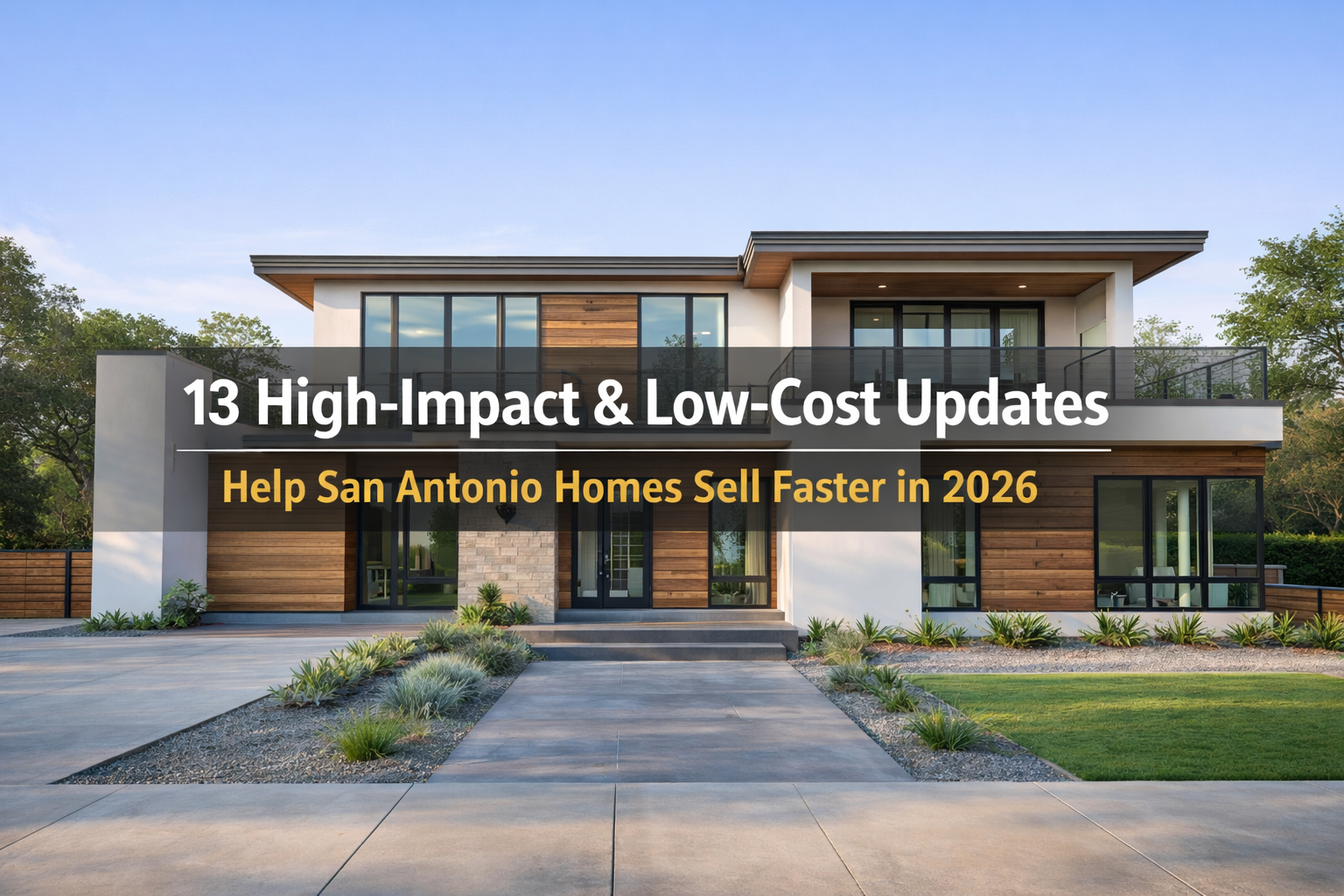 Selling a home in San Antonio in 2026 requires more than a strong list price and an accurate market analysis. Buyers are more selective than they were during the peak years, inventory is more balanced across most price ranges, and homes that feel well-maintained and move-in ready consistently attract stronger early offers than those that leave buyers mentally cataloging the work they will need to do after closing. The good news is that the updates with the highest impact on buyer perception and offer strength are rarely the most expensive ones. Tami Price, REALTOR®, a San Antonio real estate professional and Air Force veteran with nearly two decades of local market experience, notes that the sellers who generate the strongest early offers in today's market are those who invest strategically in preparation before listing rather than those who invest most heavily in price reductions after sitting too long without offers.
For homeowners preparing to sell a home in San Antonio, Schertz, Cibolo, Helotes, Converse, or Boerne, the thirteen updates below represent the improvements that most consistently reduce buyer objections, improve online presentation, and support the pricing strategy that a well-prepared home deserves. None of these require a major renovation budget. All of them produce results that the market rewards in the form of stronger offers, fewer inspection-period negotiations, and shorter days on market.
Why Does Home Preparation Matter More for San Antonio Sellers in 2026?
The peak market years created conditions where buyers were so motivated by limited inventory that they looked past preparation gaps, deferred maintenance, and dated finishes in ways they are no longer willing to do in a more balanced environment. In 2026, buyers in San Antonio are comparing multiple homes within the same price range and are making decisions based on how each option presents relative to the competition, including new construction communities with fresh finishes, builder warranties, and incentive programs that set a high visual baseline for what a move-in-ready home looks like. Resale sellers who do not prepare their homes to compete with that baseline are effectively pricing themselves out of a portion of the buyer pool rather than letting price do all the work.
The updates in this guide are organized roughly by the frequency with which they appear in Tami Price's pre-listing recommendations to sellers, beginning with the highest-impact categories and moving through the complete list of improvements that consistently support faster sales and stronger offers in the current San Antonio market. Each update is cost-effective, executable within a reasonable pre-listing timeline, and directly tied to the specific buyer concerns that determine how a home performs in its first two weeks on the market.
1. Should Sellers Paint Interiors Before Listing in San Antonio?
Fresh interior paint consistently delivers one of the highest returns on pre-listing investment because it addresses buyer perception across multiple dimensions simultaneously, including cleanliness, maintenance, and move-in readiness, in a single cost-effective improvement. A home with fresh paint in neutral tones allows buyers to visualize their own furnishings in the space without the distraction of bold colors, dated hues, or visible scuffs and marks that accumulate naturally through occupancy. Buyers who must mentally subtract the cost of painting after closing from their offer price are doing math that works against the seller, and fresh paint eliminates that calculation before it begins.
Color selection matters as much as the freshness of the application. Soft whites, light warm grays, and warm greige tones perform best because they photograph neutrally, work with a broad range of furniture styles, and read as current rather than dated in both in-person showings and online listing photography. Accent walls, bold colors, and highly personalized color schemes should be neutralized before listing even when the seller loves them, because the goal is to appeal to the broadest possible buyer pool rather than to the seller's personal aesthetic. The investment in interior paint typically ranges from $1,500 to $4,000 for a full house depending on square footage and the number of rooms, and it is among the most consistently recommended pre-listing improvements Tami Price makes to sellers preparing homes in San Antonio.
2. Do Updated Light Fixtures Make a Difference to San Antonio Buyers?
Dated light fixtures are one of the most visually prominent signals of a home's age, and they affect buyer perception in listing photography before a buyer ever schedules a showing. The entry, dining area, kitchen, and bathrooms are the spaces where fixture updates produce the most visible impact because those are the areas buyers photograph and return to mentally when evaluating whether a home feels current or dated. Clean, simple fixture designs in brushed nickel, matte black, or mixed metal finishes photograph better than ornate brass or faux-tiffany styles that are immediately associated with an earlier design era, and the update communicates ongoing investment in the home's condition rather than passive maintenance.
The cost of replacing entry, dining, and bathroom fixtures is typically $300 to $800 in materials if the seller selects mid-range replacements from a home improvement retailer, and the installation is straightforward enough for a handyman or electrically capable seller to complete without a licensed electrician in most cases. Sellers who are unsure which fixtures deserve replacement benefit most from a staging consultation that identifies the specific fixtures creating the strongest negative impression so that the investment is targeted at the highest-impact areas rather than distributed across every room uniformly. Tami Price's staging consultation, offered complimentary to sellers as part of her seller services, covers fixture evaluation alongside furniture placement, lighting, and presentation as part of a comprehensive pre-listing preparation plan.
Q: How much should a San Antonio seller budget for pre-listing cosmetic updates before listing?
A: The right budget depends on the home's current condition and price range, but most sellers achieve meaningful results with $2,000 to $6,000 in targeted pre-listing improvements. That range covers fresh interior paint throughout the main living areas, updated light fixtures in key rooms, cabinet hardware replacement in kitchens and bathrooms, deep cleaning, and landscaping refreshment. Sellers who invest strategically in these categories consistently recover the investment through stronger offer prices and fewer inspection-period concessions, while sellers who skip preparation and rely on price alone frequently find themselves offering deeper discounts than the preparation cost would have required.
3. Is Cabinet Hardware Worth Replacing Before Listing?
Cabinet hardware is one of the least expensive and most disproportionately impactful updates available to sellers preparing a kitchen or bathroom for listing, because hardware is what buyers touch, photograph close-up, and remember as a detail that either feels current or dated. Replacing knobs and pulls throughout the kitchen and bathrooms typically costs $150 to $400 in materials depending on the number of cabinets and the hardware style selected, and the installation requires only a screwdriver and an hour or two of time. The visual difference between original builder-grade gold or brass hardware from the 1990s and a fresh set of matte black, brushed nickel, or champagne bronze hardware is significant enough to meaningfully change a buyer's perception of the kitchen's overall modernity.
Current buyer preferences in the San Antonio market favor hardware styles that read as contemporary without being trendy, meaning they will appear current for several years rather than immediately dating the home to the year of installation. Matte black hardware works well in kitchens with white or light gray cabinetry and is currently the most commonly requested finish by buyers touring homes in updated price ranges. Brushed nickel remains a versatile choice across multiple cabinet colors and is rarely perceived as dated even in homes where it has been installed for several years. Sellers who replace hardware alongside updating faucets in kitchens and bathrooms create a cohesive finish update that photographs as a deliberate design choice rather than a collection of individual improvements.
4. Is Deep Cleaning and Odor Removal Truly Non-Negotiable Before Listing?
Deep cleaning and odor removal are the baseline preparation requirements that no amount of staging, photography, or pricing can compensate for when they are absent, because buyers make visceral assessments about a home's maintenance level within the first thirty seconds of walking through the front door. A home that smells of pets, smoke, cooking, or moisture immediately creates a negative impression that compounds every subsequent observation, causing buyers to scrutinize condition details they might otherwise overlook in a home that smelled fresh and clean. Buyers associate cleanliness with overall maintenance, and a dirty home implies to many buyers that maintenance they cannot see has been equally neglected.
Professional deep cleaning covers the areas that routine cleaning overlooks, including grout lines that have discolored over time, baseboards that accumulate visible dust and scuffs, HVAC vents that have darkened from air circulation, appliance interiors that carry residual odor, and hard water deposits on fixtures and glass that make a bathroom feel worn even when it is structurally sound. Pet odors in particular require treatment beyond surface cleaning, including carpet cleaning, vent cleaning, and in severe cases professional odor neutralization treatment for subflooring or wall materials that have absorbed odor over years of occupancy. The investment in professional deep cleaning typically ranges from $300 to $600 for a standard-sized home and is one of the most universally recommended pre-listing investments regardless of price range or neighborhood.
Q: Should a San Antonio seller have carpets professionally cleaned before listing even if they appear in decent condition?
A: Yes, in almost every case. Professional carpet cleaning removes embedded dirt, odor, and allergen residue that is not visible to the seller but is detectable by buyers during showings, and clean carpets photograph better and feel fresher underfoot during in-person walkthroughs. The cost of professional carpet cleaning is typically $150 to $300 for an average-sized home, and it is one of the most cost-effective preparation investments available. Sellers who are considering replacing carpet entirely should evaluate whether professional cleaning plus spot treatment of damaged areas would produce acceptable results first, since cleaning is always less expensive than replacement and may be sufficient when the carpet's underlying condition is sound.
5. How Much Does Landscaping and Curb Appeal Actually Affect Buyer Behavior?
Curb appeal determines the first impression a buyer forms of a home before they ever step inside, and in the current era of online listing browsing, it also determines whether a buyer schedules a showing at all based on the exterior photography. A home with overgrown shrubs, a patchy lawn, dead landscaping, or a neglected driveway sends an immediate signal about maintenance that buyers carry with them through every subsequent room of the showing, compounding their skepticism in ways that internal presentation alone cannot overcome. The exterior is the packaging, and buyers who are not attracted by the packaging are less likely to see the value inside regardless of how well the interior shows.
Practical curb appeal improvements that produce the most visual impact at the lowest cost include trimming overgrown shrubs to reveal the home's facade rather than obscure it, adding fresh mulch to landscaping beds which is one of the highest-return landscaping investments at $50 to $150 for most front yards, maintaining the lawn through regular mowing and edging during the listing period, and replacing any dead or severely distressed plants with fresh seasonal color in visible planting areas. For homes with front yards that are largely grass, ensuring the lawn is green, consistent, and well-edged at the time listing photography is taken is the most important curb appeal step because the lawn is typically the largest visual element in exterior photos. Sellers in San Antonio's summer market should be particularly attentive to watering schedules and lawn health in the weeks before listing, as summer heat can rapidly produce the kind of brown, patchy lawn that undermines even a beautifully prepared interior.
6. Is Pressure Washing Worth Doing Before Listing a San Antonio Home?
Pressure washing driveways, sidewalks, patios, and exterior facades is one of the lowest-cost, highest-visibility pre-listing improvements available because it removes the accumulated grime, algae, and weathering that makes surfaces look aged and neglected even when they are structurally sound. A concrete driveway that has darkened with oil stains, organic growth, and years of accumulated dirt reads as old and poorly maintained in listing photography, while the same driveway after professional pressure washing can look dramatically fresher and can improve the perceived age and care level of the entire property. The improvement is immediately visible in before-and-after comparisons and requires no materials beyond renting or hiring the pressure washing equipment.
Professional pressure washing for a standard San Antonio home typically costs $150 to $350 depending on the square footage of surfaces treated and whether the service includes the home's exterior siding or brick in addition to concrete surfaces. Sellers who own or can borrow a pressure washer can often accomplish comparable results themselves, though professional services typically achieve more consistent pressure calibration that prevents surface damage on brick or painted surfaces. Scheduling the pressure washing two to three weeks before listing photography ensures the surfaces are clean and fully dried before the camera captures them, and any areas where the washing revealed underlying damage have time to be addressed before the home goes live.
7. What Minor Kitchen Updates Actually Move the Needle for Buyers in San Antonio?
A full kitchen remodel is rarely justified as a pre-listing investment because the return on a complete remodel rarely approaches the cost in a standard residential sale, but targeted minor updates in the kitchen consistently produce disproportionate buyer response because the kitchen is the room buyers weigh most heavily in their overall assessment of a home's value and livability. The goal of pre-listing kitchen improvements is modernization without over-investment, focusing on the specific elements buyers notice and photograph during showings rather than the underlying structure that does not affect visual impression.
High-impact minor kitchen updates that San Antonio sellers should consider include:
- Replacing a dated faucet with a clean pull-down style in brushed nickel or matte black, which typically costs $100 to $250 including installation and dramatically improves the sink area's visual appeal
- Updating the backsplash if the current tile is heavily dated or damaged, focusing on affordable subway tile or peel-and-stick options that install without a contractor for $50 to $200 in materials
- Replacing caulking around the sink, countertop edges, and backsplash where discoloration or cracking has made the joints look worn
- Cleaning and repainting cabinet faces if full hardware replacement is not sufficient to modernize the cabinet's appearance, which can extend the usable life of dated cabinetry without the cost of replacement
The combination of updated hardware, a fresh faucet, clean caulking, and consistent lighting in the kitchen typically produces the appearance of a refreshed space at a cost of $300 to $700, which is a fraction of what a full remodel would require and represents an investment that buyers consistently notice and respond to positively.
Q: Should a San Antonio seller replace appliances before listing if they are older but functional?
A: Generally no, unless the appliances are significantly mismatched in finish, visibly damaged, or producing noise or functional issues that buyers are likely to flag during showings. Functional older appliances in consistent finishes typically do not reduce offers in ways that justify replacement costs. If one appliance is dramatically mismatched, such as a black refrigerator in a kitchen where all other appliances are stainless, a replacement panel or an appliance matching kit may produce a more cost-effective solution than full replacement. Sellers who receive specific feedback during showings that appliances are a concern should evaluate replacement in the context of offer feedback rather than as a default pre-listing investment.
8. What Bathroom Touch-Ups Produce the Strongest Buyer Response?
Bathrooms receive intense buyer scrutiny during showings because they are spaces where condition indicators are highly visible and where dated or poorly maintained features create strong impressions of overall home care. A bathroom with discolored caulking, an outdated mirror, a dated light fixture, and mineral-stained fixtures reads as neglected even when it is otherwise clean, and those impressions affect buyer confidence in ways that persist through the negotiation. Targeted bathroom improvements that address these specific concerns consistently produce stronger showings at minimal cost.
The highest-impact bathroom updates for pre-listing preparation include recaulking tubs, showers, and sink areas where existing caulk has discolored or cracked, which costs $20 to $50 in materials and a few hours of time and makes a dramatically fresher impression than even a well-cleaned bathroom with old caulking. Replacing frameless mirrors that have silver oxidation damage with fresh mirrors from a home improvement retailer typically costs $50 to $150 and immediately modernizes the space. Updating bathroom light fixtures from dated bar lights to clean contemporary alternatives in the $50 to $150 range improves both the in-person impression and the photography. Replacing faucets with fresh hardware in a consistent finish across both sinks in a double-vanity bathroom creates the cohesive, well-maintained impression that buyers associate with a home that has been actively cared for rather than simply lived in.
9. How Should Sellers Address Flooring Issues Before Listing?
Flooring condition is one of the first things buyers assess when they walk through the front door, and visible flooring damage, staining, or wear creates an immediate impression about the overall maintenance level of the home that follows buyers through every subsequent room. Damaged or worn flooring in high-traffic areas including entryways, living rooms, and kitchen transitions is particularly costly to buyer perception because those areas are what buyers see first and return to most frequently during the showing. Addressing flooring issues before listing is almost always more cost-effective than accepting the offer price reduction buyers will apply to compensate for the flooring they perceive as needing replacement.
Practical pre-listing flooring decisions should prioritize visible damage and high-traffic areas over cosmetic wear in less prominent locations. Carpet that has significant staining, pet odor absorption, or physical damage in primary living areas should be evaluated for replacement versus professional cleaning based on the extent of the damage and the home's price range. Hardwood or tile flooring with specific damaged areas, including cracked tiles, buckled boards, or deep scratches in visible locations, should be repaired or replaced in those specific areas rather than left for buyers to discover and price into their offers. Full flooring replacement across the entire home is rarely the most financially efficient pre-listing investment, but targeted repair in the areas buyers notice most consistently produces returns that justify the cost.
10. Why Is Decluttering and Depersonalizing So Important for San Antonio Sellers?
Decluttering and depersonalizing are among the lowest-cost and highest-impact preparation steps available to sellers because they require primarily time and intentional effort rather than financial investment, yet their effect on buyer experience is profound. Buyers need to be able to visualize themselves living in the space, and excess furniture, personal photographs, collections, and accumulated items make that visualization difficult by keeping the buyer's attention on the seller's life rather than on the home's potential. A home that feels spacious, organized, and neutral allows buyers to project their own vision onto the space, which is the mental state that produces the emotional connection to a home that drives strong offers.
Specific decluttering priorities that produce the most buyer-positive outcomes include reducing furniture in each room to the minimum needed to define the space's function without filling it to capacity, removing personal photographs from walls and surfaces throughout the home, clearing kitchen countertops to showcase counter space rather than appliances and accessories, organizing closets to no more than seventy percent capacity so that storage appears generous rather than tight, and addressing garage and outdoor storage areas that buyers will inevitably inspect during showings. Items removed from the home for the listing period can be placed in a storage unit, a friend's garage, or a portable storage container positioned off the property during showings. The visual spaciousness that results from thorough decluttering consistently produces a stronger showing experience than maintaining full occupancy throughout the listing period.
Q: How does professional staging compare to decluttering and furniture rearrangement for a typical San Antonio home sale?
A: For most San Antonio home sales in the standard resale price ranges, thorough decluttering combined with a professional staging consultation that covers furniture placement, lighting, and focal point optimization produces results comparable to full professional staging at a fraction of the cost. Full professional staging, which involves bringing in furniture and decor to fill a vacant home or supplement what is already there, is most valuable for vacant homes or for higher-end listings where the investment is justified by the price point. For occupied homes being prepared for listing, the combination of decluttering, a staging consultation, and strategic furniture placement typically achieves the show-ready condition that buyers respond to without requiring a full staging contract.
11. How Does Improving Lighting and Brightness Affect a Home's Online Presentation?
Lighting is the variable that most directly affects how a home photographs, and since the overwhelming majority of buyers begin their evaluation of a home through online listing photos before scheduling an in-person showing, the quality of the lighting during photography determines how many buyers even give the home a chance. Dark, inconsistently lit rooms photograph poorly regardless of the quality of the home's finishes, and a beautiful space that photographs dark will attract fewer showing requests than a more modest space that photographs bright and inviting. Sellers who control their home's lighting environment before the photography appointment consistently produce listing photos that generate more online interest.
Practical lighting improvements that cost relatively little and produce strong photographic results include replacing burned-out bulbs throughout the home before the photography appointment, ensuring all bulbs within a room are the same color temperature so that the light is consistent rather than creating a mix of warm and cool tones, opening all blinds and window coverings on the day of photography to maximize natural light from every available source, adding floor or table lamps in rooms that lack adequate overhead lighting, and cleaning window glass inside and out so that natural light enters the space without the diffusion that dirty glass produces. For rooms that remain dark after these steps, a conversation with the listing photographer about supplemental lighting during the shoot produces professional results that are not achievable through ambient light alone.
12. What Impact Does a Refreshed Front Door Have on Buyer Perception?
The front door is the visual focal point of a home's exterior and the element that buyers examine most closely during in-person visits as they wait for the door to be unlocked and opened, which gives sellers a concentrated opportunity to create a strong first impression through a single, low-cost improvement. A front door that is freshly painted in a color that complements the home's exterior palette, fitted with updated hardware in a consistent finish, and surrounded by a clean, well-lit entry area communicates pride of ownership in the first thirty seconds of a buyer's visit in a way that no interior preparation can replicate. The front door is also a prominent element in the exterior photography that buyers evaluate online before scheduling showings, and a refreshed door consistently improves click-through rates on listing photos compared to a worn or dated original.
Painting a front door typically costs $50 to $150 in materials and can be completed in a single afternoon, making it one of the highest return-per-hour improvements available on the pre-listing preparation list. Popular front door colors in the San Antonio market include classic navy, deep hunter green, bold red, and charcoal black for homes where the exterior palette supports a contrasting door color, while homes with brick or stone facades often benefit from a complementary deep tone that draws attention to the entry without clashing with the natural material color. Updating the door hardware to match other exterior fixtures, including address numbers, light fixtures, and any visible hinges or kick plates, completes the entry refresh for an additional $50 to $150 in materials.
13. Why Does a Pre-Listing Maintenance Check Protect Sellers During Negotiations?
A pre-listing maintenance check, which involves walking through the home with a critical eye or inviting a contractor to identify small functional issues before the home goes live, is the preparation step that most directly reduces the negotiating leverage buyers gain during the option period inspection. Buyers who discover a list of small maintenance items during their inspection, including loose cabinet hinges, dripping faucets, broken outlet covers, sticking doors or windows, and visible caulking failures, use those items cumulatively to justify repair requests or price concessions that frequently exceed the cost the seller would have incurred by addressing them proactively before listing. The asymmetry of this dynamic makes pre-listing maintenance checks one of the most financially rational preparation investments available to sellers.
Common pre-listing maintenance items that sellers frequently overlook because they have normalized them through daily familiarity include:
- Door and window hardware that sticks, does not latch cleanly, or has loose components
- Bathroom and kitchen faucets with slow drips or mineral buildup around the base
- Outlet and switch covers that are cracked, yellowed, or missing
- Visible caulking failures around windows, doors, tubs, and showers
- HVAC filters that have not been recently replaced and vents that are visibly dirty
- Garage door operation issues or weather stripping that has separated from the door frame
- Loose handrails, stair treads, or deck boards that a buyer will notice during their walkthrough
Addressing these items before listing typically costs less than the inspection-period concession a buyer would request for the same items discovered after contract execution, and it prevents the perception that the home has been poorly maintained from taking root in the buyer's mind during the period when they are most uncertain about their decision. For a comprehensive overview of what a pre-listing consultation with Tami Price covers, that resource provides the full framework for how pre-listing preparation is evaluated and prioritized for each seller's specific home and neighborhood.
Expert Insight from Tami Price
The sellers who generate the strongest early offers in San Antonio's 2026 market are not necessarily those with the most upgraded homes or the newest construction. They are the sellers who presented their homes most effectively within their price range and competition, because buyers in a more balanced market are comparing multiple options carefully and rewarding the ones that feel move-in ready and well-maintained over those that require the buyer to absorb the cost of deferred preparation through a lower offer. The thirteen updates in this guide represent the improvements that consistently appear in Tami Price's pre-listing recommendations to sellers across San Antonio, Schertz, Cibolo, Helotes, Converse, and Boerne, not because they are universally required but because they address the specific buyer objections that most frequently produce lower offers or longer days on market in the current environment. Tami Price, REALTOR®, a USAF veteran and San Antonio real estate professional with nearly two decades of local market experience, connects sellers with the preparation strategy that positions their specific home within its specific competition rather than applying a generic checklist that does not account for price range, neighborhood, and buyer profile.
Her pre-listing consultation process, which includes a walk-through of the home alongside a local professional stager, produces a prioritized preparation plan that identifies the highest-return updates for the specific home rather than recommending everything on the list regardless of relevance. The goal is always to maximize the seller's return on preparation investment rather than to generate the longest possible to-do list.
"The sellers who hesitate on preparation often tell me they don't want to spend money on a home they're leaving," says Tami Price, REALTOR®. "I understand that instinct, but in the current San Antonio market, the cost of not preparing almost always exceeds the cost of preparing, because buyers either offer less to compensate for what they see or they move on entirely to a home that shows better at the same price point. Strategic preparation is not about improving the home for the next owner. It is about protecting the seller's equity by presenting the home at its best before the first buyer walks through the door."
Recognized as a RealTrends Verified top real estate agent in San Antonio, a 15-time Five Star Professional Award winner, and the recipient of more than 650 five-star reviews, Tami Price serves sellers across San Antonio, Schertz, Cibolo, Helotes, Converse, and Boerne.
Three Key Takeaways
- Fresh interior paint and deep cleaning are the two pre-listing improvements that produce the broadest positive impact on buyer perception because they affect every room simultaneously and address the two buyer concerns, visual freshness and maintenance signals, that most directly influence whether a home generates strong early offers or sits and accumulates days-on-market count. Both investments are accessible to sellers at virtually every price point, and both consistently produce returns that exceed their cost through stronger offers, fewer inspection-period concessions, and shorter time on market. Sellers who complete only these two improvements before listing are meaningfully better positioned than those who list without any preparation.
- The kitchen and bathrooms are the rooms that buyers weigh most heavily in their overall assessment of a home's value, and targeted minor updates in those spaces, including hardware replacement, faucet updates, recaulking, and lighting improvements, consistently produce buyer responses disproportionate to the investment required. Full remodels of either space are rarely justified as pre-listing investments, but the specific visual elements that buyers notice and photograph during showings can almost always be modernized for $300 to $700 per room in targeted improvements. Sellers who invest in those specific elements without over-improving to a level that exceeds the neighborhood price ceiling achieve the strongest return on their preparation budget.
- Pre-listing maintenance checks protect sellers during inspection-period negotiations by eliminating the small functional issues that buyers use cumulatively to justify repair requests or price concessions that typically exceed the cost of proactive pre-listing repair. The asymmetry between the cost of addressing a loose door handle or dripping faucet before listing and the buyer's estimated cost of the same repair during the option period negotiation almost always favors the seller who addresses the item proactively. Sellers who walk through their home with critical attention to the items buyers will notice during a showing and address each one before going live consistently experience more straightforward option-period negotiations than those who leave visible maintenance signals for buyers to discover and price into their offers.
Frequently Asked Questions
Q. How much should a San Antonio seller budget for pre-listing preparation in 2026?
A. Most sellers achieve meaningful results with $2,000 to $6,000 in targeted improvements, covering fresh interior paint, updated fixtures, hardware replacement, professional deep cleaning, and landscaping refreshment. Sellers at higher price points or with homes requiring more extensive preparation may invest more, while sellers of lower-priced homes in strong condition may spend significantly less. The right budget depends on the home's specific condition and the price range's competitive standards, which a pre-listing consultation evaluates specifically for each seller's situation.
Q. Which pre-listing update produces the highest return in San Antonio?
A. Fresh interior paint in neutral tones consistently delivers among the highest returns relative to cost because it addresses buyer perception across multiple dimensions simultaneously and affects every room in the home rather than a single space. Deep cleaning and odor removal is equally high-return because it affects the fundamental first impression buyers form within seconds of entering the home, and no amount of staging or pricing compensates for a home that smells or feels unclean. These two improvements together represent the foundation of effective pre-listing preparation regardless of price range.
Q. Should San Antonio sellers replace flooring before listing?
A. It depends on the specific flooring's condition and the home's price range. Carpet with significant staining, odor, or physical damage in primary living areas should be evaluated for replacement versus professional cleaning, with cleaning being the more cost-effective first step when the carpet's underlying structure is sound. Hardwood or tile with specific damaged areas should be repaired in those locations rather than replaced throughout. Full flooring replacement across the entire home is rarely the most financially efficient pre-listing investment, but targeted repair in high-visibility areas consistently produces returns that justify the cost.
Q. How does new construction competition affect how much preparation a resale seller needs to do?
A. In neighborhoods with active new construction, resale sellers are competing against homes with fresh finishes, builder warranties, and financial incentives that set a high baseline for what buyers expect a move-in-ready home to look like. That competition raises the preparation bar for resale sellers and makes the investments in this guide more important rather than less, because buyers who feel that a resale home requires significant updating or maintenance have a new construction alternative readily available at a comparable or slightly higher price point. Resale sellers in builder-active neighborhoods who invest thoroughly in preparation are competing more effectively against that alternative than those who list with visible preparation gaps.
Q. Is a professional staging consultation worth the cost before listing a San Antonio home?
A. For most sellers, a professional staging consultation, which provides specific guidance on furniture placement, lighting, focal points, and presentation without necessarily bringing in replacement furniture, produces strong returns relative to its cost. Tami Price provides this consultation complimentary to sellers as part of her seller services, and the improvements it identifies consistently affect how buyers experience the home during showings and how the home photographs for online listing presentation. Full professional staging with furniture rental is most appropriate for vacant homes or higher price point listings where the investment is supported by the sale price.
Q. How far in advance of listing should a San Antonio seller begin pre-listing preparation?
A. Six to eight weeks before the target listing date provides the most comfortable preparation window for completing paint, fixture updates, hardware replacement, landscaping improvements, and any contractor work that requires scheduling. Sellers who begin preparation eight weeks out can schedule the professional deep cleaning in the final week before photography, ensuring the home is at its cleanest when the listing photos are taken. Sellers who have less time should prioritize the highest-impact improvements, specifically paint, cleaning, and curb appeal, over lower-priority items if the full list cannot be completed before the listing date.
Q. Should San Antonio sellers make repairs before or after the buyer's inspection?
A. Proactive pre-listing repair almost always produces better outcomes than reactive inspection-period negotiation because items the buyer discovers during the option period are priced as unknown risks rather than known costs, which means buyers typically request repair credits significantly exceeding the seller's actual cost to address the same items. Pre-listing maintenance checks and minor repairs before listing eliminate the negotiating leverage those items would provide if left for buyers to discover, and they contribute to the maintained, move-in-ready impression that supports stronger offer prices.
Q. How does curb appeal affect online listing performance in San Antonio?
A. Significantly. Online listing photo click-through rates are heavily influenced by the exterior photography that buyers see first in search results, and homes with strong curb appeal in their lead exterior photo generate more showing requests than those with neglected landscaping, dirty exterior surfaces, or a dated front entry. Since the majority of San Antonio buyers begin their home search online and form their initial impressions from listing photography before scheduling any in-person visits, the exterior presentation that generates online engagement is the first filter every listing must pass before buyers invest the time to schedule a showing.
The Bottom Line
Selling a home in San Antonio in 2026 does not require a renovation budget to generate strong offers. It requires strategic, targeted preparation that positions the home correctly within its price range and competition, addresses the specific buyer objections that most commonly reduce offer prices or extend days on market, and creates the move-in-ready impression that the current buyer pool is actively rewarding. The thirteen updates in this guide represent the improvements that most consistently produce those results for sellers across San Antonio's diverse neighborhoods and price ranges, and none of them requires the kind of investment that takes months to complete or risks over-improving the home beyond the neighborhood price ceiling.
Sellers who invest in preparation before listing consistently outperform those who rely on price alone, because preparation changes how buyers experience the home rather than simply adjusting the number that appears in the listing header. A home that shows well, smells clean, has updated fixtures, fresh paint, and a maintained exterior creates the buyer confidence that produces competitive early offers rather than the cautious, contingency-laden offers that follow a showing in a home that leaves buyers with a mental list of work to do. That buyer confidence is what the thirteen updates in this guide are designed to produce, and it is available to any seller willing to invest the preparation time and modest budget that the current market rewards.
Sellers in San Antonio, Schertz, Cibolo, Helotes, Converse, and Boerne who want a specific preparation plan for their home, based on its actual condition, price range, and neighborhood competition, are encouraged to schedule a pre-listing consultation before any preparation decisions are finalized so that the investment is targeted at the highest-return improvements for the specific situation.

Contact Tami Price, REALTOR® | San Antonio, TX
Tami Price, REALTOR®, serves sellers across San Antonio, Schertz, Cibolo, Helotes, Converse, and Boerne with nearly two decades of local market experience and a data-driven approach to pricing, preparation, and negotiation strategy.
📞 210-620-6681
🌐 TamiPrice.com
Tami Price's Specialties
- Buyer and Seller Representation
- Military Relocations and PCS Moves
- VA Loan Guidance
- New Construction
- First Time Home Buyers
- Move Up Buyers
- Downsizing and Rightsizing
- Strategic Pricing and Market Analysis
- San Antonio, Schertz, Cibolo, Helotes, Converse, and Boerne
Disclaimer
This blog is for informational purposes only and does not constitute legal, financial, or real estate advice. Market conditions change, and individual circumstances vary. Cost estimates for improvements are approximate and subject to change based on materials, labor, and local market conditions. Readers should consult qualified professionals before making real estate decisions. Tami Price, REALTOR®, is licensed in Texas and affiliated with Real Broker, LLC. Fair Housing principles apply to all content.
Categories
- All Blogs (940)
- Home Buying (19)
- Neighborhood Guides (44)
- 10 Incentive and Rate Buydown Questions (1)
- 10 Military Neighborhood (1)
- 10 Mistakes Sellers Make (1)
- 10 Strategies to Coordinate a Same Day Close (1)
- 12 Lifestyle Questions to Move In (1)
- 12 PCS What Ifs (1)
- 12 Photos and Marketing Assets (1)
- 13 PCS Hunting Trip Tips (1)
- 14 Design Center Decisions (1)
- 15 Red Flags Touring Home in San Antonio (1)
- 2026 Market (1)
- 30 days after closing your home (1)
- 7 Offer Terms Beyond Price (1)
- 7 VA Specific Questions (1)
- 78015 Ranked One (1)
- 8 Bridge (1)
- 8 Myths Buyers Believe about Down Payments (1)
- 8 Reasons VA Buyers Love New Construction (1)
- 9 Mistakes Move Up Buyers Make (1)
- 9 Questions to Decide If You Keep Your PCS Home (1)
- 9 Timeline Questions Every Buyer Need to Ask (1)
- 9 Warranty Questions to Ask (1)
- 9 Ways to Attract VA & Military Buyers (1)
- 90 days before your move (1)
- About Tami Price (6)
- Active Adult Homes (1)
- Affordable Communities (2)
- Affordable Housing & Community Development (5)
- Agent Qualifications and Credentials (1)
- Agent Qualifications and Experience (1)
- Agent Recognition (3)
- Agent Selection (1)
- AI and Real Estate Tools (1)
- Alamo Heights (5)
- Alamo Heights ISD (1)
- Alamo Heights Real Estate (1)
- Alamo Ranch (3)
- Amenities in Helotes, Texas (3)
- Apartment Market (1)
- Appraisals (1)
- Arts and Culture (1)
- Awards and Recognition (7)
- Balcones Creek (1)
- Best Neighborhoods to Live in Cibolo, TX (3)
- Best Neighborhoods to Live in San Antonio (16)
- Best Places to Live in Leon Valley: A Neighborhood Guide (1)
- Best Places to Live in Northeast Inner Loop: A Neighborhood Guide (1)
- Bexar County Property Tax (1)
- Bexar County Real Estate (3)
- Blue Tape Walkthrough (1)
- Boerne Home Sellers (1)
- Boerne Neighborhoods (2)
- Boerne Texas (9)
- Broadway Corridor Development (1)
- Build-to-Rent Communities (1)
- Builder Contracts & Warranties (3)
- Builder Incentives (1)
- Builder Warranties (1)
- Buyer (97)
- Buyer Activity San Antonio (1)
- Buyer and Seller Guidance (4)
- Buyer Due Diligence (1)
- Buyer Education (46)
- Buyer Guide (9)
- Buyer Guides (7)
- Buyer Protection Strategies (1)
- Buyer Representation (1)
- Buyer Representation Expertise (1)
- Buyer Resources (89)
- Buyer Strategy (2)
- Buyers (13)
- Buyers Agent (1)
- Buying a Foreclosed Home in San Antonio (10)
- Buying a Home (3)
- Buying a Home in San Antonio (6)
- Buying Near JBSA (1)
- Buying Timeline (1)
- Buying vs Renting (1)
- Castroville, TX (8)
- Central San Antonio (1)
- Central San Antonio Development (2)
- Central Texas Growth (1)
- Choosing a Real Estate Agent (1)
- Choosing an Agent (1)
- Cibolo Communities (1)
- Cibolo Home Sellers (1)
- Cibolo TX (15)
- Client Reviews and Testimonials (1)
- Client Satisfaction (1)
- Client Stories (1)
- Client Testimonial (4)
- Clients review (4)
- Closing (1)
- Cobblestone (1)
- Comal County (1)
- Commercial & Retail Development (27)
- Commercial Development (13)
- Commercial Development Impact on Home Values (1)
- Commercial Real Estate (1)
- Community (1)
- Community Amenities (2)
- Community Development (23)
- Community Development and Real Estate (3)
- Community Events & Development (1)
- Community Infrastructure (1)
- Community Investment Impact (2)
- Community Landmarks (1)
- Community News (4)
- Community Planning (2)
- Community Revitalization (1)
- Community Spotlights (1)
- Commuter Neighborhoods (1)
- Cons of Living in Helotes, TX (4)
- Conservation Communities (1)
- Contingency Questions (1)
- Converse Home Sellers (1)
- Converse Homes For Sale (3)
- Converse Real Estate (1)
- Converse TX (10)
- Converse TX Real Estate (1)
- Cost of Living Guides (1)
- Cost of Living in San Antonio TX (25)
- CPS Energy Programs (1)
- Custom Homes (5)
- Davis Ranch (1)
- Days on Market (1)
- Deco District San Antonio (1)
- Denver Heights (1)
- Down Payment Assistance (1)
- Downtown Boerne (1)
- Downtown Development (3)
- Downtown Living (1)
- Downtown Revitalization (14)
- Downtown San Antonio (2)
- Downtown San Antonio Real Estate (5)
- Downtown San Antonio Revitalization (1)
- Dual Military (1)
- East Side Living (1)
- East Side Neighborhoods (1)
- East Side San Antonio (4)
- Economic Development (3)
- Economic Growth & Industry (1)
- Education, Texas Hill Country (1)
- Emerald Pointe (1)
- Employment (1)
- Employment Corridors (1)
- Encino Forest (1)
- Entertainment Economy (1)
- Equity and Pricing Strategy (2)
- Equity Q&A (1)
- Established Communities (3)
- Events in San Antonio (207)
- Expert Advice from Tami Price, Realtor® (10)
- Fair Oak Ranch (1)
- Family Activities (2)
- Family Homes (3)
- Family Living in San Antonio (1)
- FAQ (1)
- Far Northwest San Antonio (1)
- Far West San Antonio (1)
- Far Westside Real Estate (4)
- Fastest Growing Zip Codes in America (1)
- Featured Homes for Sale (2)
- Featured Properties (1)
- Final Walkthrough (1)
- Financial Planning (11)
- Financing Strategy (1)
- First Time Buyers (23)
- First Time Sellers (1)
- First-Time Buyers (6)
- First-Time Homebuyer Resources (4)
- First-Time Homebuyer Tips (2)
- First-Time Homebuyers (6)
- First-Time Investors (1)
- Fort Sam Houston (3)
- Fort Sam Houston Real Estate (1)
- Fort Sam Houston, TX (2)
- Fox Grove (1)
- FSBO vs Agent Representation (1)
- Future Rental (1)
- Gated Communities (5)
- Golf Communities (1)
- Great Northwest (1)
- Greater San Antonio Housing Trends (2)
- Greater San Antonio Real Estate (5)
- Green Home Upgrades (1)
- Growth and Development (11)
- Healthcare (1)
- HELOC (1)
- Helotes Home Sellers (1)
- Highway 151 Corridor Growth (1)
- Hill Country Business (1)
- Hill Country Communities (2)
- Hill Country Development (3)
- Hill Country Homes for Sale (1)
- Hill Country Living (3)
- Hill Country Market Updates (1)
- Hill Country Real Estate (4)
- Hill Country Retreat (1)
- Historic Districts (5)
- Historic Neighborhoods (4)
- Historic Preservation (2)
- Holiday Attractions (1)
- Holiday Guide (1)
- Home Buying (7)
- Home Buying Education (3)
- Home Buying Guide (7)
- Home Buying Process (8)
- Home Buying Strategy (2)
- Home Buying Tips (6)
- Home Energy Efficiency San Antonio (5)
- Home Financing (2)
- Home Improvement ROI (1)
- Home Inspections (3)
- Home Preparation (2)
- Home Pricing Strategy (14)
- Home Renovation for Resale (1)
- Home Selling (12)
- Home Selling Guide (11)
- Home Selling Strategies (3)
- Home Selling Strategy (3)
- Home Selling Tips (22)
- Home Staging and Updates (2)
- Home Values (2)
- Homebuyer Education (15)
- Homebuyer Resources (1)
- Homebuying Guide (1)
- Homebuying Tips (3)
- Homeowner (37)
- Homeowner Tax Benefits (1)
- Homeownership Costs (1)
- Homes for Sale (2)
- Homes for sale near Lackland AFB (4)
- Homes Near Military Bases (1)
- Homestead amenities (1)
- Horizon Pointe (1)
- House Hunting Guide (1)
- Housing (1)
- Housing Community Development (1)
- Housing Development (2)
- Housing Market Updates (3)
- How to Buy a House in San Antonio TX (48)
- Huebner Oaks shopping center (1)
- Hunters Ranch (1)
- Hybrid (1)
- I-10 Corridor (1)
- I-35 Corridor (1)
- In Person (1)
- Incorporated Cities (6)
- Industrial Investment Impact (1)
- Industry News (2)
- Industry Recognition (1)
- Infrastructure & Growth Projects (26)
- Infrastructure and Sustainability (1)
- Infrastructure Development (1)
- Infrastructure Investment (1)
- Infrastructure Updates (2)
- Interest Rates (2)
- Invest in San Antonio (46)
- Investment Opportunities (3)
- Investment Property San Antonio (4)
- JBSA (9)
- JBSA Housing (11)
- JBSA Real Estate (4)
- JBSA Resources (7)
- Joint Base San Antonio (5)
- Joint Base San Antonio Housing (1)
- Judson ISD (2)
- Kendall County (1)
- La Cantera Retail Development (1)
- Lackland AFB (7)
- Lackland AFB Housing (1)
- Land Conservation (1)
- Land Use Planning (1)
- Lera MLS (15)
- Lifestyle & Community Growth (18)
- Lifestyle & Local Growth (12)
- Lifestyle Amenities (1)
- Lifestyle Communities (1)
- Listing Preparation (1)
- Listing Strategy (1)
- Live Oak (1)
- Living in San Antonio, TX (52)
- Living Near Randolph AFB (7)
- Loan Programs (1)
- Local Attractions (3)
- Local Business (1)
- Local Business & Development (9)
- Local Business & Economy (3)
- Local Business Spotlight (20)
- Local Business Support (5)
- Local Development (4)
- Local Development News (9)
- Local Market Insights (5)
- Local News (2)
- Local News Around San Antonio (2)
- Local Policy Changes (1)
- Local Real Estate News (1)
- Loop 1604 Corridor Growth (2)
- Loop 410 Corridor Development (1)
- Luxury Communities (3)
- Luxury Homes (2)
- Luxury Real Estate (1)
- Luxury Retail San Antonio (1)
- MacArthur Park (1)
- Major Developments (2)
- Making Offers on Homes (1)
- Market Analysis (26)
- Market Conditions (47)
- Market Expertise (1)
- Market Insights (5)
- Market Strategy (1)
- Market Timing (2)
- Market Trends (10)
- Market Trends & Insights (2)
- Market Update (17)
- Market Update 2026 (1)
- Market Updates (22)
- Master Planned Communities (12)
- Medical Center Area Real Estate (1)
- Medina Valley ISD (2)
- Midtown Living (1)
- Military & Economic Impact (3)
- Military Buyers (3)
- Military Communities (1)
- Military Families (1)
- Military Family Resources (1)
- Military Heritage (1)
- Military Homebuying (3)
- Military Homeownership (1)
- Military Housing (3)
- Military Housing Market in Texas (16)
- Military Life in San Antonio (2)
- Military Neighborhoods (1)
- Military PCS Relocations (3)
- Military Real Estate (2)
- Military Relocation (100)
- Military Relocation & VA Loans (10)
- Military Relocation San Antonio (4)
- Military Relocation Services (3)
- Military Relocation to San Antonio (50)
- Military Relocations (20)
- Military Relocations & VA Home Loans (5)
- Mixed-Income Housing (1)
- MLS Accuracy & Data Transparency (1)
- Mortgage Programs (1)
- Mothers Day in San Antonio (1)
- Move to Boerne TX (18)
- Move to Castroville TX (11)
- Move to Converse TX (16)
- Move to New Braunfels (1)
- Move to North San Antonio (19)
- Move to San Antonio TX (73)
- Move to Selma TX (19)
- Move to Shertz TX (13)
- Move to Texas (53)
- Move Up Buyer Resources (1)
- Move Up Buyers (23)
- Move-In Ready Homes (3)
- Move-In Ready Homes San Antonio (2)
- Move-Up Buyers (2)
- Moving to Helotes, TX (17)
- Moving to San Antonio (69)
- MUD Taxes (1)
- Natalia Homes For Sale (1)
- Near East Side Living (1)
- Negotiation Strategy (2)
- Neighborhood Amenities (1)
- Neighborhood Development (1)
- Neighborhood Guides (7)
- Neighborhood Investment (1)
- Neighborhood News (2)
- Neighborhood Revitalization (2)
- Neighborhood Spotlights (12)
- Neighborhood Updates (1)
- Neighborhoods near Randolph AFB (12)
- New Braunfels (6)
- New Braunfels Homes For Sale (1)
- New Braunfels News (3)
- New Braunfels Real Estate (3)
- New Businesses (2)
- New Construction (63)
- New Construction Communities (1)
- New Construction Homes (13)
- New Construction Homes San Antonio (5)
- New Construction vs Resale (2)
- New Construction Without Customization (1)
- New Construction Without the Wait (1)
- New Contruction Cost (1)
- New Development (3)
- New Listing (19)
- New Restaurants (3)
- News (211)
- News & updates (213)
- No HOA Homes (1)
- North Central San Antonio (5)
- North East ISD (4)
- North San Antonio (9)
- North San Antonio Real Estate (3)
- North Side Neighborhoods (1)
- North Side San Antonio Development (2)
- Northeast Inner Loop (1)
- Northeast Inner Loop Neighborhoods (1)
- Northeast San Antonio (3)
- Northside ISD (5)
- Northwest San Antonio (9)
- Northwest San Antonio Development (1)
- Northwest San Antonio Growth (1)
- Northwest San Antonio Real Estate (3)
- Northwood (1)
- Olympia Hills (1)
- One-Story Homes (1)
- Outdoor Living (1)
- Parks and Recreation (2)
- PCS and JBSA (2)
- PCS checklist (1)
- PCS Guide (4)
- PCS Moves (12)
- PCS Moves to Joint Base San Antonio (4)
- PCS Planning (16)
- PCS Randolph AFB (17)
- PCS Relocation (1)
- PCS Resources (6)
- PCS San Antonio (46)
- PCS to San Antonio (42)
- Pearl District Area Real Estate (2)
- PID Assessments (1)
- Pinon Creek (1)
- Pipe Creek (1)
- Places to Eat Near Randolph AFB (1)
- Pool Homes (1)
- Pre Approval (1)
- Pre-Listing Preparation (2)
- Pre-Listing Process (1)
- Prescott Oaks (1)
- Pricing and Marketing Strategy (3)
- Professional Awards and Achievements (2)
- Professional Real Estate Representation (1)
- Property Tax Exemptions Texas (1)
- Property Value Enhancement (1)
- pros and cons living in Converse TX (3)
- Pros and Cons Living in Selma TX (6)
- Pros and Cons of Living in Castroville, TX (4)
- Pros and Cons of Living in San Antonio (33)
- PT500 List (1)
- Purchase Negotiation (1)
- Quality of Life (1)
- Quick Close Real Estate (1)
- Randolph AFB Neighborhoods (2)
- Real Estate (1)
- Real Estate Advice (1)
- Real Estate Agent Recognition (6)
- Real Estate Agent Selection (2)
- Real Estate Agent Value (1)
- Real Estate Consultation (1)
- Real Estate Finance (1)
- Real Estate Financing (1)
- Real Estate Impact (1)
- Real Estate Investment San Antonio (2)
- Real Estate Legal Issues (1)
- Real Estate Market Insights (2)
- Real Estate Market Trends (5)
- Real Estate Professional Designations (1)
- Real Estate Strategy (1)
- Real Estate Technology & Trends (2)
- Real Estate Tips (1)
- Real Estate Tips and Guides (2)
- Real Estate Trends (4)
- RealTrends Verified (1)
- Regional Development (1)
- Regional Real Estate (2)
- Relocating to San Antonio (2)
- Relocation (4)
- Relocation Resources (2)
- Relocation to San Antonio (55)
- Remote Homebuying (1)
- Rental Housing (1)
- Rental Property (1)
- Rental Strategy (1)
- Resale Properties (1)
- Retail Development (2)
- Retire in Boerne TX (11)
- Retire in San Antonio (37)
- Retirement Communities (1)
- Reviews and Recognition (1)
- Rockwall Ranch (1)
- Rural Living (2)
- SABOR (28)
- San Antonio Area Listings (1)
- San Antonio Business Growth (1)
- San Antonio Buyer Resources (2)
- San Antonio Communities (3)
- San Antonio Community Events (1)
- San Antonio Community News (1)
- San Antonio Data Center Development (1)
- San Antonio Development (5)
- San Antonio Development & East Side Real Estate (1)
- San Antonio Dining and Lifestyle (3)
- San Antonio East Side Development (1)
- San Antonio Employment Growth (1)
- San Antonio Food & Community Development (2)
- San Antonio Growth (8)
- San Antonio Home Buying and Selling (2)
- San Antonio Home Buying Guide (5)
- San Antonio Home Improvement (2)
- San antonio home prices (3)
- San Antonio Home Sellers (3)
- San Antonio Homeowner Guide (1)
- San Antonio Homeowner Resources (1)
- San Antonio Homes for Sale (12)
- San Antonio Housing Market (2)
- San Antonio Housing Market & Mortgage Financing (2)
- San Antonio Housing Market Analysis (2)
- San Antonio Housing Trends & Market Analysis (4)
- San Antonio Industrial Development (1)
- San Antonio Industrial Policy (1)
- San Antonio Investment Properties (2)
- San Antonio Job Market (1)
- San Antonio Lifestyle Amenities (1)
- San Antonio Listing (1)
- San Antonio Living (1)
- San Antonio Market (3)
- San Antonio Market Updates (18)
- San Antonio Military Relocation (3)
- San Antonio Neighborhoods (67)
- San Antonio New Construction & Master-Planned Communities (4)
- San Antonio New Home Communities (1)
- San Antonio News (229)
- San Antonio North Side Development (1)
- San Antonio Parks (1)
- San Antonio Property Investment (1)
- San Antonio Property Taxes (2)
- San Antonio Real Estate (162)
- San Antonio Real Estate Agents (6)
- San Antonio Real Estate Excellence (1)
- San Antonio Real Estate Guide (6)
- San Antonio Real Estate Market (41)
- San Antonio Real Estate Market Analysis (6)
- San Antonio Real Estate News (2)
- San Antonio REALTOR Awards (1)
- San Antonio Restaurant News (2)
- San Antonio Restaurant Openings (1)
- San Antonio Seller Resources (2)
- San Antonio Sellers (1)
- San Antonio Spec Homes (1)
- San Antonio Spurs Community Programs (1)
- San Antonio Suburbs (1)
- San Antonio Transportation (2)
- San Antonio University Area Housing (1)
- San Antonio Urban Living (7)
- San Antonio West Side Development (2)
- San Antonio Zoning Policy (1)
- Scenic Loop (1)
- Schertz Home Sellers (1)
- Schertz Real Estate (1)
- Schertz, TX (13)
- School Districts (1)
- School Information (1)
- SCUCISD Schools (1)
- Secured Quick Offer (1)
- Sell Home In San Antonio TX (64)
- Seller (83)
- Seller Education (24)
- Seller Guide (4)
- Seller Guides (1)
- Seller Representation Expertise (1)
- Seller Resources (67)
- Seller Should Understand (1)
- Seller Strategy (3)
- Seller Tips (2)
- Sellers (10)
- Selling A Home in San Antonio (62)
- Selling Your San Antonio Home (3)
- Selma TX (9)
- Single-Story Homes (4)
- Smart Homes (1)
- Solar Homes (3)
- South San Antonio Real Estate (1)
- South Side Economic Growth (1)
- South Side San Antonio (1)
- Southtown (2)
- Southwest San Antonio Real Estate (1)
- Spec Homes and Inventory Homes (2)
- Spurs Arena Project Marvel (1)
- Stone Oak (2)
- Stone Oak Community News (5)
- Suburban Housing Growth (12)
- Suburban Living (2)
- Talise De Culebra (1)
- Technology Growth (3)
- Technology Sector Growth (1)
- Terrell Hills (3)
- Texas Acreage Properties (3)
- Texas Homestead Exemption (1)
- The Dominion Real Estate (1)
- The Rim Area Real Estate (1)
- Things to do in San Antonio TX (21)
- Things to do Near Randolph AFB (4)
- Time Planning (1)
- Time-Sensitive Home Buying (1)
- Timing Strategy (1)
- Tips for Buying New Construction (9)
- Tobin Hill Neighborhoods (2)
- Top Real Estate Agent in San Antonio (3)
- Tourism and Economic Development (1)
- Traders's Joe San Antonio (1)
- Transaction Coordination (1)
- Transportation Infrastructure (1)
- Two-Story Homes (2)
- Universal City (1)
- Updated Homes (2)
- Upscale Communities (1)
- Urban Communities (2)
- Urban Corridor Real Estate (1)
- Urban Development (5)
- Urban Living (3)
- Urban Neighborhoods (4)
- Urban Real Estate (1)
- Urban Renewal Projects (1)
- Urban Revitalization San Antonio (1)
- Utility Cost Reduction (1)
- UTSA Campus Development (1)
- VA Buyers (1)
- VA Home Loan Benefits (3)
- VA Loan Assumptions (3)
- VA loan benefits (27)
- VA Loan Guidance (1)
- VA Loan Home Buying Assistance (2)
- VA Loans (71)
- VA Loans and Military Benefits (3)
- VA Loans and Military Home Buying (3)
- VA Loans San Antonio (43)
- VET Benefits Living in San Antonio (3)
- Veterans Resources (3)
- Village Northwest (1)
- Virtual Buyers (1)
- Walkable Communities (1)
- week in sales (40)
- Weekly Sales Report (41)
- West San Antonio (2)
- West San Antonio Development (1)
- West San Antonio Real Estate (3)
- West San Antonio Real Estate Market (2)
- West Side Infrastructure Planning (1)
- West Side Real Estate (1)
- West Side San Antonio (2)
- Windcrest Homes for Sale (1)
Recent Posts