San Antonio Real Estate Market Update: Mid-February 2026 Weekly Sales Trends
As February 2026 continues, the San Antonio real estate market is showing consistent activity with notable shifts in pricing dynamics and buyer behavior that directly affect homeowners buying a home in San Antonio or selling a home in San Antonio during the critical pre-spring period. Weekly sales data from LERA MLS® provides a useful, granular snapshot of how buyers and sellers are responding to current market conditions, particularly as the spring selling season approaches and inventory patterns begin to change across the Greater San Antonio area.
According to LERA MLS® data for the City of San Antonio, two consecutive weeks in mid-February highlight a market that remains active yet increasingly price sensitive, with a remarkable $54,691 median price increase between consecutive weeks that reveals important information about inventory composition and buyer focus. Tami Price, REALTOR®, notes that while dramatic week-to-week median shifts often reflect which specific homes happened to close during particular periods rather than actual value changes, the pattern visible in mid-February demonstrates that buyer activity spans multiple price tiers simultaneously, creating different competitive dynamics and strategic requirements for buyers and sellers operating in distinct market segments throughout San Antonio, Schertz, Cibolo, Helotes, Converse, and Boerne.
Why This Matters for San Antonio Home Buyers and Sellers
Understanding week-to-week variations in median pricing provides strategic intelligence that monthly market summaries completely obscure. When the median price shifts by more than $54,000 between consecutive weeks, this movement signals specific patterns about inventory composition, buyer concentration, and market segmentation that buyers and sellers can leverage for strategic advantage.
For buyers, recognizing that the market serves multiple price tiers simultaneously means understanding where competition concentrates and where opportunities exist based on your specific budget and target neighborhoods. Entry-level buyers face different competitive dynamics than mid-range or luxury buyers, requiring tailored strategies rather than uniform approaches.
For sellers, these weekly variations confirm that pricing accuracy within your specific segment matters far more than citywide averages or what homes in completely different price ranges are selling for. A seller with a $320,000 home gains no strategic advantage from knowing that luxury homes above $500,000 closed during a particular week, pulling the average upward.
The mid-February data demonstrates that San Antonio's market remains balanced and functional across multiple price segments, rewarding informed positioning while penalizing assumptions about uniform market behavior regardless of price tier.
What Did the Week of February 9 Through February 15, 2026, Show?
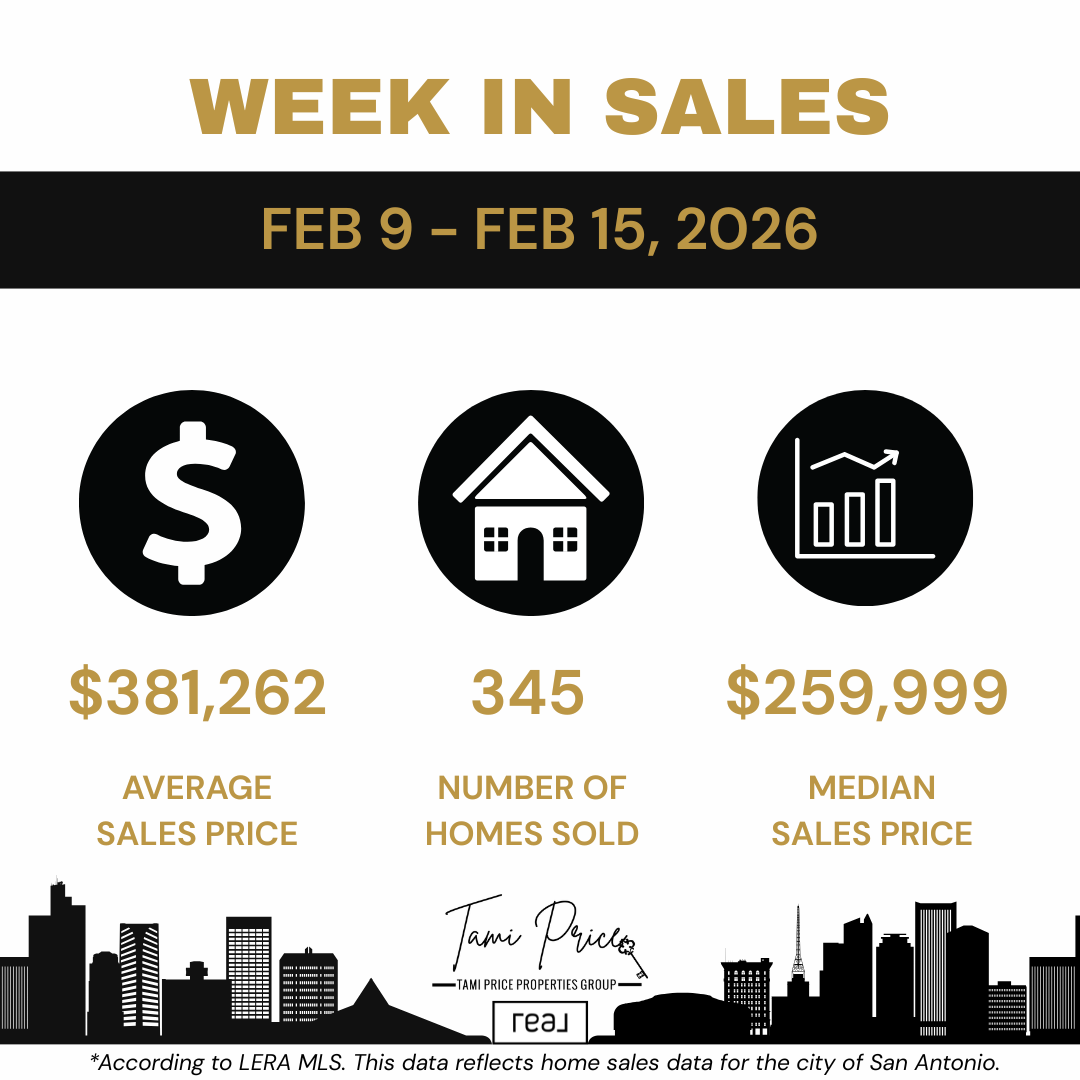
During the week of February 9 through February 15, 2026, San Antonio recorded 345 homes sold according to LERA MLS® data. The average sales price reached $381,262, while the median sales price came in at $259,999.
This week reflected strong transactional volume with several important characteristics visible in the data:
- 345 total closed transactions indicate robust weekly buyer activity
- Average price of $381,262 reflects inclusion of higher-priced properties in the mix
- Median price below $260,000 shows the center of market activity in affordable segments
- The $121,263 gap between average and median is exceptionally wide, indicating market bifurcation
- Heavy concentration of sales in entry-level and lower mid-range price brackets
The gap between average and median pricing in this particular week suggests that a smaller number of higher-priced transactions influenced the average significantly, while the majority of buyers remained active in entry-level and mid-range segments. This pattern reflects current buyer priorities around affordability, total ownership costs, and careful financial management rather than aggressive purchasing regardless of price.
For buyers searching in the sub-$300,000 range during this period, the data confirms significant competition from other buyers focusing on similar price points. For buyers in higher segments, the week demonstrates that transactions occur across all price tiers, though volume concentrates in more affordable ranges.
For sellers, this week's data emphasizes understanding where your specific property fits within the overall market structure. Homes priced in alignment with the median range likely faced meaningful buyer interest, while higher-priced properties represented a smaller share of overall weekly transaction volume.
Q: Why was the median price so much lower than the average price during the February 9-15 week? A: The $121,263 gap indicates that a small number of higher-priced homes (likely in the $500,000 to $700,000+ range) closed during that week, pulling the average upward substantially. However, the majority of sales occurred below $260,000, meaning half of all transactions happened at or below that price point. This demonstrates market bifurcation where different buyer segments are active simultaneously in different price tiers.
What Did the Week of February 16 Through February 22, 2026, Reveal?
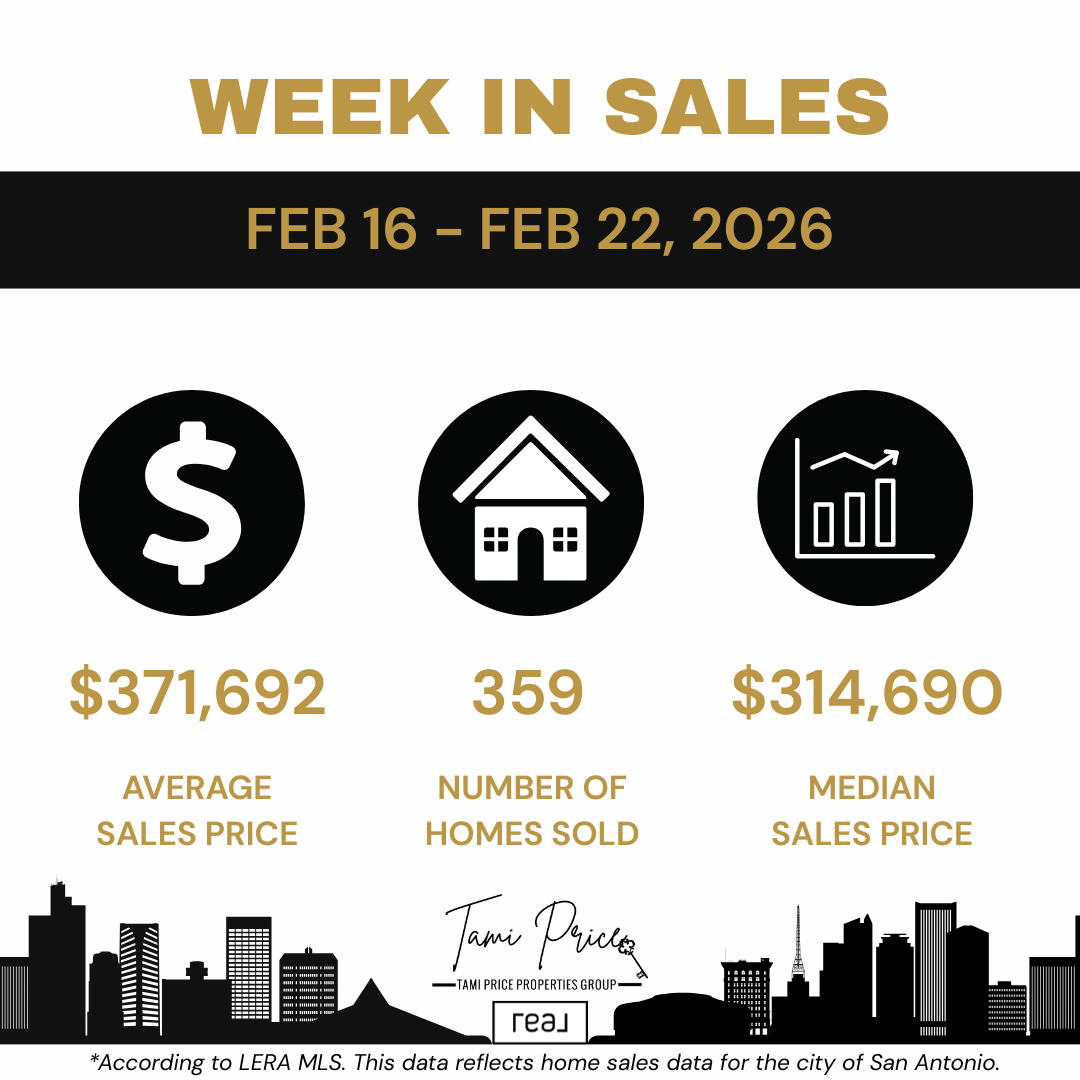
The following week showed continued momentum with meaningfully different price dynamics that provide important context about market composition and buyer behavior. During the week of February 16 through February 22, 2026, San Antonio recorded 359 homes sold. The average sales price adjusted to $371,692, while the median sales price increased dramatically to $314,690.
This week's data demonstrates several significant patterns:
- 359 total sales indicates increased closing volume compared to the prior week
- Average price declining slightly to $371,692 while median rose substantially
- Median price increasing by $54,691 from $259,999 to $314,690 week over week
- The gap between average and median narrowing to $56,002, much tighter than the prior week
- Increased activity concentration in mid-range price points rather than entry-level segments
Sales volume increased from 345 to 359 homes, and the median sales price rose by more than $54,000 compared to the prior week. This substantial change points to increased closing activity in mid-range price points between approximately $280,000 and $350,000, while the average sales price adjusted downward slightly to $371,692.
This type of movement is common in balanced markets where buyer demand spans multiple price ranges rather than clustering in a single segment week after week. The narrower gap between average and median in this week compared to the prior week indicates more balanced inventory composition without extreme concentration in either affordable or luxury segments.
Q: Does the $54,691 median price increase mean San Antonio home values jumped 21% in one week? A: No. This reflects which specific homes happened to close during each week, not actual value appreciation. Week one saw heavy concentration of affordable closings below $260,000. Week two saw more mid-range closings in the $280,000 to $350,000 range. Neither week indicates that individual home values changed by 21%. Always examine multi-week trends and comparable sales in specific neighborhoods rather than reacting to single-week median shifts.
Understanding Inventory Composition Effects on Weekly Medians
The dramatic median shift between these consecutive weeks provides an excellent illustration of how inventory composition affects weekly statistics in ways that have nothing to do with actual value changes or market appreciation. When week one closes a high volume of entry-level homes while week two closes more mid-range properties, the median naturally shifts upward even when no individual home appreciated in value.
Professional market analysis distinguishes these composition effects from genuine market trends requiring strategic response. Buyers and sellers who understand this distinction avoid misinterpreting statistical noise as meaningful signals while remaining vigilant for actual multi-week patterns that indicate real market shifts.
What Do These Weekly Trends Reveal About Current Buyer Behavior?
For buyers watching the San Antonio market, these mid-February weekly trends reinforce several important principles about how to navigate current conditions effectively. The data confirms that competition exists across multiple price segments but manifests differently depending on where your target properties fall within the market structure.
Understanding true market value based on recent comparable sales in specific neighborhoods and price ranges remains the most critical buyer competency. While general market statistics provide context, individual purchase decisions must be grounded in evidence about what buyers are actually paying for similar properties in your target areas.
Current buyer behavior patterns visible in the data include:
- Clear prioritization of affordability and total ownership cost management
- Careful evaluation of property condition relative to asking price
- Comparison shopping across available inventory before making offers
- Focus on long-term value rather than fear-driven urgency
- Willingness to wait for appropriately priced properties rather than overpaying
Homes that are priced realistically based on recent comparable sales and aligned with current buyer expectations continue to attract interest and generate offers. Properties priced optimistically above what comparable sales support experience extended market time as buyers focus attention on better-positioned alternatives.
Buyers who are well-prepared through strong pre-approval from reputable lenders, financially qualified with clear budget parameters, and guided by current market data from an experienced REALTOR® are better positioned to act decisively when the right opportunities arise. This preparation becomes especially valuable as more listings enter the market ahead of the spring season, creating increased choices alongside increased competition for the most desirable properties.
Working with Tami Price, REALTOR®, buyers receive comprehensive guidance on the home buying process in San Antonio that incorporates current weekly data, seasonal patterns, and neighborhood-specific comparable sales analysis to prevent both overpaying on overpriced properties and missing opportunities on homes that represent genuine value.
Q: Should buyers make offers below asking price in current market conditions? A: Offer strategy should be based on comparable sales, not arbitrary discounts. If recent comparable sales in the specific neighborhood show homes selling at 95-98% of list price, competitive offers near asking are appropriate for well-priced properties. If comparable sales show extended market time and price reductions, negotiation opportunities exist. Work with your REALTOR® to analyze specific property positioning rather than applying uniform strategies regardless of individual circumstances.
How Spring Inventory Increases Affect Buyer Strategy
As February transitions into March and the spring selling season accelerates, buyers typically face increased inventory alongside increased buyer competition. More homes entering the market creates more choices and opportunities to find properties matching specific criteria. However, the best-positioned properties in desirable neighborhoods still attract multiple offers and require decisive action.
Effective buyer strategy in the pre-spring period involves beginning searches early, establishing clear criteria, securing financing completely, and maintaining readiness to act quickly when appropriate properties appear. Waiting until inventory peaks in April or May may provide maximum selection but also means facing maximum competition from other buyers employing similar timing strategies.
What Do These Trends Signal for San Antonio Home Sellers?
For sellers contemplating listing their San Antonio homes or currently on market without offers, the mid-February data highlights a critical takeaway that defines success in current conditions: pricing strategy based on recent comparable sales in your specific price segment and neighborhood matters more than ever before.
Homes that are priced in line with recent median trends for their specific market segment are moving successfully and generating appropriate buyer interest. Properties priced above market expectations without clear justification through superior condition, location advantages, or meaningful upgrades may experience longer days on market and reduced showing activity.
This is not a market driven by urgency, emotion, or buyers making irrational decisions to secure properties regardless of price. Buyers are evaluating options carefully, comparing recent sales data, factoring in overall ownership costs including insurance and property taxes, and making informed decisions based on value assessment.
Successful sellers in current San Antonio market conditions demonstrate several shared characteristics:
- Pricing based on recent comparable sales from past 30 to 60 days in specific neighborhoods
- Understanding of where their home fits within the market structure relative to median activity
- Investment in proper preparation including necessary repairs, cleaning, and staging
- Realistic expectations about showing activity, offer timing, and negotiation dynamics
- Responsive strategy adjustment when market feedback indicates positioning problems
Sellers who understand these dynamics and position their homes accordingly are achieving successful outcomes and closing transactions. Those who resist market realities, overprice based on emotional attachment or outdated peak market values, or neglect necessary preparation find their properties languishing while better-positioned competing inventory sells successfully.
Tami Price's approach to pricing your San Antonio home incorporates weekly trend analysis, seasonal patterns, neighborhood-specific data, and current inventory evaluation. This comprehensive methodology prevents pricing errors that damage market perception and reduce final proceeds through extended market time and eventual forced price reductions.
Q: How should sellers interpret strong showing activity without offers? A: Strong showings without offers typically indicate that buyers find the property appealing enough to visit but conclude the price exceeds value after comparing against competing inventory. This feedback signals a pricing problem rather than a condition or marketing issue. Discuss current comparable sales with your REALTOR® and consider strategic price adjustment before extended market time compounds perception problems with new buyers discovering your listing later in their search.
Preparing for Spring Market Competition
The approaching spring season from March through May typically brings peak inventory to the San Antonio market as sellers list homes hoping to capture increased buyer activity during traditional peak selling months. While this timing can work effectively, it also means facing maximum competition from other sellers employing identical timing strategies.
Sellers who list in late February or early March before inventory peaks may benefit from motivated buyers with fewer competing options to evaluate. However, this advantage only materializes when pricing is accurate and properties are properly prepared. Listing early with optimistic pricing simply extends market time through the spring period without capturing early buyer interest.
How Do Weekly Trends Fit Into San Antonio's Broader Market Context?
San Antonio continues to benefit from several long-term structural advantages that support sustained housing demand across multiple market cycles and economic conditions. Understanding how weekly tactical data fits within this broader strategic context helps buyers and sellers maintain appropriate perspective while making informed decisions.
San Antonio's fundamental market strengths include:
- Ongoing population growth driven by corporate relocations, military presence, and lifestyle migration
- Employment stability across diverse industries reducing economic concentration risk
- Military relocation demand from Joint Base San Antonio creating consistent buyer activity
- Relative affordability compared to Austin, Dallas, and other major Texas metros attracting price-conscious buyers
- New construction activity across price ranges providing inventory alternatives that also discipline resale pricing
However, weekly sales data shows that success in individual transactions depends less on broad structural advantages and more on neighborhood-specific pricing, property condition, marketing quality, and timing decisions. Long-term market health does not override the requirement for accurate tactical positioning in any specific transaction.
Shifts between median and average pricing from week to week demonstrate that buyer demand is present across multiple price tiers, but not without limits or price sensitivity. This reinforces the value of data-driven decision-making for both buyers and sellers rather than assuming structural advantages automatically translate to individual success regardless of positioning accuracy.
For military families managing PCS moves to or from San Antonio, understanding both long-term market stability and current weekly trends provides the foundation for confident housing decisions under compressed timelines. Working with a REALTOR® who holds the Military Relocation Professional designation and monitors current data helps military buyers and sellers navigate unique challenges while benefiting from San Antonio's sustained military demand.
How Does Tami Price, REALTOR®, Translate Weekly Data Into Client Strategy?
Tami Price, REALTOR®, works with buyers and sellers throughout San Antonio to interpret weekly LERA MLS® market data and translate it into practical strategies that serve client interests effectively. Her approach focuses on realistic pricing grounded in current comparable sales, clear expectations about market dynamics, and protecting clients from unnecessary risk in a market where informed positioning matters more than timing or luck.
By closely monitoring weekly sales trends alongside neighborhood-level inventory movement, seasonal patterns, and price segment performance, Tami helps clients make informed decisions based on current conditions rather than outdated assumptions, generalized headlines, or strategies that worked during different market phases.
For buyers, this means understanding whether specific properties represent fair value based on recent comparable sales, where competition is likely to be strongest, and how to structure offers that protect buyer interests while remaining competitive when appropriate. It means recognizing when to negotiate firmly on overpriced properties versus when to make strong offers on homes priced to market.
For sellers, this means setting initial list prices that reflect what buyers are actually paying in specific neighborhoods and price ranges right now, not what sellers hope to receive or what properties sold for during peak market years. It means responding quickly to market feedback when showing counts or buyer comments indicate positioning problems rather than waiting and hoping conditions will change.
This commitment to current market intelligence and transparent guidance serves clients across all segments, from first-time home buyers navigating their initial purchase to move-up buyers balancing sale and purchase timing to military families managing compressed PCS timelines.
Expert Insight from Tami Price
With nearly two decades representing San Antonio buyers and sellers and approximately 1,000 closed transactions across multiple market cycles, Tami Price, REALTOR®, understands that mid-February's weekly data reflects normal market function where buyer activity spans multiple price tiers simultaneously, creating segment-specific dynamics that require tailored strategies rather than uniform approaches.
"The $54,691 median increase between consecutive weeks in mid-February demonstrates perfectly why sellers cannot rely on citywide statistics to price their specific homes," Tami explains. "That dramatic shift reflects inventory composition, not value appreciation. Week one closed heavy volume of affordable homes while week two closed more mid-range properties. Neither week tells a seller pricing a $320,000 home anything useful about what buyers will pay for their specific property in their particular neighborhood."
Tami holds multiple designations including Pricing Strategy Advisor (PSA), Seller Representative Specialist (SRS), Accredited Buyer's Representative (ABR), Graduate REALTOR® Institute (GRI), and Military Relocation Professional (MRP). These certifications reflect ongoing education in pricing methodology, market analysis, negotiation strategy, and specialized service for military families managing relocations.
Her experience across boom markets, corrections, balanced markets, and recovery phases provides perspective that prevents reactive decision-making based on short-term data without proper context. Whether markets favor buyers, sellers, or neither side decisively, the fundamental principles remain consistent: accurate pricing based on recent comparable sales drives seller results, informed evaluation protects buyers from overpaying, and strategic positioning outperforms emotional reactions.
"What I emphasize to both buyers and sellers approaching the spring market is that more inventory means more choices for buyers but also more competition for sellers," Tami notes. "Buyers benefit from increased selection but still face competition for the best-positioned properties in desirable neighborhoods. Sellers benefit from peak buyer activity but must compete against more alternative options. Success for both sides depends on accurate market knowledge and responsive strategy, not timing alone."
This commitment to data-driven, client-focused guidance has earned Tami recognition as a RealTrends Verified Top Agent, 15-time Five Star Professional® Award winner, and top real estate agent in San Antonio with more than 650 five-star reviews from satisfied buyers and sellers.
Three Key Takeaways
- The $54,691 median price increase between consecutive mid-February weeks demonstrates how inventory composition affects weekly statistics without indicating actual value appreciation, emphasizing why buyers and sellers must analyze comparable sales in their specific neighborhoods and price segments rather than relying on citywide averages. When the median jumped from $259,999 to $314,690 while the average only declined slightly from $381,262 to $371,692, this pattern revealed that week one closed heavy volume of affordable homes while week two closed more mid-range properties. Neither week indicates that San Antonio home values changed by 21% in seven days. Professional market analysis distinguishes these composition effects from genuine trends requiring strategic response. Sellers pricing homes based on weekly median shifts rather than recent comparable sales in their specific market areas inevitably overprice or underprice relative to what informed buyers will actually pay.
- San Antonio's mid-February market demonstrates that buyer demand spans multiple price tiers simultaneously, creating segment-specific competitive dynamics and strategic requirements that vary dramatically between affordable, mid-range, and luxury segments. The 704 homes that sold across these two weeks prove sustained transaction volume and functional market conditions. However, competition concentrates differently across price ranges, with entry-level buyers facing the most competitive environments while upper-range buyers enjoy more leverage and evaluation time. Successful buyers and sellers recognize which competitive dynamics apply to their specific price segment and neighborhood rather than assuming uniform market behavior regardless of price tier. Understanding where your transaction fits within the overall market structure allows appropriate strategy calibration based on segment-specific realities.
- The approaching spring selling season creates both opportunities and challenges for buyers and sellers, with increased inventory providing more choices alongside increased competition that rewards early preparation and accurate positioning over timing strategy alone. Sellers who list in late February or early March with accurate pricing based on current comparable sales may capture motivated buyers before inventory peaks and competition intensifies in April and May. However, listing early with optimistic pricing simply extends market time without strategic advantage. Buyers beginning searches early gain familiarity with available inventory and market pricing, positioning them to act decisively when appropriately priced properties appear. Spring timing provides no automatic advantages for either buyers or sellers without proper preparation, accurate pricing, and responsive strategy as conditions evolve through the season.
Frequently Asked Questions
Q: What causes median home prices to fluctuate by more than $50,000 between consecutive weeks? A: Inventory composition drives these dramatic weekly median shifts. When week one closes heavy volume of entry-level homes below $260,000, the median reflects that concentration. When week two closes more mid-range homes in the $280,000 to $350,000 range, the median rises substantially. Neither scenario indicates actual appreciation or depreciation of individual home values. Always examine multi-week trends and comparable sales in your specific neighborhood and price range rather than reacting to single-week citywide statistics.
Q: Should sellers price based on the current week's median or average price? A: Neither. Sellers should price based on recent comparable sales of similar homes in their specific neighborhood and price range from the past 30 to 60 days. Citywide medians and averages reflect transactions across all neighborhoods and price tiers, most of which have no relevance to your specific property. A seller with a $320,000 home in Schertz gains no useful pricing guidance from knowing the citywide median was $259,999 or $314,690 during any particular week. Focus on what comparable homes in your immediate market area actually sold for recently.
Q: Is the spring market approaching San Antonio better for buyers or sellers? A: Spring brings both increased buyer activity and increased listing inventory, creating balanced dynamics rather than strongly favoring either side. Sellers benefit from peak buyer pools but face more competing inventory. Buyers gain more selection but navigate more competition for the best properties. Success depends on accurate positioning and responsive strategy for both sides rather than timing alone. Neither buyers nor sellers should assume spring automatically provides decisive leverage advantages without proper preparation and market alignment.
Q: How should buyers compete for homes when median prices show strong activity in their target range? A: Competition varies by specific property positioning, not just overall segment activity. Well-priced homes in excellent condition in desirable neighborhoods attract multiple offers requiring competitive positioning. Overpriced or problematic properties provide negotiation opportunities despite segment activity. Work with your REALTOR® to analyze specific property positioning through comparable sales rather than assuming every home in your price range requires aggressive offers. Strategic buyers recognize which scenario applies and adjust accordingly.
Q: Why do some weeks show wide gaps between average and median prices while others show narrow gaps? A: Gap width reflects inventory composition during that specific week. Wide gaps indicate significant luxury sales pulling the average upward while the median stays lower due to high affordable transaction volume. Narrow gaps indicate more balanced distribution across price tiers without extreme concentration in either affordable or luxury segments. Neither gap pattern indicates better or worse market conditions, just different inventory mixes during particular closing periods.
Q: Should sellers wait until spring inventory peaks to list their homes? A: Listing when inventory peaks means facing maximum competition from other sellers simultaneously entering the market. While buyer activity also peaks during spring, the benefit only materializes for homes positioned competitively through accurate pricing and excellent presentation. Many sellers achieve better outcomes by listing in late February or early March before competition intensifies, capturing motivated buyers with fewer alternative options. However, timing provides no advantage without accurate positioning. Consult your REALTOR® about current neighborhood-specific inventory and buyer activity before making timing decisions based solely on seasonal assumptions.
Q: How do military PCS buyers navigate market timing when orders control their timeline? A: Military buyers benefit from working with REALTORS® who hold the Military Relocation Professional designation and understand how to navigate compressed timelines while protecting buyer interests. Understanding current weekly market data helps identify whether target price segments are highly competitive or provide negotiation opportunities. VA loan pre-approval, clear criteria, and decisive action when appropriate properties appear allow military buyers to achieve housing goals despite timeline constraints. San Antonio's sustained military demand from Joint Base San Antonio creates understanding among sellers about military buyer needs.
Q: What showing activity level indicates a property is priced correctly in current conditions? A: Showing counts vary by price range, season, and neighborhood, making universal standards unreliable. However, properties priced at or slightly below recent comparable sales typically generate 8-15+ showings within the first two weeks in moderately active segments. If your home receives 10+ showings without offers, pricing likely exceeds value despite buyer interest. If showings are minimal despite adequate marketing, pricing likely exceeds market support significantly. Discuss specific showing feedback and comparable sales with your REALTOR® to diagnose positioning accuracy.
The Bottom Line
Mid-February 2026 sales data shows a San Antonio real estate market that remains active, balanced, and driven by careful value evaluation from buyers navigating across multiple price segments. The 704 homes that sold across two consecutive weeks prove sustained buyer demand and functional market conditions. The dramatic $54,691 median shift between weeks demonstrates the importance of understanding inventory composition effects rather than misinterpreting statistical variations as meaningful market signals.
For buyers deciding to buy a home in San Antonio, mid-February trends confirm opportunities exist across price ranges with varying competitive dynamics by segment. Financial preparation, clear criteria, and strategic positioning based on recent comparable sales create advantages as spring inventory increases provide more selection alongside more competition.
For sellers deciding to sell your San Antonio home, mid-February data reinforces that pricing accuracy within your specific market segment drives results while citywide statistics provide limited guidance for individual properties. The approaching spring season offers opportunities for sellers who position correctly early, avoiding the increased competition that arrives as inventory peaks in April and May.
Understanding weekly trends provides clarity in a market where strategy matters more than speed, timing, or assumptions. For buyers and sellers alike, informed decisions based on current comparable sales data and neighborhood-specific analysis lead to better outcomes than emotional reactions or outdated playbooks.
Ready to discuss how current San Antonio market trends specifically affect your buying or selling timeline and strategy? Contact Tami Price, REALTOR®, for guidance grounded in weekly market intelligence and nearly two decades of San Antonio real estate experience.

Contact Tami Price, REALTOR® | San Antonio, TX
Tami Price provides expert buyer and seller representation throughout Greater San Antonio with comprehensive market analysis incorporating weekly trends, seasonal patterns, and neighborhood-specific comparable sales data. Schedule a consultation to discuss your real estate goals with guidance grounded in current market realities.
📞 210-620-6681
Tami Price's Specialties
- Buyer and Seller Representation
- Military Relocations and PCS Moves
- VA Loan Guidance and VA Loan Assumptions
- New Construction Representation
- First Time Home Buyers
- Move Up Buyers
- Downsizing and Rightsizing
- Strategic Pricing and Market Analysis
- San Antonio, Schertz, Cibolo, Helotes, Converse, and Boerne
Disclaimer
This blog is for informational purposes only and does not constitute legal, financial, or real estate advice. Market conditions change, and individual circumstances vary. Readers should consult qualified professionals before making real estate decisions. Tami Price, REALTOR®, is licensed in Texas and affiliated with Real Broker, LLC. Fair Housing principles apply to all content.
Categories
- All Blogs (944)
- Home Buying (21)
- Neighborhood Guides (46)
- 10 Incentive and Rate Buydown Questions (1)
- 10 Military Neighborhood (1)
- 10 Mistakes Sellers Make (1)
- 10 Strategies to Coordinate a Same Day Close (1)
- 12 Lifestyle Questions to Move In (1)
- 12 PCS What Ifs (1)
- 12 Photos and Marketing Assets (1)
- 13 PCS Hunting Trip Tips (1)
- 14 Design Center Decisions (1)
- 15 Red Flags Touring Home in San Antonio (1)
- 2026 Market (1)
- 30 days after closing your home (1)
- 7 Offer Terms Beyond Price (1)
- 7 VA Specific Questions (1)
- 78015 Ranked One (1)
- 8 Bridge (1)
- 8 Myths Buyers Believe about Down Payments (1)
- 8 Reasons VA Buyers Love New Construction (1)
- 9 Mistakes Move Up Buyers Make (1)
- 9 Questions to Decide If You Keep Your PCS Home (1)
- 9 Timeline Questions Every Buyer Need to Ask (1)
- 9 Warranty Questions to Ask (1)
- 9 Ways to Attract VA & Military Buyers (1)
- 90 days before your move (1)
- About Tami Price (6)
- Active Adult Homes (1)
- Affordable Communities (2)
- Affordable Housing & Community Development (5)
- Agent Qualifications and Credentials (1)
- Agent Qualifications and Experience (1)
- Agent Recognition (3)
- Agent Selection (1)
- AI and Real Estate Tools (1)
- Alamo Heights (5)
- Alamo Heights ISD (1)
- Alamo Heights Real Estate (1)
- Alamo Ranch (3)
- Amenities in Helotes, Texas (3)
- Apartment Market (1)
- Appraisals (1)
- Arts and Culture (1)
- Awards and Recognition (7)
- Balcones Creek (1)
- Best Neighborhoods to Live in Cibolo, TX (3)
- Best Neighborhoods to Live in San Antonio (16)
- Best Places to Live in Leon Valley: A Neighborhood Guide (1)
- Best Places to Live in Northeast Inner Loop: A Neighborhood Guide (1)
- Bexar County Property Tax (1)
- Bexar County Real Estate (3)
- Blue Tape Walkthrough (1)
- Boerne Home Sellers (1)
- Boerne Neighborhoods (2)
- Boerne Texas (9)
- Broadway Corridor Development (1)
- Build-to-Rent Communities (1)
- Builder Contracts & Warranties (3)
- Builder Incentives (1)
- Builder Warranties (1)
- Buyer (97)
- Buyer Activity San Antonio (1)
- Buyer and Seller Guidance (4)
- Buyer Due Diligence (1)
- Buyer Education (46)
- Buyer Guide (9)
- Buyer Guides (7)
- Buyer Protection Strategies (1)
- Buyer Representation (1)
- Buyer Representation Expertise (1)
- Buyer Resources (90)
- Buyer Strategy (2)
- Buyers (13)
- Buyers Agent (1)
- Buying a Foreclosed Home in San Antonio (10)
- Buying a Home (3)
- Buying a Home in San Antonio (6)
- Buying Near JBSA (1)
- Buying Timeline (1)
- Buying vs Renting (1)
- Castroville, TX (8)
- Central San Antonio (1)
- Central San Antonio Development (2)
- Central Texas Growth (1)
- Choosing a Real Estate Agent (1)
- Choosing an Agent (1)
- Cibolo Communities (1)
- Cibolo Home Sellers (1)
- Cibolo TX (15)
- Client Reviews and Testimonials (1)
- Client Satisfaction (1)
- Client Stories (1)
- Client Testimonial (4)
- Clients review (4)
- Closing (1)
- Cobblestone (1)
- Comal County (1)
- Commercial & Retail Development (27)
- Commercial Development (13)
- Commercial Development Impact on Home Values (1)
- Commercial Real Estate (1)
- Community (1)
- Community Amenities (2)
- Community Development (23)
- Community Development and Real Estate (3)
- Community Events & Development (1)
- Community Guides (1)
- Community Infrastructure (1)
- Community Investment Impact (2)
- Community Landmarks (1)
- Community News (4)
- Community Planning (2)
- Community Revitalization (1)
- Community Spotlights (1)
- Commuter Neighborhoods (1)
- Cons of Living in Helotes, TX (4)
- Conservation Communities (1)
- Contingency Questions (1)
- Converse Home Sellers (1)
- Converse Homes For Sale (3)
- Converse Real Estate (1)
- Converse TX (10)
- Converse TX Real Estate (1)
- Cost of Living Guides (1)
- Cost of Living in San Antonio TX (25)
- CPS Energy Programs (1)
- Custom Homes (5)
- Davis Ranch (1)
- Days on Market (1)
- Deco District San Antonio (1)
- Denver Heights (1)
- Down Payment Assistance (1)
- Downtown Boerne (1)
- Downtown Development (3)
- Downtown Living (1)
- Downtown Revitalization (14)
- Downtown San Antonio (2)
- Downtown San Antonio Real Estate (5)
- Downtown San Antonio Revitalization (1)
- Dual Military (1)
- East Side Living (1)
- East Side Neighborhoods (1)
- East Side San Antonio (4)
- Economic Development (3)
- Economic Growth & Industry (1)
- Education, Texas Hill Country (1)
- Emerald Pointe (1)
- Employment (1)
- Employment Corridors (1)
- Encino Forest (1)
- Entertainment Economy (1)
- Equity and Pricing Strategy (2)
- Equity Q&A (1)
- Established Communities (3)
- Events in San Antonio (207)
- Expert Advice from Tami Price, Realtor® (10)
- Fair Oak Ranch (1)
- Family Activities (2)
- Family Homes (3)
- Family Living in San Antonio (1)
- FAQ (1)
- Far Northwest San Antonio (1)
- Far West San Antonio (1)
- Far Westside Real Estate (4)
- Farmer Markets in San Antonio (1)
- Fastest Growing Zip Codes in America (1)
- Featured Homes for Sale (2)
- Featured Properties (1)
- Final Walkthrough (1)
- Financial Planning (11)
- Financing Strategy (1)
- First Time Buyers (23)
- First Time Sellers (1)
- First-Time Buyers (6)
- First-Time Homebuyer Resources (4)
- First-Time Homebuyer Tips (2)
- First-Time Homebuyers (6)
- First-Time Investors (1)
- Fort Sam Houston (3)
- Fort Sam Houston Real Estate (1)
- Fort Sam Houston, TX (2)
- Fox Grove (1)
- FSBO vs Agent Representation (1)
- Future Rental (1)
- Gated Communities (5)
- Golf Communities (1)
- Great Northwest (1)
- Greater San Antonio Housing Trends (2)
- Greater San Antonio Real Estate (5)
- Green Home Upgrades (1)
- Growth and Development (11)
- Healthcare (1)
- HELOC (1)
- Helotes Home Sellers (1)
- Highway 151 Corridor Growth (1)
- Hill Country Business (1)
- Hill Country Communities (2)
- Hill Country Development (3)
- Hill Country Homes for Sale (1)
- Hill Country Living (3)
- Hill Country Market Updates (1)
- Hill Country Real Estate (4)
- Hill Country Retreat (1)
- Historic Districts (5)
- Historic Neighborhoods (4)
- Historic Preservation (2)
- Holiday Attractions (1)
- Holiday Guide (1)
- Home Buying (7)
- Home Buying Education (3)
- Home Buying Guide (7)
- Home Buying Process (8)
- Home Buying Strategy (2)
- Home Buying Tips (6)
- Home Energy Efficiency San Antonio (5)
- Home Financing (2)
- Home Improvement ROI (1)
- Home Inspections (3)
- Home Maintenance (1)
- Home Preparation (2)
- Home Pricing Strategy (14)
- Home Renovation for Resale (1)
- Home Selling (12)
- Home Selling Guide (11)
- Home Selling Strategies (3)
- Home Selling Strategy (3)
- Home Selling Tips (22)
- Home Staging and Updates (2)
- Home Values (2)
- Homebuyer Education (15)
- Homebuyer Resources (1)
- Homebuying Guide (1)
- Homebuying Tips (3)
- Homeowner (39)
- Homeowner Tax Benefits (1)
- Homeownership Costs (1)
- Homes for Sale (2)
- Homes for sale near Lackland AFB (4)
- Homes Near Military Bases (1)
- Homestead amenities (1)
- Horizon Pointe (1)
- House Hunting Guide (1)
- Housing (1)
- Housing Community Development (1)
- Housing Development (2)
- Housing Market Updates (3)
- How to Buy a House in San Antonio TX (48)
- Huebner Oaks shopping center (1)
- Hunters Ranch (1)
- Hybrid (1)
- I-10 Corridor (1)
- I-35 Corridor (1)
- In Person (1)
- Incorporated Cities (6)
- Industrial Investment Impact (1)
- Industry News (2)
- Industry Recognition (1)
- Infrastructure & Growth Projects (26)
- Infrastructure and Sustainability (1)
- Infrastructure Development (1)
- Infrastructure Investment (1)
- Infrastructure Updates (2)
- Interest Rates (2)
- Invest in San Antonio (46)
- Investment Opportunities (3)
- Investment Property San Antonio (4)
- JBSA (9)
- JBSA Housing (11)
- JBSA Real Estate (4)
- JBSA Resources (7)
- Joint Base San Antonio (5)
- Joint Base San Antonio Housing (1)
- Judson ISD (2)
- Kendall County (1)
- La Cantera Retail Development (1)
- Lackland AFB (7)
- Lackland AFB Housing (1)
- Land Conservation (1)
- Land Use Planning (1)
- Lera MLS (15)
- Lifestyle & Community Growth (18)
- Lifestyle & Local Growth (12)
- Lifestyle Amenities (1)
- Lifestyle Communities (1)
- Listing Preparation (1)
- Listing Strategy (1)
- Live Oak (1)
- Living in San Antonio, TX (52)
- Living Near Randolph AFB (7)
- Loan Programs (1)
- Local Attractions (3)
- Local Business (1)
- Local Business & Development (9)
- Local Business & Economy (3)
- Local Business Spotlight (20)
- Local Business Support (5)
- Local Development (4)
- Local Development News (9)
- Local Market Insights (5)
- Local News (2)
- Local News Around San Antonio (2)
- Local Policy Changes (1)
- Local Real Estate News (1)
- Loop 1604 Corridor Growth (2)
- Loop 410 Corridor Development (1)
- Luxury Communities (3)
- Luxury Homes (2)
- Luxury Real Estate (1)
- Luxury Retail San Antonio (1)
- MacArthur Park (1)
- Major Developments (2)
- Making Offers on Homes (1)
- Market Analysis (26)
- Market Conditions (47)
- Market Expertise (1)
- Market Insights (5)
- Market Strategy (1)
- Market Timing (2)
- Market Trends (10)
- Market Trends & Insights (2)
- Market Update (18)
- Market Update 2026 (1)
- Market Updates (22)
- Master Planned Communities (12)
- Medical Center Area Real Estate (1)
- Medina Valley ISD (2)
- Midtown Living (1)
- Military & Economic Impact (3)
- Military Buyers (3)
- Military Communities (1)
- Military Families (1)
- Military Family Resources (1)
- Military Heritage (1)
- Military Homebuying (3)
- Military Homeownership (1)
- Military Housing (3)
- Military Housing Market in Texas (16)
- Military Life in San Antonio (2)
- Military Neighborhoods (1)
- Military PCS Relocations (3)
- Military Real Estate (2)
- Military Relocation (100)
- Military Relocation & VA Loans (10)
- Military Relocation San Antonio (4)
- Military Relocation Services (3)
- Military Relocation to San Antonio (50)
- Military Relocations (20)
- Military Relocations & VA Home Loans (5)
- Mixed-Income Housing (1)
- MLS Accuracy & Data Transparency (1)
- Mortgage Programs (1)
- Mothers Day in San Antonio (1)
- Move to Boerne TX (18)
- Move to Castroville TX (11)
- Move to Converse TX (16)
- Move to New Braunfels (1)
- Move to North San Antonio (19)
- Move to San Antonio TX (73)
- Move to Selma TX (19)
- Move to Shertz TX (13)
- Move to Texas (53)
- Move Up Buyer Resources (1)
- Move Up Buyers (23)
- Move-In Ready Homes (3)
- Move-In Ready Homes San Antonio (2)
- Move-Up Buyers (2)
- Moving to Helotes, TX (17)
- Moving to San Antonio (69)
- MUD Taxes (1)
- Natalia Homes For Sale (1)
- Near East Side Living (1)
- Negotiation Strategy (2)
- Neighborhood Amenities (1)
- Neighborhood Development (1)
- Neighborhood Guides (7)
- Neighborhood Investment (1)
- Neighborhood News (2)
- Neighborhood Revitalization (2)
- Neighborhood Spotlights (12)
- Neighborhood Updates (1)
- Neighborhoods near Randolph AFB (12)
- New Braunfels (6)
- New Braunfels Homes For Sale (1)
- New Braunfels News (3)
- New Braunfels Real Estate (3)
- New Businesses (2)
- New Construction (63)
- New Construction Communities (1)
- New Construction Homes (13)
- New Construction Homes San Antonio (5)
- New Construction vs Resale (2)
- New Construction Without Customization (1)
- New Construction Without the Wait (1)
- New Contruction Cost (1)
- New Development (3)
- New Listing (19)
- New Restaurants (3)
- News (211)
- News & updates (213)
- No HOA Homes (1)
- North Central San Antonio (5)
- North East ISD (4)
- North San Antonio (9)
- North San Antonio Real Estate (3)
- North Side Neighborhoods (1)
- North Side San Antonio Development (2)
- Northeast Inner Loop (1)
- Northeast Inner Loop Neighborhoods (1)
- Northeast San Antonio (3)
- Northside ISD (5)
- Northwest San Antonio (9)
- Northwest San Antonio Development (1)
- Northwest San Antonio Growth (1)
- Northwest San Antonio Real Estate (3)
- Northwood (1)
- Olympia Hills (1)
- One-Story Homes (1)
- Outdoor Living (1)
- Parks and Recreation (2)
- PCS and JBSA (2)
- PCS checklist (1)
- PCS Guide (4)
- PCS Moves (12)
- PCS Moves to Joint Base San Antonio (4)
- PCS Planning (16)
- PCS Randolph AFB (17)
- PCS Relocation (1)
- PCS Resources (6)
- PCS San Antonio (46)
- PCS to San Antonio (42)
- Pearl District Area Real Estate (2)
- PID Assessments (1)
- Pinon Creek (1)
- Pipe Creek (1)
- Places to Eat Near Randolph AFB (1)
- Pool Homes (1)
- Pre Approval (1)
- Pre-Listing Preparation (2)
- Pre-Listing Process (1)
- Prescott Oaks (1)
- Pricing and Marketing Strategy (3)
- Professional Awards and Achievements (2)
- Professional Real Estate Representation (1)
- Property Tax Exemptions Texas (1)
- Property Value Enhancement (1)
- pros and cons living in Converse TX (3)
- Pros and Cons Living in Selma TX (6)
- Pros and Cons of Living in Castroville, TX (4)
- Pros and Cons of Living in San Antonio (33)
- PT500 List (1)
- Purchase Negotiation (1)
- Quality of Life (1)
- Quick Close Real Estate (1)
- Randolph AFB Neighborhoods (2)
- Real Estate (1)
- Real Estate Advice (1)
- Real Estate Agent Recognition (6)
- Real Estate Agent Selection (2)
- Real Estate Agent Value (1)
- Real Estate Consultation (1)
- Real Estate Finance (1)
- Real Estate Financing (1)
- Real Estate Impact (1)
- Real Estate Investment San Antonio (2)
- Real Estate Legal Issues (1)
- Real Estate Market Insights (2)
- Real Estate Market Trends (5)
- Real Estate Professional Designations (1)
- Real Estate Strategy (1)
- Real Estate Technology & Trends (2)
- Real Estate Tips (1)
- Real Estate Tips and Guides (2)
- Real Estate Trends (4)
- RealTrends Verified (1)
- Regional Development (1)
- Regional Real Estate (2)
- Relocating to San Antonio (2)
- Relocation (4)
- Relocation Resources (2)
- Relocation to San Antonio (55)
- Remote Homebuying (1)
- Rental Housing (1)
- Rental Property (1)
- Rental Strategy (1)
- Resale Properties (1)
- Retail Development (2)
- Retire in Boerne TX (11)
- Retire in San Antonio (37)
- Retirement Communities (1)
- Reviews and Recognition (1)
- Rockwall Ranch (1)
- Rural Living (2)
- SABOR (28)
- San Antonio Area Listings (1)
- San Antonio Business Growth (1)
- San Antonio Buyer Resources (2)
- San Antonio Communities (3)
- San Antonio Community Events (1)
- San Antonio Community News (1)
- San Antonio Data Center Development (1)
- San Antonio Development (5)
- San Antonio Development & East Side Real Estate (1)
- San Antonio Dining and Lifestyle (3)
- San Antonio East Side Development (1)
- San Antonio Employment Growth (1)
- San Antonio Food & Community Development (2)
- San Antonio Growth (8)
- San Antonio Home Buying and Selling (2)
- San Antonio Home Buying Guide (5)
- San Antonio Home Improvement (2)
- San antonio home prices (3)
- San Antonio Home Sellers (3)
- San Antonio Homeowner Guide (1)
- San Antonio Homeowner Resources (1)
- San Antonio Homes for Sale (12)
- San Antonio Housing Market (2)
- San Antonio Housing Market & Mortgage Financing (2)
- San Antonio Housing Market Analysis (2)
- San Antonio Housing Trends & Market Analysis (4)
- San Antonio Industrial Development (1)
- San Antonio Industrial Policy (1)
- San Antonio Investment Properties (2)
- San Antonio Job Market (1)
- San Antonio Lifestyle Amenities (2)
- San Antonio Listing (1)
- San Antonio Living (1)
- San Antonio Market (3)
- San Antonio Market Updates (18)
- San Antonio Military Relocation (3)
- San Antonio Neighborhoods (67)
- San Antonio New Construction & Master-Planned Communities (4)
- San Antonio New Home Communities (1)
- San Antonio News (229)
- San Antonio North Side Development (1)
- San Antonio Parks (1)
- San Antonio Property Investment (1)
- San Antonio Property Taxes (2)
- San Antonio Real Estate (165)
- San Antonio Real Estate Agents (6)
- San Antonio Real Estate Excellence (1)
- San Antonio Real Estate Guide (6)
- San Antonio Real Estate Market (41)
- San Antonio Real Estate Market Analysis (6)
- San Antonio Real Estate News (2)
- San Antonio REALTOR Awards (1)
- San Antonio Restaurant News (2)
- San Antonio Restaurant Openings (1)
- San Antonio Seller Resources (2)
- San Antonio Sellers (1)
- San Antonio Spec Homes (1)
- San Antonio Spurs Community Programs (1)
- San Antonio Suburbs (1)
- San Antonio Transportation (2)
- San Antonio University Area Housing (1)
- San Antonio Urban Living (7)
- San Antonio West Side Development (2)
- San Antonio Zoning Policy (1)
- Scenic Loop (1)
- Schertz Home Sellers (1)
- Schertz Real Estate (1)
- Schertz, TX (13)
- School Districts (1)
- School Information (1)
- SCUCISD Schools (1)
- Secured Quick Offer (1)
- Sell Home In San Antonio TX (64)
- Seller (83)
- Seller Education (24)
- Seller Guide (4)
- Seller Guides (1)
- Seller Representation Expertise (1)
- Seller Resources (68)
- Seller Should Understand (1)
- Seller Strategy (3)
- Seller Tips (2)
- Sellers (10)
- Selling A Home in San Antonio (62)
- Selling Your San Antonio Home (3)
- Selma TX (9)
- Single-Story Homes (4)
- Smart Homes (1)
- Solar Homes (3)
- South San Antonio Real Estate (1)
- South Side Economic Growth (1)
- South Side San Antonio (1)
- Southtown (2)
- Southwest San Antonio Real Estate (1)
- Spec Homes and Inventory Homes (2)
- Spurs Arena Project Marvel (1)
- Stone Oak (2)
- Stone Oak Community News (5)
- Suburban Housing Growth (12)
- Suburban Living (2)
- Talise De Culebra (1)
- Technology Growth (3)
- Technology Sector Growth (1)
- Terrell Hills (3)
- Texas Acreage Properties (3)
- Texas Homestead Exemption (1)
- The Dominion Real Estate (1)
- The Rim Area Real Estate (1)
- Things to do in San Antonio TX (22)
- Things to do Near Randolph AFB (4)
- Time Planning (1)
- Time-Sensitive Home Buying (1)
- Timing Strategy (1)
- Tips for Buying New Construction (9)
- Tobin Hill Neighborhoods (2)
- Top Real Estate Agent in San Antonio (3)
- Tourism and Economic Development (1)
- Traders's Joe San Antonio (1)
- Transaction Coordination (1)
- Transportation Infrastructure (1)
- Two-Story Homes (2)
- Universal City (1)
- Updated Homes (2)
- Upscale Communities (1)
- Urban Communities (2)
- Urban Corridor Real Estate (1)
- Urban Development (5)
- Urban Living (3)
- Urban Neighborhoods (4)
- Urban Real Estate (1)
- Urban Renewal Projects (1)
- Urban Revitalization San Antonio (1)
- Utility Cost Reduction (1)
- UTSA Campus Development (1)
- VA Buyers (1)
- VA Home Loan Benefits (3)
- VA Loan Assumptions (3)
- VA loan benefits (27)
- VA Loan Guidance (1)
- VA Loan Home Buying Assistance (2)
- VA Loans (71)
- VA Loans and Military Benefits (3)
- VA Loans and Military Home Buying (3)
- VA Loans San Antonio (43)
- VET Benefits Living in San Antonio (3)
- Veterans Resources (3)
- Village Northwest (1)
- Virtual Buyers (1)
- Walkable Communities (1)
- week in sales (41)
- Weekly Sales Report (42)
- West San Antonio (2)
- West San Antonio Development (1)
- West San Antonio Real Estate (3)
- West San Antonio Real Estate Market (2)
- West Side Infrastructure Planning (1)
- West Side Real Estate (1)
- West Side San Antonio (2)
- Windcrest Homes for Sale (1)
Recent Posts