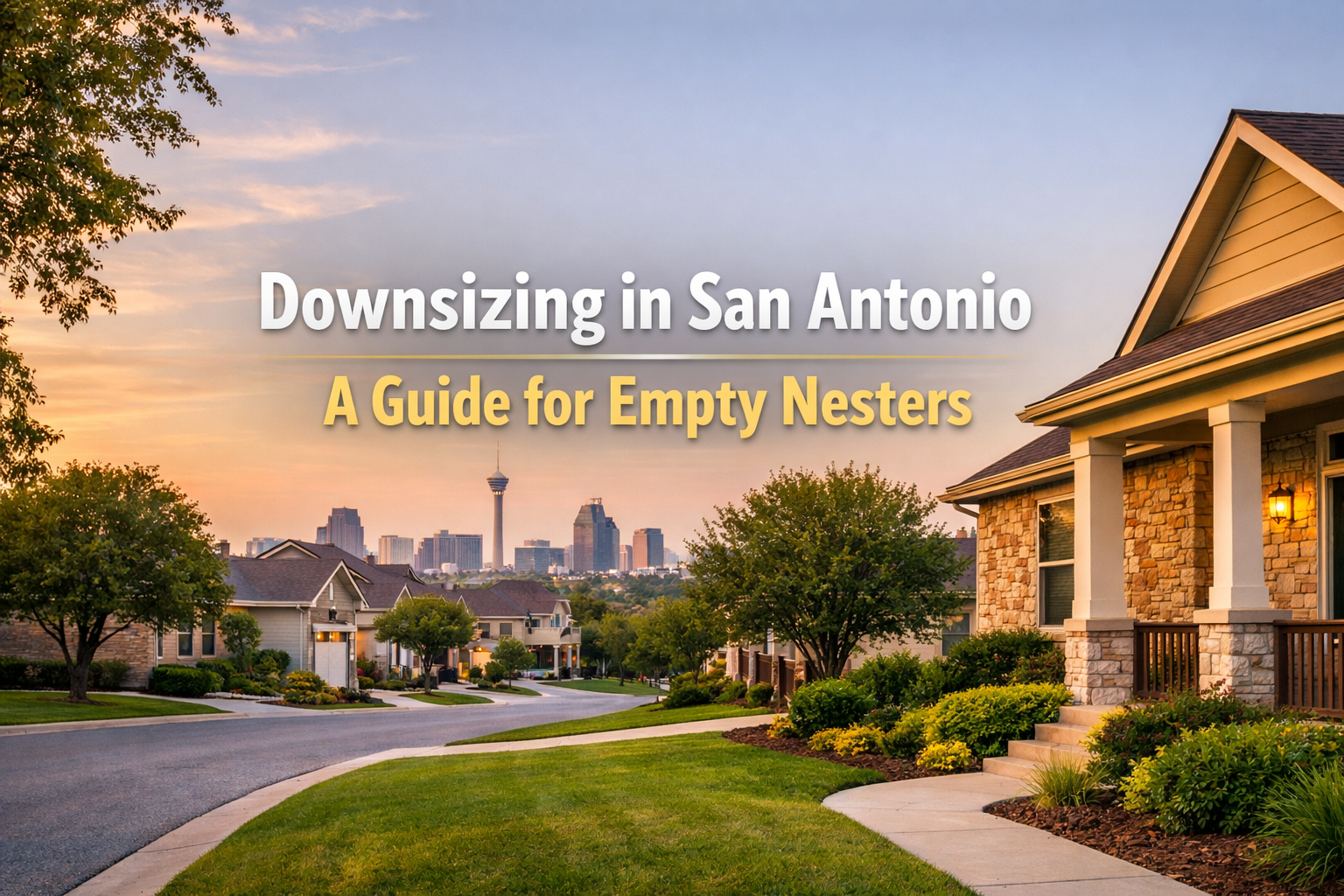
Downsizing in San Antonio: A Guide for Empty Nesters and Homeowners Ready for Less Space
The home that perfectly fit a growing family often feels different when circumstances change. Children leave for college, careers, and families of their own. Retirement arrives, shifting priorities from school districts and space to simplicity and accessibility. The stairs that once seemed minor become daily challenges. The yard that provided endless summer memories now demands weekend maintenance that competes with travel plans and grandchildren visits.
Downsizing represents more than moving to a smaller home. It offers an opportunity to realign living space with current lifestyle, reduce maintenance burdens, potentially free up equity for retirement goals, and create environments that support this chapter of life rather than echoing the previous one.
For San Antonio homeowners considering downsizing, understanding when the time is right, how to approach selling a larger home, and what options exist for the next chapter helps transform an emotionally complex decision into a manageable and ultimately rewarding transition.
Why Do Homeowners Choose to Downsize?
Multiple motivations drive downsizing decisions. Understanding personal reasons helps clarify timing and priorities for the transition.
Lifestyle Alignment:
Homes that accommodated active families with children often contain space that empty nesters rarely use. Formal dining rooms host holiday gatherings once yearly. Spare bedrooms collect storage rather than guests. Backyards designed for play equipment sit largely untouched.
Downsizing allows homeowners to match living space with actual use. Smaller homes concentrate living into spaces that see daily activity, eliminating the burden of maintaining rooms that serve no practical purpose.
Maintenance Reduction:
Larger homes and yards demand ongoing attention. Roofs cover more square footage. HVAC systems condition more space. Landscaping requires more time, effort, and expense. Every system, surface, and feature multiplies maintenance requirements.
For homeowners whose interests, abilities, or schedules no longer accommodate extensive home maintenance, smaller properties reduce these demands. Some downsizers specifically seek properties with minimal yards, HOA maintained exteriors, or newer construction requiring less immediate attention.
Financial Considerations:
Homes appreciated significantly over time for many long term San Antonio homeowners. Downsizing can convert that accumulated equity into liquid assets supporting retirement, travel, healthcare planning, or generational wealth transfer.
Financial motivations include:
- Reducing monthly housing expenses including mortgage, taxes, insurance, and utilities
- Accessing equity accumulated over years of ownership
- Eliminating mortgage debt before or during retirement
- Freeing capital for investment, experiences, or family support
- Reducing property tax burden through lower valued properties
Accessibility and Aging in Place:
Homes designed for younger families often present challenges as mobility changes. Multi story layouts, high maintenance requirements, and designs that assume physical capability may not serve aging homeowners well.
Downsizing provides opportunity to select properties with single story layouts, wider doorways, accessible bathrooms, and other features supporting comfortable aging. Planning ahead while options remain maximizes choice and control.
Life Transitions:
Divorce, death of a spouse, retirement, or health changes sometimes necessitate housing transitions. While emotionally difficult, these circumstances often make continuing in larger homes impractical or undesirable.
Downsizing during transitions allows fresh starts in environments without associations to previous circumstances while right sizing for individual rather than household needs.
When Is the Right Time to Downsize?
Timing downsizing decisions involves balancing multiple factors including market conditions, personal readiness, and practical circumstances.
Signs the Time May Be Right:
- Unused rooms accumulate storage rather than serving living purposes
- Maintenance feels burdensome rather than satisfying
- Utility bills for conditioning rarely used spaces seem wasteful
- Stairs or property layout creates daily inconvenience or concern
- Financial goals would benefit from accessing accumulated equity
- Lifestyle desires conflict with current home demands
- Future health or mobility concerns suggest proactive planning
Market Timing Considerations:
Favorable selling conditions help maximize proceeds from larger homes. Strong buyer demand, limited inventory, and appreciating values support downsizers seeking optimal returns.
However, downsizers simultaneously become buyers, meaning market conditions affect both sides of the transaction. Hot seller's markets that maximize sale proceeds also create competition for desirable smaller properties.
Focusing on personal readiness rather than attempting to time markets perfectly often produces better outcomes. Markets fluctuate, but the benefits of right sized living compound over time regardless of exact timing.
Planning Horizons:
Proactive downsizing while fully able to manage transitions provides more options than waiting until circumstances force decisions. Homeowners who downsize on their own timelines choose their next homes deliberately rather than accepting whatever becomes available under pressure.
Beginning the exploration process months or even years before anticipated moves allows thorough preparation, gradual decluttering, and thoughtful selection without rushed decisions.
What Challenges Do Downsizers Face When Selling?
Selling larger family homes presents specific challenges that differ from typical transactions.
Accumulated Possessions:
Decades of family life generate possessions that fill available space. Downsizing requires decisions about furniture, belongings, collections, and sentimental items that simply will not fit in smaller homes.
Approaching decluttering systematically over months rather than weeks reduces overwhelm. Starting with obviously disposable items builds momentum before tackling emotionally significant decisions. Professional organizers and estate sale services can assist when the volume feels unmanageable.
Deferred Maintenance:
Long term homeowners sometimes defer maintenance on items they have learned to live with. Carpet worn along traffic paths, dated fixtures, aging appliances, and accumulated minor repairs may not bother current residents but concern potential buyers.
Pre listing preparation should address deferred items that affect buyer perception or inspection findings. Strategic improvements enhance marketability without over investing in a home about to sell.
Emotional Attachment:
Homes where families grew hold memories that complicate objective decision making. Every room contains associations. Selling feels like closing chapters as much as relocating.
Acknowledging emotional dimensions while maintaining focus on practical goals helps navigate this challenge. The memories remain regardless of who owns the property. New owners will create their own memories in spaces that served their purpose for the previous family.
Pricing Family Homes:
Long term owners sometimes overvalue homes based on personal significance rather than market reality. Updates considered modern when installed decades ago may now appear dated. Features that served family needs may not appeal to current buyers.
Professional pricing analysis based on comparable sales provides objective foundation for listing decisions. Understanding how buyers perceive the property helps set realistic expectations.
What Housing Options Should Downsizers Consider?
San Antonio offers diverse options for downsizers seeking right sized living.
Single Story Patio Homes:
Patio homes provide single level living with reduced lot maintenance. Often found in communities with HOA maintained common areas, these properties offer house like living with condominium like convenience. Many feature two bedrooms plus studies, attached garages, and private outdoor spaces.
Low Maintenance Communities:
Master planned communities targeting active adults or empty nesters often include exterior maintenance, landscaping, and amenity access in HOA fees. These communities reduce homeowner responsibilities while providing social opportunities and recreational facilities.
Condominiums and Townhomes:
Condominium living eliminates virtually all exterior maintenance while providing secure, lock and leave convenience. Downtown and urban condos offer walkable lifestyle access, while suburban options may provide more space and parking.
Townhomes bridge single family and condominium living, often providing attached garages and private entries with reduced maintenance compared to detached homes.
Smaller Single Family Homes:
Some downsizers prefer traditional single family homes in smaller footprints. Older neighborhoods often contain modest homes on manageable lots. Newer construction includes smaller floor plans appealing to empty nesters and first time buyers alike.
New Construction Options:
Builders increasingly design floor plans targeting downsizers. New construction offers modern layouts, energy efficiency, and warranty coverage appealing to those leaving older larger homes. Single story plans with primary suites on main levels address accessibility preferences.
Geographic Considerations:
Downsizing creates opportunity to reconsider location. Proximity to children and grandchildren, healthcare facilities, airports for travel, or desired amenities may shift priorities compared to school district focused previous decisions.
San Antonio area communities including Boerne, Schertz, and Cibolo each offer distinct character and options for downsizers evaluating location changes.
How Should Downsizers Approach the Selling Process?
Selling larger family homes requires strategic preparation and realistic expectations.
Start With Professional Consultation:
Meeting with an experienced agent before beginning preparation provides direction. Agents evaluate properties, suggest improvements with meaningful return potential, and establish realistic pricing expectations based on current market conditions.
Pre listing consultations help homeowners understand buyer perspectives on their properties, identifying strengths to emphasize and concerns to address.
Declutter Before Listing:
Homes filled with decades of accumulation photograph poorly and show even worse. Removing excess furniture, personal items, and clutter transforms spaces from crowded to inviting.
Decluttering before photography and showings is essential, but spreading the process over weeks or months reduces stress. Begin with less emotional areas before tackling sentimental items.
Address Strategic Updates:
Not every improvement returns its cost at sale. Focus on items that affect buyer willingness to make offers rather than personal preferences. Fresh paint, clean carpets or updated flooring, functional fixtures, and addressed inspection concerns typically provide better returns than major renovations.
Price Based on Market Data:
What a home meant to the family has no bearing on what buyers will pay. Pricing strategy must reflect current comparable sales, competitive listings, and property condition regardless of emotional significance.
Overpricing based on attachment leads to extended market time, eventual reductions, and often lower final prices than accurate initial pricing would have achieved.
Prepare for Showings:
Keeping a lived in home show ready requires ongoing effort. Developing routines that maintain presentation standards reduces stress when showing requests arrive. Being flexible about showing access maximizes buyer exposure.
How Can Downsizers Coordinate Selling and Buying?
Like move up buyers, downsizers must navigate simultaneous transactions with different challenges.
Sell First Approach:
Selling before buying provides certainty about available funds and eliminates contingent offer complications. This approach works well when temporary housing options exist and when buyers are not rushed to find next homes.
Advantages include knowing exact proceeds, avoiding two mortgages, and presenting non contingent offers on purchases. Challenges include potential temporary housing, storing possessions, and purchasing pressure if market conditions change.
Buy First Approach:
Purchasing before selling works for downsizers who can qualify for new mortgages while still owning current homes. This approach allows selecting ideal next homes without time pressure and permits moving directly rather than through temporary housing.
Financial qualification, carrying cost ability, and market confidence in selling the current home determine whether this approach is practical.
Contingent Approach:
Making purchase offers contingent on selling current homes reduces risk but weakens offer competitiveness. In active markets, contingent offers may lose to non contingent competition.
Getting the current home under contract before making offers significantly strengthens contingent offer positions by demonstrating the contingency will likely resolve.
Leaseback Arrangements:
Negotiating post closing occupancy in the sold home provides time to complete purchases without temporary housing. Remaining briefly as renters after selling allows proceeds to fund the next purchase while maintaining housing continuity.
What Financial Considerations Affect Downsizing Decisions?
Beyond emotional factors, financial implications deserve careful analysis.
Capital Gains Considerations:
Federal tax law excludes up to $250,000 in capital gains for single filers and $500,000 for married couples filing jointly on primary residence sales, subject to ownership and use requirements. Long term San Antonio homeowners with significant appreciation should consult tax professionals to understand implications.
Properties with gains exceeding exclusion amounts may face tax consequences affecting net proceeds. Timing, filing status, and specific circumstances influence outcomes requiring professional guidance.
Proceeds Allocation:
Downsizing often generates significant proceeds after purchasing smaller replacement homes. Planning how to allocate these funds supports long term goals.
Options include:
- Paying cash for the replacement home, eliminating mortgage payments
- Investing proceeds for retirement income
- Gifting to children or grandchildren
- Funding travel, experiences, or lifestyle goals
- Establishing reserves for healthcare or long term care
Ongoing Cost Comparisons:
Smaller homes typically cost less to maintain, insure, heat, and cool. However, some downsizing options like HOA communities carry monthly fees that offset savings. Comparing total housing costs rather than just purchase prices provides accurate financial pictures.
Mortgage Considerations:
Downsizers purchasing smaller homes may choose to finance portions of their purchases even with ability to pay cash. Maintaining liquidity, preserving investment portfolios, or taking advantage of favorable rates sometimes makes financing preferable to depleting assets.
Qualification for mortgages changes in retirement when employment income decreases or ends. Asset based qualification, retirement income documentation, and specific lender programs serve retired borrowers.
What Should Downsizers Look for in Their Next Home?
Thoughtful requirements development helps downsizers find homes serving their needs for years to come.
Current and Future Accessibility:
Selecting homes with accessibility features supports comfortable aging even if not immediately necessary. Single story layouts, wider doorways, walk in showers, and minimal steps provide flexibility as circumstances change.
Retrofitting homes for accessibility costs significantly more than selecting properties with features already in place.
Right Sized Space:
Downsizing means reducing space, but determining appropriate size requires thoughtful analysis. How many bedrooms accommodate typical needs? Is dedicated office space necessary? Do hobbies require particular accommodations?
Overshooting downsizing by selecting homes too small creates different problems than spaces too large. Visiting properties and visualizing actual use helps calibrate appropriate size.
Maintenance Expectations:
Understanding what maintenance the property requires prevents surprises. Yards still need attention even if smaller. Older homes require ongoing upkeep. HOA communities may restrict modifications or impose rules.
Matching maintenance expectations with willingness and ability to perform or pay for work ensures sustainable arrangements.
Community and Lifestyle:
Location affects daily life significantly. Proximity to family, healthcare, shopping, and activities deserves consideration. Community character, neighbor demographics, and social opportunities may matter more in retirement than during working years.
Quality Over Quantity:
Downsizing budgets often allow higher quality in smaller spaces. Upgraded finishes, premium locations, and enhanced features become accessible when not paying for excess square footage. Focusing on quality of space rather than quantity often increases satisfaction.
Expert Insight from Tami Price, REALTOR®
"Downsizing is as much an emotional journey as a real estate transaction. I've helped many long term San Antonio homeowners transition from family homes where they raised children to properties that fit their current lives. The key is acknowledging that selling a home full of memories feels significant while focusing on the exciting opportunities the next chapter brings. Right sizing your living space can be incredibly liberating once you move through the transition."
Tami Price, REALTOR®, Broker Associate, has guided downsizers through successful transitions for nearly two decades, combining patient support for the emotional dimensions with professional expertise in selling larger homes and finding ideal replacement properties.
Three Key Takeaways for San Antonio Downsizers
- Downsizing offers lifestyle benefits beyond financial considerations. Reduced maintenance, right sized spaces, and properties designed for current needs improve daily living regardless of equity accessed.
- Preparation makes transitions smoother. Beginning decluttering early, addressing deferred maintenance strategically, and pricing realistically based on market data positions homes for successful sales.
- Thoughtful next home selection supports long term satisfaction. Considering accessibility, maintenance requirements, and lifestyle factors ensures replacement properties serve well for years rather than requiring another transition.
Frequently Asked Questions
Q: How do I decide what to keep when downsizing?
A: Start by measuring spaces in potential new homes to understand what furniture actually fits. Keep items you use regularly and those with genuine sentimental significance. Be honest about whether you will actually use stored items or if they simply occupy space. Professional organizers can help work through decisions systematically. Give yourself permission to let go of things that served their purpose but no longer fit your life.
Q: Will I regret downsizing?
A: Research suggests most downsizers report satisfaction with their decisions, particularly after adjustment periods. Regret more commonly stems from selecting replacement homes too small or in wrong locations than from downsizing itself. Thoughtful planning, realistic space assessment, and careful next home selection minimize regret risk. Temporary feelings of loss are normal but typically resolve as benefits of right sized living become apparent.
Q: How long does the downsizing process typically take?
A: Timelines vary significantly based on market conditions, property characteristics, and personal pace. Allowing six months to a year from initial decision through completed transition provides comfortable pacing for decluttering, preparing to sell, marketing, purchasing, and moving. Rushed timelines increase stress and may compromise outcomes. Starting the exploration process well before desired move dates preserves options.
Q: Should I downsize before or after retiring?
A: Both approaches have merits. Downsizing before retirement while still employed may ease qualification for any needed financing and allows focusing retirement on enjoying the new situation rather than managing a transition. Waiting until retirement provides clarity about schedule flexibility, travel plans, and lifestyle desires that inform housing choices. Personal circumstances including health, financial situation, and family considerations influence optimal timing.
Q: What if my spouse and I disagree about downsizing?
A: Differing readiness for major life transitions is common. Open conversation about concerns, priorities, and fears helps identify specific issues rather than general resistance. Exploring options together without commitment can build comfort. Sometimes one spouse needs more time to process the emotional dimensions. Professional guidance from agents experienced with downsizers can help couples work through differing perspectives constructively.
Q: How do I handle family heirlooms and sentimental items?
A: Discuss significant items with family members who might want them before donating or discarding. Take photographs of items you cannot keep to preserve memories without the physical objects. Consider whether the item itself or the memory it represents matters most. Give yourself permission to keep truly meaningful items even if they seem impractical. Some downsizers find that passing heirlooms to the next generation while living provides more satisfaction than bequeathing them later.
The Bottom Line
Downsizing represents an opportunity to align living space with current lifestyle, reduce maintenance burdens, and potentially access equity accumulated over years of homeownership. While emotionally complex, the transition from larger family homes to right sized properties offers benefits that compound over time.
Success requires acknowledging both practical and emotional dimensions. Strategic preparation, realistic pricing, thoughtful next home selection, and patience with the process contribute to positive outcomes. Working with professionals experienced in helping downsizers navigate these transitions provides support through each phase.
For San Antonio homeowners considering whether the time has come to downsize, beginning the exploration process with professional consultation clarifies options and timelines without obligation.

Contact Tami Price, REALTOR®
Tami Price, REALTOR®, Broker Associate, and USAF Veteran, has helped numerous San Antonio homeowners successfully downsize from larger family homes to properties fitting their current lifestyles. With nearly two decades of experience and more than 650 five-star reviews and recommendations across platforms including Google and Real Satisfied, Tami provides patient guidance through both the practical and emotional aspects of downsizing transitions.
From initial consultation through selling, buying, and closing, Tami offers experienced support tailored to downsizer needs.
Tami Price, REALTOR®, Broker Associate
📞 210 620 6681
Tami Price's Specialties
- Downsizing assistance for empty nesters and retirees
- Home sellers in San Antonio and surrounding areas
- Move up buyers and transition coordination
- First time buyers including adult children of downsizers
- Military relocation and veteran services
- New construction options for downsizers
Disclaimer
This blog provides general educational information about downsizing in San Antonio and does not constitute legal, financial, or tax advice. Individual circumstances vary significantly and affect outcomes. Tax implications, financial planning, and estate considerations require consultation with qualified professionals. Real estate markets change and affect timing decisions. Readers should consult with licensed real estate agents, tax advisors, financial planners, and attorneys regarding their specific situations. Tami Price, REALTOR®, is licensed in the State of Texas.
Categories
- All Blogs (933)
- Home Buying (14)
- Neighborhood Guides (44)
- 10 Incentive and Rate Buydown Questions (1)
- 10 Military Neighborhood (1)
- 10 Mistakes Sellers Make (1)
- 10 Strategies to Coordinate a Same Day Close (1)
- 12 Lifestyle Questions to Move In (1)
- 12 PCS What Ifs (1)
- 12 Photos and Marketing Assets (1)
- 13 PCS Hunting Trip Tips (1)
- 15 Red Flags Touring Home in San Antonio (1)
- 2026 Market (1)
- 30 days after closing your home (1)
- 7 Offer Terms Beyond Price (1)
- 7 VA Specific Questions (1)
- 78015 Ranked One (1)
- 8 Bridge (1)
- 8 Myths Buyers Believe about Down Payments (1)
- 8 Reasons VA Buyers Love New Construction (1)
- 9 Mistakes Move Up Buyers Make (1)
- 9 Questions to Decide If You Keep Your PCS Home (1)
- 9 Timeline Questions Every Buyer Need to Ask (1)
- 9 Warranty Questions to Ask (1)
- 9 Ways to Attract VA & Military Buyers (1)
- About Tami Price (6)
- Active Adult Homes (1)
- Affordable Communities (2)
- Affordable Housing & Community Development (5)
- Agent Qualifications and Credentials (1)
- Agent Qualifications and Experience (1)
- Agent Recognition (3)
- Agent Selection (1)
- AI and Real Estate Tools (1)
- Alamo Heights (5)
- Alamo Heights ISD (1)
- Alamo Heights Real Estate (1)
- Alamo Ranch (3)
- Amenities in Helotes, Texas (3)
- Apartment Market (1)
- Appraisals (1)
- Arts and Culture (1)
- Awards and Recognition (7)
- Balcones Creek (1)
- Best Neighborhoods to Live in Cibolo, TX (3)
- Best Neighborhoods to Live in San Antonio (16)
- Best Places to Live in Leon Valley: A Neighborhood Guide (1)
- Best Places to Live in Northeast Inner Loop: A Neighborhood Guide (1)
- Bexar County Property Tax (1)
- Bexar County Real Estate (3)
- Boerne Home Sellers (1)
- Boerne Neighborhoods (2)
- Boerne Texas (9)
- Broadway Corridor Development (1)
- Build-to-Rent Communities (1)
- Builder Contracts & Warranties (3)
- Builder Incentives (1)
- Builder Warranties (1)
- Buyer (97)
- Buyer Activity San Antonio (1)
- Buyer and Seller Guidance (4)
- Buyer Due Diligence (1)
- Buyer Education (46)
- Buyer Guide (9)
- Buyer Guides (7)
- Buyer Protection Strategies (1)
- Buyer Representation (1)
- Buyer Representation Expertise (1)
- Buyer Resources (88)
- Buyer Strategy (2)
- Buyers (13)
- Buyers Agent (1)
- Buying a Foreclosed Home in San Antonio (10)
- Buying a Home (3)
- Buying a Home in San Antonio (6)
- Buying Near JBSA (1)
- Buying Timeline (1)
- Buying vs Renting (1)
- Castroville, TX (8)
- Central San Antonio (1)
- Central San Antonio Development (2)
- Central Texas Growth (1)
- Choosing a Real Estate Agent (1)
- Choosing an Agent (1)
- Cibolo Communities (1)
- Cibolo Home Sellers (1)
- Cibolo TX (15)
- Client Reviews and Testimonials (1)
- Client Satisfaction (1)
- Client Stories (1)
- Client Testimonial (4)
- Clients review (4)
- Cobblestone (1)
- Comal County (1)
- Commercial & Retail Development (27)
- Commercial Development (13)
- Commercial Development Impact on Home Values (1)
- Commercial Real Estate (1)
- Community (1)
- Community Amenities (2)
- Community Development (23)
- Community Development and Real Estate (3)
- Community Events & Development (1)
- Community Infrastructure (1)
- Community Investment Impact (2)
- Community Landmarks (1)
- Community News (4)
- Community Planning (2)
- Community Revitalization (1)
- Community Spotlights (1)
- Commuter Neighborhoods (1)
- Cons of Living in Helotes, TX (4)
- Conservation Communities (1)
- Contingency Questions (1)
- Converse Home Sellers (1)
- Converse Homes For Sale (3)
- Converse Real Estate (1)
- Converse TX (10)
- Converse TX Real Estate (1)
- Cost of Living Guides (1)
- Cost of Living in San Antonio TX (25)
- CPS Energy Programs (1)
- Custom Homes (5)
- Davis Ranch (1)
- Days on Market (1)
- Deco District San Antonio (1)
- Denver Heights (1)
- Down Payment Assistance (1)
- Downtown Boerne (1)
- Downtown Development (3)
- Downtown Living (1)
- Downtown Revitalization (14)
- Downtown San Antonio (2)
- Downtown San Antonio Real Estate (5)
- Downtown San Antonio Revitalization (1)
- Dual Military (1)
- East Side Living (1)
- East Side Neighborhoods (1)
- East Side San Antonio (4)
- Economic Development (3)
- Economic Growth & Industry (1)
- Education, Texas Hill Country (1)
- Emerald Pointe (1)
- Employment (1)
- Employment Corridors (1)
- Encino Forest (1)
- Entertainment Economy (1)
- Equity and Pricing Strategy (2)
- Equity Q&A (1)
- Established Communities (3)
- Events in San Antonio (207)
- Expert Advice from Tami Price, Realtor® (10)
- Fair Oak Ranch (1)
- Family Activities (2)
- Family Homes (3)
- Family Living in San Antonio (1)
- FAQ (1)
- Far Northwest San Antonio (1)
- Far West San Antonio (1)
- Far Westside Real Estate (4)
- Fastest Growing Zip Codes in America (1)
- Featured Homes for Sale (2)
- Featured Properties (1)
- Financial Planning (10)
- Financing Strategy (1)
- First Time Buyers (23)
- First Time Sellers (1)
- First-Time Buyers (6)
- First-Time Homebuyer Resources (4)
- First-Time Homebuyer Tips (2)
- First-Time Homebuyers (6)
- First-Time Investors (1)
- Fort Sam Houston (3)
- Fort Sam Houston Real Estate (1)
- Fort Sam Houston, TX (2)
- Fox Grove (1)
- FSBO vs Agent Representation (1)
- Future Rental (1)
- Gated Communities (5)
- Golf Communities (1)
- Great Northwest (1)
- Greater San Antonio Housing Trends (2)
- Greater San Antonio Real Estate (5)
- Green Home Upgrades (1)
- Growth and Development (11)
- Healthcare (1)
- HELOC (1)
- Helotes Home Sellers (1)
- Highway 151 Corridor Growth (1)
- Hill Country Business (1)
- Hill Country Communities (2)
- Hill Country Development (3)
- Hill Country Homes for Sale (1)
- Hill Country Living (3)
- Hill Country Market Updates (1)
- Hill Country Real Estate (4)
- Hill Country Retreat (1)
- Historic Districts (5)
- Historic Neighborhoods (4)
- Historic Preservation (2)
- Holiday Attractions (1)
- Holiday Guide (1)
- Home Buying (7)
- Home Buying Education (3)
- Home Buying Guide (7)
- Home Buying Process (8)
- Home Buying Strategy (2)
- Home Buying Tips (6)
- Home Energy Efficiency San Antonio (4)
- Home Financing (2)
- Home Improvement ROI (1)
- Home Inspections (1)
- Home Preparation (2)
- Home Pricing Strategy (14)
- Home Renovation for Resale (1)
- Home Selling (10)
- Home Selling Guide (11)
- Home Selling Strategies (3)
- Home Selling Strategy (3)
- Home Selling Tips (22)
- Home Staging and Updates (2)
- Home Values (2)
- Homebuyer Education (15)
- Homebuyer Resources (1)
- Homebuying Guide (1)
- Homebuying Tips (3)
- Homeowner (36)
- Homeowner Tax Benefits (1)
- Homeownership Costs (1)
- Homes for Sale (2)
- Homes for sale near Lackland AFB (4)
- Homes Near Military Bases (1)
- Homestead amenities (1)
- Horizon Pointe (1)
- House Hunting Guide (1)
- Housing (1)
- Housing Community Development (1)
- Housing Development (2)
- Housing Market Updates (3)
- How to Buy a House in San Antonio TX (48)
- Huebner Oaks shopping center (1)
- Hunters Ranch (1)
- Hybrid (1)
- I-10 Corridor (1)
- I-35 Corridor (1)
- In Person (1)
- Incorporated Cities (6)
- Industrial Investment Impact (1)
- Industry News (2)
- Industry Recognition (1)
- Infrastructure & Growth Projects (26)
- Infrastructure and Sustainability (1)
- Infrastructure Development (1)
- Infrastructure Investment (1)
- Infrastructure Updates (2)
- Interest Rates (2)
- Invest in San Antonio (46)
- Investment Opportunities (3)
- Investment Property San Antonio (4)
- JBSA (9)
- JBSA Housing (11)
- JBSA Real Estate (4)
- JBSA Resources (7)
- Joint Base San Antonio (5)
- Joint Base San Antonio Housing (1)
- Judson ISD (2)
- Kendall County (1)
- La Cantera Retail Development (1)
- Lackland AFB (7)
- Lackland AFB Housing (1)
- Land Conservation (1)
- Land Use Planning (1)
- Lera MLS (15)
- Lifestyle & Community Growth (18)
- Lifestyle & Local Growth (12)
- Lifestyle Amenities (1)
- Lifestyle Communities (1)
- Listing Preparation (1)
- Listing Strategy (1)
- Live Oak (1)
- Living in San Antonio, TX (52)
- Living Near Randolph AFB (7)
- Loan Programs (1)
- Local Attractions (3)
- Local Business (1)
- Local Business & Development (9)
- Local Business & Economy (3)
- Local Business Spotlight (20)
- Local Business Support (5)
- Local Development (4)
- Local Development News (9)
- Local Market Insights (5)
- Local News (2)
- Local News Around San Antonio (2)
- Local Policy Changes (1)
- Local Real Estate News (1)
- Loop 1604 Corridor Growth (2)
- Loop 410 Corridor Development (1)
- Luxury Communities (3)
- Luxury Homes (2)
- Luxury Real Estate (1)
- Luxury Retail San Antonio (1)
- MacArthur Park (1)
- Major Developments (2)
- Making Offers on Homes (1)
- Market Analysis (26)
- Market Conditions (47)
- Market Expertise (1)
- Market Insights (5)
- Market Strategy (1)
- Market Timing (2)
- Market Trends (10)
- Market Trends & Insights (2)
- Market Update (17)
- Market Update 2026 (1)
- Market Updates (22)
- Master Planned Communities (12)
- Medical Center Area Real Estate (1)
- Medina Valley ISD (2)
- Midtown Living (1)
- Military & Economic Impact (3)
- Military Buyers (3)
- Military Communities (1)
- Military Families (1)
- Military Family Resources (1)
- Military Heritage (1)
- Military Homebuying (3)
- Military Homeownership (1)
- Military Housing (3)
- Military Housing Market in Texas (16)
- Military Life in San Antonio (2)
- Military Neighborhoods (1)
- Military PCS Relocations (3)
- Military Real Estate (2)
- Military Relocation (97)
- Military Relocation & VA Loans (10)
- Military Relocation San Antonio (4)
- Military Relocation Services (3)
- Military Relocation to San Antonio (50)
- Military Relocations (20)
- Military Relocations & VA Home Loans (5)
- Mixed-Income Housing (1)
- MLS Accuracy & Data Transparency (1)
- Mortgage Programs (1)
- Mothers Day in San Antonio (1)
- Move to Boerne TX (18)
- Move to Castroville TX (11)
- Move to Converse TX (16)
- Move to New Braunfels (1)
- Move to North San Antonio (19)
- Move to San Antonio TX (73)
- Move to Selma TX (19)
- Move to Shertz TX (13)
- Move to Texas (53)
- Move Up Buyer Resources (1)
- Move Up Buyers (22)
- Move-In Ready Homes (3)
- Move-In Ready Homes San Antonio (2)
- Move-Up Buyers (2)
- Moving to Helotes, TX (17)
- Moving to San Antonio (69)
- MUD Taxes (1)
- Natalia Homes For Sale (1)
- Near East Side Living (1)
- Negotiation Strategy (2)
- Neighborhood Amenities (1)
- Neighborhood Development (1)
- Neighborhood Guides (7)
- Neighborhood Investment (1)
- Neighborhood News (2)
- Neighborhood Revitalization (2)
- Neighborhood Spotlights (12)
- Neighborhood Updates (1)
- Neighborhoods near Randolph AFB (12)
- New Braunfels (6)
- New Braunfels Homes For Sale (1)
- New Braunfels News (3)
- New Braunfels Real Estate (3)
- New Businesses (2)
- New Construction (60)
- New Construction Communities (1)
- New Construction Homes (13)
- New Construction Homes San Antonio (5)
- New Construction vs Resale (1)
- New Construction Without Customization (1)
- New Construction Without the Wait (1)
- New Contruction Cost (1)
- New Development (3)
- New Listing (19)
- New Restaurants (3)
- News (211)
- News & updates (213)
- No HOA Homes (1)
- North Central San Antonio (5)
- North East ISD (4)
- North San Antonio (9)
- North San Antonio Real Estate (3)
- North Side Neighborhoods (1)
- North Side San Antonio Development (2)
- Northeast Inner Loop (1)
- Northeast Inner Loop Neighborhoods (1)
- Northeast San Antonio (3)
- Northside ISD (5)
- Northwest San Antonio (9)
- Northwest San Antonio Development (1)
- Northwest San Antonio Growth (1)
- Northwest San Antonio Real Estate (3)
- Northwood (1)
- Olympia Hills (1)
- One-Story Homes (1)
- Outdoor Living (1)
- Parks and Recreation (2)
- PCS and JBSA (2)
- PCS Guide (4)
- PCS Moves (12)
- PCS Moves to Joint Base San Antonio (4)
- PCS Planning (15)
- PCS Randolph AFB (17)
- PCS Relocation (1)
- PCS Resources (6)
- PCS San Antonio (46)
- PCS to San Antonio (42)
- Pearl District Area Real Estate (2)
- PID Assessments (1)
- Pinon Creek (1)
- Pipe Creek (1)
- Places to Eat Near Randolph AFB (1)
- Pool Homes (1)
- Pre Approval (1)
- Pre-Listing Preparation (2)
- Pre-Listing Process (1)
- Prescott Oaks (1)
- Pricing and Marketing Strategy (3)
- Professional Awards and Achievements (2)
- Professional Real Estate Representation (1)
- Property Tax Exemptions Texas (1)
- Property Value Enhancement (1)
- pros and cons living in Converse TX (3)
- Pros and Cons Living in Selma TX (6)
- Pros and Cons of Living in Castroville, TX (4)
- Pros and Cons of Living in San Antonio (33)
- PT500 List (1)
- Purchase Negotiation (1)
- Quality of Life (1)
- Quick Close Real Estate (1)
- Randolph AFB Neighborhoods (2)
- Real Estate (1)
- Real Estate Advice (1)
- Real Estate Agent Recognition (6)
- Real Estate Agent Selection (2)
- Real Estate Agent Value (1)
- Real Estate Consultation (1)
- Real Estate Finance (1)
- Real Estate Financing (1)
- Real Estate Impact (1)
- Real Estate Investment San Antonio (2)
- Real Estate Legal Issues (1)
- Real Estate Market Insights (2)
- Real Estate Market Trends (5)
- Real Estate Professional Designations (1)
- Real Estate Strategy (1)
- Real Estate Technology & Trends (2)
- Real Estate Tips (1)
- Real Estate Tips and Guides (2)
- Real Estate Trends (4)
- RealTrends Verified (1)
- Regional Development (1)
- Regional Real Estate (2)
- Relocating to San Antonio (2)
- Relocation (4)
- Relocation Resources (2)
- Relocation to San Antonio (55)
- Remote Homebuying (1)
- Rental Housing (1)
- Rental Property (1)
- Rental Strategy (1)
- Resale Properties (1)
- Retail Development (2)
- Retire in Boerne TX (11)
- Retire in San Antonio (37)
- Retirement Communities (1)
- Reviews and Recognition (1)
- Rockwall Ranch (1)
- Rural Living (2)
- SABOR (28)
- San Antonio Area Listings (1)
- San Antonio Business Growth (1)
- San Antonio Buyer Resources (2)
- San Antonio Communities (3)
- San Antonio Community Events (1)
- San Antonio Community News (1)
- San Antonio Data Center Development (1)
- San Antonio Development (5)
- San Antonio Development & East Side Real Estate (1)
- San Antonio Dining and Lifestyle (3)
- San Antonio East Side Development (1)
- San Antonio Employment Growth (1)
- San Antonio Food & Community Development (2)
- San Antonio Growth (8)
- San Antonio Home Buying and Selling (2)
- San Antonio Home Buying Guide (5)
- San Antonio Home Improvement (2)
- San antonio home prices (3)
- San Antonio Home Sellers (3)
- San Antonio Homeowner Guide (1)
- San Antonio Homeowner Resources (1)
- San Antonio Homes for Sale (12)
- San Antonio Housing Market (2)
- San Antonio Housing Market & Mortgage Financing (2)
- San Antonio Housing Market Analysis (2)
- San Antonio Housing Trends & Market Analysis (4)
- San Antonio Industrial Development (1)
- San Antonio Industrial Policy (1)
- San Antonio Investment Properties (2)
- San Antonio Job Market (1)
- San Antonio Lifestyle Amenities (1)
- San Antonio Listing (1)
- San Antonio Living (1)
- San Antonio Market (3)
- San Antonio Market Updates (18)
- San Antonio Military Relocation (3)
- San Antonio Neighborhoods (67)
- San Antonio New Construction & Master-Planned Communities (4)
- San Antonio New Home Communities (1)
- San Antonio News (229)
- San Antonio North Side Development (1)
- San Antonio Parks (1)
- San Antonio Property Investment (1)
- San Antonio Property Taxes (2)
- San Antonio Real Estate (156)
- San Antonio Real Estate Agents (6)
- San Antonio Real Estate Excellence (1)
- San Antonio Real Estate Guide (6)
- San Antonio Real Estate Market (41)
- San Antonio Real Estate Market Analysis (6)
- San Antonio Real Estate News (2)
- San Antonio REALTOR Awards (1)
- San Antonio Restaurant News (2)
- San Antonio Restaurant Openings (1)
- San Antonio Seller Resources (2)
- San Antonio Sellers (1)
- San Antonio Spec Homes (1)
- San Antonio Spurs Community Programs (1)
- San Antonio Suburbs (1)
- San Antonio Transportation (2)
- San Antonio University Area Housing (1)
- San Antonio Urban Living (7)
- San Antonio West Side Development (2)
- San Antonio Zoning Policy (1)
- Scenic Loop (1)
- Schertz Home Sellers (1)
- Schertz Real Estate (1)
- Schertz, TX (13)
- School Districts (1)
- School Information (1)
- SCUCISD Schools (1)
- Secured Quick Offer (1)
- Sell Home In San Antonio TX (64)
- Seller (83)
- Seller Education (24)
- Seller Guide (4)
- Seller Guides (1)
- Seller Representation Expertise (1)
- Seller Resources (67)
- Seller Should Understand (1)
- Seller Strategy (3)
- Seller Tips (2)
- Sellers (10)
- Selling A Home in San Antonio (62)
- Selling Your San Antonio Home (3)
- Selma TX (9)
- Single-Story Homes (4)
- Smart Homes (1)
- Solar Homes (2)
- South San Antonio Real Estate (1)
- South Side Economic Growth (1)
- South Side San Antonio (1)
- Southtown (2)
- Southwest San Antonio Real Estate (1)
- Spec Homes and Inventory Homes (2)
- Spurs Arena Project Marvel (1)
- Stone Oak (2)
- Stone Oak Community News (5)
- Suburban Housing Growth (12)
- Suburban Living (2)
- Talise De Culebra (1)
- Technology Growth (3)
- Technology Sector Growth (1)
- Terrell Hills (3)
- Texas Acreage Properties (3)
- Texas Homestead Exemption (1)
- The Dominion Real Estate (1)
- The Rim Area Real Estate (1)
- Things to do in San Antonio TX (21)
- Things to do Near Randolph AFB (4)
- Time Planning (1)
- Time-Sensitive Home Buying (1)
- Timing Strategy (1)
- Tips for Buying New Construction (9)
- Tobin Hill Neighborhoods (2)
- Top Real Estate Agent in San Antonio (3)
- Tourism and Economic Development (1)
- Traders's Joe San Antonio (1)
- Transaction Coordination (1)
- Transportation Infrastructure (1)
- Two-Story Homes (2)
- Universal City (1)
- Updated Homes (2)
- Upscale Communities (1)
- Urban Communities (2)
- Urban Corridor Real Estate (1)
- Urban Development (5)
- Urban Living (3)
- Urban Neighborhoods (4)
- Urban Real Estate (1)
- Urban Renewal Projects (1)
- Urban Revitalization San Antonio (1)
- Utility Cost Reduction (1)
- UTSA Campus Development (1)
- VA Buyers (1)
- VA Home Loan Benefits (3)
- VA Loan Assumptions (3)
- VA loan benefits (27)
- VA Loan Guidance (1)
- VA Loan Home Buying Assistance (2)
- VA Loans (70)
- VA Loans and Military Benefits (3)
- VA Loans and Military Home Buying (3)
- VA Loans San Antonio (43)
- VET Benefits Living in San Antonio (3)
- Veterans Resources (3)
- Village Northwest (1)
- Virtual Buyers (1)
- Walkable Communities (1)
- week in sales (40)
- Weekly Sales Report (41)
- West San Antonio (2)
- West San Antonio Development (1)
- West San Antonio Real Estate (3)
- West San Antonio Real Estate Market (2)
- West Side Infrastructure Planning (1)
- West Side Real Estate (1)
- West Side San Antonio (2)
- Windcrest Homes for Sale (1)
Recent Posts