Lavaca: A Complete Guide to San Antonio's Oldest Working Class Neighborhood
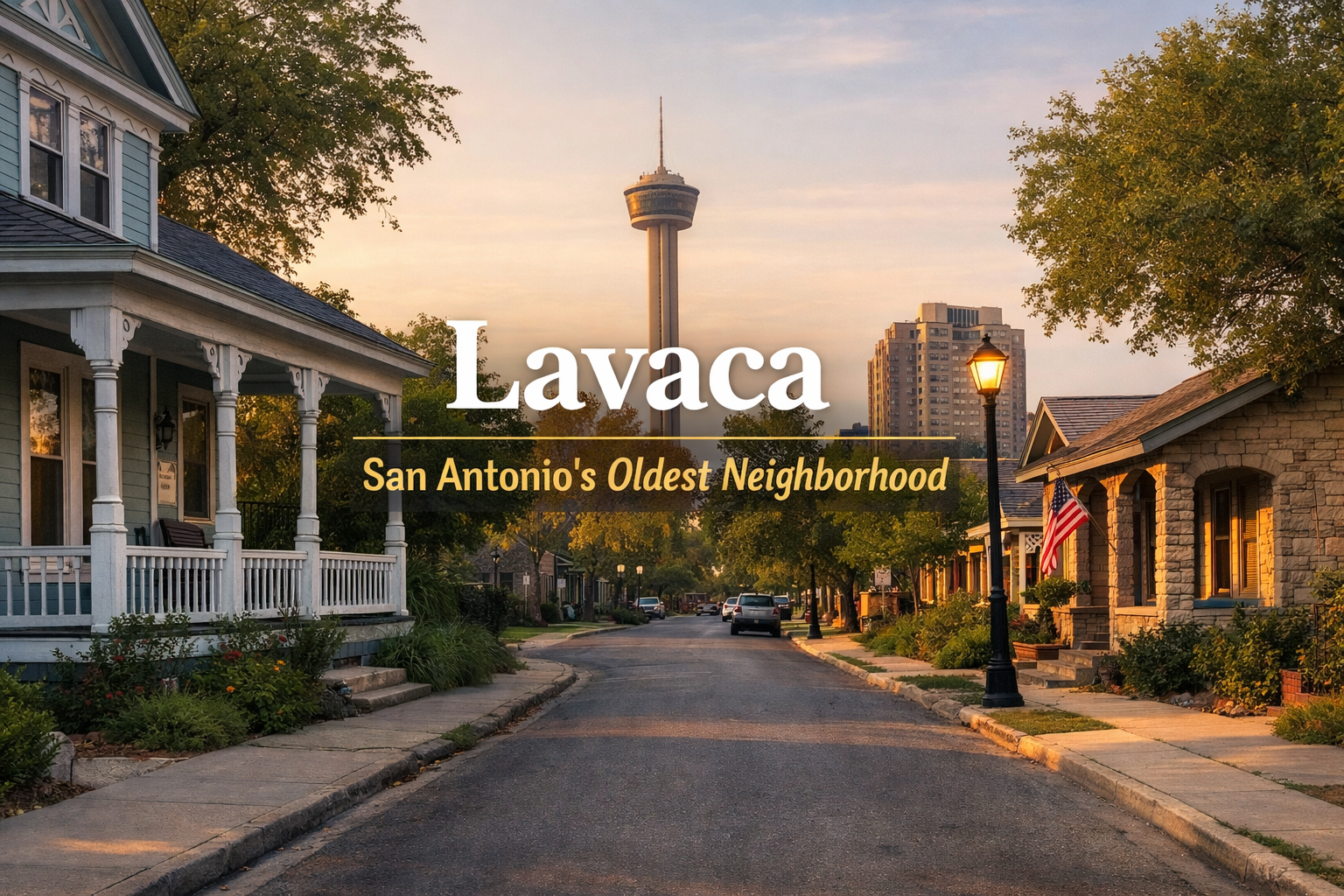
Lavaca holds a distinctive place in San Antonio's history as the city's oldest surviving residential neighborhood. Developed in the early 1870s by working class families, this intimate enclave south of downtown has preserved its 19th century character while evolving into one of San Antonio's most walkable and culturally vibrant communities. Just steps from Hemisfair Park and the King William Historic District, Lavaca offers urban living with authentic historic charm.
For those exploring homes for sale in San Antonio who value walkability, arts culture, and genuine neighborhood character, Lavaca presents opportunities found in few other urban settings. The neighborhood's designation as a historic district in 2001 protects its architectural heritage while contemporary restaurants, galleries, and entertainment venues continue to emerge along its commercial corridors.
This guide examines what buyers should know about Lavaca, from its working class origins and architectural character to the Southtown arts scene that defines the neighborhood's contemporary identity.
Why Does Lavaca Appeal to San Antonio Buyers?
Lavaca attracts buyers for specific reasons tied to its location, character, and lifestyle.
Genuine Walkability
Unlike most San Antonio neighborhoods, Lavaca offers true walkability for daily life:
- Coffee shops, restaurants, and bars within walking distance
- Grocery shopping accessible via short walks or bike rides
- River Walk connection through Roosevelt Park
- Downtown employment reachable on foot or by bike
- Art galleries, boutiques, and entertainment within the neighborhood
This pedestrian oriented lifestyle appeals to buyers seeking alternatives to car dependent suburban living.
Southtown Arts and Culture
Lavaca sits within San Antonio's designated Southtown Arts District, providing immediate access to:
- First Friday: San Antonio's longest running art walk, dating to the mid 1990s
- Blue Star Arts Complex: Contemporary art space, galleries, studios, restaurants, and breweries
- Second Saturday: Additional monthly art walk events
- A Day in Southtown: Annual community celebration
- Street murals and public art: Visible throughout the neighborhood
This arts forward identity creates a lifestyle where culture is embedded in daily experience rather than requiring special trips.
Historic Character at Urban Prices
Compared to the grand Victorian mansions of adjacent King William, Lavaca offers more accessible entry points to historic homeownership. The neighborhood's working class origins mean smaller homes at lower price points, appealing to first time buyers and those seeking urban living without King William pricing.
Downtown Proximity
Lavaca's location immediately south of Hemisfair Park places residents minutes from:
- Downtown employment centers
- The Alamo and River Walk
- La Villita Historic Arts Village
- Major highways including I-10 and I-37
- The Pearl District via surface streets
What Housing Options Does Lavaca Offer?
Lavaca provides diverse housing reflecting its development from the 1870s through the present.
Historic Cottages and Bungalows
The neighborhood's original housing stock includes:
- Vernacular Stone Cottages: Simple limestone or caliche block construction from the 1870s and 1880s
- Victorian Cottages: Late 19th century homes with period details
- Craftsman Bungalows: Early 20th century homes with characteristic porches and built in features
- Two Story Victorians: Larger homes interspersed throughout the neighborhood
Many homes feature original elements including longleaf pine floors, high ceilings (often 11 to 12 feet), exposed ceiling joists, shiplap, and period millwork.
Contemporary Construction
Recent development has introduced modern options:
- Contemporary townhomes designed for urban living
- New construction respecting historic context
- Adaptive renovations combining period exteriors with modern interiors
Architectural Diversity
Lavaca's housing reflects its organic development over 150 years. Homes range from simple vernacular structures to highly decorated Victorian examples. Notable styles include vernacular stone cottages, Victorian cottages, two story Victorians, Craftsman bungalows, and some Neoclassical examples.
Market Overview
Typical neighborhood prices range from the mid $300,000s for compact cottages to the upper $600,000s or more for larger, well finished homes near amenities. The median hovers around $400,000 to $475,000, with price per square foot ranging from approximately $320 to $370. Homes generally move within 20 to 40 days on market.
For buyers considering historic properties, understanding the home buying process in San Antonio helps navigate the unique considerations of purchasing in a designated historic district.
Where Is Lavaca Located and What Does the Layout Look Like?
Lavaca occupies a strategic position immediately south of downtown San Antonio.
Geographic Boundaries
The neighborhood is bounded by:
- North: Cesar E. Chavez Boulevard (formerly Durango Boulevard)
- South: Missouri Kansas Texas Railroad Line
- East: Interstate 37
- West: South St. Mary's Street and South Presa Street
Historic District
The Lavaca Historic District was formally designated in 2001, with the core area listed on the National Register of Historic Places. The historic district encompasses smaller homes built primarily during the late 1800s and early 1900s. Properties within the district may require review for exterior modifications.
Neighborhood Conservation District
Additional portions of Lavaca fall within a Neighborhood Conservation District (NCD), which provides design standards for new construction focused on massing, height, building placement, and parking lot design, while being less stringent than full historic district requirements.
Key Landmarks
- Florida Street Park: Triangular green space with gazebo, included in city bond improvements
- Labor Street Park: Neighborhood park with basketball courts and playground
- Tower of the Americas: Visible landmark from throughout the neighborhood
- Hemisfair Park: Adjacent to Lavaca's northern boundary
Connectivity
Lavaca's central location provides excellent access:
- Downtown San Antonio: Immediately adjacent to the north
- River Walk: Connected via Roosevelt Park
- Hemisfair Park: Adjacent, including Yanaguana Garden
- King William Historic District: Borders Lavaca to the west
- Blue Star Arts Complex: Walking distance along South Alamo Street
- I-10 and I-37: Minutes away
What Schools Serve Lavaca Residents?
Lavaca falls within San Antonio Independent School District, the city's oldest district.
District Schools
Students in Lavaca attend San Antonio ISD schools:
- Bonham Academy: Elementary serving younger students
- Page Middle School: Serves middle school students
- Brackenridge High School: Comprehensive high school with magnet programs
Additional Options
The central location provides access to alternative educational choices:
- James Bonham Academy: Charter school (K through 8) with curriculum focusing on environmental science, fine arts, and languages
- Various private school options in the surrounding area
Buyers should verify current school assignments directly with San Antonio ISD, as boundaries and programs may change.
What Dining and Entertainment Options Define Lavaca?
Lavaca and the surrounding Southtown area offer one of San Antonio's most dynamic dining and nightlife scenes.
Notable Restaurants
- Bliss: Award winning New American cuisine with exposed brick and outdoor patio
- Rosario's ComidaMex and Bar: Classic Tex Mex with rooftop views
- Battalion: Italian cuisine in historic Firehouse No. 7
- Liberty Bar: Regional cuisine in a historic Benedictine convent
- The Haven Southtown: Mexican brunch with live music and comedy
- Mixtli: Acclaimed fine dining celebrating Mexican regional cuisine
- Little Em's Oyster Bar: Southtown staple for seafood
- Taco Haven: Classic Mexican with breakfast all day
- La Frite Belgian Bistro: European cuisine
Coffee and Cafes
- Eight Ball Coffee: Known for house made syrups
- Stranded Coffee: Neighborhood coffee option
- Halcyon: Coffee and cocktails at Blue Star
Bars and Nightlife
- The Friendly Spot Ice House: Kid friendly venue with 250 plus beers and outdoor seating
- Bar 1919: Speakeasy style cocktails at Blue Star
- Bar America: Retro dive bar with jukebox and pool
- Southtown 101: Craft cocktails with live music
- Blue Star Brewing Company: Microbrewery with craft beers and pub fare
- Southtown Bodega: New "bardega" combining deli and dive bar
Blue Star Arts Complex
This anchor of the Southtown arts scene includes:
- Blue Star Contemporary art museum
- Multiple galleries and studios
- Stella Public House for locally sourced pizza
- Sukeban for sushi and champagne
- Restaurants, bars, and performance spaces
What Arts and Cultural Events Shape Lavaca's Identity?
Lavaca's position within the Southtown Arts District provides ongoing cultural programming.
First Friday Art Walk
San Antonio's longest running art walk began in the mid 1990s and continues monthly at the Blue Star Arts Complex and throughout Southtown. Local artists showcase work at gallery openings accompanied by live music, pop up markets, and street performers.
Second Saturday
Additional monthly art walk programming extends cultural engagement beyond First Friday events.
A Day in Southtown
Annual community celebration bringing together the five Southtown neighborhoods for arts, music, and neighborhood pride.
Art in the Park
October event at Florida Street Park celebrating neighborhood creativity and community.
Street Art and Murals
Murals decorate local businesses throughout Lavaca, showcasing the neighborhood's culture and connection to the Southtown arts scene. Public art installations contribute to the neighborhood's visual identity.
Southtown Farmers Market
Held at The Arsenal on select Saturdays, featuring local vendors and artisan goods.
What Parks and Recreation Options Exist in Lavaca?
Despite its urban density, Lavaca offers green space and recreation access.
Florida Street Park
This triangular green space with gazebo and benches is part of the city's 2022 to 2027 Bond Project, which will add new trees, landscaping, and public art structures.
Labor Street Park
Neighborhood park with basketball courts and playground. The adjacent Labor Street Dog Park provides off leash space for pets.
Roosevelt Park
Located less than a mile south, Roosevelt Park sits along the San Antonio River and features:
- Public swimming pool
- Rock climbing wall
- Connection to the San Antonio River Walk
River Walk Access
The neighborhood connects to the 15 mile River Walk trail network, enabling walking, jogging, and biking along the river through Southtown and beyond.
Hemisfair Park
Adjacent to Lavaca's northern boundary, Hemisfair Park offers:
- Yanaguana Garden with playground and splash pad
- Interactive art installations
- Green space and gathering areas
How Has Lavaca Evolved Over Time?
Understanding Lavaca's history illuminates its current character.
Spanish Colonial Origins
The area was originally part of the Labor de Afuera, the farmlands of Mission San Antonio de Valero (the Alamo), watered by the Acequia Madre irrigation ditch built by the Spanish in the 18th century.
Working Class Development (1870s)
Beginning in the early 1870s, vernacular houses built primarily by working class families began to define the neighborhood. This was approximately the same time affluent San Antonians were building much larger homes several blocks away in what became King William.
The neighborhood's original residents included carpenters, stonemasons, shopkeepers, clerks, tailors, bartenders, teamsters, and butchers. The 1877 San Antonio City Directory recorded families with German, Polish, and Hispanic surnames along Lavaca Street.
Late 19th Century Growth
Subdivisions of land made in 1877 on Barrera and Camargo Streets, and in 1888 on Callaghan Avenue, indicate ongoing development. The Missouri Kansas Texas Railroad extended into San Antonio in 1901, with a station opening in 1917 at Flores and Durango Streets.
Early 20th Century Changes
Commercial buildings were constructed along South Alamo Street, including a firehouse, meat markets, and beer gardens alongside residences. The neighborhood retained its working class character while the housing stock remained largely intact through generations.
Late 20th Century Challenges
External pressures threatened Lavaca as San Antonio's near downtown neighborhoods faced demolition and redevelopment. The Alamodome construction in the late 1980s and Victoria Courts demolition raised concerns about neighborhood preservation.
Historic Designation and Revival (1990s to Present)
- Early 1990s: Southtown organization formed to bring revitalization to commercial streets
- Late 1990s: Neighbors organized to pursue historic designation
- 2001: Lavaca Historic District formally established
- Ongoing: Continued investment in renovation while preserving neighborhood character
Who Does Lavaca Appeal To?
Lavaca attracts specific buyer profiles drawn to its character and lifestyle.
Urban Professionals
Young professionals and creative workers seeking walkable urban living, arts culture, and alternatives to suburban commutes find Lavaca's combination of location and character compelling. The ability to walk to work downtown, bike to the Pearl, and enjoy First Friday on foot appeals to this demographic.
Artists and Creatives
The neighborhood's position within the Southtown Arts District and proximity to Blue Star Arts Complex naturally attracts artists, musicians, designers, and creative professionals seeking an arts forward community.
Historic Home Enthusiasts
Buyers who appreciate authentic period architecture find Lavaca's 19th century cottages and bungalows appealing. The satisfaction of owning and preserving a home dating to the 1870s or 1880s attracts those who value historic character.
Downsizers and Empty Nesters
The neighborhood's smaller home sizes and walkable lifestyle appeal to those transitioning from larger suburban properties who seek urban convenience and cultural amenities.
Investors
Short term rental demand in Lavaca reflects its desirability as a visitor destination. The neighborhood's character and proximity to downtown attractions draw tourists who prefer neighborhood stays over conventional hotels.
Expert Insight from Tami Price
"Lavaca offers something increasingly rare in San Antonio: genuine urban walkability combined with authentic historic character," says Tami Price, REALTOR® and Broker Associate. "The neighborhood's working class origins mean more accessible pricing than King William, while the Southtown arts scene provides a cultural richness that suburban communities simply cannot match. For buyers seeking a lifestyle where you can walk to dinner, stroll to an art opening, and bike to work, Lavaca delivers in ways few San Antonio neighborhoods can."
With nearly two decades of San Antonio real estate experience and over 650 five star reviews across Google, Zillow, Realtor.com, and other platforms, Tami helps buyers navigate the unique considerations of purchasing in historic urban neighborhoods.
Three Key Takeaways
- San Antonio's oldest surviving neighborhood: Working class homes dating to the 1870s offer authentic 19th century character at more accessible prices than adjacent King William
- True urban walkability: Coffee shops, restaurants, galleries, and the River Walk are accessible on foot, enabling a car light lifestyle rare in San Antonio
- Southtown arts culture embedded in daily life: First Friday art walks, Blue Star Arts Complex, and neighborhood murals make cultural engagement part of the neighborhood experience rather than a special occasion
Frequently Asked Questions About Lavaca
Q: What types of homes are available in Lavaca?
A: Lavaca offers diverse historic housing including vernacular stone cottages from the 1870s and 1880s, Victorian cottages, Craftsman bungalows, and two story Victorians. Contemporary townhomes and new construction complement the historic stock. Prices typically range from the mid $300,000s for compact cottages to the upper $600,000s for larger, well finished homes.
Q: Is Lavaca a historic district?
A: Yes, the Lavaca Historic District was formally designated in 2001 and the core area is listed on the National Register of Historic Places. Properties within the historic district may require review for exterior modifications. Additional areas fall within a Neighborhood Conservation District with design standards for new construction.
Q: What school district serves Lavaca?
A: Lavaca falls within San Antonio Independent School District. Schools serving the area include Bonham Academy (elementary), Page Middle School, and Brackenridge High School. James Bonham Academy, a charter school, also serves the neighborhood. Buyers should verify current school assignments directly with SAISD.
Q: How walkable is Lavaca?
A: Lavaca offers genuine walkability unusual for San Antonio. Coffee shops, restaurants, bars, galleries, and entertainment are within walking distance. The River Walk is accessible via Roosevelt Park. Downtown is immediately adjacent. Many residents find they can conduct daily life with minimal car use.
Q: What is First Friday?
A: First Friday is San Antonio's longest running art walk, dating to the mid 1990s. Held monthly at the Blue Star Arts Complex and throughout Southtown, the event features gallery openings, local artists showcasing work, live music, and pop up markets. It has become a defining cultural tradition for the neighborhood.
Q: What is the Blue Star Arts Complex?
A: The Blue Star Arts Complex anchors the Southtown arts scene with Blue Star Contemporary art museum, multiple galleries and studios, restaurants, bars, and performance spaces. Located along South Alamo Street near Lavaca, the complex hosts ongoing programming including art walks and community events.
Q: How does Lavaca compare to King William?
A: Lavaca and King William share the Southtown location and historic designation but differ in character and price. King William features grand Victorian mansions built by affluent German immigrants, while Lavaca features smaller working class cottages and bungalows from the same era. Lavaca typically offers more accessible pricing while maintaining walkability to the same Southtown amenities.
Q: What restaurants are near Lavaca?
A: Notable dining includes Bliss (New American), Rosario's (Tex Mex), Battalion (Italian in a historic firehouse), Liberty Bar (regional cuisine), and The Haven Southtown (Mexican brunch). The Blue Star Arts Complex adds Stella Public House, Sukeban, Blue Star Brewing, and additional options. Coffee shops include Eight Ball Coffee.
The Bottom Line on Lavaca
Lavaca offers an urban living experience rooted in 150 years of working class history and contemporary arts culture. The neighborhood suits buyers who value walkability, appreciate authentic architecture, and seek a lifestyle where cultural engagement is embedded in daily experience. The combination of historic character, Southtown arts access, and downtown proximity creates a neighborhood unlike any other in San Antonio.
The community appeals to those who understand that urban living involves trade offs. Smaller lot sizes, street parking challenges during First Friday events, and historic district requirements come with the territory. Those who embrace these realities in exchange for genuine walkability and neighborhood character find Lavaca deeply satisfying.
Understanding how Lavaca fits within San Antonio neighborhoods and communities helps buyers determine whether its urban lifestyle aligns with their priorities.
For buyers navigating the decision to buy a home in San Antonio, working with a REALTOR® experienced in historic neighborhoods ensures proper guidance through the unique considerations of purchasing in a designated historic district.

Contact Tami Price, REALTOR®
Tami Price brings nearly two decades of San Antonio real estate experience and approximately 1,000 closed transactions to buyers exploring historic urban neighborhoods like Lavaca. As a Broker Associate, USAF Veteran, and holder of multiple professional designations including ABR®, GRI, MRP, PSA, SRS, AHWD, and ePRO®, Tami provides specialized expertise for buyers seeking historic properties and walkable urban communities.
Whether exploring 19th century cottages, Craftsman bungalows, or contemporary townhomes, Tami delivers professional representation backed by local knowledge and a commitment to client success.
Tami Price, REALTOR®, Broker Associate
📞 210 620 6681
Disclaimer
This blog provides general information about Lavaca and should not replace professional real estate, legal, or financial advice. Market conditions, school boundaries, historic district requirements, and neighborhood features change over time. Buyers should verify all information independently with appropriate professionals, including confirming school assignments directly with San Antonio Independent School District and historic district boundaries with the City of San Antonio Office of Historic Preservation. Tami Price, REALTOR®, is committed to providing accurate information but cannot guarantee the completeness or current accuracy of all details presented.
Categories
- All Blogs (940)
- Home Buying (19)
- Neighborhood Guides (44)
- 10 Incentive and Rate Buydown Questions (1)
- 10 Military Neighborhood (1)
- 10 Mistakes Sellers Make (1)
- 10 Strategies to Coordinate a Same Day Close (1)
- 12 Lifestyle Questions to Move In (1)
- 12 PCS What Ifs (1)
- 12 Photos and Marketing Assets (1)
- 13 PCS Hunting Trip Tips (1)
- 14 Design Center Decisions (1)
- 15 Red Flags Touring Home in San Antonio (1)
- 2026 Market (1)
- 30 days after closing your home (1)
- 7 Offer Terms Beyond Price (1)
- 7 VA Specific Questions (1)
- 78015 Ranked One (1)
- 8 Bridge (1)
- 8 Myths Buyers Believe about Down Payments (1)
- 8 Reasons VA Buyers Love New Construction (1)
- 9 Mistakes Move Up Buyers Make (1)
- 9 Questions to Decide If You Keep Your PCS Home (1)
- 9 Timeline Questions Every Buyer Need to Ask (1)
- 9 Warranty Questions to Ask (1)
- 9 Ways to Attract VA & Military Buyers (1)
- 90 days before your move (1)
- About Tami Price (6)
- Active Adult Homes (1)
- Affordable Communities (2)
- Affordable Housing & Community Development (5)
- Agent Qualifications and Credentials (1)
- Agent Qualifications and Experience (1)
- Agent Recognition (3)
- Agent Selection (1)
- AI and Real Estate Tools (1)
- Alamo Heights (5)
- Alamo Heights ISD (1)
- Alamo Heights Real Estate (1)
- Alamo Ranch (3)
- Amenities in Helotes, Texas (3)
- Apartment Market (1)
- Appraisals (1)
- Arts and Culture (1)
- Awards and Recognition (7)
- Balcones Creek (1)
- Best Neighborhoods to Live in Cibolo, TX (3)
- Best Neighborhoods to Live in San Antonio (16)
- Best Places to Live in Leon Valley: A Neighborhood Guide (1)
- Best Places to Live in Northeast Inner Loop: A Neighborhood Guide (1)
- Bexar County Property Tax (1)
- Bexar County Real Estate (3)
- Blue Tape Walkthrough (1)
- Boerne Home Sellers (1)
- Boerne Neighborhoods (2)
- Boerne Texas (9)
- Broadway Corridor Development (1)
- Build-to-Rent Communities (1)
- Builder Contracts & Warranties (3)
- Builder Incentives (1)
- Builder Warranties (1)
- Buyer (97)
- Buyer Activity San Antonio (1)
- Buyer and Seller Guidance (4)
- Buyer Due Diligence (1)
- Buyer Education (46)
- Buyer Guide (9)
- Buyer Guides (7)
- Buyer Protection Strategies (1)
- Buyer Representation (1)
- Buyer Representation Expertise (1)
- Buyer Resources (89)
- Buyer Strategy (2)
- Buyers (13)
- Buyers Agent (1)
- Buying a Foreclosed Home in San Antonio (10)
- Buying a Home (3)
- Buying a Home in San Antonio (6)
- Buying Near JBSA (1)
- Buying Timeline (1)
- Buying vs Renting (1)
- Castroville, TX (8)
- Central San Antonio (1)
- Central San Antonio Development (2)
- Central Texas Growth (1)
- Choosing a Real Estate Agent (1)
- Choosing an Agent (1)
- Cibolo Communities (1)
- Cibolo Home Sellers (1)
- Cibolo TX (15)
- Client Reviews and Testimonials (1)
- Client Satisfaction (1)
- Client Stories (1)
- Client Testimonial (4)
- Clients review (4)
- Closing (1)
- Cobblestone (1)
- Comal County (1)
- Commercial & Retail Development (27)
- Commercial Development (13)
- Commercial Development Impact on Home Values (1)
- Commercial Real Estate (1)
- Community (1)
- Community Amenities (2)
- Community Development (23)
- Community Development and Real Estate (3)
- Community Events & Development (1)
- Community Infrastructure (1)
- Community Investment Impact (2)
- Community Landmarks (1)
- Community News (4)
- Community Planning (2)
- Community Revitalization (1)
- Community Spotlights (1)
- Commuter Neighborhoods (1)
- Cons of Living in Helotes, TX (4)
- Conservation Communities (1)
- Contingency Questions (1)
- Converse Home Sellers (1)
- Converse Homes For Sale (3)
- Converse Real Estate (1)
- Converse TX (10)
- Converse TX Real Estate (1)
- Cost of Living Guides (1)
- Cost of Living in San Antonio TX (25)
- CPS Energy Programs (1)
- Custom Homes (5)
- Davis Ranch (1)
- Days on Market (1)
- Deco District San Antonio (1)
- Denver Heights (1)
- Down Payment Assistance (1)
- Downtown Boerne (1)
- Downtown Development (3)
- Downtown Living (1)
- Downtown Revitalization (14)
- Downtown San Antonio (2)
- Downtown San Antonio Real Estate (5)
- Downtown San Antonio Revitalization (1)
- Dual Military (1)
- East Side Living (1)
- East Side Neighborhoods (1)
- East Side San Antonio (4)
- Economic Development (3)
- Economic Growth & Industry (1)
- Education, Texas Hill Country (1)
- Emerald Pointe (1)
- Employment (1)
- Employment Corridors (1)
- Encino Forest (1)
- Entertainment Economy (1)
- Equity and Pricing Strategy (2)
- Equity Q&A (1)
- Established Communities (3)
- Events in San Antonio (207)
- Expert Advice from Tami Price, Realtor® (10)
- Fair Oak Ranch (1)
- Family Activities (2)
- Family Homes (3)
- Family Living in San Antonio (1)
- FAQ (1)
- Far Northwest San Antonio (1)
- Far West San Antonio (1)
- Far Westside Real Estate (4)
- Fastest Growing Zip Codes in America (1)
- Featured Homes for Sale (2)
- Featured Properties (1)
- Final Walkthrough (1)
- Financial Planning (11)
- Financing Strategy (1)
- First Time Buyers (23)
- First Time Sellers (1)
- First-Time Buyers (6)
- First-Time Homebuyer Resources (4)
- First-Time Homebuyer Tips (2)
- First-Time Homebuyers (6)
- First-Time Investors (1)
- Fort Sam Houston (3)
- Fort Sam Houston Real Estate (1)
- Fort Sam Houston, TX (2)
- Fox Grove (1)
- FSBO vs Agent Representation (1)
- Future Rental (1)
- Gated Communities (5)
- Golf Communities (1)
- Great Northwest (1)
- Greater San Antonio Housing Trends (2)
- Greater San Antonio Real Estate (5)
- Green Home Upgrades (1)
- Growth and Development (11)
- Healthcare (1)
- HELOC (1)
- Helotes Home Sellers (1)
- Highway 151 Corridor Growth (1)
- Hill Country Business (1)
- Hill Country Communities (2)
- Hill Country Development (3)
- Hill Country Homes for Sale (1)
- Hill Country Living (3)
- Hill Country Market Updates (1)
- Hill Country Real Estate (4)
- Hill Country Retreat (1)
- Historic Districts (5)
- Historic Neighborhoods (4)
- Historic Preservation (2)
- Holiday Attractions (1)
- Holiday Guide (1)
- Home Buying (7)
- Home Buying Education (3)
- Home Buying Guide (7)
- Home Buying Process (8)
- Home Buying Strategy (2)
- Home Buying Tips (6)
- Home Energy Efficiency San Antonio (5)
- Home Financing (2)
- Home Improvement ROI (1)
- Home Inspections (3)
- Home Preparation (2)
- Home Pricing Strategy (14)
- Home Renovation for Resale (1)
- Home Selling (12)
- Home Selling Guide (11)
- Home Selling Strategies (3)
- Home Selling Strategy (3)
- Home Selling Tips (22)
- Home Staging and Updates (2)
- Home Values (2)
- Homebuyer Education (15)
- Homebuyer Resources (1)
- Homebuying Guide (1)
- Homebuying Tips (3)
- Homeowner (37)
- Homeowner Tax Benefits (1)
- Homeownership Costs (1)
- Homes for Sale (2)
- Homes for sale near Lackland AFB (4)
- Homes Near Military Bases (1)
- Homestead amenities (1)
- Horizon Pointe (1)
- House Hunting Guide (1)
- Housing (1)
- Housing Community Development (1)
- Housing Development (2)
- Housing Market Updates (3)
- How to Buy a House in San Antonio TX (48)
- Huebner Oaks shopping center (1)
- Hunters Ranch (1)
- Hybrid (1)
- I-10 Corridor (1)
- I-35 Corridor (1)
- In Person (1)
- Incorporated Cities (6)
- Industrial Investment Impact (1)
- Industry News (2)
- Industry Recognition (1)
- Infrastructure & Growth Projects (26)
- Infrastructure and Sustainability (1)
- Infrastructure Development (1)
- Infrastructure Investment (1)
- Infrastructure Updates (2)
- Interest Rates (2)
- Invest in San Antonio (46)
- Investment Opportunities (3)
- Investment Property San Antonio (4)
- JBSA (9)
- JBSA Housing (11)
- JBSA Real Estate (4)
- JBSA Resources (7)
- Joint Base San Antonio (5)
- Joint Base San Antonio Housing (1)
- Judson ISD (2)
- Kendall County (1)
- La Cantera Retail Development (1)
- Lackland AFB (7)
- Lackland AFB Housing (1)
- Land Conservation (1)
- Land Use Planning (1)
- Lera MLS (15)
- Lifestyle & Community Growth (18)
- Lifestyle & Local Growth (12)
- Lifestyle Amenities (1)
- Lifestyle Communities (1)
- Listing Preparation (1)
- Listing Strategy (1)
- Live Oak (1)
- Living in San Antonio, TX (52)
- Living Near Randolph AFB (7)
- Loan Programs (1)
- Local Attractions (3)
- Local Business (1)
- Local Business & Development (9)
- Local Business & Economy (3)
- Local Business Spotlight (20)
- Local Business Support (5)
- Local Development (4)
- Local Development News (9)
- Local Market Insights (5)
- Local News (2)
- Local News Around San Antonio (2)
- Local Policy Changes (1)
- Local Real Estate News (1)
- Loop 1604 Corridor Growth (2)
- Loop 410 Corridor Development (1)
- Luxury Communities (3)
- Luxury Homes (2)
- Luxury Real Estate (1)
- Luxury Retail San Antonio (1)
- MacArthur Park (1)
- Major Developments (2)
- Making Offers on Homes (1)
- Market Analysis (26)
- Market Conditions (47)
- Market Expertise (1)
- Market Insights (5)
- Market Strategy (1)
- Market Timing (2)
- Market Trends (10)
- Market Trends & Insights (2)
- Market Update (17)
- Market Update 2026 (1)
- Market Updates (22)
- Master Planned Communities (12)
- Medical Center Area Real Estate (1)
- Medina Valley ISD (2)
- Midtown Living (1)
- Military & Economic Impact (3)
- Military Buyers (3)
- Military Communities (1)
- Military Families (1)
- Military Family Resources (1)
- Military Heritage (1)
- Military Homebuying (3)
- Military Homeownership (1)
- Military Housing (3)
- Military Housing Market in Texas (16)
- Military Life in San Antonio (2)
- Military Neighborhoods (1)
- Military PCS Relocations (3)
- Military Real Estate (2)
- Military Relocation (100)
- Military Relocation & VA Loans (10)
- Military Relocation San Antonio (4)
- Military Relocation Services (3)
- Military Relocation to San Antonio (50)
- Military Relocations (20)
- Military Relocations & VA Home Loans (5)
- Mixed-Income Housing (1)
- MLS Accuracy & Data Transparency (1)
- Mortgage Programs (1)
- Mothers Day in San Antonio (1)
- Move to Boerne TX (18)
- Move to Castroville TX (11)
- Move to Converse TX (16)
- Move to New Braunfels (1)
- Move to North San Antonio (19)
- Move to San Antonio TX (73)
- Move to Selma TX (19)
- Move to Shertz TX (13)
- Move to Texas (53)
- Move Up Buyer Resources (1)
- Move Up Buyers (23)
- Move-In Ready Homes (3)
- Move-In Ready Homes San Antonio (2)
- Move-Up Buyers (2)
- Moving to Helotes, TX (17)
- Moving to San Antonio (69)
- MUD Taxes (1)
- Natalia Homes For Sale (1)
- Near East Side Living (1)
- Negotiation Strategy (2)
- Neighborhood Amenities (1)
- Neighborhood Development (1)
- Neighborhood Guides (7)
- Neighborhood Investment (1)
- Neighborhood News (2)
- Neighborhood Revitalization (2)
- Neighborhood Spotlights (12)
- Neighborhood Updates (1)
- Neighborhoods near Randolph AFB (12)
- New Braunfels (6)
- New Braunfels Homes For Sale (1)
- New Braunfels News (3)
- New Braunfels Real Estate (3)
- New Businesses (2)
- New Construction (63)
- New Construction Communities (1)
- New Construction Homes (13)
- New Construction Homes San Antonio (5)
- New Construction vs Resale (2)
- New Construction Without Customization (1)
- New Construction Without the Wait (1)
- New Contruction Cost (1)
- New Development (3)
- New Listing (19)
- New Restaurants (3)
- News (211)
- News & updates (213)
- No HOA Homes (1)
- North Central San Antonio (5)
- North East ISD (4)
- North San Antonio (9)
- North San Antonio Real Estate (3)
- North Side Neighborhoods (1)
- North Side San Antonio Development (2)
- Northeast Inner Loop (1)
- Northeast Inner Loop Neighborhoods (1)
- Northeast San Antonio (3)
- Northside ISD (5)
- Northwest San Antonio (9)
- Northwest San Antonio Development (1)
- Northwest San Antonio Growth (1)
- Northwest San Antonio Real Estate (3)
- Northwood (1)
- Olympia Hills (1)
- One-Story Homes (1)
- Outdoor Living (1)
- Parks and Recreation (2)
- PCS and JBSA (2)
- PCS checklist (1)
- PCS Guide (4)
- PCS Moves (12)
- PCS Moves to Joint Base San Antonio (4)
- PCS Planning (16)
- PCS Randolph AFB (17)
- PCS Relocation (1)
- PCS Resources (6)
- PCS San Antonio (46)
- PCS to San Antonio (42)
- Pearl District Area Real Estate (2)
- PID Assessments (1)
- Pinon Creek (1)
- Pipe Creek (1)
- Places to Eat Near Randolph AFB (1)
- Pool Homes (1)
- Pre Approval (1)
- Pre-Listing Preparation (2)
- Pre-Listing Process (1)
- Prescott Oaks (1)
- Pricing and Marketing Strategy (3)
- Professional Awards and Achievements (2)
- Professional Real Estate Representation (1)
- Property Tax Exemptions Texas (1)
- Property Value Enhancement (1)
- pros and cons living in Converse TX (3)
- Pros and Cons Living in Selma TX (6)
- Pros and Cons of Living in Castroville, TX (4)
- Pros and Cons of Living in San Antonio (33)
- PT500 List (1)
- Purchase Negotiation (1)
- Quality of Life (1)
- Quick Close Real Estate (1)
- Randolph AFB Neighborhoods (2)
- Real Estate (1)
- Real Estate Advice (1)
- Real Estate Agent Recognition (6)
- Real Estate Agent Selection (2)
- Real Estate Agent Value (1)
- Real Estate Consultation (1)
- Real Estate Finance (1)
- Real Estate Financing (1)
- Real Estate Impact (1)
- Real Estate Investment San Antonio (2)
- Real Estate Legal Issues (1)
- Real Estate Market Insights (2)
- Real Estate Market Trends (5)
- Real Estate Professional Designations (1)
- Real Estate Strategy (1)
- Real Estate Technology & Trends (2)
- Real Estate Tips (1)
- Real Estate Tips and Guides (2)
- Real Estate Trends (4)
- RealTrends Verified (1)
- Regional Development (1)
- Regional Real Estate (2)
- Relocating to San Antonio (2)
- Relocation (4)
- Relocation Resources (2)
- Relocation to San Antonio (55)
- Remote Homebuying (1)
- Rental Housing (1)
- Rental Property (1)
- Rental Strategy (1)
- Resale Properties (1)
- Retail Development (2)
- Retire in Boerne TX (11)
- Retire in San Antonio (37)
- Retirement Communities (1)
- Reviews and Recognition (1)
- Rockwall Ranch (1)
- Rural Living (2)
- SABOR (28)
- San Antonio Area Listings (1)
- San Antonio Business Growth (1)
- San Antonio Buyer Resources (2)
- San Antonio Communities (3)
- San Antonio Community Events (1)
- San Antonio Community News (1)
- San Antonio Data Center Development (1)
- San Antonio Development (5)
- San Antonio Development & East Side Real Estate (1)
- San Antonio Dining and Lifestyle (3)
- San Antonio East Side Development (1)
- San Antonio Employment Growth (1)
- San Antonio Food & Community Development (2)
- San Antonio Growth (8)
- San Antonio Home Buying and Selling (2)
- San Antonio Home Buying Guide (5)
- San Antonio Home Improvement (2)
- San antonio home prices (3)
- San Antonio Home Sellers (3)
- San Antonio Homeowner Guide (1)
- San Antonio Homeowner Resources (1)
- San Antonio Homes for Sale (12)
- San Antonio Housing Market (2)
- San Antonio Housing Market & Mortgage Financing (2)
- San Antonio Housing Market Analysis (2)
- San Antonio Housing Trends & Market Analysis (4)
- San Antonio Industrial Development (1)
- San Antonio Industrial Policy (1)
- San Antonio Investment Properties (2)
- San Antonio Job Market (1)
- San Antonio Lifestyle Amenities (1)
- San Antonio Listing (1)
- San Antonio Living (1)
- San Antonio Market (3)
- San Antonio Market Updates (18)
- San Antonio Military Relocation (3)
- San Antonio Neighborhoods (67)
- San Antonio New Construction & Master-Planned Communities (4)
- San Antonio New Home Communities (1)
- San Antonio News (229)
- San Antonio North Side Development (1)
- San Antonio Parks (1)
- San Antonio Property Investment (1)
- San Antonio Property Taxes (2)
- San Antonio Real Estate (162)
- San Antonio Real Estate Agents (6)
- San Antonio Real Estate Excellence (1)
- San Antonio Real Estate Guide (6)
- San Antonio Real Estate Market (41)
- San Antonio Real Estate Market Analysis (6)
- San Antonio Real Estate News (2)
- San Antonio REALTOR Awards (1)
- San Antonio Restaurant News (2)
- San Antonio Restaurant Openings (1)
- San Antonio Seller Resources (2)
- San Antonio Sellers (1)
- San Antonio Spec Homes (1)
- San Antonio Spurs Community Programs (1)
- San Antonio Suburbs (1)
- San Antonio Transportation (2)
- San Antonio University Area Housing (1)
- San Antonio Urban Living (7)
- San Antonio West Side Development (2)
- San Antonio Zoning Policy (1)
- Scenic Loop (1)
- Schertz Home Sellers (1)
- Schertz Real Estate (1)
- Schertz, TX (13)
- School Districts (1)
- School Information (1)
- SCUCISD Schools (1)
- Secured Quick Offer (1)
- Sell Home In San Antonio TX (64)
- Seller (83)
- Seller Education (24)
- Seller Guide (4)
- Seller Guides (1)
- Seller Representation Expertise (1)
- Seller Resources (67)
- Seller Should Understand (1)
- Seller Strategy (3)
- Seller Tips (2)
- Sellers (10)
- Selling A Home in San Antonio (62)
- Selling Your San Antonio Home (3)
- Selma TX (9)
- Single-Story Homes (4)
- Smart Homes (1)
- Solar Homes (3)
- South San Antonio Real Estate (1)
- South Side Economic Growth (1)
- South Side San Antonio (1)
- Southtown (2)
- Southwest San Antonio Real Estate (1)
- Spec Homes and Inventory Homes (2)
- Spurs Arena Project Marvel (1)
- Stone Oak (2)
- Stone Oak Community News (5)
- Suburban Housing Growth (12)
- Suburban Living (2)
- Talise De Culebra (1)
- Technology Growth (3)
- Technology Sector Growth (1)
- Terrell Hills (3)
- Texas Acreage Properties (3)
- Texas Homestead Exemption (1)
- The Dominion Real Estate (1)
- The Rim Area Real Estate (1)
- Things to do in San Antonio TX (21)
- Things to do Near Randolph AFB (4)
- Time Planning (1)
- Time-Sensitive Home Buying (1)
- Timing Strategy (1)
- Tips for Buying New Construction (9)
- Tobin Hill Neighborhoods (2)
- Top Real Estate Agent in San Antonio (3)
- Tourism and Economic Development (1)
- Traders's Joe San Antonio (1)
- Transaction Coordination (1)
- Transportation Infrastructure (1)
- Two-Story Homes (2)
- Universal City (1)
- Updated Homes (2)
- Upscale Communities (1)
- Urban Communities (2)
- Urban Corridor Real Estate (1)
- Urban Development (5)
- Urban Living (3)
- Urban Neighborhoods (4)
- Urban Real Estate (1)
- Urban Renewal Projects (1)
- Urban Revitalization San Antonio (1)
- Utility Cost Reduction (1)
- UTSA Campus Development (1)
- VA Buyers (1)
- VA Home Loan Benefits (3)
- VA Loan Assumptions (3)
- VA loan benefits (27)
- VA Loan Guidance (1)
- VA Loan Home Buying Assistance (2)
- VA Loans (71)
- VA Loans and Military Benefits (3)
- VA Loans and Military Home Buying (3)
- VA Loans San Antonio (43)
- VET Benefits Living in San Antonio (3)
- Veterans Resources (3)
- Village Northwest (1)
- Virtual Buyers (1)
- Walkable Communities (1)
- week in sales (40)
- Weekly Sales Report (41)
- West San Antonio (2)
- West San Antonio Development (1)
- West San Antonio Real Estate (3)
- West San Antonio Real Estate Market (2)
- West Side Infrastructure Planning (1)
- West Side Real Estate (1)
- West Side San Antonio (2)
- Windcrest Homes for Sale (1)
Recent Posts