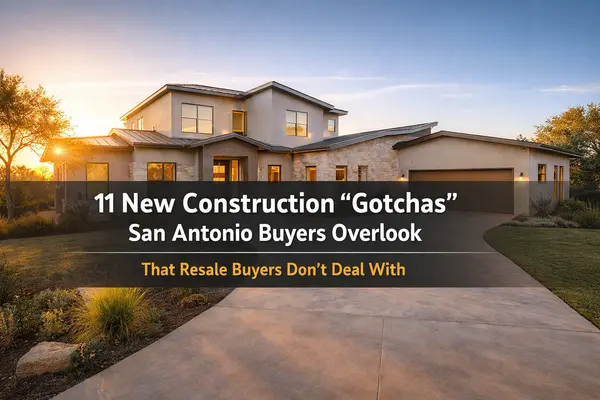
9 Ways Builders Make Their Homes Look Cheaper (or Better) Than They Really Are in 2026
 New construction continues to attract buyers across San Antonio because of modern layouts, energy efficiency improvements, builder incentive programs, and the appeal of owning something that no one else has lived in. But not all new construction homes are presented in ways that make the comparison between the model home experience and the base-price reality immediately clear, and buyers who do not understand how builders design, upgrade, and market their homes sometimes commit to a purchase expecting one thing and receive another. Tami Price, REALTOR®, a San Antonio real estate professional and Air Force veteran with nearly two decades of local market experience, notes that the buyers who navigate new construction most successfully are those who understand how to separate what is showcased from what is included before they fall in love with a model, not after a contract is signed and the design center budget is already spent.
San Antonio's new construction market in 2026 is active across multiple growth corridors, with builders competing through incentive programs, pricing strategies, and carefully designed presentation environments that are optimized to create the most compelling buying experience possible. For buyers evaluating new construction homes in San Antonio, Schertz, Cibolo, Helotes, Converse, and Boerne, the nine items below represent the most common ways that builder presentations can create a gap between buyer expectation and delivered reality, along with the specific questions and evaluation steps that prevent that gap from becoming a post-closing surprise.
Why Do San Antonio Buyers Need to Evaluate Builder Presentations More Carefully in 2026?
The model home is one of the most sophisticated sales tools in residential real estate, and builders invest significantly in creating an environment that generates emotional connection to the home before the buyer has evaluated the financial details of what they are actually purchasing. Every design decision in a model home, from the lighting placement to the flooring selection to the ceiling height and cabinetry style, is made to maximize the perceived value of the space and to create a buying experience that produces commitment before the full cost picture is clear. That is not inherently deceptive, but it is strategically optimized, and buyers who understand the optimization are better positioned to evaluate what they are seeing rather than simply responding to how it makes them feel.
In a more balanced 2026 market where builders are competing actively for buyers through incentive programs and pricing adjustments, understanding the distinction between base-price value and upgrade-enhanced presentation is more important than it was during the peak years when limited inventory reduced buyer leverage to ask detailed questions before committing. The nine items below address the most common presentation gaps that affect buyer decision-making in San Antonio's new construction market this year.
1. How Do Model Homes Differ From the Base-Price Home a Buyer Will Actually Receive?
The model home is designed to showcase the full potential of the builder's product, not to represent the standard configuration that a base-price buyer will receive at closing, and the gap between the two can be substantial enough to change both the aesthetic appeal and the functionality of the home the buyer actually takes possession of. Every finish visible in the model, from the flooring material and cabinetry style to the countertop surface and lighting fixtures, reflects upgrade selections that carry additional cost beyond the advertised base price, and the cumulative cost of those upgrades frequently adds $20,000 to $60,000 or more to the final purchase price for buyers who want their home to match the model's presentation.
The most effective protection against this gap is requesting a complete base-price specification sheet before walking through the model home and evaluating each feature visible in the model against that specification to understand which elements require upgrade selection and what each costs. Asking the builder's sales representative to walk through the model room by room and identify specifically which features are standard and which are upgraded at additional cost produces a clear picture of what is and is not included that a general conversation about base price rarely provides. For a comprehensive overview of what buyers should know before signing a new construction contract, that resource covers the full evaluation framework that protects buyers from committing before the complete picture is understood.
Q: Is there a way to see what a base-price home actually looks like before committing to a community?
A: In many cases, yes. Asking the builder's sales representative whether any recently completed homes purchased at or near base price can be toured provides a far more accurate reference than the model home's fully upgraded presentation. Some builders will facilitate this request and others will not, but the question is worth asking because the answer either provides useful information or reveals something about the builder's confidence in their base-price product. An agent experienced with the specific community may also know of recently closed base-price homes whose owners would allow a brief tour.
2. How Does Strategic Lighting in Model Homes Affect Buyer Perception?
Lighting design in model homes is one of the most deliberate and effective tools builders use to make spaces feel larger, warmer, and more inviting than they will appear once the standard lighting package is installed in the buyer's specific home. Professional lighting designers or interior designers typically consult on model home lighting placement, adding fixtures at heights and positions that create the most flattering possible presentation of each space, and the result is an environment that photographs beautifully and feels genuinely appealing during a showing in ways that a base-level lighting package may not replicate. Buyers who tour a model under optimized lighting conditions and then move into a home with the standard package sometimes describe the difference as the home feeling smaller or less finished than what they expected based on the model experience.
Standard new construction lighting packages in San Antonio communities typically include builder-selected fixtures in defined locations specified by the floor plan, and those fixtures may differ from the model's selections in both style and light output. Areas where the lighting gap most commonly becomes apparent after closing include the kitchen island and dining area, where pendant lights over the island and a statement fixture over the dining space are frequently upgraded options rather than standard inclusions, master bathroom vanity lighting that may default to a basic bar light rather than the more contemporary fixture in the model, and secondary bedrooms that may receive a single ceiling fan or basic fixture rather than the layered lighting the model showcases. Understanding the standard lighting plan before closing, and budgeting for any upgrades that the buyer considers essential to the home's livability, prevents the frustration of discovering these differences at move-in.
3. Does Flooring Continue the Same Way Throughout the Base-Price Home as in the Model?
Continuous flooring throughout the main living areas of a model home creates a visual flow that makes the space feel larger and more cohesive, and buyers who respond positively to that aesthetic sometimes discover after closing that the base-price home transitions to carpet in areas where the model showed consistent hard surface flooring. The specific flooring plan in the base configuration is defined by the builder's specification document rather than by the model's presentation, and the locations where the transition occurs can meaningfully affect both the home's appearance and the buyer's long-term maintenance obligations.
Common flooring specification differences between model homes and base configurations include carpet in secondary bedrooms where the model may show wood or luxury vinyl plank, carpet in the master bedroom where the model features continuous hard surface, reduced wood or LVP square footage in dining areas or studies where the model showed full hard surface coverage, and builder-selected tile in bathrooms that differs in size or pattern from the larger format or more contemporary tile the model showcases. The most reliable evaluation step is requesting the base flooring plan with specific square footage allocations for each material before making a design center appointment, so that the buyer understands exactly which areas will be carpeted and which will have hard surface in the base configuration before deciding which upgrades to pursue.
Q: How much does a flooring upgrade from base carpet to luxury vinyl plank or hardwood typically cost in a San Antonio new construction home?
A: Flooring upgrade costs vary by builder, community, and the specific materials selected, but buyers should generally anticipate $3,000 to $10,000 or more to extend hard surface flooring from the base plan into secondary bedrooms and the master bedroom in a standard production home. Some builders include LVP or wood in all main areas as standard and offer carpet only in bedrooms as a default, while others provide carpet throughout secondary spaces and charge for any hard surface extension. Requesting the specific upgrade cost per square foot from the design center before the base specification review makes the cost comparison concrete rather than estimated.
4. How Do Cabinet and Countertop Selections in the Model Compare to the Base-Price Standard?
Cabinetry and countertops are among the most prominent visual elements in a home's kitchen and bathrooms, and the quality, finish, and construction of these elements can differ dramatically between the entry-level options included in the base price and the upgraded selections showcased in the model. Base-level cabinetry in many San Antonio builder communities features standard door profiles, basic hardware, and builder-selected finishes that have a different visual weight and perceived quality than the soft-close, full-overlay, or custom-look cabinetry visible in a fully upgraded model kitchen. Buyers who evaluate a kitchen based on the model's cabinetry presentation and then receive base-level cabinetry at closing sometimes describe the difference as the kitchen feeling less finished than they expected, even when the layout and functionality are identical.
Countertop selections follow the same pattern, with base configurations typically offering builder-selected laminate or entry-level granite or quartz at price points that differ in edge profile, color selection, and perceived quality from the designer-selected stone visible in the model. Buyers who prioritize countertop quality should request to see the available base options rather than assuming the model's selection represents what is available at the base price, and should compare the upgrade cost for preferred options before committing to a community where the base-level countertops are not acceptable. The combination of cabinetry and countertop upgrades is frequently where the largest portion of the gap between base price and final contract price accumulates, making this the area that deserves the most specific cost evaluation before a builder is selected.
5. Are Ceiling Height and Architectural Features Standard or Upgraded in the Model?
Architectural features including raised ceilings, tray ceiling details, exposed beams, coffered ceilings, and open staircase designs create the visual drama that makes model homes feel distinctly more impressive than standard residential construction, and most of these features are structural upgrades that carry significant additional cost rather than base-price inclusions. Buyers who are drawn to the elevated feel of a model home's great room or master bedroom should specifically ask which ceiling treatments are standard and which require structural option selection during the design process, because the difference in ceiling height and detail between a base configuration and a fully upgraded model can change how a home feels at a fundamental level.
Standard ceiling heights in San Antonio production home communities typically range from eight to nine feet in the base configuration, while model homes frequently showcase ten-foot or higher ceilings with tray, coffered, or beamed detail work as structural upgrades selected to maximize visual impact during the model tour. The structural nature of these upgrades means they must be selected before construction begins rather than added after closing, and the cost is embedded in the contract price rather than available as a post-closing modification. For buyers who find that the ceiling treatments are central to their connection to a specific floor plan, understanding the upgrade cost and confirming it fits within the overall budget before committing to the community prevents the disappointment of discovering mid-construction that the feature they most valued was not included in the base they selected.
Q: What is the typical cost of ceiling height upgrades in San Antonio new construction communities?
A: Ceiling height upgrades vary by builder and structural complexity, but standard upgrades from eight-foot to ten-foot ceilings typically add $5,000 to $15,000 to the base price depending on the floor plan and whether the upgrade applies to the entire home or specific rooms. Tray ceiling details, coffered treatments, and exposed beam features are often priced additionally on top of the base ceiling height upgrade. Buyers who are budget-conscious should identify which architectural features they consider essential versus aspirational before the design center appointment, because this category can absorb a significant portion of the upgrade budget without obviously visible payoff in the finished home's day-to-day functionality.
6. Does the Base-Price Home Have the Same Exterior Elevation as the Model?
Front elevation is one of the first features buyers evaluate during an in-person visit and one of the elements that most strongly influences curb appeal in listing photography when the time comes to sell, and builder communities frequently showcase premium exterior elevations in their models and marketing materials while offering simpler base elevations as the standard configuration. The difference between a base elevation and a premium elevation can include fewer architectural details such as shutters, stone or brick accents, extended front porches, or varied roofline complexity, all of which affect how the home reads from the street and how it photographs compared to the community's marketing imagery.
Buyers who select a lot and floor plan without specifically evaluating the elevation options available for their base price sometimes discover at framing that the home's exterior appearance is significantly simpler than the model or the community's marketing suggested. Requesting to see the elevation drawings for all available tiers, not just the premium options, and confirming which elevation is included in the base price for the specific lot selected, provides the complete picture that prevents this common surprise. For buyers whose lot selection affects which elevations are available, understanding that relationship before signing the contract rather than during the construction phase allows them to make a fully informed lot selection decision.
7. What Appliance Package Does the Base Price Actually Include?
Stainless steel appliances featured in model home kitchens frequently represent upgraded packages that are not included in the builder's base configuration, and the specific appliances included at base price, including the range or cooktop, oven configuration, microwave, and whether a refrigerator is provided at all, vary significantly between builders and communities. Buyers who assume that the appliance suite visible in the model is standard are sometimes surprised to discover during the design center appointment that the refrigerator is not included at any price tier, that the base range is a standard coil electric unit rather than the smooth-top or gas range in the model, or that the dishwasher is a builder-selected entry-level model rather than the quieter, more feature-rich unit the model showcases.
Specific appliance verification steps that protect buyers before contract signing include requesting the base appliance specification by brand and model number, not just by general description, and comparing the specified models against consumer reviews and specifications to understand the quality level actually included. Buyers who have specific appliance preferences should confirm availability at the design center before selecting a community, because some builders offer extensive appliance upgrade options while others have limited design center selections that may not include the brands or configurations the buyer prefers. For buyers using builder incentives to offset closing costs, evaluating whether any appliance package credits represent genuine savings relative to retail pricing for the same appliances produces a more accurate assessment of the incentive's real value.
8. How Do Lot Premiums Affect the Total Price Beyond the Advertised Home Price?
The advertised starting price for a new construction home reflects the base home on the least desirable available lot within the community, and buyers who identify a specific homesite with characteristics they value, including greenbelt backing, cul-de-sac location, larger square footage, corner position, or elevated grade, will typically find that the lot itself carries a premium that adds to the purchase price independently of any structural or design center upgrades. Lot premiums in San Antonio new construction communities commonly range from $5,000 to $50,000 or more depending on the community, the specific lot's characteristics, and the builder's pricing structure for premium homesites, and this addition is separate from and cumulative with all other upgrade costs the buyer incurs during the design process.
Buyers who identify a preferred community based on the advertised base price and then select a specific lot with desirable characteristics without understanding the lot premium structure sometimes discover that the home they want on the site they want costs substantially more than the entry price that attracted their initial attention. The most straightforward protective step is asking the builder's sales representative for a specific price for the homesite the buyer is considering, not just the community's starting price, before any design center appointment is scheduled. That specific site price becomes the baseline for the complete cost analysis, with upgrade selections then added to a realistic starting point rather than to an entry price that does not reflect the buyer's actual intended purchase.
Q: Are lot premiums negotiable in San Antonio new construction communities in 2026?
A: In most cases, lot premiums are less negotiable than other components of the builder's pricing structure because they reflect the genuine market differentiation between homesites and the builder's interest in preserving comparable sale data for the community. However, in communities with significant unsold premium lot inventory at late development phases, builders sometimes incorporate lot premium value into incentive packages rather than reducing the premium explicitly. An experienced agent who works regularly with San Antonio builders can identify which communities are in phases where premium lot flexibility is more likely and can structure the negotiation conversation accordingly.
9. What Warranty Coverage Does the Builder Actually Provide, and How Does It Compare Across Builders?
Builder warranty coverage is one of the most consequential long-term value factors in a new construction purchase, and warranty structures vary enough across San Antonio builders that buyers who assume equivalence without verifying specifics may be accepting meaningfully different post-closing risk levels than they realize. Some builders in the San Antonio market have reduced their structural warranty coverage from ten years to six years in recent years, while others continue to provide longer coverage terms, and the distinction matters for buyers who plan to hold the home through the period when that difference in coverage becomes relevant. Understanding exactly what is covered at each warranty tier, how long each tier of coverage applies, and how the claims process works is essential information that should be part of the builder evaluation rather than a detail reviewed only after closing.
Standard new construction warranty tiers typically include one year of workmanship coverage on materials and labor, two years of systems coverage for mechanical, electrical, and plumbing components, and a longer structural warranty period for load-bearing components. Beyond duration, the distinction between a warranty backed directly by the builder and one administered through a third-party warranty company is a meaningful risk consideration, because a builder-backed warranty depends on the builder's continued operation to be honored while a third-party warranty company operates independently. For a detailed comparison of builder warranties in Greater San Antonio, that resource provides the full framework buyers need to evaluate coverage terms across communities and make an informed builder selection with warranty quality as an explicit consideration alongside price and design.
Expert Insight from Tami Price
The nine items in this guide are the ones that most consistently create a gap between what a buyer expected when they committed to a new construction home and what they received when they moved in, and almost all of them are preventable with the right questions asked at the right point in the evaluation process. The model home tour is designed to produce an emotional response that motivates a purchase decision, and it succeeds at that goal in ways that make the analytical evaluation of what is and is not included in the base price harder to complete objectively in the same visit. Tami Price, REALTOR®, a USAF veteran and San Antonio real estate professional with nearly two decades of local market experience, conducts pre-contract reviews of builder specifications with buyers specifically because the point before signing is the only point where the complete picture can change the decision. After the contract is executed, the specification is locked and the buyer's options for addressing gaps between expectation and reality are limited to design center selection within the agreed budget.
Her approach to new construction buyer representation begins before the model home tour with preparation on specific questions and a framework for evaluating what the builder is presenting against what the base price delivers, which allows buyers to experience the model with appropriate enthusiasm while maintaining the analytical clarity needed to make a financially grounded decision. That preparation is what produces the builder community selections and design center choices that buyers feel good about long after closing.
"The model home is not a lie," says Tami Price, REALTOR®. "It is an aspirational presentation, and there is nothing wrong with aspiring. The problem is when buyers do not have the framework to evaluate what they are seeing accurately enough to know what it will cost to get there from the base price. My job is to provide that framework before the visit rather than after the contract, because after the contract is when it stops being useful."
Recognized as a RealTrends Verified top real estate agent in San Antonio, a 15-time Five Star Professional Award winner, and the recipient of more than 650 five-star reviews, Tami Price serves buyers, military families, and move-up buyers across San Antonio, Schertz, Cibolo, Helotes, Converse, and Boerne.
Three Key Takeaways
- The advertised base price of a new construction home is the entry point for the pricing conversation, not a complete representation of what the buyer will pay to receive a home that matches the model's presentation, and buyers who evaluate communities based on base price without understanding the cumulative cost of the upgrades they consider essential frequently discover that their actual purchase price is $20,000 to $60,000 or more above the number that attracted their initial attention. Requesting a base specification sheet, touring a completed base-price home if available, and running a complete upgrade budget estimate before committing to a community are the three evaluation steps that convert the base price from a misleading headline into a useful starting point for the complete financial analysis.
- Lot premiums, which are separate from and cumulative with all upgrade costs, can add $5,000 to $50,000 to the purchase price for buyers who select homesites with characteristics they value, and the lot premium is often not prominently discussed during the initial community introduction that focuses on the base price. Obtaining a specific price for the exact homesite under consideration before any design center appointment is scheduled ensures that the complete cost baseline is realistic before upgrade selections are made against it, rather than discovering mid-design-center that the total price is significantly higher than the buyer planned for.
- Builder warranty coverage varies meaningfully across San Antonio communities, with some builders having reduced structural warranty terms in recent years while others continue to provide longer coverage, and this variation directly affects the long-term risk profile of the purchase for buyers who plan to hold the home through the period when structural warranty coverage matters. Evaluating warranty terms explicitly as part of the builder selection process, rather than treating them as equivalent across communities, produces a more complete assessment of each builder's value proposition that accounts for post-closing protection alongside price and design quality.
Frequently Asked Questions
Q. How do I get an accurate total price for a new construction home in San Antonio before committing to a community?
A. Request the base specification sheet and ask the builder's sales representative for a specific price on the exact homesite you are considering, then schedule a design center preview appointment to understand the upgrade costs for the features you consider essential. Adding the lot premium to the base price and then layering the estimated upgrade costs produces a realistic total contract price estimate before any formal commitment is made. An agent experienced with the specific builder can help identify which upgrade categories are likely to require the largest budget allocations based on the buyer's stated priorities.
Q. Are the appliances shown in a model home always included in the purchase price?
A. Not always. Appliances shown in model homes frequently represent upgraded packages or selected configurations that are not part of the base specification, and the refrigerator in particular is often not included at any price tier in many builder communities. Requesting the base appliance specification by brand and model number, not just general description, and confirming what is and is not included before the design center appointment eliminates this as a post-closing surprise. Buyers with specific appliance preferences should confirm design center availability before selecting a community.
Q. What is a lot premium and how much should I budget for it in San Antonio?
A. A lot premium is an additional charge applied to homesites with characteristics that make them more desirable than the community's least-preferred available lots, including greenbelt backing, cul-de-sac location, larger square footage, corner position, or elevated grade. Premiums in San Antonio communities commonly range from $5,000 to $50,000 or more depending on the community and the specific homesite's characteristics. The premium is separate from and cumulative with all upgrade costs and should be included in the total cost analysis before any community selection is finalized.
Q. How do I evaluate builder warranty quality when comparing multiple San Antonio communities?
A. Request the specific warranty documents, not a verbal summary, from each builder under consideration and compare the duration and coverage scope at each tier, the distinction between builder-backed and third-party warranty administration, and the claims process requirements for different types of issues. Asking for the warranty terms in writing before signing a contract provides the specific information needed for comparison, while relying on a verbal description during the sales presentation produces summaries that may not accurately represent the coverage's limitations.
Q. Can I negotiate the base price of a San Antonio new construction home?
A. Builders typically protect base prices because reducing them creates comparable sale data that affects every other home in the community. What builders negotiate is the incentive package, including closing cost assistance, rate buydown programs, and upgrade credits, which provides financial value without affecting the recorded sale price. Buyers who understand this framework and focus their negotiation on incentive structure rather than base price consistently achieve better total value than those who approach builder negotiations with resale seller instincts. End-of-phase timing can sometimes produce more aggressive incentive offerings as builders manage inventory toward production targets.
Q. How does the exterior elevation choice affect my home's resale value in San Antonio?
A. Premium elevations with more architectural detail, stone or brick accents, and varied roofline complexity generally photograph better and create stronger curb appeal that supports resale positioning compared to base elevations with simpler finishes and fewer design details. In communities where multiple elevation tiers are visible on the same street, homes with base elevations adjacent to premium ones sometimes face curb appeal disadvantages that affect buyer perception at resale. Buyers who plan to hold the home for a PCS cycle of three to five years should evaluate the elevation's resale positioning alongside its aesthetic appeal during the initial purchase decision.
Q. What is the difference between builder-backed and third-party warranty coverage, and why does it matter?
A. A builder-backed warranty is honored directly by the builder, which means its value depends on the builder's continued financial health and willingness to honor claims. A third-party warranty is administered by an independent warranty company that is not the builder, which provides coverage continuity if the builder goes through financial difficulties or ceases operations during the warranty period. Third-party warranties vary in their coverage terms and claim resolution processes, and reviewing the specific third-party company's financial standing and claim history provides additional assurance beyond the terms of the warranty document itself.
Q. Should I hire an independent agent before visiting builder model homes in San Antonio?
A. Yes. Engaging an independent agent before visiting builder communities ensures that contract review, incentive program comparison, and specification evaluation are handled by a professional whose role is to advocate for the buyer's interests rather than the builder's sales goals. Because builder contracts are non-negotiable after execution, the pre-contract review that an independent agent provides is the only available protection point before a binding commitment is made. Buyers who visit model homes without representation and then seek an agent only after identifying a preferred community have reduced their agent's ability to provide the most valuable pre-contract protections.
The Bottom Line
New construction in San Antonio represents a genuinely compelling option for buyers in 2026, and the advantages of modern design, energy efficiency, builder incentives, and warranty coverage are real and meaningful when evaluated accurately. What makes the evaluation accurate is understanding the nine ways that builder presentation can create a gap between the model home experience and the base-price reality, and asking the specific questions that close that gap before any contract is signed. Buyers who do this work before committing consistently make more financially grounded decisions and experience fewer post-closing surprises than those who respond primarily to the model home experience without the analytical framework that converts that experience into a well-understood purchase commitment.
The base price, lot premium, upgrade budget, incentive structure, and warranty terms together define what a buyer is actually purchasing and what it will actually cost, and each of those components deserves specific verification rather than assumption based on what the model presents or what the sales representative summarizes in a general conversation. That verification is exactly what an independent agent provides as a standard part of new construction buyer representation, and it is available to any buyer who engages representation before the model home visit rather than after the design center appointment.
Buyers considering new construction homes in San Antonio, Schertz, Cibolo, Helotes, Converse, or Boerne are encouraged to book a consultation before visiting builder communities so that the specification evaluation framework, lender comparison process, and contract review approach are in place before any presentation creates the emotional commitment that makes later analytical evaluation harder to complete objectively.

Contact Tami Price, REALTOR® | San Antonio, TX
Tami Price, REALTOR®, serves buyers, military families, and move-up buyers across San Antonio, Schertz, Cibolo, Helotes, Converse, and Boerne with nearly two decades of local market experience and specialized expertise in new construction evaluation, builder contract review, VA loan strategy, and military relocation coordination.
📞 210-620-6681
🌐 TamiPrice.com
Tami Price's Specialties
- Buyer and Seller Representation
- Military Relocations and PCS Moves
- VA Loan Guidance
- New Construction
- First Time Home Buyers
- Move Up Buyers
- Downsizing and Rightsizing
- Strategic Pricing and Market Analysis
- San Antonio, Schertz, Cibolo, Helotes, Converse, and Boerne
Disclaimer
This blog is for informational purposes only and does not constitute legal, financial, or real estate advice. Builder pricing, upgrade costs, warranty terms, lot premiums, and incentive programs are subject to change and vary by community, builder, and individual transaction. Market conditions change, and individual circumstances vary. Readers should consult qualified professionals, including a licensed real estate agent, before making real estate decisions. Tami Price, REALTOR®, is licensed in Texas and affiliated with Real Broker, LLC. Fair Housing principles apply to all content.
Categories
- All Blogs (868)
- Home Buying (9)
- Neighborhood Guides (43)
- 2026 Market (1)
- About Tami Price (4)
- Affordable Communities (1)
- Affordable Housing & Community Development (4)
- Agent Qualifications and Credentials (1)
- Agent Qualifications and Experience (1)
- Agent Selection (1)
- AI and Real Estate Tools (1)
- Alamo Heights (5)
- Alamo Heights ISD (1)
- Alamo Heights Real Estate (1)
- Alamo Ranch (2)
- Amenities in Helotes, Texas (3)
- Apartment Market (1)
- Appraisals (1)
- Arts and Culture (1)
- Awards and Recognition (4)
- Balcones Creek (1)
- Best Neighborhoods to Live in Cibolo, TX (3)
- Best Neighborhoods to Live in San Antonio (16)
- Best Places to Live in Leon Valley: A Neighborhood Guide (1)
- Best Places to Live in Northeast Inner Loop: A Neighborhood Guide (1)
- Bexar County Property Tax (1)
- Bexar County Real Estate (3)
- Boerne Home Sellers (1)
- Boerne Neighborhoods (2)
- Boerne Texas (8)
- Broadway Corridor Development (1)
- Build-to-Rent Communities (1)
- Builder Contracts & Warranties (3)
- Builder Incentives (1)
- Builder Warranties (1)
- Buyer (97)
- Buyer Activity San Antonio (1)
- Buyer and Seller Guidance (3)
- Buyer Due Diligence (1)
- Buyer Education (46)
- Buyer Guide (9)
- Buyer Guides (1)
- Buyer Protection Strategies (1)
- Buyer Representation (1)
- Buyer Representation Expertise (1)
- Buyer Resources (65)
- Buyer Strategy (2)
- Buyers (10)
- Buying a Foreclosed Home in San Antonio (10)
- Buying a Home (1)
- Buying a Home in San Antonio (6)
- Buying Timeline (1)
- Castroville, TX (8)
- Central San Antonio (1)
- Central San Antonio Development (2)
- Central Texas Growth (1)
- Choosing a Real Estate Agent (1)
- Choosing an Agent (1)
- Cibolo Communities (1)
- Cibolo Home Sellers (1)
- Cibolo TX (15)
- Client Reviews and Testimonials (1)
- Client Satisfaction (1)
- Client Testimonial (4)
- Clients review (4)
- Comal County (1)
- Commercial & Retail Development (27)
- Commercial Development (13)
- Commercial Development Impact on Home Values (1)
- Commercial Real Estate (1)
- Community (1)
- Community Amenities (2)
- Community Development (23)
- Community Development and Real Estate (3)
- Community Events & Development (1)
- Community Infrastructure (1)
- Community Investment Impact (2)
- Community Landmarks (1)
- Community News (4)
- Community Planning (2)
- Community Revitalization (1)
- Community Spotlights (1)
- Commuter Neighborhoods (1)
- Cons of Living in Helotes, TX (4)
- Conservation Communities (1)
- Converse Home Sellers (1)
- Converse Homes For Sale (1)
- Converse Real Estate (1)
- Converse TX (10)
- Converse TX Real Estate (1)
- Cost of Living Guides (1)
- Cost of Living in San Antonio TX (25)
- CPS Energy Programs (1)
- Custom Homes (3)
- Days on Market (1)
- Deco District San Antonio (1)
- Denver Heights (1)
- Down Payment Assistance (1)
- Downtown Boerne (1)
- Downtown Development (3)
- Downtown Living (1)
- Downtown Revitalization (14)
- Downtown San Antonio (2)
- Downtown San Antonio Real Estate (5)
- Downtown San Antonio Revitalization (1)
- East Side Living (1)
- East Side Neighborhoods (1)
- East Side San Antonio (4)
- Economic Development (3)
- Economic Growth & Industry (1)
- Education, Texas Hill Country (1)
- Emerald Pointe (1)
- Employment (1)
- Employment Corridors (1)
- Encino Forest (1)
- Entertainment Economy (1)
- Equity and Pricing Strategy (2)
- Established Communities (3)
- Events in San Antonio (207)
- Expert Advice from Tami Price, Realtor® (10)
- Family Activities (2)
- Family Homes (2)
- Family Living in San Antonio (1)
- FAQ (1)
- Far Northwest San Antonio (1)
- Far West San Antonio (1)
- Far Westside Real Estate (4)
- Featured Homes for Sale (2)
- Featured Properties (1)
- Financial Planning (4)
- Financing Strategy (1)
- First Time Buyers (14)
- First Time Sellers (1)
- First-Time Buyers (6)
- First-Time Homebuyer Resources (3)
- First-Time Homebuyer Tips (2)
- First-Time Homebuyers (6)
- First-Time Investors (1)
- Fort Sam Houston (2)
- Fort Sam Houston Real Estate (1)
- Fort Sam Houston, TX (2)
- Fox Grove (1)
- FSBO vs Agent Representation (1)
- Gated Communities (3)
- Golf Communities (1)
- Great Northwest (1)
- Greater San Antonio Housing Trends (2)
- Greater San Antonio Real Estate (5)
- Green Home Upgrades (1)
- Growth and Development (11)
- Healthcare (1)
- Helotes Home Sellers (1)
- Highway 151 Corridor Growth (1)
- Hill Country Business (1)
- Hill Country Communities (2)
- Hill Country Development (3)
- Hill Country Homes for Sale (1)
- Hill Country Living (3)
- Hill Country Market Updates (1)
- Hill Country Real Estate (4)
- Historic Districts (5)
- Historic Neighborhoods (4)
- Historic Preservation (2)
- Holiday Attractions (1)
- Holiday Guide (1)
- Home Buying (7)
- Home Buying Education (3)
- Home Buying Guide (7)
- Home Buying Process (8)
- Home Buying Strategy (2)
- Home Buying Tips (6)
- Home Energy Efficiency San Antonio (1)
- Home Financing (2)
- Home Improvement ROI (1)
- Home Preparation (2)
- Home Pricing Strategy (9)
- Home Renovation for Resale (1)
- Home Selling (7)
- Home Selling Guide (10)
- Home Selling Strategies (3)
- Home Selling Strategy (3)
- Home Selling Tips (22)
- Home Staging and Updates (2)
- Home Values (2)
- Homebuyer Education (15)
- Homebuyer Resources (1)
- Homebuying Guide (1)
- Homebuying Tips (3)
- Homeowner (35)
- Homeowner Tax Benefits (1)
- Homeownership Costs (1)
- Homes for Sale (1)
- Homes for sale near Lackland AFB (4)
- Homes Near Military Bases (1)
- Homestead amenities (1)
- Horizon Pointe (1)
- House Hunting Guide (1)
- Housing (1)
- Housing Community Development (1)
- Housing Development (2)
- Housing Market Updates (3)
- How to Buy a House in San Antonio TX (48)
- Huebner Oaks shopping center (1)
- Hunters Ranch (1)
- I-10 Corridor (1)
- I-35 Corridor (1)
- Incorporated Cities (6)
- Industrial Investment Impact (1)
- Industry News (2)
- Industry Recognition (1)
- Infrastructure & Growth Projects (26)
- Infrastructure and Sustainability (1)
- Infrastructure Development (1)
- Infrastructure Investment (1)
- Infrastructure Updates (2)
- Interest Rates (1)
- Invest in San Antonio (46)
- Investment Opportunities (2)
- Investment Property San Antonio (4)
- JBSA (6)
- JBSA Housing (10)
- JBSA Real Estate (4)
- JBSA Resources (7)
- Joint Base San Antonio (5)
- Joint Base San Antonio Housing (1)
- Judson ISD (1)
- Kendall County (1)
- La Cantera Retail Development (1)
- Lackland AFB (6)
- Lackland AFB Housing (1)
- Land Conservation (1)
- Land Use Planning (1)
- Lera MLS (12)
- Lifestyle & Community Growth (18)
- Lifestyle & Local Growth (12)
- Lifestyle Amenities (1)
- Lifestyle Communities (1)
- Listing Preparation (1)
- Listing Strategy (1)
- Live Oak (1)
- Living in San Antonio, TX (52)
- Living Near Randolph AFB (5)
- Loan Programs (1)
- Local Attractions (3)
- Local Business (1)
- Local Business & Development (9)
- Local Business & Economy (3)
- Local Business Spotlight (20)
- Local Business Support (5)
- Local Development (4)
- Local Development News (9)
- Local Market Insights (5)
- Local News (2)
- Local News Around San Antonio (2)
- Local Policy Changes (1)
- Local Real Estate News (1)
- Loop 1604 Corridor Growth (2)
- Loop 410 Corridor Development (1)
- Luxury Communities (2)
- Luxury Homes (2)
- Luxury Retail San Antonio (1)
- Major Developments (2)
- Making Offers on Homes (1)
- Market Analysis (24)
- Market Conditions (35)
- Market Expertise (1)
- Market Insights (4)
- Market Strategy (1)
- Market Timing (2)
- Market Trends (10)
- Market Trends & Insights (2)
- Market Update (11)
- Market Update 2026 (1)
- Market Updates (19)
- Master Planned Communities (12)
- Medical Center Area Real Estate (1)
- Medina Valley ISD (2)
- Midtown Living (1)
- Military & Economic Impact (3)
- Military Buyers (2)
- Military Communities (1)
- Military Family Resources (1)
- Military Heritage (1)
- Military Homebuying (2)
- Military Homeownership (1)
- Military Housing (3)
- Military Housing Market in Texas (16)
- Military Life in San Antonio (2)
- Military Neighborhoods (1)
- Military PCS Relocations (3)
- Military Real Estate (2)
- Military Relocation (72)
- Military Relocation & VA Loans (9)
- Military Relocation San Antonio (4)
- Military Relocation Services (3)
- Military Relocation to San Antonio (50)
- Military Relocations (18)
- Military Relocations & VA Home Loans (5)
- Mixed-Income Housing (1)
- MLS Accuracy & Data Transparency (1)
- Mortgage Programs (1)
- Mothers Day in San Antonio (1)
- Move to Boerne TX (18)
- Move to Castroville TX (11)
- Move to Converse TX (16)
- Move to New Braunfels (1)
- Move to North San Antonio (19)
- Move to San Antonio TX (73)
- Move to Selma TX (19)
- Move to Shertz TX (13)
- Move to Texas (53)
- Move Up Buyers (14)
- Move-In Ready Homes (2)
- Move-In Ready Homes San Antonio (2)
- Move-Up Buyers (2)
- Moving to Helotes, TX (17)
- Moving to San Antonio (69)
- Natalia Homes For Sale (1)
- Near East Side Living (1)
- Negotiation Strategy (1)
- Neighborhood Amenities (1)
- Neighborhood Development (1)
- Neighborhood Guides (7)
- Neighborhood Investment (1)
- Neighborhood News (2)
- Neighborhood Revitalization (2)
- Neighborhood Spotlights (12)
- Neighborhood Updates (1)
- Neighborhoods near Randolph AFB (12)
- New Braunfels (6)
- New Braunfels News (3)
- New Braunfels Real Estate (1)
- New Businesses (2)
- New Construction (48)
- New Construction Communities (1)
- New Construction Homes (12)
- New Construction Homes San Antonio (5)
- New Construction Without Customization (1)
- New Construction Without the Wait (1)
- New Development (3)
- New Listing (16)
- New Restaurants (3)
- News (211)
- News & updates (213)
- North Central San Antonio (5)
- North East ISD (3)
- North San Antonio (9)
- North San Antonio Real Estate (3)
- North Side Neighborhoods (1)
- North Side San Antonio Development (2)
- Northeast Inner Loop (1)
- Northeast Inner Loop Neighborhoods (1)
- Northeast San Antonio (3)
- Northside ISD (2)
- Northwest San Antonio (8)
- Northwest San Antonio Development (1)
- Northwest San Antonio Growth (1)
- Northwest San Antonio Real Estate (3)
- Northwood (1)
- Olympia Hills (1)
- One-Story Homes (1)
- Parks and Recreation (2)
- PCS and JBSA (1)
- PCS Guide (3)
- PCS Moves (10)
- PCS Moves to Joint Base San Antonio (4)
- PCS Planning (9)
- PCS Randolph AFB (17)
- PCS Relocation (1)
- PCS Resources (6)
- PCS San Antonio (46)
- PCS to San Antonio (42)
- Pearl District Area Real Estate (2)
- Pipe Creek (1)
- Places to Eat Near Randolph AFB (1)
- Pre-Listing Preparation (2)
- Pre-Listing Process (1)
- Pricing and Marketing Strategy (2)
- Professional Awards and Achievements (1)
- Professional Real Estate Representation (1)
- Property Tax Exemptions Texas (1)
- Property Value Enhancement (1)
- pros and cons living in Converse TX (3)
- Pros and Cons Living in Selma TX (6)
- Pros and Cons of Living in Castroville, TX (4)
- Pros and Cons of Living in San Antonio (33)
- PT500 List (1)
- Purchase Negotiation (1)
- Quality of Life (1)
- Quick Close Real Estate (1)
- Randolph AFB Neighborhoods (1)
- Real Estate (1)
- Real Estate Advice (1)
- Real Estate Agent Recognition (5)
- Real Estate Agent Selection (2)
- Real Estate Agent Value (1)
- Real Estate Consultation (1)
- Real Estate Finance (1)
- Real Estate Financing (1)
- Real Estate Impact (1)
- Real Estate Investment San Antonio (2)
- Real Estate Legal Issues (1)
- Real Estate Market Insights (2)
- Real Estate Market Trends (5)
- Real Estate Professional Designations (1)
- Real Estate Strategy (1)
- Real Estate Technology & Trends (2)
- Real Estate Tips (1)
- Real Estate Tips and Guides (2)
- Real Estate Trends (4)
- RealTrends Verified (1)
- Regional Development (1)
- Regional Real Estate (2)
- Relocating to San Antonio (2)
- Relocation (4)
- Relocation Resources (2)
- Relocation to San Antonio (55)
- Remote Homebuying (1)
- Rental Housing (1)
- Rental Property (1)
- Rental Strategy (1)
- Resale Properties (1)
- Retail Development (2)
- Retire in Boerne TX (11)
- Retire in San Antonio (37)
- Reviews and Recognition (1)
- Rural Living (2)
- SABOR (25)
- San Antonio Area Listings (1)
- San Antonio Business Growth (1)
- San Antonio Buyer Resources (2)
- San Antonio Communities (3)
- San Antonio Community Events (1)
- San Antonio Community News (1)
- San Antonio Data Center Development (1)
- San Antonio Development (5)
- San Antonio Development & East Side Real Estate (1)
- San Antonio Dining and Lifestyle (3)
- San Antonio East Side Development (1)
- San Antonio Employment Growth (1)
- San Antonio Food & Community Development (2)
- San Antonio Growth (8)
- San Antonio Home Buying and Selling (2)
- San Antonio Home Buying Guide (5)
- San Antonio Home Improvement (2)
- San antonio home prices (3)
- San Antonio Home Sellers (3)
- San Antonio Homeowner Guide (1)
- San Antonio Homeowner Resources (1)
- San Antonio Homes for Sale (5)
- San Antonio Housing Market (1)
- San Antonio Housing Market & Mortgage Financing (2)
- San Antonio Housing Market Analysis (2)
- San Antonio Housing Trends & Market Analysis (4)
- San Antonio Industrial Development (1)
- San Antonio Industrial Policy (1)
- San Antonio Investment Properties (2)
- San Antonio Job Market (1)
- San Antonio Lifestyle Amenities (1)
- San Antonio Listing (1)
- San Antonio Living (1)
- San Antonio Market (3)
- San Antonio Market Updates (18)
- San Antonio Military Relocation (2)
- San Antonio Neighborhoods (66)
- San Antonio New Construction & Master-Planned Communities (4)
- San Antonio New Home Communities (1)
- San Antonio News (229)
- San Antonio North Side Development (1)
- San Antonio Parks (1)
- San Antonio Property Investment (1)
- San Antonio Property Taxes (1)
- San Antonio Real Estate (135)
- San Antonio Real Estate Agents (5)
- San Antonio Real Estate Excellence (1)
- San Antonio Real Estate Guide (6)
- San Antonio Real Estate Market (41)
- San Antonio Real Estate Market Analysis (6)
- San Antonio Real Estate News (2)
- San Antonio REALTOR Awards (1)
- San Antonio Restaurant News (2)
- San Antonio Restaurant Openings (1)
- San Antonio Seller Resources (2)
- San Antonio Sellers (1)
- San Antonio Spec Homes (1)
- San Antonio Spurs Community Programs (1)
- San Antonio Suburbs (1)
- San Antonio Transportation (2)
- San Antonio University Area Housing (1)
- San Antonio Urban Living (7)
- San Antonio West Side Development (2)
- San Antonio Zoning Policy (1)
- Scenic Loop (1)
- Schertz Home Sellers (1)
- Schertz Real Estate (1)
- Schertz, TX (13)
- School Districts (1)
- School Information (1)
- SCUCISD Schools (1)
- Secured Quick Offer (1)
- Sell Home In San Antonio TX (64)
- Seller (83)
- Seller Education (24)
- Seller Guide (4)
- Seller Representation Expertise (1)
- Seller Resources (50)
- Seller Strategy (3)
- Seller Tips (2)
- Sellers (7)
- Selling A Home in San Antonio (62)
- Selling Your San Antonio Home (3)
- Selma TX (9)
- Single-Story Homes (2)
- South San Antonio Real Estate (1)
- South Side Economic Growth (1)
- South Side San Antonio (1)
- Southtown (2)
- Southwest San Antonio Real Estate (1)
- Spec Homes and Inventory Homes (1)
- Spurs Arena Project Marvel (1)
- Stone Oak (1)
- Stone Oak Community News (5)
- Suburban Housing Growth (12)
- Suburban Living (2)
- Technology Growth (3)
- Technology Sector Growth (1)
- Terrell Hills (3)
- Texas Acreage Properties (2)
- Texas Homestead Exemption (1)
- The Dominion Real Estate (1)
- The Rim Area Real Estate (1)
- Things to do in San Antonio TX (21)
- Things to do Near Randolph AFB (4)
- Time Planning (1)
- Time-Sensitive Home Buying (1)
- Timing Strategy (1)
- Tips for Buying New Construction (9)
- Tobin Hill Neighborhoods (2)
- Top Real Estate Agent in San Antonio (3)
- Tourism and Economic Development (1)
- Traders's Joe San Antonio (1)
- Transaction Coordination (1)
- Transportation Infrastructure (1)
- Universal City (1)
- Updated Homes (1)
- Upscale Communities (1)
- Urban Communities (2)
- Urban Corridor Real Estate (1)
- Urban Development (5)
- Urban Living (3)
- Urban Neighborhoods (4)
- Urban Real Estate (1)
- Urban Renewal Projects (1)
- Urban Revitalization San Antonio (1)
- Utility Cost Reduction (1)
- UTSA Campus Development (1)
- VA Buyers (1)
- VA Home Loan Benefits (3)
- VA Loan Assumptions (3)
- VA loan benefits (27)
- VA Loan Guidance (1)
- VA Loan Home Buying Assistance (2)
- VA Loans (55)
- VA Loans and Military Benefits (3)
- VA Loans and Military Home Buying (3)
- VA Loans San Antonio (43)
- VET Benefits Living in San Antonio (3)
- Veterans Resources (1)
- Village Northwest (1)
- Walkable Communities (1)
- week in sales (35)
- Weekly Sales Report (36)
- West San Antonio (2)
- West San Antonio Development (1)
- West San Antonio Real Estate (3)
- West San Antonio Real Estate Market (2)
- West Side Infrastructure Planning (1)
- West Side Real Estate (1)
- West Side San Antonio (2)
- Windcrest Homes for Sale (1)
Recent Posts