Comparing San Antonio Areas and Commute Considerations
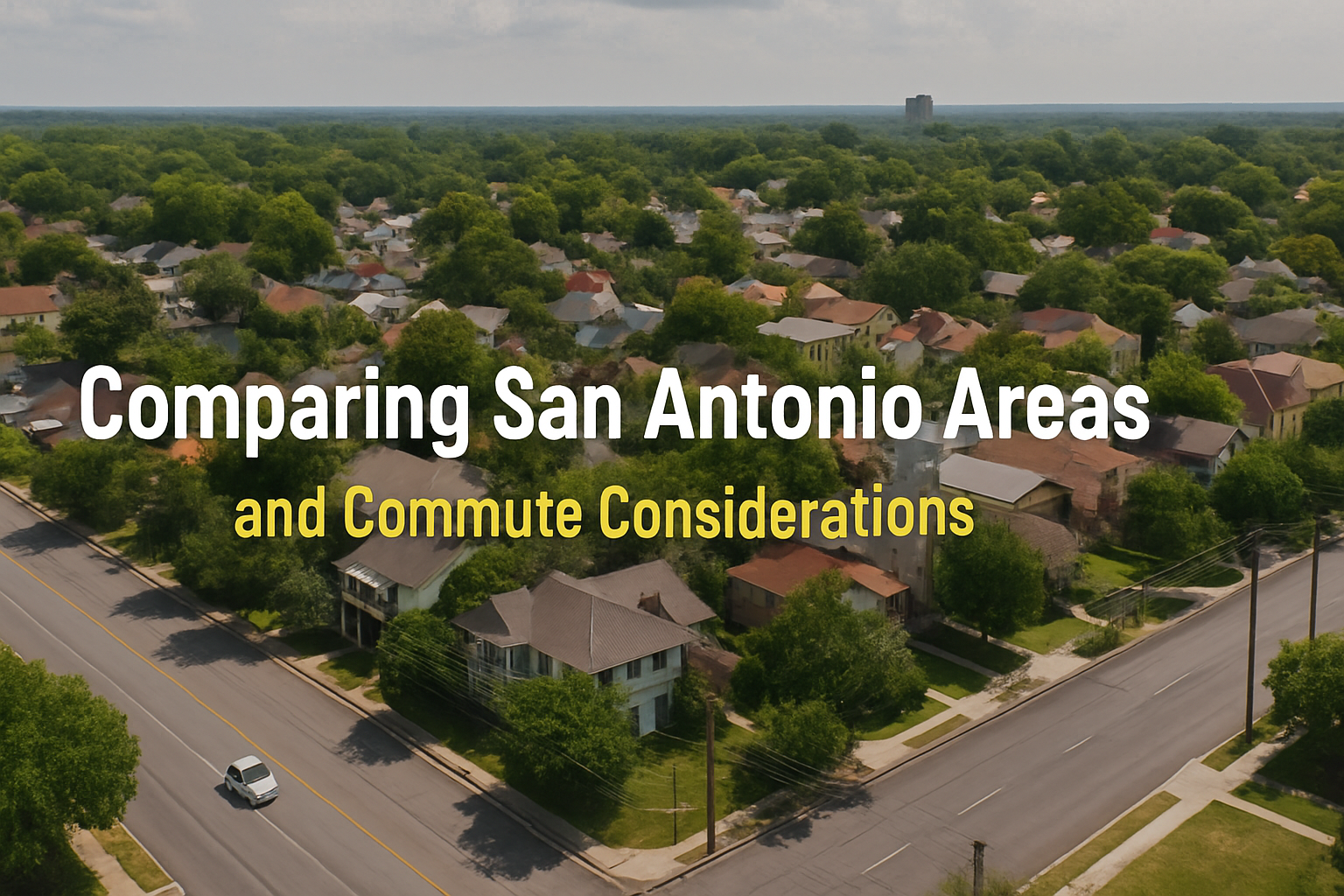
San Antonio spans a vast geographic footprint, offering buyers diverse neighborhoods with distinct characteristics, amenities, and price points. For those unfamiliar with the area, understanding how different parts of the city compare and how location affects daily commutes presents a significant challenge. The right neighborhood depends not just on housing preferences but on where residents work, how they spend their time, and what trade-offs they are willing to accept.
Buyers relocating to San Antonio from other cities or moving within the metropolitan area benefit from understanding regional differences before narrowing their search. From urban neighborhoods near downtown to suburban communities in Boerne, Helotes, Fair Oaks Ranch, Cibolo, Schertz, and Converse, each area offers advantages and limitations worth considering.
This guide compares major San Antonio areas, examines commute patterns to key employment centers, and helps buyers think strategically about choosing the right neighborhood for their circumstances.
How Is the San Antonio Metropolitan Area Organized?
Understanding San Antonio's geography and major corridors provides context for comparing different areas.
What Are the Major Regions Within the Metro?
The San Antonio metropolitan area extends across multiple counties, with Bexar County containing the city proper and portions of surrounding communities. Guadalupe County to the northeast includes Schertz, Cibolo, and other growing suburbs. Comal County to the north encompasses parts of the Hill Country including areas near New Braunfels. Kendall County to the northwest includes Boerne and surrounding communities.
Within San Antonio itself, residents typically reference areas by their general direction from downtown. The North Side, Northwest Side, Northeast Side, Far West Side, and South Side each carry distinct reputations and characteristics. These broad designations contain numerous specific neighborhoods with their own identities.
Major highways define many area boundaries and commute patterns. Loop 1604 circles the city, marking the boundary between established areas and newer suburban development. Loop 410 runs closer to downtown, separating inner-city neighborhoods from middle-ring suburbs. Interstate 35, Interstate 10, Highway 281, and Highway 90 provide major arterial connections throughout the region.
How Has Growth Shaped Different Areas?
San Antonio's growth has pushed outward in waves over decades. Neighborhoods closer to downtown developed earlier and feature older housing stock, established trees, and urban character. Middle-ring areas developed primarily in the latter twentieth century with suburban layouts and mid-century to 1990s construction. Outer areas continue developing now with new construction communities and master-planned developments.
The Northwest Side along Loop 1604 and extending toward Helotes has seen tremendous growth with communities like Alamo Ranch, Westover Hills, and numerous master-planned neighborhoods. The Far North Side along Highway 281 includes Stone Oak and surrounding developments that transformed formerly rural areas into suburban centers.
The Northeast Side extending toward Schertz and Cibolo offers somewhat more affordable options while providing access to both San Antonio and the Austin corridor. Continued development along Interstate 35 connects these areas to growing job centers.
What Characterizes the Major San Antonio Areas?
Each region offers distinct advantages that appeal to different buyer priorities.
What Does the North Central Corridor Offer?
The North Central area along Highway 281 features established neighborhoods, highly regarded schools, and convenient access to major employers. Areas like Stone Oak, Wilderness Oak, and surrounding communities developed primarily from the 1990s through 2010s, offering relatively newer construction while maintaining mature landscaping and established community identity.
Medical facilities including major hospital systems and the South Texas Medical Center complex sit within easy reach of North Central residents. Professional employment in healthcare, financial services, and corporate offices clusters along this corridor.
Housing ranges from entry-level options in older sections to luxury properties in gated communities. The variety allows buyers at different price points to access this desirable area, though competition for well-priced homes remains strong.
What Attracts Buyers to the Northwest Side?
The Northwest Side has experienced explosive growth, transforming from rural ranch land to thriving suburban communities within two decades. Master-planned neighborhoods offer newer construction, community amenities, and family-oriented environments.
Major developments like Alamo Ranch provide self-contained communities with schools, shopping, dining, and recreation within neighborhood boundaries. Residents can accomplish daily tasks without traveling far, though commutes to employment centers elsewhere require planning.
Access to Helotes and the Texas Hill Country appeals to buyers seeking natural beauty and outdoor recreation opportunities. The area balances suburban convenience with proximity to parks, trails, and scenic landscapes.
What Does the Northeast Corridor Provide?
The Northeast Side extending toward Schertz and Cibolo offers more affordable options for many buyers while providing access to growing employment centers. Interstate 35 connects this area to both San Antonio and Austin, appealing to those who work along the corridor or value access to both cities.
Randolph Air Force Base, part of Joint Base San Antonio, anchors the area and drives significant housing demand from military families. Defense contractors and related industries cluster nearby, providing civilian employment opportunities.
Newer communities continue developing in Cibolo, Schertz, and surrounding areas, offering new construction options at price points below comparable Northwest Side communities. The trade-off involves longer commutes to some San Antonio employment centers.
What Appeal Does the Hill Country Hold?
Communities in Boerne, Fair Oaks Ranch, and surrounding Hill Country areas attract buyers seeking natural beauty, small-town character, and escape from urban density. The landscape differs markedly from San Antonio's flatter terrain, featuring rolling hills, oak trees, and scenic vistas.
Housing options range from established neighborhoods in Boerne proper to acreage properties and custom homes on larger lots. Buyers seeking space, privacy, and connection to nature find options here that do not exist closer to San Antonio's urban core.
The trade-off involves commute times. Workers employed in San Antonio face longer drives, particularly to employment centers on the opposite side of the city. Those working remotely, retired, or employed locally find the location advantages outweigh commute considerations.
How Do Commute Patterns Affect Location Decisions?
Where residents work significantly influences which areas make practical sense for their households.
What Are the Major Employment Centers?
Employment in San Antonio clusters in several major areas, each drawing commuters from surrounding neighborhoods:
- Downtown San Antonio hosts government offices, financial institutions, legal services, and corporate headquarters. Workers commuting downtown benefit from central locations with multiple access routes.
- South Texas Medical Center along Fredericksburg Road and surrounding areas concentrates healthcare employment including major hospital systems, research facilities, and medical offices. The North Central and Northwest areas provide relatively convenient access.
- USAA and Northwest Corporate Corridor along Interstate 10 and Loop 1604 includes major employers in insurance, financial services, and technology. Northwest Side residents enjoy shorter commutes to these employers.
- Joint Base San Antonio includes multiple installations. Lackland AFB on the Southwest Side, Fort Sam Houston on the Northeast Side, and Randolph AFB in the Northeast corridor each drive housing demand in surrounding areas.
- The Brooks development and Southeast Side include growing employment in education, healthcare, and redevelopment projects attracting new businesses.
- Interstate 35 corridor connecting to Austin sees growing employment in technology, logistics, and manufacturing. Northeast Side residents access this corridor most easily.
How Should Buyers Evaluate Commute Times?
Commute evaluation requires considering actual drive times during rush hours rather than distance alone. A location closer in miles may take longer during peak traffic than a more distant location with better highway access.
Testing potential commutes before purchasing helps buyers understand daily reality. Driving routes during typical commute times reveals traffic patterns, bottlenecks, and realistic time requirements. What looks reasonable on a map may prove frustrating in practice.
Dual-income households face additional complexity when partners work in different locations. Finding areas that provide reasonable commutes for both workers often involves compromise, with neither partner achieving an optimal commute.
What Infrastructure Developments Affect Commute Planning?
Highway construction and expansion projects continue reshaping San Antonio's commute landscape.
What Major Projects Are Underway or Planned?
Loop 1604 expansion projects aim to improve capacity and reduce congestion on this critical outer loop. Sections that have been expanded to highway standards move traffic more efficiently than older two-lane sections still awaiting improvement.
Highway 281 improvements continue addressing one of the region's most congested corridors. The combination of daily commuters and ongoing development generates traffic that frequently exceeds road capacity during peak periods.
Interstate 35 carries both local commuters and through traffic connecting Austin and points north to Mexico and points south. This combination creates persistent congestion that affects Northeast Side commuters.
Potranco Road corridor development on the Far West Side accompanies residential growth in that area. Infrastructure improvements lag development in some cases, creating temporary bottlenecks that may improve as projects complete.
How Should Buyers Factor in Future Development?
Areas currently experiencing rapid development may see both opportunities and challenges. New retail, restaurants, and services reduce the need to travel far for daily needs. However, growth also brings increased traffic as more residents occupy formerly less-developed areas.
Planned infrastructure improvements can make currently congested areas more attractive once projects complete. However, construction timelines often extend beyond initial projections, meaning anticipated relief may take years to materialize.
Buyers should research planned developments in areas they are considering. Major retail centers, school construction, road projects, and residential developments all influence future livability and commute patterns.
How Do Different Buyer Types Approach Location Decisions?
Various buyer categories often prioritize different factors when selecting locations.
What Do Military Families Consider?
Military families often prioritize proximity to their assigned installation while balancing other family needs. Buyers stationed at Lackland typically look toward the West and Southwest sides. Those at Fort Sam Houston favor Northeast areas. Randolph assignments point toward Schertz, Cibolo, and the Interstate 35 corridor.
Resale considerations matter for military buyers who may PCS within a few years. Purchasing in areas with strong demand and good schools supports eventual resale regardless of market conditions at departure time.
School quality often influences military family decisions, particularly for those with children in specific grades. Researching school options within commute-practical areas helps narrow neighborhood choices.
What Matters to First-Time Buyers?
First-time buyers often balance affordability against commute considerations. Areas with lower home prices may require longer commutes, while more convenient locations command higher prices. Finding the right balance requires understanding total costs including housing, transportation, and time.
Entry-level buyers may find more affordable options in the Northeast corridor, Far West Side, or older neighborhoods closer to the urban core. These areas offer paths to homeownership that more expensive markets may not provide.
Future needs deserve consideration even for current circumstances. A neighborhood that works for a single professional may not serve a growing family well. Thinking ahead helps buyers select locations with longer-term viability.
What Appeals to Move-Up Buyers?
Move-up buyers often have clearer priorities based on experience in their current home and neighborhood. They know what they value and what they would change. This clarity helps focus searches on areas meeting demonstrated needs.
School assignments frequently drive move-up decisions for families with children. Parents seeking specific schools may concentrate searches in associated attendance zones regardless of other considerations.
Upgrade in home size, features, or lot often motivates move-up purchases. Some areas offer larger homes and lots at given price points than others, making location selection a strategy for maximizing value.
Expert Insight from Tami Price, REALTOR®
"I always tell buyers to test their commute before falling in love with a house. A beautiful home loses appeal quickly when the daily drive becomes exhausting. Understanding how location affects daily life prevents regrets and helps buyers find homes they will enjoy for years."
Tami Price, REALTOR®, Broker Associate, and USAF Veteran, brings nearly two decades of experience helping buyers navigate San Antonio's diverse neighborhoods. Her familiarity with areas throughout the metropolitan region helps buyers match their priorities with locations that meet their practical needs.
Three Key Takeaways
- San Antonio's sprawling geography creates significant variation between areas. Neighborhoods differ in character, housing options, price points, and convenience to employment centers.
- Commute considerations deserve serious attention. Where residents work affects which areas make practical sense, and testing actual drive times reveals reality that maps cannot show.
- Different buyer types prioritize different factors. Military families, first-time buyers, and move-up buyers each approach location decisions with distinct considerations that shape their searches.
Frequently Asked Questions
Q: Which San Antonio area has the shortest commutes?
A: Commute length depends on where you work. No single area provides short commutes to all employment centers. North Central locations offer reasonable access to downtown and the Medical Center. Northwest areas favor USAA and the technology corridor. Northeast locations work best for Randolph AFB and the Interstate 35 corridor.
Q: Are newer suburban areas better than established neighborhoods?
A: Neither is inherently better. Newer areas offer modern construction, community amenities, and updated floor plans. Established neighborhoods provide mature trees, larger lots, and proximity to urban amenities. The best choice depends on buyer priorities and lifestyle preferences.
Q: How do I research school quality in different areas?
A: Texas Education Agency ratings, standardized test scores, and community reputation all provide information. Visiting schools, talking with parents in the community, and researching specific campuses helps buyers understand options. School quality varies within districts, so neighborhood-level research matters.
Q: Will traffic get better as new highways are built?
A: Infrastructure improvements help but rarely eliminate congestion entirely. As roads expand, development often follows, eventually filling new capacity. Improved roads provide relief but typically attract additional traffic over time. Planning for some congestion regardless of improvements sets realistic expectations.
Q: Should I prioritize commute or housing features?
A: This trade-off depends on individual circumstances. Some buyers accept longer commutes for more house or better neighborhoods. Others prioritize location convenience over home size or features. Understanding personal priorities and testing actual commutes helps buyers make informed decisions.
Q: What about working remotely and commute considerations?
A: Remote workers enjoy location flexibility that commuters lack. However, considering potential job changes, hybrid arrangements, or eventual return to office helps ensure location choices remain viable if circumstances change. Complete commute independence may not last throughout ownership.
The Bottom Line
Choosing the right San Antonio area requires balancing multiple factors including housing preferences, budget, commute requirements, school needs, and lifestyle priorities. The metropolitan area offers tremendous variety, from urban neighborhoods to suburban communities to Hill Country settings. Each option involves trade-offs that buyers must evaluate based on their specific circumstances.
Understanding how different areas compare and how location affects daily life helps buyers focus their searches productively. Testing commutes, researching neighborhoods, and thinking strategically about priorities leads to better decisions and greater satisfaction with the ultimate choice.
For buyers relocating to San Antonio or moving within the area, professional guidance from someone who knows the region's neighborhoods and dynamics helps navigate the complexity. The right location enhances quality of life for years, making the effort to choose wisely well worth the investment.

Contact Tami Price, REALTOR®
Buyers seeking guidance on San Antonio areas and neighborhoods can connect with Tami Price, REALTOR®, Broker Associate, and USAF Veteran. With extensive knowledge of communities throughout the metropolitan area, Tami helps buyers match their priorities with locations that meet their practical needs.
From initial consultation through closing, Tami offers personalized service tailored to each buyer's circumstances, timeline, and goals. Her commitment to education and transparent communication helps buyers understand their options and make confident decisions.
Recognized as a RealTrends Verified top San Antonio agent and backed by 646+ five-star reviews and recommendations across multiple platforms, Tami delivers results clients trust.
Tami Price, REALTOR®, Broker Associate
📞 210 620 6681
🌐 TamiPrice.com
Tami Price's Specialties
- San Antonio neighborhoods and surrounding communities
- Buyer education and relocation guidance
- Military relocation and PCS moves
- First time and move up buyers
- New construction representation
- VA loan transactions
Disclaimer
This blog post is intended for general informational purposes only and does not constitute legal, financial, or professional advice. Real estate decisions involve complex considerations that vary based on individual circumstances. Commute times, traffic patterns, and area characteristics change over time due to development, infrastructure projects, and other factors. Readers should conduct their own research and consult with qualified professionals including licensed real estate agents before making location and purchasing decisions. The information provided reflects general observations about the San Antonio, Texas market and may not apply in all situations.
Categories
- All Blogs (942)
- Home Buying (19)
- Neighborhood Guides (45)
- 10 Incentive and Rate Buydown Questions (1)
- 10 Military Neighborhood (1)
- 10 Mistakes Sellers Make (1)
- 10 Strategies to Coordinate a Same Day Close (1)
- 12 Lifestyle Questions to Move In (1)
- 12 PCS What Ifs (1)
- 12 Photos and Marketing Assets (1)
- 13 PCS Hunting Trip Tips (1)
- 14 Design Center Decisions (1)
- 15 Red Flags Touring Home in San Antonio (1)
- 2026 Market (1)
- 30 days after closing your home (1)
- 7 Offer Terms Beyond Price (1)
- 7 VA Specific Questions (1)
- 78015 Ranked One (1)
- 8 Bridge (1)
- 8 Myths Buyers Believe about Down Payments (1)
- 8 Reasons VA Buyers Love New Construction (1)
- 9 Mistakes Move Up Buyers Make (1)
- 9 Questions to Decide If You Keep Your PCS Home (1)
- 9 Timeline Questions Every Buyer Need to Ask (1)
- 9 Warranty Questions to Ask (1)
- 9 Ways to Attract VA & Military Buyers (1)
- 90 days before your move (1)
- About Tami Price (6)
- Active Adult Homes (1)
- Affordable Communities (2)
- Affordable Housing & Community Development (5)
- Agent Qualifications and Credentials (1)
- Agent Qualifications and Experience (1)
- Agent Recognition (3)
- Agent Selection (1)
- AI and Real Estate Tools (1)
- Alamo Heights (5)
- Alamo Heights ISD (1)
- Alamo Heights Real Estate (1)
- Alamo Ranch (3)
- Amenities in Helotes, Texas (3)
- Apartment Market (1)
- Appraisals (1)
- Arts and Culture (1)
- Awards and Recognition (7)
- Balcones Creek (1)
- Best Neighborhoods to Live in Cibolo, TX (3)
- Best Neighborhoods to Live in San Antonio (16)
- Best Places to Live in Leon Valley: A Neighborhood Guide (1)
- Best Places to Live in Northeast Inner Loop: A Neighborhood Guide (1)
- Bexar County Property Tax (1)
- Bexar County Real Estate (3)
- Blue Tape Walkthrough (1)
- Boerne Home Sellers (1)
- Boerne Neighborhoods (2)
- Boerne Texas (9)
- Broadway Corridor Development (1)
- Build-to-Rent Communities (1)
- Builder Contracts & Warranties (3)
- Builder Incentives (1)
- Builder Warranties (1)
- Buyer (97)
- Buyer Activity San Antonio (1)
- Buyer and Seller Guidance (4)
- Buyer Due Diligence (1)
- Buyer Education (46)
- Buyer Guide (9)
- Buyer Guides (7)
- Buyer Protection Strategies (1)
- Buyer Representation (1)
- Buyer Representation Expertise (1)
- Buyer Resources (90)
- Buyer Strategy (2)
- Buyers (13)
- Buyers Agent (1)
- Buying a Foreclosed Home in San Antonio (10)
- Buying a Home (3)
- Buying a Home in San Antonio (6)
- Buying Near JBSA (1)
- Buying Timeline (1)
- Buying vs Renting (1)
- Castroville, TX (8)
- Central San Antonio (1)
- Central San Antonio Development (2)
- Central Texas Growth (1)
- Choosing a Real Estate Agent (1)
- Choosing an Agent (1)
- Cibolo Communities (1)
- Cibolo Home Sellers (1)
- Cibolo TX (15)
- Client Reviews and Testimonials (1)
- Client Satisfaction (1)
- Client Stories (1)
- Client Testimonial (4)
- Clients review (4)
- Closing (1)
- Cobblestone (1)
- Comal County (1)
- Commercial & Retail Development (27)
- Commercial Development (13)
- Commercial Development Impact on Home Values (1)
- Commercial Real Estate (1)
- Community (1)
- Community Amenities (2)
- Community Development (23)
- Community Development and Real Estate (3)
- Community Events & Development (1)
- Community Guides (1)
- Community Infrastructure (1)
- Community Investment Impact (2)
- Community Landmarks (1)
- Community News (4)
- Community Planning (2)
- Community Revitalization (1)
- Community Spotlights (1)
- Commuter Neighborhoods (1)
- Cons of Living in Helotes, TX (4)
- Conservation Communities (1)
- Contingency Questions (1)
- Converse Home Sellers (1)
- Converse Homes For Sale (3)
- Converse Real Estate (1)
- Converse TX (10)
- Converse TX Real Estate (1)
- Cost of Living Guides (1)
- Cost of Living in San Antonio TX (25)
- CPS Energy Programs (1)
- Custom Homes (5)
- Davis Ranch (1)
- Days on Market (1)
- Deco District San Antonio (1)
- Denver Heights (1)
- Down Payment Assistance (1)
- Downtown Boerne (1)
- Downtown Development (3)
- Downtown Living (1)
- Downtown Revitalization (14)
- Downtown San Antonio (2)
- Downtown San Antonio Real Estate (5)
- Downtown San Antonio Revitalization (1)
- Dual Military (1)
- East Side Living (1)
- East Side Neighborhoods (1)
- East Side San Antonio (4)
- Economic Development (3)
- Economic Growth & Industry (1)
- Education, Texas Hill Country (1)
- Emerald Pointe (1)
- Employment (1)
- Employment Corridors (1)
- Encino Forest (1)
- Entertainment Economy (1)
- Equity and Pricing Strategy (2)
- Equity Q&A (1)
- Established Communities (3)
- Events in San Antonio (207)
- Expert Advice from Tami Price, Realtor® (10)
- Fair Oak Ranch (1)
- Family Activities (2)
- Family Homes (3)
- Family Living in San Antonio (1)
- FAQ (1)
- Far Northwest San Antonio (1)
- Far West San Antonio (1)
- Far Westside Real Estate (4)
- Farmer Markets in San Antonio (1)
- Fastest Growing Zip Codes in America (1)
- Featured Homes for Sale (2)
- Featured Properties (1)
- Final Walkthrough (1)
- Financial Planning (11)
- Financing Strategy (1)
- First Time Buyers (23)
- First Time Sellers (1)
- First-Time Buyers (6)
- First-Time Homebuyer Resources (4)
- First-Time Homebuyer Tips (2)
- First-Time Homebuyers (6)
- First-Time Investors (1)
- Fort Sam Houston (3)
- Fort Sam Houston Real Estate (1)
- Fort Sam Houston, TX (2)
- Fox Grove (1)
- FSBO vs Agent Representation (1)
- Future Rental (1)
- Gated Communities (5)
- Golf Communities (1)
- Great Northwest (1)
- Greater San Antonio Housing Trends (2)
- Greater San Antonio Real Estate (5)
- Green Home Upgrades (1)
- Growth and Development (11)
- Healthcare (1)
- HELOC (1)
- Helotes Home Sellers (1)
- Highway 151 Corridor Growth (1)
- Hill Country Business (1)
- Hill Country Communities (2)
- Hill Country Development (3)
- Hill Country Homes for Sale (1)
- Hill Country Living (3)
- Hill Country Market Updates (1)
- Hill Country Real Estate (4)
- Hill Country Retreat (1)
- Historic Districts (5)
- Historic Neighborhoods (4)
- Historic Preservation (2)
- Holiday Attractions (1)
- Holiday Guide (1)
- Home Buying (7)
- Home Buying Education (3)
- Home Buying Guide (7)
- Home Buying Process (8)
- Home Buying Strategy (2)
- Home Buying Tips (6)
- Home Energy Efficiency San Antonio (5)
- Home Financing (2)
- Home Improvement ROI (1)
- Home Inspections (3)
- Home Preparation (2)
- Home Pricing Strategy (14)
- Home Renovation for Resale (1)
- Home Selling (12)
- Home Selling Guide (11)
- Home Selling Strategies (3)
- Home Selling Strategy (3)
- Home Selling Tips (22)
- Home Staging and Updates (2)
- Home Values (2)
- Homebuyer Education (15)
- Homebuyer Resources (1)
- Homebuying Guide (1)
- Homebuying Tips (3)
- Homeowner (37)
- Homeowner Tax Benefits (1)
- Homeownership Costs (1)
- Homes for Sale (2)
- Homes for sale near Lackland AFB (4)
- Homes Near Military Bases (1)
- Homestead amenities (1)
- Horizon Pointe (1)
- House Hunting Guide (1)
- Housing (1)
- Housing Community Development (1)
- Housing Development (2)
- Housing Market Updates (3)
- How to Buy a House in San Antonio TX (48)
- Huebner Oaks shopping center (1)
- Hunters Ranch (1)
- Hybrid (1)
- I-10 Corridor (1)
- I-35 Corridor (1)
- In Person (1)
- Incorporated Cities (6)
- Industrial Investment Impact (1)
- Industry News (2)
- Industry Recognition (1)
- Infrastructure & Growth Projects (26)
- Infrastructure and Sustainability (1)
- Infrastructure Development (1)
- Infrastructure Investment (1)
- Infrastructure Updates (2)
- Interest Rates (2)
- Invest in San Antonio (46)
- Investment Opportunities (3)
- Investment Property San Antonio (4)
- JBSA (9)
- JBSA Housing (11)
- JBSA Real Estate (4)
- JBSA Resources (7)
- Joint Base San Antonio (5)
- Joint Base San Antonio Housing (1)
- Judson ISD (2)
- Kendall County (1)
- La Cantera Retail Development (1)
- Lackland AFB (7)
- Lackland AFB Housing (1)
- Land Conservation (1)
- Land Use Planning (1)
- Lera MLS (15)
- Lifestyle & Community Growth (18)
- Lifestyle & Local Growth (12)
- Lifestyle Amenities (1)
- Lifestyle Communities (1)
- Listing Preparation (1)
- Listing Strategy (1)
- Live Oak (1)
- Living in San Antonio, TX (52)
- Living Near Randolph AFB (7)
- Loan Programs (1)
- Local Attractions (3)
- Local Business (1)
- Local Business & Development (9)
- Local Business & Economy (3)
- Local Business Spotlight (20)
- Local Business Support (5)
- Local Development (4)
- Local Development News (9)
- Local Market Insights (5)
- Local News (2)
- Local News Around San Antonio (2)
- Local Policy Changes (1)
- Local Real Estate News (1)
- Loop 1604 Corridor Growth (2)
- Loop 410 Corridor Development (1)
- Luxury Communities (3)
- Luxury Homes (2)
- Luxury Real Estate (1)
- Luxury Retail San Antonio (1)
- MacArthur Park (1)
- Major Developments (2)
- Making Offers on Homes (1)
- Market Analysis (26)
- Market Conditions (47)
- Market Expertise (1)
- Market Insights (5)
- Market Strategy (1)
- Market Timing (2)
- Market Trends (10)
- Market Trends & Insights (2)
- Market Update (18)
- Market Update 2026 (1)
- Market Updates (22)
- Master Planned Communities (12)
- Medical Center Area Real Estate (1)
- Medina Valley ISD (2)
- Midtown Living (1)
- Military & Economic Impact (3)
- Military Buyers (3)
- Military Communities (1)
- Military Families (1)
- Military Family Resources (1)
- Military Heritage (1)
- Military Homebuying (3)
- Military Homeownership (1)
- Military Housing (3)
- Military Housing Market in Texas (16)
- Military Life in San Antonio (2)
- Military Neighborhoods (1)
- Military PCS Relocations (3)
- Military Real Estate (2)
- Military Relocation (100)
- Military Relocation & VA Loans (10)
- Military Relocation San Antonio (4)
- Military Relocation Services (3)
- Military Relocation to San Antonio (50)
- Military Relocations (20)
- Military Relocations & VA Home Loans (5)
- Mixed-Income Housing (1)
- MLS Accuracy & Data Transparency (1)
- Mortgage Programs (1)
- Mothers Day in San Antonio (1)
- Move to Boerne TX (18)
- Move to Castroville TX (11)
- Move to Converse TX (16)
- Move to New Braunfels (1)
- Move to North San Antonio (19)
- Move to San Antonio TX (73)
- Move to Selma TX (19)
- Move to Shertz TX (13)
- Move to Texas (53)
- Move Up Buyer Resources (1)
- Move Up Buyers (23)
- Move-In Ready Homes (3)
- Move-In Ready Homes San Antonio (2)
- Move-Up Buyers (2)
- Moving to Helotes, TX (17)
- Moving to San Antonio (69)
- MUD Taxes (1)
- Natalia Homes For Sale (1)
- Near East Side Living (1)
- Negotiation Strategy (2)
- Neighborhood Amenities (1)
- Neighborhood Development (1)
- Neighborhood Guides (7)
- Neighborhood Investment (1)
- Neighborhood News (2)
- Neighborhood Revitalization (2)
- Neighborhood Spotlights (12)
- Neighborhood Updates (1)
- Neighborhoods near Randolph AFB (12)
- New Braunfels (6)
- New Braunfels Homes For Sale (1)
- New Braunfels News (3)
- New Braunfels Real Estate (3)
- New Businesses (2)
- New Construction (63)
- New Construction Communities (1)
- New Construction Homes (13)
- New Construction Homes San Antonio (5)
- New Construction vs Resale (2)
- New Construction Without Customization (1)
- New Construction Without the Wait (1)
- New Contruction Cost (1)
- New Development (3)
- New Listing (19)
- New Restaurants (3)
- News (211)
- News & updates (213)
- No HOA Homes (1)
- North Central San Antonio (5)
- North East ISD (4)
- North San Antonio (9)
- North San Antonio Real Estate (3)
- North Side Neighborhoods (1)
- North Side San Antonio Development (2)
- Northeast Inner Loop (1)
- Northeast Inner Loop Neighborhoods (1)
- Northeast San Antonio (3)
- Northside ISD (5)
- Northwest San Antonio (9)
- Northwest San Antonio Development (1)
- Northwest San Antonio Growth (1)
- Northwest San Antonio Real Estate (3)
- Northwood (1)
- Olympia Hills (1)
- One-Story Homes (1)
- Outdoor Living (1)
- Parks and Recreation (2)
- PCS and JBSA (2)
- PCS checklist (1)
- PCS Guide (4)
- PCS Moves (12)
- PCS Moves to Joint Base San Antonio (4)
- PCS Planning (16)
- PCS Randolph AFB (17)
- PCS Relocation (1)
- PCS Resources (6)
- PCS San Antonio (46)
- PCS to San Antonio (42)
- Pearl District Area Real Estate (2)
- PID Assessments (1)
- Pinon Creek (1)
- Pipe Creek (1)
- Places to Eat Near Randolph AFB (1)
- Pool Homes (1)
- Pre Approval (1)
- Pre-Listing Preparation (2)
- Pre-Listing Process (1)
- Prescott Oaks (1)
- Pricing and Marketing Strategy (3)
- Professional Awards and Achievements (2)
- Professional Real Estate Representation (1)
- Property Tax Exemptions Texas (1)
- Property Value Enhancement (1)
- pros and cons living in Converse TX (3)
- Pros and Cons Living in Selma TX (6)
- Pros and Cons of Living in Castroville, TX (4)
- Pros and Cons of Living in San Antonio (33)
- PT500 List (1)
- Purchase Negotiation (1)
- Quality of Life (1)
- Quick Close Real Estate (1)
- Randolph AFB Neighborhoods (2)
- Real Estate (1)
- Real Estate Advice (1)
- Real Estate Agent Recognition (6)
- Real Estate Agent Selection (2)
- Real Estate Agent Value (1)
- Real Estate Consultation (1)
- Real Estate Finance (1)
- Real Estate Financing (1)
- Real Estate Impact (1)
- Real Estate Investment San Antonio (2)
- Real Estate Legal Issues (1)
- Real Estate Market Insights (2)
- Real Estate Market Trends (5)
- Real Estate Professional Designations (1)
- Real Estate Strategy (1)
- Real Estate Technology & Trends (2)
- Real Estate Tips (1)
- Real Estate Tips and Guides (2)
- Real Estate Trends (4)
- RealTrends Verified (1)
- Regional Development (1)
- Regional Real Estate (2)
- Relocating to San Antonio (2)
- Relocation (4)
- Relocation Resources (2)
- Relocation to San Antonio (55)
- Remote Homebuying (1)
- Rental Housing (1)
- Rental Property (1)
- Rental Strategy (1)
- Resale Properties (1)
- Retail Development (2)
- Retire in Boerne TX (11)
- Retire in San Antonio (37)
- Retirement Communities (1)
- Reviews and Recognition (1)
- Rockwall Ranch (1)
- Rural Living (2)
- SABOR (28)
- San Antonio Area Listings (1)
- San Antonio Business Growth (1)
- San Antonio Buyer Resources (2)
- San Antonio Communities (3)
- San Antonio Community Events (1)
- San Antonio Community News (1)
- San Antonio Data Center Development (1)
- San Antonio Development (5)
- San Antonio Development & East Side Real Estate (1)
- San Antonio Dining and Lifestyle (3)
- San Antonio East Side Development (1)
- San Antonio Employment Growth (1)
- San Antonio Food & Community Development (2)
- San Antonio Growth (8)
- San Antonio Home Buying and Selling (2)
- San Antonio Home Buying Guide (5)
- San Antonio Home Improvement (2)
- San antonio home prices (3)
- San Antonio Home Sellers (3)
- San Antonio Homeowner Guide (1)
- San Antonio Homeowner Resources (1)
- San Antonio Homes for Sale (12)
- San Antonio Housing Market (2)
- San Antonio Housing Market & Mortgage Financing (2)
- San Antonio Housing Market Analysis (2)
- San Antonio Housing Trends & Market Analysis (4)
- San Antonio Industrial Development (1)
- San Antonio Industrial Policy (1)
- San Antonio Investment Properties (2)
- San Antonio Job Market (1)
- San Antonio Lifestyle Amenities (2)
- San Antonio Listing (1)
- San Antonio Living (1)
- San Antonio Market (3)
- San Antonio Market Updates (18)
- San Antonio Military Relocation (3)
- San Antonio Neighborhoods (67)
- San Antonio New Construction & Master-Planned Communities (4)
- San Antonio New Home Communities (1)
- San Antonio News (229)
- San Antonio North Side Development (1)
- San Antonio Parks (1)
- San Antonio Property Investment (1)
- San Antonio Property Taxes (2)
- San Antonio Real Estate (163)
- San Antonio Real Estate Agents (6)
- San Antonio Real Estate Excellence (1)
- San Antonio Real Estate Guide (6)
- San Antonio Real Estate Market (41)
- San Antonio Real Estate Market Analysis (6)
- San Antonio Real Estate News (2)
- San Antonio REALTOR Awards (1)
- San Antonio Restaurant News (2)
- San Antonio Restaurant Openings (1)
- San Antonio Seller Resources (2)
- San Antonio Sellers (1)
- San Antonio Spec Homes (1)
- San Antonio Spurs Community Programs (1)
- San Antonio Suburbs (1)
- San Antonio Transportation (2)
- San Antonio University Area Housing (1)
- San Antonio Urban Living (7)
- San Antonio West Side Development (2)
- San Antonio Zoning Policy (1)
- Scenic Loop (1)
- Schertz Home Sellers (1)
- Schertz Real Estate (1)
- Schertz, TX (13)
- School Districts (1)
- School Information (1)
- SCUCISD Schools (1)
- Secured Quick Offer (1)
- Sell Home In San Antonio TX (64)
- Seller (83)
- Seller Education (24)
- Seller Guide (4)
- Seller Guides (1)
- Seller Representation Expertise (1)
- Seller Resources (68)
- Seller Should Understand (1)
- Seller Strategy (3)
- Seller Tips (2)
- Sellers (10)
- Selling A Home in San Antonio (62)
- Selling Your San Antonio Home (3)
- Selma TX (9)
- Single-Story Homes (4)
- Smart Homes (1)
- Solar Homes (3)
- South San Antonio Real Estate (1)
- South Side Economic Growth (1)
- South Side San Antonio (1)
- Southtown (2)
- Southwest San Antonio Real Estate (1)
- Spec Homes and Inventory Homes (2)
- Spurs Arena Project Marvel (1)
- Stone Oak (2)
- Stone Oak Community News (5)
- Suburban Housing Growth (12)
- Suburban Living (2)
- Talise De Culebra (1)
- Technology Growth (3)
- Technology Sector Growth (1)
- Terrell Hills (3)
- Texas Acreage Properties (3)
- Texas Homestead Exemption (1)
- The Dominion Real Estate (1)
- The Rim Area Real Estate (1)
- Things to do in San Antonio TX (22)
- Things to do Near Randolph AFB (4)
- Time Planning (1)
- Time-Sensitive Home Buying (1)
- Timing Strategy (1)
- Tips for Buying New Construction (9)
- Tobin Hill Neighborhoods (2)
- Top Real Estate Agent in San Antonio (3)
- Tourism and Economic Development (1)
- Traders's Joe San Antonio (1)
- Transaction Coordination (1)
- Transportation Infrastructure (1)
- Two-Story Homes (2)
- Universal City (1)
- Updated Homes (2)
- Upscale Communities (1)
- Urban Communities (2)
- Urban Corridor Real Estate (1)
- Urban Development (5)
- Urban Living (3)
- Urban Neighborhoods (4)
- Urban Real Estate (1)
- Urban Renewal Projects (1)
- Urban Revitalization San Antonio (1)
- Utility Cost Reduction (1)
- UTSA Campus Development (1)
- VA Buyers (1)
- VA Home Loan Benefits (3)
- VA Loan Assumptions (3)
- VA loan benefits (27)
- VA Loan Guidance (1)
- VA Loan Home Buying Assistance (2)
- VA Loans (71)
- VA Loans and Military Benefits (3)
- VA Loans and Military Home Buying (3)
- VA Loans San Antonio (43)
- VET Benefits Living in San Antonio (3)
- Veterans Resources (3)
- Village Northwest (1)
- Virtual Buyers (1)
- Walkable Communities (1)
- week in sales (41)
- Weekly Sales Report (42)
- West San Antonio (2)
- West San Antonio Development (1)
- West San Antonio Real Estate (3)
- West San Antonio Real Estate Market (2)
- West Side Infrastructure Planning (1)
- West Side Real Estate (1)
- West Side San Antonio (2)
- Windcrest Homes for Sale (1)
Recent Posts