Understanding Closing Costs in San Antonio: A First-Time Buyer's Guide
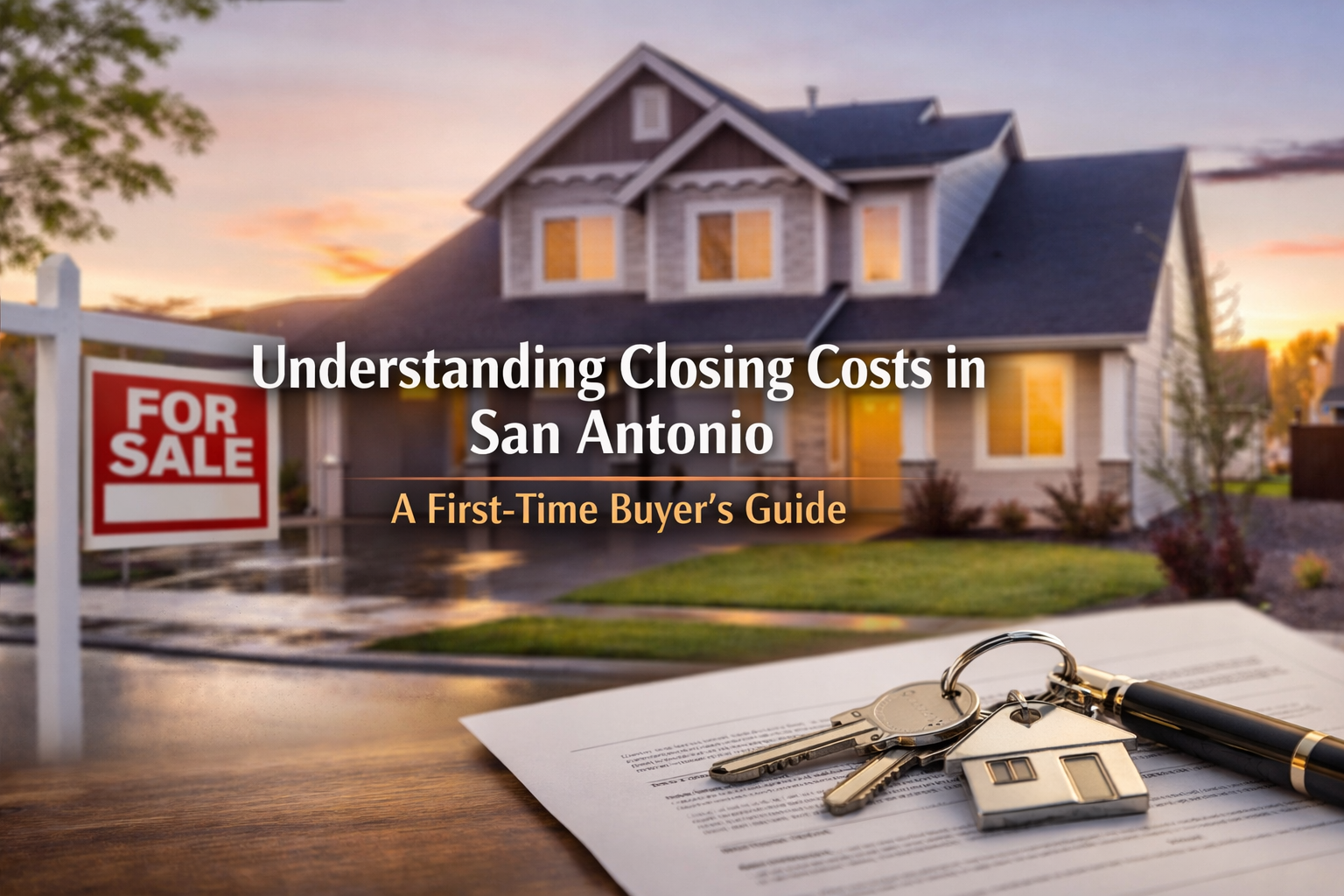
Closing costs are the one-time fees and expenses buyers pay when purchasing a home in San Antonio, separate from and in addition to the down payment. For first-time buyers in Greater San Antonio, these costs often range from 2-5% of the purchase price and typically include lender fees, title charges, prepaid expenses, and items tied to Texas-specific real estate practices. Understanding what's included in closing costs, which fees are negotiable, and when these costs are due helps San Antonio buyers across Bexar County plan confidently and avoid unpleasant surprises at the closing table. This comprehensive guide explains buyer closing costs clearly using local context so first-time buyers can move forward with complete clarity and proper financial preparation.
Direct Answer
Closing costs in San Antonio typically include lender origination and processing fees, title and escrow charges, prepaid property taxes and homeowner's insurance, government recording fees, and initial escrow account funding. First-time buyers should plan for these costs early in the process, review all estimates carefully, and understand which specific fees are negotiable versus fixed and non-negotiable.
Key Points at a Glance
- Closing costs are separate from and in addition to your down payment
- Most buyer costs come from lenders, title companies, and prepaid future expenses
- Texas uses title companies rather than attorneys for real estate closings
- Costs typically range from 2-5% of the purchase price in San Antonio
- Some costs are negotiable through seller concessions, others are fixed
- Buyers receive multiple cost estimates before closing day
- Final numbers can change slightly from initial estimates
- Understanding costs early reduces stress and financial surprises
What Are Closing Costs for San Antonio Home Buyers?
Closing costs are the collection of expenses required to finalize and complete the purchase of a home beyond just the down payment. In San Antonio and throughout Texas, these costs follow state-specific real estate practices that differ in some important ways from other states across the country.
First-time buyers are often genuinely surprised by how many individual line items appear on a closing disclosure statement, but most fall into predictable, understandable categories once explained clearly. The key is understanding these categories early in your home buying journey rather than discovering them days before closing.
Why closing costs exist:
Closing costs compensate various parties involved in the transaction—lenders who process your mortgage, title companies who ensure clean ownership, insurance companies who protect the property, and government entities who record the transaction officially. Each service provides important protections or requirements necessary for a successful, legal real estate transfer.
Understanding these costs early and thoroughly helps you budget accurately, negotiate effectively, and reduces stress significantly during the final stages of the home buying process. For comprehensive guidance on the complete buying journey, the resource on The Home Buying Process in San Antonio provides step-by-step context.
Lender-Related Closing Costs
Lender fees cover the administrative costs of processing, underwriting, and approving your mortgage loan.
Obtaining a mortgage involves substantial work by the lender—verifying your income and employment, reviewing your credit history, appraising the property value, underwriting the loan for approval, and preparing all closing documentation. These services generate fees that appear on your closing disclosure.
Common lender-related fees include:
- Loan origination fee: Typically 0.5-1% of loan amount, covers lender's administrative work
- Underwriting fee: Compensates underwriter for reviewing and approving your loan application
- Processing fee: Covers administrative handling of your loan file and documentation
- Credit report fee: Cost of pulling your credit from all three major bureaus
- Appraisal fee: Professional property valuation (often paid earlier but included in totals)
- Flood certification: Determines if property is in flood zone requiring special insurance
- Tax service fee: Ensures property taxes are paid and monitored during loan term
These fees compensate the lender and third parties for evaluating your loan application thoroughly, verifying income and assets, and ensuring the property meets all lending standards and requirements.
Important consideration: Some lenders bundle multiple fees into single line items, while others itemize everything separately. This makes direct comparison challenging but not impossible. When comparing lenders, focus on total lender fees rather than individual line items, as naming conventions vary.
Quick Takeaway: Lender fees vary significantly by lender and loan type, making comparison shopping critically important for first-time buyers seeking the best overall deal.
Title and Escrow Costs in San Antonio
Title and escrow fees protect your ownership rights and manage the entire closing process from contract to funding.
In Texas, title companies handle real estate closings instead of real estate attorneys like in many northeastern and some other states. This is an important distinction that affects both the process and the associated costs.
Buyer-related title and escrow costs typically include:
- Lender's title insurance policy: Protects the lender's interest in the property (required by lender)
- Title search and examination: Research to verify clean ownership and identify any liens or issues
- Escrow or settlement fee: Compensation for title company managing the closing process
- Endorsements: Additional title insurance coverage for specific risks or situations
- Document preparation fees: Creating deed, closing documents, and required paperwork
Understanding title insurance in Texas:
Title insurance protects against ownership disputes, undiscovered liens, fraud, forgery, and other title defects that could threaten your ownership. Unlike other insurance that protects against future events, title insurance protects against past issues that weren't discovered during the title search.
In San Antonio, there are actually two title insurance policies involved in most transactions:
- Lender's policy: Protects the lender's financial interest (buyer pays this)
- Owner's policy: Protects the buyer's ownership interest (seller often pays this, but negotiable)
While the seller traditionally pays for the owner's title insurance policy in San Antonio and most of Texas, this is customary practice—not a legal requirement. It can be negotiated in the purchase contract, and in some transactions buyers agree to pay for their own owner's policy.
Quick Takeaway: Title and escrow costs represent significant expenses but provide essential legal protections, and who pays what can vary based on contract negotiations.
Prepaid Costs: Property Taxes and Insurance
Prepaid costs are not fees paid to service providers—they're future expenses you'll owe anyway that are collected upfront at closing.
This distinction is important because first-time buyers sometimes view prepaids as "lost money" or additional fees, when in reality they're simply advance payments for obligations you'd be paying soon after closing anyway.
Prepaid items at closing typically include:
- Homeowner's insurance premium: Full annual premium paid upfront (12 months)
- Property taxes: Prorated amount to cover from closing through tax payment dates
- Prepaid interest: Daily interest from closing date until first mortgage payment
- HOA dues: If applicable, often collected for upcoming months
Understanding property tax timing in San Antonio:
Texas property taxes are assessed annually and typically paid in arrears (meaning you pay for the previous year). Tax bills are usually sent in October with payment due by January 31st of the following year.
When you close on a home in San Antonio, you'll typically owe prorated property taxes to reimburse the seller for taxes they paid covering the period you'll own the home. The exact calculation depends on closing date and when taxes were last paid.
Initial escrow account funding:
In addition to the immediate prepaids, lenders also require you to fund an initial escrow account—sometimes called an impound account—which holds money for future property tax and insurance payments. This ensures funds are available when these bills come due.
Lenders are allowed to collect up to two months of estimated property taxes and insurance at closing to establish this cushion. This protects both you and the lender from payment gaps.
Quick Takeaway: Prepaids are a necessary part of planning and budgeting, not money lost—they cover future bills you would pay anyway as a homeowner.
"I have now been acquainted with Tami for almost a decade. I first met her as a client of mine in a former career. Throughout the entire time of knowing her I always found her to be extremely professional and courteous, and always focused on serving her clients in her real estate business. Based on my personal experience with her clients through real estate, I can personally say that choosing to use Tami Price as your real estate agent would be one of the best decisions that you could make. Do yourself a favor and call Tami whether or not you think you're ready for ownership. She is dedicated to guiding you through the process, not just selling you a house." — Jose R.
Government Recording Fees and Transfer Taxes
These fees cover official documentation, legal recording of ownership transfer, and government-required filings.
Every real estate transaction must be officially recorded with the county to establish legal ownership and create public record. These government services generate fees that appear on your closing statement.
Common government fees include:
- County recording fees: Official recording of deed, deed of trust, and other documents
- Transfer tax or filing charges: Some counties charge for ownership transfer (varies by location)
- Municipal utility charges: Connecting or transferring utility accounts in some areas
In Bexar County and most Texas counties, these fees are relatively modest compared to states with substantial transfer taxes. Texas doesn't have a state transfer tax, which keeps these costs lower than many other states.
Quick Takeaway: Government recording fees are predictable, modest, and completely non-negotiable, but they're usually smaller compared to other closing expenses.
Negotiable vs. Non-Negotiable Closing Costs
Understanding which closing costs can be negotiated and which are fixed helps first-time buyers develop effective offer strategies.
Not all closing costs are set in stone. Some can be reduced through negotiation, lender credits, or seller concessions, while others are fixed by third parties or government entities and cannot be changed regardless of negotiation.
Often negotiable or reducible:
- Lender origination and processing fees: Can vary significantly between lenders
- Title company fees: Can shop different title companies for better rates
- Seller concessions: Sellers can contribute toward buyer closing costs (common in balanced markets)
- Lender credits: Accept slightly higher interest rate in exchange for lender paying some costs
- Discount points: Optional fee to lower interest rate (you control whether to pay this)
Typically non-negotiable:
- Government recording fees: Set by county and state, non-negotiable
- Property taxes: Based on assessed value and tax rates, not negotiable
- Homeowner's insurance premiums: Set by insurance company based on coverage
- HOA transfer fees: Set by homeowner's association if applicable
- Credit report fees: Third-party charges that are standardized
Seller concessions in San Antonio:
In balanced or buyer-favorable markets, sellers are often willing to contribute toward buyer closing costs as part of negotiation. This is commonly called "seller paid closing costs" or "seller concessions."
Typical concession ranges are 2-3% of purchase price for conventional loans, though exact limits depend on loan type and down payment. These concessions can significantly reduce cash needed at closing for first-time buyers.
Understanding negotiation strategies is covered comprehensively in Making an Offer & Negotiation, which helps buyers structure competitive yet protective offers.
Quick Takeaway: Understanding what's flexible versus fixed helps buyers negotiate smarter and reduce out-of-pocket closing costs strategically.
When Do Buyers Learn Their Exact Closing Costs?
Buyers receive multiple estimates throughout the process, with final exact numbers provided just before closing day.
The closing cost disclosure timeline is federally regulated to protect buyers from last-minute surprises and give adequate time to review all charges before committing funds.
Key documents in the timeline:
1. Loan Estimate (LE):
- Provided within 3 business days after applying for mortgage
- Standardized 3-page form showing estimated loan terms and closing costs
- Required by all lenders, making comparison shopping easier
- Estimates are based on typical costs, not final exact amounts
2. Closing Disclosure (CD):
- Provided at least 3 business days before scheduled closing
- Shows final, exact loan terms and itemized closing costs
- Must be reviewed carefully and compared to Loan Estimate
- Any significant changes require a new 3-day waiting period
Between these documents:
You may receive updated estimates if your loan details change, interest rates lock, or property-specific information becomes available. It's normal for some line items to change slightly between Loan Estimate and final Closing Disclosure.
What to review carefully:
- Compare final Closing Disclosure to initial Loan Estimate
- Verify no unexpected fees appeared
- Confirm seller concessions are properly credited
- Check that earnest money deposit is correctly credited
- Ensure property taxes are calculated correctly
Reviewing these documents carefully allows time to ask questions, identify errors, and confirm accuracy before wiring funds or arriving at closing.
Quick Takeaway: Early document review prevents last-minute surprises and gives you time to address any discrepancies or questions before closing day.
How Much Should First-Time Buyers Budget for Closing Costs?
While exact amounts vary based on purchase price, loan type, and negotiation, general guidelines help with planning.
Most first-time buyers in San Antonio should budget approximately 2-5% of the purchase price for closing costs, though this range can vary based on several factors.
Factors affecting total closing costs:
- Purchase price: Higher price means higher costs for percentage-based fees
- Loan type: FHA, VA, conventional, and USDA loans have different fee structures
- Down payment amount: Affects loan amount and some percentage-based costs
- Property taxes: Vary by location and timing of closing during tax year
- Insurance costs: Based on property value, location, and coverage level
- Seller concessions: Can reduce buyer's out-of-pocket costs significantly
- Lender credits: Trading higher rate for lower upfront costs
- Title insurance rates: Promulgated by state but can vary slightly
Example scenarios for San Antonio:
- $250,000 purchase: Approximately $5,000-$12,500 in closing costs
- $350,000 purchase: Approximately $7,000-$17,500 in closing costs
- $450,000 purchase: Approximately $9,000-$22,500 in closing costs
These ranges assume conventional financing. VA loans eliminate some costs (no appraisal fee, limited closing costs), while FHA loans add upfront mortgage insurance premium.
Quick Takeaway: Budget 2-5% of purchase price for closing costs, request detailed estimates early, and explore seller concessions to reduce out-of-pocket expenses.
Questions First-Time Buyers Often Ask
Q: Can closing costs be rolled into my mortgage loan amount to reduce cash needed at closing? A: Generally no—closing costs cannot be directly added to your loan amount in most cases. However, you can use lender credits (accepting a slightly higher interest rate in exchange for lender paying some costs) or negotiate seller concessions to reduce your out-of-pocket cash needed at closing.
Q: Are closing costs higher or different for first-time buyers compared to repeat buyers? A: No, closing costs are based on purchase price, loan amount, and loan type—not whether you're a first-time buyer. However, first-time buyers may feel the impact more because they haven't experienced these costs before and may have less savings cushion.
Q: Do VA loans, FHA loans, or other special programs significantly change closing costs? A: Yes, different loan programs have different fee structures. VA loans eliminate some costs and limit others by regulation, FHA loans add upfront mortgage insurance premium, and each program has specific requirements that affect total closing costs.
Q: Can I get a realistic estimate of closing costs before making an offer on a home? A: Yes, absolutely. A knowledgeable local agent and experienced lender can provide realistic estimates based on purchase price range, loan type, and typical San Antonio closing costs before you make any offer.
Q: What happens if I can't afford the closing costs after my offer is accepted? A: This is why early planning is critical. Options include renegotiating for seller concessions, exploring lender credits, or in worst case, potentially withdrawing from the contract during contingency periods—though this should be avoided through proper planning.
Common Misconceptions About Closing Costs
Misconception: Closing costs and down payment are the same thing or should be added together. Reality: These are completely separate expenses. Down payment is your equity contribution toward the purchase price. Closing costs are the fees and prepaid expenses required to complete the transaction. Both must be budgeted separately.
Misconception: All closing costs are negotiable and can be reduced through bargaining. Reality: Some costs like government fees, property taxes, and insurance premiums are fixed and non-negotiable regardless of how well you negotiate. Other costs like lender fees and seller concessions are negotiable.
Misconception: The Loan Estimate you receive early is the final, guaranteed amount you'll pay. Reality: The Loan Estimate is exactly that—an estimate based on typical costs. The final Closing Disclosure received before closing shows actual amounts, which can vary somewhat from initial estimates.
Misconception: First-time buyers always pay more in closing costs than experienced buyers. Reality: Closing costs are based on loan amount, purchase price, and loan type—not buyer experience level. All buyers pay similar costs for similar transactions.
Misconception: Cash buyers don't have any closing costs since there's no mortgage. Reality: Cash buyers avoid lender-related fees but still pay for title insurance, title search, escrow fees, recording fees, and prorated property taxes. Closing costs still exist, just in reduced form.
Important Considerations for San Antonio Buyers
Before finalizing your home purchase in Greater San Antonio, carefully consider these closing cost factors:
Local Texas-specific practices:
- Texas uses title companies rather than attorneys for closings
- Seller typically pays for owner's title insurance policy (but negotiable)
- No state transfer taxes keep government fees lower than many states
- Property tax timing affects prorated amounts at closing
Property tax timing considerations:
- San Antonio taxes assessed annually, paid in arrears
- Closing date affects prorated tax responsibilities
- Tax amounts vary significantly by school district and location
- Initial escrow funding required for property taxes
Neighborhood and property-specific factors:
- HOA communities add transfer fees and initial dues
- Older homes may require additional inspections affecting costs
- Flood zones require flood insurance affecting prepaids
- Some neighborhoods have MUD (Municipal Utility District) taxes
Contract negotiation strategies:
- Seller concessions common in balanced markets
- Typical concession requests are 2-3% of purchase price
- Closing cost assistance can be negotiated upfront in offer
- Some sellers prefer price reduction over paying closing costs
For comprehensive guidance on making strategic offers that include closing cost considerations, the detailed resource on Deciding to Buy a Home in San Antonio provides excellent context.
Quick Takeaway: Local San Antonio market knowledge and Texas-specific practices significantly affect closing cost planning and strategy.
"Working with Tami was an absolute pleasure from start to finish! She helped us purchase our new home in the Brookmill community and made the entire process incredibly smooth — even with us living out of state during the move from Florida to San Antonio." — Jenni G.
Frequently Asked Questions
Q: How much should first-time buyers realistically budget for closing costs in San Antonio? A: While exact amounts vary based on purchase price and loan type, planning for 2-5% of the purchase price is a realistic range. Getting detailed estimates from your lender and agent early in the process provides the most accurate planning numbers for your specific situation.
Q: Who ultimately decides which specific closing costs the buyer pays versus the seller? A: Costs are determined by a combination of loan program requirements (lender decides), standard Texas real estate practices (customary allocations), and contract negotiations (what buyer and seller agree to). Some costs are assigned by custom, others by negotiation.
Q: Can unexpected closing costs delay or prevent my closing from happening? A: Yes, they can if buyers are unprepared financially and don't have sufficient funds to close. This is exactly why early planning, reviewing estimates carefully, and having adequate savings beyond just down payment is critically important for first-time buyers.
Q: Are closing costs in San Antonio higher or lower than other Texas cities? A: Closing costs in San Antonio are generally comparable to other major Texas metros. Texas's lack of state transfer taxes keeps costs lower than many states. The biggest variables are purchase price, property taxes (which vary by area), and insurance costs (which vary by property).
Q: Can my real estate agent help me understand and estimate closing costs before I find a home? A: Absolutely yes. Experienced San Antonio agents provide realistic closing cost estimates based on your price range and typical local costs, helping you budget appropriately before starting the home search process.
The Bottom Line
Buying your first home in San Antonio is exciting and represents a major financial milestone, but understanding closing costs thoroughly is essential for a smooth, stress-free experience. Knowing what fees to expect, which costs are negotiable versus fixed, and how Texas-specific closing practices work gives first-time buyers confidence, clarity, and the ability to budget accurately.
Closing costs typically range from 2-5% of the purchase price and include lender fees, title and escrow charges, prepaid expenses, and government recording fees. While some costs are fixed and non-negotiable, others can be reduced through lender shopping, seller concessions, or strategic negotiation.
The key to managing closing costs successfully is early planning, careful review of all estimates and disclosures, and working with experienced local professionals who understand San Antonio's market and Texas's unique real estate practices.
First-time buyers across Greater San Antonio—from Bexar County neighborhoods to surrounding communities in Comal, Guadalupe, and Kendall counties—benefit from understanding these costs early rather than being surprised days before closing. Proper preparation turns potential stress into confidence and ensures you're financially ready for every aspect of homeownership.

Contact Tami Price, REALTOR® | San Antonio, TX
Tami Price is a REALTOR® and Broker Associate serving the Greater San Antonio area, including Bexar, Comal, Guadalupe, Kendall, and Medina counties. With nearly two decades of experience and over 650+ five-star reviews across multiple platforms, she provides clear, comprehensive guidance for first-time buyers understanding closing costs, navigating the complete buying process, and making confident financial decisions throughout their homeownership journey.
Tami Price, REALTOR®, Broker Associate
📞 210 620 6681
✉️ tami@tamiprice.com
🌐 TamiPrice.com
📅 Book a Consultation
Disclaimer: This content is for educational purposes only and reflects general market conditions in Greater San Antonio at the time of writing. Real estate conditions vary by neighborhood, property type, and buyer profile. Always consult with a licensed real estate professional, lender, or legal advisor before making any real estate decision.
Categories
- All Blogs (944)
- Home Buying (21)
- Neighborhood Guides (46)
- 10 Incentive and Rate Buydown Questions (1)
- 10 Military Neighborhood (1)
- 10 Mistakes Sellers Make (1)
- 10 Strategies to Coordinate a Same Day Close (1)
- 12 Lifestyle Questions to Move In (1)
- 12 PCS What Ifs (1)
- 12 Photos and Marketing Assets (1)
- 13 PCS Hunting Trip Tips (1)
- 14 Design Center Decisions (1)
- 15 Red Flags Touring Home in San Antonio (1)
- 2026 Market (1)
- 30 days after closing your home (1)
- 7 Offer Terms Beyond Price (1)
- 7 VA Specific Questions (1)
- 78015 Ranked One (1)
- 8 Bridge (1)
- 8 Myths Buyers Believe about Down Payments (1)
- 8 Reasons VA Buyers Love New Construction (1)
- 9 Mistakes Move Up Buyers Make (1)
- 9 Questions to Decide If You Keep Your PCS Home (1)
- 9 Timeline Questions Every Buyer Need to Ask (1)
- 9 Warranty Questions to Ask (1)
- 9 Ways to Attract VA & Military Buyers (1)
- 90 days before your move (1)
- About Tami Price (6)
- Active Adult Homes (1)
- Affordable Communities (2)
- Affordable Housing & Community Development (5)
- Agent Qualifications and Credentials (1)
- Agent Qualifications and Experience (1)
- Agent Recognition (3)
- Agent Selection (1)
- AI and Real Estate Tools (1)
- Alamo Heights (5)
- Alamo Heights ISD (1)
- Alamo Heights Real Estate (1)
- Alamo Ranch (3)
- Amenities in Helotes, Texas (3)
- Apartment Market (1)
- Appraisals (1)
- Arts and Culture (1)
- Awards and Recognition (7)
- Balcones Creek (1)
- Best Neighborhoods to Live in Cibolo, TX (3)
- Best Neighborhoods to Live in San Antonio (16)
- Best Places to Live in Leon Valley: A Neighborhood Guide (1)
- Best Places to Live in Northeast Inner Loop: A Neighborhood Guide (1)
- Bexar County Property Tax (1)
- Bexar County Real Estate (3)
- Blue Tape Walkthrough (1)
- Boerne Home Sellers (1)
- Boerne Neighborhoods (2)
- Boerne Texas (9)
- Broadway Corridor Development (1)
- Build-to-Rent Communities (1)
- Builder Contracts & Warranties (3)
- Builder Incentives (1)
- Builder Warranties (1)
- Buyer (97)
- Buyer Activity San Antonio (1)
- Buyer and Seller Guidance (4)
- Buyer Due Diligence (1)
- Buyer Education (46)
- Buyer Guide (9)
- Buyer Guides (7)
- Buyer Protection Strategies (1)
- Buyer Representation (1)
- Buyer Representation Expertise (1)
- Buyer Resources (90)
- Buyer Strategy (2)
- Buyers (13)
- Buyers Agent (1)
- Buying a Foreclosed Home in San Antonio (10)
- Buying a Home (3)
- Buying a Home in San Antonio (6)
- Buying Near JBSA (1)
- Buying Timeline (1)
- Buying vs Renting (1)
- Castroville, TX (8)
- Central San Antonio (1)
- Central San Antonio Development (2)
- Central Texas Growth (1)
- Choosing a Real Estate Agent (1)
- Choosing an Agent (1)
- Cibolo Communities (1)
- Cibolo Home Sellers (1)
- Cibolo TX (15)
- Client Reviews and Testimonials (1)
- Client Satisfaction (1)
- Client Stories (1)
- Client Testimonial (4)
- Clients review (4)
- Closing (1)
- Cobblestone (1)
- Comal County (1)
- Commercial & Retail Development (27)
- Commercial Development (13)
- Commercial Development Impact on Home Values (1)
- Commercial Real Estate (1)
- Community (1)
- Community Amenities (2)
- Community Development (23)
- Community Development and Real Estate (3)
- Community Events & Development (1)
- Community Guides (1)
- Community Infrastructure (1)
- Community Investment Impact (2)
- Community Landmarks (1)
- Community News (4)
- Community Planning (2)
- Community Revitalization (1)
- Community Spotlights (1)
- Commuter Neighborhoods (1)
- Cons of Living in Helotes, TX (4)
- Conservation Communities (1)
- Contingency Questions (1)
- Converse Home Sellers (1)
- Converse Homes For Sale (3)
- Converse Real Estate (1)
- Converse TX (10)
- Converse TX Real Estate (1)
- Cost of Living Guides (1)
- Cost of Living in San Antonio TX (25)
- CPS Energy Programs (1)
- Custom Homes (5)
- Davis Ranch (1)
- Days on Market (1)
- Deco District San Antonio (1)
- Denver Heights (1)
- Down Payment Assistance (1)
- Downtown Boerne (1)
- Downtown Development (3)
- Downtown Living (1)
- Downtown Revitalization (14)
- Downtown San Antonio (2)
- Downtown San Antonio Real Estate (5)
- Downtown San Antonio Revitalization (1)
- Dual Military (1)
- East Side Living (1)
- East Side Neighborhoods (1)
- East Side San Antonio (4)
- Economic Development (3)
- Economic Growth & Industry (1)
- Education, Texas Hill Country (1)
- Emerald Pointe (1)
- Employment (1)
- Employment Corridors (1)
- Encino Forest (1)
- Entertainment Economy (1)
- Equity and Pricing Strategy (2)
- Equity Q&A (1)
- Established Communities (3)
- Events in San Antonio (207)
- Expert Advice from Tami Price, Realtor® (10)
- Fair Oak Ranch (1)
- Family Activities (2)
- Family Homes (3)
- Family Living in San Antonio (1)
- FAQ (1)
- Far Northwest San Antonio (1)
- Far West San Antonio (1)
- Far Westside Real Estate (4)
- Farmer Markets in San Antonio (1)
- Fastest Growing Zip Codes in America (1)
- Featured Homes for Sale (2)
- Featured Properties (1)
- Final Walkthrough (1)
- Financial Planning (11)
- Financing Strategy (1)
- First Time Buyers (23)
- First Time Sellers (1)
- First-Time Buyers (6)
- First-Time Homebuyer Resources (4)
- First-Time Homebuyer Tips (2)
- First-Time Homebuyers (6)
- First-Time Investors (1)
- Fort Sam Houston (3)
- Fort Sam Houston Real Estate (1)
- Fort Sam Houston, TX (2)
- Fox Grove (1)
- FSBO vs Agent Representation (1)
- Future Rental (1)
- Gated Communities (5)
- Golf Communities (1)
- Great Northwest (1)
- Greater San Antonio Housing Trends (2)
- Greater San Antonio Real Estate (5)
- Green Home Upgrades (1)
- Growth and Development (11)
- Healthcare (1)
- HELOC (1)
- Helotes Home Sellers (1)
- Highway 151 Corridor Growth (1)
- Hill Country Business (1)
- Hill Country Communities (2)
- Hill Country Development (3)
- Hill Country Homes for Sale (1)
- Hill Country Living (3)
- Hill Country Market Updates (1)
- Hill Country Real Estate (4)
- Hill Country Retreat (1)
- Historic Districts (5)
- Historic Neighborhoods (4)
- Historic Preservation (2)
- Holiday Attractions (1)
- Holiday Guide (1)
- Home Buying (7)
- Home Buying Education (3)
- Home Buying Guide (7)
- Home Buying Process (8)
- Home Buying Strategy (2)
- Home Buying Tips (6)
- Home Energy Efficiency San Antonio (5)
- Home Financing (2)
- Home Improvement ROI (1)
- Home Inspections (3)
- Home Maintenance (1)
- Home Preparation (2)
- Home Pricing Strategy (14)
- Home Renovation for Resale (1)
- Home Selling (12)
- Home Selling Guide (11)
- Home Selling Strategies (3)
- Home Selling Strategy (3)
- Home Selling Tips (22)
- Home Staging and Updates (2)
- Home Values (2)
- Homebuyer Education (15)
- Homebuyer Resources (1)
- Homebuying Guide (1)
- Homebuying Tips (3)
- Homeowner (39)
- Homeowner Tax Benefits (1)
- Homeownership Costs (1)
- Homes for Sale (2)
- Homes for sale near Lackland AFB (4)
- Homes Near Military Bases (1)
- Homestead amenities (1)
- Horizon Pointe (1)
- House Hunting Guide (1)
- Housing (1)
- Housing Community Development (1)
- Housing Development (2)
- Housing Market Updates (3)
- How to Buy a House in San Antonio TX (48)
- Huebner Oaks shopping center (1)
- Hunters Ranch (1)
- Hybrid (1)
- I-10 Corridor (1)
- I-35 Corridor (1)
- In Person (1)
- Incorporated Cities (6)
- Industrial Investment Impact (1)
- Industry News (2)
- Industry Recognition (1)
- Infrastructure & Growth Projects (26)
- Infrastructure and Sustainability (1)
- Infrastructure Development (1)
- Infrastructure Investment (1)
- Infrastructure Updates (2)
- Interest Rates (2)
- Invest in San Antonio (46)
- Investment Opportunities (3)
- Investment Property San Antonio (4)
- JBSA (9)
- JBSA Housing (11)
- JBSA Real Estate (4)
- JBSA Resources (7)
- Joint Base San Antonio (5)
- Joint Base San Antonio Housing (1)
- Judson ISD (2)
- Kendall County (1)
- La Cantera Retail Development (1)
- Lackland AFB (7)
- Lackland AFB Housing (1)
- Land Conservation (1)
- Land Use Planning (1)
- Lera MLS (15)
- Lifestyle & Community Growth (18)
- Lifestyle & Local Growth (12)
- Lifestyle Amenities (1)
- Lifestyle Communities (1)
- Listing Preparation (1)
- Listing Strategy (1)
- Live Oak (1)
- Living in San Antonio, TX (52)
- Living Near Randolph AFB (7)
- Loan Programs (1)
- Local Attractions (3)
- Local Business (1)
- Local Business & Development (9)
- Local Business & Economy (3)
- Local Business Spotlight (20)
- Local Business Support (5)
- Local Development (4)
- Local Development News (9)
- Local Market Insights (5)
- Local News (2)
- Local News Around San Antonio (2)
- Local Policy Changes (1)
- Local Real Estate News (1)
- Loop 1604 Corridor Growth (2)
- Loop 410 Corridor Development (1)
- Luxury Communities (3)
- Luxury Homes (2)
- Luxury Real Estate (1)
- Luxury Retail San Antonio (1)
- MacArthur Park (1)
- Major Developments (2)
- Making Offers on Homes (1)
- Market Analysis (26)
- Market Conditions (47)
- Market Expertise (1)
- Market Insights (5)
- Market Strategy (1)
- Market Timing (2)
- Market Trends (10)
- Market Trends & Insights (2)
- Market Update (18)
- Market Update 2026 (1)
- Market Updates (22)
- Master Planned Communities (12)
- Medical Center Area Real Estate (1)
- Medina Valley ISD (2)
- Midtown Living (1)
- Military & Economic Impact (3)
- Military Buyers (3)
- Military Communities (1)
- Military Families (1)
- Military Family Resources (1)
- Military Heritage (1)
- Military Homebuying (3)
- Military Homeownership (1)
- Military Housing (3)
- Military Housing Market in Texas (16)
- Military Life in San Antonio (2)
- Military Neighborhoods (1)
- Military PCS Relocations (3)
- Military Real Estate (2)
- Military Relocation (100)
- Military Relocation & VA Loans (10)
- Military Relocation San Antonio (4)
- Military Relocation Services (3)
- Military Relocation to San Antonio (50)
- Military Relocations (20)
- Military Relocations & VA Home Loans (5)
- Mixed-Income Housing (1)
- MLS Accuracy & Data Transparency (1)
- Mortgage Programs (1)
- Mothers Day in San Antonio (1)
- Move to Boerne TX (18)
- Move to Castroville TX (11)
- Move to Converse TX (16)
- Move to New Braunfels (1)
- Move to North San Antonio (19)
- Move to San Antonio TX (73)
- Move to Selma TX (19)
- Move to Shertz TX (13)
- Move to Texas (53)
- Move Up Buyer Resources (1)
- Move Up Buyers (23)
- Move-In Ready Homes (3)
- Move-In Ready Homes San Antonio (2)
- Move-Up Buyers (2)
- Moving to Helotes, TX (17)
- Moving to San Antonio (69)
- MUD Taxes (1)
- Natalia Homes For Sale (1)
- Near East Side Living (1)
- Negotiation Strategy (2)
- Neighborhood Amenities (1)
- Neighborhood Development (1)
- Neighborhood Guides (7)
- Neighborhood Investment (1)
- Neighborhood News (2)
- Neighborhood Revitalization (2)
- Neighborhood Spotlights (12)
- Neighborhood Updates (1)
- Neighborhoods near Randolph AFB (12)
- New Braunfels (6)
- New Braunfels Homes For Sale (1)
- New Braunfels News (3)
- New Braunfels Real Estate (3)
- New Businesses (2)
- New Construction (63)
- New Construction Communities (1)
- New Construction Homes (13)
- New Construction Homes San Antonio (5)
- New Construction vs Resale (2)
- New Construction Without Customization (1)
- New Construction Without the Wait (1)
- New Contruction Cost (1)
- New Development (3)
- New Listing (19)
- New Restaurants (3)
- News (211)
- News & updates (213)
- No HOA Homes (1)
- North Central San Antonio (5)
- North East ISD (4)
- North San Antonio (9)
- North San Antonio Real Estate (3)
- North Side Neighborhoods (1)
- North Side San Antonio Development (2)
- Northeast Inner Loop (1)
- Northeast Inner Loop Neighborhoods (1)
- Northeast San Antonio (3)
- Northside ISD (5)
- Northwest San Antonio (9)
- Northwest San Antonio Development (1)
- Northwest San Antonio Growth (1)
- Northwest San Antonio Real Estate (3)
- Northwood (1)
- Olympia Hills (1)
- One-Story Homes (1)
- Outdoor Living (1)
- Parks and Recreation (2)
- PCS and JBSA (2)
- PCS checklist (1)
- PCS Guide (4)
- PCS Moves (12)
- PCS Moves to Joint Base San Antonio (4)
- PCS Planning (16)
- PCS Randolph AFB (17)
- PCS Relocation (1)
- PCS Resources (6)
- PCS San Antonio (46)
- PCS to San Antonio (42)
- Pearl District Area Real Estate (2)
- PID Assessments (1)
- Pinon Creek (1)
- Pipe Creek (1)
- Places to Eat Near Randolph AFB (1)
- Pool Homes (1)
- Pre Approval (1)
- Pre-Listing Preparation (2)
- Pre-Listing Process (1)
- Prescott Oaks (1)
- Pricing and Marketing Strategy (3)
- Professional Awards and Achievements (2)
- Professional Real Estate Representation (1)
- Property Tax Exemptions Texas (1)
- Property Value Enhancement (1)
- pros and cons living in Converse TX (3)
- Pros and Cons Living in Selma TX (6)
- Pros and Cons of Living in Castroville, TX (4)
- Pros and Cons of Living in San Antonio (33)
- PT500 List (1)
- Purchase Negotiation (1)
- Quality of Life (1)
- Quick Close Real Estate (1)
- Randolph AFB Neighborhoods (2)
- Real Estate (1)
- Real Estate Advice (1)
- Real Estate Agent Recognition (6)
- Real Estate Agent Selection (2)
- Real Estate Agent Value (1)
- Real Estate Consultation (1)
- Real Estate Finance (1)
- Real Estate Financing (1)
- Real Estate Impact (1)
- Real Estate Investment San Antonio (2)
- Real Estate Legal Issues (1)
- Real Estate Market Insights (2)
- Real Estate Market Trends (5)
- Real Estate Professional Designations (1)
- Real Estate Strategy (1)
- Real Estate Technology & Trends (2)
- Real Estate Tips (1)
- Real Estate Tips and Guides (2)
- Real Estate Trends (4)
- RealTrends Verified (1)
- Regional Development (1)
- Regional Real Estate (2)
- Relocating to San Antonio (2)
- Relocation (4)
- Relocation Resources (2)
- Relocation to San Antonio (55)
- Remote Homebuying (1)
- Rental Housing (1)
- Rental Property (1)
- Rental Strategy (1)
- Resale Properties (1)
- Retail Development (2)
- Retire in Boerne TX (11)
- Retire in San Antonio (37)
- Retirement Communities (1)
- Reviews and Recognition (1)
- Rockwall Ranch (1)
- Rural Living (2)
- SABOR (28)
- San Antonio Area Listings (1)
- San Antonio Business Growth (1)
- San Antonio Buyer Resources (2)
- San Antonio Communities (3)
- San Antonio Community Events (1)
- San Antonio Community News (1)
- San Antonio Data Center Development (1)
- San Antonio Development (5)
- San Antonio Development & East Side Real Estate (1)
- San Antonio Dining and Lifestyle (3)
- San Antonio East Side Development (1)
- San Antonio Employment Growth (1)
- San Antonio Food & Community Development (2)
- San Antonio Growth (8)
- San Antonio Home Buying and Selling (2)
- San Antonio Home Buying Guide (5)
- San Antonio Home Improvement (2)
- San antonio home prices (3)
- San Antonio Home Sellers (3)
- San Antonio Homeowner Guide (1)
- San Antonio Homeowner Resources (1)
- San Antonio Homes for Sale (12)
- San Antonio Housing Market (2)
- San Antonio Housing Market & Mortgage Financing (2)
- San Antonio Housing Market Analysis (2)
- San Antonio Housing Trends & Market Analysis (4)
- San Antonio Industrial Development (1)
- San Antonio Industrial Policy (1)
- San Antonio Investment Properties (2)
- San Antonio Job Market (1)
- San Antonio Lifestyle Amenities (2)
- San Antonio Listing (1)
- San Antonio Living (1)
- San Antonio Market (3)
- San Antonio Market Updates (18)
- San Antonio Military Relocation (3)
- San Antonio Neighborhoods (67)
- San Antonio New Construction & Master-Planned Communities (4)
- San Antonio New Home Communities (1)
- San Antonio News (229)
- San Antonio North Side Development (1)
- San Antonio Parks (1)
- San Antonio Property Investment (1)
- San Antonio Property Taxes (2)
- San Antonio Real Estate (165)
- San Antonio Real Estate Agents (6)
- San Antonio Real Estate Excellence (1)
- San Antonio Real Estate Guide (6)
- San Antonio Real Estate Market (41)
- San Antonio Real Estate Market Analysis (6)
- San Antonio Real Estate News (2)
- San Antonio REALTOR Awards (1)
- San Antonio Restaurant News (2)
- San Antonio Restaurant Openings (1)
- San Antonio Seller Resources (2)
- San Antonio Sellers (1)
- San Antonio Spec Homes (1)
- San Antonio Spurs Community Programs (1)
- San Antonio Suburbs (1)
- San Antonio Transportation (2)
- San Antonio University Area Housing (1)
- San Antonio Urban Living (7)
- San Antonio West Side Development (2)
- San Antonio Zoning Policy (1)
- Scenic Loop (1)
- Schertz Home Sellers (1)
- Schertz Real Estate (1)
- Schertz, TX (13)
- School Districts (1)
- School Information (1)
- SCUCISD Schools (1)
- Secured Quick Offer (1)
- Sell Home In San Antonio TX (64)
- Seller (83)
- Seller Education (24)
- Seller Guide (4)
- Seller Guides (1)
- Seller Representation Expertise (1)
- Seller Resources (68)
- Seller Should Understand (1)
- Seller Strategy (3)
- Seller Tips (2)
- Sellers (10)
- Selling A Home in San Antonio (62)
- Selling Your San Antonio Home (3)
- Selma TX (9)
- Single-Story Homes (4)
- Smart Homes (1)
- Solar Homes (3)
- South San Antonio Real Estate (1)
- South Side Economic Growth (1)
- South Side San Antonio (1)
- Southtown (2)
- Southwest San Antonio Real Estate (1)
- Spec Homes and Inventory Homes (2)
- Spurs Arena Project Marvel (1)
- Stone Oak (2)
- Stone Oak Community News (5)
- Suburban Housing Growth (12)
- Suburban Living (2)
- Talise De Culebra (1)
- Technology Growth (3)
- Technology Sector Growth (1)
- Terrell Hills (3)
- Texas Acreage Properties (3)
- Texas Homestead Exemption (1)
- The Dominion Real Estate (1)
- The Rim Area Real Estate (1)
- Things to do in San Antonio TX (22)
- Things to do Near Randolph AFB (4)
- Time Planning (1)
- Time-Sensitive Home Buying (1)
- Timing Strategy (1)
- Tips for Buying New Construction (9)
- Tobin Hill Neighborhoods (2)
- Top Real Estate Agent in San Antonio (3)
- Tourism and Economic Development (1)
- Traders's Joe San Antonio (1)
- Transaction Coordination (1)
- Transportation Infrastructure (1)
- Two-Story Homes (2)
- Universal City (1)
- Updated Homes (2)
- Upscale Communities (1)
- Urban Communities (2)
- Urban Corridor Real Estate (1)
- Urban Development (5)
- Urban Living (3)
- Urban Neighborhoods (4)
- Urban Real Estate (1)
- Urban Renewal Projects (1)
- Urban Revitalization San Antonio (1)
- Utility Cost Reduction (1)
- UTSA Campus Development (1)
- VA Buyers (1)
- VA Home Loan Benefits (3)
- VA Loan Assumptions (3)
- VA loan benefits (27)
- VA Loan Guidance (1)
- VA Loan Home Buying Assistance (2)
- VA Loans (71)
- VA Loans and Military Benefits (3)
- VA Loans and Military Home Buying (3)
- VA Loans San Antonio (43)
- VET Benefits Living in San Antonio (3)
- Veterans Resources (3)
- Village Northwest (1)
- Virtual Buyers (1)
- Walkable Communities (1)
- week in sales (41)
- Weekly Sales Report (42)
- West San Antonio (2)
- West San Antonio Development (1)
- West San Antonio Real Estate (3)
- West San Antonio Real Estate Market (2)
- West Side Infrastructure Planning (1)
- West Side Real Estate (1)
- West Side San Antonio (2)
- Windcrest Homes for Sale (1)
Recent Posts