Understanding Builder Incentives When Buying New Construction in San Antonio
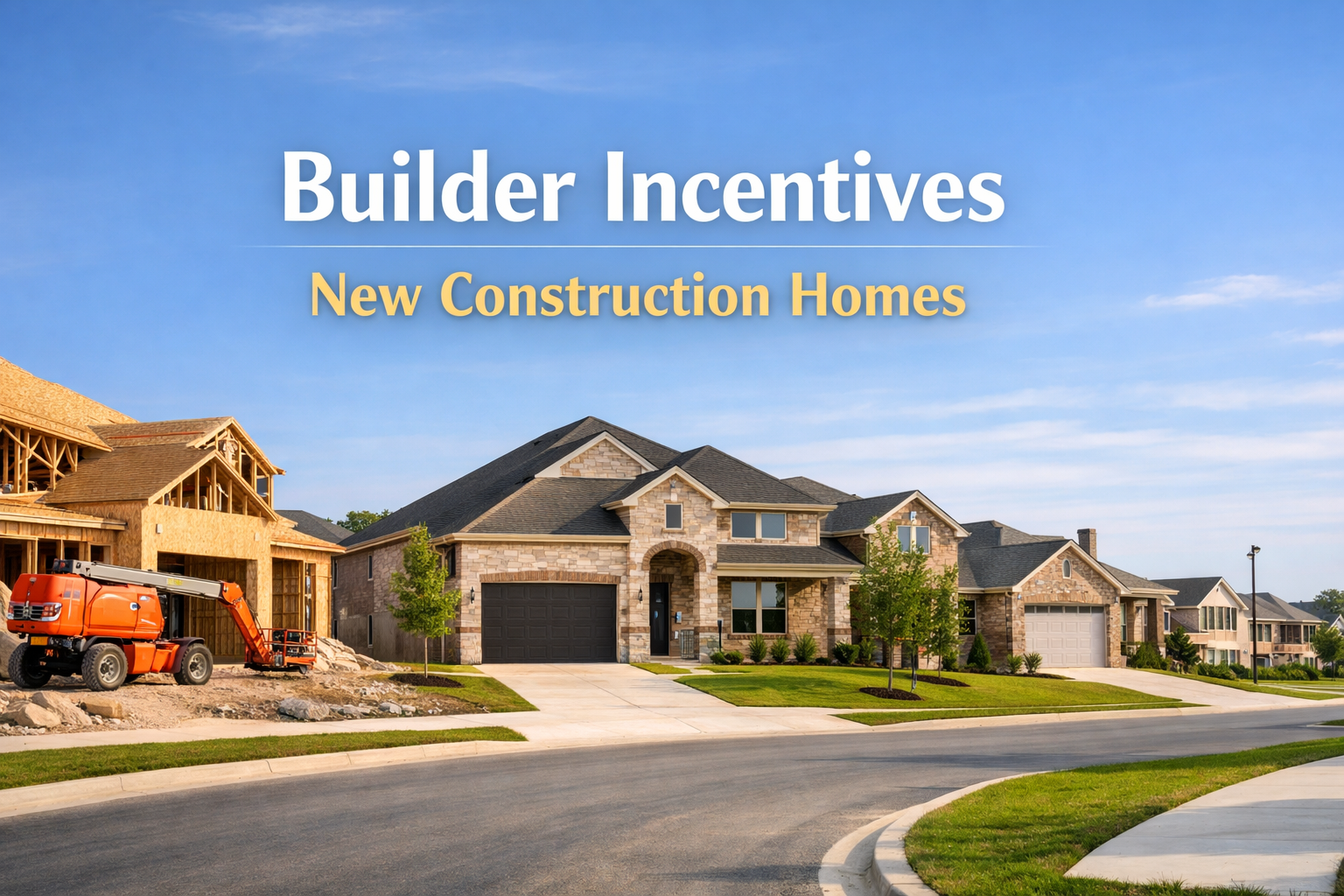
Builder incentives represent one of the most valuable yet frequently misunderstood aspects of purchasing new construction homes in San Antonio. These concessions, offered by builders to attract buyers and move inventory, can save thousands of dollars or significantly enhance home features without additional costs. However, not all incentives provide equal value, and understanding how to evaluate offers, negotiate additional concessions, and avoid common pitfalls makes the difference between good outcomes and missed opportunities.
The San Antonio market features active new construction development across diverse communities throughout the city and surrounding areas including Boerne, Helotes, Fair Oaks Ranch, Cibolo, Schertz, and Converse. National production builders, regional developers, and local custom builders each employ different incentive strategies requiring informed evaluation.
This guide examines why builders offer incentives, what types exist, how to assess their true value, what additional concessions buyers can negotiate, and why professional representation matters when navigating new construction transactions.
Why Do Builders Offer Incentives?
Understanding builder motivations helps buyers recognize negotiating opportunities.
Market Competition:
Builders compete for buyer attention against both other builders and resale home inventory. When multiple builders develop simultaneously in the same area, each needs differentiation to attract buyers. Incentives provide competitive advantages without reducing base prices that affect comparable sales and appraisals.
Inventory Management:
Completed homes sitting unsold cost builders money through carrying costs, maintenance, insurance, and opportunity costs preventing capital deployment to new projects. Moving completed inventory motivates aggressive incentive offerings.
Homes under construction also benefit from early buyer commitment. Securing buyers before completion reduces uncertainty and improves financial planning for builders.
Sales Cycle Pressure:
Builders operate under monthly, quarterly, and annual sales targets. As reporting periods approach, pressure to meet goals creates opportunities for buyers. End of month or quarter timing often produces enhanced incentive packages as builders push to close additional sales before deadlines.
Market Conditions:
When buyer demand exceeds supply and homes sell quickly, builders offer minimal incentives. When inventory accumulates or demand softens, incentive levels increase as builders compete more aggressively for available buyers.
Understanding these dynamics helps buyers identify optimal timing for purchases and maximum negotiating leverage.
What Types of Incentives Do Builders Offer?
Incentives take various forms, each with different implications for buyers.
Closing Cost Assistance:
One of the most common incentives, closing cost contributions reduce cash buyers need at closing. Builders agree to pay portions of settlement expenses including:
- Lender fees and origination charges
- Title insurance and closing fees
- Prepaid property taxes and insurance
- HOA transfer fees and setup costs
- Recording fees and other settlement charges
Closing cost assistance typically ranges from 2 to 6 percent of purchase prices, though amounts vary by builder, market conditions, and negotiation.
Many builders require using their preferred lenders and title companies to receive closing cost incentives. Buyers should compare total packages including interest rates and fees against independent providers to determine whether incentives justify any rate or fee differences.
Upgrade Credits:
Design center credits allow buyers to select upgraded finishes without additional payment. These credits may apply to:
- Flooring options beyond base specifications
- Countertop and cabinet upgrades
- Appliance packages and fixture selections
- Lighting and plumbing fixture upgrades
- Paint colors and trim options
Understanding credit parameters is essential. Some builders provide dollar amounts applicable to any upgrades. Others restrict credits to specific categories or exclude certain premium selections from credit eligibility.
Effective buyers research design center pricing before appointments, understanding which upgrades provide best value and how to allocate credits strategically.
Rate Buydowns:
Interest rate buydowns have become increasingly popular incentives, particularly when market rates are elevated. Builders pay fees reducing buyers' mortgage interest rates either:
- Permanently for the entire loan term
- Temporarily for initial periods before adjusting to market rates
Permanent buydowns provide lasting payment savings worth thousands over loan terms. Temporary buydowns reduce early payments but increase after buydown periods expire, requiring buyers to budget for future payment increases.
Evaluating rate buydown value requires comparing monthly payment savings to alternatives like applying equivalent incentive value toward down payments or accepting higher rates with greater equity.
Included Features:
Rather than providing separate upgrade credits, some builders advertise homes with premium features already included:
- Granite or quartz countertops as standard
- Stainless steel appliance packages
- Upgraded flooring throughout
- Smart home technology packages
- Enhanced landscaping or fencing
Included features simplify decisions but may not align perfectly with buyer preferences. Comparing what competitors charge for similar features helps assess included feature value.
Price Reductions:
Direct price reductions occur less frequently because builders prefer protecting base prices that affect comparable sales and future appraisals. However, completed inventory homes sitting unsold sometimes receive outright price cuts, particularly as market conditions soften or homes age without selling.
Price reduction benefits are straightforward, reducing purchase prices and potentially lowering financing needs, property taxes, and insurance costs.
How Should Buyers Evaluate Incentive Value?
Comparing incentive packages requires calculating total value across different types.
Quantifying Package Components:
To compare offers accurately:
- Closing cost assistance has direct dollar value
- Upgrade credits convert directly to dollars
- Rate buydowns require calculating payment savings over relevant periods
- Included features need market price research for equivalent options
Adding these components produces total incentive value for comparison across builders.
Considering Personal Priorities:
Beyond dollar amounts, buyers should evaluate which incentives match their needs:
- Limited cash reserves make closing cost assistance particularly valuable
- Strong finish preferences benefit from flexible upgrade credits
- Payment-conscious buyers appreciate rate buydowns reducing monthly obligations
- Buyers with specific feature desires value included options matching preferences
The highest dollar value package may not provide the most useful benefits for specific circumstances.
Understanding True Upgrade Costs:
Builders price design center upgrades at retail rates potentially exceeding post-closing improvement costs. Researching whether similar upgrades cost less through independent contractors after purchase helps evaluate upgrade credit value.
However, including upgrades during construction provides convenience, ensures warranty coverage, and avoids coordinating contractors after moving. These factors have value beyond pure cost comparison.
Assessing Resale Value:
Not all upgrades return proportional value at resale. Structural options, energy efficiency features, and kitchen and bathroom improvements typically add lasting value. Highly personalized selections or excessive upgrades relative to neighborhood norms may not return investment.
Prioritizing upgrades supporting long-term value maximizes incentive benefit even if not immediately selling.
What Can Buyers Negotiate Beyond Advertised Incentives?
Published incentives represent starting points rather than final offers.
Lot Premium Negotiations:
Builders charge premiums for preferred lots featuring:
- Corner or cul-de-sac locations
- Larger than standard dimensions
- Views or backing to greenbelt
- Enhanced privacy or positioning
These premiums are often negotiable, particularly for lots not attracting significant buyer interest. Requesting lot premium reductions or waivers can save thousands without affecting base home prices.
Additional Structural Options:
Options beyond standard plans like covered patios, garage extensions, additional rooms, or other structural modifications involve builder costs but also profit margins potentially negotiable.
Requesting included structural options as part of incentive packages sometimes succeeds, particularly when builders face inventory pressure.
Extended Rate Locks:
Construction timelines spanning months expose buyers to interest rate increases. Extended rate lock periods protecting buyers from rate movements provide valuable security.
Builders working with preferred lenders may offer extended locks as negotiated incentives even if not advertised.
Appliances and Features:
Including upgraded appliances, smart home packages, landscaping enhancements, or fencing sometimes becomes negotiating territory. Items with relatively low builder costs but meaningful buyer value make attractive negotiation targets.
When Do Buyers Have Maximum Negotiating Leverage?
Timing and circumstances affect negotiating power significantly.
Market Conditions:
Buyer's markets with rising inventory and softening demand provide maximum leverage. Builders competing for limited buyers offer enhanced incentives and negotiate more readily.
Seller's markets with low inventory and strong demand limit negotiating opportunities as builders can be selective about buyer terms.
Completed Inventory:
Homes sitting completed without buyers cost builders carrying expenses creating urgency to sell. Completed inventory, particularly homes aged beyond typical sale timelines, present strongest negotiating positions.
To-be-built homes under construction or pre-construction provide less leverage as builders have time for alternative buyers to emerge.
Reporting Period Timing:
Month-end, quarter-end, and year-end create sales target pressure. Shopping during final weeks of reporting periods often yields more generous incentive packages as builders push toward goals.
Financial Strength:
Cash buyers or those with strong pre-approvals and substantial down payments present lower transaction risk. Builders may provide better terms to buyers offering transaction certainty versus those barely qualifying or with questionable financing.
Why Does Professional Representation Matter?
Many buyers mistakenly believe agents are unnecessary for new construction purchases.
Builder Representatives Work for Builders:
On-site sales agents, while often professional and helpful, work for builders. Their obligations and incentives align with builder interests, not buyer protection.
Agent Knowledge and Advocacy:
Buyer agents provide critical services:
- Current incentive knowledge across multiple builders
- Contract review identifying concerning provisions
- Negotiation support maximizing concessions
- Construction monitoring and quality advocacy
- Issue resolution throughout the building process
Representation Costs Nothing:
Builders pay buyer agent commissions from sales budgets. Buyers receive professional representation at no additional cost. However, many builders require agent registration on first visits, so bringing agents to initial model home tours or registering involvement before signing contracts ensures representation rights.
What Common Mistakes Should Buyers Avoid?
Avoiding pitfalls improves outcomes and satisfaction.
Accepting Initial Offers Without Discussion:
Advertised incentives represent starting positions. Builders expect negotiation and build margin into offerings. Accepting initial terms without discussion often leaves value uncaptured.
Failing to Compare Financing Options:
Builder preferred lenders offer convenience and unlock incentives, but rates and fees aren't always competitive. Comparing offers from multiple lenders ensures the total package including incentives provides best value.
Skipping Independent Inspections:
New construction warranties don't eliminate defect possibilities. Pre-drywall and final inspections by independent professionals identify issues before problems become expensive or hidden.
Rushing Design Center Decisions:
Upgrade selection excitement prompts hasty decisions without considering long-term satisfaction or resale implications. Taking time for thoughtful selections maximizes incentive credit value.
Ignoring Resale Considerations:
Even buyers planning extended ownership eventually sell. Excessive personalization or choices limiting buyer appeal affect future marketability and values.
Expert Insight from Tami Price, REALTOR®
"Builder incentives provide real value, but only if buyers understand how to evaluate packages, negotiate additional concessions, and avoid common traps. Over nearly two decades representing new construction buyers, I've helped clients save tens of thousands through effective incentive navigation and contract negotiation. The biggest mistake buyers make is assuming they can't use an agent with builders. Representation costs nothing and provides advocacy builders' sales agents can't offer. My clients consistently secure better incentive packages and terms than unrepresented buyers because I know current market conditions, builder motivations, and negotiation strategies that work."
Tami Price, REALTOR®, Broker Associate, specializes in new construction representation throughout approximately 1,000 closed transactions in San Antonio.
Three Key Takeaways for New Construction Buyers
- Builder incentives take multiple valuable forms. Closing cost assistance, upgrade credits, rate buydowns, included features, and negotiated concessions combine to create significant value for informed buyers who understand evaluation methods and negotiation strategies.
- Advertised incentives represent starting points for negotiation. Builders expect discussion and build margin into offerings. Market conditions, inventory status, timing, and buyer financial strength all affect leverage. Completed homes and reporting period deadlines present optimal negotiating opportunities.
- Professional representation costs nothing while providing critical value. Builder sales agents cannot provide buyer advocacy. Experienced agents know current incentive levels, negotiate effectively, review contracts, and protect buyer interests throughout construction without charging buyers directly.
Frequently Asked Questions
Q: Are all builder incentives negotiable?
A: Most incentive components have some negotiation flexibility, though amounts vary by market conditions, inventory levels, and timing. Completed inventory homes offer strongest leverage. End of reporting periods create urgency favoring buyers. Working with experienced agents helps identify what additional concessions might be available beyond advertised packages.
Q: Should I use the builder's preferred lender to get incentives?
A: Compare total packages including rates, fees, and incentives against independent lenders. Calculate actual costs over expected ownership periods. Sometimes incentive value exceeds any rate differences, making preferred lenders advantageous. Other times independent lenders offer superior overall terms despite lower incentives. Running specific numbers for your situation reveals the better choice.
Q: Do builder incentives affect home value or appraisals?
A: Incentives structured as seller concessions for closing costs or included upgrades typically don't affect appraised values. Rate buydowns are financing arrangements not affecting property value. Direct price reductions do lower sale prices affecting comparable sales. Appraisers evaluate actual home characteristics and recent comparable sales rather than incentive structures.
Q: Can I negotiate incentives after signing the contract?
A: Once contracts are signed, negotiating leverage drops dramatically. Builders have secured commitments and face less pressure to offer additional concessions. The time to maximize incentive value is before contract execution when builders still compete for your business. This is why working with agents during initial discussions rather than after commitments matters.
Q: What happens if the builder doesn't honor promised incentives?
A: Purchase contracts should explicitly detail all agreed incentives including amounts, conditions, and delivery methods. Documenting everything in writing protects buyers if disputes arise. If builders fail to honor contractual commitments, buyers have legal remedies though enforcement creates delays and expenses. Working with agents who ensure proper contract documentation prevents most issues.
Q: Do I need inspections on brand new construction?
A: Yes. New construction isn't defect-free even from reputable builders. Pre-drywall inspections catch issues before walls cover them. Final inspections before closing identify items needing correction. Builder warranties provide recourse but don't prevent defects. Independent inspections cost modest amounts compared to protection they provide.
The Bottom Line
Builder incentives represent meaningful opportunities for San Antonio buyers purchasing new construction homes. Understanding available incentive types, evaluating their true value, negotiating additional concessions, and avoiding common mistakes positions buyers to maximize benefits potentially worth tens of thousands of dollars.
However, navigating incentive packages, comparing offers across builders, and negotiating effectively requires market knowledge and experience many buyers lack. Professional representation from agents specializing in new construction provides the expertise needed to capitalize on opportunities while avoiding pitfalls.
For buyers considering new construction homes throughout San Antonio and surrounding communities, working with experienced professionals who understand current builder incentive landscapes and negotiation strategies produces superior outcomes at no cost to buyers.

Contact Tami Price, REALTOR® | San Antonio, TX
Tami Price, REALTOR®, Broker Associate, and USAF Veteran, specializes in new construction buyer representation throughout San Antonio. With nearly two decades of experience and approximately 1,000 closed transactions including extensive new construction purchases, Tami provides the expertise buyers need maximizing builder incentive value and navigating construction contracts.
Recognized by San Antonio Business Journal as a Top 50 Residential Real Estate Agent and backed by 646+ five-star reviews and recommendations across platforms including Google, Zillow, Realtor.com, FastExpert, and Real Satisfied, Tami delivers results new construction buyers trust.
Tami Price, REALTOR®, Broker Associate
📞 210 620 6681
Tami Price's Specialties
- New construction buyer representation
- Builder incentive negotiation and maximization
- New construction contracts and protection
- Design center guidance and upgrade strategy
- Construction monitoring and quality advocacy
- First time buyers and move-up buyers
Disclaimer
This blog provides general educational information about builder incentives and new construction purchases and does not constitute financial, legal, or professional advice. Builder incentive programs, contract terms, and market conditions vary significantly and change over time. Individual circumstances differ. Readers should conduct their own research and consult with qualified professionals including licensed real estate agents, attorneys, and lenders regarding their specific situations. Tami Price, REALTOR®, is licensed in the State of Texas.
Categories
- All Blogs (931)
- Home Buying (13)
- Neighborhood Guides (44)
- 10 Incentive and Rate Buydown Questions (1)
- 10 Military Neighborhood (1)
- 10 Mistakes Sellers Make (1)
- 10 Strategies to Coordinate a Same Day Close (1)
- 12 Lifestyle Questions to Move In (1)
- 12 PCS What Ifs (1)
- 12 Photos and Marketing Assets (1)
- 13 PCS Hunting Trip Tips (1)
- 15 Red Flags Touring Home in San Antonio (1)
- 2026 Market (1)
- 30 days after closing your home (1)
- 7 Offer Terms Beyond Price (1)
- 7 VA Specific Questions (1)
- 78015 Ranked One (1)
- 8 Bridge (1)
- 8 Myths Buyers Believe about Down Payments (1)
- 8 Reasons VA Buyers Love New Construction (1)
- 9 Mistakes Move Up Buyers Make (1)
- 9 Questions to Decide If You Keep Your PCS Home (1)
- 9 Timeline Questions Every Buyer Need to Ask (1)
- 9 Warranty Questions to Ask (1)
- 9 Ways to Attract VA & Military Buyers (1)
- About Tami Price (6)
- Active Adult Homes (1)
- Affordable Communities (2)
- Affordable Housing & Community Development (5)
- Agent Qualifications and Credentials (1)
- Agent Qualifications and Experience (1)
- Agent Recognition (3)
- Agent Selection (1)
- AI and Real Estate Tools (1)
- Alamo Heights (5)
- Alamo Heights ISD (1)
- Alamo Heights Real Estate (1)
- Alamo Ranch (3)
- Amenities in Helotes, Texas (3)
- Apartment Market (1)
- Appraisals (1)
- Arts and Culture (1)
- Awards and Recognition (7)
- Balcones Creek (1)
- Best Neighborhoods to Live in Cibolo, TX (3)
- Best Neighborhoods to Live in San Antonio (16)
- Best Places to Live in Leon Valley: A Neighborhood Guide (1)
- Best Places to Live in Northeast Inner Loop: A Neighborhood Guide (1)
- Bexar County Property Tax (1)
- Bexar County Real Estate (3)
- Boerne Home Sellers (1)
- Boerne Neighborhoods (2)
- Boerne Texas (9)
- Broadway Corridor Development (1)
- Build-to-Rent Communities (1)
- Builder Contracts & Warranties (3)
- Builder Incentives (1)
- Builder Warranties (1)
- Buyer (97)
- Buyer Activity San Antonio (1)
- Buyer and Seller Guidance (4)
- Buyer Due Diligence (1)
- Buyer Education (46)
- Buyer Guide (9)
- Buyer Guides (7)
- Buyer Protection Strategies (1)
- Buyer Representation (1)
- Buyer Representation Expertise (1)
- Buyer Resources (88)
- Buyer Strategy (2)
- Buyers (13)
- Buyers Agent (1)
- Buying a Foreclosed Home in San Antonio (10)
- Buying a Home (3)
- Buying a Home in San Antonio (6)
- Buying Timeline (1)
- Buying vs Renting (1)
- Castroville, TX (8)
- Central San Antonio (1)
- Central San Antonio Development (2)
- Central Texas Growth (1)
- Choosing a Real Estate Agent (1)
- Choosing an Agent (1)
- Cibolo Communities (1)
- Cibolo Home Sellers (1)
- Cibolo TX (15)
- Client Reviews and Testimonials (1)
- Client Satisfaction (1)
- Client Stories (1)
- Client Testimonial (4)
- Clients review (4)
- Cobblestone (1)
- Comal County (1)
- Commercial & Retail Development (27)
- Commercial Development (13)
- Commercial Development Impact on Home Values (1)
- Commercial Real Estate (1)
- Community (1)
- Community Amenities (2)
- Community Development (23)
- Community Development and Real Estate (3)
- Community Events & Development (1)
- Community Infrastructure (1)
- Community Investment Impact (2)
- Community Landmarks (1)
- Community News (4)
- Community Planning (2)
- Community Revitalization (1)
- Community Spotlights (1)
- Commuter Neighborhoods (1)
- Cons of Living in Helotes, TX (4)
- Conservation Communities (1)
- Contingency Questions (1)
- Converse Home Sellers (1)
- Converse Homes For Sale (3)
- Converse Real Estate (1)
- Converse TX (10)
- Converse TX Real Estate (1)
- Cost of Living Guides (1)
- Cost of Living in San Antonio TX (25)
- CPS Energy Programs (1)
- Custom Homes (5)
- Davis Ranch (1)
- Days on Market (1)
- Deco District San Antonio (1)
- Denver Heights (1)
- Down Payment Assistance (1)
- Downtown Boerne (1)
- Downtown Development (3)
- Downtown Living (1)
- Downtown Revitalization (14)
- Downtown San Antonio (2)
- Downtown San Antonio Real Estate (5)
- Downtown San Antonio Revitalization (1)
- East Side Living (1)
- East Side Neighborhoods (1)
- East Side San Antonio (4)
- Economic Development (3)
- Economic Growth & Industry (1)
- Education, Texas Hill Country (1)
- Emerald Pointe (1)
- Employment (1)
- Employment Corridors (1)
- Encino Forest (1)
- Entertainment Economy (1)
- Equity and Pricing Strategy (2)
- Equity Q&A (1)
- Established Communities (3)
- Events in San Antonio (207)
- Expert Advice from Tami Price, Realtor® (10)
- Fair Oak Ranch (1)
- Family Activities (2)
- Family Homes (3)
- Family Living in San Antonio (1)
- FAQ (1)
- Far Northwest San Antonio (1)
- Far West San Antonio (1)
- Far Westside Real Estate (4)
- Fastest Growing Zip Codes in America (1)
- Featured Homes for Sale (2)
- Featured Properties (1)
- Financial Planning (10)
- Financing Strategy (1)
- First Time Buyers (23)
- First Time Sellers (1)
- First-Time Buyers (6)
- First-Time Homebuyer Resources (4)
- First-Time Homebuyer Tips (2)
- First-Time Homebuyers (6)
- First-Time Investors (1)
- Fort Sam Houston (3)
- Fort Sam Houston Real Estate (1)
- Fort Sam Houston, TX (2)
- Fox Grove (1)
- FSBO vs Agent Representation (1)
- Future Rental (1)
- Gated Communities (5)
- Golf Communities (1)
- Great Northwest (1)
- Greater San Antonio Housing Trends (2)
- Greater San Antonio Real Estate (5)
- Green Home Upgrades (1)
- Growth and Development (11)
- Healthcare (1)
- HELOC (1)
- Helotes Home Sellers (1)
- Highway 151 Corridor Growth (1)
- Hill Country Business (1)
- Hill Country Communities (2)
- Hill Country Development (3)
- Hill Country Homes for Sale (1)
- Hill Country Living (3)
- Hill Country Market Updates (1)
- Hill Country Real Estate (4)
- Hill Country Retreat (1)
- Historic Districts (5)
- Historic Neighborhoods (4)
- Historic Preservation (2)
- Holiday Attractions (1)
- Holiday Guide (1)
- Home Buying (7)
- Home Buying Education (3)
- Home Buying Guide (7)
- Home Buying Process (8)
- Home Buying Strategy (2)
- Home Buying Tips (6)
- Home Energy Efficiency San Antonio (4)
- Home Financing (2)
- Home Improvement ROI (1)
- Home Inspections (1)
- Home Preparation (2)
- Home Pricing Strategy (14)
- Home Renovation for Resale (1)
- Home Selling (10)
- Home Selling Guide (11)
- Home Selling Strategies (3)
- Home Selling Strategy (3)
- Home Selling Tips (22)
- Home Staging and Updates (2)
- Home Values (2)
- Homebuyer Education (15)
- Homebuyer Resources (1)
- Homebuying Guide (1)
- Homebuying Tips (3)
- Homeowner (36)
- Homeowner Tax Benefits (1)
- Homeownership Costs (1)
- Homes for Sale (2)
- Homes for sale near Lackland AFB (4)
- Homes Near Military Bases (1)
- Homestead amenities (1)
- Horizon Pointe (1)
- House Hunting Guide (1)
- Housing (1)
- Housing Community Development (1)
- Housing Development (2)
- Housing Market Updates (3)
- How to Buy a House in San Antonio TX (48)
- Huebner Oaks shopping center (1)
- Hunters Ranch (1)
- Hybrid (1)
- I-10 Corridor (1)
- I-35 Corridor (1)
- In Person (1)
- Incorporated Cities (6)
- Industrial Investment Impact (1)
- Industry News (2)
- Industry Recognition (1)
- Infrastructure & Growth Projects (26)
- Infrastructure and Sustainability (1)
- Infrastructure Development (1)
- Infrastructure Investment (1)
- Infrastructure Updates (2)
- Interest Rates (2)
- Invest in San Antonio (46)
- Investment Opportunities (3)
- Investment Property San Antonio (4)
- JBSA (9)
- JBSA Housing (11)
- JBSA Real Estate (4)
- JBSA Resources (7)
- Joint Base San Antonio (5)
- Joint Base San Antonio Housing (1)
- Judson ISD (2)
- Kendall County (1)
- La Cantera Retail Development (1)
- Lackland AFB (7)
- Lackland AFB Housing (1)
- Land Conservation (1)
- Land Use Planning (1)
- Lera MLS (15)
- Lifestyle & Community Growth (18)
- Lifestyle & Local Growth (12)
- Lifestyle Amenities (1)
- Lifestyle Communities (1)
- Listing Preparation (1)
- Listing Strategy (1)
- Live Oak (1)
- Living in San Antonio, TX (52)
- Living Near Randolph AFB (7)
- Loan Programs (1)
- Local Attractions (3)
- Local Business (1)
- Local Business & Development (9)
- Local Business & Economy (3)
- Local Business Spotlight (20)
- Local Business Support (5)
- Local Development (4)
- Local Development News (9)
- Local Market Insights (5)
- Local News (2)
- Local News Around San Antonio (2)
- Local Policy Changes (1)
- Local Real Estate News (1)
- Loop 1604 Corridor Growth (2)
- Loop 410 Corridor Development (1)
- Luxury Communities (3)
- Luxury Homes (2)
- Luxury Real Estate (1)
- Luxury Retail San Antonio (1)
- MacArthur Park (1)
- Major Developments (2)
- Making Offers on Homes (1)
- Market Analysis (26)
- Market Conditions (47)
- Market Expertise (1)
- Market Insights (5)
- Market Strategy (1)
- Market Timing (2)
- Market Trends (10)
- Market Trends & Insights (2)
- Market Update (17)
- Market Update 2026 (1)
- Market Updates (22)
- Master Planned Communities (12)
- Medical Center Area Real Estate (1)
- Medina Valley ISD (2)
- Midtown Living (1)
- Military & Economic Impact (3)
- Military Buyers (3)
- Military Communities (1)
- Military Families (1)
- Military Family Resources (1)
- Military Heritage (1)
- Military Homebuying (3)
- Military Homeownership (1)
- Military Housing (3)
- Military Housing Market in Texas (16)
- Military Life in San Antonio (2)
- Military Neighborhoods (1)
- Military PCS Relocations (3)
- Military Real Estate (2)
- Military Relocation (96)
- Military Relocation & VA Loans (10)
- Military Relocation San Antonio (4)
- Military Relocation Services (3)
- Military Relocation to San Antonio (50)
- Military Relocations (19)
- Military Relocations & VA Home Loans (5)
- Mixed-Income Housing (1)
- MLS Accuracy & Data Transparency (1)
- Mortgage Programs (1)
- Mothers Day in San Antonio (1)
- Move to Boerne TX (18)
- Move to Castroville TX (11)
- Move to Converse TX (16)
- Move to New Braunfels (1)
- Move to North San Antonio (19)
- Move to San Antonio TX (73)
- Move to Selma TX (19)
- Move to Shertz TX (13)
- Move to Texas (53)
- Move Up Buyer Resources (1)
- Move Up Buyers (21)
- Move-In Ready Homes (3)
- Move-In Ready Homes San Antonio (2)
- Move-Up Buyers (2)
- Moving to Helotes, TX (17)
- Moving to San Antonio (69)
- MUD Taxes (1)
- Natalia Homes For Sale (1)
- Near East Side Living (1)
- Negotiation Strategy (2)
- Neighborhood Amenities (1)
- Neighborhood Development (1)
- Neighborhood Guides (7)
- Neighborhood Investment (1)
- Neighborhood News (2)
- Neighborhood Revitalization (2)
- Neighborhood Spotlights (12)
- Neighborhood Updates (1)
- Neighborhoods near Randolph AFB (12)
- New Braunfels (6)
- New Braunfels Homes For Sale (1)
- New Braunfels News (3)
- New Braunfels Real Estate (3)
- New Businesses (2)
- New Construction (59)
- New Construction Communities (1)
- New Construction Homes (13)
- New Construction Homes San Antonio (5)
- New Construction vs Resale (1)
- New Construction Without Customization (1)
- New Construction Without the Wait (1)
- New Contruction Cost (1)
- New Development (3)
- New Listing (19)
- New Restaurants (3)
- News (211)
- News & updates (213)
- No HOA Homes (1)
- North Central San Antonio (5)
- North East ISD (4)
- North San Antonio (9)
- North San Antonio Real Estate (3)
- North Side Neighborhoods (1)
- North Side San Antonio Development (2)
- Northeast Inner Loop (1)
- Northeast Inner Loop Neighborhoods (1)
- Northeast San Antonio (3)
- Northside ISD (5)
- Northwest San Antonio (9)
- Northwest San Antonio Development (1)
- Northwest San Antonio Growth (1)
- Northwest San Antonio Real Estate (3)
- Northwood (1)
- Olympia Hills (1)
- One-Story Homes (1)
- Outdoor Living (1)
- Parks and Recreation (2)
- PCS and JBSA (2)
- PCS Guide (3)
- PCS Moves (12)
- PCS Moves to Joint Base San Antonio (4)
- PCS Planning (15)
- PCS Randolph AFB (17)
- PCS Relocation (1)
- PCS Resources (6)
- PCS San Antonio (46)
- PCS to San Antonio (42)
- Pearl District Area Real Estate (2)
- PID Assessments (1)
- Pinon Creek (1)
- Pipe Creek (1)
- Places to Eat Near Randolph AFB (1)
- Pool Homes (1)
- Pre Approval (1)
- Pre-Listing Preparation (2)
- Pre-Listing Process (1)
- Prescott Oaks (1)
- Pricing and Marketing Strategy (3)
- Professional Awards and Achievements (2)
- Professional Real Estate Representation (1)
- Property Tax Exemptions Texas (1)
- Property Value Enhancement (1)
- pros and cons living in Converse TX (3)
- Pros and Cons Living in Selma TX (6)
- Pros and Cons of Living in Castroville, TX (4)
- Pros and Cons of Living in San Antonio (33)
- PT500 List (1)
- Purchase Negotiation (1)
- Quality of Life (1)
- Quick Close Real Estate (1)
- Randolph AFB Neighborhoods (2)
- Real Estate (1)
- Real Estate Advice (1)
- Real Estate Agent Recognition (6)
- Real Estate Agent Selection (2)
- Real Estate Agent Value (1)
- Real Estate Consultation (1)
- Real Estate Finance (1)
- Real Estate Financing (1)
- Real Estate Impact (1)
- Real Estate Investment San Antonio (2)
- Real Estate Legal Issues (1)
- Real Estate Market Insights (2)
- Real Estate Market Trends (5)
- Real Estate Professional Designations (1)
- Real Estate Strategy (1)
- Real Estate Technology & Trends (2)
- Real Estate Tips (1)
- Real Estate Tips and Guides (2)
- Real Estate Trends (4)
- RealTrends Verified (1)
- Regional Development (1)
- Regional Real Estate (2)
- Relocating to San Antonio (2)
- Relocation (4)
- Relocation Resources (2)
- Relocation to San Antonio (55)
- Remote Homebuying (1)
- Rental Housing (1)
- Rental Property (1)
- Rental Strategy (1)
- Resale Properties (1)
- Retail Development (2)
- Retire in Boerne TX (11)
- Retire in San Antonio (37)
- Retirement Communities (1)
- Reviews and Recognition (1)
- Rockwall Ranch (1)
- Rural Living (2)
- SABOR (28)
- San Antonio Area Listings (1)
- San Antonio Business Growth (1)
- San Antonio Buyer Resources (2)
- San Antonio Communities (3)
- San Antonio Community Events (1)
- San Antonio Community News (1)
- San Antonio Data Center Development (1)
- San Antonio Development (5)
- San Antonio Development & East Side Real Estate (1)
- San Antonio Dining and Lifestyle (3)
- San Antonio East Side Development (1)
- San Antonio Employment Growth (1)
- San Antonio Food & Community Development (2)
- San Antonio Growth (8)
- San Antonio Home Buying and Selling (2)
- San Antonio Home Buying Guide (5)
- San Antonio Home Improvement (2)
- San antonio home prices (3)
- San Antonio Home Sellers (3)
- San Antonio Homeowner Guide (1)
- San Antonio Homeowner Resources (1)
- San Antonio Homes for Sale (12)
- San Antonio Housing Market (2)
- San Antonio Housing Market & Mortgage Financing (2)
- San Antonio Housing Market Analysis (2)
- San Antonio Housing Trends & Market Analysis (4)
- San Antonio Industrial Development (1)
- San Antonio Industrial Policy (1)
- San Antonio Investment Properties (2)
- San Antonio Job Market (1)
- San Antonio Lifestyle Amenities (1)
- San Antonio Listing (1)
- San Antonio Living (1)
- San Antonio Market (3)
- San Antonio Market Updates (18)
- San Antonio Military Relocation (2)
- San Antonio Neighborhoods (67)
- San Antonio New Construction & Master-Planned Communities (4)
- San Antonio New Home Communities (1)
- San Antonio News (229)
- San Antonio North Side Development (1)
- San Antonio Parks (1)
- San Antonio Property Investment (1)
- San Antonio Property Taxes (2)
- San Antonio Real Estate (154)
- San Antonio Real Estate Agents (6)
- San Antonio Real Estate Excellence (1)
- San Antonio Real Estate Guide (6)
- San Antonio Real Estate Market (41)
- San Antonio Real Estate Market Analysis (6)
- San Antonio Real Estate News (2)
- San Antonio REALTOR Awards (1)
- San Antonio Restaurant News (2)
- San Antonio Restaurant Openings (1)
- San Antonio Seller Resources (2)
- San Antonio Sellers (1)
- San Antonio Spec Homes (1)
- San Antonio Spurs Community Programs (1)
- San Antonio Suburbs (1)
- San Antonio Transportation (2)
- San Antonio University Area Housing (1)
- San Antonio Urban Living (7)
- San Antonio West Side Development (2)
- San Antonio Zoning Policy (1)
- Scenic Loop (1)
- Schertz Home Sellers (1)
- Schertz Real Estate (1)
- Schertz, TX (13)
- School Districts (1)
- School Information (1)
- SCUCISD Schools (1)
- Secured Quick Offer (1)
- Sell Home In San Antonio TX (64)
- Seller (83)
- Seller Education (24)
- Seller Guide (4)
- Seller Guides (1)
- Seller Representation Expertise (1)
- Seller Resources (67)
- Seller Should Understand (1)
- Seller Strategy (3)
- Seller Tips (2)
- Sellers (10)
- Selling A Home in San Antonio (62)
- Selling Your San Antonio Home (3)
- Selma TX (9)
- Single-Story Homes (4)
- Smart Homes (1)
- Solar Homes (2)
- South San Antonio Real Estate (1)
- South Side Economic Growth (1)
- South Side San Antonio (1)
- Southtown (2)
- Southwest San Antonio Real Estate (1)
- Spec Homes and Inventory Homes (2)
- Spurs Arena Project Marvel (1)
- Stone Oak (2)
- Stone Oak Community News (5)
- Suburban Housing Growth (12)
- Suburban Living (2)
- Talise De Culebra (1)
- Technology Growth (3)
- Technology Sector Growth (1)
- Terrell Hills (3)
- Texas Acreage Properties (3)
- Texas Homestead Exemption (1)
- The Dominion Real Estate (1)
- The Rim Area Real Estate (1)
- Things to do in San Antonio TX (21)
- Things to do Near Randolph AFB (4)
- Time Planning (1)
- Time-Sensitive Home Buying (1)
- Timing Strategy (1)
- Tips for Buying New Construction (9)
- Tobin Hill Neighborhoods (2)
- Top Real Estate Agent in San Antonio (3)
- Tourism and Economic Development (1)
- Traders's Joe San Antonio (1)
- Transaction Coordination (1)
- Transportation Infrastructure (1)
- Two-Story Homes (2)
- Universal City (1)
- Updated Homes (2)
- Upscale Communities (1)
- Urban Communities (2)
- Urban Corridor Real Estate (1)
- Urban Development (5)
- Urban Living (3)
- Urban Neighborhoods (4)
- Urban Real Estate (1)
- Urban Renewal Projects (1)
- Urban Revitalization San Antonio (1)
- Utility Cost Reduction (1)
- UTSA Campus Development (1)
- VA Buyers (1)
- VA Home Loan Benefits (3)
- VA Loan Assumptions (3)
- VA loan benefits (27)
- VA Loan Guidance (1)
- VA Loan Home Buying Assistance (2)
- VA Loans (69)
- VA Loans and Military Benefits (3)
- VA Loans and Military Home Buying (3)
- VA Loans San Antonio (43)
- VET Benefits Living in San Antonio (3)
- Veterans Resources (3)
- Village Northwest (1)
- Virtual Buyers (1)
- Walkable Communities (1)
- week in sales (40)
- Weekly Sales Report (41)
- West San Antonio (2)
- West San Antonio Development (1)
- West San Antonio Real Estate (3)
- West San Antonio Real Estate Market (2)
- West Side Infrastructure Planning (1)
- West Side Real Estate (1)
- West Side San Antonio (2)
- Windcrest Homes for Sale (1)
Recent Posts