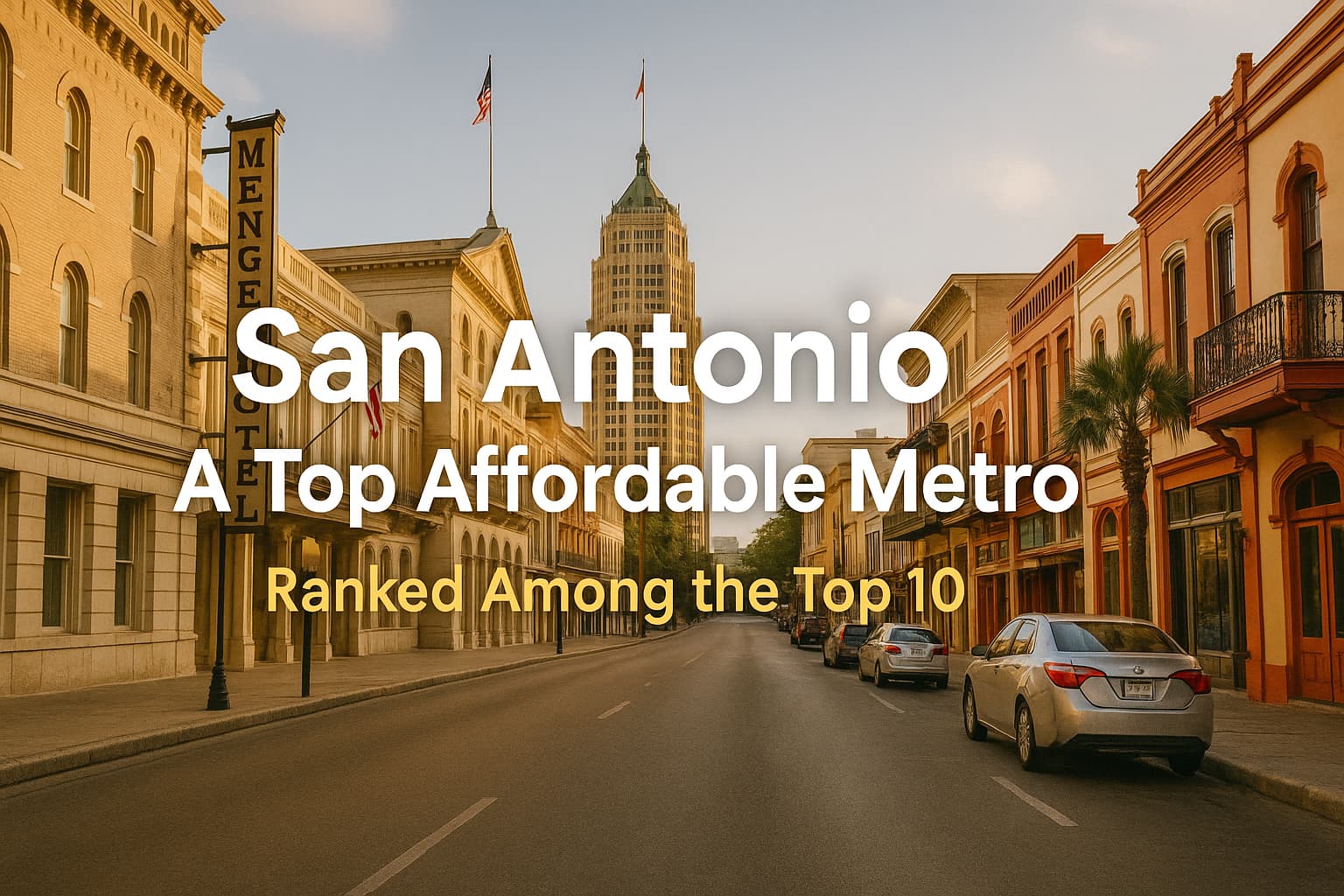
San Antonio Named a Top 10 Most Affordable Big Metro
National Recognition Confirms What Locals Already Know
San Antonio is earning national attention as one of the most affordable large metropolitan areas in the United States, and the latest data shows why that reputation still holds in 2025. A new national "comfortable living" study by Upgraded Points ranks major U.S. cities by how much income residents need to follow the 50/30/20 budgeting rule, and San Antonio lands near the top of the list for affordability. Local coverage from the San Antonio Express News reinforces that story, highlighting San Antonio as the cheapest large metro in Texas when measured by the income required to live comfortably.
For buyers, renters, and especially relocating military families, this combination of national and local data provides something rare in today's housing landscape. A big city market where a comfortable lifestyle is still financially reachable represents a significant advantage for households evaluating where to put down roots. Understanding what that actually means in dollars and cents can help households decide whether San Antonio should be at the top of their relocation list.
This recognition matters for anyone considering buying a home in San Antonio or evaluating the local market for investment purposes. The data provides concrete benchmarks that go beyond vague claims of affordability and instead offer measurable comparisons against peer cities across the nation.
Why This Matters for San Antonio Home Buyers and Sellers
The affordability ranking carries significant implications for both sides of real estate transactions throughout San Antonio, Schertz, Cibolo, Helotes, Converse, and Boerne. Understanding how national affordability metrics translate into local market conditions helps buyers and sellers make more informed decisions about timing, pricing, and strategy.
What Does This Mean for Home Buyers in San Antonio?
For buyers, San Antonio's affordability ranking directly impacts purchasing power and long term financial planning. When housing costs consume a smaller percentage of household income compared to other major metros, buyers have more flexibility in their home search criteria. They may be able to consider larger homes, better school districts, or more desirable locations than they could afford in higher cost markets.
Q: How does San Antonio's affordability ranking affect my home search? A: The ranking means your income stretches further here than in many comparable metros. Buyers can often afford more square footage, better locations, or additional features compared to what the same income would purchase in Austin, Dallas, or coastal cities.
The affordability advantage also affects first time home buyers who may find San Antonio offers a realistic path to homeownership that seems out of reach in higher cost markets. With a more favorable affordability ratio, qualifying for financing becomes more achievable for households that might be priced out of other major metros.
Key benefits for San Antonio home buyers include:
- Lower median home prices compared to other large Texas metros
- More favorable debt to income ratios when applying for mortgages
- Greater purchasing power for the same household income
- Opportunity to build equity earlier in careers or military service
- Flexibility to save for other financial goals while owning a home
How Does Affordability Impact San Antonio Home Sellers?
Sellers benefit from San Antonio's affordability reputation through sustained buyer demand and a steady pipeline of relocating households. When national publications identify San Antonio as one of the most affordable large metros, it attracts attention from remote workers, corporate relocations, military families, and retirees seeking to stretch their housing budgets further.
This visibility helps maintain healthy demand for homes for sale in San Antonio even during periods when higher cost markets experience slowdowns. Buyers who might be priced out of Austin, Dallas, or coastal metros often turn their attention to San Antonio as a more financially viable alternative.
Q: Does San Antonio's affordability ranking help or hurt home values? A: It generally helps by sustaining buyer demand. Affordability attracts relocating households, remote workers, and investors, which supports property values even when other markets slow down. The key is that affordability does not mean cheap, it means accessible.
What Does the "Comfortable Living" Study Actually Measure?
The Upgraded Points analysis does not simply look at median incomes or average rents and declare a city cheap or expensive. Instead, it builds its rankings around the 50/30/20 rule, a widely used budgeting framework that allocates 50% of income to needs, 30% to wants, and 20% to savings or debt repayment.
To apply that rule to real world cities, researchers used detailed cost of living figures from sources such as the Economic Policy Institute to estimate how much it truly costs to cover housing, food, transportation, childcare, healthcare, and other essentials in each metro. This methodology provides a more nuanced view of affordability than simple price comparisons.
The study considers these essential cost categories:
- Housing costs including mortgage or rent payments
- Food and grocery expenses for the household
- Transportation including vehicle costs and commuting
- Childcare expenses for families with young children
- Healthcare premiums and out of pocket costs
- Utilities and basic household services
From there, the study reverse engineers the pre tax salary a household would need to keep those expenses within the "needs" and "wants" buckets while still reserving 20% of income for savings or paying down debt. The end result is a "comfortable living salary" for each city that differs for single adults and for families of four. This methodology matters because it frames affordability in terms of long term financial health rather than mere survival.
Where Does San Antonio Rank Among Big U.S. Metros?
Within this national framework, San Antonio stands out as one of the top 10 most affordable large metropolitan areas in the United States. In plain terms, that means the income required to live comfortably in the San Antonio New Braunfels metro is significantly lower than in many other large cities, including high cost coastal hubs and several booming Sun Belt markets.
The Express News reports that San Antonio is the cheapest large metro in Texas under this comfortable income metric, outpacing Austin, Dallas Fort Worth, and Houston. While each of those cities offers job opportunities and amenities, they also demand much higher household incomes to satisfy the 50/30/20 rule once housing, childcare, and everyday costs are factored in.
Q: How does San Antonio compare to other Texas metros for affordability? A: San Antonio ranks as the most affordable large metro in Texas. Austin, Dallas Fort Worth, and Houston all require higher household incomes to achieve the same comfortable living standard under the 50/30/20 budgeting framework.
For anyone comparing multiple Texas metros, San Antonio's lower salary requirement is a key part of why it continues to appear on national "most affordable city" lists. This positioning attracts attention from households weighing relocation options and businesses considering expansion into Texas markets.
What Income Is Needed to Live Comfortably in San Antonio?
The comfortable income figures vary by household type, but together they paint a clear picture of San Antonio's cost profile in 2025. For a single adult, studies place the comfortable living salary in the San Antonio metro in roughly the low to mid $90,000 range per year. That income level is designed to cover rent or a reasonable mortgage, utilities, groceries, transportation, insurance, minimum savings, and discretionary spending while staying within the 50/30/20 budget model.
For a family of four consisting of two adults and two children, the recommended comfortable income climbs into the neighborhood of $190,000 to $200,000 per year in combined earnings. While that number may sound high at first glance, the Express News notes that it is still tens of thousands of dollars lower than what similar families must earn to live comfortably in many other large metros across the country.
The comfortable salary benchmarks highlight these key thresholds:
- Single adults need approximately $90,000 to $95,000 annually
- Families of four need approximately $190,000 to $200,000 combined
- Both figures are significantly lower than coastal metro requirements
- The benchmarks account for savings and discretionary spending, not just survival
The takeaway is not that every San Antonio household must hit those income targets to make life work. Rather, the comfortable salary benchmarks highlight what it takes to live with margin, to have space for saving, investing, and enjoying the city's lifestyle without feeling constantly stretched by fixed expenses.
Why Is There a Gap Between Local Wages and Comfortable Salaries?
If San Antonio is so affordable, why do so many residents still feel pressure in their monthly budgets? Recent local reporting helps answer that question. Data shared by the Express News and other outlets shows that the median family income in the San Antonio metro is still well below the comfortable living threshold, often landing closer to the high $90,000s for families and much lower for individual workers.
That means many households are living in a city that ranks as affordable on paper while earning significantly less than what the 50/30/20 rule suggests they should. Analyses of local paychecks describe the average San Antonio worker as earning roughly half of the income needed to live what the studies define as a financially comfortable life.
In practice, that often looks like families doing fine on day to day bills but sacrificing savings, retirement contributions, or extras like travel and activities. It also explains why conversations about affordability in San Antonio must be nuanced. The city is affordable relative to many other large metros, but that affordability is not automatically experienced by every resident regardless of income level.
Q: Why do some San Antonio residents feel financially stretched despite the affordability ranking? A: Median incomes in San Antonio often fall below the comfortable living thresholds identified in national studies. While the city is affordable compared to peer metros, many households earn less than what the 50/30/20 rule recommends for truly comfortable living.
How Does Housing Drive San Antonio's Affordability Story?
Housing sits at the center of these rankings, and it is the primary reason San Antonio fares so well in national comparisons. Studies across multiple data sources confirm that the median home price in the San Antonio area remains materially lower than both the U.S. median and prices in other major Texas metros like Austin and Dallas Fort Worth.
Typical resale homes and many new construction options in the broader metro still commonly trade in the high $200,000s to mid $300,000s, depending on location, school district, and amenities. This price range positions San Antonio favorably for households seeking to enter homeownership or upgrade their current living situation.
A national report on first time homebuyer affordability ranks San Antonio as the most affordable metro in Texas and No. 12 in the country, citing an affordability ratio of 3.2. That means first time buyers are paying about 3.2 times their household income for a home, which falls well below what similar buyers face in many large metros where medians exceed $500,000.
Housing affordability advantages in San Antonio include:
- Median home prices significantly below U.S. and Texas averages
- First time buyer affordability ratio of 3.2 (ranked No. 12 nationally)
- Typical first time buyer purchase price around $298,000
- Median household income for first time buyers approximately $92,000
- New construction options available across multiple price points
On the rental side, San Antonio's average rents for one and two bedroom apartments still undercut national averages and remain lower than in several other big Texas cities. Cost of living analyses estimate that one bedroom units often range in the low $1,200s, with two bedroom apartments still competitive compared to Austin or central Dallas. For renters who are balancing student loans, childcare, or upcoming PCS orders, that difference in monthly rent can be the factor that keeps their budget within 50/30/20 guidelines.
What Are Everyday Costs Like in San Antonio?
Beyond housing, San Antonio's overall cost of living index continues to sit below both the U.S. and Texas averages, and that helps reinforce its place on any list of affordable metros. Current studies estimate that overall expenses in San Antonio run around 8% to 9% below the national average and several percentage points below the statewide composite once housing, utilities, groceries, transportation, and healthcare are all considered together.
Groceries in the metro tend to price about 5% to 11% lower than national norms, which matters for families feeding teenagers, young children, or visiting relatives on a regular basis. Utility costs including electricity, water, and basic services often register around 17% to 18% below national levels, helping to offset hot summers and extended air conditioning seasons.
Key cost of living advantages include:
- Overall expenses 8% to 9% below national average
- Grocery costs 5% to 11% below national norms
- Utility costs 17% to 18% below national levels
- Transportation costs competitive with most major metros
- Combined cost of living index approximately 91 to 92 on a 100 point scale
Transportation, while car dependent, usually remains slightly cheaper than in dense coastal markets where insurance, parking, and longer commute times can drive up the monthly total. Healthcare is a mixed category for San Antonio residents, sometimes coming in a bit above national averages depending on plan, provider, and coverage.
Q: How do everyday expenses in San Antonio compare to national averages? A: San Antonio's overall cost of living index runs 8% to 9% below the national average. Groceries are 5% to 11% cheaper, and utilities cost 17% to 18% less than national norms, which helps offset other expenses and keeps the overall index favorable.
However, because housing, utilities, and groceries are meaningfully lower than the U.S. baseline, the combined impact still produces a favorable overall cost of living index of roughly 91 to 92 on a 100 point national scale. That lower index is one reason San Antonio's required comfortable salary stays below what similar households need elsewhere.
How Does San Antonio Compare to Austin, Dallas, and Houston?
For many families and professionals, the real comparison is not San Antonio versus New York or San Francisco, but San Antonio versus other Texas powerhouses. On that front, the latest numbers are clear. San Antonio remains the most affordable large metro in the state when both housing and overall cost of living are factored in.
Analyses of cost of living across major Texas cities show San Antonio's overall index about 9% below the national average, while Austin sits only slightly below or near even with national costs due largely to its higher housing prices. Dallas Fort Worth trends closer to or slightly above the national baseline, and Houston lands somewhere in between with pockets of relative affordability but higher costs in some core neighborhoods.
Texas metro comparison highlights:
- San Antonio: Overall costs approximately 9% below national average
- Austin: Near or at national average due to elevated housing costs
- Dallas Fort Worth: At or slightly above national baseline
- Houston: Mixed affordability depending on specific neighborhoods
- San Antonio requires lowest comfortable salary among major Texas metros
When comfortable income is recalculated using the same 50/30/20 methodology, Austin, Dallas, and Houston all require noticeably higher salaries for both singles and families compared with San Antonio. Put simply, someone earning a given salary will generally be able to cover more of their needs, wants, and savings targets in San Antonio than in those other big metros.
For employers recruiting talent, for military families choosing where to live off base, and for remote workers who can live anywhere, that purchasing power advantage is a persuasive reason to give San Antonio serious consideration.
What Does Affordability Mean for First Time Buyers?
For first time homebuyers, especially those using FHA or VA financing, San Antonio's affordability metrics translate into concrete options. A lower median home price and a more favorable affordability ratio mean that more households can qualify for starter homes without overextending their budgets.
With interest rates still above the ultra low levels seen a few years ago, having a lower purchase price to work with can make the difference between renting for another lease cycle and finally becoming a homeowner. The 3.2 affordability ratio means first time buyers in San Antonio face a more manageable path to homeownership than their counterparts in many other large metros.
Q: Is San Antonio a good market for first time home buyers? A: Yes. San Antonio ranks as the most affordable metro in Texas and No. 12 nationally for first time buyer affordability. The 3.2 affordability ratio means buyers are paying about 3.2 times their income for a home, which is significantly more manageable than in higher cost markets.
First time buyer advantages in San Antonio include:
- Most affordable metro in Texas for first time purchases
- Ranked No. 12 nationally for first time buyer affordability
- Affordability ratio of 3.2 compared to much higher ratios elsewhere
- Multiple financing options including FHA and VA programs
- Entry level inventory available across suburban communities
How Does This Data Impact Military Families Relocating to San Antonio?
Military families relocating to Joint Base San Antonio or returning to the area after a deployment often find that San Antonio's relative affordability allows them to buy earlier in their careers or to move up to a larger home while still keeping future PCS plans in mind.
The combination of moderate prices, competitive property taxes, and an overall cost of living below national averages often fits well with predictable BAH structures and military pay scales. Even for those who choose to rent for flexibility, the ability to find housing at price points that align with the 50/30/20 rule is a significant advantage.
Military family affordability considerations include:
- Housing costs that align well with BAH allowances
- Lower overall cost of living stretches military pay further
- VA loan options provide additional purchasing power advantages
- Opportunity to build equity during San Antonio assignments
- VA loan assumptions offer unique opportunities in the current rate environment
For military families who purchase during their San Antonio assignment, the affordability advantage can translate into meaningful equity accumulation that supports future moves or long term wealth building. Working with a Military Relocation Professional who understands both the local market and military specific considerations helps ensure families maximize these advantages.
How Can Buyers and Sellers Use This Data in Real World Decisions?
All of these numbers are useful, but they become powerful when translated into practical decisions. Households can apply the insights from these affordability studies in several concrete ways that inform both buying and selling strategies.
Practical applications of affordability data:
- Benchmarking income goals: Use the comfortable salary figures as long term targets rather than strict pass/fail thresholds, then assess how far current income is from those numbers
- Setting housing budgets: Apply the 50/30/20 rule to your own situation and compare it with current San Antonio housing prices and rents
- Comparing cities: If weighing San Antonio against another metro, run the same 50/30/20 calculations for each city's housing and costs to see where income stretches further
- Timing decisions: Consider how affordability trends might affect future buying or selling opportunities
- Investment planning: Evaluate how San Antonio's affordability advantage might impact long term appreciation and rental demand
Q: How should I use affordability data when making real estate decisions? A: Apply the 50/30/20 framework to your own income and compare results against San Antonio housing costs. Use comfortable salary benchmarks as planning targets rather than strict requirements, and compare San Antonio's numbers to any other metros you are considering.
Because the Upgraded Points study and the Express News coverage use consistent budgeting logic, they offer a framework that individuals and families can adapt to their own goals and timelines. Working with a knowledgeable San Antonio REALTOR® helps translate these broad market insights into specific strategies tailored to individual circumstances.

Expert Insight from Tami Price
"San Antonio's recognition as one of America's top 10 most affordable large metros validates what those of us working in this market see every day," says Tami Price, REALTOR® and Broker Associate with Real Broker, LLC. "Buyers relocating from Austin, Dallas, or coastal markets consistently express surprise at how much further their housing dollars stretch here. That purchasing power advantage is real, and it affects both immediate affordability and long term wealth building potential."
Price, a USAF Veteran with nearly two decades of experience and approximately 1,000 closed transactions, emphasizes that affordability should not be confused with a lack of quality or opportunity. "San Antonio offers big city amenities, strong job growth, and diverse neighborhoods, all at price points that remain accessible to a much broader range of households than most comparable metros. That combination is increasingly rare in today's housing landscape."
As a RealTrends Verified Top Agent and 14 time Five Star Professional Award Winner, Price has guided hundreds of buyers and sellers through transactions across San Antonio, Schertz, Cibolo, Helotes, Converse, and Boerne. Her perspective reflects both market expertise and direct experience helping clients navigate affordability considerations.
"For military families in particular, San Antonio's affordability aligns well with BAH structures and provides real opportunities to build equity during assignments here," Price notes. "My experience as a Military Relocation Professional and Air Force veteran helps me guide these families through the unique considerations they face when evaluating whether to buy, rent, or explore options like VA loan assumptions that can provide even more favorable terms."
Price holds multiple professional designations including ABR®, SRS, PSA, GRI, and MRP, reflecting ongoing commitment to professional development and specialized expertise. Her 646+ five star reviews and recommendations across Google, Zillow, Realtor.com, FastExpert, and Real Satisfied reflect consistent client satisfaction across a wide range of transaction types.
Three Key Takeaways
- San Antonio ranks among the top 10 most affordable large metros in the United States based on the income required to live comfortably under the 50/30/20 budgeting framework, and it is the cheapest large metro in Texas by this measure, requiring significantly lower household incomes than Austin, Dallas Fort Worth, or Houston to achieve the same standard of living
- Housing costs drive San Antonio's affordability advantage with median home prices well below national and state averages, a first time buyer affordability ratio of 3.2 (ranking No. 12 nationally), and rental rates that undercut most large Texas metros, making homeownership accessible to a broader range of households than in peer cities
- Affordability translates into real purchasing power for buyers and sustained demand for sellers as the lower cost of living attracts relocating households, remote workers, and military families while allowing existing residents to build equity and save for other financial goals, supporting healthy market activity even during periods when higher cost metros experience slowdowns
Frequently Asked Questions
Q: What does it mean that San Antonio is one of the top 10 most affordable big metros?
A: The ranking comes from a national study measuring the income required to live comfortably under the 50/30/20 budgeting rule. San Antonio requires a lower salary than most large metros to cover needs, wants, and savings, making it one of the most financially accessible big cities in the country.
Q: How does San Antonio compare to Austin for affordability?
A: San Antonio is significantly more affordable than Austin. While Austin's cost of living sits near or at the national average due to elevated housing prices, San Antonio runs about 9% below the national baseline. Both singles and families need substantially lower incomes to live comfortably in San Antonio.
Q: What income is needed to live comfortably in San Antonio?
A: Studies suggest single adults need approximately $90,000 to $95,000 annually, while families of four need combined incomes of $190,000 to $200,000 to follow the 50/30/20 budget rule. These figures are tens of thousands lower than comparable thresholds in many other large metros.
Q: Is San Antonio affordable for first time home buyers?
A: Yes. San Antonio ranks as the most affordable metro in Texas and No. 12 nationally for first time buyer affordability, with an affordability ratio of 3.2. This means buyers pay about 3.2 times their household income for a home, which is significantly more manageable than in higher cost markets.
Q: How does San Antonio's affordability affect military families?
A: Military families often find that San Antonio's housing costs align well with BAH allowances, and the lower overall cost of living stretches military pay further. This creates opportunities to buy homes and build equity during San Antonio assignments rather than renting throughout the tour.
Q: Are everyday costs like groceries and utilities also lower in San Antonio?
A: Yes. Groceries run 5% to 11% below national averages, and utilities cost 17% to 18% less than national norms. The combined cost of living index for San Antonio is approximately 91 to 92 on a 100 point scale where 100 represents the national average.
Q: Does affordability mean San Antonio homes are low quality?
A: No. Affordability reflects lower relative costs compared to peer metros, not a lack of quality. San Antonio offers diverse housing options across all price points, strong school districts, and big city amenities at prices that remain accessible to a broader range of households.
Q: How should I use this affordability data when house hunting?
A: Apply the 50/30/20 framework to your own income to determine how much you can comfortably spend on housing. Compare San Antonio's costs to any other metros you are considering, and work with a local REALTOR® to identify neighborhoods and price points that match your budget and lifestyle goals.
The Bottom Line
San Antonio's recognition as one of America's top 10 most affordable large metros confirms what the local housing market demonstrates every day. Buyers relocating from higher cost markets gain meaningful purchasing power, first time buyers face more manageable paths to homeownership, and military families find housing costs that align with BAH structures and military pay scales.
The data reveals that San Antonio is not just affordable in a vague, marketing driven sense. The city requires measurably lower household incomes to achieve comfortable living standards under the widely used 50/30/20 budgeting framework than Austin, Dallas Fort Worth, Houston, and most large metros nationwide. Housing costs, grocery prices, and utility expenses all run below national and state averages, producing a combined cost of living that stretches paychecks further.
For buyers, this affordability advantage translates into more options, better neighborhoods, and greater flexibility in home searches. For sellers, it means sustained demand from relocating households attracted by San Antonio's reputation as a financially accessible big city. Understanding these dynamics and working with experienced local guidance helps households on both sides of transactions make decisions that align with their financial goals and lifestyle priorities.

Contact Tami Price, REALTOR®
Whether you are relocating to San Antonio and evaluating how far your housing budget will stretch, a first time buyer ready to take advantage of the city's affordability, or a seller curious how these market dynamics affect your property's value, working with an experienced local REALTOR® ensures you have the guidance needed to navigate decisions confidently.
With nearly two decades of experience, approximately 1,000 closed transactions, and deep expertise across San Antonio, Schertz, Cibolo, Helotes, Converse, and Boerne, Tami Price provides the market knowledge and client focused service that buyers and sellers deserve.
Tami Price, REALTOR®, Broker Associate
📞 210 620 6681
Tami Price's Specialties
- Comprehensive Buyer and Seller Representation
- Military Relocations and PCS Moves
- VA Loans and VA Loan Assumptions
- First Time Home Buyer Guidance
- New Construction Purchases
- Strategic Pricing and Market Analysis
- Residential Real Estate Throughout San Antonio, Schertz, Helotes, Cibolo, Converse, and Boerne
Disclaimer
This blog post is provided for informational purposes only and should not be construed as financial, investment, or tax advice. Affordability metrics, cost of living data, income thresholds, and market statistics referenced in this article are derived from third party studies and publications including Upgraded Points and the San Antonio Express News, and may vary based on methodology, timing, and individual circumstances. Actual housing costs, income requirements, and living expenses will differ based on specific household situations, lifestyle choices, and market conditions at the time of purchase or relocation. Readers should conduct independent research, consult with appropriate financial and real estate professionals, and make decisions based on their own circumstances rather than relying solely on general market commentary. Information reflects conditions as of the publication date and is subject to change. Tami Price, REALTOR®, and Real Broker, LLC make no warranties regarding accuracy, completeness, or applicability of information to specific circumstances.
Categories
- All Blogs (940)
- Home Buying (19)
- Neighborhood Guides (44)
- 10 Incentive and Rate Buydown Questions (1)
- 10 Military Neighborhood (1)
- 10 Mistakes Sellers Make (1)
- 10 Strategies to Coordinate a Same Day Close (1)
- 12 Lifestyle Questions to Move In (1)
- 12 PCS What Ifs (1)
- 12 Photos and Marketing Assets (1)
- 13 PCS Hunting Trip Tips (1)
- 14 Design Center Decisions (1)
- 15 Red Flags Touring Home in San Antonio (1)
- 2026 Market (1)
- 30 days after closing your home (1)
- 7 Offer Terms Beyond Price (1)
- 7 VA Specific Questions (1)
- 78015 Ranked One (1)
- 8 Bridge (1)
- 8 Myths Buyers Believe about Down Payments (1)
- 8 Reasons VA Buyers Love New Construction (1)
- 9 Mistakes Move Up Buyers Make (1)
- 9 Questions to Decide If You Keep Your PCS Home (1)
- 9 Timeline Questions Every Buyer Need to Ask (1)
- 9 Warranty Questions to Ask (1)
- 9 Ways to Attract VA & Military Buyers (1)
- 90 days before your move (1)
- About Tami Price (6)
- Active Adult Homes (1)
- Affordable Communities (2)
- Affordable Housing & Community Development (5)
- Agent Qualifications and Credentials (1)
- Agent Qualifications and Experience (1)
- Agent Recognition (3)
- Agent Selection (1)
- AI and Real Estate Tools (1)
- Alamo Heights (5)
- Alamo Heights ISD (1)
- Alamo Heights Real Estate (1)
- Alamo Ranch (3)
- Amenities in Helotes, Texas (3)
- Apartment Market (1)
- Appraisals (1)
- Arts and Culture (1)
- Awards and Recognition (7)
- Balcones Creek (1)
- Best Neighborhoods to Live in Cibolo, TX (3)
- Best Neighborhoods to Live in San Antonio (16)
- Best Places to Live in Leon Valley: A Neighborhood Guide (1)
- Best Places to Live in Northeast Inner Loop: A Neighborhood Guide (1)
- Bexar County Property Tax (1)
- Bexar County Real Estate (3)
- Blue Tape Walkthrough (1)
- Boerne Home Sellers (1)
- Boerne Neighborhoods (2)
- Boerne Texas (9)
- Broadway Corridor Development (1)
- Build-to-Rent Communities (1)
- Builder Contracts & Warranties (3)
- Builder Incentives (1)
- Builder Warranties (1)
- Buyer (97)
- Buyer Activity San Antonio (1)
- Buyer and Seller Guidance (4)
- Buyer Due Diligence (1)
- Buyer Education (46)
- Buyer Guide (9)
- Buyer Guides (7)
- Buyer Protection Strategies (1)
- Buyer Representation (1)
- Buyer Representation Expertise (1)
- Buyer Resources (89)
- Buyer Strategy (2)
- Buyers (13)
- Buyers Agent (1)
- Buying a Foreclosed Home in San Antonio (10)
- Buying a Home (3)
- Buying a Home in San Antonio (6)
- Buying Near JBSA (1)
- Buying Timeline (1)
- Buying vs Renting (1)
- Castroville, TX (8)
- Central San Antonio (1)
- Central San Antonio Development (2)
- Central Texas Growth (1)
- Choosing a Real Estate Agent (1)
- Choosing an Agent (1)
- Cibolo Communities (1)
- Cibolo Home Sellers (1)
- Cibolo TX (15)
- Client Reviews and Testimonials (1)
- Client Satisfaction (1)
- Client Stories (1)
- Client Testimonial (4)
- Clients review (4)
- Closing (1)
- Cobblestone (1)
- Comal County (1)
- Commercial & Retail Development (27)
- Commercial Development (13)
- Commercial Development Impact on Home Values (1)
- Commercial Real Estate (1)
- Community (1)
- Community Amenities (2)
- Community Development (23)
- Community Development and Real Estate (3)
- Community Events & Development (1)
- Community Infrastructure (1)
- Community Investment Impact (2)
- Community Landmarks (1)
- Community News (4)
- Community Planning (2)
- Community Revitalization (1)
- Community Spotlights (1)
- Commuter Neighborhoods (1)
- Cons of Living in Helotes, TX (4)
- Conservation Communities (1)
- Contingency Questions (1)
- Converse Home Sellers (1)
- Converse Homes For Sale (3)
- Converse Real Estate (1)
- Converse TX (10)
- Converse TX Real Estate (1)
- Cost of Living Guides (1)
- Cost of Living in San Antonio TX (25)
- CPS Energy Programs (1)
- Custom Homes (5)
- Davis Ranch (1)
- Days on Market (1)
- Deco District San Antonio (1)
- Denver Heights (1)
- Down Payment Assistance (1)
- Downtown Boerne (1)
- Downtown Development (3)
- Downtown Living (1)
- Downtown Revitalization (14)
- Downtown San Antonio (2)
- Downtown San Antonio Real Estate (5)
- Downtown San Antonio Revitalization (1)
- Dual Military (1)
- East Side Living (1)
- East Side Neighborhoods (1)
- East Side San Antonio (4)
- Economic Development (3)
- Economic Growth & Industry (1)
- Education, Texas Hill Country (1)
- Emerald Pointe (1)
- Employment (1)
- Employment Corridors (1)
- Encino Forest (1)
- Entertainment Economy (1)
- Equity and Pricing Strategy (2)
- Equity Q&A (1)
- Established Communities (3)
- Events in San Antonio (207)
- Expert Advice from Tami Price, Realtor® (10)
- Fair Oak Ranch (1)
- Family Activities (2)
- Family Homes (3)
- Family Living in San Antonio (1)
- FAQ (1)
- Far Northwest San Antonio (1)
- Far West San Antonio (1)
- Far Westside Real Estate (4)
- Fastest Growing Zip Codes in America (1)
- Featured Homes for Sale (2)
- Featured Properties (1)
- Final Walkthrough (1)
- Financial Planning (11)
- Financing Strategy (1)
- First Time Buyers (23)
- First Time Sellers (1)
- First-Time Buyers (6)
- First-Time Homebuyer Resources (4)
- First-Time Homebuyer Tips (2)
- First-Time Homebuyers (6)
- First-Time Investors (1)
- Fort Sam Houston (3)
- Fort Sam Houston Real Estate (1)
- Fort Sam Houston, TX (2)
- Fox Grove (1)
- FSBO vs Agent Representation (1)
- Future Rental (1)
- Gated Communities (5)
- Golf Communities (1)
- Great Northwest (1)
- Greater San Antonio Housing Trends (2)
- Greater San Antonio Real Estate (5)
- Green Home Upgrades (1)
- Growth and Development (11)
- Healthcare (1)
- HELOC (1)
- Helotes Home Sellers (1)
- Highway 151 Corridor Growth (1)
- Hill Country Business (1)
- Hill Country Communities (2)
- Hill Country Development (3)
- Hill Country Homes for Sale (1)
- Hill Country Living (3)
- Hill Country Market Updates (1)
- Hill Country Real Estate (4)
- Hill Country Retreat (1)
- Historic Districts (5)
- Historic Neighborhoods (4)
- Historic Preservation (2)
- Holiday Attractions (1)
- Holiday Guide (1)
- Home Buying (7)
- Home Buying Education (3)
- Home Buying Guide (7)
- Home Buying Process (8)
- Home Buying Strategy (2)
- Home Buying Tips (6)
- Home Energy Efficiency San Antonio (5)
- Home Financing (2)
- Home Improvement ROI (1)
- Home Inspections (3)
- Home Preparation (2)
- Home Pricing Strategy (14)
- Home Renovation for Resale (1)
- Home Selling (12)
- Home Selling Guide (11)
- Home Selling Strategies (3)
- Home Selling Strategy (3)
- Home Selling Tips (22)
- Home Staging and Updates (2)
- Home Values (2)
- Homebuyer Education (15)
- Homebuyer Resources (1)
- Homebuying Guide (1)
- Homebuying Tips (3)
- Homeowner (37)
- Homeowner Tax Benefits (1)
- Homeownership Costs (1)
- Homes for Sale (2)
- Homes for sale near Lackland AFB (4)
- Homes Near Military Bases (1)
- Homestead amenities (1)
- Horizon Pointe (1)
- House Hunting Guide (1)
- Housing (1)
- Housing Community Development (1)
- Housing Development (2)
- Housing Market Updates (3)
- How to Buy a House in San Antonio TX (48)
- Huebner Oaks shopping center (1)
- Hunters Ranch (1)
- Hybrid (1)
- I-10 Corridor (1)
- I-35 Corridor (1)
- In Person (1)
- Incorporated Cities (6)
- Industrial Investment Impact (1)
- Industry News (2)
- Industry Recognition (1)
- Infrastructure & Growth Projects (26)
- Infrastructure and Sustainability (1)
- Infrastructure Development (1)
- Infrastructure Investment (1)
- Infrastructure Updates (2)
- Interest Rates (2)
- Invest in San Antonio (46)
- Investment Opportunities (3)
- Investment Property San Antonio (4)
- JBSA (9)
- JBSA Housing (11)
- JBSA Real Estate (4)
- JBSA Resources (7)
- Joint Base San Antonio (5)
- Joint Base San Antonio Housing (1)
- Judson ISD (2)
- Kendall County (1)
- La Cantera Retail Development (1)
- Lackland AFB (7)
- Lackland AFB Housing (1)
- Land Conservation (1)
- Land Use Planning (1)
- Lera MLS (15)
- Lifestyle & Community Growth (18)
- Lifestyle & Local Growth (12)
- Lifestyle Amenities (1)
- Lifestyle Communities (1)
- Listing Preparation (1)
- Listing Strategy (1)
- Live Oak (1)
- Living in San Antonio, TX (52)
- Living Near Randolph AFB (7)
- Loan Programs (1)
- Local Attractions (3)
- Local Business (1)
- Local Business & Development (9)
- Local Business & Economy (3)
- Local Business Spotlight (20)
- Local Business Support (5)
- Local Development (4)
- Local Development News (9)
- Local Market Insights (5)
- Local News (2)
- Local News Around San Antonio (2)
- Local Policy Changes (1)
- Local Real Estate News (1)
- Loop 1604 Corridor Growth (2)
- Loop 410 Corridor Development (1)
- Luxury Communities (3)
- Luxury Homes (2)
- Luxury Real Estate (1)
- Luxury Retail San Antonio (1)
- MacArthur Park (1)
- Major Developments (2)
- Making Offers on Homes (1)
- Market Analysis (26)
- Market Conditions (47)
- Market Expertise (1)
- Market Insights (5)
- Market Strategy (1)
- Market Timing (2)
- Market Trends (10)
- Market Trends & Insights (2)
- Market Update (17)
- Market Update 2026 (1)
- Market Updates (22)
- Master Planned Communities (12)
- Medical Center Area Real Estate (1)
- Medina Valley ISD (2)
- Midtown Living (1)
- Military & Economic Impact (3)
- Military Buyers (3)
- Military Communities (1)
- Military Families (1)
- Military Family Resources (1)
- Military Heritage (1)
- Military Homebuying (3)
- Military Homeownership (1)
- Military Housing (3)
- Military Housing Market in Texas (16)
- Military Life in San Antonio (2)
- Military Neighborhoods (1)
- Military PCS Relocations (3)
- Military Real Estate (2)
- Military Relocation (100)
- Military Relocation & VA Loans (10)
- Military Relocation San Antonio (4)
- Military Relocation Services (3)
- Military Relocation to San Antonio (50)
- Military Relocations (20)
- Military Relocations & VA Home Loans (5)
- Mixed-Income Housing (1)
- MLS Accuracy & Data Transparency (1)
- Mortgage Programs (1)
- Mothers Day in San Antonio (1)
- Move to Boerne TX (18)
- Move to Castroville TX (11)
- Move to Converse TX (16)
- Move to New Braunfels (1)
- Move to North San Antonio (19)
- Move to San Antonio TX (73)
- Move to Selma TX (19)
- Move to Shertz TX (13)
- Move to Texas (53)
- Move Up Buyer Resources (1)
- Move Up Buyers (23)
- Move-In Ready Homes (3)
- Move-In Ready Homes San Antonio (2)
- Move-Up Buyers (2)
- Moving to Helotes, TX (17)
- Moving to San Antonio (69)
- MUD Taxes (1)
- Natalia Homes For Sale (1)
- Near East Side Living (1)
- Negotiation Strategy (2)
- Neighborhood Amenities (1)
- Neighborhood Development (1)
- Neighborhood Guides (7)
- Neighborhood Investment (1)
- Neighborhood News (2)
- Neighborhood Revitalization (2)
- Neighborhood Spotlights (12)
- Neighborhood Updates (1)
- Neighborhoods near Randolph AFB (12)
- New Braunfels (6)
- New Braunfels Homes For Sale (1)
- New Braunfels News (3)
- New Braunfels Real Estate (3)
- New Businesses (2)
- New Construction (63)
- New Construction Communities (1)
- New Construction Homes (13)
- New Construction Homes San Antonio (5)
- New Construction vs Resale (2)
- New Construction Without Customization (1)
- New Construction Without the Wait (1)
- New Contruction Cost (1)
- New Development (3)
- New Listing (19)
- New Restaurants (3)
- News (211)
- News & updates (213)
- No HOA Homes (1)
- North Central San Antonio (5)
- North East ISD (4)
- North San Antonio (9)
- North San Antonio Real Estate (3)
- North Side Neighborhoods (1)
- North Side San Antonio Development (2)
- Northeast Inner Loop (1)
- Northeast Inner Loop Neighborhoods (1)
- Northeast San Antonio (3)
- Northside ISD (5)
- Northwest San Antonio (9)
- Northwest San Antonio Development (1)
- Northwest San Antonio Growth (1)
- Northwest San Antonio Real Estate (3)
- Northwood (1)
- Olympia Hills (1)
- One-Story Homes (1)
- Outdoor Living (1)
- Parks and Recreation (2)
- PCS and JBSA (2)
- PCS checklist (1)
- PCS Guide (4)
- PCS Moves (12)
- PCS Moves to Joint Base San Antonio (4)
- PCS Planning (16)
- PCS Randolph AFB (17)
- PCS Relocation (1)
- PCS Resources (6)
- PCS San Antonio (46)
- PCS to San Antonio (42)
- Pearl District Area Real Estate (2)
- PID Assessments (1)
- Pinon Creek (1)
- Pipe Creek (1)
- Places to Eat Near Randolph AFB (1)
- Pool Homes (1)
- Pre Approval (1)
- Pre-Listing Preparation (2)
- Pre-Listing Process (1)
- Prescott Oaks (1)
- Pricing and Marketing Strategy (3)
- Professional Awards and Achievements (2)
- Professional Real Estate Representation (1)
- Property Tax Exemptions Texas (1)
- Property Value Enhancement (1)
- pros and cons living in Converse TX (3)
- Pros and Cons Living in Selma TX (6)
- Pros and Cons of Living in Castroville, TX (4)
- Pros and Cons of Living in San Antonio (33)
- PT500 List (1)
- Purchase Negotiation (1)
- Quality of Life (1)
- Quick Close Real Estate (1)
- Randolph AFB Neighborhoods (2)
- Real Estate (1)
- Real Estate Advice (1)
- Real Estate Agent Recognition (6)
- Real Estate Agent Selection (2)
- Real Estate Agent Value (1)
- Real Estate Consultation (1)
- Real Estate Finance (1)
- Real Estate Financing (1)
- Real Estate Impact (1)
- Real Estate Investment San Antonio (2)
- Real Estate Legal Issues (1)
- Real Estate Market Insights (2)
- Real Estate Market Trends (5)
- Real Estate Professional Designations (1)
- Real Estate Strategy (1)
- Real Estate Technology & Trends (2)
- Real Estate Tips (1)
- Real Estate Tips and Guides (2)
- Real Estate Trends (4)
- RealTrends Verified (1)
- Regional Development (1)
- Regional Real Estate (2)
- Relocating to San Antonio (2)
- Relocation (4)
- Relocation Resources (2)
- Relocation to San Antonio (55)
- Remote Homebuying (1)
- Rental Housing (1)
- Rental Property (1)
- Rental Strategy (1)
- Resale Properties (1)
- Retail Development (2)
- Retire in Boerne TX (11)
- Retire in San Antonio (37)
- Retirement Communities (1)
- Reviews and Recognition (1)
- Rockwall Ranch (1)
- Rural Living (2)
- SABOR (28)
- San Antonio Area Listings (1)
- San Antonio Business Growth (1)
- San Antonio Buyer Resources (2)
- San Antonio Communities (3)
- San Antonio Community Events (1)
- San Antonio Community News (1)
- San Antonio Data Center Development (1)
- San Antonio Development (5)
- San Antonio Development & East Side Real Estate (1)
- San Antonio Dining and Lifestyle (3)
- San Antonio East Side Development (1)
- San Antonio Employment Growth (1)
- San Antonio Food & Community Development (2)
- San Antonio Growth (8)
- San Antonio Home Buying and Selling (2)
- San Antonio Home Buying Guide (5)
- San Antonio Home Improvement (2)
- San antonio home prices (3)
- San Antonio Home Sellers (3)
- San Antonio Homeowner Guide (1)
- San Antonio Homeowner Resources (1)
- San Antonio Homes for Sale (12)
- San Antonio Housing Market (2)
- San Antonio Housing Market & Mortgage Financing (2)
- San Antonio Housing Market Analysis (2)
- San Antonio Housing Trends & Market Analysis (4)
- San Antonio Industrial Development (1)
- San Antonio Industrial Policy (1)
- San Antonio Investment Properties (2)
- San Antonio Job Market (1)
- San Antonio Lifestyle Amenities (1)
- San Antonio Listing (1)
- San Antonio Living (1)
- San Antonio Market (3)
- San Antonio Market Updates (18)
- San Antonio Military Relocation (3)
- San Antonio Neighborhoods (67)
- San Antonio New Construction & Master-Planned Communities (4)
- San Antonio New Home Communities (1)
- San Antonio News (229)
- San Antonio North Side Development (1)
- San Antonio Parks (1)
- San Antonio Property Investment (1)
- San Antonio Property Taxes (2)
- San Antonio Real Estate (162)
- San Antonio Real Estate Agents (6)
- San Antonio Real Estate Excellence (1)
- San Antonio Real Estate Guide (6)
- San Antonio Real Estate Market (41)
- San Antonio Real Estate Market Analysis (6)
- San Antonio Real Estate News (2)
- San Antonio REALTOR Awards (1)
- San Antonio Restaurant News (2)
- San Antonio Restaurant Openings (1)
- San Antonio Seller Resources (2)
- San Antonio Sellers (1)
- San Antonio Spec Homes (1)
- San Antonio Spurs Community Programs (1)
- San Antonio Suburbs (1)
- San Antonio Transportation (2)
- San Antonio University Area Housing (1)
- San Antonio Urban Living (7)
- San Antonio West Side Development (2)
- San Antonio Zoning Policy (1)
- Scenic Loop (1)
- Schertz Home Sellers (1)
- Schertz Real Estate (1)
- Schertz, TX (13)
- School Districts (1)
- School Information (1)
- SCUCISD Schools (1)
- Secured Quick Offer (1)
- Sell Home In San Antonio TX (64)
- Seller (83)
- Seller Education (24)
- Seller Guide (4)
- Seller Guides (1)
- Seller Representation Expertise (1)
- Seller Resources (67)
- Seller Should Understand (1)
- Seller Strategy (3)
- Seller Tips (2)
- Sellers (10)
- Selling A Home in San Antonio (62)
- Selling Your San Antonio Home (3)
- Selma TX (9)
- Single-Story Homes (4)
- Smart Homes (1)
- Solar Homes (3)
- South San Antonio Real Estate (1)
- South Side Economic Growth (1)
- South Side San Antonio (1)
- Southtown (2)
- Southwest San Antonio Real Estate (1)
- Spec Homes and Inventory Homes (2)
- Spurs Arena Project Marvel (1)
- Stone Oak (2)
- Stone Oak Community News (5)
- Suburban Housing Growth (12)
- Suburban Living (2)
- Talise De Culebra (1)
- Technology Growth (3)
- Technology Sector Growth (1)
- Terrell Hills (3)
- Texas Acreage Properties (3)
- Texas Homestead Exemption (1)
- The Dominion Real Estate (1)
- The Rim Area Real Estate (1)
- Things to do in San Antonio TX (21)
- Things to do Near Randolph AFB (4)
- Time Planning (1)
- Time-Sensitive Home Buying (1)
- Timing Strategy (1)
- Tips for Buying New Construction (9)
- Tobin Hill Neighborhoods (2)
- Top Real Estate Agent in San Antonio (3)
- Tourism and Economic Development (1)
- Traders's Joe San Antonio (1)
- Transaction Coordination (1)
- Transportation Infrastructure (1)
- Two-Story Homes (2)
- Universal City (1)
- Updated Homes (2)
- Upscale Communities (1)
- Urban Communities (2)
- Urban Corridor Real Estate (1)
- Urban Development (5)
- Urban Living (3)
- Urban Neighborhoods (4)
- Urban Real Estate (1)
- Urban Renewal Projects (1)
- Urban Revitalization San Antonio (1)
- Utility Cost Reduction (1)
- UTSA Campus Development (1)
- VA Buyers (1)
- VA Home Loan Benefits (3)
- VA Loan Assumptions (3)
- VA loan benefits (27)
- VA Loan Guidance (1)
- VA Loan Home Buying Assistance (2)
- VA Loans (71)
- VA Loans and Military Benefits (3)
- VA Loans and Military Home Buying (3)
- VA Loans San Antonio (43)
- VET Benefits Living in San Antonio (3)
- Veterans Resources (3)
- Village Northwest (1)
- Virtual Buyers (1)
- Walkable Communities (1)
- week in sales (40)
- Weekly Sales Report (41)
- West San Antonio (2)
- West San Antonio Development (1)
- West San Antonio Real Estate (3)
- West San Antonio Real Estate Market (2)
- West Side Infrastructure Planning (1)
- West Side Real Estate (1)
- West Side San Antonio (2)
- Windcrest Homes for Sale (1)
Recent Posts