Is It Better to Buy in the City or Suburbs of San Antonio as a First-Time Buyer?
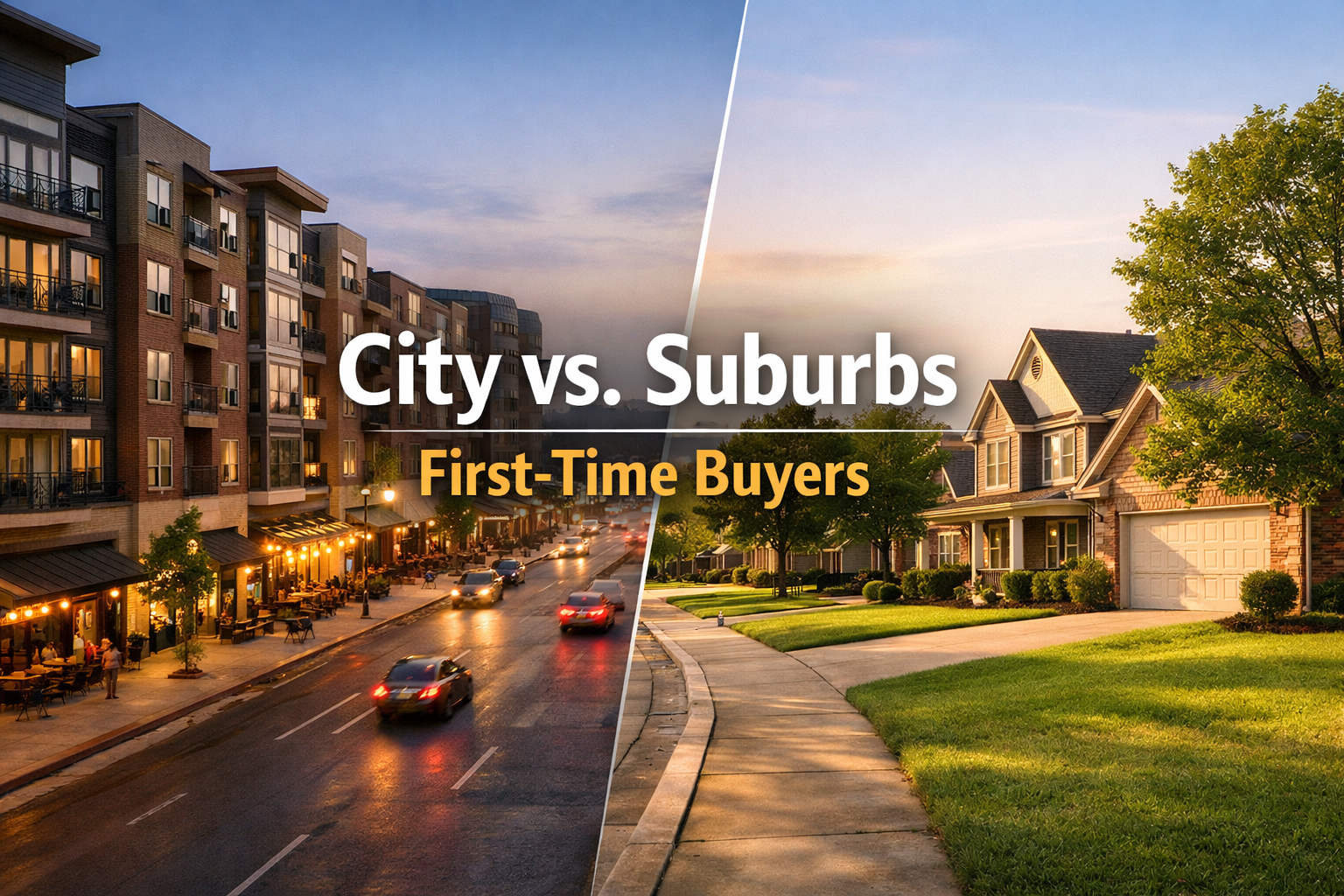
For first-time buyers in Greater San Antonio, choosing between the city and the suburbs comes down to affordability, lifestyle priorities, commute tolerance, and long-term flexibility. San Antonio city neighborhoods often offer shorter commutes and established communities, while suburbs like Boerne, Schertz, Cibolo, Helotes, and Converse tend to provide newer homes, more space, and different price dynamics. Neither option is universally "better"—the right choice depends on how you plan to live today and how much flexibility you want for the future. Understanding these trade-offs early helps first-time buyers make confident, sustainable decisions in today's Bexar County market.
Direct Answer
For most first-time buyers, buying in San Antonio versus the suburbs is less about which area is "better" and more about which environment fits your budget, lifestyle, and future plans. City homes often mean convenience and shorter commutes, while suburban homes typically offer more space and newer construction. The best choice is the one that aligns with how you live now and how long you plan to stay.
Key Points at a Glance
- San Antonio city homes often offer shorter commutes and established neighborhoods
- Suburbs may provide newer homes, more square footage, and different HOA structures
- Price differences vary significantly by area and home type, not just location
- Commute time can change your daily quality of life more than expected
- Long-term flexibility matters if this won't be your "forever" home
- Property taxes, HOA fees, and utility costs differ across city and suburban areas
- School districts affect home values even if you don't have children
- Neither option is universally better—the right choice is personal
Understanding the City vs. Suburbs Decision for First-Time Buyers
Buying your first home is already a major decision. Adding the city-versus-suburbs question can make it feel overwhelming, especially in a large and geographically diverse metro like Greater San Antonio. First-time buyers often assume there is a clear financial or lifestyle "winner," but in reality, the answer is highly personal and situation-dependent.
San Antonio's size and diversity allow buyers to choose from urban neighborhoods near downtown, established residential areas throughout the city, and a wide range of suburban communities—all within a reasonable driving radius. The metro spans multiple counties and includes everything from walkable historic districts to master-planned suburban developments.
Understanding how these areas differ in practical, everyday ways helps you avoid buying a home that feels right initially but becomes frustrating or financially burdensome over time. The goal is finding the right fit for your current lifestyle while maintaining flexibility for future changes.
City Living in San Antonio: What First-Time Buyers Should Know
Buying within San Antonio city limits appeals to many first-time buyers because of convenience, proximity, and established character. City neighborhoods tend to be closer to major employers, downtown, the Medical Center, JBSA installations, and cultural amenities.
What city buyers often appreciate:
- Shorter commutes: Less time in the car to reach downtown, Medical Center, or other major employment hubs
- Established neighborhoods: Mature trees, historic character, unique architecture in areas like Alamo Heights, Monte Vista, or King William
- Walkability: Some city neighborhoods offer walkable access to restaurants, coffee shops, and entertainment
- Greater access to amenities: Proximity to dining, entertainment venues, museums, and events
- Diverse housing stock: Everything from historic bungalows to modern townhomes
- Central location: Easy access to multiple parts of the metro without long drives
- Less dependence on highways: Shorter distances to destinations
However, city living also comes with trade-offs that first-time buyers should evaluate carefully before committing.
Things to consider before buying in the city:
- Older homes: Many city neighborhoods feature homes built in the 1950s-1980s that may require more maintenance, updates, or unexpected repairs
- Smaller lots: Yards tend to be smaller with less outdoor space
- Limited parking: Street parking or single-car garages are common in older neighborhoods
- Higher competition: Popular city neighborhoods can be competitive with faster-moving inventory
- Property condition varies: Home condition can vary dramatically block by block
- Noise levels: Urban areas tend to have more ambient noise from traffic, neighbors, or nearby businesses
- Limited yard space: May not suit buyers with large dogs or outdoor hobbies
For first-time buyers, the condition of the home often matters more than location alone. An older city home with deferred maintenance—foundation issues, aging HVAC systems, old plumbing—can strain a new homeowner's budget if major repairs come sooner than expected.
Understanding the full home buying process, including inspection priorities and budgeting for maintenance, is covered in The Home Buying Process in San Antonio.
Quick Takeaway: City homes offer convenience and character, but first-time buyers should budget carefully for potential maintenance needs and understand neighborhood-level differences.
Suburban Living Around San Antonio: What Changes?
Suburbs like Boerne, Schertz, Cibolo, Helotes, and Converse attract many first-time buyers for several practical reasons: predictability, newer construction, and different lifestyle offerings. These areas often feature newer developments, clearer HOA structures, and homes built with modern layouts and systems.
Common benefits of suburban buying:
- Newer construction: Homes built in the last 10-20 years with modern systems and warranties
- Larger floor plans: More square footage and bedroom/bathroom count for the price
- More storage: Larger closets, garages, and built-in storage solutions
- Consistent neighborhood design: Master-planned communities with cohesive aesthetics
- Community amenities: Pools, parks, walking trails, and recreation centers included in HOA fees
- Easier parking: Two-car or three-car garages are standard
- Larger yards: More outdoor space for pets, kids, or gardening
- Newer schools: Proximity to recently built schools with modern facilities
- Lower crime perceptions: Many suburban areas have reputation for safety
Suburbs also appeal to buyers who want a more residential, quiet feel or anticipate lifestyle changes such as working from home permanently, starting families, or needing more space for hobbies.
Potential downsides first-time buyers should weigh:
- Longer commute times: Especially during rush hour to downtown, Medical Center, or in-city employment
- HOA fees: Monthly costs ranging from $30 to $300+ depending on amenities
- HOA restrictions: Rules about exterior modifications, parking, landscaping, and more
- Less immediate access: City nightlife, dining variety, and entertainment require driving
- Dependence on driving: Most errands require a car; walkability is limited
- Traffic patterns: Highway access points can create bottlenecks during peak hours
- Less established: Newer areas lack mature trees, character, and established neighborhood identity
- Cookie-cutter feel: Some buyers dislike the uniformity of newer subdivisions
The key is understanding that "suburban" does not mean the same thing everywhere in Greater San Antonio. Boerne offers Hill Country charm and small-town character. Schertz and Cibolo attract military families and young professionals with modern amenities. Helotes provides a mix of acreage properties and planned communities. Converse offers affordability with proximity to multiple JBSA installations.
For detailed information on different areas, the overview of San Antonio Neighborhoods and Communities provides helpful comparisons.
Quick Takeaway: Suburbs often offer newer homes and more space, but commute patterns and HOA costs matter more than many first-time buyers expect upfront.
Affordability: City vs. Suburbs Isn't Always What You Think
Many first-time buyers assume suburbs are always cheaper than buying in the city. In Greater San Antonio, that assumption isn't always accurate. Affordability is more nuanced and depends on multiple factors beyond just purchase price.
What actually affects monthly affordability:
- Home age and condition: Newer suburban homes may cost more upfront but require less immediate maintenance
- Lot size and property features: Larger suburban lots may mean higher landscaping and maintenance costs
- Neighborhood amenities and HOA fees: Suburban HOAs can add $100-$300+ monthly
- School district demand: Highly rated districts command premium pricing in both city and suburbs
- Proximity to employment centers: Homes closer to jobs often cost more but save commute time and fuel
- Property taxes: Vary by municipality, school district, and county—not just city vs. suburb
- Utility costs: Larger suburban homes cost more to heat and cool
- Maintenance and repairs: Older city homes may require more frequent repairs
- Insurance costs: Can vary based on home age, construction type, and location
Some suburban homes may have higher purchase prices but lower ongoing maintenance costs because everything is newer. Some city homes may cost less upfront but require more ongoing investment in repairs, updates, and maintenance.
Monthly affordability is about more than just the mortgage payment—it's the total cost of ownership including taxes, insurance, HOA fees, utilities, and maintenance.
This is where working through the full buyer journey—including comprehensive budgeting and payment planning—becomes critical. The resource on Deciding to Buy a Home in San Antonio helps first-time buyers see the complete financial picture, not just the list price.
Quick Takeaway: True affordability depends on total monthly costs and long-term maintenance needs, not whether the home is technically located in the city or suburbs.
Commute and Lifestyle: The Hidden Cost of Location
Commute time is one of the most underestimated factors for first-time buyers making the city-versus-suburbs decision. A home that feels perfect during a weekend showing may create significant daily stress during weekday rush-hour traffic.
Questions first-time buyers should ask honestly:
- Where do I work now, and is that location likely to change in the next few years?
- What time of day will I typically commute to and from work?
- How flexible is my work schedule, or am I locked into traditional hours?
- How often do I need to be near downtown, Medical Center, or other major hubs?
- Do I mind spending time in the car, or does commuting stress me out?
- What's my backup plan if traffic patterns worsen or my job location changes?
A 10-mile difference in home location can add 20-30 minutes or more to your daily drive time depending on direction, highway access, and traffic patterns. Over years of ownership, that time commitment adds up significantly—both in hours lost and in fuel costs, vehicle wear, and stress levels.
Lifestyle compatibility matters just as much as commute:
- Some buyers thrive on being close to city events, restaurants, and cultural activities
- Others prefer quieter neighborhoods and don't mind driving 20-30 minutes for entertainment
- Some value walkability and nearby amenities over yard space
- Others prioritize outdoor space, privacy, and separation from urban density
- Some need proximity to specific amenities (gyms, parks, shopping)
- Others work from home and rarely commute, making location less critical
Neither lifestyle is better—they're simply different. The mistake is buying a home that doesn't match how you actually live and what you actually value daily.
Quick Takeaway: A slightly longer commute or lifestyle mismatch can impact daily quality of life more than first-time buyers expect when they're focused on the home itself.
Long-Term Flexibility for First-Time Buyers
Most first-time buyers do not stay in their first home forever. Statistics show first-time buyers typically stay 5-10 years before selling or moving up. That makes resale flexibility an important consideration even when buying your first home.
City homes may offer future advantages:
- Strong resale demand in established, sought-after neighborhoods
- Appeal to future buyers seeking location convenience and shorter commutes
- Rental potential in certain areas if you need to relocate but want to keep the property
- Appreciation potential in neighborhoods with limited new construction
- Appeal to diverse buyer types (singles, couples, retirees, investors)
Suburban homes may offer different advantages:
- Broader appeal to move-up buyers and families seeking space
- Newer systems that age more predictably with less surprise maintenance
- Easier resale in family-oriented communities with good schools
- Attract military families who prioritize newer homes and proximity to bases
- Appeal to buyers who prioritize condition over location
There is no guarantee of appreciation in any specific neighborhood—market conditions, economic factors, and area development all play roles. However, buying with eventual resale or rental flexibility in mind reduces risk if your personal or professional plans change unexpectedly.
Consider who your future buyer might be:
- Will families want this home because of schools and space?
- Will young professionals want this home because of location and commute?
- Will the home appeal to a broad range of buyers, or is it very specific?
- What happens if I need to sell quickly—is there consistent demand?
Quick Takeaway: Think about who your future buyer might be and what they'll value, not just your current needs and preferences.
"We worked with Tami for about 6 months and she is hands down the absolute best real estate agent we have ever had the pleasure to do business with. She's not kidding on her promotional materials when she claims to provide concierge service! The process began for us when I contacted her about a listing she had posted online. Tami was so knowledgeable about the area and attentive to the details that we asked to meet with her when we were in town for spring break. You see we were moving from out of state and transitioning from one career to another. Accommodating us down to facetiming with a spouse half way around the world several time zones away and working with our crazy schedule was no small task, but she made it happen. When it came time to close the deal, Tami fought for us to get the best deal, the best home inspectors, the best contractors, and the best resolutions down to minutest of details. Even though we were not her only clients, Tami always made us feel as if we were her top priority. When we decide to buy or sell again in the San Antonio area, we will use no one other than Tami Price and would recommend you do the same!" — Austin
Common Misconceptions First-Time Buyers Have
Misconception: Suburbs are always cheaper than the city. Reality: Total monthly costs vary widely by neighborhood, home type, HOA fees, and property taxes. Some city homes offer better value than suburban equivalents.
Misconception: City homes are always older, riskier, and require more maintenance. Reality: Many city neighborhoods include renovated homes, newer construction, and well-maintained properties. Age doesn't automatically mean poor condition.
Misconception: Commute time won't matter long-term or I'll get used to it. Reality: Commute fatigue is one of the most common regrets among buyers. It affects daily quality of life and rarely gets easier over time.
Misconception: HOA fees are always a waste of money or a bad thing. Reality: Some HOAs cover amenities, landscaping, and maintenance that would otherwise cost you separately. Well-managed HOAs can protect property values.
Misconception: Suburbs always have better schools than city neighborhoods. Reality: School quality varies by specific district and even by individual campus—not by city versus suburban location. Research specific schools, not assumptions.
Important Considerations Before You Decide
Before making your city-versus-suburbs decision, carefully consider:
- Review property taxes across areas: Compare actual tax bills, not just assessed values
- Understand HOA rules before making offers: Read CC&Rs carefully to ensure you can live with restrictions
- Budget for total ownership costs: Include maintenance, utilities, commute costs, not just mortgage
- Consider resale flexibility: Think about eventual selling even if you plan to stay long-term
- Work with local experts: Choose someone who understands micro-market differences across Greater San Antonio
- Visit areas at different times: See neighborhoods during rush hour, weekends, and evenings
- Talk to current residents: Get real feedback about daily living in areas you're considering
- Research future development: Understand what's planned for areas you're considering
First-time buyers benefit from structured guidance through this decision-making process. The step-by-step walkthrough in The Home Buying Process in San Antonio helps clarify what to expect at each stage.
Quick Takeaway: Take time to research thoroughly and visit areas multiple times before committing to a location.
Questions First-Time Buyers Often Ask
Q: Is it smarter to buy smaller in the city or bigger in the suburbs? A: It depends entirely on your lifestyle priorities and timeline. Smaller city homes may offer location value, appreciation potential, and lower maintenance, while suburban homes may provide more day-to-day comfort and space. Neither is universally smarter—they serve different needs.
Q: Do suburbs always have better schools than San Antonio city neighborhoods? A: No, not always. School quality varies by specific district and even by individual campus—not simply by city versus suburban location. Some excellent schools exist within San Antonio city limits, while some suburban districts have variable quality. Research specific schools.
Q: Are HOAs unavoidable in the suburbs around San Antonio? A: Many suburban neighborhoods have HOAs, but not all. Some older suburban areas and certain communities lack HOAs. However, HOA structure and management quality matter more than presence alone. Some provide genuine value through amenities and maintenance.
Q: Can first-time buyers still compete in popular city neighborhoods? A: Yes, absolutely—with realistic expectations, strong financing preparation, and flexibility on terms. Popular city neighborhoods attract competition, but prepared buyers succeed regularly.
Q: How does property tax differ between city and suburban areas? A: Property taxes are determined by taxing entities (city, county, school district, special districts)—not simply by city versus suburban location. Taxes can vary significantly even between nearby neighborhoods. Always research actual tax bills for specific properties.
"Tami was perfect! Very patient and helpful throughout or our first home purchase. Any question we had she had the answer. Made my girlfriend and I feel like we were her number one priority! If we liked a house or wanted to see one she had us in it , within the next day or earlier!!" — Rob
Frequently Asked Questions
Q: Is buying in San Antonio city limits harder for first-time buyers than suburbs? A: Not harder, just different. City buying requires careful evaluation of home condition, neighborhood dynamics, and maintenance budgets. Suburban buying requires understanding HOAs, commute impacts, and total monthly costs.
Q: Are suburbs safer investments for first-time buyers than city homes? A: Investment safety depends on location fundamentals, demand trends, and long-term flexibility—not just geography. Both city and suburban homes can be good or poor investments depending on specific neighborhood, condition, and pricing.
Q: How far out from San Antonio should I look as a first-time buyer? A: Start with your comfortable commute limit first, then expand based on budget and available inventory. Most buyers regret buying too far out more than buying closer in.
Q: What if I'm not sure whether I prefer city or suburban living? A: Rent in both types of areas first if possible, or visit neighborhoods extensively at different times of day. Talk to current residents about daily living realities.
Q: Can I buy in the suburbs now and move to the city later, or vice versa? A: Yes, many buyers do this as their needs, income, and preferences evolve. This is why thinking about resale flexibility matters even for your first purchase.
The Bottom Line
There is no universal answer to whether it is better to buy in the city or suburbs of San Antonio—especially for first-time buyers with unique circumstances, budgets, and lifestyle preferences. The right choice balances affordability, commute tolerance, lifestyle compatibility, and future flexibility in ways that work specifically for you.
Taking time to understand how San Antonio's city neighborhoods and surrounding suburbs—Boerne, Schertz, Cibolo, Helotes, Converse, and beyond—differ in practical, everyday ways helps you avoid buyer's remorse and make a decision you can live with comfortably long after closing.
Neither option is inherently better. A well-chosen city home serves some buyers perfectly for decades. A well-chosen suburban home does the same for others. The key is honest self-assessment about how you live, what you value daily, and how long you realistically plan to stay.
The Greater San Antonio market offers first-time buyers excellent options in both city neighborhoods and suburban communities. Success comes from matching your choice to your actual lifestyle and financial reality—not to what you think you "should" want or what worked for someone else.

Tami Price is a REALTOR® and Broker Associate serving the Greater San Antonio area, including Bexar, Comal, Guadalupe, Kendall, and Medina counties. With nearly two decades of experience and over 600 five-star reviews across multiple platforms, she provides clear guidance for first-time buyers navigating the city-versus-suburbs decision throughout the metro.
Tami Price, REALTOR®, Broker Associate
📞 210 620 6681
✉️ tami@tamiprice.com
🌐 TamiPrice.com
📅 Book a Consultation
Disclaimer: This content is for educational purposes only and reflects general market conditions in Greater San Antonio at the time of writing. Real estate conditions vary by neighborhood, property type, and buyer profile. Always consult with a licensed real estate professional, lender, or legal advisor before making any real estate decision.
Categories
- All Blogs (642)
- Home Buying (21)
- Neighborhood Guides (41)
- 10 Incentive and Rate Buydown Questions (1)
- 10 Military Neighborhood (1)
- 10 Mistakes Sellers Make (1)
- 10 Strategies to Coordinate a Same Day Close (1)
- 12 Lifestyle Questions to Move In (1)
- 12 PCS What Ifs (1)
- 12 Photos and Marketing Assets (1)
- 13 PCS Hunting Trip Tips (1)
- 14 Design Center Decisions (1)
- 15 Red Flags Touring Home in San Antonio (1)
- 2026 Market (1)
- 30 days after closing your home (1)
- 7 Offer Terms Beyond Price (1)
- 7 VA Specific Questions (1)
- 78015 Ranked One (1)
- 8 Bridge (1)
- 8 Myths Buyers Believe about Down Payments (1)
- 8 Reasons VA Buyers Love New Construction (1)
- 9 Mistakes Move Up Buyers Make (1)
- 9 Questions to Decide If You Keep Your PCS Home (1)
- 9 Timeline Questions Every Buyer Need to Ask (1)
- 9 Warranty Questions to Ask (1)
- 9 Ways to Attract VA & Military Buyers (1)
- 90 days before your move (1)
- About Tami Price (6)
- Active Adult Homes (1)
- Affordable Communities (2)
- Affordable Homes (1)
- Affordable Housing & Community Development (3)
- Agent Qualifications and Credentials (1)
- Agent Qualifications and Experience (1)
- Agent Recognition (3)
- Agent Selection (1)
- AI and Real Estate Tools (1)
- Alamo Heights (4)
- Alamo Heights ISD (1)
- Alamo Ranch (2)
- Amenities in Helotes, Texas (3)
- Appraisals (1)
- Arts and Culture (1)
- Awards and Recognition (7)
- Balcones Creek (1)
- Best Neighborhoods to Live in Cibolo, TX (3)
- Best Neighborhoods to Live in San Antonio (15)
- Best Places to Live in Northeast Inner Loop: A Neighborhood Guide (1)
- Bexar County Property Tax (1)
- Bexar County Real Estate (3)
- Blue Tape Walkthrough (1)
- Boerne Home Sellers (1)
- Boerne Texas (4)
- Builder Contracts & Warranties (3)
- Builder Incentives (1)
- Builder Warranties (1)
- Buyer (64)
- Buyer Activity San Antonio (1)
- Buyer and Seller Guidance (3)
- Buyer Due Diligence (1)
- Buyer Education (45)
- Buyer Guide (9)
- Buyer Guides (7)
- Buyer Protection Strategies (1)
- Buyer Representation (1)
- Buyer Representation Expertise (1)
- Buyer Resources (91)
- Buyer Strategy (2)
- Buyers (13)
- Buyers Agent (1)
- Buying a Foreclosed Home in San Antonio (10)
- Buying a Home (4)
- Buying a Home in San Antonio (6)
- Buying Near JBSA (1)
- Buying Timeline (1)
- Buying vs Renting (1)
- Castroville, TX (8)
- Central Texas Growth (1)
- Choosing a Real Estate Agent (1)
- Choosing an Agent (1)
- Cibolo Communities (1)
- Cibolo Home Sellers (1)
- Cibolo TX (12)
- Client Reviews and Testimonials (1)
- Client Satisfaction (1)
- Client Stories (1)
- Client Testimonial (4)
- Clients review (4)
- Closing (1)
- Cobblestone (1)
- Comal County (1)
- Commercial & Retail Development (2)
- Commercial Development (1)
- Community (1)
- Community Development (2)
- Community Development and Real Estate (1)
- Community Guides (1)
- Community Investment Impact (1)
- Community Spotlights (1)
- Commuter Neighborhoods (1)
- Cons of Living in Helotes, TX (4)
- Conservation Communities (1)
- Contingency Questions (1)
- Converse Home Sellers (1)
- Converse Homes For Sale (3)
- Converse Real Estate (1)
- Converse TX (10)
- Cost of Living Guides (1)
- Cost of Living in San Antonio TX (23)
- Custom Homes (5)
- Davis Ranch (1)
- Days on Market (1)
- Down Payment Assistance (1)
- Downtown Revitalization (1)
- Downtown San Antonio (2)
- Dual Military (1)
- East Side Living (1)
- Economic Development (1)
- Education, Texas Hill Country (1)
- Emerald Pointe (1)
- Employment (1)
- Employment Corridors (1)
- Encino Forest (1)
- Equity and Pricing Strategy (2)
- Equity Q&A (1)
- Established Communities (3)
- Events in San Antonio (34)
- Expert Advice from Tami Price, Realtor® (7)
- Fair Oak Ranch (1)
- Family Homes (3)
- FAQ (1)
- Far Northwest San Antonio (1)
- Far West San Antonio (1)
- Farmer Markets in San Antonio (1)
- Fastest Growing Zip Codes in America (1)
- Featured Homes for Sale (2)
- Featured Properties (1)
- Final Walkthrough (1)
- Financial Planning (11)
- Financing Strategy (1)
- First Time Buyers (23)
- First Time Sellers (1)
- First-Time Buyers (6)
- First-Time Homebuyer Resources (4)
- First-Time Homebuyer Tips (2)
- First-Time Homebuyers (6)
- First-Time Investors (1)
- Fort Sam Houston (3)
- Fort Sam Houston Real Estate (1)
- Fort Sam Houston, TX (2)
- Fox Grove (1)
- FSBO vs Agent Representation (1)
- Future Rental (1)
- Gated Communities (5)
- Golf Communities (1)
- Great Northwest (1)
- Greater San Antonio Housing Trends (2)
- Greater San Antonio Real Estate (5)
- Growth and Development (11)
- HELOC (1)
- Helotes Home Sellers (1)
- Hill Country (1)
- Hill Country Communities (2)
- Hill Country Development (1)
- Hill Country Homes for Sale (1)
- Hill Country Real Estate (2)
- Hill Country Retreat (1)
- Historic Districts (5)
- Historic Neighborhoods (4)
- Holiday Guide (1)
- Home Buying (7)
- Home Buying Education (3)
- Home Buying Guide (7)
- Home Buying Process (8)
- Home Buying Strategy (2)
- Home Buying Tips (5)
- Home Energy Efficiency San Antonio (5)
- Home Financing (3)
- Home Improvement ROI (1)
- Home Inspections (3)
- Home Maintenance (1)
- Home Preparation (2)
- Home Pricing Strategy (14)
- Home Renovation for Resale (1)
- Home Selling (12)
- Home Selling Guide (12)
- Home Selling Strategies (3)
- Home Selling Strategy (3)
- Home Selling Tips (23)
- Home Staging and Updates (2)
- Home Values (2)
- Homebuyer Education (15)
- Homebuyer Resources (1)
- Homebuying Guide (1)
- Homebuying Tips (3)
- Homeowner (32)
- Homeowner Tax Benefits (1)
- Homeownership Costs (1)
- Homes for Sale (2)
- Homes for sale near Lackland AFB (2)
- Homestead amenities (1)
- Horizon Pointe (1)
- House Hunting Guide (1)
- Housing Development (1)
- Housing Market Updates (3)
- How to Buy a House in San Antonio TX (43)
- Hunters Ranch (1)
- Hybrid (1)
- In Person (1)
- Incorporated Cities (6)
- Industry News (2)
- Industry Recognition (1)
- Infrastructure & Growth Projects (2)
- Interest Rates (2)
- Invest in San Antonio (32)
- Investment Opportunities (1)
- Investment Property San Antonio (3)
- JBSA (8)
- JBSA Housing (11)
- JBSA Real Estate (2)
- JBSA Resources (7)
- Joint Base San Antonio (4)
- Joint Base San Antonio Housing (1)
- Judson ISD (2)
- Lackland AFB (5)
- Lackland AFB Housing (1)
- Land Use Planning (1)
- Lera MLS (15)
- Lifestyle & Community Growth (2)
- Lifestyle & Local Growth (1)
- Lifestyle Communities (1)
- Listing Preparation (1)
- Listing Strategy (1)
- Live Oak (1)
- Living in San Antonio, TX (44)
- Living Near Randolph AFB (5)
- Loan Programs (1)
- Local Development News (2)
- Local Market Insights (4)
- Local News Around San Antonio (1)
- Luxury Communities (3)
- Luxury Homes (4)
- Luxury Real Estate (2)
- MacArthur Park (1)
- Making Offers on Homes (1)
- Market Analysis (24)
- Market Conditions (47)
- Market Expertise (1)
- Market Insights (5)
- Market Strategy (2)
- Market Timing (2)
- Market Trends (6)
- Market Trends & Insights (2)
- Market Update (17)
- Market Update 2026 (1)
- Market Updates (16)
- Master Planned Communities (12)
- Medical Center Area Real Estate (1)
- Medina Valley ISD (2)
- Midtown Living (1)
- Military & Economic Impact (3)
- Military Buyers (3)
- Military Communities (1)
- Military Families (1)
- Military Family Resources (1)
- Military Homebuying (3)
- Military Homeownership (1)
- Military Housing (2)
- Military Housing Market in Texas (14)
- Military Life in San Antonio (2)
- Military Neighborhoods (1)
- Military PCS Relocations (3)
- Military Real Estate (2)
- Military Relocation (99)
- Military Relocation & VA Loans (10)
- Military Relocation San Antonio (4)
- Military Relocation Services (3)
- Military Relocation to San Antonio (46)
- Military Relocations (18)
- Military Relocations & VA Home Loans (5)
- MLS Accuracy & Data Transparency (1)
- Mortgage Programs (1)
- Mothers Day in San Antonio (1)
- Move to Boerne TX (15)
- Move to Castroville TX (9)
- Move to Converse TX (14)
- Move to New Braunfels (1)
- Move to North San Antonio (16)
- Move to San Antonio TX (64)
- Move to Selma TX (17)
- Move to Shertz TX (10)
- Move to Texas (45)
- Move Up Buyer Resources (1)
- Move Up Buyers (24)
- Move-In Ready Homes (2)
- Move-In Ready Homes San Antonio (2)
- Move-Up Buyers (2)
- Moving to Helotes, TX (14)
- Moving to San Antonio (61)
- MUD Taxes (1)
- Natalia Homes For Sale (1)
- Near East Side Living (1)
- Negotiation Strategy (2)
- Neighborhood Amenities (1)
- Neighborhood Guides (7)
- Neighborhood Spotlights (3)
- Neighborhoods near Randolph AFB (9)
- New Braunfels (4)
- New Braunfels Homes For Sale (1)
- New Braunfels News (2)
- New Braunfels Real Estate (2)
- New Construction (62)
- New Construction Communities (1)
- New Construction Homes (12)
- New Construction Homes San Antonio (5)
- New Construction vs Resale (2)
- New Construction Without Customization (1)
- New Construction Without the Wait (1)
- New Contruction Cost (1)
- New Listing (12)
- News (21)
- News & updates (23)
- No City Tax (1)
- No HOA Homes (1)
- North Central San Antonio (5)
- North East ISD (4)
- North San Antonio (7)
- North Side Neighborhoods (1)
- North Side San Antonio Development (1)
- Northeast Inner Loop (1)
- Northeast Inner Loop Neighborhoods (1)
- Northeast San Antonio (1)
- Northside ISD (5)
- Northwest San Antonio (6)
- Northwest San Antonio Real Estate (2)
- Northwood (1)
- Olympia Hills (1)
- One-Story Homes (1)
- Outdoor Living (1)
- PCS and JBSA (2)
- PCS checklist (1)
- PCS Guide (4)
- PCS Moves (12)
- PCS Moves to Joint Base San Antonio (4)
- PCS Planning (16)
- PCS Randolph AFB (15)
- PCS Relocation (1)
- PCS Resources (6)
- PCS San Antonio (42)
- PCS to San Antonio (38)
- PID Assessments (1)
- Pinon Creek (1)
- Pipe Creek (1)
- Places to Eat Near Randolph AFB (1)
- Pool Homes (1)
- Pre Approval (1)
- Pre-Listing Preparation (2)
- Pre-Listing Process (1)
- Prescott Oaks (1)
- Preserve at Medina (1)
- Pricing and Marketing Strategy (3)
- Professional Awards and Achievements (2)
- Professional Real Estate Representation (1)
- Property Tax Exemptions Texas (1)
- pros and cons living in Converse TX (3)
- Pros and Cons Living in Selma TX (6)
- Pros and Cons of Living in Castroville, TX (4)
- Pros and Cons of Living in San Antonio (30)
- PT500 List (1)
- Purchase Negotiation (1)
- Quick Close Real Estate (1)
- Randolph AFB Neighborhoods (2)
- Real Estate (1)
- Real Estate Advice (1)
- Real Estate Agent Recognition (6)
- Real Estate Agent Selection (2)
- Real Estate Agent Value (1)
- Real Estate Consultation (1)
- Real Estate Finance (1)
- Real Estate Financing (1)
- Real Estate Impact (1)
- Real Estate Investment San Antonio (1)
- Real Estate Market Trends (3)
- Real Estate Professional Designations (1)
- Real Estate Strategy (1)
- Real Estate Technology & Trends (1)
- Real Estate Tips (1)
- Real Estate Tips and Guides (2)
- Real Estate Trends (2)
- RealTrends Verified (1)
- Relocating to San Antonio (2)
- Relocation (4)
- Relocation Resources (2)
- Relocation to San Antonio (49)
- Remote Homebuying (1)
- Rental Housing (1)
- Rental Property (1)
- Rental Strategy (1)
- Resale Properties (1)
- Retail Development (1)
- Retire in Boerne TX (10)
- Retire in San Antonio (31)
- Retirement Communities (1)
- Reviews and Recognition (1)
- Rockwall Ranch (1)
- Rural Living (2)
- SABOR (27)
- San Antonio Buyer Resources (2)
- San Antonio Communities (3)
- San Antonio Community Events (1)
- San Antonio Growth (1)
- San Antonio Home Buying and Selling (2)
- San Antonio Home Buying Guide (5)
- San Antonio Home Improvement (1)
- San antonio home prices (3)
- San Antonio Home Sellers (3)
- San Antonio Homeowner Guide (1)
- San Antonio Homes for Sale (12)
- San Antonio Housing Market (2)
- San Antonio Housing Market & Mortgage Financing (1)
- San Antonio Housing Market Analysis (1)
- San Antonio Housing Trends & Market Analysis (3)
- San Antonio Lifestyle Amenities (1)
- San Antonio Listing (1)
- San Antonio Living (1)
- San Antonio Market (3)
- San Antonio Market Updates (7)
- San Antonio Military Relocation (3)
- San Antonio Neighborhoods (48)
- San Antonio New Construction & Master-Planned Communities (2)
- San Antonio New Home Communities (1)
- San Antonio News (22)
- San Antonio Property Taxes (2)
- San Antonio Real Estate (163)
- San Antonio Real Estate Agents (6)
- San Antonio Real Estate Excellence (1)
- San Antonio Real Estate Guide (6)
- San Antonio Real Estate Market (32)
- San Antonio Real Estate Market Analysis (2)
- San Antonio REALTOR Awards (1)
- San Antonio Seller Resources (2)
- San Antonio Sellers (1)
- San Antonio Spec Homes (1)
- San Antonio Spurs Community Programs (1)
- San Antonio Urban Living (1)
- Scenic Loop (1)
- Schertz Home Sellers (1)
- Schertz Real Estate (1)
- Schertz, TX (11)
- School Information (1)
- SCUCISD Schools (1)
- Secured Quick Offer (1)
- Sell Home In San Antonio TX (50)
- Seller (50)
- Seller Education (24)
- Seller Guide (4)
- Seller Guides (1)
- Seller Representation Expertise (1)
- Seller Resources (69)
- Seller Should Understand (1)
- Seller Strategy (3)
- Seller Tips (2)
- Sellers (10)
- Selling A Home in San Antonio (49)
- Selling Your San Antonio Home (3)
- Selma TX (9)
- Single-Story Homes (4)
- Smart Homes (1)
- Solar Homes (3)
- Southtown (1)
- Spec Homes and Inventory Homes (2)
- Stone Oak (2)
- Suburban Housing Growth (2)
- Suburban Living (2)
- Talise De Culebra (1)
- Terrell Hills (2)
- Texas Acreage Properties (4)
- Texas Homestead Exemption (1)
- Things to do in San Antonio TX (16)
- Things to do Near Randolph AFB (3)
- Time Planning (1)
- Time-Sensitive Home Buying (1)
- Timing Strategy (1)
- Tips for Buying New Construction (9)
- Top Real Estate Agent in San Antonio (3)
- Transaction Coordination (1)
- Transportation Infrastructure (1)
- Two-Story Homes (2)
- Universal City (1)
- Updated Homes (2)
- Upscale Communities (1)
- Urban Communities (2)
- Urban Living (1)
- Urban Neighborhoods (4)
- VA Buyers (1)
- VA Home Loan Benefits (3)
- VA Loan Assumptions (3)
- VA loan benefits (27)
- VA Loan Guidance (1)
- VA Loan Home Buying Assistance (2)
- VA Loans (71)
- VA Loans and Military Benefits (3)
- VA Loans and Military Home Buying (3)
- VA Loans San Antonio (41)
- VET Benefits Living in San Antonio (3)
- Veterans Resources (3)
- Village Northwest (1)
- Virtual Buyers (1)
- Von Ormy Homes For Sale (1)
- week in sales (40)
- Weekly Sales Report (41)
- West San Antonio (2)
- West San Antonio Real Estate (1)
- Windcrest Homes for Sale (1)
Recent Posts