Inventory Homes: Understanding Move-In-Ready New Construction in San Antonio
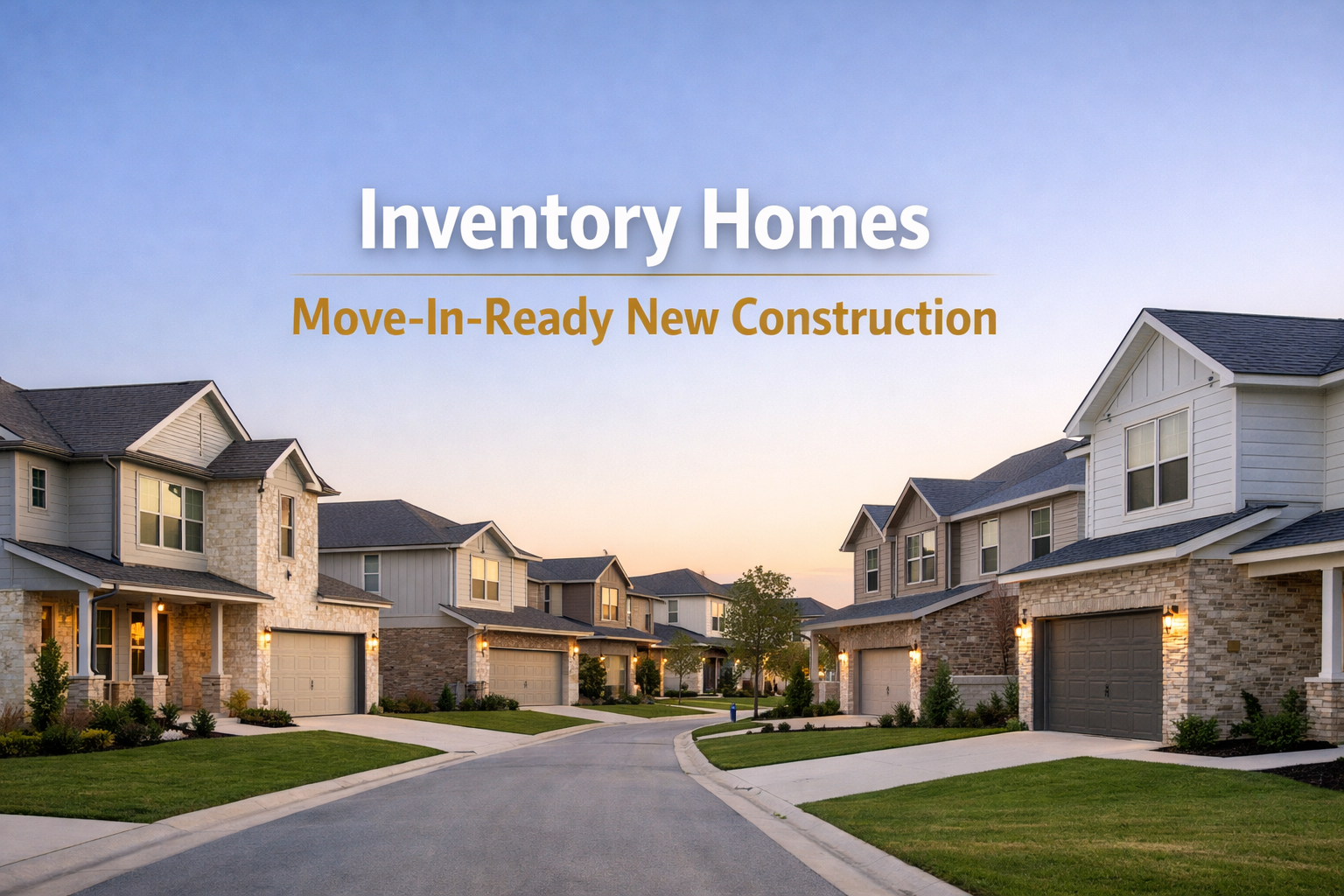
Inventory homes, also called spec homes or move-in-ready homes, represent completed new construction that builders have finished without specific buyers in place. Unlike to-be-built homes requiring months of construction after purchase, inventory homes allow immediate or near-immediate occupancy. For builders, completed inventory sitting unsold ties up capital and incurs carrying costs creating motivation to sell quickly. For buyers, inventory homes present unique opportunities including faster move-in timelines, negotiating leverage builders don't offer on pre-construction sales, and ability to see exactly what they're buying before committing.
San Antonio's active new construction market includes inventory homes throughout developing communities in the city and surrounding areas including Boerne, Helotes, Fair Oaks Ranch, Cibolo, Schertz, and Converse. Understanding how inventory homes work, what advantages and limitations they present, and how to negotiate effectively helps buyers capitalize on opportunities while avoiding potential pitfalls.
This comprehensive guide examines what inventory homes are, why builders create them, what advantages they offer buyers, how to evaluate inventory effectively, what negotiating leverage exists, and how inventory home purchases differ from building custom new construction.
What Are Inventory Homes and Why Do Builders Have Them?
Understanding builder motivations helps buyers recognize opportunities.
Inventory Home Definition:
Inventory homes are:
- Completed or nearly completed new construction
- Built speculatively without specific buyer contracts
- Move-in-ready or requiring only minor finishing
- Available for immediate or quick possession
- Often showcasing popular floor plans and features
These homes allow buyers seeing and purchasing finished products.
Why Builders Create Inventory:
Several business reasons drive spec construction:
- Model home alternatives: Showcasing floor plans without model costs
- Market confidence: Demonstrating builder faith in demand
- Sales velocity: Completing homes attracts ready buyers
- Community momentum: Activity and completion encourage confidence
- Design center avoidance: Eliminating customization complexity
Strategic inventory supports sales and marketing objectives.
When Inventory Becomes Problem:
Completed homes transition from strategic to problematic when:
- Market conditions slow reducing buyer demand
- Homes sit completed beyond normal sale timelines
- Carrying costs accumulate including interest, taxes, insurance, maintenance
- Capital tied up prevents starting new construction
- Inventory accumulation signals market weakness
Extended inventory creates builder urgency benefiting buyers.
Seasonal Inventory Patterns:
Inventory levels fluctuate throughout years:
- Higher inventory during slower winter months
- Lower inventory during active spring and summer
- Builder completion timing affecting availability
- Market condition impacts on absorption rates
Understanding patterns helps buyers time purchases strategically.
What Advantages Do Inventory Homes Offer Buyers?
Move-in-ready homes provide several benefits over building from scratch.
Immediate or Quick Possession:
The most obvious advantage is timeline:
- No construction wait of 6 to 12 months
- Occupancy within days or weeks of purchase
- Accommodates urgent relocation timelines
- Eliminates construction delay risks
- Certainty about move dates
Quick possession matters enormously for time-constrained buyers.
See Exactly What You're Buying:
Finished homes eliminate uncertainty:
- Walk through actual homes not just floor plans
- See finishes, colors, and materials in place
- Evaluate room sizes and layouts in reality
- Assess natural light and views
- Identify any construction quality issues before purchasing
What-you-see-is-what-you-get prevents surprises.
Enhanced Negotiating Leverage:
Completed inventory creates seller motivation:
- Carrying costs incentivize quick sales
- Longer sitting time increases willingness to negotiate
- End-of-period pressures amplify motivation
- Completed homes can't wait for perfect buyers
- Builders may accept below initial asking prices
Buyer leverage is strongest with aged inventory.
Avoid Design Center Overwhelm:
Finished selections eliminate decision stress:
- No pressure making dozens of quick choices
- No risk of upgrade budget explosions
- No regret over hasty finish selections
- Complete homes show coordination of choices
- Buyers either like finished product or move on
Selection completion simplifies purchasing.
Immediate Neighborhood Context:
Developed surroundings provide clarity:
- See actual neighborhood development not promises
- Observe completed landscaping and maturity
- Evaluate neighbor proximity and views
- Understand traffic and noise realities
- Assess amenity completion and quality
Context evaluation improves location assessment.
What Potential Drawbacks Should Buyers Consider?
Inventory homes aren't universally superior to building custom.
No Personalization:
Finished homes eliminate customization:
- Colors, finishes, and fixtures already selected
- Floor plans and structural options complete
- No ability changing features to preferences
- May include choices buyers dislike
- Acceptance of builder selections required
Buyers wanting specific features must build custom.
Dated or Trendy Choices:
Some inventory selections age poorly:
- Trendy colors or finishes potentially dating quickly
- Builder cost-saving rather than quality choices
- Combinations buyers wouldn't select personally
- Styles not matching buyer preferences
- Potential need for updates despite new construction
Not all builder choices align with buyer tastes.
Lot and Location Limitations:
Available inventory constrains choices:
- Limited lot selections from current inventory
- Potentially less desirable locations than sold lots
- Premium lots typically sell during construction
- Remaining inventory may face challenges
- Location acceptance required for purchase
Lot compromise may be necessary accessing inventory benefits.
Possible Construction Issues:
Completed homes may have problems:
- Quality issues potentially missed during construction
- Builder rushing completion to move inventory
- Seasonal construction challenges
- Subcontractor quality variations
- Finish damage during construction
Even new construction requires thorough inspection.
Limited Warranty Time:
Warranty periods may have started:
- Some builders start warranties at completion not sale
- Months of coverage potentially consumed
- Reduced protection period for buyers
- Verification of warranty start dates essential
Understanding remaining coverage protects buyers.
How Should Buyers Evaluate Inventory Homes?
Systematic assessment prevents overlooking issues or overpaying.
Thorough Physical Inspection:
Treat inventory homes like resale properties:
- Professional home inspections despite new construction
- Focus on construction quality and code compliance
- Identify any finish damage or defects
- Test all systems and appliances
- Document everything before purchase
New construction status doesn't guarantee perfection.
Finish Quality Assessment:
Evaluate selections and execution:
- Material quality and grade
- Installation workmanship
- Color and finish coordination
- Durability for intended use
- Personal aesthetic compatibility
Finish quality varies significantly among builders and price points.
Lot and Location Evaluation:
Assess property positioning carefully:
- Lot size, orientation, and characteristics
- Views and privacy considerations
- Proximity to amenities or negatives
- Future development around property
- Comparison to premium lots in community
Location affects both enjoyment and resale value.
Pricing Comparison:
Determine whether pricing reflects appropriate value:
- Comparison to builder's current base prices
- Included upgrades and features
- Lot premium considerations
- Incentives and concessions offered
- Competitive inventory in similar communities
Fair pricing balances builder motivation against market value.
Time on Market Research:
How long has inventory sat unsold:
- Listing date and days on market
- Previous price reductions
- Builder urgency level
- Reason for extended availability
- Leverage implications for negotiation
Longer market time increases buyer negotiating power.
What Negotiating Strategies Work With Inventory Homes?
Completed inventory creates opportunities smart buyers exploit.
Timing Advantages:
When to maximize leverage:
- End of month, quarter, or year reporting periods
- Extended market time beyond normal absorption
- Multiple inventory homes signaling oversupply
- Market slowdowns reducing buyer traffic
- Builder financial pressure from carrying costs
Timing affects builder willingness to negotiate.
Price Negotiation Approaches:
How to approach pricing discussions:
- Research recent comparable sales
- Identify extended market time creating urgency
- Request price reductions beyond advertised incentives
- Propose reasonable offers below asking prices
- Justify offers with market data and condition
Completed inventory allows more negotiation than pre-construction.
Concession Requests:
Beyond price, request additional value:
- Closing cost contributions
- Home warranty extensions
- Appliance upgrades or additions
- Landscaping enhancements
- Repair or improvement credits
Builders may grant concessions preserving list prices.
As-Is Acceptance Trade-Off:
Accepting condition may improve terms:
- Waiving minor repair requests
- Accepting some finish imperfections
- Quick closing accommodating builder needs
- Reduced contingencies
Flexibility on condition may improve financial terms.
Multiple Offer Strategy:
Exploring several inventory homes:
- Comparing value across available inventory
- Creating competition for your purchase
- Using alternatives as leverage
- Walking away if terms unsatisfactory
Options strengthen negotiating position.
How Do Inventory Homes Compare to Building Custom?
Understanding trade-offs guides decision-making.
Timeline Differences:
Inventory offers speed, custom requires patience:
- Inventory: Immediate to 30-day possession typically
- Custom: 6 to 12 months from contract to completion
- Inventory: Eliminates construction uncertainty
- Custom: Allows build scheduling around life events
Urgency favors inventory while patience enables customization.
Personalization Trade-Offs:
Choice versus acceptance:
- Inventory: Accept builder selections
- Custom: Choose every finish and feature
- Inventory: Completed coordination guaranteed
- Custom: Risk of choice regret or budget overruns
Personal preference importance determines which approach suits better.
Cost Considerations:
Pricing differences favor different situations:
- Inventory: Potential discounts from builder motivation
- Custom: Pay base prices plus lot premiums and upgrades
- Inventory: See total cost upfront
- Custom: Costs evolve through design center process
Budget certainty versus customization cost varies by priorities.
Lot Selection:
Location trade-offs:
- Inventory: Limited to available completed lots
- Custom: Choose from all available lots
- Inventory: Potentially less desirable locations
- Custom: Premium lots available at premium prices
Lot importance affects which approach works better.
Quality Control:
Construction oversight opportunities:
- Inventory: Cannot monitor construction
- Custom: Can inspect during construction
- Inventory: Issues may be hidden behind finishes
- Custom: Catch problems before covering
Quality concern level affects approach preference.
What Should Buyers Know About Builder Motivations?
Understanding builder position improves negotiation effectiveness.
Carrying Cost Pressure:
Completed homes cost builders money:
- Construction loan interest accumulating
- Property taxes and insurance
- Utilities and maintenance
- Opportunity cost preventing new starts
- Monthly expenses motivating sales
Longer inventory sits, more pressure builders feel.
Reporting Period Urgency:
End-of-period goals create deadlines:
- Monthly sales targets affecting bonuses
- Quarterly earnings reporting to investors
- Annual performance evaluations
- Fiscal year-end motivations
Timing near these deadlines maximizes buyer leverage.
Market Condition Stress:
Broader market weakness amplifies pressure:
- Rising overall inventory across builders
- Slowing sales velocity
- Interest rate impacts on affordability
- Competing inventory from other builders
- Economic uncertainty affecting confidence
Market challenges increase negotiating opportunities.
Individual Property Challenges:
Some inventory homes face specific issues:
- Undesirable lot locations
- Finish combinations with limited appeal
- Oversized or undersized floor plans
- Pricing above market absorption
- Condition issues from extended vacancy
Problem properties create maximum motivation.
How Can Buyers Find the Best Inventory Home Opportunities?
Strategic searching uncovers optimal inventory deals.
Builder Website Monitoring:
Direct sources provide current information:
- Builder websites listing inventory homes
- Quick move-in or available now sections
- Filtering by location, price, and features
- Photos and virtual tours of completed homes
- Regular checking as inventory changes
Direct monitoring ensures awareness of new opportunities.
MLS® Searches:
Professional listings aggregate inventory:
- New construction status filters
- Immediate possession search criteria
- Builder name searches
- Price and location parameters
- Days on market sorting identifying aged inventory
MLS® searching through agents provides comprehensive coverage.
Community Visits:
On-site exploration reveals inventory:
- Visiting active building communities
- Asking sales representatives about available inventory
- Walking completed homes personally
- Comparing multiple builders' inventory
- Identifying unlisted or preview inventory
Physical visits uncover opportunities not yet advertised.
Agent Relationships:
Buyer agents provide valuable intelligence:
- Knowledge of builder inventory across communities
- Awareness of distressed or aged inventory
- Negotiation experience with specific builders
- Competitive market understanding
- Advocacy throughout purchase process
Experienced agents know where inventory opportunities exist.
Timing Consideration:
When to search for maximum selection:
- Fall and winter months typically see higher inventory
- End-of-year clearance motivations
- Market slowdown periods
- After construction rush periods
- Builder-specific inventory cycles
Strategic timing improves available options.
Expert Insight from Tami Price, REALTOR®
"Inventory homes represent some of the best opportunities in new construction when buyers understand how to evaluate and negotiate effectively. Over nearly two decades representing new construction buyers, I've helped hundreds capitalize on builder urgency turning completed inventory into exceptional value for buyers. The keys are thorough inspection despite new construction status, realistic assessment of finish choices and lot locations, and understanding builder motivations driving willingness to negotiate. Buyers who succeed with inventory homes are those wanting quick possession, accepting builder finish choices, and willing to negotiate based on market time and builder pressure rather than just accepting asking prices. The best deals exist on homes sitting longest, but buyers must verify why they haven't sold before assuming discounts automatically equal value."
Tami Price, REALTOR®, Broker Associate, specializes in inventory home negotiation and new construction representation throughout approximately 1,000 closed transactions.
Three Key Takeaways About Inventory Homes
- Inventory homes offer unique advantages including immediate possession, seeing finished products, and enhanced negotiating leverage from builder motivation. These benefits are strongest for buyers needing quick move-in timelines, wanting certainty about finishes, and willing to accept builder selections rather than customizing. However, inventory homes eliminate personalization and may involve lot or finish compromises.
- Completed inventory creates negotiating opportunities absent from pre-construction sales. Builders carrying completed homes face carrying costs and urgency to move inventory creating willingness to negotiate on price, concessions, and terms. Leverage is strongest with homes sitting longest, particularly near month-end, quarter-end, or year-end reporting periods when builders push to meet targets.
- Inventory homes require thorough evaluation despite new construction status. Not all builder choices align with quality or buyer preferences. Construction issues occur even in new homes. Lot locations may be less desirable than sold lots. Comprehensive inspection, finish assessment, and pricing comparison prevent overpaying for compromised inventory despite builder urgency signals.
Frequently Asked Questions
Q: Are inventory homes priced lower than building custom?
A: Often yes, particularly for homes sitting extended periods. Builders motivated to move inventory may offer discounts, enhanced incentives, or concessions not available on to-be-built homes. However, pricing varies by builder urgency, market conditions, and specific home characteristics. Some inventory homes are priced at or above comparable custom builds despite completed status.
Q: How quickly can I close on an inventory home?
A: Typically within 30 to 45 days similar to resale transactions. Some builders accommodate faster closings if homes are truly ready and buyers have financing prepared. Unlike custom builds requiring 6 to 12 months from contract to completion, inventory homes allow immediate or near-immediate possession making them ideal for urgent relocations.
Q: Should I get an inspection on a new inventory home?
A: Absolutely. Even new construction can have defects, code violations, or quality issues. Professional inspections identify problems before purchase when correction is simpler than warranty claims after closing. The cost of inspection is minimal compared to protection provided against construction deficiencies.
Q: What if I don't like the finishes in inventory homes?
A: You have two options: accept builder choices or build custom selecting your own finishes. Some minor changes like paint colors may be possible pre-closing but major finish changes generally aren't feasible on completed homes. If personalization matters significantly, building custom better serves your needs despite longer timelines.
Q: Do inventory homes have warranties like custom builds?
A: Yes, builder warranties cover inventory homes. However, verify when warranty periods begin. Some builders start coverage at completion not sale, meaning months of warranty may be consumed. Understanding remaining coverage prevents surprises about protection duration.
Q: Why hasn't an inventory home sold if it's a good deal?
A: Multiple reasons exist including pricing above market, less desirable lot location, finish combinations with limited appeal, recent completion without adequate exposure, or market conditions slowing overall sales. Investigating specific circumstances determines whether extended availability signals genuine value opportunity or property-specific challenges.
The Bottom Line
Inventory homes provide unique opportunities in San Antonio's new construction market for buyers wanting immediate possession, certainty about finished products, and potential negotiating advantages from builder urgency to move completed homes. These advantages are strongest when homes have sat completed for extended periods, particularly near month-end or quarter-end when builders push to meet sales targets.
However, inventory homes require accepting builder finish choices, potentially compromised lot selections, and elimination of customization opportunities. Thorough inspection despite new construction status, careful finish evaluation, and pricing comparison against market value prevents overpaying for compromised inventory despite builder urgency signals.
For buyers considering new construction throughout San Antonio, understanding inventory home opportunities, how to evaluate them effectively, and negotiation strategies capitalizing on builder motivation provides access to potentially exceptional value when circumstances align with buyer needs and preferences.

Contact Tami Price, REALTOR® | San Antonio, TX
Tami Price, REALTOR®, Broker Associate, and USAF Veteran, specializes in inventory home negotiation and new construction buyer representation. With nearly two decades of experience and approximately 1,000 closed transactions including extensive new construction purchases, Tami provides expertise identifying inventory opportunities, evaluating completed homes, and negotiating effectively with builders.
Named among San Antonio Business Journal's Top 50 Residential Real Estate Agents and backed by 650+ five-star reviews and recommendations across platforms including Google, Zillow, Realtor.com, FastExpert, and Real Satisfied, Tami delivers results new construction buyers trust.
Tami Price, REALTOR®, Broker Associate
📞 210 620 6681
Tami Price's Specialties
- Inventory home evaluation and negotiation
- New construction buyer representation
- Builder incentive maximization
- Quick-closing coordination
- First time buyers and move-up buyers
- Military relocation urgent timelines
Disclaimer
This blog provides general educational information about inventory homes and new construction purchases and does not constitute professional advice regarding specific builder negotiations, property evaluation, or purchase decisions. Builder practices, inventory availability, pricing, and market conditions change frequently. Individual circumstances vary significantly. Readers should conduct independent research and consult with qualified professionals including licensed real estate agents, home inspectors, and lenders regarding their specific situations. Tami Price, REALTOR®, is licensed in the State of Texas.
Categories
- All Blogs (945)
- Home Buying (21)
- Neighborhood Guides (46)
- 10 Incentive and Rate Buydown Questions (1)
- 10 Military Neighborhood (1)
- 10 Mistakes Sellers Make (1)
- 10 Strategies to Coordinate a Same Day Close (1)
- 12 Lifestyle Questions to Move In (1)
- 12 PCS What Ifs (1)
- 12 Photos and Marketing Assets (1)
- 13 PCS Hunting Trip Tips (1)
- 14 Design Center Decisions (1)
- 15 Red Flags Touring Home in San Antonio (1)
- 2026 Market (1)
- 30 days after closing your home (1)
- 7 Offer Terms Beyond Price (1)
- 7 VA Specific Questions (1)
- 78015 Ranked One (1)
- 8 Bridge (1)
- 8 Myths Buyers Believe about Down Payments (1)
- 8 Reasons VA Buyers Love New Construction (1)
- 9 Mistakes Move Up Buyers Make (1)
- 9 Questions to Decide If You Keep Your PCS Home (1)
- 9 Timeline Questions Every Buyer Need to Ask (1)
- 9 Warranty Questions to Ask (1)
- 9 Ways to Attract VA & Military Buyers (1)
- 90 days before your move (1)
- About Tami Price (6)
- Active Adult Homes (1)
- Affordable Communities (2)
- Affordable Housing & Community Development (5)
- Agent Qualifications and Credentials (1)
- Agent Qualifications and Experience (1)
- Agent Recognition (3)
- Agent Selection (1)
- AI and Real Estate Tools (1)
- Alamo Heights (5)
- Alamo Heights ISD (1)
- Alamo Heights Real Estate (1)
- Alamo Ranch (3)
- Amenities in Helotes, Texas (3)
- Apartment Market (1)
- Appraisals (1)
- Arts and Culture (1)
- Awards and Recognition (7)
- Balcones Creek (1)
- Best Neighborhoods to Live in Cibolo, TX (3)
- Best Neighborhoods to Live in San Antonio (16)
- Best Places to Live in Leon Valley: A Neighborhood Guide (1)
- Best Places to Live in Northeast Inner Loop: A Neighborhood Guide (1)
- Bexar County Property Tax (1)
- Bexar County Real Estate (3)
- Blue Tape Walkthrough (1)
- Boerne Home Sellers (1)
- Boerne Neighborhoods (2)
- Boerne Texas (9)
- Broadway Corridor Development (1)
- Build-to-Rent Communities (1)
- Builder Contracts & Warranties (3)
- Builder Incentives (1)
- Builder Warranties (1)
- Buyer (97)
- Buyer Activity San Antonio (1)
- Buyer and Seller Guidance (4)
- Buyer Due Diligence (1)
- Buyer Education (46)
- Buyer Guide (9)
- Buyer Guides (7)
- Buyer Protection Strategies (1)
- Buyer Representation (1)
- Buyer Representation Expertise (1)
- Buyer Resources (90)
- Buyer Strategy (2)
- Buyers (13)
- Buyers Agent (1)
- Buying a Foreclosed Home in San Antonio (10)
- Buying a Home (4)
- Buying a Home in San Antonio (6)
- Buying Near JBSA (1)
- Buying Timeline (1)
- Buying vs Renting (1)
- Castroville, TX (8)
- Central San Antonio (1)
- Central San Antonio Development (2)
- Central Texas Growth (1)
- Choosing a Real Estate Agent (1)
- Choosing an Agent (1)
- Cibolo Communities (1)
- Cibolo Home Sellers (1)
- Cibolo TX (15)
- Client Reviews and Testimonials (1)
- Client Satisfaction (1)
- Client Stories (1)
- Client Testimonial (4)
- Clients review (4)
- Closing (1)
- Cobblestone (1)
- Comal County (1)
- Commercial & Retail Development (27)
- Commercial Development (13)
- Commercial Development Impact on Home Values (1)
- Commercial Real Estate (1)
- Community (1)
- Community Amenities (2)
- Community Development (23)
- Community Development and Real Estate (3)
- Community Events & Development (1)
- Community Guides (1)
- Community Infrastructure (1)
- Community Investment Impact (2)
- Community Landmarks (1)
- Community News (4)
- Community Planning (2)
- Community Revitalization (1)
- Community Spotlights (1)
- Commuter Neighborhoods (1)
- Cons of Living in Helotes, TX (4)
- Conservation Communities (1)
- Contingency Questions (1)
- Converse Home Sellers (1)
- Converse Homes For Sale (3)
- Converse Real Estate (1)
- Converse TX (10)
- Converse TX Real Estate (1)
- Cost of Living Guides (1)
- Cost of Living in San Antonio TX (25)
- CPS Energy Programs (1)
- Custom Homes (5)
- Davis Ranch (1)
- Days on Market (1)
- Deco District San Antonio (1)
- Denver Heights (1)
- Down Payment Assistance (1)
- Downtown Boerne (1)
- Downtown Development (3)
- Downtown Living (1)
- Downtown Revitalization (14)
- Downtown San Antonio (2)
- Downtown San Antonio Real Estate (5)
- Downtown San Antonio Revitalization (1)
- Dual Military (1)
- East Side Living (1)
- East Side Neighborhoods (1)
- East Side San Antonio (4)
- Economic Development (3)
- Economic Growth & Industry (1)
- Education, Texas Hill Country (1)
- Emerald Pointe (1)
- Employment (1)
- Employment Corridors (1)
- Encino Forest (1)
- Entertainment Economy (1)
- Equity and Pricing Strategy (2)
- Equity Q&A (1)
- Established Communities (3)
- Events in San Antonio (207)
- Expert Advice from Tami Price, Realtor® (10)
- Fair Oak Ranch (1)
- Family Activities (2)
- Family Homes (3)
- Family Living in San Antonio (1)
- FAQ (1)
- Far Northwest San Antonio (1)
- Far West San Antonio (1)
- Far Westside Real Estate (4)
- Farmer Markets in San Antonio (1)
- Fastest Growing Zip Codes in America (1)
- Featured Homes for Sale (2)
- Featured Properties (1)
- Final Walkthrough (1)
- Financial Planning (11)
- Financing Strategy (1)
- First Time Buyers (23)
- First Time Sellers (1)
- First-Time Buyers (6)
- First-Time Homebuyer Resources (4)
- First-Time Homebuyer Tips (2)
- First-Time Homebuyers (6)
- First-Time Investors (1)
- Fort Sam Houston (3)
- Fort Sam Houston Real Estate (1)
- Fort Sam Houston, TX (2)
- Fox Grove (1)
- FSBO vs Agent Representation (1)
- Future Rental (1)
- Gated Communities (5)
- Golf Communities (1)
- Great Northwest (1)
- Greater San Antonio Housing Trends (2)
- Greater San Antonio Real Estate (5)
- Green Home Upgrades (1)
- Growth and Development (11)
- Healthcare (1)
- HELOC (1)
- Helotes Home Sellers (1)
- Highway 151 Corridor Growth (1)
- Hill Country (1)
- Hill Country Business (1)
- Hill Country Communities (2)
- Hill Country Development (3)
- Hill Country Homes for Sale (1)
- Hill Country Living (3)
- Hill Country Market Updates (1)
- Hill Country Real Estate (4)
- Hill Country Retreat (1)
- Historic Districts (5)
- Historic Neighborhoods (4)
- Historic Preservation (2)
- Holiday Attractions (1)
- Holiday Guide (1)
- Home Buying (7)
- Home Buying Education (3)
- Home Buying Guide (7)
- Home Buying Process (8)
- Home Buying Strategy (2)
- Home Buying Tips (6)
- Home Energy Efficiency San Antonio (5)
- Home Financing (2)
- Home Improvement ROI (1)
- Home Inspections (3)
- Home Maintenance (1)
- Home Preparation (2)
- Home Pricing Strategy (14)
- Home Renovation for Resale (1)
- Home Selling (12)
- Home Selling Guide (11)
- Home Selling Strategies (3)
- Home Selling Strategy (3)
- Home Selling Tips (22)
- Home Staging and Updates (2)
- Home Values (2)
- Homebuyer Education (15)
- Homebuyer Resources (1)
- Homebuying Guide (1)
- Homebuying Tips (3)
- Homeowner (39)
- Homeowner Tax Benefits (1)
- Homeownership Costs (1)
- Homes for Sale (2)
- Homes for sale near Lackland AFB (4)
- Homes Near Military Bases (1)
- Homestead amenities (1)
- Horizon Pointe (1)
- House Hunting Guide (1)
- Housing (1)
- Housing Community Development (1)
- Housing Development (2)
- Housing Market Updates (3)
- How to Buy a House in San Antonio TX (48)
- Huebner Oaks shopping center (1)
- Hunters Ranch (1)
- Hybrid (1)
- I-10 Corridor (1)
- I-35 Corridor (1)
- In Person (1)
- Incorporated Cities (6)
- Industrial Investment Impact (1)
- Industry News (2)
- Industry Recognition (1)
- Infrastructure & Growth Projects (26)
- Infrastructure and Sustainability (1)
- Infrastructure Development (1)
- Infrastructure Investment (1)
- Infrastructure Updates (2)
- Interest Rates (2)
- Invest in San Antonio (46)
- Investment Opportunities (3)
- Investment Property San Antonio (4)
- JBSA (9)
- JBSA Housing (11)
- JBSA Real Estate (4)
- JBSA Resources (7)
- Joint Base San Antonio (5)
- Joint Base San Antonio Housing (1)
- Judson ISD (2)
- Kendall County (1)
- La Cantera Retail Development (1)
- Lackland AFB (7)
- Lackland AFB Housing (1)
- Land Conservation (1)
- Land Use Planning (1)
- Lera MLS (15)
- Lifestyle & Community Growth (18)
- Lifestyle & Local Growth (12)
- Lifestyle Amenities (1)
- Lifestyle Communities (1)
- Listing Preparation (1)
- Listing Strategy (1)
- Live Oak (1)
- Living in San Antonio, TX (52)
- Living Near Randolph AFB (7)
- Loan Programs (1)
- Local Attractions (3)
- Local Business (1)
- Local Business & Development (9)
- Local Business & Economy (3)
- Local Business Spotlight (20)
- Local Business Support (5)
- Local Development (4)
- Local Development News (9)
- Local Market Insights (5)
- Local News (2)
- Local News Around San Antonio (2)
- Local Policy Changes (1)
- Local Real Estate News (1)
- Loop 1604 Corridor Growth (2)
- Loop 410 Corridor Development (1)
- Luxury Communities (3)
- Luxury Homes (3)
- Luxury Real Estate (1)
- Luxury Retail San Antonio (1)
- MacArthur Park (1)
- Major Developments (2)
- Making Offers on Homes (1)
- Market Analysis (26)
- Market Conditions (47)
- Market Expertise (1)
- Market Insights (5)
- Market Strategy (1)
- Market Timing (2)
- Market Trends (10)
- Market Trends & Insights (2)
- Market Update (18)
- Market Update 2026 (1)
- Market Updates (22)
- Master Planned Communities (12)
- Medical Center Area Real Estate (1)
- Medina Valley ISD (2)
- Midtown Living (1)
- Military & Economic Impact (3)
- Military Buyers (3)
- Military Communities (1)
- Military Families (1)
- Military Family Resources (1)
- Military Heritage (1)
- Military Homebuying (3)
- Military Homeownership (1)
- Military Housing (3)
- Military Housing Market in Texas (16)
- Military Life in San Antonio (2)
- Military Neighborhoods (1)
- Military PCS Relocations (3)
- Military Real Estate (2)
- Military Relocation (100)
- Military Relocation & VA Loans (10)
- Military Relocation San Antonio (4)
- Military Relocation Services (3)
- Military Relocation to San Antonio (50)
- Military Relocations (20)
- Military Relocations & VA Home Loans (5)
- Mixed-Income Housing (1)
- MLS Accuracy & Data Transparency (1)
- Mortgage Programs (1)
- Mothers Day in San Antonio (1)
- Move to Boerne TX (18)
- Move to Castroville TX (11)
- Move to Converse TX (16)
- Move to New Braunfels (1)
- Move to North San Antonio (19)
- Move to San Antonio TX (73)
- Move to Selma TX (19)
- Move to Shertz TX (13)
- Move to Texas (53)
- Move Up Buyer Resources (1)
- Move Up Buyers (23)
- Move-In Ready Homes (3)
- Move-In Ready Homes San Antonio (2)
- Move-Up Buyers (2)
- Moving to Helotes, TX (17)
- Moving to San Antonio (69)
- MUD Taxes (1)
- Natalia Homes For Sale (1)
- Near East Side Living (1)
- Negotiation Strategy (2)
- Neighborhood Amenities (1)
- Neighborhood Development (1)
- Neighborhood Guides (7)
- Neighborhood Investment (1)
- Neighborhood News (2)
- Neighborhood Revitalization (2)
- Neighborhood Spotlights (12)
- Neighborhood Updates (1)
- Neighborhoods near Randolph AFB (12)
- New Braunfels (6)
- New Braunfels Homes For Sale (1)
- New Braunfels News (3)
- New Braunfels Real Estate (3)
- New Businesses (2)
- New Construction (63)
- New Construction Communities (1)
- New Construction Homes (13)
- New Construction Homes San Antonio (5)
- New Construction vs Resale (2)
- New Construction Without Customization (1)
- New Construction Without the Wait (1)
- New Contruction Cost (1)
- New Development (3)
- New Listing (19)
- New Restaurants (3)
- News (211)
- News & updates (213)
- No HOA Homes (1)
- North Central San Antonio (5)
- North East ISD (4)
- North San Antonio (9)
- North San Antonio Real Estate (3)
- North Side Neighborhoods (1)
- North Side San Antonio Development (2)
- Northeast Inner Loop (1)
- Northeast Inner Loop Neighborhoods (1)
- Northeast San Antonio (3)
- Northside ISD (5)
- Northwest San Antonio (9)
- Northwest San Antonio Development (1)
- Northwest San Antonio Growth (1)
- Northwest San Antonio Real Estate (3)
- Northwood (1)
- Olympia Hills (1)
- One-Story Homes (1)
- Outdoor Living (1)
- Parks and Recreation (2)
- PCS and JBSA (2)
- PCS checklist (1)
- PCS Guide (4)
- PCS Moves (12)
- PCS Moves to Joint Base San Antonio (4)
- PCS Planning (16)
- PCS Randolph AFB (17)
- PCS Relocation (1)
- PCS Resources (6)
- PCS San Antonio (46)
- PCS to San Antonio (42)
- Pearl District Area Real Estate (2)
- PID Assessments (1)
- Pinon Creek (1)
- Pipe Creek (1)
- Places to Eat Near Randolph AFB (1)
- Pool Homes (1)
- Pre Approval (1)
- Pre-Listing Preparation (2)
- Pre-Listing Process (1)
- Prescott Oaks (1)
- Pricing and Marketing Strategy (3)
- Professional Awards and Achievements (2)
- Professional Real Estate Representation (1)
- Property Tax Exemptions Texas (1)
- Property Value Enhancement (1)
- pros and cons living in Converse TX (3)
- Pros and Cons Living in Selma TX (6)
- Pros and Cons of Living in Castroville, TX (4)
- Pros and Cons of Living in San Antonio (33)
- PT500 List (1)
- Purchase Negotiation (1)
- Quality of Life (1)
- Quick Close Real Estate (1)
- Randolph AFB Neighborhoods (2)
- Real Estate (1)
- Real Estate Advice (1)
- Real Estate Agent Recognition (6)
- Real Estate Agent Selection (2)
- Real Estate Agent Value (1)
- Real Estate Consultation (1)
- Real Estate Finance (1)
- Real Estate Financing (1)
- Real Estate Impact (1)
- Real Estate Investment San Antonio (2)
- Real Estate Legal Issues (1)
- Real Estate Market Insights (2)
- Real Estate Market Trends (5)
- Real Estate Professional Designations (1)
- Real Estate Strategy (1)
- Real Estate Technology & Trends (2)
- Real Estate Tips (1)
- Real Estate Tips and Guides (2)
- Real Estate Trends (4)
- RealTrends Verified (1)
- Regional Development (1)
- Regional Real Estate (2)
- Relocating to San Antonio (2)
- Relocation (4)
- Relocation Resources (2)
- Relocation to San Antonio (55)
- Remote Homebuying (1)
- Rental Housing (1)
- Rental Property (1)
- Rental Strategy (1)
- Resale Properties (1)
- Retail Development (2)
- Retire in Boerne TX (11)
- Retire in San Antonio (37)
- Retirement Communities (1)
- Reviews and Recognition (1)
- Rockwall Ranch (1)
- Rural Living (2)
- SABOR (28)
- San Antonio Area Listings (1)
- San Antonio Business Growth (1)
- San Antonio Buyer Resources (2)
- San Antonio Communities (3)
- San Antonio Community Events (1)
- San Antonio Community News (1)
- San Antonio Data Center Development (1)
- San Antonio Development (5)
- San Antonio Development & East Side Real Estate (1)
- San Antonio Dining and Lifestyle (3)
- San Antonio East Side Development (1)
- San Antonio Employment Growth (1)
- San Antonio Food & Community Development (2)
- San Antonio Growth (8)
- San Antonio Home Buying and Selling (2)
- San Antonio Home Buying Guide (5)
- San Antonio Home Improvement (2)
- San antonio home prices (3)
- San Antonio Home Sellers (3)
- San Antonio Homeowner Guide (1)
- San Antonio Homeowner Resources (1)
- San Antonio Homes for Sale (12)
- San Antonio Housing Market (2)
- San Antonio Housing Market & Mortgage Financing (2)
- San Antonio Housing Market Analysis (2)
- San Antonio Housing Trends & Market Analysis (4)
- San Antonio Industrial Development (1)
- San Antonio Industrial Policy (1)
- San Antonio Investment Properties (2)
- San Antonio Job Market (1)
- San Antonio Lifestyle Amenities (2)
- San Antonio Listing (1)
- San Antonio Living (1)
- San Antonio Market (3)
- San Antonio Market Updates (18)
- San Antonio Military Relocation (3)
- San Antonio Neighborhoods (67)
- San Antonio New Construction & Master-Planned Communities (4)
- San Antonio New Home Communities (1)
- San Antonio News (229)
- San Antonio North Side Development (1)
- San Antonio Parks (1)
- San Antonio Property Investment (1)
- San Antonio Property Taxes (2)
- San Antonio Real Estate (166)
- San Antonio Real Estate Agents (6)
- San Antonio Real Estate Excellence (1)
- San Antonio Real Estate Guide (6)
- San Antonio Real Estate Market (41)
- San Antonio Real Estate Market Analysis (6)
- San Antonio Real Estate News (2)
- San Antonio REALTOR Awards (1)
- San Antonio Restaurant News (2)
- San Antonio Restaurant Openings (1)
- San Antonio Seller Resources (2)
- San Antonio Sellers (1)
- San Antonio Spec Homes (1)
- San Antonio Spurs Community Programs (1)
- San Antonio Suburbs (1)
- San Antonio Transportation (2)
- San Antonio University Area Housing (1)
- San Antonio Urban Living (7)
- San Antonio West Side Development (2)
- San Antonio Zoning Policy (1)
- Scenic Loop (1)
- Schertz Home Sellers (1)
- Schertz Real Estate (1)
- Schertz, TX (13)
- School Districts (1)
- School Information (1)
- SCUCISD Schools (1)
- Secured Quick Offer (1)
- Sell Home In San Antonio TX (64)
- Seller (83)
- Seller Education (24)
- Seller Guide (4)
- Seller Guides (1)
- Seller Representation Expertise (1)
- Seller Resources (68)
- Seller Should Understand (1)
- Seller Strategy (3)
- Seller Tips (2)
- Sellers (10)
- Selling A Home in San Antonio (62)
- Selling Your San Antonio Home (3)
- Selma TX (9)
- Single-Story Homes (4)
- Smart Homes (1)
- Solar Homes (3)
- South San Antonio Real Estate (1)
- South Side Economic Growth (1)
- South Side San Antonio (1)
- Southtown (2)
- Southwest San Antonio Real Estate (1)
- Spec Homes and Inventory Homes (2)
- Spurs Arena Project Marvel (1)
- Stone Oak (2)
- Stone Oak Community News (5)
- Suburban Housing Growth (12)
- Suburban Living (2)
- Talise De Culebra (1)
- Technology Growth (3)
- Technology Sector Growth (1)
- Terrell Hills (3)
- Texas Acreage Properties (4)
- Texas Homestead Exemption (1)
- The Dominion Real Estate (1)
- The Rim Area Real Estate (1)
- Things to do in San Antonio TX (22)
- Things to do Near Randolph AFB (4)
- Time Planning (1)
- Time-Sensitive Home Buying (1)
- Timing Strategy (1)
- Tips for Buying New Construction (9)
- Tobin Hill Neighborhoods (2)
- Top Real Estate Agent in San Antonio (3)
- Tourism and Economic Development (1)
- Traders's Joe San Antonio (1)
- Transaction Coordination (1)
- Transportation Infrastructure (1)
- Two-Story Homes (2)
- Universal City (1)
- Updated Homes (2)
- Upscale Communities (1)
- Urban Communities (2)
- Urban Corridor Real Estate (1)
- Urban Development (5)
- Urban Living (3)
- Urban Neighborhoods (4)
- Urban Real Estate (1)
- Urban Renewal Projects (1)
- Urban Revitalization San Antonio (1)
- Utility Cost Reduction (1)
- UTSA Campus Development (1)
- VA Buyers (1)
- VA Home Loan Benefits (3)
- VA Loan Assumptions (3)
- VA loan benefits (27)
- VA Loan Guidance (1)
- VA Loan Home Buying Assistance (2)
- VA Loans (71)
- VA Loans and Military Benefits (3)
- VA Loans and Military Home Buying (3)
- VA Loans San Antonio (43)
- VET Benefits Living in San Antonio (3)
- Veterans Resources (3)
- Village Northwest (1)
- Virtual Buyers (1)
- Walkable Communities (1)
- week in sales (41)
- Weekly Sales Report (42)
- West San Antonio (2)
- West San Antonio Development (1)
- West San Antonio Real Estate (3)
- West San Antonio Real Estate Market (2)
- West Side Infrastructure Planning (1)
- West Side Real Estate (1)
- West Side San Antonio (2)
- Windcrest Homes for Sale (1)
Recent Posts