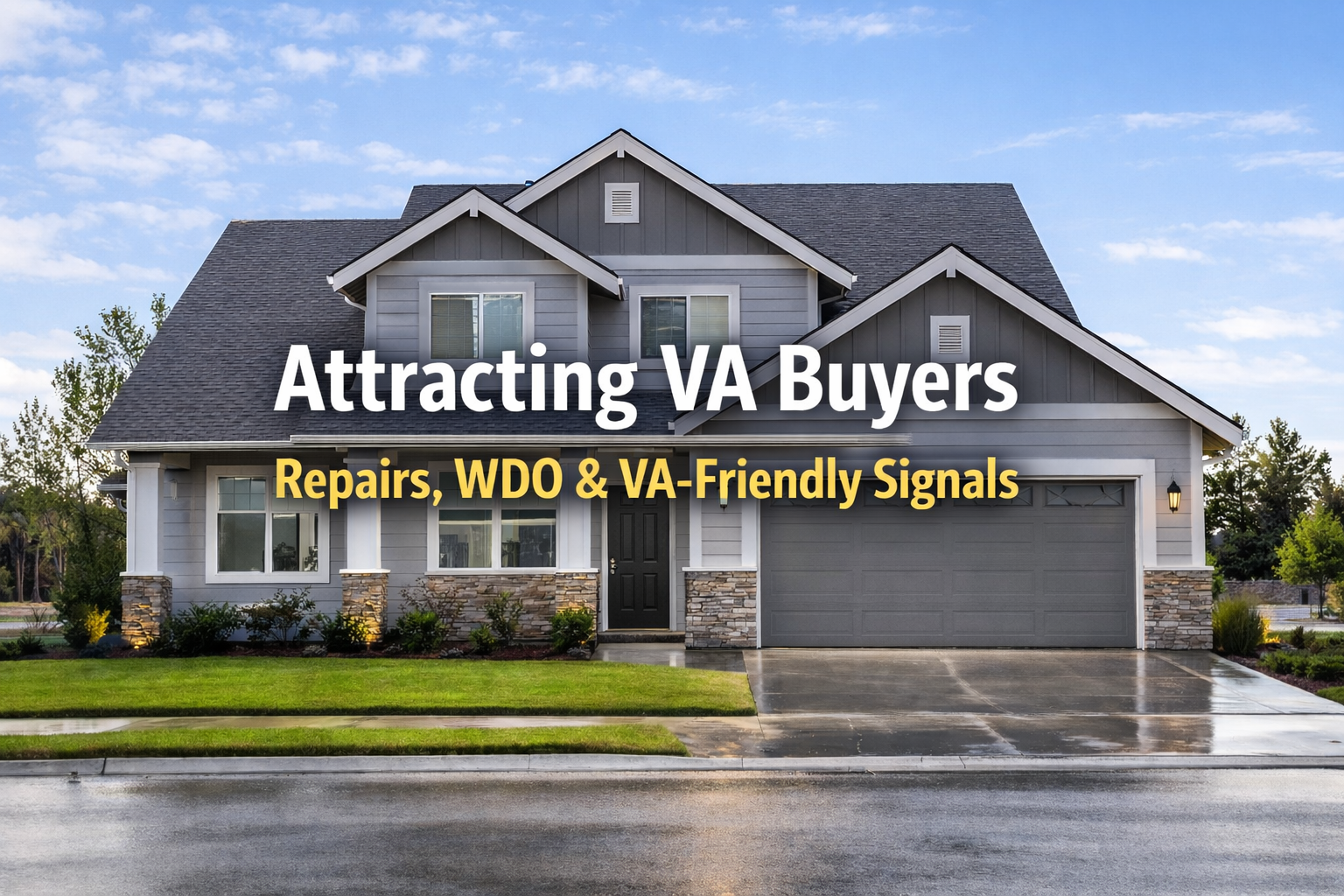
How to Attract VA Buyers as a Seller: Repairs, WDO, and VA-Friendly Listing Signals That Matter
These insights are based on real transaction experience across San Antonio and surrounding areas, including homes near Fort Sam Houston, Lackland Air Force Base, and Randolph Air Force Base.
Why Do VA Buyers Matter in San Antonio's 2026 Market?
San Antonio remains one of the most active VA loan markets in the country. PCS relocations continue year-round, and military buyers often enter the market with strong purchasing power, stable income, and defined timelines that create urgency conventional buyers may not share.
VA buyers are not niche buyers. They represent a meaningful share of qualified demand, especially in neighborhoods with reasonable commutes to JBSA installations, new construction corridors in Schertz and Cibolo, and resale homes priced below luxury thresholds. For sellers, this means one thing: ignoring VA buyers limits the pool of qualified purchasers unnecessarily.
In 2026's balanced market with increased inventory compared to peak years, sellers benefit from maximizing their potential buyer pool rather than restricting it through avoidable preparation gaps or misconceptions about VA financing.
Q: Are VA buyers as qualified as conventional buyers?
A: Yes. VA buyers undergo rigorous income verification, credit review, and debt-to-income analysis comparable to conventional financing. VA loans actually provide additional underwriting scrutiny including residual income requirements that verify buyers can afford living expenses beyond the mortgage payment, often making them more financially stable than some conventional buyers.
What Common Myths Do Sellers Have About VA Buyers?
Before addressing repairs and inspections, it is important to clear up misconceptions that still circulate among sellers and even some real estate agents who lack VA transaction experience.
VA buyers are often incorrectly viewed as difficult, risky, or overly demanding. In reality, most transaction challenges tied to VA loans stem from poor seller preparation or real estate agent inexperience with VA requirements, not the loan itself.
Common myths include the belief that VA appraisals are impossible to pass, that VA buyers cannot cover closing costs, that sellers must make excessive repairs beyond what any prudent buyer would request, or that VA transactions take significantly longer than conventional closings. None of these are universally true, and properly prepared homes with experienced representation close VA transactions smoothly and on time.
When a home is positioned correctly with realistic pricing and basic safety compliance, VA transactions proceed efficiently. Sellers who understand this reality compete more effectively in markets with active military buyer demand.
What Does the VA Appraisal Actually Evaluate?
A VA appraisal serves two distinct functions. It establishes market value through comparable sales analysis, and it verifies Minimum Property Requirements, often referred to as MPRs, which ensure the property meets basic safety and habitability standards.
The VA appraiser is not conducting a full home inspection. Instead, the appraiser focuses on health, safety, and structural integrity issues that could affect livability or create hazards for occupants. This distinction matters because sellers often prepare for the wrong things.
Key areas reviewed include roof condition and remaining life expectancy, heating and cooling system functionality, electrical safety including proper grounding and working fixtures, plumbing operation without active leaks, water heater installation meeting code requirements, and overall habitability standards. Peeling paint particularly on homes built before 1978, exposed wiring, active leaks, broken windows, or missing handrails on stairs can all trigger repair conditions that must be resolved before closing.
Understanding this scope helps sellers prioritize the right repairs instead of overcorrecting cosmetic issues that do not affect VA approval.
Q: Do VA appraisals require homes to be in perfect condition?
A: No. VA appraisals require homes to meet basic safety and habitability standards, not perfect cosmetic condition. Outdated fixtures, worn flooring, or cosmetic wear generally do not create VA appraisal issues unless they affect safety or functionality. The focus is on ensuring the home is safe and livable, not magazine-ready.
What Repairs Matter Most to VA Appraisers?
Sellers do not need to renovate their home to attract VA buyers. However, certain repairs should be addressed before listing to prevent transaction delays or buyer concerns that weaken negotiating position.
Peeling paint is one of the most common issues, especially on homes built before 1978 when lead-based paint was common. Chipped or flaking paint on exterior trim, siding, or interior surfaces often requires scraping, priming, and repainting to meet VA standards.
Roof integrity is another major focus area. Missing shingles, visible damage, or signs of active leaks can halt a transaction until repaired. VA appraisers evaluate remaining roof life, and roofs with less than two years remaining useful life typically require replacement before approval.
Electrical issues such as exposed wiring, missing outlet covers, non-functional fixtures, or improperly grounded systems should be resolved before listing. HVAC systems must be operational and capable of adequately heating and cooling the home based on climate and square footage.
Handrails on stairs, secure flooring without trip hazards, working appliances that convey with the sale, and proper drainage directing water away from the foundation all matter to VA appraisers. These are not cosmetic upgrades but basic safety and livability standards that any prudent buyer would expect regardless of financing type.
What Should Sellers Know About WDO Inspections in Texas?
Wood Destroying Organism inspections are required for VA loans in Texas. This includes termites, wood-boring beetles, and other organisms that can damage structural components of homes.
A WDO inspection does not mean a home has a problem. It is a verification step required by VA underwriting regardless of property age or condition. However, if active infestation or structural damage is found, treatment or repairs may be required before closing can occur.
Sellers who preemptively complete a WDO inspection before listing can reduce surprises and delays during the transaction. Addressing any discovered issues early positions the listing as proactive and well-maintained, which builds buyer confidence and reduces renegotiation risk.
WDO inspections typically cost $75 to $150 in the San Antonio market and can be completed within a few days. This modest investment provides clarity that benefits sellers regardless of whether the eventual buyer uses VA financing or not.
Q: If a seller already treated for termites, does the home still need a WDO inspection?
A: Yes. VA loans require a current WDO inspection regardless of past treatments. However, documentation of previous treatment and ongoing warranties can be valuable supporting information that reassures buyers and appraisers about the property's condition.
What VA-Friendly Listing Signals Do Buyers Look For?
VA buyers and their real estate agents often scan listings quickly to determine whether a home is worth pursuing given VA appraisal requirements and their specific timelines. Certain signals influence that decision immediately and can increase or decrease showing activity from qualified military buyers.
Clear disclosure of roof age, HVAC age, and recent repairs helps VA buyers assess risk before scheduling showings. Mentioning in listing descriptions that major systems are in good working order signals preparedness and reduces concerns about potential appraisal conditions.
Homes marketed as well-maintained, move-in-ready, or thoughtfully updated often perform better with VA buyers than listings emphasizing cosmetic potential without addressing underlying condition. Language like "needs TLC" or "investor special" signals potential MPR complications that VA buyers typically avoid.
Professional photography that accurately represents the home matters significantly. Over-edited images that hide wear can lead to failed showings and lost buyer trust when condition does not match expectations. Honest visual representation attracts serious buyers rather than creating disappointment.
Pricing strategy is also critical for attracting VA buyers. VA appraisals are data-driven and rely heavily on comparable sales. Overpricing increases the likelihood of appraisal gaps that can derail transactions, particularly with buyers who have limited cash reserves beyond down payment and closing costs.
How Should Sellers Price to Align With VA Appraisal Standards?
VA appraisals rely heavily on comparable sales within the past six months, adjusted for differences in condition, features, and location. Sellers who price beyond supported data often encounter challenges regardless of buyer loan type, but VA financing makes appraisal support particularly critical.
Real estate agents emphasize pricing that reflects current market conditions, neighborhood trends, and buyer behavior rather than aspirational numbers based on peak-year sales or emotional attachment to improvements. When pricing aligns with recent sales and property condition, VA appraisals are far more likely to support contract value without requiring renegotiation.
In cases where appraisal gaps arise, early strategy discussions between sellers and real estate agents matter significantly. Not all buyers can or should bridge gaps, and sellers should understand those limits before accepting offers. VA buyers with disability exemptions from funding fees may have additional flexibility, while first-time buyers stretching budgets typically cannot contribute significant cash above contract price.
Accurate initial pricing prevents these conflicts and keeps transactions on track, which particularly matters when selling to military buyers with firm PCS timelines and limited flexibility for delayed closings.
Q: Can sellers require VA buyers to cover appraisal gaps?
A: Sellers can request it, but VA buyers may lack the cash reserves to do so, particularly first-time buyers using zero-down financing. Better strategy involves pricing accurately from the beginning to minimize gap risk rather than testing the market and hoping buyers will cover shortfalls when appraisals come in low.
How Does New Construction Competition Affect Selling to VA Buyers?
New construction sellers, particularly builders in active San Antonio new construction corridors, often work successfully with VA buyers when processes are clear and timelines are understood. VA buyers may use builder incentives, rate buydowns, or closing cost credits that make new construction attractive despite potentially higher base prices.
For resale sellers competing with new construction options, condition and transparency become even more important. Buyers comparing a resale home requiring roof replacement or HVAC updates against a new construction home with warranties and builder incentives face clear value propositions that resale sellers must address through competitive pricing or condition improvements.
Resale advantages include established neighborhoods, mature landscaping, no construction delays, and often superior locations closer to JBSA installations than new construction on the urban periphery. However, these advantages only translate to sales when homes meet basic MPR standards without requiring extensive repairs that new construction avoids entirely.
How Can Sellers Reduce Transaction Friction Before Listing?
Preparation is the most effective way to attract VA buyers and prevent transaction complications that create delays or renegotiation pressure.
Completing a pre-listing inspection can identify issues early, allowing sellers to address safety-related repairs ahead of time and reduce renegotiation risk once under contract. Providing documentation for past repairs, warranties, and maintenance builds confidence with buyers and appraisers reviewing the property's history.
Clean disclosures that honestly represent known issues without hiding material facts matter significantly. Buyers discovering undisclosed problems during inspections create trust issues that complicate negotiations even when the seller offers to remedy the situation.
Working with a real estate agent experienced in VA transactions ensures the listing is positioned accurately without overpromising or inadvertently excluding qualified buyers through language suggesting VA buyers should not apply or that the property requires cash buyers only.
Why Does VA Experience Matter in Seller Representation?
Not all real estate agents understand VA financing intricacies, and missteps can create unnecessary tension or spread misinformation that costs sellers qualified offers. Agents unfamiliar with MPR requirements may advise sellers incorrectly about which repairs matter, or may discourage VA offers based on outdated assumptions about transaction difficulty.
As an Air Force Veteran, Tami Price, REALTOR®, brings firsthand understanding of PCS timelines, VA loan structure, and military buyer expectations. She advises sellers honestly on what matters, what does not, and how to avoid preventable delays that complicate transactions for both parties.
Her approach focuses on seller protection, clarity about requirements, and outcomes based on compliance rather than assumptions. This experience proves particularly valuable when negotiating repairs after VA appraisals identify conditions, as she understands which issues are negotiable and which are mandatory for VA approval.
Expert Insight from Tami Price, REALTOR®
Tami Price, REALTOR®, is a San Antonio-based real estate professional and Air Force Veteran with nearly two decades of experience representing both buyers and sellers in VA transactions. With approximately 1,000 closed transactions and recognition as a RealTrends Verified Top Agent and 15-time Five Star Professional Award winner, she specializes in helping sellers understand and attract military buyers successfully.
"The biggest mistake sellers make with VA buyers is treating them as a last resort rather than a valuable buyer pool," Tami explains. "Military buyers near JBSA bring stable income, motivated timelines, and genuine purchasing power. When sellers prepare properly with basic repairs and realistic pricing, VA transactions close smoothly without the drama some agents warn about based on outdated information or lack of experience."
Tami emphasizes that seller preparation prevents most VA transaction complications. "A pre-listing WDO inspection and basic attention to peeling paint, roof condition, and electrical safety eliminates 90 percent of VA appraisal issues before they become problems. Sellers who invest a few hundred dollars in preparation often save thousands in renegotiation or lost deals when buyers walk away from unexpected repair requirements discovered mid-transaction. The key is addressing known issues proactively rather than hoping appraisers won't notice or buyers won't care."
Three Key Takeaways
1. VA Appraisal MPRs Focus on Safety and Habitability, Not Perfection or Cosmetic Condition
Minimum Property Requirements verify that homes meet basic safety and livability standards including functional HVAC and electrical systems, sound roofs without active leaks, proper handrails on stairs, and absence of health hazards like peeling lead paint. Cosmetic wear, outdated fixtures, or lack of modern amenities generally do not create VA appraisal issues unless they affect safety or functionality. Sellers who understand this distinction avoid unnecessary renovations while addressing the repairs that actually matter for VA approval, saving time and money while positioning homes appropriately for military buyer demand.
2. WDO Inspections Are Required in Texas and Best Completed Before Listing to Prevent Delays
VA loans in Texas require Wood Destroying Organism inspections regardless of property age, condition, or seller knowledge of past treatments. Completing WDO inspections before listing allows sellers to address any discovered issues proactively rather than negotiating treatment or repairs under contract pressure with time-sensitive military buyers facing PCS deadlines. The modest cost of $75 to $150 provides clarity that benefits transactions regardless of eventual buyer financing type and positions the home as well-maintained and thoroughly vetted.
3. Accurate Pricing and VA-Friendly Listing Signals Expand Buyer Pool Without Compromising Seller Position
Pricing aligned with comparable sales and supported by appraisal data attracts VA buyers while protecting against appraisal gaps that derail transactions. Listing language emphasizing well-maintained systems, recent repairs, and move-in readiness signals VA-friendly properties without explicitly restricting buyer types, which could violate fair housing principles. Professional representation experienced with VA transactions ensures sellers maximize their qualified buyer pool including military families while avoiding inadvertent messaging that discourages VA offers based on myths or outdated assumptions about transaction difficulty.
Frequently Asked Questions
Q. Do sellers have to pay for repairs required by VA appraisals?
A. Repair responsibility is negotiable between buyer and seller like any other transaction. VA guidelines allow sellers to pay for required repairs, buyers to address them before closing, or both parties to share costs. The key is that repairs must be completed and verified before VA loan funding, regardless of who pays.
Q. Can sellers refuse VA offers because they don't want to deal with appraisal requirements?
A. Sellers can accept or reject any offer based on terms, but refusing offers solely due to financing type may raise fair housing concerns. Better approach is ensuring the home meets basic MPR standards before listing, making VA offers equally viable as conventional offers without additional complications.
Q. How long does a VA appraisal take compared to conventional appraisals?
A. VA appraisals typically take the same time as conventional appraisals, usually 7 to 14 days depending on appraiser availability and market volume. The additional MPR review happens during the same inspection and does not typically extend timelines when homes are in reasonable condition.
Q. What happens if a VA appraisal identifies required repairs but the buyer and seller cannot agree on responsibility?
A. Either party can terminate the contract if repair negotiations fail, or buyers can seek alternative financing that does not require the repairs as a condition of loan approval. This scenario is prevented through clear contract language addressing repair responsibilities before offer acceptance.
Q. Are VA buyers more likely to request repairs during inspections?
A. No. VA buyers request repairs based on inspection findings like any prudent purchaser. The difference is that VA appraisals may identify safety issues that must be repaired for loan approval regardless of buyer preference, while conventional financing leaves those decisions to buyer discretion.
Q. Should sellers disclose that they prefer conventional or cash offers over VA financing?
A. No. Such language may violate fair housing laws and unnecessarily limits the seller's buyer pool. Properly prepared homes with accurate pricing attract all buyer types equally. Focus should be on condition and pricing rather than buyer financing source.
Q. Can sellers require VA buyers to waive appraisal contingencies?
A. VA purchase contracts typically include appraisal contingencies as standard buyer protections. While buyers can waive them, doing so creates significant risk if appraisals come in low. Sellers benefit more from accurate pricing that makes contingencies less relevant than from demanding waivers that reduce buyer pool.
Q. What makes a real estate agent experienced with VA transactions?
A. Look for agents with track records of successfully closed VA transactions, military background or extensive military buyer experience, understanding of MPR requirements and VA appraisal processes, and relationships with VA-approved lenders who can coordinate smoothly. Agents with MRP (Military Relocation Professional) certification demonstrate commitment to military buyer expertise.
The Bottom Line
Attracting VA buyers as a seller in San Antonio is not about making your home perfect. It is about making it compliant with basic safety standards, well-positioned with accurate pricing, and realistically marketed to expand rather than restrict your qualified buyer pool.
Understanding repairs that matter to VA appraisers, preparing for WDO inspections required in Texas, and sending the right VA-friendly signals through listing language and condition can expand your buyer pool significantly. Sellers who prepare thoughtfully often find that VA buyers are not a hurdle but an opportunity, particularly in markets with active military relocation activity near Joint Base San Antonio.
Working with real estate agents experienced in VA transactions ensures sellers receive accurate guidance about requirements, realistic expectations about repair negotiations, and proper positioning that attracts qualified military buyers without creating unnecessary complications during the transaction process.

Contact Tami Price, REALTOR® | San Antonio, TX
Whether you're selling your San Antonio home, want to attract military buyers near JBSA, or need guidance on VA appraisal requirements and preparation, Tami Price provides experienced representation focused on seller success and VA transaction expertise.
📞 210 620 6681
Tami Price's Specialties
- Buyer and Seller Representation
- Military Relocations and PCS Moves
- VA Loan Guidance and Assumptions
- New Construction
- First-Time Home Buyers
- Move-Up Buyers
- Downsizing and Rightsizing
- Strategic Pricing and Market Analysis
- San Antonio, Schertz, Cibolo, Helotes, Converse, and Boerne
Disclaimer
This blog is for informational purposes only and does not constitute legal, financial, or real estate advice. Market conditions change, and individual circumstances vary. Readers should consult qualified professionals before making real estate decisions. Tami Price, REALTOR®, is licensed in Texas and affiliated with Real Broker, LLC. Fair Housing principles apply to all content.
Categories
- All Blogs (931)
- Home Buying (13)
- Neighborhood Guides (44)
- 10 Incentive and Rate Buydown Questions (1)
- 10 Military Neighborhood (1)
- 10 Mistakes Sellers Make (1)
- 10 Strategies to Coordinate a Same Day Close (1)
- 12 Lifestyle Questions to Move In (1)
- 12 PCS What Ifs (1)
- 12 Photos and Marketing Assets (1)
- 13 PCS Hunting Trip Tips (1)
- 15 Red Flags Touring Home in San Antonio (1)
- 2026 Market (1)
- 30 days after closing your home (1)
- 7 Offer Terms Beyond Price (1)
- 7 VA Specific Questions (1)
- 78015 Ranked One (1)
- 8 Bridge (1)
- 8 Myths Buyers Believe about Down Payments (1)
- 8 Reasons VA Buyers Love New Construction (1)
- 9 Mistakes Move Up Buyers Make (1)
- 9 Questions to Decide If You Keep Your PCS Home (1)
- 9 Timeline Questions Every Buyer Need to Ask (1)
- 9 Warranty Questions to Ask (1)
- 9 Ways to Attract VA & Military Buyers (1)
- About Tami Price (6)
- Active Adult Homes (1)
- Affordable Communities (2)
- Affordable Housing & Community Development (5)
- Agent Qualifications and Credentials (1)
- Agent Qualifications and Experience (1)
- Agent Recognition (3)
- Agent Selection (1)
- AI and Real Estate Tools (1)
- Alamo Heights (5)
- Alamo Heights ISD (1)
- Alamo Heights Real Estate (1)
- Alamo Ranch (3)
- Amenities in Helotes, Texas (3)
- Apartment Market (1)
- Appraisals (1)
- Arts and Culture (1)
- Awards and Recognition (7)
- Balcones Creek (1)
- Best Neighborhoods to Live in Cibolo, TX (3)
- Best Neighborhoods to Live in San Antonio (16)
- Best Places to Live in Leon Valley: A Neighborhood Guide (1)
- Best Places to Live in Northeast Inner Loop: A Neighborhood Guide (1)
- Bexar County Property Tax (1)
- Bexar County Real Estate (3)
- Boerne Home Sellers (1)
- Boerne Neighborhoods (2)
- Boerne Texas (9)
- Broadway Corridor Development (1)
- Build-to-Rent Communities (1)
- Builder Contracts & Warranties (3)
- Builder Incentives (1)
- Builder Warranties (1)
- Buyer (97)
- Buyer Activity San Antonio (1)
- Buyer and Seller Guidance (4)
- Buyer Due Diligence (1)
- Buyer Education (46)
- Buyer Guide (9)
- Buyer Guides (7)
- Buyer Protection Strategies (1)
- Buyer Representation (1)
- Buyer Representation Expertise (1)
- Buyer Resources (88)
- Buyer Strategy (2)
- Buyers (13)
- Buyers Agent (1)
- Buying a Foreclosed Home in San Antonio (10)
- Buying a Home (3)
- Buying a Home in San Antonio (6)
- Buying Timeline (1)
- Buying vs Renting (1)
- Castroville, TX (8)
- Central San Antonio (1)
- Central San Antonio Development (2)
- Central Texas Growth (1)
- Choosing a Real Estate Agent (1)
- Choosing an Agent (1)
- Cibolo Communities (1)
- Cibolo Home Sellers (1)
- Cibolo TX (15)
- Client Reviews and Testimonials (1)
- Client Satisfaction (1)
- Client Stories (1)
- Client Testimonial (4)
- Clients review (4)
- Cobblestone (1)
- Comal County (1)
- Commercial & Retail Development (27)
- Commercial Development (13)
- Commercial Development Impact on Home Values (1)
- Commercial Real Estate (1)
- Community (1)
- Community Amenities (2)
- Community Development (23)
- Community Development and Real Estate (3)
- Community Events & Development (1)
- Community Infrastructure (1)
- Community Investment Impact (2)
- Community Landmarks (1)
- Community News (4)
- Community Planning (2)
- Community Revitalization (1)
- Community Spotlights (1)
- Commuter Neighborhoods (1)
- Cons of Living in Helotes, TX (4)
- Conservation Communities (1)
- Contingency Questions (1)
- Converse Home Sellers (1)
- Converse Homes For Sale (3)
- Converse Real Estate (1)
- Converse TX (10)
- Converse TX Real Estate (1)
- Cost of Living Guides (1)
- Cost of Living in San Antonio TX (25)
- CPS Energy Programs (1)
- Custom Homes (5)
- Davis Ranch (1)
- Days on Market (1)
- Deco District San Antonio (1)
- Denver Heights (1)
- Down Payment Assistance (1)
- Downtown Boerne (1)
- Downtown Development (3)
- Downtown Living (1)
- Downtown Revitalization (14)
- Downtown San Antonio (2)
- Downtown San Antonio Real Estate (5)
- Downtown San Antonio Revitalization (1)
- East Side Living (1)
- East Side Neighborhoods (1)
- East Side San Antonio (4)
- Economic Development (3)
- Economic Growth & Industry (1)
- Education, Texas Hill Country (1)
- Emerald Pointe (1)
- Employment (1)
- Employment Corridors (1)
- Encino Forest (1)
- Entertainment Economy (1)
- Equity and Pricing Strategy (2)
- Equity Q&A (1)
- Established Communities (3)
- Events in San Antonio (207)
- Expert Advice from Tami Price, Realtor® (10)
- Fair Oak Ranch (1)
- Family Activities (2)
- Family Homes (3)
- Family Living in San Antonio (1)
- FAQ (1)
- Far Northwest San Antonio (1)
- Far West San Antonio (1)
- Far Westside Real Estate (4)
- Fastest Growing Zip Codes in America (1)
- Featured Homes for Sale (2)
- Featured Properties (1)
- Financial Planning (10)
- Financing Strategy (1)
- First Time Buyers (23)
- First Time Sellers (1)
- First-Time Buyers (6)
- First-Time Homebuyer Resources (4)
- First-Time Homebuyer Tips (2)
- First-Time Homebuyers (6)
- First-Time Investors (1)
- Fort Sam Houston (3)
- Fort Sam Houston Real Estate (1)
- Fort Sam Houston, TX (2)
- Fox Grove (1)
- FSBO vs Agent Representation (1)
- Future Rental (1)
- Gated Communities (5)
- Golf Communities (1)
- Great Northwest (1)
- Greater San Antonio Housing Trends (2)
- Greater San Antonio Real Estate (5)
- Green Home Upgrades (1)
- Growth and Development (11)
- Healthcare (1)
- HELOC (1)
- Helotes Home Sellers (1)
- Highway 151 Corridor Growth (1)
- Hill Country Business (1)
- Hill Country Communities (2)
- Hill Country Development (3)
- Hill Country Homes for Sale (1)
- Hill Country Living (3)
- Hill Country Market Updates (1)
- Hill Country Real Estate (4)
- Hill Country Retreat (1)
- Historic Districts (5)
- Historic Neighborhoods (4)
- Historic Preservation (2)
- Holiday Attractions (1)
- Holiday Guide (1)
- Home Buying (7)
- Home Buying Education (3)
- Home Buying Guide (7)
- Home Buying Process (8)
- Home Buying Strategy (2)
- Home Buying Tips (6)
- Home Energy Efficiency San Antonio (4)
- Home Financing (2)
- Home Improvement ROI (1)
- Home Inspections (1)
- Home Preparation (2)
- Home Pricing Strategy (14)
- Home Renovation for Resale (1)
- Home Selling (10)
- Home Selling Guide (11)
- Home Selling Strategies (3)
- Home Selling Strategy (3)
- Home Selling Tips (22)
- Home Staging and Updates (2)
- Home Values (2)
- Homebuyer Education (15)
- Homebuyer Resources (1)
- Homebuying Guide (1)
- Homebuying Tips (3)
- Homeowner (36)
- Homeowner Tax Benefits (1)
- Homeownership Costs (1)
- Homes for Sale (2)
- Homes for sale near Lackland AFB (4)
- Homes Near Military Bases (1)
- Homestead amenities (1)
- Horizon Pointe (1)
- House Hunting Guide (1)
- Housing (1)
- Housing Community Development (1)
- Housing Development (2)
- Housing Market Updates (3)
- How to Buy a House in San Antonio TX (48)
- Huebner Oaks shopping center (1)
- Hunters Ranch (1)
- Hybrid (1)
- I-10 Corridor (1)
- I-35 Corridor (1)
- In Person (1)
- Incorporated Cities (6)
- Industrial Investment Impact (1)
- Industry News (2)
- Industry Recognition (1)
- Infrastructure & Growth Projects (26)
- Infrastructure and Sustainability (1)
- Infrastructure Development (1)
- Infrastructure Investment (1)
- Infrastructure Updates (2)
- Interest Rates (2)
- Invest in San Antonio (46)
- Investment Opportunities (3)
- Investment Property San Antonio (4)
- JBSA (9)
- JBSA Housing (11)
- JBSA Real Estate (4)
- JBSA Resources (7)
- Joint Base San Antonio (5)
- Joint Base San Antonio Housing (1)
- Judson ISD (2)
- Kendall County (1)
- La Cantera Retail Development (1)
- Lackland AFB (7)
- Lackland AFB Housing (1)
- Land Conservation (1)
- Land Use Planning (1)
- Lera MLS (15)
- Lifestyle & Community Growth (18)
- Lifestyle & Local Growth (12)
- Lifestyle Amenities (1)
- Lifestyle Communities (1)
- Listing Preparation (1)
- Listing Strategy (1)
- Live Oak (1)
- Living in San Antonio, TX (52)
- Living Near Randolph AFB (7)
- Loan Programs (1)
- Local Attractions (3)
- Local Business (1)
- Local Business & Development (9)
- Local Business & Economy (3)
- Local Business Spotlight (20)
- Local Business Support (5)
- Local Development (4)
- Local Development News (9)
- Local Market Insights (5)
- Local News (2)
- Local News Around San Antonio (2)
- Local Policy Changes (1)
- Local Real Estate News (1)
- Loop 1604 Corridor Growth (2)
- Loop 410 Corridor Development (1)
- Luxury Communities (3)
- Luxury Homes (2)
- Luxury Real Estate (1)
- Luxury Retail San Antonio (1)
- MacArthur Park (1)
- Major Developments (2)
- Making Offers on Homes (1)
- Market Analysis (26)
- Market Conditions (47)
- Market Expertise (1)
- Market Insights (5)
- Market Strategy (1)
- Market Timing (2)
- Market Trends (10)
- Market Trends & Insights (2)
- Market Update (17)
- Market Update 2026 (1)
- Market Updates (22)
- Master Planned Communities (12)
- Medical Center Area Real Estate (1)
- Medina Valley ISD (2)
- Midtown Living (1)
- Military & Economic Impact (3)
- Military Buyers (3)
- Military Communities (1)
- Military Families (1)
- Military Family Resources (1)
- Military Heritage (1)
- Military Homebuying (3)
- Military Homeownership (1)
- Military Housing (3)
- Military Housing Market in Texas (16)
- Military Life in San Antonio (2)
- Military Neighborhoods (1)
- Military PCS Relocations (3)
- Military Real Estate (2)
- Military Relocation (96)
- Military Relocation & VA Loans (10)
- Military Relocation San Antonio (4)
- Military Relocation Services (3)
- Military Relocation to San Antonio (50)
- Military Relocations (19)
- Military Relocations & VA Home Loans (5)
- Mixed-Income Housing (1)
- MLS Accuracy & Data Transparency (1)
- Mortgage Programs (1)
- Mothers Day in San Antonio (1)
- Move to Boerne TX (18)
- Move to Castroville TX (11)
- Move to Converse TX (16)
- Move to New Braunfels (1)
- Move to North San Antonio (19)
- Move to San Antonio TX (73)
- Move to Selma TX (19)
- Move to Shertz TX (13)
- Move to Texas (53)
- Move Up Buyer Resources (1)
- Move Up Buyers (21)
- Move-In Ready Homes (3)
- Move-In Ready Homes San Antonio (2)
- Move-Up Buyers (2)
- Moving to Helotes, TX (17)
- Moving to San Antonio (69)
- MUD Taxes (1)
- Natalia Homes For Sale (1)
- Near East Side Living (1)
- Negotiation Strategy (2)
- Neighborhood Amenities (1)
- Neighborhood Development (1)
- Neighborhood Guides (7)
- Neighborhood Investment (1)
- Neighborhood News (2)
- Neighborhood Revitalization (2)
- Neighborhood Spotlights (12)
- Neighborhood Updates (1)
- Neighborhoods near Randolph AFB (12)
- New Braunfels (6)
- New Braunfels Homes For Sale (1)
- New Braunfels News (3)
- New Braunfels Real Estate (3)
- New Businesses (2)
- New Construction (59)
- New Construction Communities (1)
- New Construction Homes (13)
- New Construction Homes San Antonio (5)
- New Construction vs Resale (1)
- New Construction Without Customization (1)
- New Construction Without the Wait (1)
- New Contruction Cost (1)
- New Development (3)
- New Listing (19)
- New Restaurants (3)
- News (211)
- News & updates (213)
- No HOA Homes (1)
- North Central San Antonio (5)
- North East ISD (4)
- North San Antonio (9)
- North San Antonio Real Estate (3)
- North Side Neighborhoods (1)
- North Side San Antonio Development (2)
- Northeast Inner Loop (1)
- Northeast Inner Loop Neighborhoods (1)
- Northeast San Antonio (3)
- Northside ISD (5)
- Northwest San Antonio (9)
- Northwest San Antonio Development (1)
- Northwest San Antonio Growth (1)
- Northwest San Antonio Real Estate (3)
- Northwood (1)
- Olympia Hills (1)
- One-Story Homes (1)
- Outdoor Living (1)
- Parks and Recreation (2)
- PCS and JBSA (2)
- PCS Guide (3)
- PCS Moves (12)
- PCS Moves to Joint Base San Antonio (4)
- PCS Planning (15)
- PCS Randolph AFB (17)
- PCS Relocation (1)
- PCS Resources (6)
- PCS San Antonio (46)
- PCS to San Antonio (42)
- Pearl District Area Real Estate (2)
- PID Assessments (1)
- Pinon Creek (1)
- Pipe Creek (1)
- Places to Eat Near Randolph AFB (1)
- Pool Homes (1)
- Pre Approval (1)
- Pre-Listing Preparation (2)
- Pre-Listing Process (1)
- Prescott Oaks (1)
- Pricing and Marketing Strategy (3)
- Professional Awards and Achievements (2)
- Professional Real Estate Representation (1)
- Property Tax Exemptions Texas (1)
- Property Value Enhancement (1)
- pros and cons living in Converse TX (3)
- Pros and Cons Living in Selma TX (6)
- Pros and Cons of Living in Castroville, TX (4)
- Pros and Cons of Living in San Antonio (33)
- PT500 List (1)
- Purchase Negotiation (1)
- Quality of Life (1)
- Quick Close Real Estate (1)
- Randolph AFB Neighborhoods (2)
- Real Estate (1)
- Real Estate Advice (1)
- Real Estate Agent Recognition (6)
- Real Estate Agent Selection (2)
- Real Estate Agent Value (1)
- Real Estate Consultation (1)
- Real Estate Finance (1)
- Real Estate Financing (1)
- Real Estate Impact (1)
- Real Estate Investment San Antonio (2)
- Real Estate Legal Issues (1)
- Real Estate Market Insights (2)
- Real Estate Market Trends (5)
- Real Estate Professional Designations (1)
- Real Estate Strategy (1)
- Real Estate Technology & Trends (2)
- Real Estate Tips (1)
- Real Estate Tips and Guides (2)
- Real Estate Trends (4)
- RealTrends Verified (1)
- Regional Development (1)
- Regional Real Estate (2)
- Relocating to San Antonio (2)
- Relocation (4)
- Relocation Resources (2)
- Relocation to San Antonio (55)
- Remote Homebuying (1)
- Rental Housing (1)
- Rental Property (1)
- Rental Strategy (1)
- Resale Properties (1)
- Retail Development (2)
- Retire in Boerne TX (11)
- Retire in San Antonio (37)
- Retirement Communities (1)
- Reviews and Recognition (1)
- Rockwall Ranch (1)
- Rural Living (2)
- SABOR (28)
- San Antonio Area Listings (1)
- San Antonio Business Growth (1)
- San Antonio Buyer Resources (2)
- San Antonio Communities (3)
- San Antonio Community Events (1)
- San Antonio Community News (1)
- San Antonio Data Center Development (1)
- San Antonio Development (5)
- San Antonio Development & East Side Real Estate (1)
- San Antonio Dining and Lifestyle (3)
- San Antonio East Side Development (1)
- San Antonio Employment Growth (1)
- San Antonio Food & Community Development (2)
- San Antonio Growth (8)
- San Antonio Home Buying and Selling (2)
- San Antonio Home Buying Guide (5)
- San Antonio Home Improvement (2)
- San antonio home prices (3)
- San Antonio Home Sellers (3)
- San Antonio Homeowner Guide (1)
- San Antonio Homeowner Resources (1)
- San Antonio Homes for Sale (12)
- San Antonio Housing Market (2)
- San Antonio Housing Market & Mortgage Financing (2)
- San Antonio Housing Market Analysis (2)
- San Antonio Housing Trends & Market Analysis (4)
- San Antonio Industrial Development (1)
- San Antonio Industrial Policy (1)
- San Antonio Investment Properties (2)
- San Antonio Job Market (1)
- San Antonio Lifestyle Amenities (1)
- San Antonio Listing (1)
- San Antonio Living (1)
- San Antonio Market (3)
- San Antonio Market Updates (18)
- San Antonio Military Relocation (2)
- San Antonio Neighborhoods (67)
- San Antonio New Construction & Master-Planned Communities (4)
- San Antonio New Home Communities (1)
- San Antonio News (229)
- San Antonio North Side Development (1)
- San Antonio Parks (1)
- San Antonio Property Investment (1)
- San Antonio Property Taxes (2)
- San Antonio Real Estate (154)
- San Antonio Real Estate Agents (6)
- San Antonio Real Estate Excellence (1)
- San Antonio Real Estate Guide (6)
- San Antonio Real Estate Market (41)
- San Antonio Real Estate Market Analysis (6)
- San Antonio Real Estate News (2)
- San Antonio REALTOR Awards (1)
- San Antonio Restaurant News (2)
- San Antonio Restaurant Openings (1)
- San Antonio Seller Resources (2)
- San Antonio Sellers (1)
- San Antonio Spec Homes (1)
- San Antonio Spurs Community Programs (1)
- San Antonio Suburbs (1)
- San Antonio Transportation (2)
- San Antonio University Area Housing (1)
- San Antonio Urban Living (7)
- San Antonio West Side Development (2)
- San Antonio Zoning Policy (1)
- Scenic Loop (1)
- Schertz Home Sellers (1)
- Schertz Real Estate (1)
- Schertz, TX (13)
- School Districts (1)
- School Information (1)
- SCUCISD Schools (1)
- Secured Quick Offer (1)
- Sell Home In San Antonio TX (64)
- Seller (83)
- Seller Education (24)
- Seller Guide (4)
- Seller Guides (1)
- Seller Representation Expertise (1)
- Seller Resources (67)
- Seller Should Understand (1)
- Seller Strategy (3)
- Seller Tips (2)
- Sellers (10)
- Selling A Home in San Antonio (62)
- Selling Your San Antonio Home (3)
- Selma TX (9)
- Single-Story Homes (4)
- Smart Homes (1)
- Solar Homes (2)
- South San Antonio Real Estate (1)
- South Side Economic Growth (1)
- South Side San Antonio (1)
- Southtown (2)
- Southwest San Antonio Real Estate (1)
- Spec Homes and Inventory Homes (2)
- Spurs Arena Project Marvel (1)
- Stone Oak (2)
- Stone Oak Community News (5)
- Suburban Housing Growth (12)
- Suburban Living (2)
- Talise De Culebra (1)
- Technology Growth (3)
- Technology Sector Growth (1)
- Terrell Hills (3)
- Texas Acreage Properties (3)
- Texas Homestead Exemption (1)
- The Dominion Real Estate (1)
- The Rim Area Real Estate (1)
- Things to do in San Antonio TX (21)
- Things to do Near Randolph AFB (4)
- Time Planning (1)
- Time-Sensitive Home Buying (1)
- Timing Strategy (1)
- Tips for Buying New Construction (9)
- Tobin Hill Neighborhoods (2)
- Top Real Estate Agent in San Antonio (3)
- Tourism and Economic Development (1)
- Traders's Joe San Antonio (1)
- Transaction Coordination (1)
- Transportation Infrastructure (1)
- Two-Story Homes (2)
- Universal City (1)
- Updated Homes (2)
- Upscale Communities (1)
- Urban Communities (2)
- Urban Corridor Real Estate (1)
- Urban Development (5)
- Urban Living (3)
- Urban Neighborhoods (4)
- Urban Real Estate (1)
- Urban Renewal Projects (1)
- Urban Revitalization San Antonio (1)
- Utility Cost Reduction (1)
- UTSA Campus Development (1)
- VA Buyers (1)
- VA Home Loan Benefits (3)
- VA Loan Assumptions (3)
- VA loan benefits (27)
- VA Loan Guidance (1)
- VA Loan Home Buying Assistance (2)
- VA Loans (69)
- VA Loans and Military Benefits (3)
- VA Loans and Military Home Buying (3)
- VA Loans San Antonio (43)
- VET Benefits Living in San Antonio (3)
- Veterans Resources (3)
- Village Northwest (1)
- Virtual Buyers (1)
- Walkable Communities (1)
- week in sales (40)
- Weekly Sales Report (41)
- West San Antonio (2)
- West San Antonio Development (1)
- West San Antonio Real Estate (3)
- West San Antonio Real Estate Market (2)
- West Side Infrastructure Planning (1)
- West Side Real Estate (1)
- West Side San Antonio (2)
- Windcrest Homes for Sale (1)
Recent Posts