How New Retail Development Affects San Antonio Neighborhoods and Home Values
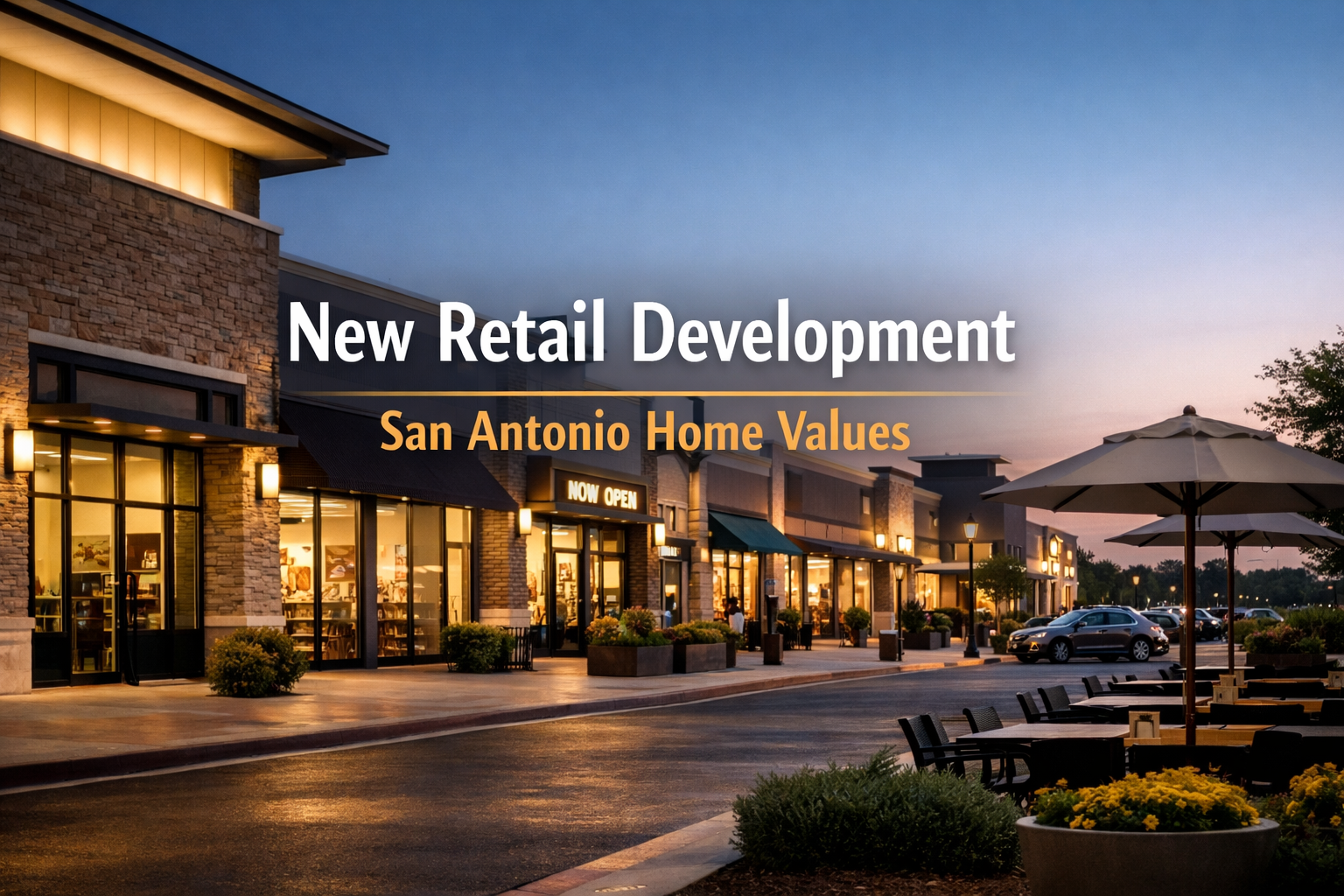
New retail development represents a double-edged sword for San Antonio residential neighborhoods. The arrival of grocery stores, restaurants, shopping centers, and service businesses brings convenience reducing travel for daily needs while potentially creating traffic, noise, and visual impacts affecting residential quality of life. Understanding how retail development affects neighborhoods, property values, and daily living helps buyers make informed location decisions and sellers position properties effectively.
The San Antonio area continues experiencing significant retail expansion as population growth and residential development create demand for commercial services. Communities throughout the city and surrounding areas including Boerne, Helotes, Fair Oaks Ranch, Cibolo, Schertz, and Converse see retail following residential rooftops, transforming formerly undeveloped or underserved areas into comprehensive neighborhoods with full commercial amenities.
This guide examines how retail development affects residential real estate, what buyers should consider when evaluating neighborhoods experiencing retail growth, and how proximity to commercial areas influences property values and quality of life.
Why Does Retail Development Follow Residential Growth?
Understanding development patterns helps predict where retail will appear.
Population Density Thresholds:
Retail businesses require customer bases supporting operations. As residential development increases area population density, retailers identify opportunities serving new markets. Different business types require different population thresholds:
- Grocery stores typically require substantial surrounding populations
- Restaurants and fast food establish with smaller customer bases
- Specialty retail needs even larger markets supporting specific offerings
- Service businesses follow population creating demand for their services
Developers track residential growth patterns identifying where population reaches levels supporting retail investment.
Developer Planning:
Master planned communities often incorporate retail components from initial design. Developers recognize that comprehensive neighborhoods including commercial services attract homebuyers seeking convenience and walkability.
However, retail development typically lags residential construction. Builders must achieve sufficient home sales before retailers commit to locations, creating periods where residents live in developing areas without nearby commercial amenities.
Economic Incentives:
Growing areas offer retailers opportunities establishing presence before competition saturates markets. First movers capturing market share in developing neighborhoods often maintain advantages even as additional competitors arrive later.
Municipal economic development efforts sometimes incentivize retail development through tax abatements, infrastructure investment, or expedited permitting encouraging commercial growth supporting residential areas.
What Types of Retail Development Affect Neighborhoods?
Different commercial categories create varying impacts.
Grocery-Anchored Centers:
Major grocery stores anchor shopping centers typically including:
- Pharmacies and healthcare services
- Restaurants and quick-service dining
- Banking and financial services
- Personal services including salons and fitness
- Convenience retail and specialty shops
These centers serve as neighborhood commercial hubs providing essential daily services. Their arrival significantly enhances convenience for nearby residents while generating substantial traffic.
Restaurant Concentrations:
Dining establishments ranging from fast food through casual dining to upscale restaurants cluster along commercial corridors and within shopping centers. Restaurant variety and quality affect neighborhood appeal particularly for buyers valuing dining options.
However, restaurants generate traffic during peak meal times, late-night activity, and odors potentially affecting adjacent residential properties depending on separation and buffering.
Big Box Retail:
Large format retailers including discount stores, home improvement centers, and warehouse clubs attract customers from broad geographic areas. While providing shopping options, these operations generate significant traffic and require large parking areas creating visual impacts.
Strip Centers and Neighborhood Retail:
Smaller shopping centers with multiple tenants provide convenience services including:
- Dry cleaners and laundromats
- Hair salons and barbershops
- Medical and dental offices
- Coffee shops and casual dining
- Convenience stores and specialty shops
These centers integrate into neighborhoods more easily than larger developments while still providing valuable services.
Mixed-Use Development:
Projects combining residential, retail, dining, and office uses in walkable environments create neighborhood focal points. Successful mixed-use development enhances area appeal though execution quality varies significantly affecting outcomes.
How Does Retail Proximity Affect Property Values?
Distance and buffering influence whether retail creates value premiums or discounts.
Convenience Premium:
Properties within reasonable distance of quality retail and services command premiums reflecting convenience:
- Reduced travel time for daily needs
- Walkability to restaurants and services
- Access to amenities without driving
- Lifestyle benefits of comprehensive neighborhoods
This premium is strongest for properties close enough for easy access but far enough to avoid direct impacts.
Optimal Distance:
Research suggests optimal retail distance balancing convenience against impacts:
- Too close creates noise, traffic, and visual impacts reducing values
- Too far reduces convenience benefits eliminating premiums
- Quarter-mile to half-mile typically provides ideal proximity for most retail types
However, optimal distance varies by retail type, buffering quality, and property orientation.
Buffering and Mitigation:
How retail development transitions to residential areas significantly affects impacts:
- Sound barriers reducing noise transmission
- Landscape buffers screening views
- Setbacks providing separation
- Access design routing traffic away from residential streets
- Building orientation minimizing residential exposure
Well-buffered retail creates fewer negative impacts allowing proximity benefits without quality of life degradation.
Visual Impact Considerations:
Properties with direct sight lines to commercial buildings, parking lots, or signage may experience value discounts despite convenience benefits. Conversely, properties screened from views but maintaining access capture convenience premiums without visual impacts.
What Benefits Does Nearby Retail Provide?
Understanding advantages helps buyers evaluate retail proximity.
Daily Convenience:
Access to groceries, pharmacies, restaurants, and services without lengthy drives improves daily life quality:
- Quick errands become feasible between activities
- Forgotten items easily obtained without major inconvenience
- Meal options expand with nearby dining
- Services including banking and dry cleaning fit into daily routines
This convenience particularly benefits busy families, working professionals, and seniors valuing reduced travel.
Walkability and Alternative Transportation:
When retail sits within walking or biking distance:
- Active transportation becomes viable for some trips
- Children gain independence accessing services independently as appropriate
- Environmental and health benefits from reduced driving
- Community interaction increases through neighborhood activity
Walkable neighborhoods with retail access appeal to buyers prioritizing active lifestyles and reduced car dependence.
Property Value Support:
Comprehensive neighborhoods with full amenities maintain demand across market cycles. When choosing between similar homes, buyers often prefer locations with nearby services supporting stronger values long-term.
Community Development:
Retail activity creates neighborhood focal points supporting community identity and social interaction. Well-designed commercial areas become gathering places enhancing neighborhood character.
What Challenges Does Retail Proximity Create?
Realistic assessment requires acknowledging potential negatives.
Traffic Congestion:
Retail generates vehicle traffic creating:
- Increased congestion on nearby streets
- Longer commute times through commercial areas
- Challenging turns onto busy roads
- Peak hour bottlenecks during shopping periods
Properties on streets serving as retail access routes experience more traffic than those on internal neighborhood streets.
Noise Impacts:
Commercial activity creates noise from:
- Customer vehicles arriving and departing
- Delivery trucks during early morning hours
- Outdoor dining and entertainment
- Parking lot activity and conversations
- Mechanical equipment including HVAC and refrigeration
Distance and buffering determine how much noise reaches residential properties.
Light Pollution:
Commercial lighting including:
- Parking lot illumination operating after dark
- Storefront and signage lighting
- Vehicle headlights creating moving light sources
These light sources may affect properties with direct sight lines particularly impacting bedrooms facing commercial areas.
Aesthetic Concerns:
Views of commercial buildings, parking lots, delivery areas, and signage affect property appeal for some buyers. Even well-designed retail may clash with residential character buyers seek.
How Should Buyers Evaluate Neighborhoods With Retail Development?
Strategic assessment helps match locations to priorities.
Visiting at Different Times:
Experiencing areas during various periods reveals traffic, noise, and activity patterns:
- Morning reveals delivery traffic and early retail activity
- Midday shows baseline commercial activity levels
- Evening rush demonstrates peak congestion
- Late evening reveals restaurant and entertainment impacts
- Weekends may differ significantly from weekdays
Multiple visits prevent surprises about actual conditions.
Assessing Buffering Quality:
Examining how retail transitions to residential reveals impact mitigation:
- Physical barriers including walls and berms
- Landscape screening maturity and effectiveness
- Distance and setback adequacy
- Building and parking orientation
- Access road design and traffic routing
Well-executed buffering dramatically reduces negative impacts.
Understanding Future Development:
Researching planned retail expansion helps anticipate changes:
- Vacant commercial land zoned for future development
- Planned shopping centers in various approval stages
- Infrastructure improvements enabling expansion
- Master plan documents showing intended build-out
Current conditions may differ significantly from ultimate development vision.
Considering Personal Priorities:
Buyers should honestly assess whether:
- Convenience benefits outweigh potential impacts for their lifestyles
- Work-from-home situations increase sensitivity to daytime noise
- Young children's safety concerns with increased traffic
- Dining and entertainment preferences value walkable access
- Resale considerations favor comprehensive neighborhoods despite proximity
Individual circumstances affect whether retail proximity represents advantage or disadvantage.
What About Properties Adjacent to Retail Development?
Immediate adjacency creates distinct considerations.
Direct Adjacency Challenges:
Properties sharing property lines or streets with retail face:
- Maximum noise exposure from activity
- Direct views of commercial operations
- Brightest light impacts
- Heaviest traffic on adjacent streets
- Potential odors from restaurants or services
These properties typically trade convenience benefits for quality of life impacts requiring careful evaluation.
Value Implications:
Directly adjacent properties often experience:
- Value discounts relative to similar homes further removed
- Smaller buyer pools excluding those prioritizing quiet
- Potentially quicker sales when priced reflecting impacts
- Some buyers specifically seeking convenience accepting trade-offs
Pricing must reflect proximity realities attracting buyers who value access over separation.
Mitigation Strategies:
Property owners can reduce impacts through:
- Substantial landscaping screening views and absorbing sound
- Window treatments reducing light intrusion
- Fence or wall construction providing separation
- Property orientation maximizing distance from commercial areas
- Strategic room placement locating bedrooms away from retail
However, mitigation has limits and some impacts remain unavoidable.
How Do Different Buyer Types View Retail Proximity?
Various demographics prioritize factors differently.
Families With Young Children:
Safety concerns including traffic and stranger exposure may outweigh convenience benefits. Families often prefer locations removed from commercial activity with parks and schools taking priority.
Working Professionals:
Convenience maximizing limited time for errands often makes retail proximity highly valuable. Quick access to services, dining, and shopping fits busy schedules.
Empty Nesters and Retirees:
Walkability and reduced driving needs make retail proximity increasingly valuable as aging reduces driving comfort or ability. One-story homes near services attract downsizing buyers.
Affordability priorities may lead buyers accepting retail proximity trade-offs for lower prices in otherwise desirable areas or neighborhoods.
Having experienced various locations, move-up buyers often know whether they prefer retail proximity or separation based on previous experiences.
Expert Insight from Tami Price, REALTOR®
"Retail development affects neighborhoods in nuanced ways that simple proximity doesn't fully capture. Over nearly two decades, I've helped buyers evaluate locations where retail enhances appeal and situations where impacts create problems. The key is matching buyer priorities to retail realities. Buyers valuing convenience and accepting activity tolerate proximity others would reject. Understanding buffering quality, traffic patterns, and individual tolerance for commercial activity helps buyers make informed decisions. No universal right answer exists, only what works for specific circumstances and preferences."
Tami Price, REALTOR®, Broker Associate, guides buyers through neighborhood selection considering retail development and amenity access throughout approximately 1,000 closed transactions.
Three Key Takeaways for San Antonio Buyers and Sellers
- Retail proximity creates both benefits and challenges requiring balanced evaluation. Convenience accessing daily services enhances quality of life while traffic, noise, and visual impacts potentially detract from residential tranquility. Optimal distance, buffering quality, and personal priorities determine whether retail proximity adds or detracts from property value and appeal.
- Distance and buffering quality matter as much as proximity itself. Properties quarter-mile to half-mile from quality retail with effective screening often capture convenience premiums without significant negative impacts. Directly adjacent properties experience maximum impacts requiring substantial value discounts attracting buyers who prioritize access over separation.
- Individual circumstances and priorities determine whether locations work. Working professionals valuing convenience may prize what families with young children avoid. Empty nesters seeking walkability appreciate what buyers wanting quiet reject. Understanding personal priorities and honestly assessing tolerance for commercial activity improves location decision quality and long-term satisfaction.
Frequently Asked Questions
Q: Does retail development increase property values?
A: Impact depends on distance, buffering, retail quality, and buyer preferences. Properties at optimal distances with good buffering typically experience value premiums from convenience. Directly adjacent properties often face discounts from impacts. Poor quality retail or inadequate buffering can reduce values even at moderate distances.
Q: How can I determine if planned retail will affect my neighborhood?
A: Research through city planning departments, zoning maps, and development application databases. Attend public hearings where commercial projects receive consideration. Master planned community documents often show intended retail locations. However, planned retail timelines frequently extend beyond initial projections.
Q: Will property values decrease when retail opens nearby?
A: Not necessarily. Well-designed retail with adequate buffering often enhances values through convenience. However, properties experiencing direct impacts from noise, traffic, or visual intrusion may see values affected. Market response depends on execution quality and how well development integrates with residential areas.
Q: Should I avoid buying near retail development?
A: Depends on priorities. Retail proximity offers genuine benefits including convenience, walkability, and comprehensive neighborhood amenities. If you value access and can tolerate or are buffered from impacts, proximity may enhance satisfaction. If you prioritize quiet and minimal commercial activity, seek locations removed from retail.
Q: How do I know if buffering will be adequate?
A: Examine buffering at similar developments determining effectiveness. Landscape maturity matters as newly planted screening takes years becoming effective. Physical barriers including walls and berms provide immediate benefit. Review development plans showing buffering specifications and orientation though execution quality varies from plans.
Q: What if retail develops after I purchase?
A: Zoning determines permitted land uses. Research vacant land near prospective properties understanding development potential. Commercial zoning allows retail even if currently undeveloped. However, development timing remains uncertain as economic conditions, developer interest, and approvals affect when retail actually appears.
The Bottom Line
Retail development affects San Antonio neighborhoods and property values in complex ways balancing convenience benefits against potential quality of life impacts. Understanding these dynamics, evaluating buffering and distance, and honestly assessing personal priorities helps buyers make informed location decisions aligned with their needs and lifestyles.
As San Antonio continues growing and residential development expands into previously undeveloped areas, retail will follow serving new populations. Buyers should anticipate this progression researching planned commercial development and evaluating how retail proximity fits their priorities. Sellers should understand how retail proximity affects property positioning and value propositions.
For those considering homes throughout San Antonio and surrounding communities, working with experienced professionals who understand retail development patterns, neighborhood dynamics, and how commercial proximity affects residential real estate provides valuable guidance through location decisions with long-term quality of life and value implications.

Contact Tami Price, REALTOR® | San Antonio, TX
Tami Price, REALTOR®, Broker Associate, and USAF Veteran, helps buyers and sellers understand how retail development affects San Antonio neighborhoods and property values. With nearly two decades of experience and approximately 1,000 closed transactions across diverse areas, Tami provides the expertise needed evaluating locations relative to commercial development and amenity access.
Named among San Antonio Business Journal's Top 50 Residential Real Estate Agents and backed by 650+ five-star reviews and recommendations across platforms including Google, Zillow, Realtor.com, FastExpert, and Real Satisfied, Tami delivers results clients trust.
Tami Price, REALTOR®, Broker Associate
📞 210 620 6681
Tami Price's Specialties
- Neighborhood selection and area expertise
- Retail development impact analysis
- Home buyers throughout San Antonio
- First time buyers evaluating locations
- Move-up buyers seeking amenities
- New construction in developing areas
Disclaimer
This blog provides general educational information about retail development impacts on residential real estate and does not constitute professional advice regarding property investment, development timing, or specific location decisions. Retail development patterns, property values, and neighborhood characteristics vary significantly and change over time. Individual circumstances differ. Readers should conduct their own research and consult with qualified professionals including licensed real estate agents regarding their specific situations. Tami Price, REALTOR®, is licensed in the State of Texas.
Categories
- All Blogs (943)
- Home Buying (20)
- Neighborhood Guides (45)
- 10 Incentive and Rate Buydown Questions (1)
- 10 Military Neighborhood (1)
- 10 Mistakes Sellers Make (1)
- 10 Strategies to Coordinate a Same Day Close (1)
- 12 Lifestyle Questions to Move In (1)
- 12 PCS What Ifs (1)
- 12 Photos and Marketing Assets (1)
- 13 PCS Hunting Trip Tips (1)
- 14 Design Center Decisions (1)
- 15 Red Flags Touring Home in San Antonio (1)
- 2026 Market (1)
- 30 days after closing your home (1)
- 7 Offer Terms Beyond Price (1)
- 7 VA Specific Questions (1)
- 78015 Ranked One (1)
- 8 Bridge (1)
- 8 Myths Buyers Believe about Down Payments (1)
- 8 Reasons VA Buyers Love New Construction (1)
- 9 Mistakes Move Up Buyers Make (1)
- 9 Questions to Decide If You Keep Your PCS Home (1)
- 9 Timeline Questions Every Buyer Need to Ask (1)
- 9 Warranty Questions to Ask (1)
- 9 Ways to Attract VA & Military Buyers (1)
- 90 days before your move (1)
- About Tami Price (6)
- Active Adult Homes (1)
- Affordable Communities (2)
- Affordable Housing & Community Development (5)
- Agent Qualifications and Credentials (1)
- Agent Qualifications and Experience (1)
- Agent Recognition (3)
- Agent Selection (1)
- AI and Real Estate Tools (1)
- Alamo Heights (5)
- Alamo Heights ISD (1)
- Alamo Heights Real Estate (1)
- Alamo Ranch (3)
- Amenities in Helotes, Texas (3)
- Apartment Market (1)
- Appraisals (1)
- Arts and Culture (1)
- Awards and Recognition (7)
- Balcones Creek (1)
- Best Neighborhoods to Live in Cibolo, TX (3)
- Best Neighborhoods to Live in San Antonio (16)
- Best Places to Live in Leon Valley: A Neighborhood Guide (1)
- Best Places to Live in Northeast Inner Loop: A Neighborhood Guide (1)
- Bexar County Property Tax (1)
- Bexar County Real Estate (3)
- Blue Tape Walkthrough (1)
- Boerne Home Sellers (1)
- Boerne Neighborhoods (2)
- Boerne Texas (9)
- Broadway Corridor Development (1)
- Build-to-Rent Communities (1)
- Builder Contracts & Warranties (3)
- Builder Incentives (1)
- Builder Warranties (1)
- Buyer (97)
- Buyer Activity San Antonio (1)
- Buyer and Seller Guidance (4)
- Buyer Due Diligence (1)
- Buyer Education (46)
- Buyer Guide (9)
- Buyer Guides (7)
- Buyer Protection Strategies (1)
- Buyer Representation (1)
- Buyer Representation Expertise (1)
- Buyer Resources (90)
- Buyer Strategy (2)
- Buyers (13)
- Buyers Agent (1)
- Buying a Foreclosed Home in San Antonio (10)
- Buying a Home (3)
- Buying a Home in San Antonio (6)
- Buying Near JBSA (1)
- Buying Timeline (1)
- Buying vs Renting (1)
- Castroville, TX (8)
- Central San Antonio (1)
- Central San Antonio Development (2)
- Central Texas Growth (1)
- Choosing a Real Estate Agent (1)
- Choosing an Agent (1)
- Cibolo Communities (1)
- Cibolo Home Sellers (1)
- Cibolo TX (15)
- Client Reviews and Testimonials (1)
- Client Satisfaction (1)
- Client Stories (1)
- Client Testimonial (4)
- Clients review (4)
- Closing (1)
- Cobblestone (1)
- Comal County (1)
- Commercial & Retail Development (27)
- Commercial Development (13)
- Commercial Development Impact on Home Values (1)
- Commercial Real Estate (1)
- Community (1)
- Community Amenities (2)
- Community Development (23)
- Community Development and Real Estate (3)
- Community Events & Development (1)
- Community Guides (1)
- Community Infrastructure (1)
- Community Investment Impact (2)
- Community Landmarks (1)
- Community News (4)
- Community Planning (2)
- Community Revitalization (1)
- Community Spotlights (1)
- Commuter Neighborhoods (1)
- Cons of Living in Helotes, TX (4)
- Conservation Communities (1)
- Contingency Questions (1)
- Converse Home Sellers (1)
- Converse Homes For Sale (3)
- Converse Real Estate (1)
- Converse TX (10)
- Converse TX Real Estate (1)
- Cost of Living Guides (1)
- Cost of Living in San Antonio TX (25)
- CPS Energy Programs (1)
- Custom Homes (5)
- Davis Ranch (1)
- Days on Market (1)
- Deco District San Antonio (1)
- Denver Heights (1)
- Down Payment Assistance (1)
- Downtown Boerne (1)
- Downtown Development (3)
- Downtown Living (1)
- Downtown Revitalization (14)
- Downtown San Antonio (2)
- Downtown San Antonio Real Estate (5)
- Downtown San Antonio Revitalization (1)
- Dual Military (1)
- East Side Living (1)
- East Side Neighborhoods (1)
- East Side San Antonio (4)
- Economic Development (3)
- Economic Growth & Industry (1)
- Education, Texas Hill Country (1)
- Emerald Pointe (1)
- Employment (1)
- Employment Corridors (1)
- Encino Forest (1)
- Entertainment Economy (1)
- Equity and Pricing Strategy (2)
- Equity Q&A (1)
- Established Communities (3)
- Events in San Antonio (207)
- Expert Advice from Tami Price, Realtor® (10)
- Fair Oak Ranch (1)
- Family Activities (2)
- Family Homes (3)
- Family Living in San Antonio (1)
- FAQ (1)
- Far Northwest San Antonio (1)
- Far West San Antonio (1)
- Far Westside Real Estate (4)
- Farmer Markets in San Antonio (1)
- Fastest Growing Zip Codes in America (1)
- Featured Homes for Sale (2)
- Featured Properties (1)
- Final Walkthrough (1)
- Financial Planning (11)
- Financing Strategy (1)
- First Time Buyers (23)
- First Time Sellers (1)
- First-Time Buyers (6)
- First-Time Homebuyer Resources (4)
- First-Time Homebuyer Tips (2)
- First-Time Homebuyers (6)
- First-Time Investors (1)
- Fort Sam Houston (3)
- Fort Sam Houston Real Estate (1)
- Fort Sam Houston, TX (2)
- Fox Grove (1)
- FSBO vs Agent Representation (1)
- Future Rental (1)
- Gated Communities (5)
- Golf Communities (1)
- Great Northwest (1)
- Greater San Antonio Housing Trends (2)
- Greater San Antonio Real Estate (5)
- Green Home Upgrades (1)
- Growth and Development (11)
- Healthcare (1)
- HELOC (1)
- Helotes Home Sellers (1)
- Highway 151 Corridor Growth (1)
- Hill Country Business (1)
- Hill Country Communities (2)
- Hill Country Development (3)
- Hill Country Homes for Sale (1)
- Hill Country Living (3)
- Hill Country Market Updates (1)
- Hill Country Real Estate (4)
- Hill Country Retreat (1)
- Historic Districts (5)
- Historic Neighborhoods (4)
- Historic Preservation (2)
- Holiday Attractions (1)
- Holiday Guide (1)
- Home Buying (7)
- Home Buying Education (3)
- Home Buying Guide (7)
- Home Buying Process (8)
- Home Buying Strategy (2)
- Home Buying Tips (6)
- Home Energy Efficiency San Antonio (5)
- Home Financing (2)
- Home Improvement ROI (1)
- Home Inspections (3)
- Home Maintenance (1)
- Home Preparation (2)
- Home Pricing Strategy (14)
- Home Renovation for Resale (1)
- Home Selling (12)
- Home Selling Guide (11)
- Home Selling Strategies (3)
- Home Selling Strategy (3)
- Home Selling Tips (22)
- Home Staging and Updates (2)
- Home Values (2)
- Homebuyer Education (15)
- Homebuyer Resources (1)
- Homebuying Guide (1)
- Homebuying Tips (3)
- Homeowner (38)
- Homeowner Tax Benefits (1)
- Homeownership Costs (1)
- Homes for Sale (2)
- Homes for sale near Lackland AFB (4)
- Homes Near Military Bases (1)
- Homestead amenities (1)
- Horizon Pointe (1)
- House Hunting Guide (1)
- Housing (1)
- Housing Community Development (1)
- Housing Development (2)
- Housing Market Updates (3)
- How to Buy a House in San Antonio TX (48)
- Huebner Oaks shopping center (1)
- Hunters Ranch (1)
- Hybrid (1)
- I-10 Corridor (1)
- I-35 Corridor (1)
- In Person (1)
- Incorporated Cities (6)
- Industrial Investment Impact (1)
- Industry News (2)
- Industry Recognition (1)
- Infrastructure & Growth Projects (26)
- Infrastructure and Sustainability (1)
- Infrastructure Development (1)
- Infrastructure Investment (1)
- Infrastructure Updates (2)
- Interest Rates (2)
- Invest in San Antonio (46)
- Investment Opportunities (3)
- Investment Property San Antonio (4)
- JBSA (9)
- JBSA Housing (11)
- JBSA Real Estate (4)
- JBSA Resources (7)
- Joint Base San Antonio (5)
- Joint Base San Antonio Housing (1)
- Judson ISD (2)
- Kendall County (1)
- La Cantera Retail Development (1)
- Lackland AFB (7)
- Lackland AFB Housing (1)
- Land Conservation (1)
- Land Use Planning (1)
- Lera MLS (15)
- Lifestyle & Community Growth (18)
- Lifestyle & Local Growth (12)
- Lifestyle Amenities (1)
- Lifestyle Communities (1)
- Listing Preparation (1)
- Listing Strategy (1)
- Live Oak (1)
- Living in San Antonio, TX (52)
- Living Near Randolph AFB (7)
- Loan Programs (1)
- Local Attractions (3)
- Local Business (1)
- Local Business & Development (9)
- Local Business & Economy (3)
- Local Business Spotlight (20)
- Local Business Support (5)
- Local Development (4)
- Local Development News (9)
- Local Market Insights (5)
- Local News (2)
- Local News Around San Antonio (2)
- Local Policy Changes (1)
- Local Real Estate News (1)
- Loop 1604 Corridor Growth (2)
- Loop 410 Corridor Development (1)
- Luxury Communities (3)
- Luxury Homes (2)
- Luxury Real Estate (1)
- Luxury Retail San Antonio (1)
- MacArthur Park (1)
- Major Developments (2)
- Making Offers on Homes (1)
- Market Analysis (26)
- Market Conditions (47)
- Market Expertise (1)
- Market Insights (5)
- Market Strategy (1)
- Market Timing (2)
- Market Trends (10)
- Market Trends & Insights (2)
- Market Update (18)
- Market Update 2026 (1)
- Market Updates (22)
- Master Planned Communities (12)
- Medical Center Area Real Estate (1)
- Medina Valley ISD (2)
- Midtown Living (1)
- Military & Economic Impact (3)
- Military Buyers (3)
- Military Communities (1)
- Military Families (1)
- Military Family Resources (1)
- Military Heritage (1)
- Military Homebuying (3)
- Military Homeownership (1)
- Military Housing (3)
- Military Housing Market in Texas (16)
- Military Life in San Antonio (2)
- Military Neighborhoods (1)
- Military PCS Relocations (3)
- Military Real Estate (2)
- Military Relocation (100)
- Military Relocation & VA Loans (10)
- Military Relocation San Antonio (4)
- Military Relocation Services (3)
- Military Relocation to San Antonio (50)
- Military Relocations (20)
- Military Relocations & VA Home Loans (5)
- Mixed-Income Housing (1)
- MLS Accuracy & Data Transparency (1)
- Mortgage Programs (1)
- Mothers Day in San Antonio (1)
- Move to Boerne TX (18)
- Move to Castroville TX (11)
- Move to Converse TX (16)
- Move to New Braunfels (1)
- Move to North San Antonio (19)
- Move to San Antonio TX (73)
- Move to Selma TX (19)
- Move to Shertz TX (13)
- Move to Texas (53)
- Move Up Buyer Resources (1)
- Move Up Buyers (23)
- Move-In Ready Homes (3)
- Move-In Ready Homes San Antonio (2)
- Move-Up Buyers (2)
- Moving to Helotes, TX (17)
- Moving to San Antonio (69)
- MUD Taxes (1)
- Natalia Homes For Sale (1)
- Near East Side Living (1)
- Negotiation Strategy (2)
- Neighborhood Amenities (1)
- Neighborhood Development (1)
- Neighborhood Guides (7)
- Neighborhood Investment (1)
- Neighborhood News (2)
- Neighborhood Revitalization (2)
- Neighborhood Spotlights (12)
- Neighborhood Updates (1)
- Neighborhoods near Randolph AFB (12)
- New Braunfels (6)
- New Braunfels Homes For Sale (1)
- New Braunfels News (3)
- New Braunfels Real Estate (3)
- New Businesses (2)
- New Construction (63)
- New Construction Communities (1)
- New Construction Homes (13)
- New Construction Homes San Antonio (5)
- New Construction vs Resale (2)
- New Construction Without Customization (1)
- New Construction Without the Wait (1)
- New Contruction Cost (1)
- New Development (3)
- New Listing (19)
- New Restaurants (3)
- News (211)
- News & updates (213)
- No HOA Homes (1)
- North Central San Antonio (5)
- North East ISD (4)
- North San Antonio (9)
- North San Antonio Real Estate (3)
- North Side Neighborhoods (1)
- North Side San Antonio Development (2)
- Northeast Inner Loop (1)
- Northeast Inner Loop Neighborhoods (1)
- Northeast San Antonio (3)
- Northside ISD (5)
- Northwest San Antonio (9)
- Northwest San Antonio Development (1)
- Northwest San Antonio Growth (1)
- Northwest San Antonio Real Estate (3)
- Northwood (1)
- Olympia Hills (1)
- One-Story Homes (1)
- Outdoor Living (1)
- Parks and Recreation (2)
- PCS and JBSA (2)
- PCS checklist (1)
- PCS Guide (4)
- PCS Moves (12)
- PCS Moves to Joint Base San Antonio (4)
- PCS Planning (16)
- PCS Randolph AFB (17)
- PCS Relocation (1)
- PCS Resources (6)
- PCS San Antonio (46)
- PCS to San Antonio (42)
- Pearl District Area Real Estate (2)
- PID Assessments (1)
- Pinon Creek (1)
- Pipe Creek (1)
- Places to Eat Near Randolph AFB (1)
- Pool Homes (1)
- Pre Approval (1)
- Pre-Listing Preparation (2)
- Pre-Listing Process (1)
- Prescott Oaks (1)
- Pricing and Marketing Strategy (3)
- Professional Awards and Achievements (2)
- Professional Real Estate Representation (1)
- Property Tax Exemptions Texas (1)
- Property Value Enhancement (1)
- pros and cons living in Converse TX (3)
- Pros and Cons Living in Selma TX (6)
- Pros and Cons of Living in Castroville, TX (4)
- Pros and Cons of Living in San Antonio (33)
- PT500 List (1)
- Purchase Negotiation (1)
- Quality of Life (1)
- Quick Close Real Estate (1)
- Randolph AFB Neighborhoods (2)
- Real Estate (1)
- Real Estate Advice (1)
- Real Estate Agent Recognition (6)
- Real Estate Agent Selection (2)
- Real Estate Agent Value (1)
- Real Estate Consultation (1)
- Real Estate Finance (1)
- Real Estate Financing (1)
- Real Estate Impact (1)
- Real Estate Investment San Antonio (2)
- Real Estate Legal Issues (1)
- Real Estate Market Insights (2)
- Real Estate Market Trends (5)
- Real Estate Professional Designations (1)
- Real Estate Strategy (1)
- Real Estate Technology & Trends (2)
- Real Estate Tips (1)
- Real Estate Tips and Guides (2)
- Real Estate Trends (4)
- RealTrends Verified (1)
- Regional Development (1)
- Regional Real Estate (2)
- Relocating to San Antonio (2)
- Relocation (4)
- Relocation Resources (2)
- Relocation to San Antonio (55)
- Remote Homebuying (1)
- Rental Housing (1)
- Rental Property (1)
- Rental Strategy (1)
- Resale Properties (1)
- Retail Development (2)
- Retire in Boerne TX (11)
- Retire in San Antonio (37)
- Retirement Communities (1)
- Reviews and Recognition (1)
- Rockwall Ranch (1)
- Rural Living (2)
- SABOR (28)
- San Antonio Area Listings (1)
- San Antonio Business Growth (1)
- San Antonio Buyer Resources (2)
- San Antonio Communities (3)
- San Antonio Community Events (1)
- San Antonio Community News (1)
- San Antonio Data Center Development (1)
- San Antonio Development (5)
- San Antonio Development & East Side Real Estate (1)
- San Antonio Dining and Lifestyle (3)
- San Antonio East Side Development (1)
- San Antonio Employment Growth (1)
- San Antonio Food & Community Development (2)
- San Antonio Growth (8)
- San Antonio Home Buying and Selling (2)
- San Antonio Home Buying Guide (5)
- San Antonio Home Improvement (2)
- San antonio home prices (3)
- San Antonio Home Sellers (3)
- San Antonio Homeowner Guide (1)
- San Antonio Homeowner Resources (1)
- San Antonio Homes for Sale (12)
- San Antonio Housing Market (2)
- San Antonio Housing Market & Mortgage Financing (2)
- San Antonio Housing Market Analysis (2)
- San Antonio Housing Trends & Market Analysis (4)
- San Antonio Industrial Development (1)
- San Antonio Industrial Policy (1)
- San Antonio Investment Properties (2)
- San Antonio Job Market (1)
- San Antonio Lifestyle Amenities (2)
- San Antonio Listing (1)
- San Antonio Living (1)
- San Antonio Market (3)
- San Antonio Market Updates (18)
- San Antonio Military Relocation (3)
- San Antonio Neighborhoods (67)
- San Antonio New Construction & Master-Planned Communities (4)
- San Antonio New Home Communities (1)
- San Antonio News (229)
- San Antonio North Side Development (1)
- San Antonio Parks (1)
- San Antonio Property Investment (1)
- San Antonio Property Taxes (2)
- San Antonio Real Estate (164)
- San Antonio Real Estate Agents (6)
- San Antonio Real Estate Excellence (1)
- San Antonio Real Estate Guide (6)
- San Antonio Real Estate Market (41)
- San Antonio Real Estate Market Analysis (6)
- San Antonio Real Estate News (2)
- San Antonio REALTOR Awards (1)
- San Antonio Restaurant News (2)
- San Antonio Restaurant Openings (1)
- San Antonio Seller Resources (2)
- San Antonio Sellers (1)
- San Antonio Spec Homes (1)
- San Antonio Spurs Community Programs (1)
- San Antonio Suburbs (1)
- San Antonio Transportation (2)
- San Antonio University Area Housing (1)
- San Antonio Urban Living (7)
- San Antonio West Side Development (2)
- San Antonio Zoning Policy (1)
- Scenic Loop (1)
- Schertz Home Sellers (1)
- Schertz Real Estate (1)
- Schertz, TX (13)
- School Districts (1)
- School Information (1)
- SCUCISD Schools (1)
- Secured Quick Offer (1)
- Sell Home In San Antonio TX (64)
- Seller (83)
- Seller Education (24)
- Seller Guide (4)
- Seller Guides (1)
- Seller Representation Expertise (1)
- Seller Resources (68)
- Seller Should Understand (1)
- Seller Strategy (3)
- Seller Tips (2)
- Sellers (10)
- Selling A Home in San Antonio (62)
- Selling Your San Antonio Home (3)
- Selma TX (9)
- Single-Story Homes (4)
- Smart Homes (1)
- Solar Homes (3)
- South San Antonio Real Estate (1)
- South Side Economic Growth (1)
- South Side San Antonio (1)
- Southtown (2)
- Southwest San Antonio Real Estate (1)
- Spec Homes and Inventory Homes (2)
- Spurs Arena Project Marvel (1)
- Stone Oak (2)
- Stone Oak Community News (5)
- Suburban Housing Growth (12)
- Suburban Living (2)
- Talise De Culebra (1)
- Technology Growth (3)
- Technology Sector Growth (1)
- Terrell Hills (3)
- Texas Acreage Properties (3)
- Texas Homestead Exemption (1)
- The Dominion Real Estate (1)
- The Rim Area Real Estate (1)
- Things to do in San Antonio TX (22)
- Things to do Near Randolph AFB (4)
- Time Planning (1)
- Time-Sensitive Home Buying (1)
- Timing Strategy (1)
- Tips for Buying New Construction (9)
- Tobin Hill Neighborhoods (2)
- Top Real Estate Agent in San Antonio (3)
- Tourism and Economic Development (1)
- Traders's Joe San Antonio (1)
- Transaction Coordination (1)
- Transportation Infrastructure (1)
- Two-Story Homes (2)
- Universal City (1)
- Updated Homes (2)
- Upscale Communities (1)
- Urban Communities (2)
- Urban Corridor Real Estate (1)
- Urban Development (5)
- Urban Living (3)
- Urban Neighborhoods (4)
- Urban Real Estate (1)
- Urban Renewal Projects (1)
- Urban Revitalization San Antonio (1)
- Utility Cost Reduction (1)
- UTSA Campus Development (1)
- VA Buyers (1)
- VA Home Loan Benefits (3)
- VA Loan Assumptions (3)
- VA loan benefits (27)
- VA Loan Guidance (1)
- VA Loan Home Buying Assistance (2)
- VA Loans (71)
- VA Loans and Military Benefits (3)
- VA Loans and Military Home Buying (3)
- VA Loans San Antonio (43)
- VET Benefits Living in San Antonio (3)
- Veterans Resources (3)
- Village Northwest (1)
- Virtual Buyers (1)
- Walkable Communities (1)
- week in sales (41)
- Weekly Sales Report (42)
- West San Antonio (2)
- West San Antonio Development (1)
- West San Antonio Real Estate (3)
- West San Antonio Real Estate Market (2)
- West Side Infrastructure Planning (1)
- West Side Real Estate (1)
- West Side San Antonio (2)
- Windcrest Homes for Sale (1)
Recent Posts