How Medical and Education Expansions Affect San Antonio Real Estate and Neighborhoods
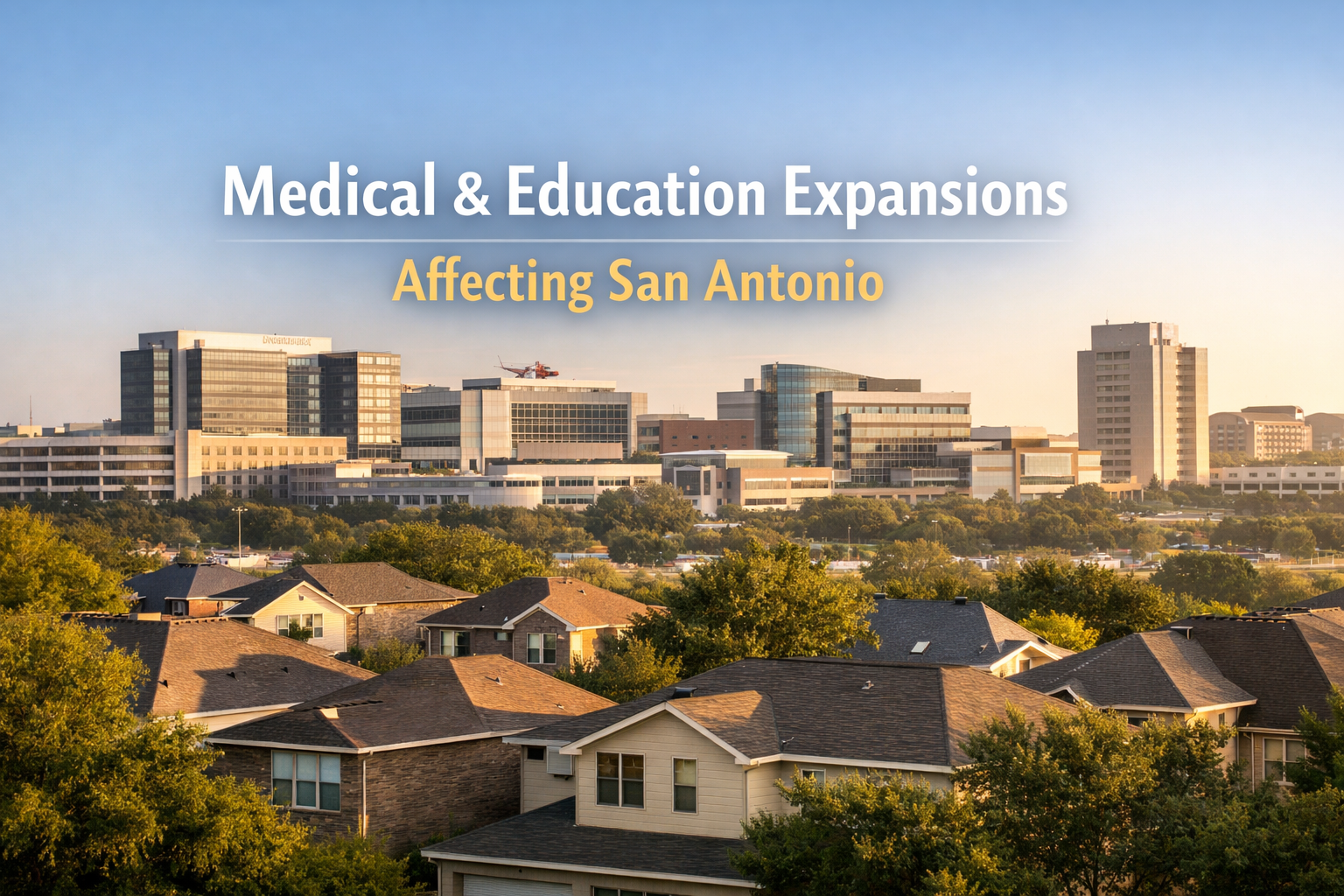
Medical facilities and educational institutions represent major economic drivers creating employment, attracting residents, generating supporting business activity, and influencing residential real estate patterns throughout metropolitan areas. For San Antonio, the South Texas Medical Center's continued expansion, university growth including UTSA and UIW, military medical facilities at Fort Sam Houston, and healthcare system development throughout the region create significant real estate impacts affecting property values, neighborhood development, and buyer location decisions.
Understanding how medical and educational expansions affect residential markets helps buyers identify opportunity areas, sellers recognize demand drivers, and homeowners anticipate neighborhood changes from institutional growth. These expansions bring both benefits including employment access and economic stability alongside challenges like increased traffic, higher density development, and changing neighborhood character.
This guide examines how San Antonio's medical and educational institutions affect surrounding real estate, which neighborhoods benefit most from institutional proximity, what employment patterns mean for residential demand, how expansion announcements influence property values, and what buyers should consider when evaluating locations near major medical or educational facilities.
What Major Medical and Educational Institutions Affect San Antonio?
Understanding key institutional drivers provides context for real estate impacts.
South Texas Medical Center:
The medical center represents San Antonio's largest institutional complex:
- Dozens of hospitals, clinics, and medical offices
- Thousands of physicians, nurses, and support staff
- Medical research and education facilities
- Specialty care centers attracting regional patients
- Continuous expansion and facility upgrades
The Medical Center creates massive employment and supporting service demand.
UT Health San Antonio:
The university's medical and research focus generates impacts:
- Medical school and graduate programs
- Research facilities and laboratories
- Teaching hospital operations
- Faculty and student populations
- Affiliated medical practices
Academic medicine combines employment, education, and research functions.
University of Texas at San Antonio (UTSA):
San Antonio's largest university continues expanding:
- Multiple campus locations
- Growing student enrollment
- Faculty and staff employment
- Research facilities and programs
- Economic development initiatives
UTSA growth particularly affects Northwest and downtown areas.
Trinity University:
Private university serving residential student population:
- Traditional campus north of downtown
- Faculty and staff employment
- Student housing demand
- Cultural and athletic facilities
- Stable institutional presence
Trinity creates demand in surrounding neighborhoods.
Military Medical Facilities:
Fort Sam Houston hosts major medical operations:
- Brooke Army Medical Center
- Military medical training programs
- Research facilities
- Military and civilian employment
- Supporting contractor presence
Military medical facilities generate demand throughout Northeast areas.
Healthcare System Expansion:
Major health systems develop throughout metro:
- Methodist Healthcare System facilities
- Baptist Health System locations
- University Health System growth
- Specialty hospital development
- Urgent care and clinic proliferation
Healthcare facility dispersion creates distributed demand patterns.
How Does Medical Center Proximity Affect Residential Real Estate?
The South Texas Medical Center's scale creates significant residential impacts.
Employment Access Premium:
Properties near the Medical Center command value premiums:
- Short commutes for healthcare professionals
- Lunch-hour access for appointments and errands
- Reduced transportation costs over ownership periods
- Quality of life benefits from proximity
- Strong rental demand from traveling professionals
Proximity premiums are strongest within 5 to 10 miles with good access.
Neighborhood Beneficiaries:
Several areas particularly benefit from Medical Center proximity:
- North Central neighborhoods along Highway 281 corridor
- Northwest communities near Loop 1604 and I-10
- Medical Center area immediately surrounding the complex
- Stone Oak and northern suburbs with reasonable commutes
These areas attract Medical Center employees seeking housing.
Property Type Demand:
Different employee categories seek different housing:
- Physicians and administrators often purchase in premium areas
- Nurses and technicians seek value in mid-range neighborhoods
- Students and residents create rental demand
- Traveling professionals need short-term furnished options
- Supporting business employees distribute throughout metro
Diverse employment creates varied housing demand patterns.
Rental Market Strength:
Medical Center proximity supports rental demand:
- Traveling nurses on temporary assignments
- Medical residents during training periods
- Students in short-term programs
- Professionals testing areas before purchasing
- Investors targeting healthcare worker tenants
Strong rental markets near major medical facilities provide investment opportunities.
What Residential Impacts Do Universities Create?
Educational institutions generate distinct real estate effects.
UTSA Northwest Campus Influence:
The main campus affects surrounding areas significantly:
- Student housing demand both on and off campus
- Faculty and staff home purchases
- Supporting retail and service development
- Infrastructure improvements serving campus
- Continued enrollment growth driving expansion
Northwest neighborhoods benefit from UTSA's presence and growth.
UTSA Downtown Campus Development:
The downtown campus transforms the urban core:
- Student housing development
- Faculty and staff downtown employment
- Supporting business growth
- Urban revitalization catalyst
- Mixed-use development attraction
Downtown campus growth supports urban residential development.
Student Housing Markets:
Universities create specific rental patterns:
- Apartments and rental homes near campuses
- Affordability emphasis for student budgets
- Seasonal leasing aligned with academic calendars
- Walkability and transit access priorities
- Turnover and management challenges
Student-oriented housing serves specific niches.
Faculty and Staff Home Buying:
University employees create homeownership demand:
- Stable employment supporting purchase decisions
- Preference for areas with reasonable campus commutes
- School quality priorities for faculty families
- Mix of price ranges serving various positions
- Long-term neighborhood stability from institutional employment
University employment provides sustained housing demand.
How Do Medical and Education Expansions Affect Property Values?
Institutional growth creates value impacts through multiple mechanisms.
Announcement Effects:
Major expansion announcements generate immediate impacts:
- Anticipatory value increases in proximity areas
- Investor interest in expansion zones
- Development activity responding to growth signals
- Infrastructure improvement expectations
- Long-term confidence from institutional investment
Announcements create value effects before construction begins.
Employment Growth Value:
Expanding employment directly affects residential demand:
- More workers seek housing near facilities
- Competition for limited proximity inventory
- Rental rate increases from demand
- Home price appreciation in beneficiary areas
- Supporting business employment multiplying effects
Employment growth creates sustained demand supporting values.
Infrastructure Investment:
Institutional expansions often trigger public improvements:
- Road expansions and traffic management
- Public transportation route additions
- Utilities and service capacity increases
- Parks and amenity development
- School construction serving growing populations
Infrastructure improvements benefit all properties in affected areas.
Neighborhood Development Catalyst:
Major institutions attract supporting development:
- Medical office buildings and clinics
- Restaurants and retail serving employees
- Professional services concentrating nearby
- Residential development responding to demand
- Mixed-use projects creating comprehensive environments
Catalytic effects transform entire corridors and submarkets.
Potential Negative Impacts:
Not all effects are positive:
- Traffic congestion on surrounding streets
- Higher density development changing character
- Parking challenges in proximity areas
- Noise from construction and operations
- Loss of residential character to commercial encroachment
Balance between benefits and challenges affects individual property impacts.
Which San Antonio Neighborhoods Benefit Most From Medical and Education Growth?
Specific areas see strongest institutional impacts.
Medical Center Adjacent Areas:
Neighborhoods immediately surrounding the complex:
- Premium property values reflecting proximity
- High professional concentration
- Mature development with limited inventory
- Strong demand supporting values
- Traffic and density as trade-offs
Immediate proximity creates maximum employment access.
North Central Corridor:
Areas along Highway 281 between Loop 410 and 1604:
- Reasonable Medical Center commutes
- Established neighborhoods with good schools
- Mix of price points serving various employees
- Comprehensive amenities and services
- Balanced residential character despite proximity
North Central balances access with residential quality.
Northwest San Antonio:
Communities along Loop 1604 and beyond:
- UTSA campus proximity for university employment
- Medical Center access via Highway 281 or I-10
- Newer construction appealing to professionals
- Strong schools attracting families
- Growing commercial amenities
Northwest areas serve both university and medical employment.
Northeast Neighborhoods:
Areas near Fort Sam Houston medical facilities:
- Military medical employment concentration
- Mix of military and civilian workers
- More affordable housing than Northwest
- Established communities with mature amenities
- Reasonable commutes to downtown and medical facilities
Northeast areas benefit from military medical presence.
Downtown Urban Core:
Central area transformation from UTSA downtown campus:
- Student housing and young professional demand
- Faculty and staff urban living preferences
- Mixed-use development and urban amenities
- Walkability and transit access
- Cultural and entertainment proximity
Downtown serves university community and urban lifestyle preferences.
What Should Buyers Consider About Medical and Education Proximity?
Strategic evaluation helps match locations to priorities and lifestyles.
Employment Alignment:
Proximity value depends on actual employment:
- Maximum benefit for employees at specific institutions
- Limited value for those commuting elsewhere
- Considering both current and future employment
- Spouse or partner employment potentially elsewhere
- Remote work reducing proximity importance
Benefits are strongest when employment actually uses proximity.
Traffic and Congestion:
Major institutions generate significant traffic:
- Peak period congestion on access routes
- Medical Center area particularly challenging
- Campus traffic during class changes
- Event traffic for sporting and cultural activities
- Construction traffic during expansion periods
Testing commutes during actual working hours reveals realities.
Parking and Density:
Institutional areas often face parking challenges:
- Street parking limitations in proximity areas
- Visitor parking shortages
- Higher density development reducing space
- On-street activity and congestion
- Balance between walkability and vehicle access
Proximity advantages come with density realities.
Noise and Activity Levels:
Institutional operations create activity:
- Medical helicopter traffic at hospitals
- Campus activity during events
- Construction during expansions
- Emergency vehicle sirens
- 24-hour operations at medical facilities
Activity levels may bother some while others appreciate vibrancy.
Future Growth Considerations:
Institutions continue evolving:
- Expansion plans affecting future character
- Zoning changes enabling development
- Infrastructure improvements and disruption
- Long-term appreciation potential
- Risk of over-development reducing residential appeal
Research expansion plans and zoning provides insight into future trajectories.
How Do Different Buyer Types Evaluate Institutional Proximity?
Preferences vary significantly by demographics and priorities.
Healthcare Professionals:
Medical workers often prioritize proximity highly:
- Commute reduction matters given long hours
- Lunch-hour access for errands and appointments
- Call coverage requiring quick facility access
- Lifestyle benefits outweigh density trade-offs
- Willingness to pay premiums for convenience
Healthcare workers particularly value Medical Center proximity.
University Faculty and Staff:
Academic employees have specific considerations:
- Campus access for teaching and office hours
- Student interaction opportunities
- Cultural and intellectual community
- School quality for faculty families
- Stability from academic employment
University employees often choose proximity supporting campus engagement.
Families With Children:
School-age children affect location priorities:
- School district quality often outweighs employment proximity
- Residential character versus density preferences
- Parks and recreation access
- Safety and traffic concerns
- Commute willingness for better schools
Families often accept longer commutes for school quality.
Young Professionals:
Early-career workers may prioritize differently:
- Urban amenities and social opportunities
- Walkability and activity
- Apartment and rental preferences
- Career flexibility reducing proximity importance
- Price sensitivity affecting location choices
Young professionals balance multiple factors beyond just employment.
Retirees and Empty Nesters:
Without employment concerns, priorities shift:
- Medical facility proximity for healthcare access
- Cultural and educational opportunities
- Urban amenities and walkability
- Downsizing to smaller homes or condos
- Reduced commuting concerns
Retirees value institutional amenities differently than employment access.
What Expansion Projects Currently Affect San Antonio Real Estate?
Understanding active and planned growth helps identify opportunity areas.
Medical Center Expansion:
Ongoing facility development includes:
- Hospital additions and new facilities
- Research center construction
- Medical office building development
- Parking and infrastructure improvements
- Continued institutional land acquisition
Medical Center growth remains constant and ongoing.
UTSA Enrollment and Facility Growth:
University expansion continues:
- Student enrollment increases
- New academic buildings and facilities
- Research center development
- Student housing construction
- Athletic and recreational facilities
UTSA growth particularly affects Northwest San Antonio.
Healthcare System Development:
Major health systems expand throughout metro:
- New hospital locations in growing areas
- Specialty facility development
- Urgent care and clinic proliferation
- Acquisitions and consolidations
- Service line expansions
Healthcare development disperses throughout San Antonio.
Military Medical Modernization:
Fort Sam Houston facilities receive investment:
- Brooke Army Medical Center upgrades
- Research facility development
- Training program expansion
- Supporting infrastructure improvements
- Long-term institutional commitment
Military medical facilities provide sustained Northeast demand.
Expert Insight from Tami Price, REALTOR®
"Medical and educational institutions provide among the most stable, long-term demand drivers in real estate. Over nearly two decades, I've watched the Medical Center, UTSA, and healthcare systems expand continuously creating sustained demand in proximity areas. However, institutional proximity isn't universally positive. Traffic, density, and changing character create trade-offs buyers must evaluate against employment access benefits. The buyers who succeed with institutional proximity are those who actually work at facilities, genuinely value the access, and accept density and activity as acceptable trade-offs. Those prioritizing quiet residential character often find locations removed from institutions more satisfying despite commute lengths. My role is helping buyers honestly assess whether institutional proximity enhances their specific lifestyles or creates friction they'll regret despite theoretical advantages."
Tami Price, REALTOR®, Broker Associate, guides buyers evaluating San Antonio neighborhoods relative to institutional proximity throughout approximately 1,000 closed transactions.
Three Key Takeaways About Medical and Education Impacts
- Medical and educational institutions create sustained long-term demand supporting residential real estate. Unlike private employers that may relocate or downsize, major institutions provide stable employment and continuous growth. Properties with good access to Medical Center, universities, and healthcare facilities maintain demand across market cycles from employment concentration and economic stability these anchors provide.
- Proximity benefits are strongest for actual institutional employees and highly variable for others. Healthcare professionals working at Medical Center receive maximum value from proximity. Those employed elsewhere gain limited benefit despite theoretical access. Benefits depend entirely on whether employment, lifestyle preferences, or future plans actually utilize institutional proximity rather than just existing near facilities.
- Institutional proximity creates trade-offs between access and residential character. Traffic, density, parking challenges, noise, and development intensity accompany institutional proximity. Some buyers happily accept these realities for employment access while others find them incompatible with desired residential quality. Honest assessment of personal tolerance for urban density and activity prevents buyer regret.
Frequently Asked Questions
Q: Do homes near the Medical Center always appreciate faster?
A: Not necessarily. While Medical Center proximity supports demand, appreciation depends on overall market conditions, property characteristics, and neighborhood factors. Some proximity areas appreciate strongly while others face challenges from traffic, density, or aging infrastructure. Location quality matters more than just institutional proximity alone.
Q: Should I buy investment property near universities?
A: Student rental markets offer opportunities but carry unique challenges including seasonal turnover, management intensity, property wear from young tenants, and regulatory restrictions some jurisdictions impose on student housing. Success requires accepting these realities and understanding specific market dynamics. Consult investment advisors before decisions.
Q: How do I know if institutional expansions will actually happen?
A: Research project details, funding sources, and regulatory approvals. Major institutions typically announce only serious projects with secured financing. However, timelines often extend beyond initial projections. Consider buying based on current conditions rather than speculative future projects potentially delaying or changing.
Q: What if healthcare or education employment declines?
A: Major institutions rarely decline significantly. Healthcare demand grows with aging populations. Universities provide stable long-term employment. However, diversified economies better withstand individual institutional changes than areas dependent on single employers. San Antonio's economic diversity provides stability beyond just medical and educational sectors.
Q: Do institutional expansions increase property taxes?
A: Not directly, but indirectly yes. Rising property values from demand and development lead to higher assessments increasing tax bills. However, institutional presence also supports tax base through economic activity. The relationship between institutional presence and individual tax bills is complex and varies by specific circumstances.
Q: How close is too close to hospitals or universities?
A: Personal preference determines acceptable proximity. Some buyers want walking distance while others prefer separation from traffic and activity. Test areas at various times including evenings and weekends. Visit during semester versus breaks for universities. Evaluate actual conditions matching your lifestyle tolerance rather than abstract proximity advantages.
The Bottom Line
Medical and educational institutions create significant real estate impacts through employment generation, economic stability, development catalysis, and sustained long-term demand. For San Antonio, the Medical Center's continued expansion, university growth, and healthcare system development throughout the region provide powerful demand drivers supporting residential markets in proximity areas.
However, institutional proximity benefits vary dramatically by individual circumstances and preferences. Those employed at facilities derive maximum value from access while others gain minimal benefit. Traffic, density, and activity accompanying institutional areas create trade-offs some accept gladly while others find incompatible with desired residential character.
For buyers evaluating homes throughout San Antonio, understanding institutional locations, employment patterns, expansion plans, and honest assessment of whether proximity enhances specific lifestyles helps match locations to priorities producing long-term satisfaction.

Contact Tami Price, REALTOR® | San Antonio, TX
Tami Price, REALTOR®, Broker Associate, and USAF Veteran, helps buyers understand how medical and educational institutions affect San Antonio neighborhoods and location decisions. With nearly two decades of experience and approximately 1,000 closed transactions throughout diverse areas, Tami provides expertise evaluating institutional proximity relative to individual buyer priorities and lifestyles.
Named among San Antonio Business Journal's Top 50 Residential Real Estate Agents and backed by 650+ five-star reviews and recommendations across platforms including Google, Zillow, Realtor.com, FastExpert, and Real Satisfied, Tami delivers results buyers trust.
Tami Price, REALTOR®, Broker Associate
📞 210 620 6681
Tami Price's Specialties
- Neighborhood selection and area expertise
- Medical Center and university proximity evaluation
- Home buyers and location guidance
- Military homebuying near medical facilities
- First time buyers and move-up buyers
- Employment center commute analysis
Disclaimer
This blog provides general educational information about medical and educational institution impacts on real estate and does not constitute professional investment, employment, or location advice. Institutional expansion plans, employment patterns, property values, and neighborhood characteristics change over time. Individual circumstances vary significantly. Readers should conduct independent research and consult with qualified professionals including licensed real estate agents regarding their specific situations. Tami Price, REALTOR®, is licensed in the State of Texas.
Categories
- All Blogs (642)
- Home Buying (21)
- Neighborhood Guides (41)
- 10 Incentive and Rate Buydown Questions (1)
- 10 Military Neighborhood (1)
- 10 Mistakes Sellers Make (1)
- 10 Strategies to Coordinate a Same Day Close (1)
- 12 Lifestyle Questions to Move In (1)
- 12 PCS What Ifs (1)
- 12 Photos and Marketing Assets (1)
- 13 PCS Hunting Trip Tips (1)
- 14 Design Center Decisions (1)
- 15 Red Flags Touring Home in San Antonio (1)
- 2026 Market (1)
- 30 days after closing your home (1)
- 7 Offer Terms Beyond Price (1)
- 7 VA Specific Questions (1)
- 78015 Ranked One (1)
- 8 Bridge (1)
- 8 Myths Buyers Believe about Down Payments (1)
- 8 Reasons VA Buyers Love New Construction (1)
- 9 Mistakes Move Up Buyers Make (1)
- 9 Questions to Decide If You Keep Your PCS Home (1)
- 9 Timeline Questions Every Buyer Need to Ask (1)
- 9 Warranty Questions to Ask (1)
- 9 Ways to Attract VA & Military Buyers (1)
- 90 days before your move (1)
- About Tami Price (6)
- Active Adult Homes (1)
- Affordable Communities (2)
- Affordable Homes (1)
- Affordable Housing & Community Development (3)
- Agent Qualifications and Credentials (1)
- Agent Qualifications and Experience (1)
- Agent Recognition (3)
- Agent Selection (1)
- AI and Real Estate Tools (1)
- Alamo Heights (4)
- Alamo Heights ISD (1)
- Alamo Ranch (2)
- Amenities in Helotes, Texas (3)
- Appraisals (1)
- Arts and Culture (1)
- Awards and Recognition (7)
- Balcones Creek (1)
- Best Neighborhoods to Live in Cibolo, TX (3)
- Best Neighborhoods to Live in San Antonio (15)
- Best Places to Live in Northeast Inner Loop: A Neighborhood Guide (1)
- Bexar County Property Tax (1)
- Bexar County Real Estate (3)
- Blue Tape Walkthrough (1)
- Boerne Home Sellers (1)
- Boerne Texas (4)
- Builder Contracts & Warranties (3)
- Builder Incentives (1)
- Builder Warranties (1)
- Buyer (64)
- Buyer Activity San Antonio (1)
- Buyer and Seller Guidance (3)
- Buyer Due Diligence (1)
- Buyer Education (45)
- Buyer Guide (9)
- Buyer Guides (7)
- Buyer Protection Strategies (1)
- Buyer Representation (1)
- Buyer Representation Expertise (1)
- Buyer Resources (91)
- Buyer Strategy (2)
- Buyers (13)
- Buyers Agent (1)
- Buying a Foreclosed Home in San Antonio (10)
- Buying a Home (4)
- Buying a Home in San Antonio (6)
- Buying Near JBSA (1)
- Buying Timeline (1)
- Buying vs Renting (1)
- Castroville, TX (8)
- Central Texas Growth (1)
- Choosing a Real Estate Agent (1)
- Choosing an Agent (1)
- Cibolo Communities (1)
- Cibolo Home Sellers (1)
- Cibolo TX (12)
- Client Reviews and Testimonials (1)
- Client Satisfaction (1)
- Client Stories (1)
- Client Testimonial (4)
- Clients review (4)
- Closing (1)
- Cobblestone (1)
- Comal County (1)
- Commercial & Retail Development (2)
- Commercial Development (1)
- Community (1)
- Community Development (2)
- Community Development and Real Estate (1)
- Community Guides (1)
- Community Investment Impact (1)
- Community Spotlights (1)
- Commuter Neighborhoods (1)
- Cons of Living in Helotes, TX (4)
- Conservation Communities (1)
- Contingency Questions (1)
- Converse Home Sellers (1)
- Converse Homes For Sale (3)
- Converse Real Estate (1)
- Converse TX (10)
- Cost of Living Guides (1)
- Cost of Living in San Antonio TX (23)
- Custom Homes (5)
- Davis Ranch (1)
- Days on Market (1)
- Down Payment Assistance (1)
- Downtown Revitalization (1)
- Downtown San Antonio (2)
- Dual Military (1)
- East Side Living (1)
- Economic Development (1)
- Education, Texas Hill Country (1)
- Emerald Pointe (1)
- Employment (1)
- Employment Corridors (1)
- Encino Forest (1)
- Equity and Pricing Strategy (2)
- Equity Q&A (1)
- Established Communities (3)
- Events in San Antonio (34)
- Expert Advice from Tami Price, Realtor® (7)
- Fair Oak Ranch (1)
- Family Homes (3)
- FAQ (1)
- Far Northwest San Antonio (1)
- Far West San Antonio (1)
- Farmer Markets in San Antonio (1)
- Fastest Growing Zip Codes in America (1)
- Featured Homes for Sale (2)
- Featured Properties (1)
- Final Walkthrough (1)
- Financial Planning (11)
- Financing Strategy (1)
- First Time Buyers (23)
- First Time Sellers (1)
- First-Time Buyers (6)
- First-Time Homebuyer Resources (4)
- First-Time Homebuyer Tips (2)
- First-Time Homebuyers (6)
- First-Time Investors (1)
- Fort Sam Houston (3)
- Fort Sam Houston Real Estate (1)
- Fort Sam Houston, TX (2)
- Fox Grove (1)
- FSBO vs Agent Representation (1)
- Future Rental (1)
- Gated Communities (5)
- Golf Communities (1)
- Great Northwest (1)
- Greater San Antonio Housing Trends (2)
- Greater San Antonio Real Estate (5)
- Growth and Development (11)
- HELOC (1)
- Helotes Home Sellers (1)
- Hill Country (1)
- Hill Country Communities (2)
- Hill Country Development (1)
- Hill Country Homes for Sale (1)
- Hill Country Real Estate (2)
- Hill Country Retreat (1)
- Historic Districts (5)
- Historic Neighborhoods (4)
- Holiday Guide (1)
- Home Buying (7)
- Home Buying Education (3)
- Home Buying Guide (7)
- Home Buying Process (8)
- Home Buying Strategy (2)
- Home Buying Tips (5)
- Home Energy Efficiency San Antonio (5)
- Home Financing (3)
- Home Improvement ROI (1)
- Home Inspections (3)
- Home Maintenance (1)
- Home Preparation (2)
- Home Pricing Strategy (14)
- Home Renovation for Resale (1)
- Home Selling (12)
- Home Selling Guide (12)
- Home Selling Strategies (3)
- Home Selling Strategy (3)
- Home Selling Tips (23)
- Home Staging and Updates (2)
- Home Values (2)
- Homebuyer Education (15)
- Homebuyer Resources (1)
- Homebuying Guide (1)
- Homebuying Tips (3)
- Homeowner (32)
- Homeowner Tax Benefits (1)
- Homeownership Costs (1)
- Homes for Sale (2)
- Homes for sale near Lackland AFB (2)
- Homestead amenities (1)
- Horizon Pointe (1)
- House Hunting Guide (1)
- Housing Development (1)
- Housing Market Updates (3)
- How to Buy a House in San Antonio TX (43)
- Hunters Ranch (1)
- Hybrid (1)
- In Person (1)
- Incorporated Cities (6)
- Industry News (2)
- Industry Recognition (1)
- Infrastructure & Growth Projects (2)
- Interest Rates (2)
- Invest in San Antonio (32)
- Investment Opportunities (1)
- Investment Property San Antonio (3)
- JBSA (8)
- JBSA Housing (11)
- JBSA Real Estate (2)
- JBSA Resources (7)
- Joint Base San Antonio (4)
- Joint Base San Antonio Housing (1)
- Judson ISD (2)
- Lackland AFB (5)
- Lackland AFB Housing (1)
- Land Use Planning (1)
- Lera MLS (15)
- Lifestyle & Community Growth (2)
- Lifestyle & Local Growth (1)
- Lifestyle Communities (1)
- Listing Preparation (1)
- Listing Strategy (1)
- Live Oak (1)
- Living in San Antonio, TX (44)
- Living Near Randolph AFB (5)
- Loan Programs (1)
- Local Development News (2)
- Local Market Insights (4)
- Local News Around San Antonio (1)
- Luxury Communities (3)
- Luxury Homes (4)
- Luxury Real Estate (2)
- MacArthur Park (1)
- Making Offers on Homes (1)
- Market Analysis (24)
- Market Conditions (47)
- Market Expertise (1)
- Market Insights (5)
- Market Strategy (2)
- Market Timing (2)
- Market Trends (6)
- Market Trends & Insights (2)
- Market Update (17)
- Market Update 2026 (1)
- Market Updates (16)
- Master Planned Communities (12)
- Medical Center Area Real Estate (1)
- Medina Valley ISD (2)
- Midtown Living (1)
- Military & Economic Impact (3)
- Military Buyers (3)
- Military Communities (1)
- Military Families (1)
- Military Family Resources (1)
- Military Homebuying (3)
- Military Homeownership (1)
- Military Housing (2)
- Military Housing Market in Texas (14)
- Military Life in San Antonio (2)
- Military Neighborhoods (1)
- Military PCS Relocations (3)
- Military Real Estate (2)
- Military Relocation (99)
- Military Relocation & VA Loans (10)
- Military Relocation San Antonio (4)
- Military Relocation Services (3)
- Military Relocation to San Antonio (46)
- Military Relocations (18)
- Military Relocations & VA Home Loans (5)
- MLS Accuracy & Data Transparency (1)
- Mortgage Programs (1)
- Mothers Day in San Antonio (1)
- Move to Boerne TX (15)
- Move to Castroville TX (9)
- Move to Converse TX (14)
- Move to New Braunfels (1)
- Move to North San Antonio (16)
- Move to San Antonio TX (64)
- Move to Selma TX (17)
- Move to Shertz TX (10)
- Move to Texas (45)
- Move Up Buyer Resources (1)
- Move Up Buyers (24)
- Move-In Ready Homes (2)
- Move-In Ready Homes San Antonio (2)
- Move-Up Buyers (2)
- Moving to Helotes, TX (14)
- Moving to San Antonio (61)
- MUD Taxes (1)
- Natalia Homes For Sale (1)
- Near East Side Living (1)
- Negotiation Strategy (2)
- Neighborhood Amenities (1)
- Neighborhood Guides (7)
- Neighborhood Spotlights (3)
- Neighborhoods near Randolph AFB (9)
- New Braunfels (4)
- New Braunfels Homes For Sale (1)
- New Braunfels News (2)
- New Braunfels Real Estate (2)
- New Construction (62)
- New Construction Communities (1)
- New Construction Homes (12)
- New Construction Homes San Antonio (5)
- New Construction vs Resale (2)
- New Construction Without Customization (1)
- New Construction Without the Wait (1)
- New Contruction Cost (1)
- New Listing (12)
- News (21)
- News & updates (23)
- No City Tax (1)
- No HOA Homes (1)
- North Central San Antonio (5)
- North East ISD (4)
- North San Antonio (7)
- North Side Neighborhoods (1)
- North Side San Antonio Development (1)
- Northeast Inner Loop (1)
- Northeast Inner Loop Neighborhoods (1)
- Northeast San Antonio (1)
- Northside ISD (5)
- Northwest San Antonio (6)
- Northwest San Antonio Real Estate (2)
- Northwood (1)
- Olympia Hills (1)
- One-Story Homes (1)
- Outdoor Living (1)
- PCS and JBSA (2)
- PCS checklist (1)
- PCS Guide (4)
- PCS Moves (12)
- PCS Moves to Joint Base San Antonio (4)
- PCS Planning (16)
- PCS Randolph AFB (15)
- PCS Relocation (1)
- PCS Resources (6)
- PCS San Antonio (42)
- PCS to San Antonio (38)
- PID Assessments (1)
- Pinon Creek (1)
- Pipe Creek (1)
- Places to Eat Near Randolph AFB (1)
- Pool Homes (1)
- Pre Approval (1)
- Pre-Listing Preparation (2)
- Pre-Listing Process (1)
- Prescott Oaks (1)
- Preserve at Medina (1)
- Pricing and Marketing Strategy (3)
- Professional Awards and Achievements (2)
- Professional Real Estate Representation (1)
- Property Tax Exemptions Texas (1)
- pros and cons living in Converse TX (3)
- Pros and Cons Living in Selma TX (6)
- Pros and Cons of Living in Castroville, TX (4)
- Pros and Cons of Living in San Antonio (30)
- PT500 List (1)
- Purchase Negotiation (1)
- Quick Close Real Estate (1)
- Randolph AFB Neighborhoods (2)
- Real Estate (1)
- Real Estate Advice (1)
- Real Estate Agent Recognition (6)
- Real Estate Agent Selection (2)
- Real Estate Agent Value (1)
- Real Estate Consultation (1)
- Real Estate Finance (1)
- Real Estate Financing (1)
- Real Estate Impact (1)
- Real Estate Investment San Antonio (1)
- Real Estate Market Trends (3)
- Real Estate Professional Designations (1)
- Real Estate Strategy (1)
- Real Estate Technology & Trends (1)
- Real Estate Tips (1)
- Real Estate Tips and Guides (2)
- Real Estate Trends (2)
- RealTrends Verified (1)
- Relocating to San Antonio (2)
- Relocation (4)
- Relocation Resources (2)
- Relocation to San Antonio (49)
- Remote Homebuying (1)
- Rental Housing (1)
- Rental Property (1)
- Rental Strategy (1)
- Resale Properties (1)
- Retail Development (1)
- Retire in Boerne TX (10)
- Retire in San Antonio (31)
- Retirement Communities (1)
- Reviews and Recognition (1)
- Rockwall Ranch (1)
- Rural Living (2)
- SABOR (27)
- San Antonio Buyer Resources (2)
- San Antonio Communities (3)
- San Antonio Community Events (1)
- San Antonio Growth (1)
- San Antonio Home Buying and Selling (2)
- San Antonio Home Buying Guide (5)
- San Antonio Home Improvement (1)
- San antonio home prices (3)
- San Antonio Home Sellers (3)
- San Antonio Homeowner Guide (1)
- San Antonio Homes for Sale (12)
- San Antonio Housing Market (2)
- San Antonio Housing Market & Mortgage Financing (1)
- San Antonio Housing Market Analysis (1)
- San Antonio Housing Trends & Market Analysis (3)
- San Antonio Lifestyle Amenities (1)
- San Antonio Listing (1)
- San Antonio Living (1)
- San Antonio Market (3)
- San Antonio Market Updates (7)
- San Antonio Military Relocation (3)
- San Antonio Neighborhoods (48)
- San Antonio New Construction & Master-Planned Communities (2)
- San Antonio New Home Communities (1)
- San Antonio News (22)
- San Antonio Property Taxes (2)
- San Antonio Real Estate (163)
- San Antonio Real Estate Agents (6)
- San Antonio Real Estate Excellence (1)
- San Antonio Real Estate Guide (6)
- San Antonio Real Estate Market (32)
- San Antonio Real Estate Market Analysis (2)
- San Antonio REALTOR Awards (1)
- San Antonio Seller Resources (2)
- San Antonio Sellers (1)
- San Antonio Spec Homes (1)
- San Antonio Spurs Community Programs (1)
- San Antonio Urban Living (1)
- Scenic Loop (1)
- Schertz Home Sellers (1)
- Schertz Real Estate (1)
- Schertz, TX (11)
- School Information (1)
- SCUCISD Schools (1)
- Secured Quick Offer (1)
- Sell Home In San Antonio TX (50)
- Seller (50)
- Seller Education (24)
- Seller Guide (4)
- Seller Guides (1)
- Seller Representation Expertise (1)
- Seller Resources (69)
- Seller Should Understand (1)
- Seller Strategy (3)
- Seller Tips (2)
- Sellers (10)
- Selling A Home in San Antonio (49)
- Selling Your San Antonio Home (3)
- Selma TX (9)
- Single-Story Homes (4)
- Smart Homes (1)
- Solar Homes (3)
- Southtown (1)
- Spec Homes and Inventory Homes (2)
- Stone Oak (2)
- Suburban Housing Growth (2)
- Suburban Living (2)
- Talise De Culebra (1)
- Terrell Hills (2)
- Texas Acreage Properties (4)
- Texas Homestead Exemption (1)
- Things to do in San Antonio TX (16)
- Things to do Near Randolph AFB (3)
- Time Planning (1)
- Time-Sensitive Home Buying (1)
- Timing Strategy (1)
- Tips for Buying New Construction (9)
- Top Real Estate Agent in San Antonio (3)
- Transaction Coordination (1)
- Transportation Infrastructure (1)
- Two-Story Homes (2)
- Universal City (1)
- Updated Homes (2)
- Upscale Communities (1)
- Urban Communities (2)
- Urban Living (1)
- Urban Neighborhoods (4)
- VA Buyers (1)
- VA Home Loan Benefits (3)
- VA Loan Assumptions (3)
- VA loan benefits (27)
- VA Loan Guidance (1)
- VA Loan Home Buying Assistance (2)
- VA Loans (71)
- VA Loans and Military Benefits (3)
- VA Loans and Military Home Buying (3)
- VA Loans San Antonio (41)
- VET Benefits Living in San Antonio (3)
- Veterans Resources (3)
- Village Northwest (1)
- Virtual Buyers (1)
- Von Ormy Homes For Sale (1)
- week in sales (40)
- Weekly Sales Report (41)
- West San Antonio (2)
- West San Antonio Real Estate (1)
- Windcrest Homes for Sale (1)
Recent Posts