Current Home Design Trends in San Antonio New Construction: What Today's Buyers Want
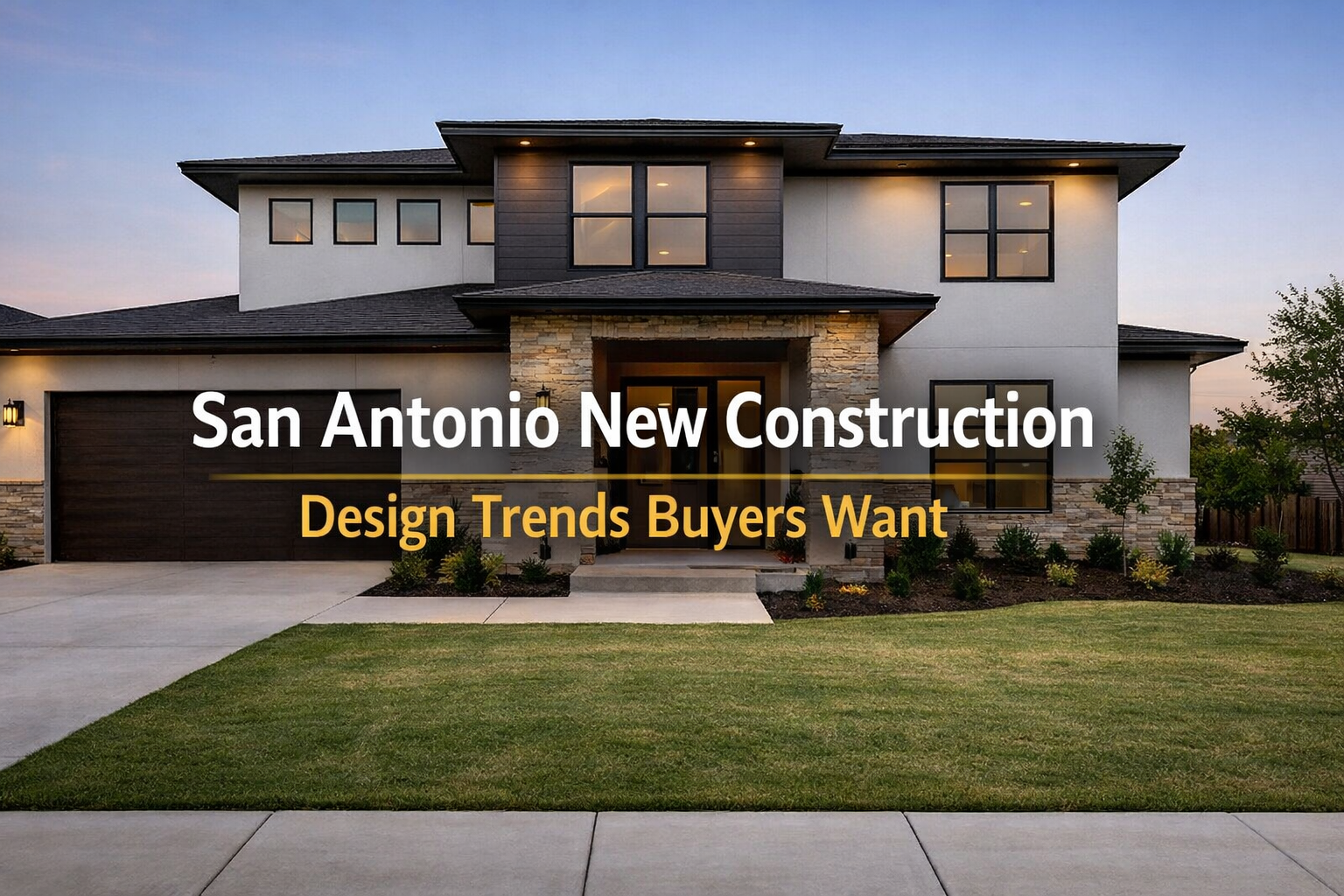
Home design trends reflect changing lifestyles, technological advances, environmental priorities, and cultural shifts affecting how families live, work, and interact within residential spaces. What buyers considered desirable decades ago differs dramatically from current preferences shaped by remote work normalization, multigenerational living increases, technology integration, and sustainability consciousness. Understanding current design trends helps buyers evaluate new construction options, sellers recognize which updates add value, and homeowners planning renovations align improvements with market preferences.
San Antonio builders respond to evolving buyer preferences incorporating trending features and layouts into new communities throughout the metro area including developments in Boerne, Helotes, Fair Oaks Ranch, Cibolo, Schertz, and Converse. While some trends prove lasting, others fade as preferences shift with time and circumstances.
This guide examines current home design trends affecting San Antonio new construction, what features buyers prioritize, how floor plan preferences have evolved, which trends add lasting value versus passing fads, and how design choices affect both immediate satisfaction and long-term resale appeal.
What Floor Plan Trends Dominate Current Construction?
Layout preferences reflect how modern families actually live in homes.
Open Concept Continuation:
Open floor plans remain strongly preferred:
- Kitchen, dining, and living spaces flowing together without walls
- Sightlines allowing supervision and interaction
- Natural light penetration throughout spaces
- Entertaining facilitation with connected areas
- Spacious feeling from combined square footage
However, some buyers now request designated rooms balancing openness with defined spaces.
Flexible Room Design:
Adaptable spaces accommodate changing needs:
- Rooms designated as offices, playrooms, or guest spaces based on current requirements
- Bonus rooms without predetermined functions
- Convertible spaces easily transitioning between uses
- Multi-purpose areas serving several functions simultaneously
- Future-proofing for evolving household compositions
Flexibility matters as families recognize changing needs over ownership periods.
Primary Suite Emphasis:
Master bedrooms receive increasing attention:
- Larger bedroom dimensions accommodating seating areas
- Spa-inspired bathrooms with luxury features
- Generous walk-in closets with organizational systems
- Private access to outdoor spaces
- Separation from secondary bedrooms providing privacy
Primary suites function as retreats beyond just sleeping spaces.
Home Office Integration:
Remote work normalization creates dedicated workspace demand:
- Defined office spaces with doors rather than desk nooks
- Locations away from household activity and noise
- Adequate size for desks, storage, and technology
- Natural light and window views
- Built-in features including shelving and desk surfaces
Work-from-home capabilities have shifted from nice-to-have to essential for many buyers.
Mudroom and Drop Zone Spaces:
Entry organization features prevent household clutter:
- Dedicated entries with storage for coats, shoes, and bags
- Built-in cubbies and benches
- Proximity to garages creating natural drop zones
- Separation from formal entries and living spaces
- Charging stations and organizational systems
These spaces contain daily life chaos near entry points.
What Kitchen Design Features Do Buyers Want?
Kitchens remain central to home designs with evolving feature preferences.
Large Islands as Focal Points:
Oversized islands serve multiple functions:
- Meal preparation workspace
- Casual dining with seating for 4 to 6
- Homework and activity surfaces
- Social gathering focal points
- Storage within island cabinetry
Islands anchor open floor plans as multi-functional centers.
Walk-In Pantries:
Storage preferences favor dedicated pantry rooms:
- Full room pantries replacing cabinet storage
- Organizational systems with adjustable shelving
- Small appliance storage removing countertop clutter
- Bulk storage for large families
- Some including secondary sinks or prep areas
Pantries address storage needs modern kitchens previously lacked.
Quality Appliances:
Appliance expectations continue rising:
- Stainless steel finishes remaining standard
- Gas cooktop preferences where available
- Large capacity refrigerators accommodating storage needs
- Double ovens for cooking flexibility
- Quiet dishwashers with third racks
- Smart appliances with technology integration
Appliance quality and features influence buyer perceptions significantly.
Quartz Countertops:
Surface material preferences have shifted:
- Quartz surpassing granite in popularity
- Durability and low maintenance appeal
- Consistent patterns and colors
- Non-porous surfaces resisting stains
- Wide variety of styles including marble looks
Quartz provides beauty with practical maintenance advantages.
Cabinet Storage Solutions:
Organization features enhance functionality:
- Soft-close drawers and doors throughout
- Pull-out shelving and lazy susans
- Deep drawers for pots and pans
- Drawer dividers and organizational inserts
- Specialized storage for specific items
Thoughtful storage maximizes kitchen efficiency.
How Have Bathroom Design Preferences Evolved?
Bathroom features blend luxury with functionality.
Primary Bathroom Spa Features:
Luxury elements create retreat atmospheres:
- Large walk-in showers replacing tubs in many homes
- Frameless glass enclosures
- Multiple showerheads and body sprays
- Freestanding soaking tubs when space allows
- Double vanities with ample counter space
Primary bathrooms function as personal spas.
Enhanced Lighting:
Illumination affects functionality and ambiance:
- Task lighting at vanities for grooming
- Ambient lighting creating atmosphere
- Natural light through windows or skylights
- Dimming capabilities for flexibility
- LED fixtures for energy efficiency
Layered lighting serves multiple purposes.
Tile and Surface Materials:
Material choices emphasize both beauty and practicality:
- Large format tiles reducing grout lines
- Wood-look tile combining aesthetics with durability
- Heated floors for comfort
- Waterproof luxury vinyl in some applications
- Stone and natural materials where budgets allow
Material selections balance maintenance against visual appeal.
Storage Solutions:
Organization prevents bathroom clutter:
- Linen closets within bathrooms
- Medicine cabinets with internal organization
- Drawer dividers and organizational inserts
- Under-sink storage maximization
- Niche shelving in showers
Adequate storage keeps bathrooms functional and organized.
What Outdoor Living Features Do Buyers Seek?
Indoor-outdoor connection remains important in San Antonio's climate.
Covered Patios:
Protected outdoor spaces extend living areas:
- Generous covered patios for year-round use
- Ceiling fans providing air circulation
- Outdoor lighting for evening enjoyment
- Some including outdoor fireplaces or kitchens
- Extension of interior floor plans
Covered spaces enable outdoor enjoyment despite weather.
Outdoor Kitchens:
Cooking and entertaining move outside:
- Built-in grills and cooking surfaces
- Counter space for food preparation
- Refrigeration and storage
- Sinks for cleanup convenience
- Bar seating for casual dining
Outdoor kitchens support entertaining and lifestyle preferences.
Fire Features:
Gathering spaces extend outdoor seasons:
- Fire pits creating social focal points
- Outdoor fireplaces providing warmth and ambiance
- Gas versus wood-burning options
- Built-in versus portable features
- Seating areas surrounding fire features
Fire features enable comfortable outdoor time beyond warm months.
Swimming Pools:
While expensive, pools remain desirable for many:
- In-ground pools with various shapes and features
- Pool-spa combinations
- Saltwater systems reducing maintenance
- Energy-efficient equipment
- Safety features for families with children
Pools represent significant investments affecting both enjoyment and resale.
What Technology and Smart Home Features Are Standard?
Technology integration increases in new construction.
Smart Home Pre-Wiring:
Infrastructure enables technology adoption:
- CAT6 Ethernet wiring throughout homes
- Centralized technology panels
- Speaker pre-wiring in multiple rooms
- Security system infrastructure
- USB outlets and charging stations
Pre-wiring accommodates current and future technology needs.
Smart Thermostats and Controls:
Climate control technology improves efficiency:
- Programmable thermostats with remote access
- Zoned systems for different areas
- Learning thermostats adapting to patterns
- Voice control integration
- Energy usage monitoring
Smart climate control saves energy while improving comfort.
Security System Integration:
Safety technology becomes standard:
- Video doorbell capabilities
- Motion sensor lighting
- Security camera infrastructure
- Smart lock systems
- Integrated alarm systems with remote monitoring
Technology enhances security while providing remote access.
Home Automation Hubs:
Central control systems manage multiple functions:
- Lighting control and automation
- Climate management
- Entertainment system integration
- Security and access control
- Voice assistant compatibility
Automation systems unify various home functions.
How Do Energy Efficiency and Sustainability Affect Design?
Environmental consciousness influences building practices and features.
High-Performance HVAC Systems:
Efficient climate control reduces operating costs:
- High SEER rating air conditioning
- Properly sized equipment for home dimensions
- Advanced filtration improving air quality
- Programmable and smart controls
- Sealed ductwork preventing loss
Efficient systems lower utility bills and environmental impact.
Enhanced Insulation:
Building envelope improvements increase efficiency:
- Spray foam insulation in walls and attics
- Radiant barrier roof decking
- Low-E windows reducing heat transfer
- Proper sealing preventing air infiltration
- Insulated garage doors
Better insulation reduces heating and cooling loads.
LED Lighting:
Efficient lighting becomes standard:
- LED fixtures throughout homes
- Reduced energy consumption versus incandescent
- Longer bulb life reducing replacement
- Dimming capabilities for flexibility
- Color temperature options for preferences
LED adoption reflects both efficiency and cost savings.
Solar-Ready Infrastructure:
Preparation for renewable energy:
- Roof orientation and structural support for panels
- Electrical panel capacity for solar integration
- Conduit pre-installation for future wiring
- Battery storage infrastructure consideration
Solar readiness enables future renewable adoption.
Water Conservation:
Efficiency extends beyond energy to water:
- Low-flow plumbing fixtures
- Efficient irrigation systems
- Drought-tolerant landscaping
- Rainwater collection infrastructure
- Tankless water heaters reducing waste
Water efficiency addresses both cost and environmental concerns.
What Design Elements Add Lasting Value Versus Passing Trends?
Distinguishing enduring features from fads guides investment decisions.
Timeless Design Choices:
These features maintain appeal across time:
- Neutral color palettes allowing personalization
- Classic materials including hardwood and natural stone
- Quality construction and attention to detail
- Functional layouts serving practical needs
- Proper proportions and spatial relationships
Timeless design choices support long-term value.
Trendy Elements Requiring Caution:
These features may date homes or limit appeal:
- Highly specific color schemes
- Ultra-modern or extreme traditional styles
- Trendy tile patterns and shapes
- Oversized fixtures or exaggerated elements
- Niche features appealing to narrow buyer segments
Trendy choices risk becoming dated reducing future appeal.
Updates Adding Significant Value:
Certain improvements consistently return investment:
- Kitchen renovations with quality materials
- Primary bathroom upgrades
- Fresh neutral paint throughout
- Quality flooring including hardwood or luxury vinyl
- Energy-efficient systems and windows
Strategic updates provide both enjoyment and resale return.
Personal Choices Best Avoided:
Some preferences should remain temporary:
- Bold wall colors easily changed
- Removable decor and accessories
- Furniture selections reflecting personal style
- Reversible modifications
Personal expression through non-permanent choices preserves resale flexibility.
How Should Buyers Evaluate Design Trends?
Strategic assessment separates valuable features from unnecessary expenses.
Distinguishing Needs From Wants:
Critical evaluation prevents overspending:
- Essential features supporting daily life
- Nice-to-have elements adding convenience
- Luxury upgrades providing enjoyment but not necessity
- Features supporting resale versus personal preference
Understanding priorities guides appropriate investment.
Considering Household Composition:
Design needs vary by family characteristics:
- Young families prioritize durability and space
- Empty nesters may prefer luxury over size
- Multi-generational households need privacy and flexibility
- Single professionals have different requirements than large families
Matching design to actual household needs improves satisfaction.
Balancing Current and Future Needs:
Flexibility accommodates changing circumstances:
- Adaptable spaces serving evolving purposes
- Features supporting potential resale to various buyers
- Avoiding highly personalized choices limiting appeal
- Infrastructure enabling future additions or changes
Forward thinking prevents designs becoming obsolete quickly.
Budget Allocation Strategy:
Investment should focus on high-impact areas:
- Prioritize visible, frequently used spaces
- Invest in quality for permanent elements
- Accept lower-cost options for easily changed features
- Allocate based on value return and enjoyment
Strategic spending maximizes both satisfaction and value.
Expert Insight from Tami Price, REALTOR®
"Design trends influence buyer preferences significantly, but timeless quality always matters more than following every current fad. Over nearly two decades representing buyers evaluating new construction, I've watched trends come and go while certain fundamentals remain constant. Buyers succeeding long-term are those who select homes with solid construction, functional layouts, and neutral aesthetics they can personalize, rather than chasing every trendy feature that may date properties within years. My guidance emphasizes understanding which design elements add lasting value supporting both enjoyment and resale, versus which trendy choices risk becoming dated quickly. The best homes balance current preferences with timeless appeal ensuring satisfaction throughout ownership and strong buyer interest when eventually selling."
Tami Price, REALTOR®, Broker Associate, guides buyers through design evaluation and new construction selection throughout approximately 1,000 closed transactions.
Three Key Takeaways About Home Design Trends
- Current design trends reflect lifestyle changes including remote work normalization, technology integration, and sustainability consciousness. Features like dedicated home offices, smart home infrastructure, and energy-efficient systems have shifted from luxury upgrades to expected standards. Understanding these trends helps buyers evaluate whether new construction meets contemporary expectations supporting both current use and future resale.
- Timeless design principles matter more than following every passing trend. Neutral palettes, quality materials, functional layouts, and proper proportions maintain appeal across time. Highly trendy choices risk dating homes within years requiring expensive updates to maintain contemporary appeal. Balance current preferences against long-term value when selecting features and finishes.
- Design priorities should match actual household needs and lifestyles. The most satisfying homes align with how families actually live rather than following generic design trends. Young families need different features than empty nesters. Remote workers require different spaces than commuting professionals. Evaluating designs against real needs rather than abstract preferences improves long-term satisfaction.
Frequently Asked Questions
Q: Are open floor plans still popular or are people moving back to defined rooms?
A: Open concepts remain strongly preferred by most buyers but some desire balance between openness and defined spaces. Many current designs include open main living areas while providing some separate rooms like offices, playrooms, or formal dining. Complete openness still dominates but thoughtful room definition addresses noise, privacy, and functional needs some buyers prioritize.
Q: Which design trends are worth paying extra for in new construction?
A: Prioritize features affecting daily functionality and difficult to add later including open floor plans, home offices, quality kitchen layouts, primary suite luxury, covered outdoor spaces, and smart home infrastructure. These elements significantly affect satisfaction and value. Avoid overpaying for highly trendy finishes easily updated later like specific tile patterns, fixtures, or color schemes.
Q: How important is energy efficiency in design trends?
A: Increasingly important as buyers recognize both environmental impacts and operating cost savings. Energy-efficient HVAC, insulation, windows, and LED lighting reduce utility bills significantly over ownership periods. These features also support resale as sustainability consciousness grows. While efficiency rarely drives purchases alone, it influences decisions between otherwise similar properties.
Q: What design features hurt resale value?
A: Highly personalized choices including bold colors, unusual layouts, over-improvement relative to neighborhoods, extreme style statements, and features appealing to narrow buyer segments. Homes with broad appeal to various buyer types sell faster and command stronger prices than properties requiring buyers to see past current owners' specific tastes.
Q: Should I choose trendy finishes or classic styles in new construction?
A: Balance current preferences against timeless appeal. Select neutral base elements allowing personalization through easily changed items like paint, fixtures, and decor. Avoid locking in highly specific trends throughout permanent features. Classic choices with quality materials age better than cutting-edge designs potentially dating quickly as preferences evolve.
Q: How do design trends vary by price point?
A: Entry-level homes focus on functional layouts and standard features. Mid-range properties incorporate popular upgrades like enhanced kitchens and primary suites. Luxury homes include high-end finishes, extensive smart home technology, and unique custom features. However, good design principles including functionality, proportion, and quality apply across all price ranges.
The Bottom Line
Home design trends evolve reflecting changing lifestyles, technological capabilities, and cultural priorities affecting how families live in residential spaces. Current trends emphasizing open layouts, home offices, smart technology, outdoor living, and energy efficiency respond to real shifts in work patterns, family structures, and environmental consciousness rather than arbitrary fashion.
However, distinguishing lasting preferences from passing fads prevents costly mistakes when selecting new construction features or planning renovations. Timeless design principles including neutral palettes, quality materials, functional layouts, and proper proportions maintain appeal across time supporting both enjoyment and resale value. The most satisfying homes balance contemporary expectations against enduring quality and personalization flexibility.
For buyers evaluating new construction throughout San Antonio, understanding current design trends, which features add lasting value, and how to match designs to actual household needs guides decisions producing long-term satisfaction and strong investment returns.

Contact Tami Price, REALTOR® | San Antonio, TX
Tami Price, REALTOR®, Broker Associate, and USAF Veteran, helps buyers evaluate design features and trends when selecting new construction homes throughout San Antonio. With nearly two decades of experience and approximately 1,000 closed transactions including extensive new construction representation, Tami provides expertise distinguishing valuable features from unnecessary expenses.
Named among San Antonio Business Journal's Top 50 Residential Real Estate Agents and backed by 650+ five-star reviews and recommendations across platforms including Google, Zillow, Realtor.com, FastExpert, and Real Satisfied, Tami delivers results buyers trust.
Tami Price, REALTOR®, Broker Associate
📞 210 620 6681
Tami Price's Specialties
- New construction design evaluation
- Builder option and upgrade guidance
- Home buyers and design consultation
- First time buyers navigating choices
- Move-up buyers seeking features
- Resale value and design investment strategy
Disclaimer
This blog provides general educational information about home design trends and does not constitute professional design, architectural, or investment advice. Design preferences, building practices, and market trends change over time. Individual tastes, needs, and circumstances vary significantly. Readers should consult with qualified professionals including licensed real estate agents, designers, and builders regarding their specific situations and decisions. Tami Price, REALTOR®, is licensed in the State of Texas.
Categories
- All Blogs (942)
- Home Buying (19)
- Neighborhood Guides (45)
- 10 Incentive and Rate Buydown Questions (1)
- 10 Military Neighborhood (1)
- 10 Mistakes Sellers Make (1)
- 10 Strategies to Coordinate a Same Day Close (1)
- 12 Lifestyle Questions to Move In (1)
- 12 PCS What Ifs (1)
- 12 Photos and Marketing Assets (1)
- 13 PCS Hunting Trip Tips (1)
- 14 Design Center Decisions (1)
- 15 Red Flags Touring Home in San Antonio (1)
- 2026 Market (1)
- 30 days after closing your home (1)
- 7 Offer Terms Beyond Price (1)
- 7 VA Specific Questions (1)
- 78015 Ranked One (1)
- 8 Bridge (1)
- 8 Myths Buyers Believe about Down Payments (1)
- 8 Reasons VA Buyers Love New Construction (1)
- 9 Mistakes Move Up Buyers Make (1)
- 9 Questions to Decide If You Keep Your PCS Home (1)
- 9 Timeline Questions Every Buyer Need to Ask (1)
- 9 Warranty Questions to Ask (1)
- 9 Ways to Attract VA & Military Buyers (1)
- 90 days before your move (1)
- About Tami Price (6)
- Active Adult Homes (1)
- Affordable Communities (2)
- Affordable Housing & Community Development (5)
- Agent Qualifications and Credentials (1)
- Agent Qualifications and Experience (1)
- Agent Recognition (3)
- Agent Selection (1)
- AI and Real Estate Tools (1)
- Alamo Heights (5)
- Alamo Heights ISD (1)
- Alamo Heights Real Estate (1)
- Alamo Ranch (3)
- Amenities in Helotes, Texas (3)
- Apartment Market (1)
- Appraisals (1)
- Arts and Culture (1)
- Awards and Recognition (7)
- Balcones Creek (1)
- Best Neighborhoods to Live in Cibolo, TX (3)
- Best Neighborhoods to Live in San Antonio (16)
- Best Places to Live in Leon Valley: A Neighborhood Guide (1)
- Best Places to Live in Northeast Inner Loop: A Neighborhood Guide (1)
- Bexar County Property Tax (1)
- Bexar County Real Estate (3)
- Blue Tape Walkthrough (1)
- Boerne Home Sellers (1)
- Boerne Neighborhoods (2)
- Boerne Texas (9)
- Broadway Corridor Development (1)
- Build-to-Rent Communities (1)
- Builder Contracts & Warranties (3)
- Builder Incentives (1)
- Builder Warranties (1)
- Buyer (97)
- Buyer Activity San Antonio (1)
- Buyer and Seller Guidance (4)
- Buyer Due Diligence (1)
- Buyer Education (46)
- Buyer Guide (9)
- Buyer Guides (7)
- Buyer Protection Strategies (1)
- Buyer Representation (1)
- Buyer Representation Expertise (1)
- Buyer Resources (90)
- Buyer Strategy (2)
- Buyers (13)
- Buyers Agent (1)
- Buying a Foreclosed Home in San Antonio (10)
- Buying a Home (3)
- Buying a Home in San Antonio (6)
- Buying Near JBSA (1)
- Buying Timeline (1)
- Buying vs Renting (1)
- Castroville, TX (8)
- Central San Antonio (1)
- Central San Antonio Development (2)
- Central Texas Growth (1)
- Choosing a Real Estate Agent (1)
- Choosing an Agent (1)
- Cibolo Communities (1)
- Cibolo Home Sellers (1)
- Cibolo TX (15)
- Client Reviews and Testimonials (1)
- Client Satisfaction (1)
- Client Stories (1)
- Client Testimonial (4)
- Clients review (4)
- Closing (1)
- Cobblestone (1)
- Comal County (1)
- Commercial & Retail Development (27)
- Commercial Development (13)
- Commercial Development Impact on Home Values (1)
- Commercial Real Estate (1)
- Community (1)
- Community Amenities (2)
- Community Development (23)
- Community Development and Real Estate (3)
- Community Events & Development (1)
- Community Guides (1)
- Community Infrastructure (1)
- Community Investment Impact (2)
- Community Landmarks (1)
- Community News (4)
- Community Planning (2)
- Community Revitalization (1)
- Community Spotlights (1)
- Commuter Neighborhoods (1)
- Cons of Living in Helotes, TX (4)
- Conservation Communities (1)
- Contingency Questions (1)
- Converse Home Sellers (1)
- Converse Homes For Sale (3)
- Converse Real Estate (1)
- Converse TX (10)
- Converse TX Real Estate (1)
- Cost of Living Guides (1)
- Cost of Living in San Antonio TX (25)
- CPS Energy Programs (1)
- Custom Homes (5)
- Davis Ranch (1)
- Days on Market (1)
- Deco District San Antonio (1)
- Denver Heights (1)
- Down Payment Assistance (1)
- Downtown Boerne (1)
- Downtown Development (3)
- Downtown Living (1)
- Downtown Revitalization (14)
- Downtown San Antonio (2)
- Downtown San Antonio Real Estate (5)
- Downtown San Antonio Revitalization (1)
- Dual Military (1)
- East Side Living (1)
- East Side Neighborhoods (1)
- East Side San Antonio (4)
- Economic Development (3)
- Economic Growth & Industry (1)
- Education, Texas Hill Country (1)
- Emerald Pointe (1)
- Employment (1)
- Employment Corridors (1)
- Encino Forest (1)
- Entertainment Economy (1)
- Equity and Pricing Strategy (2)
- Equity Q&A (1)
- Established Communities (3)
- Events in San Antonio (207)
- Expert Advice from Tami Price, Realtor® (10)
- Fair Oak Ranch (1)
- Family Activities (2)
- Family Homes (3)
- Family Living in San Antonio (1)
- FAQ (1)
- Far Northwest San Antonio (1)
- Far West San Antonio (1)
- Far Westside Real Estate (4)
- Farmer Markets in San Antonio (1)
- Fastest Growing Zip Codes in America (1)
- Featured Homes for Sale (2)
- Featured Properties (1)
- Final Walkthrough (1)
- Financial Planning (11)
- Financing Strategy (1)
- First Time Buyers (23)
- First Time Sellers (1)
- First-Time Buyers (6)
- First-Time Homebuyer Resources (4)
- First-Time Homebuyer Tips (2)
- First-Time Homebuyers (6)
- First-Time Investors (1)
- Fort Sam Houston (3)
- Fort Sam Houston Real Estate (1)
- Fort Sam Houston, TX (2)
- Fox Grove (1)
- FSBO vs Agent Representation (1)
- Future Rental (1)
- Gated Communities (5)
- Golf Communities (1)
- Great Northwest (1)
- Greater San Antonio Housing Trends (2)
- Greater San Antonio Real Estate (5)
- Green Home Upgrades (1)
- Growth and Development (11)
- Healthcare (1)
- HELOC (1)
- Helotes Home Sellers (1)
- Highway 151 Corridor Growth (1)
- Hill Country Business (1)
- Hill Country Communities (2)
- Hill Country Development (3)
- Hill Country Homes for Sale (1)
- Hill Country Living (3)
- Hill Country Market Updates (1)
- Hill Country Real Estate (4)
- Hill Country Retreat (1)
- Historic Districts (5)
- Historic Neighborhoods (4)
- Historic Preservation (2)
- Holiday Attractions (1)
- Holiday Guide (1)
- Home Buying (7)
- Home Buying Education (3)
- Home Buying Guide (7)
- Home Buying Process (8)
- Home Buying Strategy (2)
- Home Buying Tips (6)
- Home Energy Efficiency San Antonio (5)
- Home Financing (2)
- Home Improvement ROI (1)
- Home Inspections (3)
- Home Preparation (2)
- Home Pricing Strategy (14)
- Home Renovation for Resale (1)
- Home Selling (12)
- Home Selling Guide (11)
- Home Selling Strategies (3)
- Home Selling Strategy (3)
- Home Selling Tips (22)
- Home Staging and Updates (2)
- Home Values (2)
- Homebuyer Education (15)
- Homebuyer Resources (1)
- Homebuying Guide (1)
- Homebuying Tips (3)
- Homeowner (37)
- Homeowner Tax Benefits (1)
- Homeownership Costs (1)
- Homes for Sale (2)
- Homes for sale near Lackland AFB (4)
- Homes Near Military Bases (1)
- Homestead amenities (1)
- Horizon Pointe (1)
- House Hunting Guide (1)
- Housing (1)
- Housing Community Development (1)
- Housing Development (2)
- Housing Market Updates (3)
- How to Buy a House in San Antonio TX (48)
- Huebner Oaks shopping center (1)
- Hunters Ranch (1)
- Hybrid (1)
- I-10 Corridor (1)
- I-35 Corridor (1)
- In Person (1)
- Incorporated Cities (6)
- Industrial Investment Impact (1)
- Industry News (2)
- Industry Recognition (1)
- Infrastructure & Growth Projects (26)
- Infrastructure and Sustainability (1)
- Infrastructure Development (1)
- Infrastructure Investment (1)
- Infrastructure Updates (2)
- Interest Rates (2)
- Invest in San Antonio (46)
- Investment Opportunities (3)
- Investment Property San Antonio (4)
- JBSA (9)
- JBSA Housing (11)
- JBSA Real Estate (4)
- JBSA Resources (7)
- Joint Base San Antonio (5)
- Joint Base San Antonio Housing (1)
- Judson ISD (2)
- Kendall County (1)
- La Cantera Retail Development (1)
- Lackland AFB (7)
- Lackland AFB Housing (1)
- Land Conservation (1)
- Land Use Planning (1)
- Lera MLS (15)
- Lifestyle & Community Growth (18)
- Lifestyle & Local Growth (12)
- Lifestyle Amenities (1)
- Lifestyle Communities (1)
- Listing Preparation (1)
- Listing Strategy (1)
- Live Oak (1)
- Living in San Antonio, TX (52)
- Living Near Randolph AFB (7)
- Loan Programs (1)
- Local Attractions (3)
- Local Business (1)
- Local Business & Development (9)
- Local Business & Economy (3)
- Local Business Spotlight (20)
- Local Business Support (5)
- Local Development (4)
- Local Development News (9)
- Local Market Insights (5)
- Local News (2)
- Local News Around San Antonio (2)
- Local Policy Changes (1)
- Local Real Estate News (1)
- Loop 1604 Corridor Growth (2)
- Loop 410 Corridor Development (1)
- Luxury Communities (3)
- Luxury Homes (2)
- Luxury Real Estate (1)
- Luxury Retail San Antonio (1)
- MacArthur Park (1)
- Major Developments (2)
- Making Offers on Homes (1)
- Market Analysis (26)
- Market Conditions (47)
- Market Expertise (1)
- Market Insights (5)
- Market Strategy (1)
- Market Timing (2)
- Market Trends (10)
- Market Trends & Insights (2)
- Market Update (18)
- Market Update 2026 (1)
- Market Updates (22)
- Master Planned Communities (12)
- Medical Center Area Real Estate (1)
- Medina Valley ISD (2)
- Midtown Living (1)
- Military & Economic Impact (3)
- Military Buyers (3)
- Military Communities (1)
- Military Families (1)
- Military Family Resources (1)
- Military Heritage (1)
- Military Homebuying (3)
- Military Homeownership (1)
- Military Housing (3)
- Military Housing Market in Texas (16)
- Military Life in San Antonio (2)
- Military Neighborhoods (1)
- Military PCS Relocations (3)
- Military Real Estate (2)
- Military Relocation (100)
- Military Relocation & VA Loans (10)
- Military Relocation San Antonio (4)
- Military Relocation Services (3)
- Military Relocation to San Antonio (50)
- Military Relocations (20)
- Military Relocations & VA Home Loans (5)
- Mixed-Income Housing (1)
- MLS Accuracy & Data Transparency (1)
- Mortgage Programs (1)
- Mothers Day in San Antonio (1)
- Move to Boerne TX (18)
- Move to Castroville TX (11)
- Move to Converse TX (16)
- Move to New Braunfels (1)
- Move to North San Antonio (19)
- Move to San Antonio TX (73)
- Move to Selma TX (19)
- Move to Shertz TX (13)
- Move to Texas (53)
- Move Up Buyer Resources (1)
- Move Up Buyers (23)
- Move-In Ready Homes (3)
- Move-In Ready Homes San Antonio (2)
- Move-Up Buyers (2)
- Moving to Helotes, TX (17)
- Moving to San Antonio (69)
- MUD Taxes (1)
- Natalia Homes For Sale (1)
- Near East Side Living (1)
- Negotiation Strategy (2)
- Neighborhood Amenities (1)
- Neighborhood Development (1)
- Neighborhood Guides (7)
- Neighborhood Investment (1)
- Neighborhood News (2)
- Neighborhood Revitalization (2)
- Neighborhood Spotlights (12)
- Neighborhood Updates (1)
- Neighborhoods near Randolph AFB (12)
- New Braunfels (6)
- New Braunfels Homes For Sale (1)
- New Braunfels News (3)
- New Braunfels Real Estate (3)
- New Businesses (2)
- New Construction (63)
- New Construction Communities (1)
- New Construction Homes (13)
- New Construction Homes San Antonio (5)
- New Construction vs Resale (2)
- New Construction Without Customization (1)
- New Construction Without the Wait (1)
- New Contruction Cost (1)
- New Development (3)
- New Listing (19)
- New Restaurants (3)
- News (211)
- News & updates (213)
- No HOA Homes (1)
- North Central San Antonio (5)
- North East ISD (4)
- North San Antonio (9)
- North San Antonio Real Estate (3)
- North Side Neighborhoods (1)
- North Side San Antonio Development (2)
- Northeast Inner Loop (1)
- Northeast Inner Loop Neighborhoods (1)
- Northeast San Antonio (3)
- Northside ISD (5)
- Northwest San Antonio (9)
- Northwest San Antonio Development (1)
- Northwest San Antonio Growth (1)
- Northwest San Antonio Real Estate (3)
- Northwood (1)
- Olympia Hills (1)
- One-Story Homes (1)
- Outdoor Living (1)
- Parks and Recreation (2)
- PCS and JBSA (2)
- PCS checklist (1)
- PCS Guide (4)
- PCS Moves (12)
- PCS Moves to Joint Base San Antonio (4)
- PCS Planning (16)
- PCS Randolph AFB (17)
- PCS Relocation (1)
- PCS Resources (6)
- PCS San Antonio (46)
- PCS to San Antonio (42)
- Pearl District Area Real Estate (2)
- PID Assessments (1)
- Pinon Creek (1)
- Pipe Creek (1)
- Places to Eat Near Randolph AFB (1)
- Pool Homes (1)
- Pre Approval (1)
- Pre-Listing Preparation (2)
- Pre-Listing Process (1)
- Prescott Oaks (1)
- Pricing and Marketing Strategy (3)
- Professional Awards and Achievements (2)
- Professional Real Estate Representation (1)
- Property Tax Exemptions Texas (1)
- Property Value Enhancement (1)
- pros and cons living in Converse TX (3)
- Pros and Cons Living in Selma TX (6)
- Pros and Cons of Living in Castroville, TX (4)
- Pros and Cons of Living in San Antonio (33)
- PT500 List (1)
- Purchase Negotiation (1)
- Quality of Life (1)
- Quick Close Real Estate (1)
- Randolph AFB Neighborhoods (2)
- Real Estate (1)
- Real Estate Advice (1)
- Real Estate Agent Recognition (6)
- Real Estate Agent Selection (2)
- Real Estate Agent Value (1)
- Real Estate Consultation (1)
- Real Estate Finance (1)
- Real Estate Financing (1)
- Real Estate Impact (1)
- Real Estate Investment San Antonio (2)
- Real Estate Legal Issues (1)
- Real Estate Market Insights (2)
- Real Estate Market Trends (5)
- Real Estate Professional Designations (1)
- Real Estate Strategy (1)
- Real Estate Technology & Trends (2)
- Real Estate Tips (1)
- Real Estate Tips and Guides (2)
- Real Estate Trends (4)
- RealTrends Verified (1)
- Regional Development (1)
- Regional Real Estate (2)
- Relocating to San Antonio (2)
- Relocation (4)
- Relocation Resources (2)
- Relocation to San Antonio (55)
- Remote Homebuying (1)
- Rental Housing (1)
- Rental Property (1)
- Rental Strategy (1)
- Resale Properties (1)
- Retail Development (2)
- Retire in Boerne TX (11)
- Retire in San Antonio (37)
- Retirement Communities (1)
- Reviews and Recognition (1)
- Rockwall Ranch (1)
- Rural Living (2)
- SABOR (28)
- San Antonio Area Listings (1)
- San Antonio Business Growth (1)
- San Antonio Buyer Resources (2)
- San Antonio Communities (3)
- San Antonio Community Events (1)
- San Antonio Community News (1)
- San Antonio Data Center Development (1)
- San Antonio Development (5)
- San Antonio Development & East Side Real Estate (1)
- San Antonio Dining and Lifestyle (3)
- San Antonio East Side Development (1)
- San Antonio Employment Growth (1)
- San Antonio Food & Community Development (2)
- San Antonio Growth (8)
- San Antonio Home Buying and Selling (2)
- San Antonio Home Buying Guide (5)
- San Antonio Home Improvement (2)
- San antonio home prices (3)
- San Antonio Home Sellers (3)
- San Antonio Homeowner Guide (1)
- San Antonio Homeowner Resources (1)
- San Antonio Homes for Sale (12)
- San Antonio Housing Market (2)
- San Antonio Housing Market & Mortgage Financing (2)
- San Antonio Housing Market Analysis (2)
- San Antonio Housing Trends & Market Analysis (4)
- San Antonio Industrial Development (1)
- San Antonio Industrial Policy (1)
- San Antonio Investment Properties (2)
- San Antonio Job Market (1)
- San Antonio Lifestyle Amenities (2)
- San Antonio Listing (1)
- San Antonio Living (1)
- San Antonio Market (3)
- San Antonio Market Updates (18)
- San Antonio Military Relocation (3)
- San Antonio Neighborhoods (67)
- San Antonio New Construction & Master-Planned Communities (4)
- San Antonio New Home Communities (1)
- San Antonio News (229)
- San Antonio North Side Development (1)
- San Antonio Parks (1)
- San Antonio Property Investment (1)
- San Antonio Property Taxes (2)
- San Antonio Real Estate (163)
- San Antonio Real Estate Agents (6)
- San Antonio Real Estate Excellence (1)
- San Antonio Real Estate Guide (6)
- San Antonio Real Estate Market (41)
- San Antonio Real Estate Market Analysis (6)
- San Antonio Real Estate News (2)
- San Antonio REALTOR Awards (1)
- San Antonio Restaurant News (2)
- San Antonio Restaurant Openings (1)
- San Antonio Seller Resources (2)
- San Antonio Sellers (1)
- San Antonio Spec Homes (1)
- San Antonio Spurs Community Programs (1)
- San Antonio Suburbs (1)
- San Antonio Transportation (2)
- San Antonio University Area Housing (1)
- San Antonio Urban Living (7)
- San Antonio West Side Development (2)
- San Antonio Zoning Policy (1)
- Scenic Loop (1)
- Schertz Home Sellers (1)
- Schertz Real Estate (1)
- Schertz, TX (13)
- School Districts (1)
- School Information (1)
- SCUCISD Schools (1)
- Secured Quick Offer (1)
- Sell Home In San Antonio TX (64)
- Seller (83)
- Seller Education (24)
- Seller Guide (4)
- Seller Guides (1)
- Seller Representation Expertise (1)
- Seller Resources (68)
- Seller Should Understand (1)
- Seller Strategy (3)
- Seller Tips (2)
- Sellers (10)
- Selling A Home in San Antonio (62)
- Selling Your San Antonio Home (3)
- Selma TX (9)
- Single-Story Homes (4)
- Smart Homes (1)
- Solar Homes (3)
- South San Antonio Real Estate (1)
- South Side Economic Growth (1)
- South Side San Antonio (1)
- Southtown (2)
- Southwest San Antonio Real Estate (1)
- Spec Homes and Inventory Homes (2)
- Spurs Arena Project Marvel (1)
- Stone Oak (2)
- Stone Oak Community News (5)
- Suburban Housing Growth (12)
- Suburban Living (2)
- Talise De Culebra (1)
- Technology Growth (3)
- Technology Sector Growth (1)
- Terrell Hills (3)
- Texas Acreage Properties (3)
- Texas Homestead Exemption (1)
- The Dominion Real Estate (1)
- The Rim Area Real Estate (1)
- Things to do in San Antonio TX (22)
- Things to do Near Randolph AFB (4)
- Time Planning (1)
- Time-Sensitive Home Buying (1)
- Timing Strategy (1)
- Tips for Buying New Construction (9)
- Tobin Hill Neighborhoods (2)
- Top Real Estate Agent in San Antonio (3)
- Tourism and Economic Development (1)
- Traders's Joe San Antonio (1)
- Transaction Coordination (1)
- Transportation Infrastructure (1)
- Two-Story Homes (2)
- Universal City (1)
- Updated Homes (2)
- Upscale Communities (1)
- Urban Communities (2)
- Urban Corridor Real Estate (1)
- Urban Development (5)
- Urban Living (3)
- Urban Neighborhoods (4)
- Urban Real Estate (1)
- Urban Renewal Projects (1)
- Urban Revitalization San Antonio (1)
- Utility Cost Reduction (1)
- UTSA Campus Development (1)
- VA Buyers (1)
- VA Home Loan Benefits (3)
- VA Loan Assumptions (3)
- VA loan benefits (27)
- VA Loan Guidance (1)
- VA Loan Home Buying Assistance (2)
- VA Loans (71)
- VA Loans and Military Benefits (3)
- VA Loans and Military Home Buying (3)
- VA Loans San Antonio (43)
- VET Benefits Living in San Antonio (3)
- Veterans Resources (3)
- Village Northwest (1)
- Virtual Buyers (1)
- Walkable Communities (1)
- week in sales (41)
- Weekly Sales Report (42)
- West San Antonio (2)
- West San Antonio Development (1)
- West San Antonio Real Estate (3)
- West San Antonio Real Estate Market (2)
- West Side Infrastructure Planning (1)
- West Side Real Estate (1)
- West Side San Antonio (2)
- Windcrest Homes for Sale (1)
Recent Posts