Commercial Development Trends in San Antonio: How Business Growth Affects Residential Real Estate
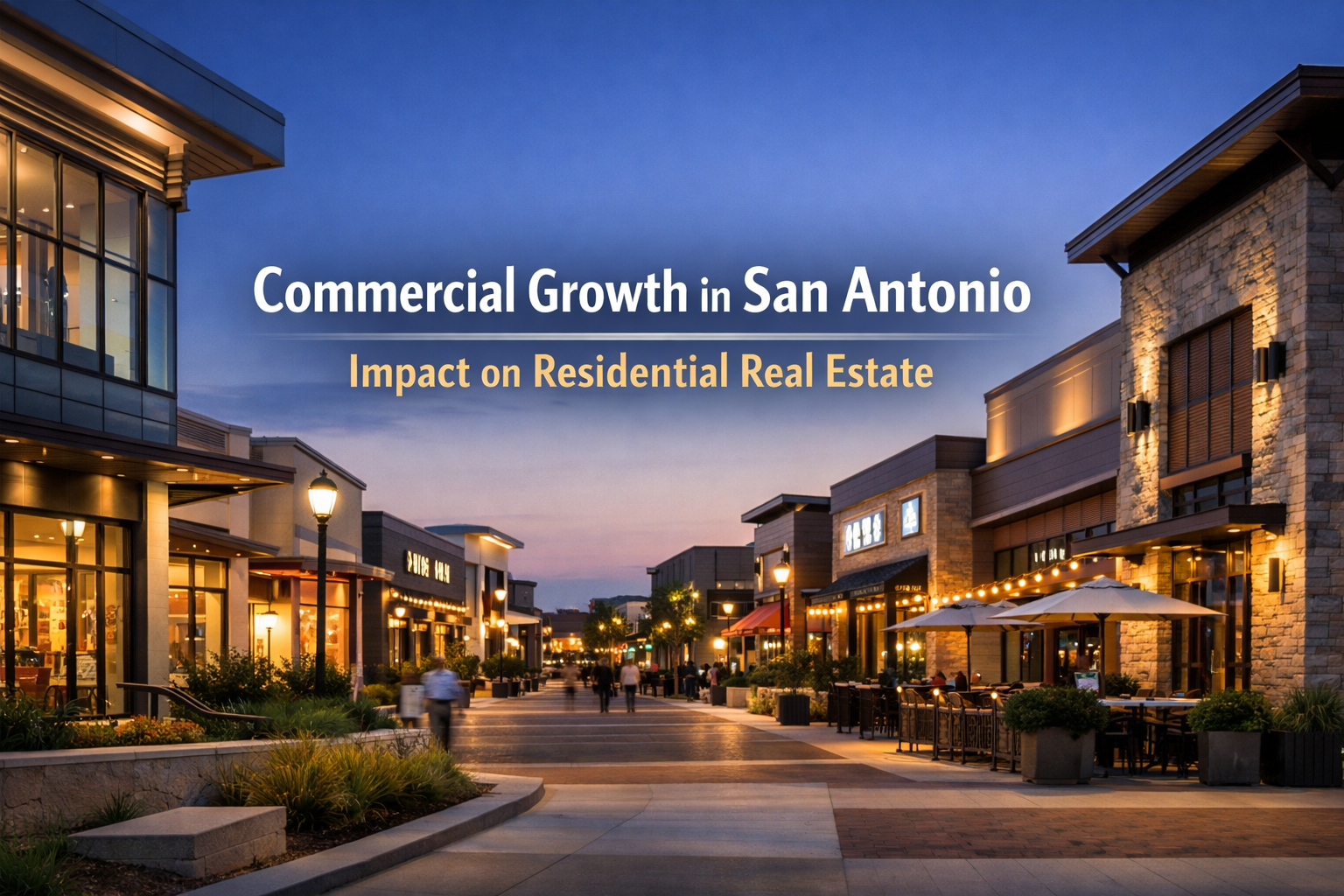
Commercial development and residential real estate markets exist in symbiotic relationship. Where businesses locate influences where people choose to live. Employment centers, retail districts, and commercial corridors create housing demand as workers seek convenient access to jobs and services. Understanding commercial development trends helps buyers anticipate which neighborhoods will experience growth, where new amenities will appear, and how business activity affects property values.
San Antonio's evolving commercial landscape includes corporate headquarters relocations, technology sector expansion, healthcare system growth, retail development following residential rooftops, and infrastructure supporting diverse industries. These trends create ripple effects throughout residential markets as buyers respond to new employment opportunities and improved neighborhood services.
This guide examines current commercial development trends in San Antonio, how business growth affects residential real estate, and what buyers should understand about the relationship between commercial activity and housing markets.
What Major Commercial Trends Are Shaping San Antonio?
Understanding broad commercial patterns helps buyers interpret local market dynamics.
Corporate Relocations and Expansions:
San Antonio continues attracting corporate relocations and expansions from higher cost markets. Companies seek:
- Lower operating costs compared to coastal markets
- Skilled workforce availability
- Business-friendly regulatory environment
- Texas tax advantages including no state corporate income tax
- Quality of life supporting employee recruitment
These relocations bring employment ranging from hundreds to thousands of positions, creating immediate housing demand from relocating employees and longer-term demand from local hiring.
Technology Sector Growth:
While not matching Austin's technology concentration, San Antonio's technology sector grows steadily:
- Cybersecurity companies attracted by military and government presence
- Software development firms
- Data centers supporting cloud infrastructure
- Technology services supporting diverse industries
Technology jobs typically offer above-average compensation supporting housing demand at various price points.
Healthcare Industry Expansion:
Healthcare represents one of San Antonio's largest and fastest growing employment sectors:
- Hospital system expansions throughout the metro
- Medical office development following population growth
- Research facilities affiliated with health science centers
- Specialized treatment centers
- Supporting medical services and suppliers
Healthcare employment provides stable, recession-resistant jobs supporting sustained housing demand.
Logistics and Distribution:
San Antonio's central Texas location and transportation infrastructure attract logistics operations:
- Distribution centers serving regional markets
- E-commerce fulfillment facilities
- Transportation and warehousing operations
- Supply chain management centers
While these operations locate in specific areas, they create employment affecting housing demand throughout the metro.
Tourism and Hospitality:
San Antonio's tourism industry continues evolving:
- Hotel development supporting convention and leisure travel
- Restaurant and entertainment expansion
- Attractions drawing visitors year-round
- Supporting service industries
Tourism employment affects housing demand particularly for service sector workers.
How Do Employment Centers Affect Residential Patterns?
Commercial development concentrations create predictable residential demand patterns.
USAA and Northwest Corporate Corridor:
USAA's massive campus near Interstate 10 and Loop 1604 anchors the Northwest corporate corridor. Surrounding business parks host technology companies, professional services, and corporate offices.
This employment concentration drives housing demand throughout Northwest San Antonio as workers seek proximity. Master planned communities, established neighborhoods, and new construction developments throughout the area serve corridor employees.
Medical Center Employment:
The South Texas Medical Center complex and distributed hospital systems throughout the metro employ tens of thousands. Medical professionals, researchers, administrative staff, and support workers create sustained housing demand.
North Central and Northwest neighborhoods particularly benefit from Medical Center proximity, though healthcare workers live throughout the metro based on personal preferences and household situations.
Downtown Corporate and Government:
Downtown San Antonio hosts government offices, financial institutions, legal firms, and corporate headquarters. While some companies have relocated to suburban campuses, downtown maintains significant employment concentration.
Central and near-downtown neighborhoods attract downtown workers valuing short commutes and urban amenities.
Military Installations:
Joint Base San Antonio's three installations create substantial employment through uniformed personnel, civilian workers, and contractors. Military employment drives housing demand in communities convenient to Lackland AFB, Fort Sam Houston, and Randolph AFB.
Emerging Employment Nodes:
New employment centers continue developing:
- Port San Antonio's aerospace and technology tenants
- Brooks City-Base redevelopment
- Interstate 35 corridor growth serving both San Antonio and Austin markets
These emerging centers create new residential demand patterns as employment grows.
What Retail Development Patterns Affect Neighborhoods?
Retail follows residential growth while also influencing housing desirability.
Grocery-Anchored Centers:
Major grocery stores anchor shopping centers providing essential services. Neighborhoods gaining grocery access become more convenient and attractive to buyers who previously faced longer drives for basic shopping.
Grocery development signals builder and retailer confidence in area demographics and growth trajectory.
National Chain Presence:
National restaurant chains, retailers, and service businesses follow population density and household income thresholds. Areas attracting these chains demonstrate market validation and provide amenities buyers expect.
However, chain proliferation can also signal commercial saturation and potential overbuilding.
Local and Regional Concepts:
San Antonio's local restaurant scene and regional retailers create neighborhood character distinct from national chain dominance. Areas with thriving local businesses often attract buyers seeking unique community identity.
Mixed-Use Development:
Newer mixed-use projects combine residential, retail, dining, and entertainment in walkable environments. These developments appeal to buyers seeking urban lifestyles without downtown location requirements.
Mixed-use success varies based on execution quality, location, and market timing.
How Does Commercial Development Affect Property Values?
Business activity influences residential values through multiple mechanisms.
Employment Accessibility:
Properties convenient to major employment centers command premiums reflecting commute time savings and quality of life benefits. As new employment develops, nearby residential areas often experience appreciation.
Amenity Access:
Retail and service business proximity adds value by reducing travel for daily needs. Neighborhoods gaining comprehensive retail, dining, and service options become more self-contained and convenient.
Tax Base Support:
Commercial property tax revenue supports municipal services including schools, infrastructure, and public safety. Strong commercial bases can reduce residential tax burdens or fund superior services.
Development Momentum:
Commercial investment signals market confidence and often catalyzes additional development. Areas attracting business activity tend to continue attracting investment creating self-reinforcing growth patterns.
Negative Impacts:
However, commercial development can also negatively affect nearby residential properties through:
- Traffic increases creating congestion and noise
- Visual impacts from commercial buildings and signage
- 24-hour operations affecting residential tranquility
- Incompatible uses near residential areas
Zoning, buffering, and development standards mitigate these impacts with varying success.
What Areas Are Experiencing Commercial Growth?
Different San Antonio areas experience distinct commercial development patterns.
Northwest Corridor:
Continued employment center expansion, retail following residential growth, and infrastructure supporting business activity characterize Northwest development.
Far West Side:
Following residential development along Potranco Road and beyond, commercial development gradually expands westward though lagging residential growth.
Northeast Corridor:
Growth along Interstate 35 toward Austin attracts logistics, distribution, and businesses serving both metros. Schertz, Cibolo, and surrounding areas benefit from this corridor development.
Medical Center Expansion:
Healthcare facilities continue expanding throughout the metro, not just in the traditional Medical Center area. Distributed medical development creates employment nodes throughout San Antonio.
Downtown Redevelopment:
Downtown transformation includes mixed-use projects, adaptive reuse of historic buildings, and residential development attracting urban-focused businesses and services.
How Should Buyers Factor Commercial Trends Into Decisions?
Understanding business development helps buyers make strategic choices.
Employment Accessibility Evaluation:
Buyers should consider:
- Proximity to current employment locations
- Emerging employment centers that may become relevant
- Industry concentrations matching career paths
- Economic diversity reducing dependence on single sectors
Amenity Development Anticipation:
Areas experiencing residential growth will eventually attract retail and services. However, timing varies. Buyers in developing areas should research planned commercial development understanding it may take years to materialize.
Traffic and Quality of Life Impacts:
Commercial growth brings both convenience and challenges. Evaluating how business development affects daily life helps buyers determine whether trade-offs are acceptable.
Long-Term Value Considerations:
Commercial vitality supports property values through employment access, amenity availability, and development momentum. Areas attracting business investment often outperform those lacking commercial activity.
What Commercial Development Signals Should Buyers Watch?
Certain indicators suggest neighborhood trajectories and investment.
Infrastructure Investment:
Road improvements, utility expansions, and public infrastructure often precede commercial development. Areas receiving infrastructure attention may attract future business activity.
Land Use Changes:
Rezoning from residential or agricultural to commercial use signals planned development. Monitoring zoning changes helps buyers anticipate neighborhood evolution.
Major Employer Announcements:
Corporate relocations, expansions, or headquarters decisions create immediate housing demand and long-term area impacts. Following business news helps buyers identify emerging opportunities.
Retail Leasing Activity:
High-profile retail leases and restaurant openings indicate market strength. Conversely, vacancy increases and store closures signal weakness.
Expert Insight from Tami Price, REALTOR®
"I watch commercial development trends closely because they tell me where residential demand will strengthen. When major employers announce expansions or new developments break ground, housing markets respond. Over nearly two decades, I have seen how business growth drives residential appreciation and neighborhood transformation. Buyers who understand these connections make smarter location decisions. Commercial activity is not just background noise. It is fundamental to understanding where San Antonio is heading and which neighborhoods will thrive."
Tami Price, REALTOR®, Broker Associate, monitors commercial development throughout approximately 1,000 closed transactions, connecting business trends to residential market implications.
Three Key Takeaways for San Antonio Buyers
- Commercial development and residential markets interact dynamically. Employment centers create housing demand while retail follows population growth. Understanding these relationships helps buyers anticipate neighborhood evolution and value appreciation.
- Major employment concentrations drive residential patterns. Areas convenient to USAA, Medical Center, downtown, and military installations attract workers seeking proximity. Emerging employment nodes create new demand patterns as they develop.
- Commercial vitality supports property values long-term. Neighborhoods attracting business investment, retail development, and employment growth generally outperform areas lacking commercial activity. However, buyers must balance convenience benefits against traffic and quality of life impacts.
Frequently Asked Questions
Q: How do I research commercial development in areas I am considering?
A: City planning departments publish development proposals and zoning changes. Local business journals cover major announcements. Economic development agencies promote business relocations and expansions. Your real estate agent can provide context about planned developments and their likely impacts.
Q: Does commercial development always increase property values?
A: Not always. Appropriate commercial development supporting neighborhood needs generally adds value. However, incompatible commercial uses, excessive traffic generation, or poor buffering can negatively affect nearby residential properties. Location, scale, and use type all matter.
Q: Should I buy near developing employment centers?
A: Proximity to employment often provides value through reduced commutes and sustained demand. However, consider whether the employment matches your career field, household employment needs, and lifestyle priorities. Employment center proximity alone should not drive decisions without considering complete circumstances.
Q: What if planned commercial development does not materialize?
A: Commercial development depends on market conditions, tenant demand, and financing availability. Announced plans do not always proceed as initially envisioned. Buyers should consider current conditions rather than banking entirely on future development promises.
Q: How does San Antonio's commercial growth compare to Austin?
A: Austin experiences more technology sector concentration and faster overall growth. San Antonio's commercial development is more diversified across healthcare, military, tourism, and varied industries. This diversity provides economic stability though potentially slower appreciation than Austin's tech-driven markets.
Q: Do commercial areas affect school quality?
A: Indirectly. Commercial development supports tax bases funding schools and attracts employers whose workers prioritize education quality. However, individual school performance depends on numerous factors beyond just commercial activity. Research specific schools rather than assuming commercial strength guarantees school quality.
The Bottom Line
Commercial development trends fundamentally shape residential real estate markets by creating employment, attracting workers, and providing amenities that make neighborhoods more desirable. Understanding how business growth affects different San Antonio areas helps buyers make informed decisions about where to purchase and what future appreciation potential exists.
From corporate relocations through retail expansion to emerging employment centers, commercial activity signals market confidence and creates demand supporting property values. However, buyers must balance commercial proximity benefits against traffic impacts and quality of life considerations.
For those considering homes throughout San Antonio, monitoring commercial development trends, understanding employment center locations, and evaluating how business activity affects neighborhoods improves decision quality and long-term satisfaction.

Contact Tami Price, REALTOR® | San Antonio, TX
Tami Price, REALTOR®, Broker Associate, and USAF Veteran, helps buyers understand how commercial development trends affect residential real estate decisions. With nearly two decades of San Antonio experience and approximately 1,000 closed transactions, Tami connects business growth patterns to neighborhood opportunities across all market areas.
Recognized as a RealTrends Verified top San Antonio agent and backed by 646+ five-star reviews and recommendations across platforms including Google, Zillow, Realtor.com, FastExpert, and Real Satisfied, Tami delivers results clients trust.
Tami Price, REALTOR®, Broker Associate
📞 210 620 6681
Tami Price's Specialties
- Commercial development impact on residential real estate
- San Antonio neighborhoods and growth patterns
- Employment center proximity and commute strategy
- New construction in developing corridors
- First time buyers and move-up buyers
- Military relocation throughout San Antonio
Disclaimer
This blog provides general educational information about commercial development trends and does not constitute professional advice regarding property investment, employment, or business activity. Commercial development plans, business relocations, and market conditions are subject to change. Individual circumstances vary significantly. Readers should conduct their own research regarding specific properties, developments, and market areas. Consult with qualified professionals including licensed real estate agents regarding specific situations. Tami Price, REALTOR®, is licensed in the State of Texas.
Categories
- All Blogs (642)
- Home Buying (21)
- Neighborhood Guides (41)
- 10 Incentive and Rate Buydown Questions (1)
- 10 Military Neighborhood (1)
- 10 Mistakes Sellers Make (1)
- 10 Strategies to Coordinate a Same Day Close (1)
- 12 Lifestyle Questions to Move In (1)
- 12 PCS What Ifs (1)
- 12 Photos and Marketing Assets (1)
- 13 PCS Hunting Trip Tips (1)
- 14 Design Center Decisions (1)
- 15 Red Flags Touring Home in San Antonio (1)
- 2026 Market (1)
- 30 days after closing your home (1)
- 7 Offer Terms Beyond Price (1)
- 7 VA Specific Questions (1)
- 78015 Ranked One (1)
- 8 Bridge (1)
- 8 Myths Buyers Believe about Down Payments (1)
- 8 Reasons VA Buyers Love New Construction (1)
- 9 Mistakes Move Up Buyers Make (1)
- 9 Questions to Decide If You Keep Your PCS Home (1)
- 9 Timeline Questions Every Buyer Need to Ask (1)
- 9 Warranty Questions to Ask (1)
- 9 Ways to Attract VA & Military Buyers (1)
- 90 days before your move (1)
- About Tami Price (6)
- Active Adult Homes (1)
- Affordable Communities (2)
- Affordable Homes (1)
- Affordable Housing & Community Development (3)
- Agent Qualifications and Credentials (1)
- Agent Qualifications and Experience (1)
- Agent Recognition (3)
- Agent Selection (1)
- AI and Real Estate Tools (1)
- Alamo Heights (4)
- Alamo Heights ISD (1)
- Alamo Ranch (2)
- Amenities in Helotes, Texas (3)
- Appraisals (1)
- Arts and Culture (1)
- Awards and Recognition (7)
- Balcones Creek (1)
- Best Neighborhoods to Live in Cibolo, TX (3)
- Best Neighborhoods to Live in San Antonio (15)
- Best Places to Live in Northeast Inner Loop: A Neighborhood Guide (1)
- Bexar County Property Tax (1)
- Bexar County Real Estate (3)
- Blue Tape Walkthrough (1)
- Boerne Home Sellers (1)
- Boerne Texas (4)
- Builder Contracts & Warranties (3)
- Builder Incentives (1)
- Builder Warranties (1)
- Buyer (64)
- Buyer Activity San Antonio (1)
- Buyer and Seller Guidance (3)
- Buyer Due Diligence (1)
- Buyer Education (45)
- Buyer Guide (9)
- Buyer Guides (7)
- Buyer Protection Strategies (1)
- Buyer Representation (1)
- Buyer Representation Expertise (1)
- Buyer Resources (91)
- Buyer Strategy (2)
- Buyers (13)
- Buyers Agent (1)
- Buying a Foreclosed Home in San Antonio (10)
- Buying a Home (4)
- Buying a Home in San Antonio (6)
- Buying Near JBSA (1)
- Buying Timeline (1)
- Buying vs Renting (1)
- Castroville, TX (8)
- Central Texas Growth (1)
- Choosing a Real Estate Agent (1)
- Choosing an Agent (1)
- Cibolo Communities (1)
- Cibolo Home Sellers (1)
- Cibolo TX (12)
- Client Reviews and Testimonials (1)
- Client Satisfaction (1)
- Client Stories (1)
- Client Testimonial (4)
- Clients review (4)
- Closing (1)
- Cobblestone (1)
- Comal County (1)
- Commercial & Retail Development (2)
- Commercial Development (1)
- Community (1)
- Community Development (2)
- Community Development and Real Estate (1)
- Community Guides (1)
- Community Investment Impact (1)
- Community Spotlights (1)
- Commuter Neighborhoods (1)
- Cons of Living in Helotes, TX (4)
- Conservation Communities (1)
- Contingency Questions (1)
- Converse Home Sellers (1)
- Converse Homes For Sale (3)
- Converse Real Estate (1)
- Converse TX (10)
- Cost of Living Guides (1)
- Cost of Living in San Antonio TX (23)
- Custom Homes (5)
- Davis Ranch (1)
- Days on Market (1)
- Down Payment Assistance (1)
- Downtown Revitalization (1)
- Downtown San Antonio (2)
- Dual Military (1)
- East Side Living (1)
- Economic Development (1)
- Education, Texas Hill Country (1)
- Emerald Pointe (1)
- Employment (1)
- Employment Corridors (1)
- Encino Forest (1)
- Equity and Pricing Strategy (2)
- Equity Q&A (1)
- Established Communities (3)
- Events in San Antonio (34)
- Expert Advice from Tami Price, Realtor® (7)
- Fair Oak Ranch (1)
- Family Homes (3)
- FAQ (1)
- Far Northwest San Antonio (1)
- Far West San Antonio (1)
- Farmer Markets in San Antonio (1)
- Fastest Growing Zip Codes in America (1)
- Featured Homes for Sale (2)
- Featured Properties (1)
- Final Walkthrough (1)
- Financial Planning (11)
- Financing Strategy (1)
- First Time Buyers (23)
- First Time Sellers (1)
- First-Time Buyers (6)
- First-Time Homebuyer Resources (4)
- First-Time Homebuyer Tips (2)
- First-Time Homebuyers (6)
- First-Time Investors (1)
- Fort Sam Houston (3)
- Fort Sam Houston Real Estate (1)
- Fort Sam Houston, TX (2)
- Fox Grove (1)
- FSBO vs Agent Representation (1)
- Future Rental (1)
- Gated Communities (5)
- Golf Communities (1)
- Great Northwest (1)
- Greater San Antonio Housing Trends (2)
- Greater San Antonio Real Estate (5)
- Growth and Development (11)
- HELOC (1)
- Helotes Home Sellers (1)
- Hill Country (1)
- Hill Country Communities (2)
- Hill Country Development (1)
- Hill Country Homes for Sale (1)
- Hill Country Real Estate (2)
- Hill Country Retreat (1)
- Historic Districts (5)
- Historic Neighborhoods (4)
- Holiday Guide (1)
- Home Buying (7)
- Home Buying Education (3)
- Home Buying Guide (7)
- Home Buying Process (8)
- Home Buying Strategy (2)
- Home Buying Tips (5)
- Home Energy Efficiency San Antonio (5)
- Home Financing (3)
- Home Improvement ROI (1)
- Home Inspections (3)
- Home Maintenance (1)
- Home Preparation (2)
- Home Pricing Strategy (14)
- Home Renovation for Resale (1)
- Home Selling (12)
- Home Selling Guide (12)
- Home Selling Strategies (3)
- Home Selling Strategy (3)
- Home Selling Tips (23)
- Home Staging and Updates (2)
- Home Values (2)
- Homebuyer Education (15)
- Homebuyer Resources (1)
- Homebuying Guide (1)
- Homebuying Tips (3)
- Homeowner (32)
- Homeowner Tax Benefits (1)
- Homeownership Costs (1)
- Homes for Sale (2)
- Homes for sale near Lackland AFB (2)
- Homestead amenities (1)
- Horizon Pointe (1)
- House Hunting Guide (1)
- Housing Development (1)
- Housing Market Updates (3)
- How to Buy a House in San Antonio TX (43)
- Hunters Ranch (1)
- Hybrid (1)
- In Person (1)
- Incorporated Cities (6)
- Industry News (2)
- Industry Recognition (1)
- Infrastructure & Growth Projects (2)
- Interest Rates (2)
- Invest in San Antonio (32)
- Investment Opportunities (1)
- Investment Property San Antonio (3)
- JBSA (8)
- JBSA Housing (11)
- JBSA Real Estate (2)
- JBSA Resources (7)
- Joint Base San Antonio (4)
- Joint Base San Antonio Housing (1)
- Judson ISD (2)
- Lackland AFB (5)
- Lackland AFB Housing (1)
- Land Use Planning (1)
- Lera MLS (15)
- Lifestyle & Community Growth (2)
- Lifestyle & Local Growth (1)
- Lifestyle Communities (1)
- Listing Preparation (1)
- Listing Strategy (1)
- Live Oak (1)
- Living in San Antonio, TX (44)
- Living Near Randolph AFB (5)
- Loan Programs (1)
- Local Development News (2)
- Local Market Insights (4)
- Local News Around San Antonio (1)
- Luxury Communities (3)
- Luxury Homes (4)
- Luxury Real Estate (2)
- MacArthur Park (1)
- Making Offers on Homes (1)
- Market Analysis (24)
- Market Conditions (47)
- Market Expertise (1)
- Market Insights (5)
- Market Strategy (2)
- Market Timing (2)
- Market Trends (6)
- Market Trends & Insights (2)
- Market Update (17)
- Market Update 2026 (1)
- Market Updates (16)
- Master Planned Communities (12)
- Medical Center Area Real Estate (1)
- Medina Valley ISD (2)
- Midtown Living (1)
- Military & Economic Impact (3)
- Military Buyers (3)
- Military Communities (1)
- Military Families (1)
- Military Family Resources (1)
- Military Homebuying (3)
- Military Homeownership (1)
- Military Housing (2)
- Military Housing Market in Texas (14)
- Military Life in San Antonio (2)
- Military Neighborhoods (1)
- Military PCS Relocations (3)
- Military Real Estate (2)
- Military Relocation (99)
- Military Relocation & VA Loans (10)
- Military Relocation San Antonio (4)
- Military Relocation Services (3)
- Military Relocation to San Antonio (46)
- Military Relocations (18)
- Military Relocations & VA Home Loans (5)
- MLS Accuracy & Data Transparency (1)
- Mortgage Programs (1)
- Mothers Day in San Antonio (1)
- Move to Boerne TX (15)
- Move to Castroville TX (9)
- Move to Converse TX (14)
- Move to New Braunfels (1)
- Move to North San Antonio (16)
- Move to San Antonio TX (64)
- Move to Selma TX (17)
- Move to Shertz TX (10)
- Move to Texas (45)
- Move Up Buyer Resources (1)
- Move Up Buyers (24)
- Move-In Ready Homes (2)
- Move-In Ready Homes San Antonio (2)
- Move-Up Buyers (2)
- Moving to Helotes, TX (14)
- Moving to San Antonio (61)
- MUD Taxes (1)
- Natalia Homes For Sale (1)
- Near East Side Living (1)
- Negotiation Strategy (2)
- Neighborhood Amenities (1)
- Neighborhood Guides (7)
- Neighborhood Spotlights (3)
- Neighborhoods near Randolph AFB (9)
- New Braunfels (4)
- New Braunfels Homes For Sale (1)
- New Braunfels News (2)
- New Braunfels Real Estate (2)
- New Construction (62)
- New Construction Communities (1)
- New Construction Homes (12)
- New Construction Homes San Antonio (5)
- New Construction vs Resale (2)
- New Construction Without Customization (1)
- New Construction Without the Wait (1)
- New Contruction Cost (1)
- New Listing (12)
- News (21)
- News & updates (23)
- No City Tax (1)
- No HOA Homes (1)
- North Central San Antonio (5)
- North East ISD (4)
- North San Antonio (7)
- North Side Neighborhoods (1)
- North Side San Antonio Development (1)
- Northeast Inner Loop (1)
- Northeast Inner Loop Neighborhoods (1)
- Northeast San Antonio (1)
- Northside ISD (5)
- Northwest San Antonio (6)
- Northwest San Antonio Real Estate (2)
- Northwood (1)
- Olympia Hills (1)
- One-Story Homes (1)
- Outdoor Living (1)
- PCS and JBSA (2)
- PCS checklist (1)
- PCS Guide (4)
- PCS Moves (12)
- PCS Moves to Joint Base San Antonio (4)
- PCS Planning (16)
- PCS Randolph AFB (15)
- PCS Relocation (1)
- PCS Resources (6)
- PCS San Antonio (42)
- PCS to San Antonio (38)
- PID Assessments (1)
- Pinon Creek (1)
- Pipe Creek (1)
- Places to Eat Near Randolph AFB (1)
- Pool Homes (1)
- Pre Approval (1)
- Pre-Listing Preparation (2)
- Pre-Listing Process (1)
- Prescott Oaks (1)
- Preserve at Medina (1)
- Pricing and Marketing Strategy (3)
- Professional Awards and Achievements (2)
- Professional Real Estate Representation (1)
- Property Tax Exemptions Texas (1)
- pros and cons living in Converse TX (3)
- Pros and Cons Living in Selma TX (6)
- Pros and Cons of Living in Castroville, TX (4)
- Pros and Cons of Living in San Antonio (30)
- PT500 List (1)
- Purchase Negotiation (1)
- Quick Close Real Estate (1)
- Randolph AFB Neighborhoods (2)
- Real Estate (1)
- Real Estate Advice (1)
- Real Estate Agent Recognition (6)
- Real Estate Agent Selection (2)
- Real Estate Agent Value (1)
- Real Estate Consultation (1)
- Real Estate Finance (1)
- Real Estate Financing (1)
- Real Estate Impact (1)
- Real Estate Investment San Antonio (1)
- Real Estate Market Trends (3)
- Real Estate Professional Designations (1)
- Real Estate Strategy (1)
- Real Estate Technology & Trends (1)
- Real Estate Tips (1)
- Real Estate Tips and Guides (2)
- Real Estate Trends (2)
- RealTrends Verified (1)
- Relocating to San Antonio (2)
- Relocation (4)
- Relocation Resources (2)
- Relocation to San Antonio (49)
- Remote Homebuying (1)
- Rental Housing (1)
- Rental Property (1)
- Rental Strategy (1)
- Resale Properties (1)
- Retail Development (1)
- Retire in Boerne TX (10)
- Retire in San Antonio (31)
- Retirement Communities (1)
- Reviews and Recognition (1)
- Rockwall Ranch (1)
- Rural Living (2)
- SABOR (27)
- San Antonio Buyer Resources (2)
- San Antonio Communities (3)
- San Antonio Community Events (1)
- San Antonio Growth (1)
- San Antonio Home Buying and Selling (2)
- San Antonio Home Buying Guide (5)
- San Antonio Home Improvement (1)
- San antonio home prices (3)
- San Antonio Home Sellers (3)
- San Antonio Homeowner Guide (1)
- San Antonio Homes for Sale (12)
- San Antonio Housing Market (2)
- San Antonio Housing Market & Mortgage Financing (1)
- San Antonio Housing Market Analysis (1)
- San Antonio Housing Trends & Market Analysis (3)
- San Antonio Lifestyle Amenities (1)
- San Antonio Listing (1)
- San Antonio Living (1)
- San Antonio Market (3)
- San Antonio Market Updates (7)
- San Antonio Military Relocation (3)
- San Antonio Neighborhoods (48)
- San Antonio New Construction & Master-Planned Communities (2)
- San Antonio New Home Communities (1)
- San Antonio News (22)
- San Antonio Property Taxes (2)
- San Antonio Real Estate (163)
- San Antonio Real Estate Agents (6)
- San Antonio Real Estate Excellence (1)
- San Antonio Real Estate Guide (6)
- San Antonio Real Estate Market (32)
- San Antonio Real Estate Market Analysis (2)
- San Antonio REALTOR Awards (1)
- San Antonio Seller Resources (2)
- San Antonio Sellers (1)
- San Antonio Spec Homes (1)
- San Antonio Spurs Community Programs (1)
- San Antonio Urban Living (1)
- Scenic Loop (1)
- Schertz Home Sellers (1)
- Schertz Real Estate (1)
- Schertz, TX (11)
- School Information (1)
- SCUCISD Schools (1)
- Secured Quick Offer (1)
- Sell Home In San Antonio TX (50)
- Seller (50)
- Seller Education (24)
- Seller Guide (4)
- Seller Guides (1)
- Seller Representation Expertise (1)
- Seller Resources (69)
- Seller Should Understand (1)
- Seller Strategy (3)
- Seller Tips (2)
- Sellers (10)
- Selling A Home in San Antonio (49)
- Selling Your San Antonio Home (3)
- Selma TX (9)
- Single-Story Homes (4)
- Smart Homes (1)
- Solar Homes (3)
- Southtown (1)
- Spec Homes and Inventory Homes (2)
- Stone Oak (2)
- Suburban Housing Growth (2)
- Suburban Living (2)
- Talise De Culebra (1)
- Terrell Hills (2)
- Texas Acreage Properties (4)
- Texas Homestead Exemption (1)
- Things to do in San Antonio TX (16)
- Things to do Near Randolph AFB (3)
- Time Planning (1)
- Time-Sensitive Home Buying (1)
- Timing Strategy (1)
- Tips for Buying New Construction (9)
- Top Real Estate Agent in San Antonio (3)
- Transaction Coordination (1)
- Transportation Infrastructure (1)
- Two-Story Homes (2)
- Universal City (1)
- Updated Homes (2)
- Upscale Communities (1)
- Urban Communities (2)
- Urban Living (1)
- Urban Neighborhoods (4)
- VA Buyers (1)
- VA Home Loan Benefits (3)
- VA Loan Assumptions (3)
- VA loan benefits (27)
- VA Loan Guidance (1)
- VA Loan Home Buying Assistance (2)
- VA Loans (71)
- VA Loans and Military Benefits (3)
- VA Loans and Military Home Buying (3)
- VA Loans San Antonio (41)
- VET Benefits Living in San Antonio (3)
- Veterans Resources (3)
- Village Northwest (1)
- Virtual Buyers (1)
- Von Ormy Homes For Sale (1)
- week in sales (40)
- Weekly Sales Report (41)
- West San Antonio (2)
- West San Antonio Real Estate (1)
- Windcrest Homes for Sale (1)
Recent Posts