$20 Million Plan Aims to Curb Development and Preserve Land in Kendall County
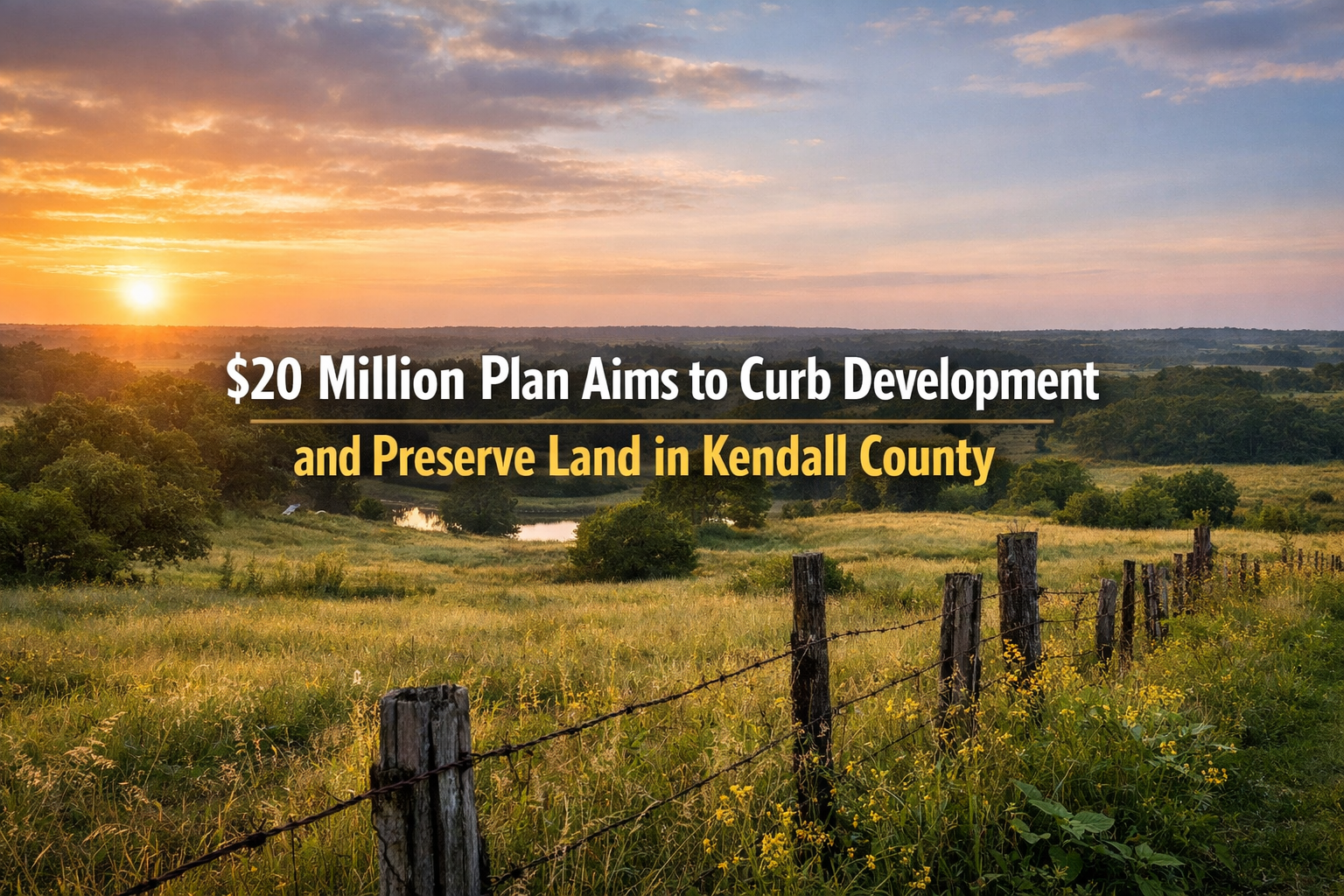
Kendall County is making substantial moves to preserve its natural landscape and protect rural character in the face of rapid regional growth that has transformed the area over recent years. In early 2026, county leaders confirmed significant progress on a $20 million voter-approved effort to limit future development through conservation easements and targeted land acquisitions. One of the largest transactions yet, a pending $11.25 million deal for 310 acres near the Esperanza community, signals just how seriously the county is taking its mission to balance growth with preservation of the Hill Country character that attracts residents in the first place.
This conservation initiative directly shapes the future of housing, zoning, and property dynamics in Kendall County. The investment reflects community values expressed through Proposition A's 2022 approval, where voters chose to fund land preservation even while the county was experiencing some of the nation's fastest growth. The tension between attracting new residents who seek Hill Country living and protecting the qualities that make the area desirable creates complex dynamics that buyers and sellers should understand.
For those considering buying a home in San Antonio or the surrounding Hill Country including Boerne, understanding how local land conservation affects development patterns provides valuable context for evaluating different areas. Protected land influences where future development can occur, which areas will maintain rural character, and how growth pressure may redirect to areas without conservation restrictions.
This guide explores what Kendall County's conservation initiative involves, how Proposition A funds are being allocated, what the pending Esperanza area deal means, how conservation easements work and what they restrict, how buyers and sellers are affected by these patterns, and what the initiative reveals about community priorities. Whether you live in Kendall County, are considering Hill Country purchase, or want to understand how conservation shapes development patterns, this initiative merits attention.
What Is Proposition A and What Does It Fund?
Understanding Proposition A provides foundation for appreciating the conservation activity occurring in Kendall County. The voter-approved bond reflects community decisions about growth management and land preservation. The initiative's structure and requirements shape how funds are being deployed.
In 2022, Kendall County voters approved Proposition A, a $20 million bond specifically intended to preserve open spaces and natural land by securing conservation easements. These voluntary agreements between landowners and conservation entities limit development in perpetuity, permanently restricting what can be built on protected properties. The voter approval demonstrated community support for actively managing growth patterns rather than allowing market forces alone to determine land use.
Q: What requirements govern how Proposition A funds must be spent?
A: To remain compliant with bond requirements, the county must spend 85% of the funds, approximately $17 million, by June 2026. This deadline creates urgency for identifying and completing conservation transactions. As of early 2026, about $3.16 million has been spent protecting over 2,320 acres, with approximately $13.84 million still requiring allocation before the mid-2026 deadline. The pending $11.25 million Esperanza area transaction would account for substantial portion of remaining funds if completed.
The structure requiring expenditure by specific deadline means conservation activity will continue actively through mid-2026 as the county works to meet bond requirements. Landowners interested in conservation easements and properties meeting conservation criteria are being evaluated on accelerated timelines.
Proposition A details:
- $20 million voter-approved in 2022
- Funds conservation easements and land acquisition
- 85% must be spent by June 2026
- Approximately $17 million required allocation
- $3.16 million spent to date
- Over 2,320 acres protected so far
- $13.84 million remaining to allocate
What Is the Pending Esperanza Area Conservation Deal?
The largest pending transaction under Proposition A involves property near one of Boerne's fastest-growing residential corridors. Understanding this specific deal helps illustrate how conservation activity affects development patterns. The scale and location make this transaction particularly significant.
A 310-acre property adjacent to the Esperanza development is under pending contract for $11.25 million. This single transaction would represent the largest Proposition A expenditure by substantial margin and would consume significant portion of remaining bond funds. The location near Esperanza, one of Boerne's most active residential growth areas, makes this conservation particularly impactful for future development patterns.
Q: How would the Esperanza area conservation affect surrounding development?
A: If completed, this transaction would significantly limit future growth around the Esperanza area by creating protected green buffer between existing neighborhoods and undeveloped land. Development that might otherwise occur on this 310-acre tract would be permanently prevented, redirecting growth pressure elsewhere. Residents of Esperanza and surrounding communities would gain assurance that the protected land will remain open rather than eventually becoming additional residential or commercial development.
The location choice reflects strategic thinking about where conservation provides greatest impact. Protecting land in already-developed corridors prevents further densification while preserving some open character within growth areas. Properties in more remote locations might cost less per acre but would have less impact on development patterns where growth pressure is highest.
Esperanza area deal specifics:
- 310 acres under pending contract
- $11.25 million proposed purchase
- Adjacent to Esperanza development
- Would create protected buffer
- Largest Proposition A transaction
- Strategic location for impact
- Pending approval process completion
How Do Conservation Easements Work?
Understanding conservation easement mechanics helps buyers and sellers appreciate what these arrangements mean for affected properties and surrounding areas. The permanent nature and specific restrictions distinguish easements from temporary land use designations. These legal instruments create lasting changes to property rights.
Conservation easements are voluntary legal agreements where landowners permanently restrict development rights on their property. The restrictions run with the land, meaning they apply to all future owners regardless of who holds title. A conservation trust or government entity holds the easement and monitors compliance. The landowner retains ownership and can sell the property, but development restrictions transfer with the sale.
Q: What activities are typically restricted under conservation easements?
A: Easements typically prohibit subdivision, construction of additional structures beyond what exists, and conversion of natural land to intensive uses. Specific restrictions vary by easement terms negotiated for each property. Agricultural use, ranching, and existing residential use generally continue under most easements. The permanent nature means restrictions cannot be removed by future owners who might prefer to develop the land.
All Kendall County conservation easement properties go through an approval process including application by landowner or conservation organization, review by the Proposition A committee, executive session review by county commissioners, and public hearing for community input. This process ensures transparency and community involvement in decisions about which properties receive public funding for conservation.
Conservation easement mechanics:
- Voluntary permanent restriction on development
- Runs with land binding future owners
- Conservation entity monitors compliance
- Property can still be sold with restrictions
- Agricultural and existing uses continue
- Approval process ensures oversight
- Public hearing allows community input
Why Is Kendall County Growing So Rapidly?
Understanding growth pressure helps appreciate why conservation efforts have become priority for Kendall County voters and leaders. The factors driving growth also explain why land preservation requires active intervention rather than expecting market forces to maintain open space. Context about growth dynamics informs buyer and seller decisions.
Kendall County has ranked among the fastest-growing counties in the United States repeatedly in recent years. San Antonio's expansion northward and westward has brought development pressure to areas that were rural a generation ago. Interest in Hill Country living, with its natural beauty, lower density, and distinct character from urban environments, has attracted buyers willing to commute for lifestyle benefits.
Q: What specific growth has Boerne and Kendall County experienced?
A: Boerne has seen dramatic transformation over the past decade including rapid neighborhood buildouts in communities like Esperanza, Balcones Creek, and Southglen. Retail and mixed-use projects along Highway 46 have expanded commercial options substantially. Increased traffic and utility demand have accompanied population growth. The area that was primarily ranching and small-town character has evolved into active growth corridor while attempting to maintain some of the qualities that attracted residents initially.
The growth pressure means that without active intervention, large tracts of open land are regularly targeted for new subdivisions, commercial projects, and infrastructure. Market forces alone tend toward development as landowners can typically earn more from selling for development than from maintaining agricultural or natural uses. Conservation easements interrupt this dynamic by compensating landowners for permanently forgoing development value.
Kendall County growth factors:
- Among fastest-growing US counties
- San Antonio expansion pressure
- Hill Country lifestyle appeal
- Lower density than urban areas
- Natural beauty attracting buyers
- Rapid neighborhood development
- Commercial corridor expansion
How Does Conservation Affect Home Buyers in Kendall County?
Buyers considering Kendall County properties benefit from understanding how conservation patterns affect their options and the long-term characteristics of different areas. Protected land creates different dynamics than areas without conservation restrictions. These patterns influence purchase decisions.
Homes near conserved areas may benefit from long-term open space assurance, fewer future neighbors, protected views, and natural area access that will not be developed away. Buyers who prioritize these qualities can identify properties positioned to maintain these benefits permanently rather than hoping development will not eventually occur. The certainty conservation provides has value for buyers seeking lasting character.
Q: What should buyers consider about properties near conservation easements?
A: While conservation provides open space benefits, zoning and future development around protected areas could be more limited than buyers might assume. Conservation in one area can redirect development pressure to other areas, potentially intensifying growth where restrictions do not exist. Buyers should understand both the benefits of conservation proximity and the broader development patterns conservation creates rather than assuming protected land means all surrounding areas will remain unchanged.
Buyers interested in Hill Country properties should research which areas have conservation easements and how those easements affect development potential on surrounding parcels. Properties benefiting from conservation views or adjacency may command premiums reflecting those benefits. Understanding conservation patterns helps buyers evaluate what they are paying for and whether those benefits will persist.
Buyer considerations:
- Open space assurance near conservation
- Fewer future neighbors possible
- Protected views and natural access
- Development may redirect elsewhere
- Conservation proximity may carry premiums
- Research easement locations and terms
- Evaluate long-term patterns not just current state
How Does Conservation Affect Home Sellers in Kendall County?
Sellers in Kendall County should understand how conservation patterns may affect their properties and potential buyer interest. Proximity to protected land can influence marketability and value depending on how buyers perceive conservation benefits. Understanding these dynamics helps sellers position properties appropriately.
Sellers near conserved areas can highlight the open space benefits their properties enjoy, though they should understand what conservation actually guarantees and what it does not. Proximity to protected land may attract buyers specifically seeking Hill Country character with some assurance of preservation. Marketing that accurately represents conservation benefits without overstating them serves sellers well.
Q: How might conservation affect land values and development potential for sellers?
A: For sellers of land with development potential, conservation patterns may influence buyer interest and price depending on whether their properties could be developed or are subject to restrictions. Land in areas where surrounding conservation limits future development may be valued differently than land where full development potential remains. Sellers of improved residential properties generally benefit from conservation proximity while sellers of developable land may experience mixed effects depending on specific circumstances.
Sellers should work with representation who understands how to position properties appropriately given conservation patterns. Highlighting genuine benefits while maintaining accurate representation serves both seller interests and buyer trust. The conservation initiative affects different property types differently, requiring nuanced understanding rather than generic assumptions.
Seller considerations:
- Conservation proximity as marketing point
- Buyer interest in preserved character
- Accurate representation of benefits
- Land value effects varying by situation
- Development potential considerations
- Professional positioning assistance
- Understanding specific property implications
How Does Conservation Affect Builders and Developers?
The conservation initiative affects where and how development can occur in Kendall County, creating constraints that builders and developers must navigate. Understanding these patterns helps buyers who may work with builders or consider new construction options. The initiative reshapes the development landscape.
Land availability may tighten in protected corridors as conservation removes acreage from development potential permanently. Builders seeking sites in areas affected by conservation will find fewer options than would exist without the initiative. This constraint may intensify competition for remaining developable land and affect pricing for development sites.
Q: Where might development redirect given conservation patterns?
A: Builders may need to pivot toward infill development within existing communities or look beyond areas impacted by conservation restrictions. Development pressure that cannot be accommodated in conserved areas will likely redirect to areas without restrictions, potentially accelerating growth in those locations. The pattern of conservation concentrated in certain areas while others remain available creates uneven development landscape that shapes where future neighborhoods and commercial projects appear.
Buyers considering new construction in Kendall County should understand how conservation affects where new homes will be available. Areas with active conservation may see less new inventory while other areas absorb development that might otherwise have occurred in protected zones.
Builder and developer considerations:
- Land availability tightening in protected corridors
- Competition intensifying for developable sites
- Infill development opportunities
- Development redirecting to unrestricted areas
- Uneven landscape emerging
- New construction location patterns shifting
- Site acquisition complexity increasing
What Does Conservation Reveal About Community Priorities?
The voter approval of Proposition A and ongoing conservation activity reveal community values that shape Kendall County's character and future direction. Understanding these priorities helps buyers and sellers appreciate what living in the area involves. Community choices affect individual property dynamics.
Kendall County voters chose to invest $20 million in land preservation even while experiencing rapid growth that might suggest preference for continued development. This choice indicates that maintaining Hill Country character, open spaces, and natural landscape ranks highly among community priorities. Buyers attracted to these qualities find validation that the community shares their values and is actively working to protect them.
Q: How should buyers interpret conservation activity when evaluating Kendall County?
A: Conservation investment signals that Kendall County is planning ahead rather than simply reacting to growth pressure. Communities that actively manage development tend to maintain character better than those that allow unrestricted growth. For buyers who prioritize Hill Country character and are willing to accept some constraints on where development can occur, conservation activity represents positive indicator. For buyers primarily seeking development potential or maximum flexibility, conservation may represent constraint to consider.
The initiative shows that Kendall County recognizes the tension between growth and character preservation and has chosen active management over laissez-faire approaches. This planning orientation may appeal to buyers who want assurance their community will maintain qualities that attracted them rather than transforming entirely over time.
Community priority signals:
- Voters chose preservation investment
- Character maintenance valued highly
- Active growth management preferred
- Long-term planning demonstrated
- Hill Country identity prioritized
- Development balanced with conservation
- Community values expressed through action
How Does Kendall County Conservation Compare to Other Areas?
Understanding how Kendall County's approach compares to other Hill Country and San Antonio area communities helps buyers evaluate different options. Conservation activity varies significantly across jurisdictions, affecting development patterns and community character differently. Comparison provides context for decision-making.
Not all communities have made the same choices Kendall County has made regarding conservation investment. Some areas prioritize growth and development, welcoming expansion with fewer restrictions. Others have conservation programs of varying scale and approach. Kendall County's $20 million commitment represents substantial investment that distinguishes it from communities without similar programs.
Q: How might conservation differences affect buyer choices between Kendall County and other areas?
A: Buyers who prioritize open space preservation and Hill Country character may find Kendall County's commitment attractive compared to areas without conservation programs. Those who prefer areas with maximum development potential or lower land costs might find other communities more aligned with their priorities. The conservation commitment affects property availability, pricing, and long-term character in ways that make Kendall County distinct.
Understanding these differences helps buyers match their priorities with communities most likely to deliver what they seek. Boerne and Kendall County attract buyers specifically seeking the character that conservation helps protect, while other areas may attract buyers with different priorities.
Comparison considerations:
- Conservation investment varies by community
- Some areas prioritize development over preservation
- Kendall County commitment substantial
- Character maintenance differs by approach
- Buyer priorities determine best fit
- Property availability affected by conservation
- Long-term character shaped by choices
What Should Property Owners Know About Conservation Easement Opportunities?
Landowners in Kendall County who might consider conservation easements benefit from understanding how the program works and what participation involves. The Proposition A deadline creates limited window for current opportunities. Understanding the process helps interested landowners evaluate options.
Conservation easements under Proposition A provide compensation to landowners who voluntarily restrict development on their properties. The payment reflects the development value being permanently forfeited. Landowners retain ownership and can continue existing uses while accepting restrictions on future development. The arrangement allows landowners to capture some economic value while preserving land character.
Q: What process do landowners follow to pursue conservation easement?
A: Interested landowners or conservation organizations apply for consideration. The Proposition A committee reviews applications for properties meeting conservation criteria. County commissioners conduct executive session review of qualified applications. Public hearings allow community input before final approval. The timeline pressure from the June 2026 deadline means interested landowners should engage promptly if considering participation.
Not all properties qualify for conservation easement funding. Properties must meet criteria related to conservation value, including ecological significance, scenic value, agricultural importance, or contribution to open space preservation. The committee evaluates applications against these criteria to determine which properties merit public investment.
Landowner considerations:
- Voluntary program with compensation
- Development value captured through payment
- Ownership retained with restrictions
- Existing uses generally continue
- Application and approval process required
- Deadline creates time pressure
- Conservation criteria determine eligibility
Expert Insight from Tami Price
"As a REALTOR® who works closely with clients relocating to the Hill Country, I am seeing more people value quiet space and natural scenery, but they still want access to conveniences," says Tami Price, REALTOR® and Broker Associate with Real Broker, LLC. "This land preservation initiative shows that Kendall County is planning ahead, and that is a strong signal for buyers who want long-term value in the area. Understanding how conservation patterns affect different properties helps buyers make informed decisions about where to purchase."
Price brings nearly two decades of experience and approximately 1,000 closed transactions to her work with buyers and sellers throughout San Antonio, Schertz, Cibolo, Helotes, Converse, and Boerne. Her understanding of Hill Country dynamics helps clients evaluate how conservation and development patterns affect different areas.
"The pending $11.25 million deal near Esperanza illustrates how seriously the county is taking preservation," Price explains. "When a community invests this substantially in protecting open space adjacent to one of its fastest-growing areas, that sends clear message about priorities. Buyers considering Boerne and Kendall County should understand that this community has chosen to actively manage growth rather than allowing unrestricted development."
Her recognition as a RealTrends Verified Top Agent and 14-time Five Star Professional Award Winner reflects consistent client satisfaction serving buyers and sellers navigating diverse market conditions throughout her career.
"Buyers attracted to Hill Country character should view conservation activity positively," Price notes. "It demonstrates that the community shares their values and is investing to protect the qualities that make the area special. For sellers, proximity to conserved land can be meaningful marketing point for buyers seeking those qualities. Understanding how conservation affects specific properties helps both buyers and sellers make better decisions."
Three Key Takeaways
1. Kendall County Is Actively Deploying $20 Million in Voter-Approved Funds to Preserve Hill Country Land Through Conservation Easements
Proposition A, approved in 2022, has already protected over 2,320 acres with approximately $3.16 million spent and approximately $13.84 million remaining to allocate before the June 2026 deadline. This substantial public investment reflects community choice to actively manage growth and preserve open space rather than allowing unrestricted development.
2. A Pending $11.25 Million Conservation Deal for 310 Acres Near Esperanza Would Create Protected Buffer in One of Boerne's Fastest-Growing Corridors
The strategic location adjacent to active residential development illustrates how conservation activity targets areas where growth pressure is highest. If completed, this transaction would significantly limit future development around Esperanza while preserving open space for existing and future residents of surrounding communities.
3. Buyers and Sellers in Boerne and Kendall County Should Understand How Conservation Patterns Affect Development, Property Characteristics, and Long-Term Community Direction
Those considering buying a home in San Antonio or the Hill Country should recognize that conservation activity shapes where development can occur and which areas will maintain rural character. Properties near conserved land offer open space benefits while development redirects to unrestricted areas. Understanding these patterns helps buyers and sellers make informed decisions.
Frequently Asked Questions
Q: What is Proposition A in Kendall County?
A: Proposition A is a $20 million voter-approved bond passed in 2022 to fund land conservation through easements and purchases that permanently limit future development. The county must spend 85% of funds by June 2026.
Q: Can land under a conservation easement still be sold?
A: Yes, but with legal restrictions in place that permanently limit or prohibit development. The restrictions run with the land, binding all future owners regardless of who holds title.
Q: Does this affect all of Boerne?
A: No, conservation easements apply to specific properties that have gone through the approval process. Key areas near the Esperanza development and other rural tracts are under review for possible acquisition or easement, but not all Boerne area land is affected.
Q: How much land has been conserved so far?
A: Over 2,320 acres have been placed under conservation easement through Proposition A funds, with approximately $3.16 million spent. The pending 310-acre Esperanza area deal would add substantially to protected acreage if completed.
Q: Will conservation increase property values?
A: Effects vary by property type and location. Properties near conserved land may benefit from open space assurance that some buyers value. Land with development potential subject to conservation restrictions may see different effects. Individual circumstances determine specific impacts.
Q: Why did voters approve this initiative?
A: Voter approval reflects community priority for preserving Hill Country character and managing growth. Despite rapid population growth, voters chose to invest in conservation, indicating that maintaining open space and natural landscape matters to residents.
Q: How does conservation affect where new homes will be built?
A: Conservation removes protected acreage from development potential, potentially redirecting growth to areas without restrictions. Buyers considering new construction should understand how conservation patterns affect where future neighborhoods will appear.
Q: Can landowners still apply for conservation easements?
A: Yes, though the June 2026 deadline for spending bond funds creates time pressure. Interested landowners should engage promptly. Properties must meet conservation criteria to qualify for funding.
The Bottom Line
Kendall County's commitment to preserving Hill Country landscape through the $20 million Proposition A initiative will shape where new development can occur over coming years and beyond. The conservation easements being established create permanent restrictions that protect open space while redirecting development pressure to areas without similar protections. For buyers, sellers, and investors in Boerne and Kendall County, understanding these patterns provides important context for property decisions.
The pending $11.25 million conservation deal near Esperanza illustrates the initiative's scale and strategic approach. Protecting 310 acres adjacent to one of Boerne's fastest-growing corridors creates lasting green buffer that benefits existing and future residents while limiting further development in that area. The community choice to invest substantially in conservation rather than allowing unrestricted growth reveals priorities that shape long-term character.
Whether you are buying, selling, or simply evaluating Kendall County options, understanding how local conservation affects development patterns helps you make informed decisions. Working with experienced representation who understands these dynamics translates general information into specific guidance for individual circumstances.

Contact Tami Price, REALTOR®
Whether exploring Boerne and Kendall County, evaluating Hill Country options, or navigating any home buying or selling process in the San Antonio metropolitan area, working with an experienced REALTOR® provides guidance through complex decisions. Tami Price brings local market knowledge and understanding of how development patterns affect different areas.
From conservation area evaluation to growth corridor expertise, personalized service makes the difference in successful transactions.
Tami Price, REALTOR®, Broker Associate
📞 210-620-6681
Tami Price's Specialties
- Comprehensive Buyer and Seller Representation
- Hill Country and Boerne Area Expertise
- Military Relocations and PCS Moves
- VA Loan Guidance and Assumptions
- New Construction Navigation
- Strategic Pricing and Market Analysis
- Professional Property Marketing
- First Time Buyer Education
- Move Up and Downsizing Transitions
- Residential Real Estate Throughout San Antonio, Schertz, Cibolo, Helotes, Converse, and Boerne
Disclaimer
This blog post is provided for informational purposes only and should not be construed as guarantees regarding property values, conservation outcomes, or development patterns. Information about Kendall County Proposition A and conservation activity reflects publicly available details as of the publication date and is subject to change. Conservation easement terms, approval status, and program details should be verified with Kendall County officials. Real estate decisions should be based on individual circumstances, professional guidance, and current market conditions. Tami Price, REALTOR®, and Real Broker, LLC make no warranties regarding accuracy, completeness, or applicability of information to specific circumstances.
Categories
- All Blogs (922)
- Home Buying (11)
- Neighborhood Guides (44)
- 10 Military Neighborhood (1)
- 10 Mistakes Sellers Make (1)
- 10 Strategies to Coordinate a Same Day Close (1)
- 12 Lifestyle Questions to Move In (1)
- 12 Photos and Marketing Assets (1)
- 13 PCS Hunting Trip Tips (1)
- 15 Red Flags Touring Home in San Antonio (1)
- 2026 Market (1)
- 30 days after closing your home (1)
- 7 Offer Terms Beyond Price (1)
- 78015 Ranked One (1)
- 8 Bridge (1)
- 8 Myths Buyers Believe about Down Payments (1)
- 8 Reasons VA Buyers Love New Construction (1)
- 9 Mistakes Move Up Buyers Make (1)
- 9 Questions to Decide If You Keep Your PCS Home (1)
- 9 Timeline Questions Every Buyer Need to Ask (1)
- 9 Warranty Questions to Ask (1)
- 9 Ways to Attract VA & Military Buyers (1)
- About Tami Price (6)
- Affordable Communities (2)
- Affordable Housing & Community Development (5)
- Agent Qualifications and Credentials (1)
- Agent Qualifications and Experience (1)
- Agent Recognition (3)
- Agent Selection (1)
- AI and Real Estate Tools (1)
- Alamo Heights (5)
- Alamo Heights ISD (1)
- Alamo Heights Real Estate (1)
- Alamo Ranch (2)
- Amenities in Helotes, Texas (3)
- Apartment Market (1)
- Appraisals (1)
- Arts and Culture (1)
- Awards and Recognition (7)
- Balcones Creek (1)
- Best Neighborhoods to Live in Cibolo, TX (3)
- Best Neighborhoods to Live in San Antonio (16)
- Best Places to Live in Leon Valley: A Neighborhood Guide (1)
- Best Places to Live in Northeast Inner Loop: A Neighborhood Guide (1)
- Bexar County Property Tax (1)
- Bexar County Real Estate (3)
- Boerne Home Sellers (1)
- Boerne Neighborhoods (2)
- Boerne Texas (9)
- Broadway Corridor Development (1)
- Build-to-Rent Communities (1)
- Builder Contracts & Warranties (3)
- Builder Incentives (1)
- Builder Warranties (1)
- Buyer (97)
- Buyer Activity San Antonio (1)
- Buyer and Seller Guidance (4)
- Buyer Due Diligence (1)
- Buyer Education (46)
- Buyer Guide (9)
- Buyer Guides (7)
- Buyer Protection Strategies (1)
- Buyer Representation (1)
- Buyer Representation Expertise (1)
- Buyer Resources (85)
- Buyer Strategy (2)
- Buyers (13)
- Buyers Agent (1)
- Buying a Foreclosed Home in San Antonio (10)
- Buying a Home (2)
- Buying a Home in San Antonio (6)
- Buying Timeline (1)
- Castroville, TX (8)
- Central San Antonio (1)
- Central San Antonio Development (2)
- Central Texas Growth (1)
- Choosing a Real Estate Agent (1)
- Choosing an Agent (1)
- Cibolo Communities (1)
- Cibolo Home Sellers (1)
- Cibolo TX (15)
- Client Reviews and Testimonials (1)
- Client Satisfaction (1)
- Client Stories (1)
- Client Testimonial (4)
- Clients review (4)
- Cobblestone (1)
- Comal County (1)
- Commercial & Retail Development (27)
- Commercial Development (13)
- Commercial Development Impact on Home Values (1)
- Commercial Real Estate (1)
- Community (1)
- Community Amenities (2)
- Community Development (23)
- Community Development and Real Estate (3)
- Community Events & Development (1)
- Community Infrastructure (1)
- Community Investment Impact (2)
- Community Landmarks (1)
- Community News (4)
- Community Planning (2)
- Community Revitalization (1)
- Community Spotlights (1)
- Commuter Neighborhoods (1)
- Cons of Living in Helotes, TX (4)
- Conservation Communities (1)
- Contingency Questions (1)
- Converse Home Sellers (1)
- Converse Homes For Sale (3)
- Converse Real Estate (1)
- Converse TX (10)
- Converse TX Real Estate (1)
- Cost of Living Guides (1)
- Cost of Living in San Antonio TX (25)
- CPS Energy Programs (1)
- Custom Homes (5)
- Davis Ranch (1)
- Days on Market (1)
- Deco District San Antonio (1)
- Denver Heights (1)
- Down Payment Assistance (1)
- Downtown Boerne (1)
- Downtown Development (3)
- Downtown Living (1)
- Downtown Revitalization (14)
- Downtown San Antonio (2)
- Downtown San Antonio Real Estate (5)
- Downtown San Antonio Revitalization (1)
- East Side Living (1)
- East Side Neighborhoods (1)
- East Side San Antonio (4)
- Economic Development (3)
- Economic Growth & Industry (1)
- Education, Texas Hill Country (1)
- Emerald Pointe (1)
- Employment (1)
- Employment Corridors (1)
- Encino Forest (1)
- Entertainment Economy (1)
- Equity and Pricing Strategy (2)
- Equity Q&A (1)
- Established Communities (3)
- Events in San Antonio (207)
- Expert Advice from Tami Price, Realtor® (10)
- Fair Oak Ranch (1)
- Family Activities (2)
- Family Homes (3)
- Family Living in San Antonio (1)
- FAQ (1)
- Far Northwest San Antonio (1)
- Far West San Antonio (1)
- Far Westside Real Estate (4)
- Fastest Growing Zip Codes in America (1)
- Featured Homes for Sale (2)
- Featured Properties (1)
- Financial Planning (10)
- Financing Strategy (1)
- First Time Buyers (22)
- First Time Sellers (1)
- First-Time Buyers (6)
- First-Time Homebuyer Resources (4)
- First-Time Homebuyer Tips (2)
- First-Time Homebuyers (6)
- First-Time Investors (1)
- Fort Sam Houston (3)
- Fort Sam Houston Real Estate (1)
- Fort Sam Houston, TX (2)
- Fox Grove (1)
- FSBO vs Agent Representation (1)
- Gated Communities (5)
- Golf Communities (1)
- Great Northwest (1)
- Greater San Antonio Housing Trends (2)
- Greater San Antonio Real Estate (5)
- Green Home Upgrades (1)
- Growth and Development (11)
- Healthcare (1)
- HELOC (1)
- Helotes Home Sellers (1)
- Highway 151 Corridor Growth (1)
- Hill Country Business (1)
- Hill Country Communities (2)
- Hill Country Development (3)
- Hill Country Homes for Sale (1)
- Hill Country Living (3)
- Hill Country Market Updates (1)
- Hill Country Real Estate (4)
- Historic Districts (5)
- Historic Neighborhoods (4)
- Historic Preservation (2)
- Holiday Attractions (1)
- Holiday Guide (1)
- Home Buying (7)
- Home Buying Education (3)
- Home Buying Guide (7)
- Home Buying Process (8)
- Home Buying Strategy (2)
- Home Buying Tips (6)
- Home Energy Efficiency San Antonio (4)
- Home Financing (2)
- Home Improvement ROI (1)
- Home Inspections (1)
- Home Preparation (2)
- Home Pricing Strategy (13)
- Home Renovation for Resale (1)
- Home Selling (9)
- Home Selling Guide (10)
- Home Selling Strategies (3)
- Home Selling Strategy (3)
- Home Selling Tips (22)
- Home Staging and Updates (2)
- Home Values (2)
- Homebuyer Education (15)
- Homebuyer Resources (1)
- Homebuying Guide (1)
- Homebuying Tips (3)
- Homeowner (35)
- Homeowner Tax Benefits (1)
- Homeownership Costs (1)
- Homes for Sale (2)
- Homes for sale near Lackland AFB (4)
- Homes Near Military Bases (1)
- Homestead amenities (1)
- Horizon Pointe (1)
- House Hunting Guide (1)
- Housing (1)
- Housing Community Development (1)
- Housing Development (2)
- Housing Market Updates (3)
- How to Buy a House in San Antonio TX (48)
- Huebner Oaks shopping center (1)
- Hunters Ranch (1)
- Hybrid (1)
- I-10 Corridor (1)
- I-35 Corridor (1)
- In Person (1)
- Incorporated Cities (6)
- Industrial Investment Impact (1)
- Industry News (2)
- Industry Recognition (1)
- Infrastructure & Growth Projects (26)
- Infrastructure and Sustainability (1)
- Infrastructure Development (1)
- Infrastructure Investment (1)
- Infrastructure Updates (2)
- Interest Rates (2)
- Invest in San Antonio (46)
- Investment Opportunities (2)
- Investment Property San Antonio (4)
- JBSA (9)
- JBSA Housing (11)
- JBSA Real Estate (4)
- JBSA Resources (7)
- Joint Base San Antonio (5)
- Joint Base San Antonio Housing (1)
- Judson ISD (2)
- Kendall County (1)
- La Cantera Retail Development (1)
- Lackland AFB (7)
- Lackland AFB Housing (1)
- Land Conservation (1)
- Land Use Planning (1)
- Lera MLS (14)
- Lifestyle & Community Growth (18)
- Lifestyle & Local Growth (12)
- Lifestyle Amenities (1)
- Lifestyle Communities (1)
- Listing Preparation (1)
- Listing Strategy (1)
- Live Oak (1)
- Living in San Antonio, TX (52)
- Living Near Randolph AFB (7)
- Loan Programs (1)
- Local Attractions (3)
- Local Business (1)
- Local Business & Development (9)
- Local Business & Economy (3)
- Local Business Spotlight (20)
- Local Business Support (5)
- Local Development (4)
- Local Development News (9)
- Local Market Insights (5)
- Local News (2)
- Local News Around San Antonio (2)
- Local Policy Changes (1)
- Local Real Estate News (1)
- Loop 1604 Corridor Growth (2)
- Loop 410 Corridor Development (1)
- Luxury Communities (3)
- Luxury Homes (2)
- Luxury Real Estate (1)
- Luxury Retail San Antonio (1)
- MacArthur Park (1)
- Major Developments (2)
- Making Offers on Homes (1)
- Market Analysis (26)
- Market Conditions (47)
- Market Expertise (1)
- Market Insights (5)
- Market Strategy (1)
- Market Timing (2)
- Market Trends (10)
- Market Trends & Insights (2)
- Market Update (15)
- Market Update 2026 (1)
- Market Updates (21)
- Master Planned Communities (12)
- Medical Center Area Real Estate (1)
- Medina Valley ISD (2)
- Midtown Living (1)
- Military & Economic Impact (3)
- Military Buyers (2)
- Military Communities (1)
- Military Families (1)
- Military Family Resources (1)
- Military Heritage (1)
- Military Homebuying (3)
- Military Homeownership (1)
- Military Housing (3)
- Military Housing Market in Texas (16)
- Military Life in San Antonio (2)
- Military Neighborhoods (1)
- Military PCS Relocations (3)
- Military Real Estate (2)
- Military Relocation (92)
- Military Relocation & VA Loans (10)
- Military Relocation San Antonio (4)
- Military Relocation Services (3)
- Military Relocation to San Antonio (50)
- Military Relocations (19)
- Military Relocations & VA Home Loans (5)
- Mixed-Income Housing (1)
- MLS Accuracy & Data Transparency (1)
- Mortgage Programs (1)
- Mothers Day in San Antonio (1)
- Move to Boerne TX (18)
- Move to Castroville TX (11)
- Move to Converse TX (16)
- Move to New Braunfels (1)
- Move to North San Antonio (19)
- Move to San Antonio TX (73)
- Move to Selma TX (19)
- Move to Shertz TX (13)
- Move to Texas (53)
- Move Up Buyer Resources (1)
- Move Up Buyers (20)
- Move-In Ready Homes (3)
- Move-In Ready Homes San Antonio (2)
- Move-Up Buyers (2)
- Moving to Helotes, TX (17)
- Moving to San Antonio (69)
- MUD Taxes (1)
- Natalia Homes For Sale (1)
- Near East Side Living (1)
- Negotiation Strategy (2)
- Neighborhood Amenities (1)
- Neighborhood Development (1)
- Neighborhood Guides (7)
- Neighborhood Investment (1)
- Neighborhood News (2)
- Neighborhood Revitalization (2)
- Neighborhood Spotlights (12)
- Neighborhood Updates (1)
- Neighborhoods near Randolph AFB (12)
- New Braunfels (6)
- New Braunfels Homes For Sale (1)
- New Braunfels News (3)
- New Braunfels Real Estate (3)
- New Businesses (2)
- New Construction (57)
- New Construction Communities (1)
- New Construction Homes (13)
- New Construction Homes San Antonio (5)
- New Construction vs Resale (1)
- New Construction Without Customization (1)
- New Construction Without the Wait (1)
- New Contruction Cost (1)
- New Development (3)
- New Listing (19)
- New Restaurants (3)
- News (211)
- News & updates (213)
- No HOA Homes (1)
- North Central San Antonio (5)
- North East ISD (4)
- North San Antonio (9)
- North San Antonio Real Estate (3)
- North Side Neighborhoods (1)
- North Side San Antonio Development (2)
- Northeast Inner Loop (1)
- Northeast Inner Loop Neighborhoods (1)
- Northeast San Antonio (3)
- Northside ISD (5)
- Northwest San Antonio (9)
- Northwest San Antonio Development (1)
- Northwest San Antonio Growth (1)
- Northwest San Antonio Real Estate (3)
- Northwood (1)
- Olympia Hills (1)
- One-Story Homes (1)
- Outdoor Living (1)
- Parks and Recreation (2)
- PCS and JBSA (2)
- PCS Guide (3)
- PCS Moves (12)
- PCS Moves to Joint Base San Antonio (4)
- PCS Planning (14)
- PCS Randolph AFB (17)
- PCS Relocation (1)
- PCS Resources (6)
- PCS San Antonio (46)
- PCS to San Antonio (42)
- Pearl District Area Real Estate (2)
- PID Assessments (1)
- Pinon Creek (1)
- Pipe Creek (1)
- Places to Eat Near Randolph AFB (1)
- Pool Homes (1)
- Pre Approval (1)
- Pre-Listing Preparation (2)
- Pre-Listing Process (1)
- Prescott Oaks (1)
- Pricing and Marketing Strategy (3)
- Professional Awards and Achievements (2)
- Professional Real Estate Representation (1)
- Property Tax Exemptions Texas (1)
- Property Value Enhancement (1)
- pros and cons living in Converse TX (3)
- Pros and Cons Living in Selma TX (6)
- Pros and Cons of Living in Castroville, TX (4)
- Pros and Cons of Living in San Antonio (33)
- PT500 List (1)
- Purchase Negotiation (1)
- Quality of Life (1)
- Quick Close Real Estate (1)
- Randolph AFB Neighborhoods (2)
- Real Estate (1)
- Real Estate Advice (1)
- Real Estate Agent Recognition (6)
- Real Estate Agent Selection (2)
- Real Estate Agent Value (1)
- Real Estate Consultation (1)
- Real Estate Finance (1)
- Real Estate Financing (1)
- Real Estate Impact (1)
- Real Estate Investment San Antonio (2)
- Real Estate Legal Issues (1)
- Real Estate Market Insights (2)
- Real Estate Market Trends (5)
- Real Estate Professional Designations (1)
- Real Estate Strategy (1)
- Real Estate Technology & Trends (2)
- Real Estate Tips (1)
- Real Estate Tips and Guides (2)
- Real Estate Trends (4)
- RealTrends Verified (1)
- Regional Development (1)
- Regional Real Estate (2)
- Relocating to San Antonio (2)
- Relocation (4)
- Relocation Resources (2)
- Relocation to San Antonio (55)
- Remote Homebuying (1)
- Rental Housing (1)
- Rental Property (1)
- Rental Strategy (1)
- Resale Properties (1)
- Retail Development (2)
- Retire in Boerne TX (11)
- Retire in San Antonio (37)
- Reviews and Recognition (1)
- Rockwall Ranch (1)
- Rural Living (2)
- SABOR (27)
- San Antonio Area Listings (1)
- San Antonio Business Growth (1)
- San Antonio Buyer Resources (2)
- San Antonio Communities (3)
- San Antonio Community Events (1)
- San Antonio Community News (1)
- San Antonio Data Center Development (1)
- San Antonio Development (5)
- San Antonio Development & East Side Real Estate (1)
- San Antonio Dining and Lifestyle (3)
- San Antonio East Side Development (1)
- San Antonio Employment Growth (1)
- San Antonio Food & Community Development (2)
- San Antonio Growth (8)
- San Antonio Home Buying and Selling (2)
- San Antonio Home Buying Guide (5)
- San Antonio Home Improvement (2)
- San antonio home prices (3)
- San Antonio Home Sellers (3)
- San Antonio Homeowner Guide (1)
- San Antonio Homeowner Resources (1)
- San Antonio Homes for Sale (11)
- San Antonio Housing Market (2)
- San Antonio Housing Market & Mortgage Financing (2)
- San Antonio Housing Market Analysis (2)
- San Antonio Housing Trends & Market Analysis (4)
- San Antonio Industrial Development (1)
- San Antonio Industrial Policy (1)
- San Antonio Investment Properties (2)
- San Antonio Job Market (1)
- San Antonio Lifestyle Amenities (1)
- San Antonio Listing (1)
- San Antonio Living (1)
- San Antonio Market (3)
- San Antonio Market Updates (18)
- San Antonio Military Relocation (2)
- San Antonio Neighborhoods (67)
- San Antonio New Construction & Master-Planned Communities (4)
- San Antonio New Home Communities (1)
- San Antonio News (229)
- San Antonio North Side Development (1)
- San Antonio Parks (1)
- San Antonio Property Investment (1)
- San Antonio Property Taxes (2)
- San Antonio Real Estate (148)
- San Antonio Real Estate Agents (6)
- San Antonio Real Estate Excellence (1)
- San Antonio Real Estate Guide (6)
- San Antonio Real Estate Market (41)
- San Antonio Real Estate Market Analysis (6)
- San Antonio Real Estate News (2)
- San Antonio REALTOR Awards (1)
- San Antonio Restaurant News (2)
- San Antonio Restaurant Openings (1)
- San Antonio Seller Resources (2)
- San Antonio Sellers (1)
- San Antonio Spec Homes (1)
- San Antonio Spurs Community Programs (1)
- San Antonio Suburbs (1)
- San Antonio Transportation (2)
- San Antonio University Area Housing (1)
- San Antonio Urban Living (7)
- San Antonio West Side Development (2)
- San Antonio Zoning Policy (1)
- Scenic Loop (1)
- Schertz Home Sellers (1)
- Schertz Real Estate (1)
- Schertz, TX (13)
- School Districts (1)
- School Information (1)
- SCUCISD Schools (1)
- Secured Quick Offer (1)
- Sell Home In San Antonio TX (64)
- Seller (83)
- Seller Education (24)
- Seller Guide (4)
- Seller Guides (1)
- Seller Representation Expertise (1)
- Seller Resources (66)
- Seller Should Understand (1)
- Seller Strategy (3)
- Seller Tips (2)
- Sellers (10)
- Selling A Home in San Antonio (62)
- Selling Your San Antonio Home (3)
- Selma TX (9)
- Single-Story Homes (4)
- Smart Homes (1)
- Solar Homes (2)
- South San Antonio Real Estate (1)
- South Side Economic Growth (1)
- South Side San Antonio (1)
- Southtown (2)
- Southwest San Antonio Real Estate (1)
- Spec Homes and Inventory Homes (1)
- Spurs Arena Project Marvel (1)
- Stone Oak (2)
- Stone Oak Community News (5)
- Suburban Housing Growth (12)
- Suburban Living (2)
- Talise De Culebra (1)
- Technology Growth (3)
- Technology Sector Growth (1)
- Terrell Hills (3)
- Texas Acreage Properties (3)
- Texas Homestead Exemption (1)
- The Dominion Real Estate (1)
- The Rim Area Real Estate (1)
- Things to do in San Antonio TX (21)
- Things to do Near Randolph AFB (4)
- Time Planning (1)
- Time-Sensitive Home Buying (1)
- Timing Strategy (1)
- Tips for Buying New Construction (9)
- Tobin Hill Neighborhoods (2)
- Top Real Estate Agent in San Antonio (3)
- Tourism and Economic Development (1)
- Traders's Joe San Antonio (1)
- Transaction Coordination (1)
- Transportation Infrastructure (1)
- Two-Story Homes (2)
- Universal City (1)
- Updated Homes (2)
- Upscale Communities (1)
- Urban Communities (2)
- Urban Corridor Real Estate (1)
- Urban Development (5)
- Urban Living (3)
- Urban Neighborhoods (4)
- Urban Real Estate (1)
- Urban Renewal Projects (1)
- Urban Revitalization San Antonio (1)
- Utility Cost Reduction (1)
- UTSA Campus Development (1)
- VA Buyers (1)
- VA Home Loan Benefits (3)
- VA Loan Assumptions (3)
- VA loan benefits (27)
- VA Loan Guidance (1)
- VA Loan Home Buying Assistance (2)
- VA Loans (66)
- VA Loans and Military Benefits (3)
- VA Loans and Military Home Buying (3)
- VA Loans San Antonio (43)
- VET Benefits Living in San Antonio (3)
- Veterans Resources (3)
- Village Northwest (1)
- Virtual Buyers (1)
- Walkable Communities (1)
- week in sales (39)
- Weekly Sales Report (40)
- West San Antonio (2)
- West San Antonio Development (1)
- West San Antonio Real Estate (3)
- West San Antonio Real Estate Market (2)
- West Side Infrastructure Planning (1)
- West Side Real Estate (1)
- West Side San Antonio (2)
- Windcrest Homes for Sale (1)
Recent Posts