Amazon Prime Air Drone Delivery Launches in San Antonio: What It Means for Local Growth
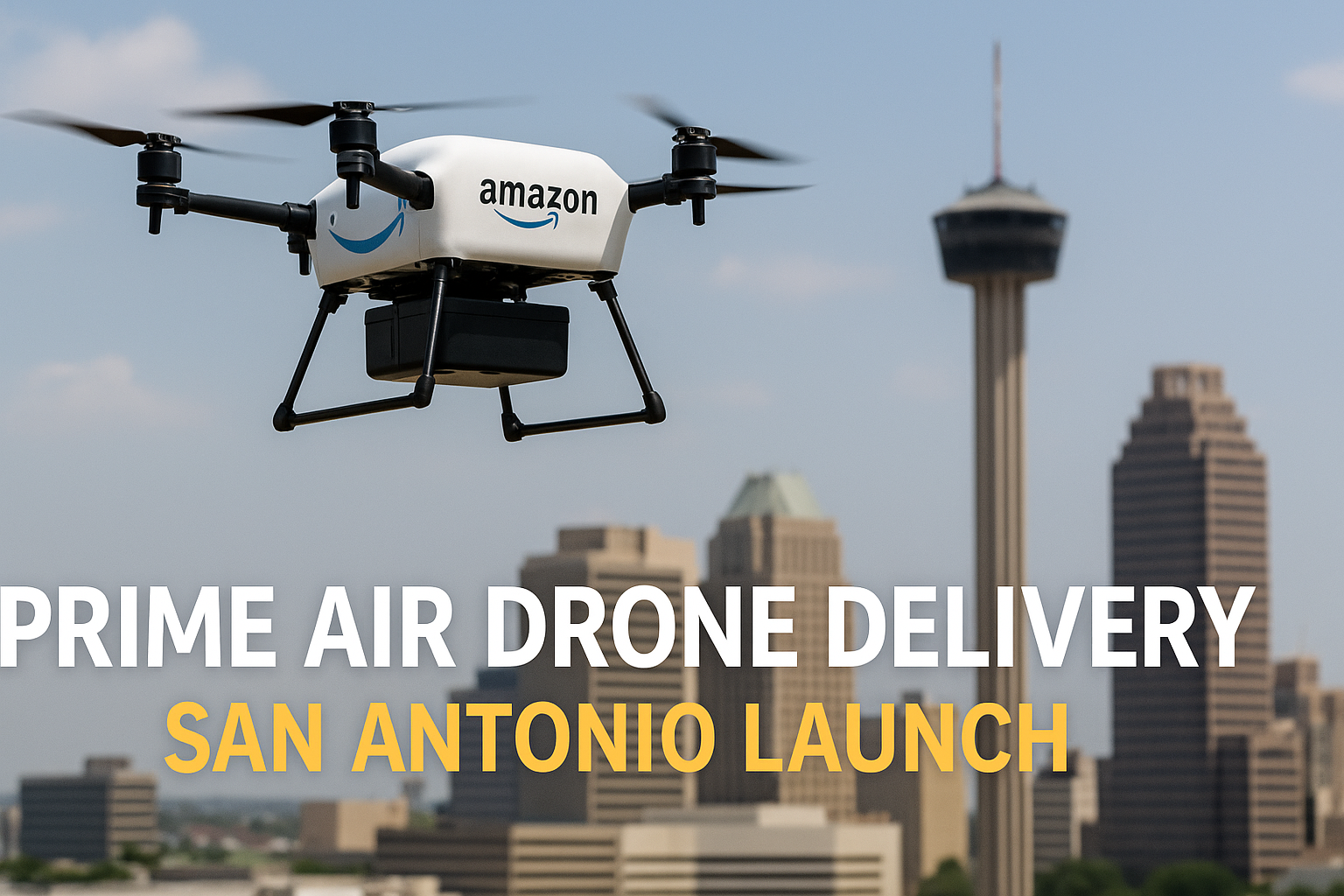
The service operates from Amazon's East Side warehouse, delivering packages weighing up to five pounds to eligible addresses within a 7.5 mile radius. City Council approved the drone operations earlier this year, clearing the way for Amazon to begin flights that promise to reshape how residents think about convenience and speed in their daily lives. For a city already known for steady population growth and economic expansion, this technology rollout adds another dimension to San Antonio's reputation as a forward thinking metropolitan area.
For those considering buying a home in San Antonio or already living here, understanding how developments like this reflect broader growth patterns provides valuable context for real estate decisions. Technology investments, infrastructure improvements, and corporate expansions all contribute to the factors that make communities attractive to buyers and supportive of long term property values. This guide explores what Prime Air means for San Antonio residents, the local economy, and the neighborhoods within the service area.
What Is Amazon Prime Air and How Does It Work in San Antonio?
Amazon Prime Air represents the company's effort to revolutionize last mile delivery through autonomous drone technology. The service uses specially designed aircraft that can carry small packages directly to customers' homes, bypassing traditional delivery trucks and the traffic delays that come with ground transportation. In San Antonio, the drones operate from the East Side warehouse facility that Amazon has converted into a dual purpose operations center.
The technology behind Prime Air has been in development for over a decade. Amazon first announced the concept in 2013 and has spent years refining the aircraft, navigation systems, and safety protocols required to make commercial drone delivery viable. San Antonio's selection as one of only four pilot cities reflects both the technical requirements of the program and the city's regulatory environment that allowed operations to proceed.
Q: What are the specific requirements for receiving drone deliveries?
A: Customers must have an address within the 7.5 mile service radius of the East Side warehouse, though not every home in that radius automatically qualifies. The FAA must approve specific airspace corridors, and delivery locations must meet safety criteria including being at least 10 feet from people, pets, vehicles, and objects taller than five feet. Customers can designate up to three potential landing spots on their property.
The delivery process works differently than traditional package drop offs. Rather than a driver placing items at a front door, the drone descends to a predetermined spot on the customer's property and lowers the package before ascending and returning to the warehouse. Customers do not need to be present to receive deliveries, making the service particularly convenient for working households.
Why Did Amazon Choose San Antonio for This Technology Launch?
Amazon has not publicly detailed all the factors that led to San Antonio's selection, but several characteristics make the city well suited for drone delivery operations. The metropolitan area offers a combination of population density, geographic features, and regulatory cooperation that drone delivery programs require to operate safely and effectively.
San Antonio's relatively flat terrain and generally favorable weather conditions provide advantages for drone operations. Unlike cities with frequent severe weather or complex topography, San Antonio offers more consistent flying conditions during daylight hours. The city's sprawling layout also means significant residential areas exist within reasonable distance of distribution centers, creating a large potential customer base.
The regulatory environment played a crucial role in making this launch possible. City Council's approval earlier this year demonstrated local government's willingness to work with Amazon on the operational requirements and safety protocols necessary for commercial drone flights. This cooperative approach between municipal authorities and corporate partners often determines whether innovative programs move forward in specific markets.
Key factors that likely influenced the selection include:
- Existing Amazon infrastructure including the East Side warehouse facility
- Population size and density supporting meaningful test market data
- Weather patterns allowing consistent daylight operations
- Local government cooperation on regulatory approvals
- Geographic characteristics suitable for drone navigation
- Proximity to other Texas markets for regional expansion potential
How Does the Drone Delivery Service Actually Operate Day to Day?
Understanding the operational details of Prime Air helps residents determine whether the service might benefit their households. The program has specific parameters around timing, weather, eligible products, and delivery locations that shape how customers can use the technology.
Drone flights occur only during daylight hours. Amazon pauses operations at night and during adverse weather conditions including high winds, rain, or other factors that could compromise flight safety. This means the service functions primarily as a daytime convenience option rather than a round the clock delivery alternative. Customers placing orders outside operational windows would receive standard ground delivery instead.
The weight limit of five pounds determines which products qualify for drone delivery. Amazon curates a selection of eligible items that fit within this constraint, covering many everyday essentials, small electronics, household supplies, and similar products. Larger or heavier items continue arriving through traditional delivery methods regardless of the customer's location within the service area.
Q: What does drone delivery cost compared to standard shipping?
A: Prime members pay $4.99 per drone delivery while non Prime customers pay $9.99. These fees apply in addition to the product cost and reflect the premium nature of ultra fast delivery. Standard Prime shipping remains free for eligible orders, so customers can choose between speed and cost based on their immediate needs.
The 60 minute delivery window represents the target timeframe for most orders. From the moment a customer completes checkout to when the drone arrives at their property, the entire process aims to take less than an hour. This speed dramatically compresses the traditional delivery timeline and creates new possibilities for how people shop for everyday items.
What Does This Launch Signal About San Antonio's Economic Growth?
Corporate technology investments often serve as indicators of how major companies view a region's growth potential. When Amazon selects San Antonio for a high profile program like Prime Air, it reflects confidence in the market's trajectory and willingness to commit resources to the area. This type of investment typically follows careful analysis of population trends, economic indicators, and long term growth projections.
San Antonio has consistently ranked among the fastest growing major cities in the United States over the past decade. The metropolitan area continues attracting new residents from across the country, driven by factors including relative affordability, employment opportunities, climate, and quality of life. Major employers across healthcare, military, technology, and financial services provide economic diversity that supports steady growth.
Amazon already employs approximately 4,000 people in San Antonio across various facilities and roles. The Prime Air launch adds specialized positions for drone operations, safety oversight, and technical support. While the company has stated that drone delivery creates jobs rather than replacing existing positions, the long term employment implications of delivery automation remain subjects of ongoing discussion across the logistics industry.
The competitive dynamics with other major retailers also matter for understanding this launch. Walmart operates drone delivery programs in Dallas and continues expanding the service across Texas. Amazon's San Antonio rollout demonstrates the company's commitment to matching or exceeding competitor offerings in key markets. This competition benefits consumers through expanded service options and continued innovation.
How Might Drone Delivery Affect Daily Life for San Antonio Residents?
The practical implications of drone delivery extend beyond simple package receipt. The service has potential to change shopping habits, reduce certain errands, and add convenience that particularly benefits specific household situations. Understanding these impacts helps residents evaluate whether the technology aligns with their lifestyle needs.
For households where adults work outside the home during traditional business hours, drone delivery addresses a common frustration. Packages left on doorsteps for hours create security concerns and weather exposure risks. The ability to schedule deliveries during specific windows and receive items within an hour of need reduces these problems. Parents managing children's activities, professionals with demanding schedules, and caregivers with limited flexibility all represent groups who might find particular value in ultra fast delivery options.
The types of items that qualify for drone delivery suggest common use cases. Forgotten household essentials, last minute party supplies, minor medical items, phone chargers, and similar small purchases that traditionally required store trips or waiting for standard delivery can now arrive within an hour. This convenience factor may influence how people plan shopping and errands.
Q: Will drone delivery eventually replace traditional package delivery?
A: Current technology and regulatory constraints limit drone delivery to specific use cases. Weight limits, weather restrictions, airspace requirements, and other factors mean traditional delivery methods will remain necessary for most packages. Drone delivery serves as a premium option for specific situations rather than a wholesale replacement for existing logistics infrastructure.
The service radius of 7.5 miles means only portions of the metropolitan area currently have access. Residents outside this zone continue using standard delivery options. As Amazon evaluates the San Antonio pilot program, decisions about expanding the service area will depend on operational success, customer adoption, and regulatory approvals for additional flight corridors.
What Areas of San Antonio Fall Within the Prime Air Service Zone?
The 7.5 mile radius from Amazon's East Side warehouse determines the geographic boundaries of potential drone delivery service. However, not every address within this radius automatically qualifies. FAA airspace approvals, proximity to airports, military facilities, and other restricted zones all affect which specific locations can receive drone deliveries.
The East Side location places neighborhoods in that portion of San Antonio within potential range. Areas extending toward downtown and into adjacent communities may fall within the service boundary depending on exact distances and approved flight corridors. Amazon's eligibility tool allows customers to enter their addresses and determine whether drone delivery options appear for their specific location.
Understanding service availability matters for residents considering how this technology might factor into daily convenience. Those already living within the service zone gain access to a new delivery option. Those outside the current radius may see expansion in future phases if the pilot program succeeds and Amazon secures additional operational approvals.
Factors affecting eligibility within the radius include:
- FAA approved flight paths and airspace corridors
- Proximity to airports, helipads, or other aviation facilities
- Distance from military installations and restricted airspace
- Physical characteristics of delivery locations meeting safety requirements
- Customer property features allowing safe drone landing zones
How Does Technology Investment Connect to Real Estate Decisions?
Homebuyers evaluate communities based on numerous factors including schools, commute times, amenities, safety, and overall quality of life. Increasingly, technology infrastructure and access to modern services factor into these decisions as well. Communities that attract corporate investment and innovation often signal positive trajectories that buyers find appealing.
The presence of major employers and their continued investment in a region typically supports housing demand. Amazon's 4,000 plus local employees represent households that need housing. The Prime Air launch suggests ongoing commitment to San Antonio operations, which provides some confidence about employment stability in the area. While no single company should determine real estate decisions, patterns of corporate investment contribute to overall market strength.
Technology amenities have become part of how communities differentiate themselves. High speed internet access was once a premium feature and is now expected in most markets. Drone delivery represents a newer tier of technology convenience that currently exists in very few locations. For some buyers, particularly those working in technology sectors or valuing cutting edge conveniences, living in a Prime Air service zone might hold meaningful appeal.
Q: Should drone delivery availability factor into home buying decisions?
A: Technology conveniences represent one of many factors in home selection. Most buyers prioritize location, price, schools, and property features over delivery options. However, for households that heavily rely on delivery services or value being early adopters of new technology, service availability might provide a tiebreaker between otherwise comparable properties.
The broader signal matters more than the specific service. San Antonio's selection for this program reflects the city's position as a growth market worthy of corporate investment. That underlying reality influences property values and market dynamics more significantly than any individual technology feature.
What Competition Exists in the Texas Drone Delivery Market?
Amazon's entry into San Antonio drone delivery does not occur in isolation. Walmart has operated drone delivery programs in Texas for several years, with established service in the Dallas Fort Worth area and continued expansion plans. This competitive dynamic benefits consumers through expanded options while signaling broader industry confidence in the Texas market.
The race between major retailers to deploy drone delivery reflects larger strategic priorities around customer convenience and logistics efficiency. Both Amazon and Walmart recognize that speed and convenience drive customer loyalty. Drone delivery represents the current frontier of that competition, with each company investing heavily in the technology and operational capabilities required to scale these services.
For San Antonio specifically, Amazon's launch creates local access to technology that Walmart has not yet brought to the market. Dallas area residents have had Walmart drone delivery options, while San Antonio residents now gain Amazon's version. The competitive pressure may eventually lead both companies to expand their respective service areas across Texas.
Industry observers watch these pilot programs closely to understand how drone delivery economics work at scale. Questions about profitability, customer adoption rates, operational challenges, and regulatory evolution will shape whether drone delivery becomes mainstream or remains a niche offering. San Antonio's participation in this early stage provides local residents front row seats to this logistics transformation.
How Has the Local Government Responded to Drone Delivery Operations?
City Council's approval earlier this year enabled Amazon to proceed with Prime Air operations. This regulatory cooperation demonstrates local government's willingness to accommodate innovative business activities while maintaining appropriate oversight and safety requirements. The approval process likely involved negotiations around operational parameters, safety protocols, and coordination with federal aviation authorities.
Municipal governments face balancing acts when considering new technologies. Residents may have concerns about noise, privacy, safety, and other impacts of drone flights over neighborhoods. Business interests and economic development goals favor accommodating corporate innovation that brings jobs and investment. Finding middle ground requires thoughtful policy making and ongoing monitoring of how programs actually affect communities.
San Antonio's decision to approve drone operations aligns with the city's broader positioning as business friendly and open to innovation. This reputation helps attract corporate investment across sectors. Companies evaluating where to locate facilities or launch new services consider regulatory environments alongside other factors. Cities that demonstrate cooperative approaches to reasonable business requests often gain advantages in economic development competition.
Q: What regulations govern drone delivery operations in San Antonio?
A: Amazon operates under FAA authorizations that govern commercial drone flights. Local approval from City Council addressed municipal requirements. The combination of federal aviation authority and local government cooperation created the regulatory framework allowing Prime Air to launch. Ongoing operations remain subject to both FAA oversight and local ordinances.
Future regulatory evolution may expand or constrain drone delivery as more experience accumulates. Early pilot programs like San Antonio's Prime Air generate data about safety records, community impacts, and operational effectiveness that inform policy decisions. Residents can engage with local government on these issues through normal civic channels.
What Should Buyers Consider About Technology and Community Growth?
Those exploring homes for sale in San Antonio benefit from understanding how various growth indicators relate to real estate decisions. Technology investments like Prime Air represent one data point among many that suggest positive community trajectory. Evaluating communities holistically provides better foundation for purchasing decisions than focusing on any single factor.
Growth indicators that typically matter for real estate include:
- Population trends showing net migration into the area
- Employment growth across diverse industry sectors
- Infrastructure investment in transportation, utilities, and public services
- Corporate relocations and expansions bringing new jobs
- Quality of school districts and educational outcomes
- Healthcare facilities and access to medical services
- Retail and entertainment amenities supporting quality of life
- Housing inventory and construction activity meeting demand
Prime Air's launch connects to several of these factors. Amazon's continued investment suggests confidence in the market. The employment associated with local operations contributes to housing demand. The service itself adds a lifestyle amenity that some residents value. None of these individually drives real estate markets, but collectively they contribute to the conditions that support property values over time.
Working with a knowledgeable REALTOR® helps buyers understand how different factors play out across specific neighborhoods. Market conditions vary significantly within metropolitan areas, and local expertise provides context that general statistics cannot capture. Agents with deep experience in San Antonio markets can help buyers evaluate opportunities in light of growth patterns and community characteristics.
How Does Amazon's Presence Affect San Antonio Employment and Housing?
Amazon ranks among the largest private employers in San Antonio with approximately 4,000 workers across various facilities. This employment base creates direct housing demand as workers seek homes within reasonable commute distances of their workplaces. The Prime Air launch adds specialized roles that expand this employment footprint, though specific hiring numbers have not been detailed.
Employment hubs typically influence housing patterns in surrounding areas. Workers generally prefer minimizing commute times and costs, which creates demand for housing near major employers. The East Side warehouse location means neighborhoods in that portion of the city may see particular interest from Amazon employees. This dynamic plays out across the metropolitan area wherever major employers concentrate.
The quality of jobs matters alongside quantity. Amazon employment spans warehouse operations, logistics, technology, and management roles with varying compensation levels. Higher paying positions support greater housing purchasing power, while entry level roles may drive rental demand. Understanding the mix of employment helps assess likely housing market impacts.
Q: Does working for Amazon provide advantages for home buying?
A: Like other major employers, Amazon offers compensation and benefits that support employee financial stability. Workers with steady employment from established companies often find mortgage qualification more straightforward than those with inconsistent income. However, individual circumstances vary significantly, and employment alone does not determine mortgage eligibility.
For those relocating to San Antonio for Amazon employment, exploring neighborhoods near the workplace provides starting points for housing searches. Balancing commute convenience with other priorities like schools, amenities, and housing preferences helps identify suitable areas. A REALTOR® familiar with the metropolitan area can provide guidance on neighborhoods that align with specific needs.
What Does Innovation Mean for San Antonio's Long Term Trajectory?
San Antonio's inclusion in high profile technology programs like Prime Air contributes to the city's evolving identity. Traditionally known for military presence, healthcare, and tourism, the metropolitan area increasingly appears in conversations about technology and innovation. This expanded identity helps attract talent, investment, and corporate interest that support continued growth.
Cities compete for economic development opportunities across multiple dimensions. Tax incentives matter, but so do quality of life, workforce availability, infrastructure, and reputation. When major technology companies select a city for pilot programs, it generates attention that benefits broader economic development efforts. Decision makers at other companies take note when peers choose specific locations.
The military and defense sectors remain foundational to San Antonio's economy, with Joint Base San Antonio representing massive employment and economic activity. Healthcare similarly anchors the economy through major hospital systems and related services. Technology investment adds another pillar without displacing existing strengths, creating more diverse economic foundations that typically prove resilient over time.
Real estate markets benefit from economic diversity. Cities dependent on single industries face greater risk when those sectors struggle. San Antonio's combination of military, healthcare, tourism, financial services, and growing technology presence provides multiple economic drivers. This diversity supports housing demand across market cycles and reduces vulnerability to sector specific downturns.
Expert Insight from Tami Price
"San Antonio keeps proving it's an innovative, fast growing city, and this Amazon Prime Air launch is another example of that momentum," says Tami Price, REALTOR® and Broker Associate with Real Broker, LLC. "When major companies choose our area for new technology, it tells buyers and sellers that our market has long term strength. Convenience matters in modern living, and services like ultra fast drone delivery add to the lifestyle value many households are seeking today."
Price brings nearly two decades of experience and approximately 1,000 closed transactions to her work with buyers and sellers throughout San Antonio, Schertz, Cibolo, Helotes, Converse, and Boerne. As a USAF Veteran holding the Military Relocation Professional (MRP) certification, she understands how employment centers and technology investments connect to housing decisions for military families and civilian buyers alike.
"I work with many clients relocating to San Antonio for employment opportunities, including positions with major companies like Amazon," Price explains. "They want to understand which neighborhoods offer the best combination of commute convenience, schools, amenities, and long term value. Developments like Prime Air factor into those conversations because they reflect the kind of market momentum that supports confident buying decisions."
Her recognition as a RealTrends Verified Top Agent and 14-time Five Star Professional Award Winner reflects consistent client satisfaction across diverse transaction types. This track record demonstrates the value of working with experienced representation when navigating real estate decisions in growing markets.
"Growth creates opportunity, but it also requires guidance to navigate effectively," Price notes. "Whether someone wants to live near their workplace, prioritize school districts, or find neighborhoods positioned for appreciation, understanding how all these factors connect helps buyers make confident decisions. That's what I help clients accomplish every day."
Three Key Takeaways
1. San Antonio Joins an Exclusive Group as One of Only Four U.S. Cities Offering Amazon Prime Air Drone Delivery
Amazon's selection of San Antonio for its Prime Air service places the city alongside Phoenix, Waco, and Pontiac as testing grounds for revolutionary delivery technology. The service operates from Amazon's East Side warehouse, delivering packages up to five pounds within a 7.5 mile radius during daylight hours. This selection reflects Amazon's confidence in the San Antonio market and the city's regulatory cooperation in enabling innovative business operations.
2. The Launch Signals Continued Corporate Investment and Economic Growth in the San Antonio Region
Major technology deployments often indicate corporate confidence in a region's trajectory. Amazon already employs approximately 4,000 people in San Antonio, and the Prime Air launch adds specialized positions while demonstrating ongoing commitment to local operations. This investment pattern aligns with broader economic indicators showing San Antonio as one of the nation's fastest growing major metropolitan areas with diverse employment across military, healthcare, technology, and financial services sectors.
3. Technology Amenities and Corporate Investment Contribute to Community Appeal and Real Estate Market Strength
While no single technology feature determines real estate values, patterns of corporate investment and innovation signal positive community trajectory that buyers find appealing. Communities attracting major employer commitment typically experience sustained housing demand from workers seeking convenient locations. For those considering buying a home in San Antonio, understanding how growth indicators connect to neighborhoods helps inform purchasing decisions.
Frequently Asked Questions
Q: How fast does Amazon Prime Air deliver packages in San Antonio?
A: Most eligible orders arrive within 60 minutes of placement. The service operates only during daylight hours and pauses during adverse weather conditions including high winds or rain. Customers selecting drone delivery should expect the one hour window as a target rather than a guarantee, as operational factors may occasionally affect timing.
Q: What items can be delivered by drone in San Antonio?
A: Amazon limits drone delivery to items weighing five pounds or less. The company curates a selection of eligible products including household essentials, small electronics, phone accessories, and similar items within the weight constraint. Larger or heavier items continue arriving through standard ground delivery regardless of address location.
Q: How much does Prime Air drone delivery cost?
A: Prime members pay $4.99 per drone delivery while non Prime customers pay $9.99. These fees apply in addition to product costs. Standard Prime shipping remains free for eligible orders, allowing customers to choose between speed and cost savings based on their immediate needs and priorities.
Q: Do I need to be home to receive a drone delivery?
A: No. The drone descends to a predetermined landing spot on the customer's property and lowers the package before returning to the warehouse. Customers designate delivery locations through the Amazon app, selecting spots at least 10 feet from people, pets, vehicles, and objects taller than five feet. Up to three landing options can be saved.
Q: Is every home within 7.5 miles of the warehouse eligible for drone delivery?
A: No. Eligibility depends on FAA approved airspace corridors and safety requirements. Proximity to airports, military facilities, or restricted zones may exclude specific addresses even within the general service radius. Customers can check eligibility by entering their address in Amazon's system during checkout.
Q: When do Prime Air drones operate in San Antonio?
A: Drones fly only during daylight hours. Operations pause at night and during weather conditions that could compromise flight safety. This means drone delivery functions as a daytime convenience option. Orders placed outside operational windows process through standard delivery methods.
Q: How does Amazon's drone delivery compare to Walmart's service?
A: Both retailers operate drone delivery programs in Texas, with Walmart established in Dallas and Amazon now active in San Antonio and Waco. Service parameters including delivery speed, weight limits, and pricing vary between programs. The competition benefits consumers through expanded options across different retail ecosystems.
Q: Why was San Antonio selected over other Texas cities?
A: Amazon has not publicly detailed all selection criteria. Factors likely include existing infrastructure at the East Side warehouse, population characteristics supporting test market data, favorable weather for drone operations, and City Council's regulatory cooperation. San Antonio's growth trajectory and diverse economy may have also influenced the decision.
The Bottom Line
Amazon's Prime Air launch represents a meaningful milestone in San Antonio's evolution as a technology forward metropolitan area. Being selected as one of only four U.S. cities for this service reflects corporate confidence in the market and positions San Antonio at the forefront of retail logistics innovation. For residents within the service zone, ultra fast delivery adds a modern convenience that aligns with busy lifestyles and changing consumer expectations.
The broader implications extend beyond package delivery. Corporate technology investments signal positive economic trajectory, support employment growth, and contribute to community appeal that influences real estate dynamics over time. San Antonio's diverse economy spanning military, healthcare, technology, and financial services creates resilient foundations that support sustained growth and housing demand.
For those exploring the San Antonio market, understanding how developments like Prime Air connect to larger growth patterns provides valuable context. Technology amenities, employment centers, infrastructure investment, and corporate commitment all factor into what makes communities attractive for home purchases. Working with experienced representation helps buyers navigate these considerations and identify neighborhoods aligned with their priorities.

Contact Tami Price, REALTOR®
Whether exploring neighborhoods near Amazon facilities or evaluating communities across the greater San Antonio region, working with an experienced REALTOR® provides guidance through the home buying process. Tami Price offers nearly two decades of local market expertise to help buyers find homes matching their lifestyle needs, budget, and long term goals.
From first time buyers to military families navigating PCS relocations, personalized service makes the difference in successful transactions. Understanding how employment centers, technology investments, and community growth connect to specific neighborhoods helps buyers make confident decisions.
Tami Price, REALTOR®, Broker Associate
📞 210-620-6681
Tami Price's Specialties
- Comprehensive Buyer and Seller Representation
- Military Relocations and PCS Moves
- VA Loan Guidance and Assumptions
- New Construction Navigation
- Strategic Pricing and Market Analysis
- Professional Property Marketing
- First Time Buyer Education
- Move Up and Downsizing Transitions
- Residential Real Estate Throughout San Antonio, Schertz, Cibolo, Helotes, Converse, and Boerne
Disclaimer
This blog post is provided for informational purposes only and should not be construed as investment advice, employment guidance, or guarantees regarding technology services, property values, or market conditions. Information about Amazon Prime Air reflects publicly available details as of the publication date and is subject to change. Service availability, pricing, operational parameters, and eligible products are determined by Amazon and may be modified without notice. Real estate decisions should be based on individual circumstances, professional guidance, and current market conditions. Tami Price, REALTOR®, and Real Broker, LLC make no warranties regarding accuracy, completeness, or applicability of information to specific circumstances.
Categories
- All Blogs (940)
- Home Buying (19)
- Neighborhood Guides (44)
- 10 Incentive and Rate Buydown Questions (1)
- 10 Military Neighborhood (1)
- 10 Mistakes Sellers Make (1)
- 10 Strategies to Coordinate a Same Day Close (1)
- 12 Lifestyle Questions to Move In (1)
- 12 PCS What Ifs (1)
- 12 Photos and Marketing Assets (1)
- 13 PCS Hunting Trip Tips (1)
- 14 Design Center Decisions (1)
- 15 Red Flags Touring Home in San Antonio (1)
- 2026 Market (1)
- 30 days after closing your home (1)
- 7 Offer Terms Beyond Price (1)
- 7 VA Specific Questions (1)
- 78015 Ranked One (1)
- 8 Bridge (1)
- 8 Myths Buyers Believe about Down Payments (1)
- 8 Reasons VA Buyers Love New Construction (1)
- 9 Mistakes Move Up Buyers Make (1)
- 9 Questions to Decide If You Keep Your PCS Home (1)
- 9 Timeline Questions Every Buyer Need to Ask (1)
- 9 Warranty Questions to Ask (1)
- 9 Ways to Attract VA & Military Buyers (1)
- 90 days before your move (1)
- About Tami Price (6)
- Active Adult Homes (1)
- Affordable Communities (2)
- Affordable Housing & Community Development (5)
- Agent Qualifications and Credentials (1)
- Agent Qualifications and Experience (1)
- Agent Recognition (3)
- Agent Selection (1)
- AI and Real Estate Tools (1)
- Alamo Heights (5)
- Alamo Heights ISD (1)
- Alamo Heights Real Estate (1)
- Alamo Ranch (3)
- Amenities in Helotes, Texas (3)
- Apartment Market (1)
- Appraisals (1)
- Arts and Culture (1)
- Awards and Recognition (7)
- Balcones Creek (1)
- Best Neighborhoods to Live in Cibolo, TX (3)
- Best Neighborhoods to Live in San Antonio (16)
- Best Places to Live in Leon Valley: A Neighborhood Guide (1)
- Best Places to Live in Northeast Inner Loop: A Neighborhood Guide (1)
- Bexar County Property Tax (1)
- Bexar County Real Estate (3)
- Blue Tape Walkthrough (1)
- Boerne Home Sellers (1)
- Boerne Neighborhoods (2)
- Boerne Texas (9)
- Broadway Corridor Development (1)
- Build-to-Rent Communities (1)
- Builder Contracts & Warranties (3)
- Builder Incentives (1)
- Builder Warranties (1)
- Buyer (97)
- Buyer Activity San Antonio (1)
- Buyer and Seller Guidance (4)
- Buyer Due Diligence (1)
- Buyer Education (46)
- Buyer Guide (9)
- Buyer Guides (7)
- Buyer Protection Strategies (1)
- Buyer Representation (1)
- Buyer Representation Expertise (1)
- Buyer Resources (89)
- Buyer Strategy (2)
- Buyers (13)
- Buyers Agent (1)
- Buying a Foreclosed Home in San Antonio (10)
- Buying a Home (3)
- Buying a Home in San Antonio (6)
- Buying Near JBSA (1)
- Buying Timeline (1)
- Buying vs Renting (1)
- Castroville, TX (8)
- Central San Antonio (1)
- Central San Antonio Development (2)
- Central Texas Growth (1)
- Choosing a Real Estate Agent (1)
- Choosing an Agent (1)
- Cibolo Communities (1)
- Cibolo Home Sellers (1)
- Cibolo TX (15)
- Client Reviews and Testimonials (1)
- Client Satisfaction (1)
- Client Stories (1)
- Client Testimonial (4)
- Clients review (4)
- Closing (1)
- Cobblestone (1)
- Comal County (1)
- Commercial & Retail Development (27)
- Commercial Development (13)
- Commercial Development Impact on Home Values (1)
- Commercial Real Estate (1)
- Community (1)
- Community Amenities (2)
- Community Development (23)
- Community Development and Real Estate (3)
- Community Events & Development (1)
- Community Infrastructure (1)
- Community Investment Impact (2)
- Community Landmarks (1)
- Community News (4)
- Community Planning (2)
- Community Revitalization (1)
- Community Spotlights (1)
- Commuter Neighborhoods (1)
- Cons of Living in Helotes, TX (4)
- Conservation Communities (1)
- Contingency Questions (1)
- Converse Home Sellers (1)
- Converse Homes For Sale (3)
- Converse Real Estate (1)
- Converse TX (10)
- Converse TX Real Estate (1)
- Cost of Living Guides (1)
- Cost of Living in San Antonio TX (25)
- CPS Energy Programs (1)
- Custom Homes (5)
- Davis Ranch (1)
- Days on Market (1)
- Deco District San Antonio (1)
- Denver Heights (1)
- Down Payment Assistance (1)
- Downtown Boerne (1)
- Downtown Development (3)
- Downtown Living (1)
- Downtown Revitalization (14)
- Downtown San Antonio (2)
- Downtown San Antonio Real Estate (5)
- Downtown San Antonio Revitalization (1)
- Dual Military (1)
- East Side Living (1)
- East Side Neighborhoods (1)
- East Side San Antonio (4)
- Economic Development (3)
- Economic Growth & Industry (1)
- Education, Texas Hill Country (1)
- Emerald Pointe (1)
- Employment (1)
- Employment Corridors (1)
- Encino Forest (1)
- Entertainment Economy (1)
- Equity and Pricing Strategy (2)
- Equity Q&A (1)
- Established Communities (3)
- Events in San Antonio (207)
- Expert Advice from Tami Price, Realtor® (10)
- Fair Oak Ranch (1)
- Family Activities (2)
- Family Homes (3)
- Family Living in San Antonio (1)
- FAQ (1)
- Far Northwest San Antonio (1)
- Far West San Antonio (1)
- Far Westside Real Estate (4)
- Fastest Growing Zip Codes in America (1)
- Featured Homes for Sale (2)
- Featured Properties (1)
- Final Walkthrough (1)
- Financial Planning (11)
- Financing Strategy (1)
- First Time Buyers (23)
- First Time Sellers (1)
- First-Time Buyers (6)
- First-Time Homebuyer Resources (4)
- First-Time Homebuyer Tips (2)
- First-Time Homebuyers (6)
- First-Time Investors (1)
- Fort Sam Houston (3)
- Fort Sam Houston Real Estate (1)
- Fort Sam Houston, TX (2)
- Fox Grove (1)
- FSBO vs Agent Representation (1)
- Future Rental (1)
- Gated Communities (5)
- Golf Communities (1)
- Great Northwest (1)
- Greater San Antonio Housing Trends (2)
- Greater San Antonio Real Estate (5)
- Green Home Upgrades (1)
- Growth and Development (11)
- Healthcare (1)
- HELOC (1)
- Helotes Home Sellers (1)
- Highway 151 Corridor Growth (1)
- Hill Country Business (1)
- Hill Country Communities (2)
- Hill Country Development (3)
- Hill Country Homes for Sale (1)
- Hill Country Living (3)
- Hill Country Market Updates (1)
- Hill Country Real Estate (4)
- Hill Country Retreat (1)
- Historic Districts (5)
- Historic Neighborhoods (4)
- Historic Preservation (2)
- Holiday Attractions (1)
- Holiday Guide (1)
- Home Buying (7)
- Home Buying Education (3)
- Home Buying Guide (7)
- Home Buying Process (8)
- Home Buying Strategy (2)
- Home Buying Tips (6)
- Home Energy Efficiency San Antonio (5)
- Home Financing (2)
- Home Improvement ROI (1)
- Home Inspections (3)
- Home Preparation (2)
- Home Pricing Strategy (14)
- Home Renovation for Resale (1)
- Home Selling (12)
- Home Selling Guide (11)
- Home Selling Strategies (3)
- Home Selling Strategy (3)
- Home Selling Tips (22)
- Home Staging and Updates (2)
- Home Values (2)
- Homebuyer Education (15)
- Homebuyer Resources (1)
- Homebuying Guide (1)
- Homebuying Tips (3)
- Homeowner (37)
- Homeowner Tax Benefits (1)
- Homeownership Costs (1)
- Homes for Sale (2)
- Homes for sale near Lackland AFB (4)
- Homes Near Military Bases (1)
- Homestead amenities (1)
- Horizon Pointe (1)
- House Hunting Guide (1)
- Housing (1)
- Housing Community Development (1)
- Housing Development (2)
- Housing Market Updates (3)
- How to Buy a House in San Antonio TX (48)
- Huebner Oaks shopping center (1)
- Hunters Ranch (1)
- Hybrid (1)
- I-10 Corridor (1)
- I-35 Corridor (1)
- In Person (1)
- Incorporated Cities (6)
- Industrial Investment Impact (1)
- Industry News (2)
- Industry Recognition (1)
- Infrastructure & Growth Projects (26)
- Infrastructure and Sustainability (1)
- Infrastructure Development (1)
- Infrastructure Investment (1)
- Infrastructure Updates (2)
- Interest Rates (2)
- Invest in San Antonio (46)
- Investment Opportunities (3)
- Investment Property San Antonio (4)
- JBSA (9)
- JBSA Housing (11)
- JBSA Real Estate (4)
- JBSA Resources (7)
- Joint Base San Antonio (5)
- Joint Base San Antonio Housing (1)
- Judson ISD (2)
- Kendall County (1)
- La Cantera Retail Development (1)
- Lackland AFB (7)
- Lackland AFB Housing (1)
- Land Conservation (1)
- Land Use Planning (1)
- Lera MLS (15)
- Lifestyle & Community Growth (18)
- Lifestyle & Local Growth (12)
- Lifestyle Amenities (1)
- Lifestyle Communities (1)
- Listing Preparation (1)
- Listing Strategy (1)
- Live Oak (1)
- Living in San Antonio, TX (52)
- Living Near Randolph AFB (7)
- Loan Programs (1)
- Local Attractions (3)
- Local Business (1)
- Local Business & Development (9)
- Local Business & Economy (3)
- Local Business Spotlight (20)
- Local Business Support (5)
- Local Development (4)
- Local Development News (9)
- Local Market Insights (5)
- Local News (2)
- Local News Around San Antonio (2)
- Local Policy Changes (1)
- Local Real Estate News (1)
- Loop 1604 Corridor Growth (2)
- Loop 410 Corridor Development (1)
- Luxury Communities (3)
- Luxury Homes (2)
- Luxury Real Estate (1)
- Luxury Retail San Antonio (1)
- MacArthur Park (1)
- Major Developments (2)
- Making Offers on Homes (1)
- Market Analysis (26)
- Market Conditions (47)
- Market Expertise (1)
- Market Insights (5)
- Market Strategy (1)
- Market Timing (2)
- Market Trends (10)
- Market Trends & Insights (2)
- Market Update (17)
- Market Update 2026 (1)
- Market Updates (22)
- Master Planned Communities (12)
- Medical Center Area Real Estate (1)
- Medina Valley ISD (2)
- Midtown Living (1)
- Military & Economic Impact (3)
- Military Buyers (3)
- Military Communities (1)
- Military Families (1)
- Military Family Resources (1)
- Military Heritage (1)
- Military Homebuying (3)
- Military Homeownership (1)
- Military Housing (3)
- Military Housing Market in Texas (16)
- Military Life in San Antonio (2)
- Military Neighborhoods (1)
- Military PCS Relocations (3)
- Military Real Estate (2)
- Military Relocation (100)
- Military Relocation & VA Loans (10)
- Military Relocation San Antonio (4)
- Military Relocation Services (3)
- Military Relocation to San Antonio (50)
- Military Relocations (20)
- Military Relocations & VA Home Loans (5)
- Mixed-Income Housing (1)
- MLS Accuracy & Data Transparency (1)
- Mortgage Programs (1)
- Mothers Day in San Antonio (1)
- Move to Boerne TX (18)
- Move to Castroville TX (11)
- Move to Converse TX (16)
- Move to New Braunfels (1)
- Move to North San Antonio (19)
- Move to San Antonio TX (73)
- Move to Selma TX (19)
- Move to Shertz TX (13)
- Move to Texas (53)
- Move Up Buyer Resources (1)
- Move Up Buyers (23)
- Move-In Ready Homes (3)
- Move-In Ready Homes San Antonio (2)
- Move-Up Buyers (2)
- Moving to Helotes, TX (17)
- Moving to San Antonio (69)
- MUD Taxes (1)
- Natalia Homes For Sale (1)
- Near East Side Living (1)
- Negotiation Strategy (2)
- Neighborhood Amenities (1)
- Neighborhood Development (1)
- Neighborhood Guides (7)
- Neighborhood Investment (1)
- Neighborhood News (2)
- Neighborhood Revitalization (2)
- Neighborhood Spotlights (12)
- Neighborhood Updates (1)
- Neighborhoods near Randolph AFB (12)
- New Braunfels (6)
- New Braunfels Homes For Sale (1)
- New Braunfels News (3)
- New Braunfels Real Estate (3)
- New Businesses (2)
- New Construction (63)
- New Construction Communities (1)
- New Construction Homes (13)
- New Construction Homes San Antonio (5)
- New Construction vs Resale (2)
- New Construction Without Customization (1)
- New Construction Without the Wait (1)
- New Contruction Cost (1)
- New Development (3)
- New Listing (19)
- New Restaurants (3)
- News (211)
- News & updates (213)
- No HOA Homes (1)
- North Central San Antonio (5)
- North East ISD (4)
- North San Antonio (9)
- North San Antonio Real Estate (3)
- North Side Neighborhoods (1)
- North Side San Antonio Development (2)
- Northeast Inner Loop (1)
- Northeast Inner Loop Neighborhoods (1)
- Northeast San Antonio (3)
- Northside ISD (5)
- Northwest San Antonio (9)
- Northwest San Antonio Development (1)
- Northwest San Antonio Growth (1)
- Northwest San Antonio Real Estate (3)
- Northwood (1)
- Olympia Hills (1)
- One-Story Homes (1)
- Outdoor Living (1)
- Parks and Recreation (2)
- PCS and JBSA (2)
- PCS checklist (1)
- PCS Guide (4)
- PCS Moves (12)
- PCS Moves to Joint Base San Antonio (4)
- PCS Planning (16)
- PCS Randolph AFB (17)
- PCS Relocation (1)
- PCS Resources (6)
- PCS San Antonio (46)
- PCS to San Antonio (42)
- Pearl District Area Real Estate (2)
- PID Assessments (1)
- Pinon Creek (1)
- Pipe Creek (1)
- Places to Eat Near Randolph AFB (1)
- Pool Homes (1)
- Pre Approval (1)
- Pre-Listing Preparation (2)
- Pre-Listing Process (1)
- Prescott Oaks (1)
- Pricing and Marketing Strategy (3)
- Professional Awards and Achievements (2)
- Professional Real Estate Representation (1)
- Property Tax Exemptions Texas (1)
- Property Value Enhancement (1)
- pros and cons living in Converse TX (3)
- Pros and Cons Living in Selma TX (6)
- Pros and Cons of Living in Castroville, TX (4)
- Pros and Cons of Living in San Antonio (33)
- PT500 List (1)
- Purchase Negotiation (1)
- Quality of Life (1)
- Quick Close Real Estate (1)
- Randolph AFB Neighborhoods (2)
- Real Estate (1)
- Real Estate Advice (1)
- Real Estate Agent Recognition (6)
- Real Estate Agent Selection (2)
- Real Estate Agent Value (1)
- Real Estate Consultation (1)
- Real Estate Finance (1)
- Real Estate Financing (1)
- Real Estate Impact (1)
- Real Estate Investment San Antonio (2)
- Real Estate Legal Issues (1)
- Real Estate Market Insights (2)
- Real Estate Market Trends (5)
- Real Estate Professional Designations (1)
- Real Estate Strategy (1)
- Real Estate Technology & Trends (2)
- Real Estate Tips (1)
- Real Estate Tips and Guides (2)
- Real Estate Trends (4)
- RealTrends Verified (1)
- Regional Development (1)
- Regional Real Estate (2)
- Relocating to San Antonio (2)
- Relocation (4)
- Relocation Resources (2)
- Relocation to San Antonio (55)
- Remote Homebuying (1)
- Rental Housing (1)
- Rental Property (1)
- Rental Strategy (1)
- Resale Properties (1)
- Retail Development (2)
- Retire in Boerne TX (11)
- Retire in San Antonio (37)
- Retirement Communities (1)
- Reviews and Recognition (1)
- Rockwall Ranch (1)
- Rural Living (2)
- SABOR (28)
- San Antonio Area Listings (1)
- San Antonio Business Growth (1)
- San Antonio Buyer Resources (2)
- San Antonio Communities (3)
- San Antonio Community Events (1)
- San Antonio Community News (1)
- San Antonio Data Center Development (1)
- San Antonio Development (5)
- San Antonio Development & East Side Real Estate (1)
- San Antonio Dining and Lifestyle (3)
- San Antonio East Side Development (1)
- San Antonio Employment Growth (1)
- San Antonio Food & Community Development (2)
- San Antonio Growth (8)
- San Antonio Home Buying and Selling (2)
- San Antonio Home Buying Guide (5)
- San Antonio Home Improvement (2)
- San antonio home prices (3)
- San Antonio Home Sellers (3)
- San Antonio Homeowner Guide (1)
- San Antonio Homeowner Resources (1)
- San Antonio Homes for Sale (12)
- San Antonio Housing Market (2)
- San Antonio Housing Market & Mortgage Financing (2)
- San Antonio Housing Market Analysis (2)
- San Antonio Housing Trends & Market Analysis (4)
- San Antonio Industrial Development (1)
- San Antonio Industrial Policy (1)
- San Antonio Investment Properties (2)
- San Antonio Job Market (1)
- San Antonio Lifestyle Amenities (1)
- San Antonio Listing (1)
- San Antonio Living (1)
- San Antonio Market (3)
- San Antonio Market Updates (18)
- San Antonio Military Relocation (3)
- San Antonio Neighborhoods (67)
- San Antonio New Construction & Master-Planned Communities (4)
- San Antonio New Home Communities (1)
- San Antonio News (229)
- San Antonio North Side Development (1)
- San Antonio Parks (1)
- San Antonio Property Investment (1)
- San Antonio Property Taxes (2)
- San Antonio Real Estate (162)
- San Antonio Real Estate Agents (6)
- San Antonio Real Estate Excellence (1)
- San Antonio Real Estate Guide (6)
- San Antonio Real Estate Market (41)
- San Antonio Real Estate Market Analysis (6)
- San Antonio Real Estate News (2)
- San Antonio REALTOR Awards (1)
- San Antonio Restaurant News (2)
- San Antonio Restaurant Openings (1)
- San Antonio Seller Resources (2)
- San Antonio Sellers (1)
- San Antonio Spec Homes (1)
- San Antonio Spurs Community Programs (1)
- San Antonio Suburbs (1)
- San Antonio Transportation (2)
- San Antonio University Area Housing (1)
- San Antonio Urban Living (7)
- San Antonio West Side Development (2)
- San Antonio Zoning Policy (1)
- Scenic Loop (1)
- Schertz Home Sellers (1)
- Schertz Real Estate (1)
- Schertz, TX (13)
- School Districts (1)
- School Information (1)
- SCUCISD Schools (1)
- Secured Quick Offer (1)
- Sell Home In San Antonio TX (64)
- Seller (83)
- Seller Education (24)
- Seller Guide (4)
- Seller Guides (1)
- Seller Representation Expertise (1)
- Seller Resources (67)
- Seller Should Understand (1)
- Seller Strategy (3)
- Seller Tips (2)
- Sellers (10)
- Selling A Home in San Antonio (62)
- Selling Your San Antonio Home (3)
- Selma TX (9)
- Single-Story Homes (4)
- Smart Homes (1)
- Solar Homes (3)
- South San Antonio Real Estate (1)
- South Side Economic Growth (1)
- South Side San Antonio (1)
- Southtown (2)
- Southwest San Antonio Real Estate (1)
- Spec Homes and Inventory Homes (2)
- Spurs Arena Project Marvel (1)
- Stone Oak (2)
- Stone Oak Community News (5)
- Suburban Housing Growth (12)
- Suburban Living (2)
- Talise De Culebra (1)
- Technology Growth (3)
- Technology Sector Growth (1)
- Terrell Hills (3)
- Texas Acreage Properties (3)
- Texas Homestead Exemption (1)
- The Dominion Real Estate (1)
- The Rim Area Real Estate (1)
- Things to do in San Antonio TX (21)
- Things to do Near Randolph AFB (4)
- Time Planning (1)
- Time-Sensitive Home Buying (1)
- Timing Strategy (1)
- Tips for Buying New Construction (9)
- Tobin Hill Neighborhoods (2)
- Top Real Estate Agent in San Antonio (3)
- Tourism and Economic Development (1)
- Traders's Joe San Antonio (1)
- Transaction Coordination (1)
- Transportation Infrastructure (1)
- Two-Story Homes (2)
- Universal City (1)
- Updated Homes (2)
- Upscale Communities (1)
- Urban Communities (2)
- Urban Corridor Real Estate (1)
- Urban Development (5)
- Urban Living (3)
- Urban Neighborhoods (4)
- Urban Real Estate (1)
- Urban Renewal Projects (1)
- Urban Revitalization San Antonio (1)
- Utility Cost Reduction (1)
- UTSA Campus Development (1)
- VA Buyers (1)
- VA Home Loan Benefits (3)
- VA Loan Assumptions (3)
- VA loan benefits (27)
- VA Loan Guidance (1)
- VA Loan Home Buying Assistance (2)
- VA Loans (71)
- VA Loans and Military Benefits (3)
- VA Loans and Military Home Buying (3)
- VA Loans San Antonio (43)
- VET Benefits Living in San Antonio (3)
- Veterans Resources (3)
- Village Northwest (1)
- Virtual Buyers (1)
- Walkable Communities (1)
- week in sales (40)
- Weekly Sales Report (41)
- West San Antonio (2)
- West San Antonio Development (1)
- West San Antonio Real Estate (3)
- West San Antonio Real Estate Market (2)
- West Side Infrastructure Planning (1)
- West Side Real Estate (1)
- West Side San Antonio (2)
- Windcrest Homes for Sale (1)
Recent Posts