San Antonio Builder Activity: Understanding New Construction Development Trends
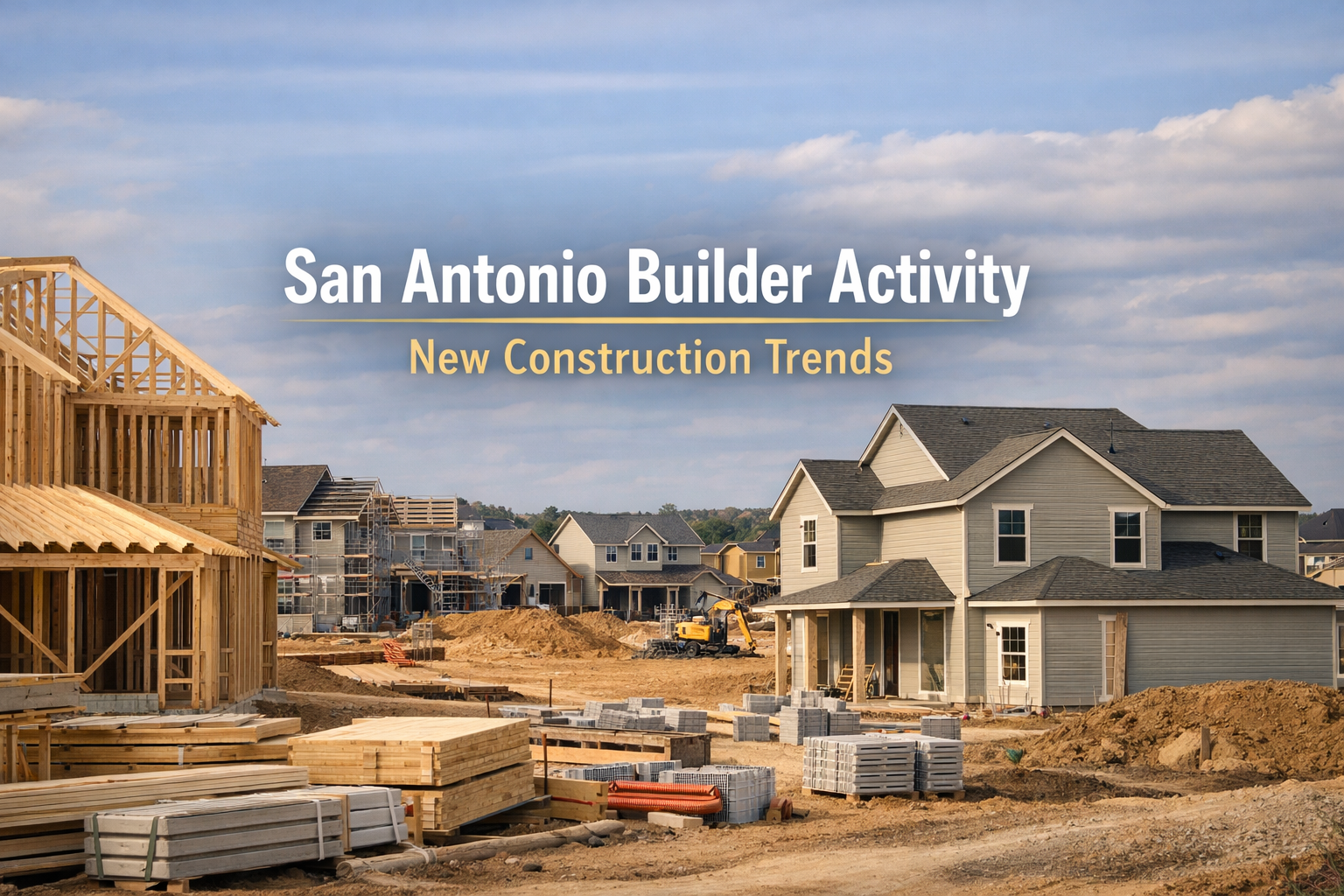
Builder activity patterns reveal significant insights about San Antonio's real estate market, economic confidence, and neighborhood development trajectories. Where builders invest capital constructing new homes signals their research conclusions about buyer demand, land values, infrastructure adequacy, and long-term growth potential. Understanding current builder activity helps buyers identify emerging areas, sellers recognize competition from new construction, and investors spot development trends affecting property values.
The San Antonio area continues experiencing robust new construction activity driven by population growth, job creation, relatively affordable land, and strong buyer demand. Builders ranging from national production companies through regional developers to local custom builders actively develop communities throughout the city and surrounding areas including Boerne, Helotes, Fair Oaks Ranch, Cibolo, Schertz, and Converse.
This guide examines current San Antonio builder activity patterns, what drives builder location decisions, which areas see most development, how builder activity affects existing home values, and what buyers should know when considering new construction in active building markets.
What Drives Builder Location Decisions?
Understanding why builders choose specific areas helps predict future development.
Land Availability and Cost:
Builders require developable land at prices supporting profitable projects:
- Undeveloped tracts large enough for community-scale projects
- Land costs allowing target price points after development expenses
- Clear title and minimal legal complications
- Seller willingness to transact on builder timelines
Land availability concentrates development in growing outer areas rather than established neighborhoods with limited vacant parcels.
Infrastructure Adequacy:
Development requires supporting infrastructure:
- Water and sewer capacity serving additional households
- Electrical service with adequate capacity
- Road access connecting to employment centers
- Drainage systems handling increased runoff
- Schools accommodating growing student populations
Areas with infrastructure in place or planned expansion attract builder investment.
Municipal Cooperation:
Builder-friendly jurisdictions facilitate development:
- Streamlined permitting and approval processes
- Reasonable development fees and impact charges
- Zoning flexibility accommodating various product types
- Economic development incentives encouraging growth
- Responsive staff and predictable timelines
Jurisdictions competing for development create favorable environments attracting builders.
Market Demand Evidence:
Builders invest where buyers want to live:
- Population growth demonstrating demand
- Job creation bringing new residents
- Household formation rates indicating housing needs
- Existing home sales velocity showing market strength
- Price appreciation suggesting value support
Data-driven demand analysis guides builder investment decisions.
Competitive Positioning:
Strategic considerations affect location choices:
- First-mover advantages in underserved areas
- Differentiation from existing inventory
- Price point gaps in market segments
- Product type opportunities addressing unmet needs
Builders seek positions offering competitive advantages.
Which San Antonio Areas See Most Builder Activity?
Development concentrates in specific growth corridors and submarkets.
Far West Side Development:
The area west of Highway 151 experiences intensive building:
- Master planned communities with thousands of planned homes
- Multiple builders offering various product lines
- Potranco Road corridor development
- Price points attracting first-time and move-up buyers
- Northside ISD access appealing to families
This region represents San Antonio's most active building frontier.
Northeast Corridor Growth:
Communities along I-35 and beyond see substantial activity:
- Schertz, Cibolo, and Converse expansion
- Proximity to Randolph AFB and Fort Sam Houston
- Judson ISD and Schertz-Cibolo-Universal City ISD schools
- More affordable land enabling competitive pricing
- Military buyer concentration
Northeast areas balance affordability with employment access.
Northwest Expansion:
Development continues along Loop 1604 and beyond:
- Highway 281 corridor communities
- Stone Oak area infill and expansion
- Medical Center employment accessibility
- Northside ISD and North East ISD schools
- Premium pricing reflecting established amenity access
Northwest development serves move-up and luxury segments.
Hill Country Communities:
Boerne, Helotes, and Fair Oaks Ranch attract builders:
- Scenic settings and Hill Country character
- Larger lots and lower density
- Premium pricing for location and lifestyle
- Strong school districts
- Buyers prioritizing setting over proximity
Hill Country building serves buyers accepting commutes for environment.
South Side Development:
Growth occurs along I-37 and Highway 90:
- More affordable pricing serving first-time buyers
- Proximity to Port San Antonio employment
- Brooks development area growth
- Land availability supporting expansion
South Side development provides entry-level opportunities.
What Builder Types Operate in San Antonio?
Different builder categories serve distinct market segments.
National Production Builders:
Large publicly-traded companies including major brands:
- High-volume production with standardized processes
- Multiple price points and product lines
- Extensive advertising and sales operations
- Preferred lender and title company relationships
- Corporate resources supporting operations
National builders offer consistency and volume pricing.
Regional Production Builders:
Mid-sized companies focusing on Texas or Southwest markets:
- Local market expertise with regional resources
- Flexibility between standardization and customization
- Established reputations in San Antonio
- Competitive pricing and incentive programs
- Responsive local management
Regional builders balance scale advantages with market focus.
Local Custom Builders:
Smaller companies building limited homes annually:
- Customization and personalization emphasis
- Attention to detail and craftsmanship
- Personal owner involvement
- Flexible design and specifications
- Premium pricing reflecting individualized service
Custom builders serve buyers wanting unique homes.
Luxury Builders:
Specialists in high-end construction:
- Premium locations and lot premiums
- Highest quality materials and finishes
- Architectural distinction and design
- Concierge service and customization
- Pricing reflecting luxury positioning
Luxury builders target affluent buyers with sophisticated preferences.
How Does Builder Activity Affect Existing Home Values?
New construction creates both competition and benefits for resale properties.
Competitive Pressure:
New homes compete with resale inventory:
- Modern floor plans appealing to current preferences
- Latest building codes and energy efficiency
- Warranty coverage providing buyer confidence
- Customization opportunities during construction
- No deferred maintenance or needed updates
Resale homes must offer compelling value propositions competing against new construction.
Price Discovery:
Builder pricing influences resale valuations:
- New home prices establish market ceilings in areas
- Builder incentives affect effective pricing
- Appraisers consider new construction as comparables
- Buyers compare resale versus new construction values
Builder pricing affects neighborhood value perceptions.
Amenity Development:
Builder activity often brings improvements benefiting all properties:
- Retail and service development following rooftops
- Infrastructure improvements including roads
- Parks and community amenities
- School construction and expansion
Neighborhood development enhances appeal for all homes.
Inventory Absorption:
New construction affects market balance:
- Additional inventory potentially slowing resale absorption
- Buyer choices expanding with new options
- Market time potentially extending for resale homes
- Negotiating leverage shifting toward buyers
Significant builder activity can tip markets toward buyer advantages.
What Should Buyers Know About Builder Selection?
Choosing builders affects outcomes as much as community selection.
Researching Builder Reputations:
Investigation reveals builder track records:
- Online reviews from actual buyers
- Better Business Bureau ratings and complaint histories
- References from recent customers
- Completed home quality in existing communities
- Construction quality during active building observation
Reputation research prevents selecting problematic builders.
Understanding Warranty Coverage:
Builder warranties vary significantly:
- Workmanship coverage duration and scope
- Systems coverage including plumbing, electrical, HVAC
- Structural warranty length and limitations
- Claims process and dispute resolution
- Third-party warranty backing versus builder-only coverage
Warranty strength affects long-term ownership experience.
Comparing Builder Incentives:
Incentive packages differ across builders:
- Closing cost assistance amounts and requirements
- Upgrade credits and design center allowances
- Rate buydown programs and financing incentives
- Included features and standard specifications
- Lot premium policies and pricing
Comprehensive comparison reveals total value beyond base pricing.
Evaluating Construction Quality:
Quality varies among builders at similar price points:
- Material selection and grade
- Construction techniques and attention to detail
- Subcontractor quality and supervision
- Final finish quality and craftsmanship
- Homeowner feedback about construction experience
Visiting communities under construction reveals quality differences.
How Has Builder Activity Changed Recently?
Market dynamics affect building patterns and approaches.
Interest Rate Impact:
Elevated mortgage rates influence builder strategies:
- Increased focus on affordability and entry-level products
- Rate buydown incentives helping buyer qualification
- Inventory home accumulation requiring discounting
- Slower sales pace affecting construction starts
- Product mix shifts toward smaller homes and lower price points
Builders adapt to financing environment realities.
Supply Chain Normalization:
After pandemic disruptions, supply chains stabilized:
- Material availability improving predictability
- Cost inflation moderating from peak levels
- Construction timelines becoming more reliable
- Labor availability remaining challenged
- Quality control improving with stable materials
Normalization improves buyer experience and builder operations.
Land Cost Pressures:
Rising land prices affect development:
- Higher land costs requiring price increases or margin compression
- Builders seeking more affordable outer locations
- Smaller lot sizes maintaining affordability
- Focus on land banking for future development
- Competition for remaining developable parcels
Land economics drive geographic development patterns.
Buyer Preference Evolution:
Changing preferences influence product:
- Home office space becoming standard
- Outdoor living area emphasis
- Energy efficiency and sustainability features
- Smart home technology integration
- Flexible spaces accommodating multiple uses
Builders adapt products to evolving buyer priorities.
What Trends Shape Future Builder Activity?
Understanding trajectories helps predict development patterns.
Continued Urban Sprawl:
Outer area development will continue:
- Affordable land availability at metro edges
- Buyer willingness accepting commutes for value
- Infrastructure investment enabling expansion
- Municipal annexation and service extension
- Leapfrog development over constrained areas
Growth will push boundaries further from urban core.
Infill Opportunities:
Limited infill development occurs where possible:
- Teardown and rebuild in premium established areas
- Small-lot development on scattered parcels
- Adaptive reuse creating residential from other uses
- Higher density projects in urban locations
- Premium pricing reflecting scarcity and location
Infill serves buyers prioritizing location over space.
Product Diversification:
Varied housing types address different needs:
- Townhomes and attached products for affordability
- Age-restricted communities for downsizing buyers
- Mixed-use development combining residential and commercial
- Build-to-rent communities serving rental demand
- Smaller lot sizes maintaining price points
Product variety serves diverse buyer segments.
Sustainability Integration:
Environmental considerations increase:
- Energy-efficient construction becoming standard
- Solar installation and renewable energy options
- Water conservation features and landscaping
- Sustainable material selections
- Green building certifications
Sustainability evolves from premium feature to expected standard.
How Can Buyers Navigate Active Building Markets?
Strategic approaches improve new construction purchase outcomes.
Comparing Multiple Builders:
Shopping across builders reveals differences:
- Visiting multiple communities and model homes
- Comparing base specifications and included features
- Evaluating construction quality and attention to detail
- Understanding warranty coverage variations
- Assessing builder reputations and customer satisfaction
Comprehensive comparison prevents settling for inferior options.
Understanding Total Costs:
Hidden costs beyond base prices affect affordability:
- Lot premiums for desirable locations
- Structural options and upgrades
- Design center selections and finishes
- Landscaping, fencing, and outdoor features
- HOA fees and special assessments
Realistic total cost budgeting prevents surprises.
Timing Considerations:
Purchase timing affects prices and inventory:
- Early phase buying offers choice but uncertainty
- Mid-development balances selection and proven communities
- Late-phase purchases may offer discounts and quick delivery
- Seasonal patterns affecting builder incentives
- Economic conditions influencing negotiations
Strategic timing optimizes value and selection.
Professional Representation:
Buyer agents provide valuable services:
- Knowledge of builder reputations and track records
- Contract review and negotiation support
- Construction monitoring and quality advocacy
- Coordination through complex processes
- Representation at no cost to buyers
Professional representation protects buyer interests.
Expert Insight from Tami Price, REALTOR®
"Builder activity reveals where smart money sees growth potential, but active building doesn't automatically mean good value for buyers. Over nearly two decades representing new construction buyers, I've learned to distinguish builders delivering quality and value from those cutting corners or overpromising. The most important lesson is that builder reputations, construction quality, and warranty strength matter as much as price and location. Buyers succeeding in active building markets research thoroughly, compare comprehensively, understand total costs, and work with professionals who know builders personally through multiple transactions. My role is steering clients toward reputable builders while protecting them from problematic operations that look good in model homes but disappoint during construction and ownership."
Tami Price, REALTOR®, Broker Associate, specializes in new construction representation throughout approximately 1,000 closed transactions including extensive builder experience.
Three Key Takeaways About San Antonio Builder Activity
- Builder location choices reflect data-driven growth predictions. Where builders invest billions developing communities reveals their research conclusions about employment growth, buyer demand, infrastructure adequacy, and appreciation potential. Understanding development patterns helps buyers identify emerging opportunity areas while recognizing which locations builders avoid despite promotional narratives.
- Builder selection affects outcomes as significantly as community choice. Construction quality, warranty strength, reputation reliability, and customer service vary dramatically among builders at similar price points. Comprehensive research including reviews, Better Business Bureau ratings, references, and quality observation distinguishes excellent builders from problematic operations buyers should avoid.
- New construction creates both opportunity and competition for buyers. Active building provides inventory choices, modern features, and warranty coverage unavailable in resale homes. However, competition among builders and between new construction and resale inventory affects pricing, incentives, and negotiating leverage. Understanding market dynamics and timing purchases strategically improves outcomes.
Frequently Asked Questions
Q: How do I know which builders have good reputations?
A: Research through multiple sources including online reviews from actual buyers, Better Business Bureau ratings showing complaint patterns, references from recent customers, and observation of completed homes and active construction sites. Work with buyer agents familiar with builders through multiple transactions providing insider perspective unavailable to individual buyers researching independently.
Q: Should I buy from large national builders or smaller local companies?
A: Both can deliver quality outcomes. National builders offer volume pricing, established processes, and corporate resources supporting operations. Local builders provide personalization, attention to detail, and owner involvement. Focus on individual builder reputations, construction quality, and warranty strength rather than size alone. Excellent and problematic builders exist in both categories.
Q: How much builder activity is too much for a market?
A: Excessive building creates oversupply risks. When new construction starts significantly exceed household formation and job growth, inventory accumulates requiring discounting affecting all property values. Monitor months of supply, builder incentive escalation, and completed inventory accumulation. Modest building meeting organic demand supports healthy markets while speculative overbuilding creates corrections.
Q: Do new construction homes appreciate faster than existing homes?
A: Not necessarily. Appreciation depends on location, market conditions, and individual property characteristics rather than age alone. New homes avoid deferred maintenance and offer modern features but command premium pricing. Existing homes in premium locations often appreciate as strongly as new construction in developing areas. Location typically matters more than age for long-term appreciation.
Q: What if a builder goes out of business after I buy?
A: Builder failure creates warranty concerns. Third-party warranty backing provides coverage if builders cannot honor commitments. Research builder financial stability before purchasing. Larger established builders with long track records present lower failure risk than startups or builders overextended during downturns. However, even established builders face difficulties requiring buyer protection through third-party warranties.
Q: How can I tell if an area has good future growth potential?
A: Research employment growth, infrastructure investment, school construction, retail development, and demographic trends. Areas attracting multiple builders signal confidence. However, verify fundamentals rather than assuming builder presence alone guarantees success. Some builder decisions prove incorrect when markets shift or infrastructure development delays. Independent research beyond builder activity provides confirmation.
The Bottom Line
Builder activity patterns provide valuable insights about San Antonio's growth trajectories, buyer demand concentrations, and development economics. Understanding where builders invest, what drives location decisions, how construction quality varies among builders, and what total ownership costs entail helps buyers navigate new construction markets successfully while avoiding problematic builders or overhyped developments unsupported by fundamentals.
Active building creates both opportunities through inventory availability and challenges through competition affecting pricing and absorption. Buyers succeeding in builder-active markets research comprehensively, compare thoroughly, understand total costs beyond base prices, and work with professionals providing builder knowledge and construction monitoring throughout purchase processes.
For those considering new construction throughout San Antonio and surrounding communities, understanding current builder activity patterns, development trends, and individual builder reputations provides foundation for informed decisions leading to satisfying long-term homeownership experiences.

Contact Tami Price, REALTOR® | San Antonio, TX
Tami Price, REALTOR®, Broker Associate, and USAF Veteran, specializes in new construction buyer representation with comprehensive builder knowledge across San Antonio markets. With nearly two decades of experience and approximately 1,000 closed transactions including extensive new construction purchases, Tami provides the expertise buyers need selecting builders, negotiating incentives, and navigating construction processes.
Named among San Antonio Business Journal's Top 50 Residential Real Estate Agents and backed by 650+ five-star reviews and recommendations across platforms including Google, Zillow, Realtor.com, FastExpert, and Real Satisfied, Tami delivers results new construction buyers trust.
Tami Price, REALTOR®, Broker Associate
📞 210 620 6681
Tami Price's Specialties
- New construction buyer representation
- Builder reputation and quality assessment
- New construction contracts and negotiation
- Construction monitoring and advocacy
- First time buyers and move-up buyers
- Military homebuying in new construction
Disclaimer
This blog provides general educational information about builder activity and new construction markets and does not constitute professional advice regarding builder selection, investment decisions, or specific purchase recommendations. Builder reputations, construction quality, market conditions, and development patterns change over time. Individual circumstances vary. Readers should conduct independent research and consult with qualified professionals including licensed real estate agents regarding their specific situations. Tami Price, REALTOR®, is licensed in the State of Texas.
Categories
- All Blogs (941)
- Home Buying (19)
- Neighborhood Guides (45)
- 10 Incentive and Rate Buydown Questions (1)
- 10 Military Neighborhood (1)
- 10 Mistakes Sellers Make (1)
- 10 Strategies to Coordinate a Same Day Close (1)
- 12 Lifestyle Questions to Move In (1)
- 12 PCS What Ifs (1)
- 12 Photos and Marketing Assets (1)
- 13 PCS Hunting Trip Tips (1)
- 14 Design Center Decisions (1)
- 15 Red Flags Touring Home in San Antonio (1)
- 2026 Market (1)
- 30 days after closing your home (1)
- 7 Offer Terms Beyond Price (1)
- 7 VA Specific Questions (1)
- 78015 Ranked One (1)
- 8 Bridge (1)
- 8 Myths Buyers Believe about Down Payments (1)
- 8 Reasons VA Buyers Love New Construction (1)
- 9 Mistakes Move Up Buyers Make (1)
- 9 Questions to Decide If You Keep Your PCS Home (1)
- 9 Timeline Questions Every Buyer Need to Ask (1)
- 9 Warranty Questions to Ask (1)
- 9 Ways to Attract VA & Military Buyers (1)
- 90 days before your move (1)
- About Tami Price (6)
- Active Adult Homes (1)
- Affordable Communities (2)
- Affordable Housing & Community Development (5)
- Agent Qualifications and Credentials (1)
- Agent Qualifications and Experience (1)
- Agent Recognition (3)
- Agent Selection (1)
- AI and Real Estate Tools (1)
- Alamo Heights (5)
- Alamo Heights ISD (1)
- Alamo Heights Real Estate (1)
- Alamo Ranch (3)
- Amenities in Helotes, Texas (3)
- Apartment Market (1)
- Appraisals (1)
- Arts and Culture (1)
- Awards and Recognition (7)
- Balcones Creek (1)
- Best Neighborhoods to Live in Cibolo, TX (3)
- Best Neighborhoods to Live in San Antonio (16)
- Best Places to Live in Leon Valley: A Neighborhood Guide (1)
- Best Places to Live in Northeast Inner Loop: A Neighborhood Guide (1)
- Bexar County Property Tax (1)
- Bexar County Real Estate (3)
- Blue Tape Walkthrough (1)
- Boerne Home Sellers (1)
- Boerne Neighborhoods (2)
- Boerne Texas (9)
- Broadway Corridor Development (1)
- Build-to-Rent Communities (1)
- Builder Contracts & Warranties (3)
- Builder Incentives (1)
- Builder Warranties (1)
- Buyer (97)
- Buyer Activity San Antonio (1)
- Buyer and Seller Guidance (4)
- Buyer Due Diligence (1)
- Buyer Education (46)
- Buyer Guide (9)
- Buyer Guides (7)
- Buyer Protection Strategies (1)
- Buyer Representation (1)
- Buyer Representation Expertise (1)
- Buyer Resources (89)
- Buyer Strategy (2)
- Buyers (13)
- Buyers Agent (1)
- Buying a Foreclosed Home in San Antonio (10)
- Buying a Home (3)
- Buying a Home in San Antonio (6)
- Buying Near JBSA (1)
- Buying Timeline (1)
- Buying vs Renting (1)
- Castroville, TX (8)
- Central San Antonio (1)
- Central San Antonio Development (2)
- Central Texas Growth (1)
- Choosing a Real Estate Agent (1)
- Choosing an Agent (1)
- Cibolo Communities (1)
- Cibolo Home Sellers (1)
- Cibolo TX (15)
- Client Reviews and Testimonials (1)
- Client Satisfaction (1)
- Client Stories (1)
- Client Testimonial (4)
- Clients review (4)
- Closing (1)
- Cobblestone (1)
- Comal County (1)
- Commercial & Retail Development (27)
- Commercial Development (13)
- Commercial Development Impact on Home Values (1)
- Commercial Real Estate (1)
- Community (1)
- Community Amenities (2)
- Community Development (23)
- Community Development and Real Estate (3)
- Community Events & Development (1)
- Community Guides (1)
- Community Infrastructure (1)
- Community Investment Impact (2)
- Community Landmarks (1)
- Community News (4)
- Community Planning (2)
- Community Revitalization (1)
- Community Spotlights (1)
- Commuter Neighborhoods (1)
- Cons of Living in Helotes, TX (4)
- Conservation Communities (1)
- Contingency Questions (1)
- Converse Home Sellers (1)
- Converse Homes For Sale (3)
- Converse Real Estate (1)
- Converse TX (10)
- Converse TX Real Estate (1)
- Cost of Living Guides (1)
- Cost of Living in San Antonio TX (25)
- CPS Energy Programs (1)
- Custom Homes (5)
- Davis Ranch (1)
- Days on Market (1)
- Deco District San Antonio (1)
- Denver Heights (1)
- Down Payment Assistance (1)
- Downtown Boerne (1)
- Downtown Development (3)
- Downtown Living (1)
- Downtown Revitalization (14)
- Downtown San Antonio (2)
- Downtown San Antonio Real Estate (5)
- Downtown San Antonio Revitalization (1)
- Dual Military (1)
- East Side Living (1)
- East Side Neighborhoods (1)
- East Side San Antonio (4)
- Economic Development (3)
- Economic Growth & Industry (1)
- Education, Texas Hill Country (1)
- Emerald Pointe (1)
- Employment (1)
- Employment Corridors (1)
- Encino Forest (1)
- Entertainment Economy (1)
- Equity and Pricing Strategy (2)
- Equity Q&A (1)
- Established Communities (3)
- Events in San Antonio (207)
- Expert Advice from Tami Price, Realtor® (10)
- Fair Oak Ranch (1)
- Family Activities (2)
- Family Homes (3)
- Family Living in San Antonio (1)
- FAQ (1)
- Far Northwest San Antonio (1)
- Far West San Antonio (1)
- Far Westside Real Estate (4)
- Farmer Markets in San Antonio (1)
- Fastest Growing Zip Codes in America (1)
- Featured Homes for Sale (2)
- Featured Properties (1)
- Final Walkthrough (1)
- Financial Planning (11)
- Financing Strategy (1)
- First Time Buyers (23)
- First Time Sellers (1)
- First-Time Buyers (6)
- First-Time Homebuyer Resources (4)
- First-Time Homebuyer Tips (2)
- First-Time Homebuyers (6)
- First-Time Investors (1)
- Fort Sam Houston (3)
- Fort Sam Houston Real Estate (1)
- Fort Sam Houston, TX (2)
- Fox Grove (1)
- FSBO vs Agent Representation (1)
- Future Rental (1)
- Gated Communities (5)
- Golf Communities (1)
- Great Northwest (1)
- Greater San Antonio Housing Trends (2)
- Greater San Antonio Real Estate (5)
- Green Home Upgrades (1)
- Growth and Development (11)
- Healthcare (1)
- HELOC (1)
- Helotes Home Sellers (1)
- Highway 151 Corridor Growth (1)
- Hill Country Business (1)
- Hill Country Communities (2)
- Hill Country Development (3)
- Hill Country Homes for Sale (1)
- Hill Country Living (3)
- Hill Country Market Updates (1)
- Hill Country Real Estate (4)
- Hill Country Retreat (1)
- Historic Districts (5)
- Historic Neighborhoods (4)
- Historic Preservation (2)
- Holiday Attractions (1)
- Holiday Guide (1)
- Home Buying (7)
- Home Buying Education (3)
- Home Buying Guide (7)
- Home Buying Process (8)
- Home Buying Strategy (2)
- Home Buying Tips (6)
- Home Energy Efficiency San Antonio (5)
- Home Financing (2)
- Home Improvement ROI (1)
- Home Inspections (3)
- Home Preparation (2)
- Home Pricing Strategy (14)
- Home Renovation for Resale (1)
- Home Selling (12)
- Home Selling Guide (11)
- Home Selling Strategies (3)
- Home Selling Strategy (3)
- Home Selling Tips (22)
- Home Staging and Updates (2)
- Home Values (2)
- Homebuyer Education (15)
- Homebuyer Resources (1)
- Homebuying Guide (1)
- Homebuying Tips (3)
- Homeowner (37)
- Homeowner Tax Benefits (1)
- Homeownership Costs (1)
- Homes for Sale (2)
- Homes for sale near Lackland AFB (4)
- Homes Near Military Bases (1)
- Homestead amenities (1)
- Horizon Pointe (1)
- House Hunting Guide (1)
- Housing (1)
- Housing Community Development (1)
- Housing Development (2)
- Housing Market Updates (3)
- How to Buy a House in San Antonio TX (48)
- Huebner Oaks shopping center (1)
- Hunters Ranch (1)
- Hybrid (1)
- I-10 Corridor (1)
- I-35 Corridor (1)
- In Person (1)
- Incorporated Cities (6)
- Industrial Investment Impact (1)
- Industry News (2)
- Industry Recognition (1)
- Infrastructure & Growth Projects (26)
- Infrastructure and Sustainability (1)
- Infrastructure Development (1)
- Infrastructure Investment (1)
- Infrastructure Updates (2)
- Interest Rates (2)
- Invest in San Antonio (46)
- Investment Opportunities (3)
- Investment Property San Antonio (4)
- JBSA (9)
- JBSA Housing (11)
- JBSA Real Estate (4)
- JBSA Resources (7)
- Joint Base San Antonio (5)
- Joint Base San Antonio Housing (1)
- Judson ISD (2)
- Kendall County (1)
- La Cantera Retail Development (1)
- Lackland AFB (7)
- Lackland AFB Housing (1)
- Land Conservation (1)
- Land Use Planning (1)
- Lera MLS (15)
- Lifestyle & Community Growth (18)
- Lifestyle & Local Growth (12)
- Lifestyle Amenities (1)
- Lifestyle Communities (1)
- Listing Preparation (1)
- Listing Strategy (1)
- Live Oak (1)
- Living in San Antonio, TX (52)
- Living Near Randolph AFB (7)
- Loan Programs (1)
- Local Attractions (3)
- Local Business (1)
- Local Business & Development (9)
- Local Business & Economy (3)
- Local Business Spotlight (20)
- Local Business Support (5)
- Local Development (4)
- Local Development News (9)
- Local Market Insights (5)
- Local News (2)
- Local News Around San Antonio (2)
- Local Policy Changes (1)
- Local Real Estate News (1)
- Loop 1604 Corridor Growth (2)
- Loop 410 Corridor Development (1)
- Luxury Communities (3)
- Luxury Homes (2)
- Luxury Real Estate (1)
- Luxury Retail San Antonio (1)
- MacArthur Park (1)
- Major Developments (2)
- Making Offers on Homes (1)
- Market Analysis (26)
- Market Conditions (47)
- Market Expertise (1)
- Market Insights (5)
- Market Strategy (1)
- Market Timing (2)
- Market Trends (10)
- Market Trends & Insights (2)
- Market Update (17)
- Market Update 2026 (1)
- Market Updates (22)
- Master Planned Communities (12)
- Medical Center Area Real Estate (1)
- Medina Valley ISD (2)
- Midtown Living (1)
- Military & Economic Impact (3)
- Military Buyers (3)
- Military Communities (1)
- Military Families (1)
- Military Family Resources (1)
- Military Heritage (1)
- Military Homebuying (3)
- Military Homeownership (1)
- Military Housing (3)
- Military Housing Market in Texas (16)
- Military Life in San Antonio (2)
- Military Neighborhoods (1)
- Military PCS Relocations (3)
- Military Real Estate (2)
- Military Relocation (100)
- Military Relocation & VA Loans (10)
- Military Relocation San Antonio (4)
- Military Relocation Services (3)
- Military Relocation to San Antonio (50)
- Military Relocations (20)
- Military Relocations & VA Home Loans (5)
- Mixed-Income Housing (1)
- MLS Accuracy & Data Transparency (1)
- Mortgage Programs (1)
- Mothers Day in San Antonio (1)
- Move to Boerne TX (18)
- Move to Castroville TX (11)
- Move to Converse TX (16)
- Move to New Braunfels (1)
- Move to North San Antonio (19)
- Move to San Antonio TX (73)
- Move to Selma TX (19)
- Move to Shertz TX (13)
- Move to Texas (53)
- Move Up Buyer Resources (1)
- Move Up Buyers (23)
- Move-In Ready Homes (3)
- Move-In Ready Homes San Antonio (2)
- Move-Up Buyers (2)
- Moving to Helotes, TX (17)
- Moving to San Antonio (69)
- MUD Taxes (1)
- Natalia Homes For Sale (1)
- Near East Side Living (1)
- Negotiation Strategy (2)
- Neighborhood Amenities (1)
- Neighborhood Development (1)
- Neighborhood Guides (7)
- Neighborhood Investment (1)
- Neighborhood News (2)
- Neighborhood Revitalization (2)
- Neighborhood Spotlights (12)
- Neighborhood Updates (1)
- Neighborhoods near Randolph AFB (12)
- New Braunfels (6)
- New Braunfels Homes For Sale (1)
- New Braunfels News (3)
- New Braunfels Real Estate (3)
- New Businesses (2)
- New Construction (63)
- New Construction Communities (1)
- New Construction Homes (13)
- New Construction Homes San Antonio (5)
- New Construction vs Resale (2)
- New Construction Without Customization (1)
- New Construction Without the Wait (1)
- New Contruction Cost (1)
- New Development (3)
- New Listing (19)
- New Restaurants (3)
- News (211)
- News & updates (213)
- No HOA Homes (1)
- North Central San Antonio (5)
- North East ISD (4)
- North San Antonio (9)
- North San Antonio Real Estate (3)
- North Side Neighborhoods (1)
- North Side San Antonio Development (2)
- Northeast Inner Loop (1)
- Northeast Inner Loop Neighborhoods (1)
- Northeast San Antonio (3)
- Northside ISD (5)
- Northwest San Antonio (9)
- Northwest San Antonio Development (1)
- Northwest San Antonio Growth (1)
- Northwest San Antonio Real Estate (3)
- Northwood (1)
- Olympia Hills (1)
- One-Story Homes (1)
- Outdoor Living (1)
- Parks and Recreation (2)
- PCS and JBSA (2)
- PCS checklist (1)
- PCS Guide (4)
- PCS Moves (12)
- PCS Moves to Joint Base San Antonio (4)
- PCS Planning (16)
- PCS Randolph AFB (17)
- PCS Relocation (1)
- PCS Resources (6)
- PCS San Antonio (46)
- PCS to San Antonio (42)
- Pearl District Area Real Estate (2)
- PID Assessments (1)
- Pinon Creek (1)
- Pipe Creek (1)
- Places to Eat Near Randolph AFB (1)
- Pool Homes (1)
- Pre Approval (1)
- Pre-Listing Preparation (2)
- Pre-Listing Process (1)
- Prescott Oaks (1)
- Pricing and Marketing Strategy (3)
- Professional Awards and Achievements (2)
- Professional Real Estate Representation (1)
- Property Tax Exemptions Texas (1)
- Property Value Enhancement (1)
- pros and cons living in Converse TX (3)
- Pros and Cons Living in Selma TX (6)
- Pros and Cons of Living in Castroville, TX (4)
- Pros and Cons of Living in San Antonio (33)
- PT500 List (1)
- Purchase Negotiation (1)
- Quality of Life (1)
- Quick Close Real Estate (1)
- Randolph AFB Neighborhoods (2)
- Real Estate (1)
- Real Estate Advice (1)
- Real Estate Agent Recognition (6)
- Real Estate Agent Selection (2)
- Real Estate Agent Value (1)
- Real Estate Consultation (1)
- Real Estate Finance (1)
- Real Estate Financing (1)
- Real Estate Impact (1)
- Real Estate Investment San Antonio (2)
- Real Estate Legal Issues (1)
- Real Estate Market Insights (2)
- Real Estate Market Trends (5)
- Real Estate Professional Designations (1)
- Real Estate Strategy (1)
- Real Estate Technology & Trends (2)
- Real Estate Tips (1)
- Real Estate Tips and Guides (2)
- Real Estate Trends (4)
- RealTrends Verified (1)
- Regional Development (1)
- Regional Real Estate (2)
- Relocating to San Antonio (2)
- Relocation (4)
- Relocation Resources (2)
- Relocation to San Antonio (55)
- Remote Homebuying (1)
- Rental Housing (1)
- Rental Property (1)
- Rental Strategy (1)
- Resale Properties (1)
- Retail Development (2)
- Retire in Boerne TX (11)
- Retire in San Antonio (37)
- Retirement Communities (1)
- Reviews and Recognition (1)
- Rockwall Ranch (1)
- Rural Living (2)
- SABOR (28)
- San Antonio Area Listings (1)
- San Antonio Business Growth (1)
- San Antonio Buyer Resources (2)
- San Antonio Communities (3)
- San Antonio Community Events (1)
- San Antonio Community News (1)
- San Antonio Data Center Development (1)
- San Antonio Development (5)
- San Antonio Development & East Side Real Estate (1)
- San Antonio Dining and Lifestyle (3)
- San Antonio East Side Development (1)
- San Antonio Employment Growth (1)
- San Antonio Food & Community Development (2)
- San Antonio Growth (8)
- San Antonio Home Buying and Selling (2)
- San Antonio Home Buying Guide (5)
- San Antonio Home Improvement (2)
- San antonio home prices (3)
- San Antonio Home Sellers (3)
- San Antonio Homeowner Guide (1)
- San Antonio Homeowner Resources (1)
- San Antonio Homes for Sale (12)
- San Antonio Housing Market (2)
- San Antonio Housing Market & Mortgage Financing (2)
- San Antonio Housing Market Analysis (2)
- San Antonio Housing Trends & Market Analysis (4)
- San Antonio Industrial Development (1)
- San Antonio Industrial Policy (1)
- San Antonio Investment Properties (2)
- San Antonio Job Market (1)
- San Antonio Lifestyle Amenities (2)
- San Antonio Listing (1)
- San Antonio Living (1)
- San Antonio Market (3)
- San Antonio Market Updates (18)
- San Antonio Military Relocation (3)
- San Antonio Neighborhoods (67)
- San Antonio New Construction & Master-Planned Communities (4)
- San Antonio New Home Communities (1)
- San Antonio News (229)
- San Antonio North Side Development (1)
- San Antonio Parks (1)
- San Antonio Property Investment (1)
- San Antonio Property Taxes (2)
- San Antonio Real Estate (162)
- San Antonio Real Estate Agents (6)
- San Antonio Real Estate Excellence (1)
- San Antonio Real Estate Guide (6)
- San Antonio Real Estate Market (41)
- San Antonio Real Estate Market Analysis (6)
- San Antonio Real Estate News (2)
- San Antonio REALTOR Awards (1)
- San Antonio Restaurant News (2)
- San Antonio Restaurant Openings (1)
- San Antonio Seller Resources (2)
- San Antonio Sellers (1)
- San Antonio Spec Homes (1)
- San Antonio Spurs Community Programs (1)
- San Antonio Suburbs (1)
- San Antonio Transportation (2)
- San Antonio University Area Housing (1)
- San Antonio Urban Living (7)
- San Antonio West Side Development (2)
- San Antonio Zoning Policy (1)
- Scenic Loop (1)
- Schertz Home Sellers (1)
- Schertz Real Estate (1)
- Schertz, TX (13)
- School Districts (1)
- School Information (1)
- SCUCISD Schools (1)
- Secured Quick Offer (1)
- Sell Home In San Antonio TX (64)
- Seller (83)
- Seller Education (24)
- Seller Guide (4)
- Seller Guides (1)
- Seller Representation Expertise (1)
- Seller Resources (67)
- Seller Should Understand (1)
- Seller Strategy (3)
- Seller Tips (2)
- Sellers (10)
- Selling A Home in San Antonio (62)
- Selling Your San Antonio Home (3)
- Selma TX (9)
- Single-Story Homes (4)
- Smart Homes (1)
- Solar Homes (3)
- South San Antonio Real Estate (1)
- South Side Economic Growth (1)
- South Side San Antonio (1)
- Southtown (2)
- Southwest San Antonio Real Estate (1)
- Spec Homes and Inventory Homes (2)
- Spurs Arena Project Marvel (1)
- Stone Oak (2)
- Stone Oak Community News (5)
- Suburban Housing Growth (12)
- Suburban Living (2)
- Talise De Culebra (1)
- Technology Growth (3)
- Technology Sector Growth (1)
- Terrell Hills (3)
- Texas Acreage Properties (3)
- Texas Homestead Exemption (1)
- The Dominion Real Estate (1)
- The Rim Area Real Estate (1)
- Things to do in San Antonio TX (22)
- Things to do Near Randolph AFB (4)
- Time Planning (1)
- Time-Sensitive Home Buying (1)
- Timing Strategy (1)
- Tips for Buying New Construction (9)
- Tobin Hill Neighborhoods (2)
- Top Real Estate Agent in San Antonio (3)
- Tourism and Economic Development (1)
- Traders's Joe San Antonio (1)
- Transaction Coordination (1)
- Transportation Infrastructure (1)
- Two-Story Homes (2)
- Universal City (1)
- Updated Homes (2)
- Upscale Communities (1)
- Urban Communities (2)
- Urban Corridor Real Estate (1)
- Urban Development (5)
- Urban Living (3)
- Urban Neighborhoods (4)
- Urban Real Estate (1)
- Urban Renewal Projects (1)
- Urban Revitalization San Antonio (1)
- Utility Cost Reduction (1)
- UTSA Campus Development (1)
- VA Buyers (1)
- VA Home Loan Benefits (3)
- VA Loan Assumptions (3)
- VA loan benefits (27)
- VA Loan Guidance (1)
- VA Loan Home Buying Assistance (2)
- VA Loans (71)
- VA Loans and Military Benefits (3)
- VA Loans and Military Home Buying (3)
- VA Loans San Antonio (43)
- VET Benefits Living in San Antonio (3)
- Veterans Resources (3)
- Village Northwest (1)
- Virtual Buyers (1)
- Walkable Communities (1)
- week in sales (40)
- Weekly Sales Report (41)
- West San Antonio (2)
- West San Antonio Development (1)
- West San Antonio Real Estate (3)
- West San Antonio Real Estate Market (2)
- West Side Infrastructure Planning (1)
- West Side Real Estate (1)
- West Side San Antonio (2)
- Windcrest Homes for Sale (1)
Recent Posts