Complete Guide to Moving to San Antonio: What to Know Before Relocating to Alamo City
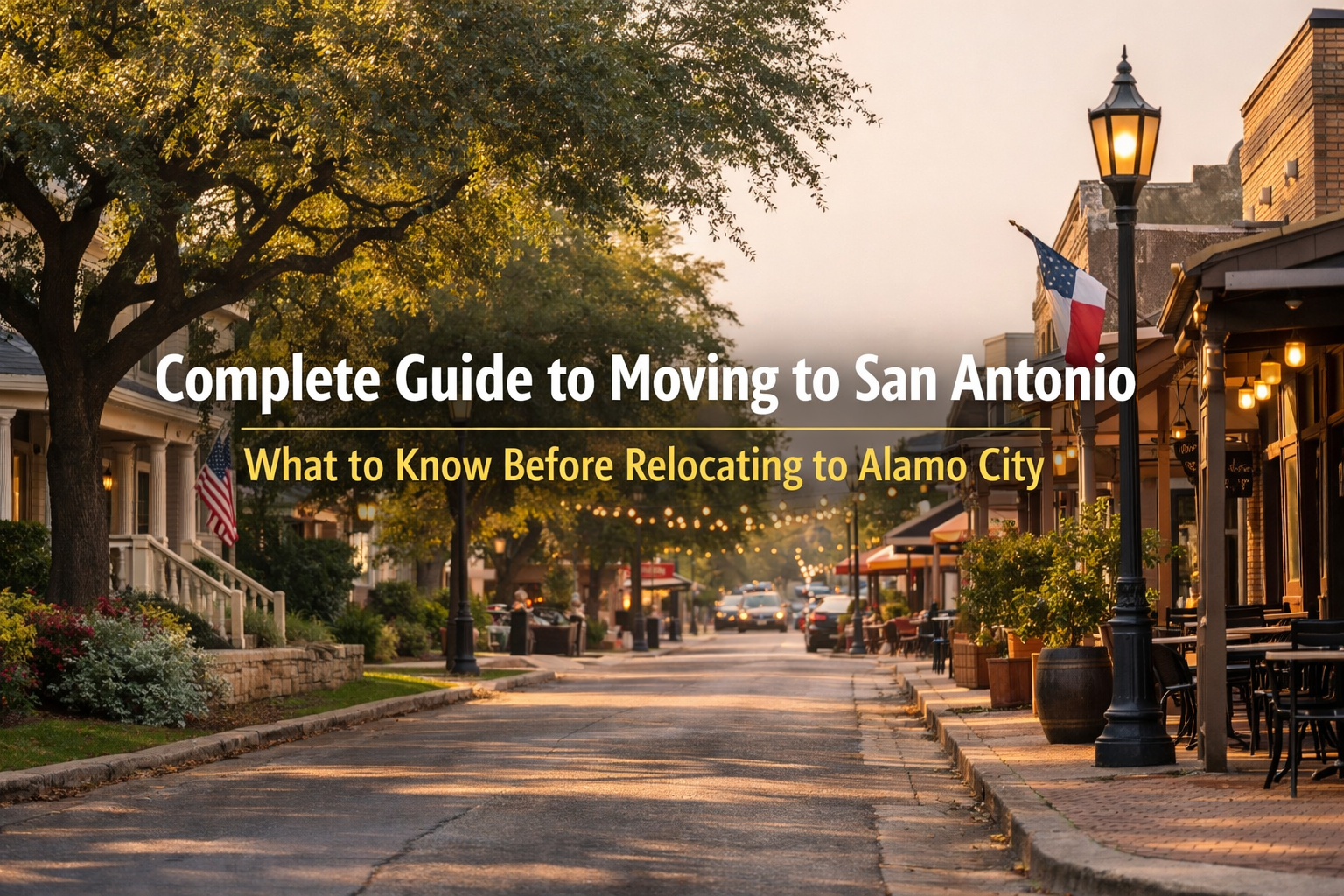
San Antonio consistently ranks among the fastest growing major cities in America, attracting thousands of new residents annually from across the United States and internationally. This growth reflects the city's combination of economic opportunity, affordable living, cultural richness, and quality of life advantages that make relocation appealing to diverse populations from young professionals to growing families to retirees.
For those considering moving to San Antonio, understanding what makes the city unique, what to expect regarding cost of living and lifestyle, which neighborhoods might fit different needs, and how the relocation process works helps transform an intimidating transition into an exciting new chapter. The city's sprawling geography, diverse communities, and distinctive Texas character create both opportunities and considerations for newcomers.
This comprehensive guide covers everything prospective residents need to know about moving to San Antonio, from why people relocate here through practical considerations about housing, employment, schools, and lifestyle.
Why Are People Moving to San Antonio?
Understanding what attracts others helps evaluate whether San Antonio matches your own priorities.
Economic Opportunity:
San Antonio's diverse economy provides employment across multiple sectors creating stability and growth:
- Healthcare: The South Texas Medical Center and hospital systems throughout the metro employ thousands in medical, research, and administrative roles
- Military: Joint Base San Antonio represents one of the largest military installations in the country, employing uniformed personnel and civilian workers
- Technology and Cybersecurity: Growing sectors attracting companies and talent
- Financial Services: Major employers including USAA headquarters
- Tourism and Hospitality: Year round tourism supporting service sector employment
- Manufacturing and Logistics: Strategic location supporting distribution and production
The employment base supports both career advancement and job security across economic cycles.
Housing Affordability:
Compared to coastal markets and many other major metros, San Antonio offers significantly more affordable housing. Buyers relocating from California, New York, Washington, or other high cost areas often upgrade in size, features, and locations while reducing monthly housing expenses.
The ability to purchase larger homes, access better school districts, or live in newer construction for prices that would buy modest properties in expensive markets represents powerful economic incentive.
No State Income Tax:
Texas lacks state income tax, reducing tax burdens for many relocating households. Combined with affordable housing and reasonable cost of living, total financial pictures often improve significantly despite other costs like property taxes.
Quality of Life:
San Antonio offers big city amenities with more relaxed pacing than some major metros:
- Cultural attractions including the River Walk, Alamo, museums, and performing arts
- Diverse dining scene reflecting Mexican, German, and other cultural influences
- Professional sports including the Spurs NBA franchise
- Outdoor recreation with parks, trails, rivers, and Hill Country proximity
- Family friendly environment with numerous attractions and activities
- Year round sunshine supporting active outdoor lifestyles
Climate Advantages:
Mild winters and long growing seasons appeal to those seeking escape from harsh northern climates. While summer heat requires adjustment, many newcomers appreciate extended outdoor seasons and abundant sunshine compared to colder, cloudier origin locations.
What Is the Cost of Living in San Antonio?
Understanding total living costs helps set realistic budgets and expectations.
Housing Costs:
Housing represents the largest budget component for most households. San Antonio housing costs run significantly below national averages and far below expensive coastal markets.
Median home prices provide reasonable entry points for first time buyers while allowing move up buyers substantial options. The range extends from affordable starter homes through luxury properties in premium locations.
Property Taxes:
Texas relies heavily on property taxes funding schools and local services, resulting in higher rates than many states. However, homestead exemptions reduce assessed values for primary residences, lowering tax bills.
Understanding actual tax burdens on prospective properties prevents budget surprises. Buyers should research tax rates in specific areas and calculate annual costs rather than assuming low taxes based on no income tax.
Utilities:
Summer cooling costs represent significant utility expenses. Air conditioning runs extensively from May through September. However, minimal heating requirements during mild winters provide offset.
Transportation:
San Antonio's sprawling geography makes car ownership practical necessity for most residents. Public transportation exists but serves limited areas compared to dense urban metros. Budgeting for vehicle ownership, insurance, and fuel matters for most households.
Commute costs depend heavily on where residents live relative to employment. Strategic location selection reduces both time and expense.
Groceries and Consumer Goods:
Food and consumer prices generally run at or slightly below national averages. The absence of sales tax on groceries provides some savings, though sales tax applies to most other purchases at combined state and local rates.
Healthcare:
Healthcare costs vary based on insurance coverage and provider networks. The strong healthcare sector provides excellent medical facilities and numerous provider options.
What Are San Antonio's Major Areas and Neighborhoods?
Understanding geography helps narrow housing searches.
North Central and Stone Oak:
The North Central corridor along Highway 281 features established neighborhoods, highly regarded schools, and convenient access to the Medical Center and employment centers. Stone Oak and surrounding communities developed primarily from the 1990s onward, offering relatively newer construction with mature landscaping.
This area attracts families prioritizing schools, professionals working in healthcare and business, and buyers seeking established communities with amenities.
Rapid growth characterizes the Northwest Side, transforming from ranch land to master planned communities over recent decades. Areas along Loop 1604 extending toward Helotes feature newer construction, family oriented environments, and community amenities.
This region appeals to buyers seeking modern homes, families wanting newer schools and amenities, and those prioritizing newer development over established character.
Northeast Corridor:
Schertz, Cibolo, and Converse form the Northeast corridor serving both military families near Randolph Air Force Base and civilians seeking suburban living with access to both San Antonio and Austin employment corridors.
This area offers relatively affordable housing, growing communities, and convenient Interstate 35 access.
Hill Country and Boerne:
The Hill Country west of San Antonio provides scenic beauty, small town character, and outdoor recreation access. Boerne maintains distinct identity while serving San Antonio commuters willing to trade drive time for natural settings and community atmosphere.
This region attracts buyers prioritizing scenery and lifestyle over urban convenience, retirees seeking relaxed environments, and those desiring separation from metro density.
Central and Urban Areas:
Downtown and surrounding central neighborhoods offer urban living with walkability, historic character, and cultural amenities. These areas appeal to young professionals, empty nesters, and those prioritizing urban lifestyle over suburban space.
South Side:
The South Side features more affordable housing, diverse communities, and developing commercial corridors. This area attracts first time buyers, investors, and those seeking value while accepting longer commutes to some employment centers.
What Should Relocators Know About Employment?
Job considerations drive many relocation decisions.
Major Employment Sectors:
Understanding where jobs concentrate helps with both employment searches and housing location decisions:
- Medical Center: Concentrated healthcare employment along Northwest Side
- Military installations: Fort Sam Houston, Randolph AFB, Lackland AFB throughout metro
- Downtown: Government, legal, financial services, corporate headquarters
- Corporate campuses: USAA, Valero, H-E-B, and others scattered across metro
- Technology parks: Emerging clusters in various locations
- Distribution and logistics: Throughout metro given central Texas location
Commute Considerations:
San Antonio's size means commute times vary dramatically based on home and workplace locations. Testing routes during typical commute hours reveals realistic travel times before committing to housing locations.
Rush hour congestion affects major corridors including Interstate 10, Highway 281, and Loop 1604. Strategic location selection minimizes commute burden.
Remote Work:
Increasing remote work flexibility allows some relocators to prioritize lifestyle factors over commute convenience. However, hybrid schedules still require considering occasional office access.
What About Schools for Families?
School quality significantly influences family relocation decisions.
School District Landscape:
The San Antonio area contains numerous independent school districts with varying reputations and performance. Northside ISD, North East ISD, and several others serve large portions of the metro. Smaller districts including Alamo Heights, Boerne, and others maintain distinct identities.
School quality varies within districts by individual campus. Families should research specific schools serving prospective properties rather than relying solely on district reputations.
School Research Resources:
Online resources provide test scores, demographic data, and parent reviews. However, visiting schools when possible and speaking with current parents provides deeper insight into culture, programs, and fit.
Understanding how school assignments work and whether they might change helps avoid surprises after purchase.
Private and Charter Options:
Numerous private schools and charter school options provide alternatives to traditional public schools for families whose priorities extend beyond district assignments.
How Does San Antonio's Climate Affect Lifestyle?
Climate shapes daily life and seasonal patterns.
Summer Heat:
San Antonio summers feature high temperatures typically exceeding 95 degrees from June through September with heat index values often higher. Adjusting to heat requires acclimatization for newcomers from cooler climates.
Strategies include:
- Prioritizing homes with quality air conditioning and shaded outdoor spaces
- Planning outdoor activities for morning and evening
- Embracing indoor recreation during peak heat
- Utilizing pools and water features
- Understanding that summer indoor living dominates for many
Mild Winters:
Winter temperatures rarely drop to freezing for extended periods. Minimal heating needs and outdoor accessibility year round appeal to those escaping harsh northern winters.
Occasional winter storms can bring ice and disruption unfamiliar to some newcomers, though frequency remains low.
Extended Outdoor Season:
Comfortable weather from October through May supports outdoor activities, dining, and recreation for much of the year. This extended season appeals to active individuals and families.
What Is the Home Buying Process for Relocating Buyers?
Understanding the buying process helps newcomers navigate successfully.
Distance Challenges:
Buying from afar requires strategic approaches:
- Virtual tours for preliminary screening
- Focused in person visits seeing multiple properties efficiently
- Local representation providing market knowledge and on ground presence
- Remote closing options when necessary
- Coordination of inspections, appraisals, and closing logistics
Timeline Expectations:
Most transactions close within 30 to 45 days from contract execution. Buyers should plan move timing accordingly, potentially utilizing temporary housing if needed.
Financing Considerations:
Relocating buyers should address:
- Pre approval before serious searching
- Employment verification for new jobs or transfers
- Asset documentation including fund sources
- Local lender benefits versus using origin state lenders
What Practical Considerations Affect Moves?
Beyond housing, relocation involves numerous logistics.
Temporary Housing:
Many relocators utilize temporary housing while searching or waiting for new construction completion. Options include corporate housing, extended stay hotels, and short term rentals.
Vehicle Registration:
Texas requires vehicle registration and driver's license updates within specified periods after establishing residency. Understanding requirements prevents penalties.
Utility Setup:
Electric, water, internet, and other utilities require setup before move in. Many providers handle arrangements remotely with activation scheduled for move dates.
Community Integration:
Building social connections matters for successful relocation. Involvement in neighborhoods, schools, religious organizations, recreational groups, and community activities helps newcomers establish roots.
Expert Insight from Tami Price, REALTOR®
"I have helped hundreds of people relocate to San Antonio over nearly two decades. The transition goes most smoothly when buyers research thoroughly, visit before committing if possible, and work with experienced local professionals who understand both the market and relocation challenges. San Antonio offers tremendous advantages for many relocators, but success requires understanding what you are moving to, not just what you are leaving. I help my relocating clients understand neighborhoods, make informed decisions, and navigate the buying process despite geographic distance."
Tami Price, REALTOR®, Broker Associate, specializes in relocation support throughout her approximately 1,000 closed transactions, helping newcomers transition successfully to San Antonio.
Three Key Takeaways for Those Moving to San Antonio
- San Antonio offers compelling economic and lifestyle advantages. Affordable housing, no state income tax, diverse employment, and quality of life attract relocators from across the country seeking better value and opportunities.
- Neighborhood selection significantly affects relocation success. Understanding different areas, commute implications, school options, and lifestyle factors helps newcomers find locations matching their priorities and circumstances.
- Professional local guidance smooths the transition. Working with experienced agents familiar with relocation challenges, neighborhood nuances, and market conditions helps newcomers avoid costly mistakes and find ideal homes more efficiently.
Frequently Asked Questions
Q: How does San Antonio compare to Austin or Dallas?
A: San Antonio offers more affordable housing than Austin while maintaining strong job growth and cultural amenities. Compared to Dallas, San Antonio provides lower costs, less traffic congestion, and distinct cultural character. Austin attracts more technology focus, Dallas more corporate headquarters. San Antonio balances affordability with opportunity and quality of life.
Q: Is San Antonio safe?
A: Like any major city, San Antonio includes neighborhoods with varying safety profiles. Crime concentrates in specific areas while many neighborhoods maintain very low crime rates. Research specific areas you are considering and avoid generalizing about the entire metro. Your agent can provide context about different neighborhoods.
Q: Do I need to speak Spanish to live in San Antonio?
A: English remains the primary language for most business and daily activities. However, San Antonio's rich Hispanic heritage means Spanish appears frequently in signage, media, and casual conversation. Bilingual skills provide advantages but are not necessary for most relocators.
Q: How long does it take to adjust to the summer heat?
A: Most newcomers from cooler climates require at least one full summer to acclimate. The first summer often feels most challenging. By the second summer, most people adapt their routines and expectations. Embracing air conditioning, adjusting activity timing, and accepting seasonal patterns facilitates adjustment.
Q: Should I rent before buying?
A: Renting first allows experiencing neighborhoods before purchase commitments. However, it also means making two moves and potentially missing favorable buying opportunities. The right choice depends on timeline flexibility, market familiarity, and comfort with remote decision making. Many successful relocations involve direct purchase after thorough research and focused visits.
Q: What surprises do most relocators encounter?
A: Common surprises include summer heat intensity, property tax levels despite no income tax, sprawling geography requiring more driving than expected, and positive discoveries about cultural diversity, food quality, and community friendliness. Managing expectations through research reduces negative surprises while allowing pleasant discoveries.
The Bottom Line
Moving to San Antonio represents significant opportunity for many relocators seeking affordable living, economic advancement, and quality of life improvements. The city's growth reflects its appeal across diverse populations from young professionals through families to retirees.
Successful relocation requires understanding what makes San Antonio unique, which neighborhoods fit different priorities, how costs truly compare to origin locations, and how the housing market works. Research, realistic expectations, and professional guidance transform potentially overwhelming transitions into exciting new chapters.
For those considering relocating to San Antonio, thorough preparation and informed decision making make all the difference between struggling adjustment and thriving in new surroundings.

Contact Tami Price, REALTOR® | San Antonio, TX
Tami Price, REALTOR®, Broker Associate, and USAF Veteran, specializes in helping relocators transition successfully to San Antonio. With nearly two decades of local experience and approximately 1,000 closed transactions including hundreds of relocating buyers, Tami provides the market knowledge, neighborhood expertise, and relocation support newcomers need.
Recognized as a RealTrends Verified top San Antonio agent and backed by 646+ five-star reviews and recommendations across platforms including Google, Zillow, Realtor.com, FastExpert, and Real Satisfied, Tami delivers results relocating clients trust.
Tami Price, REALTOR®, Broker Associate
📞 210 620 6681
Tami Price's Specialties
- Relocation support for families and individuals moving to San Antonio
- San Antonio neighborhoods and area expertise
- Out of state buyers and remote transactions
- Military relocation and PCS moves
- First time buyers new to the market
- New construction for relocating families
Disclaimer
This blog provides general educational information about relocating to San Antonio and does not constitute financial, legal, employment, or professional advice. Individual circumstances vary significantly. Cost of living, employment opportunities, neighborhood characteristics, and quality of life factors change over time and affect people differently. Readers should conduct their own research and consult with qualified professionals including licensed real estate agents, financial advisors, and relocation specialists regarding their specific situations. Tami Price, REALTOR®, is licensed in the State of Texas.
Categories
- All Blogs (942)
- Home Buying (19)
- Neighborhood Guides (45)
- 10 Incentive and Rate Buydown Questions (1)
- 10 Military Neighborhood (1)
- 10 Mistakes Sellers Make (1)
- 10 Strategies to Coordinate a Same Day Close (1)
- 12 Lifestyle Questions to Move In (1)
- 12 PCS What Ifs (1)
- 12 Photos and Marketing Assets (1)
- 13 PCS Hunting Trip Tips (1)
- 14 Design Center Decisions (1)
- 15 Red Flags Touring Home in San Antonio (1)
- 2026 Market (1)
- 30 days after closing your home (1)
- 7 Offer Terms Beyond Price (1)
- 7 VA Specific Questions (1)
- 78015 Ranked One (1)
- 8 Bridge (1)
- 8 Myths Buyers Believe about Down Payments (1)
- 8 Reasons VA Buyers Love New Construction (1)
- 9 Mistakes Move Up Buyers Make (1)
- 9 Questions to Decide If You Keep Your PCS Home (1)
- 9 Timeline Questions Every Buyer Need to Ask (1)
- 9 Warranty Questions to Ask (1)
- 9 Ways to Attract VA & Military Buyers (1)
- 90 days before your move (1)
- About Tami Price (6)
- Active Adult Homes (1)
- Affordable Communities (2)
- Affordable Housing & Community Development (5)
- Agent Qualifications and Credentials (1)
- Agent Qualifications and Experience (1)
- Agent Recognition (3)
- Agent Selection (1)
- AI and Real Estate Tools (1)
- Alamo Heights (5)
- Alamo Heights ISD (1)
- Alamo Heights Real Estate (1)
- Alamo Ranch (3)
- Amenities in Helotes, Texas (3)
- Apartment Market (1)
- Appraisals (1)
- Arts and Culture (1)
- Awards and Recognition (7)
- Balcones Creek (1)
- Best Neighborhoods to Live in Cibolo, TX (3)
- Best Neighborhoods to Live in San Antonio (16)
- Best Places to Live in Leon Valley: A Neighborhood Guide (1)
- Best Places to Live in Northeast Inner Loop: A Neighborhood Guide (1)
- Bexar County Property Tax (1)
- Bexar County Real Estate (3)
- Blue Tape Walkthrough (1)
- Boerne Home Sellers (1)
- Boerne Neighborhoods (2)
- Boerne Texas (9)
- Broadway Corridor Development (1)
- Build-to-Rent Communities (1)
- Builder Contracts & Warranties (3)
- Builder Incentives (1)
- Builder Warranties (1)
- Buyer (97)
- Buyer Activity San Antonio (1)
- Buyer and Seller Guidance (4)
- Buyer Due Diligence (1)
- Buyer Education (46)
- Buyer Guide (9)
- Buyer Guides (7)
- Buyer Protection Strategies (1)
- Buyer Representation (1)
- Buyer Representation Expertise (1)
- Buyer Resources (90)
- Buyer Strategy (2)
- Buyers (13)
- Buyers Agent (1)
- Buying a Foreclosed Home in San Antonio (10)
- Buying a Home (3)
- Buying a Home in San Antonio (6)
- Buying Near JBSA (1)
- Buying Timeline (1)
- Buying vs Renting (1)
- Castroville, TX (8)
- Central San Antonio (1)
- Central San Antonio Development (2)
- Central Texas Growth (1)
- Choosing a Real Estate Agent (1)
- Choosing an Agent (1)
- Cibolo Communities (1)
- Cibolo Home Sellers (1)
- Cibolo TX (15)
- Client Reviews and Testimonials (1)
- Client Satisfaction (1)
- Client Stories (1)
- Client Testimonial (4)
- Clients review (4)
- Closing (1)
- Cobblestone (1)
- Comal County (1)
- Commercial & Retail Development (27)
- Commercial Development (13)
- Commercial Development Impact on Home Values (1)
- Commercial Real Estate (1)
- Community (1)
- Community Amenities (2)
- Community Development (23)
- Community Development and Real Estate (3)
- Community Events & Development (1)
- Community Guides (1)
- Community Infrastructure (1)
- Community Investment Impact (2)
- Community Landmarks (1)
- Community News (4)
- Community Planning (2)
- Community Revitalization (1)
- Community Spotlights (1)
- Commuter Neighborhoods (1)
- Cons of Living in Helotes, TX (4)
- Conservation Communities (1)
- Contingency Questions (1)
- Converse Home Sellers (1)
- Converse Homes For Sale (3)
- Converse Real Estate (1)
- Converse TX (10)
- Converse TX Real Estate (1)
- Cost of Living Guides (1)
- Cost of Living in San Antonio TX (25)
- CPS Energy Programs (1)
- Custom Homes (5)
- Davis Ranch (1)
- Days on Market (1)
- Deco District San Antonio (1)
- Denver Heights (1)
- Down Payment Assistance (1)
- Downtown Boerne (1)
- Downtown Development (3)
- Downtown Living (1)
- Downtown Revitalization (14)
- Downtown San Antonio (2)
- Downtown San Antonio Real Estate (5)
- Downtown San Antonio Revitalization (1)
- Dual Military (1)
- East Side Living (1)
- East Side Neighborhoods (1)
- East Side San Antonio (4)
- Economic Development (3)
- Economic Growth & Industry (1)
- Education, Texas Hill Country (1)
- Emerald Pointe (1)
- Employment (1)
- Employment Corridors (1)
- Encino Forest (1)
- Entertainment Economy (1)
- Equity and Pricing Strategy (2)
- Equity Q&A (1)
- Established Communities (3)
- Events in San Antonio (207)
- Expert Advice from Tami Price, Realtor® (10)
- Fair Oak Ranch (1)
- Family Activities (2)
- Family Homes (3)
- Family Living in San Antonio (1)
- FAQ (1)
- Far Northwest San Antonio (1)
- Far West San Antonio (1)
- Far Westside Real Estate (4)
- Farmer Markets in San Antonio (1)
- Fastest Growing Zip Codes in America (1)
- Featured Homes for Sale (2)
- Featured Properties (1)
- Final Walkthrough (1)
- Financial Planning (11)
- Financing Strategy (1)
- First Time Buyers (23)
- First Time Sellers (1)
- First-Time Buyers (6)
- First-Time Homebuyer Resources (4)
- First-Time Homebuyer Tips (2)
- First-Time Homebuyers (6)
- First-Time Investors (1)
- Fort Sam Houston (3)
- Fort Sam Houston Real Estate (1)
- Fort Sam Houston, TX (2)
- Fox Grove (1)
- FSBO vs Agent Representation (1)
- Future Rental (1)
- Gated Communities (5)
- Golf Communities (1)
- Great Northwest (1)
- Greater San Antonio Housing Trends (2)
- Greater San Antonio Real Estate (5)
- Green Home Upgrades (1)
- Growth and Development (11)
- Healthcare (1)
- HELOC (1)
- Helotes Home Sellers (1)
- Highway 151 Corridor Growth (1)
- Hill Country Business (1)
- Hill Country Communities (2)
- Hill Country Development (3)
- Hill Country Homes for Sale (1)
- Hill Country Living (3)
- Hill Country Market Updates (1)
- Hill Country Real Estate (4)
- Hill Country Retreat (1)
- Historic Districts (5)
- Historic Neighborhoods (4)
- Historic Preservation (2)
- Holiday Attractions (1)
- Holiday Guide (1)
- Home Buying (7)
- Home Buying Education (3)
- Home Buying Guide (7)
- Home Buying Process (8)
- Home Buying Strategy (2)
- Home Buying Tips (6)
- Home Energy Efficiency San Antonio (5)
- Home Financing (2)
- Home Improvement ROI (1)
- Home Inspections (3)
- Home Preparation (2)
- Home Pricing Strategy (14)
- Home Renovation for Resale (1)
- Home Selling (12)
- Home Selling Guide (11)
- Home Selling Strategies (3)
- Home Selling Strategy (3)
- Home Selling Tips (22)
- Home Staging and Updates (2)
- Home Values (2)
- Homebuyer Education (15)
- Homebuyer Resources (1)
- Homebuying Guide (1)
- Homebuying Tips (3)
- Homeowner (37)
- Homeowner Tax Benefits (1)
- Homeownership Costs (1)
- Homes for Sale (2)
- Homes for sale near Lackland AFB (4)
- Homes Near Military Bases (1)
- Homestead amenities (1)
- Horizon Pointe (1)
- House Hunting Guide (1)
- Housing (1)
- Housing Community Development (1)
- Housing Development (2)
- Housing Market Updates (3)
- How to Buy a House in San Antonio TX (48)
- Huebner Oaks shopping center (1)
- Hunters Ranch (1)
- Hybrid (1)
- I-10 Corridor (1)
- I-35 Corridor (1)
- In Person (1)
- Incorporated Cities (6)
- Industrial Investment Impact (1)
- Industry News (2)
- Industry Recognition (1)
- Infrastructure & Growth Projects (26)
- Infrastructure and Sustainability (1)
- Infrastructure Development (1)
- Infrastructure Investment (1)
- Infrastructure Updates (2)
- Interest Rates (2)
- Invest in San Antonio (46)
- Investment Opportunities (3)
- Investment Property San Antonio (4)
- JBSA (9)
- JBSA Housing (11)
- JBSA Real Estate (4)
- JBSA Resources (7)
- Joint Base San Antonio (5)
- Joint Base San Antonio Housing (1)
- Judson ISD (2)
- Kendall County (1)
- La Cantera Retail Development (1)
- Lackland AFB (7)
- Lackland AFB Housing (1)
- Land Conservation (1)
- Land Use Planning (1)
- Lera MLS (15)
- Lifestyle & Community Growth (18)
- Lifestyle & Local Growth (12)
- Lifestyle Amenities (1)
- Lifestyle Communities (1)
- Listing Preparation (1)
- Listing Strategy (1)
- Live Oak (1)
- Living in San Antonio, TX (52)
- Living Near Randolph AFB (7)
- Loan Programs (1)
- Local Attractions (3)
- Local Business (1)
- Local Business & Development (9)
- Local Business & Economy (3)
- Local Business Spotlight (20)
- Local Business Support (5)
- Local Development (4)
- Local Development News (9)
- Local Market Insights (5)
- Local News (2)
- Local News Around San Antonio (2)
- Local Policy Changes (1)
- Local Real Estate News (1)
- Loop 1604 Corridor Growth (2)
- Loop 410 Corridor Development (1)
- Luxury Communities (3)
- Luxury Homes (2)
- Luxury Real Estate (1)
- Luxury Retail San Antonio (1)
- MacArthur Park (1)
- Major Developments (2)
- Making Offers on Homes (1)
- Market Analysis (26)
- Market Conditions (47)
- Market Expertise (1)
- Market Insights (5)
- Market Strategy (1)
- Market Timing (2)
- Market Trends (10)
- Market Trends & Insights (2)
- Market Update (18)
- Market Update 2026 (1)
- Market Updates (22)
- Master Planned Communities (12)
- Medical Center Area Real Estate (1)
- Medina Valley ISD (2)
- Midtown Living (1)
- Military & Economic Impact (3)
- Military Buyers (3)
- Military Communities (1)
- Military Families (1)
- Military Family Resources (1)
- Military Heritage (1)
- Military Homebuying (3)
- Military Homeownership (1)
- Military Housing (3)
- Military Housing Market in Texas (16)
- Military Life in San Antonio (2)
- Military Neighborhoods (1)
- Military PCS Relocations (3)
- Military Real Estate (2)
- Military Relocation (100)
- Military Relocation & VA Loans (10)
- Military Relocation San Antonio (4)
- Military Relocation Services (3)
- Military Relocation to San Antonio (50)
- Military Relocations (20)
- Military Relocations & VA Home Loans (5)
- Mixed-Income Housing (1)
- MLS Accuracy & Data Transparency (1)
- Mortgage Programs (1)
- Mothers Day in San Antonio (1)
- Move to Boerne TX (18)
- Move to Castroville TX (11)
- Move to Converse TX (16)
- Move to New Braunfels (1)
- Move to North San Antonio (19)
- Move to San Antonio TX (73)
- Move to Selma TX (19)
- Move to Shertz TX (13)
- Move to Texas (53)
- Move Up Buyer Resources (1)
- Move Up Buyers (23)
- Move-In Ready Homes (3)
- Move-In Ready Homes San Antonio (2)
- Move-Up Buyers (2)
- Moving to Helotes, TX (17)
- Moving to San Antonio (69)
- MUD Taxes (1)
- Natalia Homes For Sale (1)
- Near East Side Living (1)
- Negotiation Strategy (2)
- Neighborhood Amenities (1)
- Neighborhood Development (1)
- Neighborhood Guides (7)
- Neighborhood Investment (1)
- Neighborhood News (2)
- Neighborhood Revitalization (2)
- Neighborhood Spotlights (12)
- Neighborhood Updates (1)
- Neighborhoods near Randolph AFB (12)
- New Braunfels (6)
- New Braunfels Homes For Sale (1)
- New Braunfels News (3)
- New Braunfels Real Estate (3)
- New Businesses (2)
- New Construction (63)
- New Construction Communities (1)
- New Construction Homes (13)
- New Construction Homes San Antonio (5)
- New Construction vs Resale (2)
- New Construction Without Customization (1)
- New Construction Without the Wait (1)
- New Contruction Cost (1)
- New Development (3)
- New Listing (19)
- New Restaurants (3)
- News (211)
- News & updates (213)
- No HOA Homes (1)
- North Central San Antonio (5)
- North East ISD (4)
- North San Antonio (9)
- North San Antonio Real Estate (3)
- North Side Neighborhoods (1)
- North Side San Antonio Development (2)
- Northeast Inner Loop (1)
- Northeast Inner Loop Neighborhoods (1)
- Northeast San Antonio (3)
- Northside ISD (5)
- Northwest San Antonio (9)
- Northwest San Antonio Development (1)
- Northwest San Antonio Growth (1)
- Northwest San Antonio Real Estate (3)
- Northwood (1)
- Olympia Hills (1)
- One-Story Homes (1)
- Outdoor Living (1)
- Parks and Recreation (2)
- PCS and JBSA (2)
- PCS checklist (1)
- PCS Guide (4)
- PCS Moves (12)
- PCS Moves to Joint Base San Antonio (4)
- PCS Planning (16)
- PCS Randolph AFB (17)
- PCS Relocation (1)
- PCS Resources (6)
- PCS San Antonio (46)
- PCS to San Antonio (42)
- Pearl District Area Real Estate (2)
- PID Assessments (1)
- Pinon Creek (1)
- Pipe Creek (1)
- Places to Eat Near Randolph AFB (1)
- Pool Homes (1)
- Pre Approval (1)
- Pre-Listing Preparation (2)
- Pre-Listing Process (1)
- Prescott Oaks (1)
- Pricing and Marketing Strategy (3)
- Professional Awards and Achievements (2)
- Professional Real Estate Representation (1)
- Property Tax Exemptions Texas (1)
- Property Value Enhancement (1)
- pros and cons living in Converse TX (3)
- Pros and Cons Living in Selma TX (6)
- Pros and Cons of Living in Castroville, TX (4)
- Pros and Cons of Living in San Antonio (33)
- PT500 List (1)
- Purchase Negotiation (1)
- Quality of Life (1)
- Quick Close Real Estate (1)
- Randolph AFB Neighborhoods (2)
- Real Estate (1)
- Real Estate Advice (1)
- Real Estate Agent Recognition (6)
- Real Estate Agent Selection (2)
- Real Estate Agent Value (1)
- Real Estate Consultation (1)
- Real Estate Finance (1)
- Real Estate Financing (1)
- Real Estate Impact (1)
- Real Estate Investment San Antonio (2)
- Real Estate Legal Issues (1)
- Real Estate Market Insights (2)
- Real Estate Market Trends (5)
- Real Estate Professional Designations (1)
- Real Estate Strategy (1)
- Real Estate Technology & Trends (2)
- Real Estate Tips (1)
- Real Estate Tips and Guides (2)
- Real Estate Trends (4)
- RealTrends Verified (1)
- Regional Development (1)
- Regional Real Estate (2)
- Relocating to San Antonio (2)
- Relocation (4)
- Relocation Resources (2)
- Relocation to San Antonio (55)
- Remote Homebuying (1)
- Rental Housing (1)
- Rental Property (1)
- Rental Strategy (1)
- Resale Properties (1)
- Retail Development (2)
- Retire in Boerne TX (11)
- Retire in San Antonio (37)
- Retirement Communities (1)
- Reviews and Recognition (1)
- Rockwall Ranch (1)
- Rural Living (2)
- SABOR (28)
- San Antonio Area Listings (1)
- San Antonio Business Growth (1)
- San Antonio Buyer Resources (2)
- San Antonio Communities (3)
- San Antonio Community Events (1)
- San Antonio Community News (1)
- San Antonio Data Center Development (1)
- San Antonio Development (5)
- San Antonio Development & East Side Real Estate (1)
- San Antonio Dining and Lifestyle (3)
- San Antonio East Side Development (1)
- San Antonio Employment Growth (1)
- San Antonio Food & Community Development (2)
- San Antonio Growth (8)
- San Antonio Home Buying and Selling (2)
- San Antonio Home Buying Guide (5)
- San Antonio Home Improvement (2)
- San antonio home prices (3)
- San Antonio Home Sellers (3)
- San Antonio Homeowner Guide (1)
- San Antonio Homeowner Resources (1)
- San Antonio Homes for Sale (12)
- San Antonio Housing Market (2)
- San Antonio Housing Market & Mortgage Financing (2)
- San Antonio Housing Market Analysis (2)
- San Antonio Housing Trends & Market Analysis (4)
- San Antonio Industrial Development (1)
- San Antonio Industrial Policy (1)
- San Antonio Investment Properties (2)
- San Antonio Job Market (1)
- San Antonio Lifestyle Amenities (2)
- San Antonio Listing (1)
- San Antonio Living (1)
- San Antonio Market (3)
- San Antonio Market Updates (18)
- San Antonio Military Relocation (3)
- San Antonio Neighborhoods (67)
- San Antonio New Construction & Master-Planned Communities (4)
- San Antonio New Home Communities (1)
- San Antonio News (229)
- San Antonio North Side Development (1)
- San Antonio Parks (1)
- San Antonio Property Investment (1)
- San Antonio Property Taxes (2)
- San Antonio Real Estate (163)
- San Antonio Real Estate Agents (6)
- San Antonio Real Estate Excellence (1)
- San Antonio Real Estate Guide (6)
- San Antonio Real Estate Market (41)
- San Antonio Real Estate Market Analysis (6)
- San Antonio Real Estate News (2)
- San Antonio REALTOR Awards (1)
- San Antonio Restaurant News (2)
- San Antonio Restaurant Openings (1)
- San Antonio Seller Resources (2)
- San Antonio Sellers (1)
- San Antonio Spec Homes (1)
- San Antonio Spurs Community Programs (1)
- San Antonio Suburbs (1)
- San Antonio Transportation (2)
- San Antonio University Area Housing (1)
- San Antonio Urban Living (7)
- San Antonio West Side Development (2)
- San Antonio Zoning Policy (1)
- Scenic Loop (1)
- Schertz Home Sellers (1)
- Schertz Real Estate (1)
- Schertz, TX (13)
- School Districts (1)
- School Information (1)
- SCUCISD Schools (1)
- Secured Quick Offer (1)
- Sell Home In San Antonio TX (64)
- Seller (83)
- Seller Education (24)
- Seller Guide (4)
- Seller Guides (1)
- Seller Representation Expertise (1)
- Seller Resources (68)
- Seller Should Understand (1)
- Seller Strategy (3)
- Seller Tips (2)
- Sellers (10)
- Selling A Home in San Antonio (62)
- Selling Your San Antonio Home (3)
- Selma TX (9)
- Single-Story Homes (4)
- Smart Homes (1)
- Solar Homes (3)
- South San Antonio Real Estate (1)
- South Side Economic Growth (1)
- South Side San Antonio (1)
- Southtown (2)
- Southwest San Antonio Real Estate (1)
- Spec Homes and Inventory Homes (2)
- Spurs Arena Project Marvel (1)
- Stone Oak (2)
- Stone Oak Community News (5)
- Suburban Housing Growth (12)
- Suburban Living (2)
- Talise De Culebra (1)
- Technology Growth (3)
- Technology Sector Growth (1)
- Terrell Hills (3)
- Texas Acreage Properties (3)
- Texas Homestead Exemption (1)
- The Dominion Real Estate (1)
- The Rim Area Real Estate (1)
- Things to do in San Antonio TX (22)
- Things to do Near Randolph AFB (4)
- Time Planning (1)
- Time-Sensitive Home Buying (1)
- Timing Strategy (1)
- Tips for Buying New Construction (9)
- Tobin Hill Neighborhoods (2)
- Top Real Estate Agent in San Antonio (3)
- Tourism and Economic Development (1)
- Traders's Joe San Antonio (1)
- Transaction Coordination (1)
- Transportation Infrastructure (1)
- Two-Story Homes (2)
- Universal City (1)
- Updated Homes (2)
- Upscale Communities (1)
- Urban Communities (2)
- Urban Corridor Real Estate (1)
- Urban Development (5)
- Urban Living (3)
- Urban Neighborhoods (4)
- Urban Real Estate (1)
- Urban Renewal Projects (1)
- Urban Revitalization San Antonio (1)
- Utility Cost Reduction (1)
- UTSA Campus Development (1)
- VA Buyers (1)
- VA Home Loan Benefits (3)
- VA Loan Assumptions (3)
- VA loan benefits (27)
- VA Loan Guidance (1)
- VA Loan Home Buying Assistance (2)
- VA Loans (71)
- VA Loans and Military Benefits (3)
- VA Loans and Military Home Buying (3)
- VA Loans San Antonio (43)
- VET Benefits Living in San Antonio (3)
- Veterans Resources (3)
- Village Northwest (1)
- Virtual Buyers (1)
- Walkable Communities (1)
- week in sales (41)
- Weekly Sales Report (42)
- West San Antonio (2)
- West San Antonio Development (1)
- West San Antonio Real Estate (3)
- West San Antonio Real Estate Market (2)
- West Side Infrastructure Planning (1)
- West Side Real Estate (1)
- West Side San Antonio (2)
- Windcrest Homes for Sale (1)
Recent Posts