11 Questions to Ask Before You Price Your San Antonio Home in Today’s Market

Pricing a home in San Antonio in 2026 requires more than pulling a handful of comparable sales and landing on a number that feels optimistic. In a market that has shifted toward more balanced conditions, where inventory levels are higher than the peak years and buyers are evaluating multiple options carefully before committing, the initial list price carries consequences that extend well beyond the first week on the market. Tami Price, REALTOR®, a San Antonio real estate professional and Air Force veteran with nearly two decades of local market experience, notes that the sellers who protect their equity most effectively in today's environment are not those who aim highest and negotiate down but those who enter the market aligned with current buyer expectations from day one and capture the strong early activity that accurate pricing generates.
The first two weeks of a listing are the highest-engagement period a home will experience, and pricing that captures buyer attention during that window consistently produces better offers, fewer days on market, and stronger negotiating positions than pricing that requires a correction after the initial enthusiasm fades. For homeowners preparing to sell a home in San Antonio, Schertz, Cibolo, Helotes, Converse, or Boerne, working through the eleven questions below before any list price is set produces a pricing decision grounded in current market reality rather than aspiration, and that grounding is what protects equity when it matters most.
Why Does Pricing Strategy Carry More Weight in San Antonio's 2026 Market?
The peak market years created conditions where pricing errors were relatively forgiving because buyer urgency and limited inventory compensated for overpricing in ways the more balanced 2026 environment does not. Buyers today have more options, more time to evaluate those options carefully, and more sensitivity to pricing that does not reflect current comparable sale data, which means homes that are priced above where buyers are transacting accumulate days on market rather than generating the early offer activity that reflects accurate positioning. That accumulation of days on market is not neutral. It creates a stigma around the listing that persists even after a price correction, because buyers who monitor the market see both the original price and the reduction and draw conclusions about seller motivation and property condition that affect their offer posture.
Understanding where buyer activity is concentrated, how current interest rates affect purchasing power in the specific price range, and what the competition from new construction looks like in comparable corridors are all dimensions of the pricing decision that a simple comparable sales pull does not capture. The eleven questions below provide a structured framework for working through those dimensions before the list price is finalized.
1. What Are Similar Homes Actually Selling For Right Now?
The foundation of any accurate pricing analysis is closed sales data, not active listing prices, because closed sales represent the prices buyers have actually agreed to pay rather than the prices sellers have decided to ask. Active listings show the competition, and that context is valuable, but they do not reveal whether buyers are engaging at those prices or passing in favor of better-positioned alternatives. Sellers who anchor their list price to active listings rather than to recent closed sales risk pricing above where buyers have demonstrated willingness to transact, which produces a listing that feels competitively positioned on paper but generates less buyer engagement than the market should support at the actual transaction level.
Specific data points that produce the most useful closed sale analysis include the sale price relative to the original list price for each comparable, not just the final sale price, which reveals how much negotiation occurred and whether buyers in that segment are paying list price or consistently closing below it. Closed sales that occurred within the past 30 to 45 days are the most relevant benchmark for current buyer behavior, and the per-square-foot analysis should be adjusted for meaningful differences in lot size, condition, and upgrade level rather than applied uniformly across homes that share only the neighborhood and approximate size. Tami Price conducts this analysis as part of the pre-listing consultation process specifically to ensure that the pricing recommendation is grounded in what buyers are actually paying today rather than what sellers hoped they would pay three months ago.
2. How Recent Are the Comparable Sales, and Does Their Timing Still Reflect Current Conditions?
Market conditions in San Antonio have shifted meaningfully enough over the past twelve to eighteen months that comparable sales from even three to six months ago may not accurately reflect current buyer behavior, particularly in price ranges or neighborhoods where inventory has increased or where buyer demand has moderated. A comparable sale from the first quarter of the year reflects the market conditions, buyer pool, and inventory dynamics of that period, and using it without adjustment to price a home in a materially different current environment produces a price that is calibrated to a market that no longer exists in the same form.
The most reliable pricing benchmark uses the most recent available closed sales as the primary reference and older comparables only as supporting context rather than as equivalent inputs. Sellers whose neighborhood has not produced recent closed sales should work with their agent to identify the most comparable available data from adjacent areas or slightly broader geographic parameters, with an explicit acknowledgment of what adjustments are appropriate to account for the geographic difference. In rapidly changing market segments, even 60-day-old comparable data requires a directional adjustment that reflects whether conditions in the specific price range have been improving or softening during that period, and the direction and magnitude of that adjustment should be a specific, documented part of the pricing analysis rather than an implied assumption.
Q: How do I know if the comparable sales my agent is using are recent enough to be reliable for my San Antonio home?
A: The most relevant comparables are closed sales from the past 30 to 60 days in the same neighborhood and price range. Comparables from 90 days or older should be reviewed with an explicit adjustment for how market conditions have changed during that period rather than treated as equivalent to current data. If your neighborhood has not produced any closed sales in the past 60 days, ask your agent which adjacent neighborhoods have comparable buyer profiles and what the most recent activity there reveals about current pricing expectations.
3. How Does My Home's Condition Compare to the Comparable Sales?
Condition is one of the most important and most consistently underweighted variables in a seller's self-assessment of their home's value, because sellers who have lived in a home naturally habituate to its condition and perceive it as more move-in ready than buyers who encounter it fresh during a showing. A home that requires deferred maintenance, shows cosmetic wear, or has dated finishes in areas buyers evaluate closely will generate offers that reflect those conditions, and sellers who price without accounting for condition differences relative to comparable sales often find that the market's response to their listing tells them what the pricing analysis should have already incorporated.
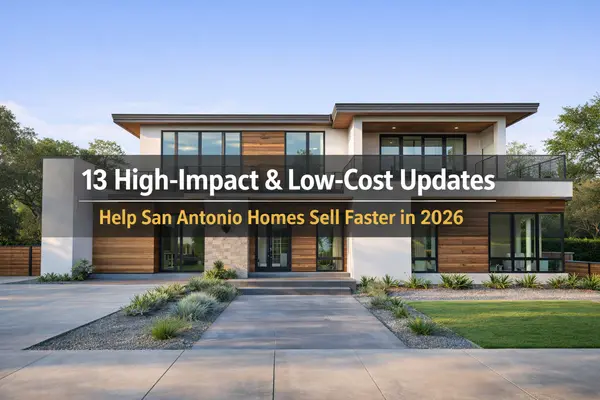
Specific condition factors that produce meaningful downward adjustments relative to updated comparables include roofing that is approaching the end of its functional life, HVAC systems that are beyond ten years of age without documented recent service, outdated kitchen and bathroom finishes in a price range where buyers expect more contemporary presentation, visible deferred maintenance items including caulking failures, paint deterioration, and flooring wear in high-traffic areas, and foundation or structural conditions that have been noted but not addressed. Sellers who invest in targeted pre-listing improvements that address the most visible condition concerns before going live consistently price more aggressively than those who list without preparation, because the condition gap between their home and comparable closed sales is smaller. For guidance on which updates help San Antonio homes sell faster, that resource covers the high-return preparation investments that support stronger pricing.
4. How Do My Home's Features and Upgrades Compare to What Recently Sold?
Square footage provides a baseline for comparable analysis, but the pricing position within that baseline is determined by the specific features and upgrades that differentiate homes at the same size level in the same neighborhood. A home with an updated kitchen, energy-efficient mechanical systems, a finished outdoor living space, and a premium lot position commands a different price than an identically sized home with builder-grade finishes, a standard lot, and no meaningful upgrades, and the pricing analysis should quantify those differences rather than treating all homes of similar size as equivalent.
Specific feature and upgrade categories that carry meaningful value in San Antonio's current buyer market include kitchen renovation level and recency, primary bathroom configuration and finish quality, outdoor living amenity including covered patios, pools, and landscaping quality, garage configuration and finished condition, energy efficiency features including solar, upgraded insulation, and high-efficiency HVAC systems, and lot characteristics including size, backing, and premium positioning within the community. Sellers who have made significant improvements since purchase should document those improvements specifically for the pricing analysis, because undocumented upgrades that a buyer cannot verify during a showing sometimes produce offers that do not fully credit the investment. An accurate features comparison against the closed sales used as comparables is what allows the pricing recommendation to position the home's upgrades as justified value rather than aspirational additions.
Q: How do I accurately represent the value of upgrades I have made to my San Antonio home when pricing it?
A: Provide your agent with documentation of all improvements completed since purchase, including costs, dates, and contractor information where applicable. Your agent can then compare those upgrades against what is present in the comparable sales to determine what pricing premium the upgrades support relative to the competition. It is important to understand that upgrade value in pricing is determined by what buyers in the specific market will pay for those features rather than by what the seller invested, and some upgrade categories produce stronger pricing support than others depending on current buyer priorities in the specific price range.
5. What Is the Current Inventory Level in My Specific Price Range?
Inventory level in the seller's specific price range is the supply-side variable that most directly determines how much competitive pressure exists among sellers at any given moment, and it has a more direct effect on days-on-market expectations and offer strength than general market sentiment about San Antonio real estate overall. A seller whose home is in a price range with four months of inventory is in a fundamentally different competitive position than one in a range with eight months of inventory, even if both homes are in the same city and the general market is described as balanced.
Understanding the specific inventory level in the target price range requires more than a general market overview. It requires looking at how many active homes currently compete for the same buyer pool the seller is targeting, how that number compares to the same period in prior years, and whether inventory is growing or contracting in that segment at the time of listing. Sellers in segments with growing inventory have both a competitive and a timing incentive to price accurately from the beginning rather than testing the market at a higher level, because the competitive landscape will only become more challenging if inventory continues to grow during a prolonged listing period. Sellers in segments with contracting inventory have more pricing support but should still anchor to closed sales rather than to the optimism that low inventory creates.
6. What Are Buyers Currently Prioritizing in the San Antonio Market?
Buyer priorities shift as market conditions evolve, and the features and characteristics that drove strong offers during the peak years may not be the same ones generating buyer engagement in 2026's more balanced environment. Understanding what today's buyers are responding to most actively in the specific price range and neighborhood allows sellers to highlight those characteristics in their pricing and marketing strategy rather than emphasizing attributes that current buyers are treating as secondary.
Current buyer priorities in San Antonio's 2026 market that consistently influence offer strength and speed of sale include move-in ready condition that reduces the buyer's perceived need to invest immediately after closing, functional floor plans with flexible spaces that accommodate work-from-home configurations and changing household needs, accurate pricing that aligns with the buyer's total monthly cost budget including taxes and insurance rather than just the purchase price, energy efficiency features that reduce ongoing utility costs in a market where carrying costs matter more than they did when rates were lower, and strong school district positioning for buyers who weight that factor in neighborhood selection. Sellers whose homes offer multiple items from this list have pricing support that sellers whose homes offer fewer do not, and that support should be reflected in the pricing analysis rather than assumed uniformly across all homes in the neighborhood.
7. How Long Are Similar Homes in My Area Staying on the Market?
Days on market for comparable homes in the same price range and neighborhood is one of the most reliable leading indicators of whether the current pricing environment for that specific segment is accurate, aggressive, or aspirational, because the market's response to active listings reveals buyer engagement levels that closed sale analysis alone does not capture. A neighborhood where comparable homes are consistently going under contract within 14 days indicates pricing is aligned with buyer expectations. A neighborhood where comparable homes are averaging 45 to 60 days before receiving offers indicates that either pricing or presentation is creating friction that the market is signaling through delayed engagement.
Sellers should evaluate days-on-market data for active comparables at the time of listing and for recently closed sales to understand whether the segment is accelerating, holding steady, or softening in terms of how quickly buyers are engaging. A segment where days on market has been increasing over the past 60 to 90 days provides advance warning that pricing calibrated to an earlier period of faster sales may not generate the same engagement in the current environment. The practical implication for pricing strategy is that homes entering a segment with lengthening days-on-market trends should be priced with that trend factored in rather than against the days-on-market figures from a period when the segment was moving faster.
Q: If similar homes in my San Antonio neighborhood are sitting for 60 days before selling, does that mean buyers are not interested in the area?
A: Not necessarily. Extended days on market most commonly indicates that initial pricing was above where buyers were willing to transact rather than that buyer interest in the area is absent. The majority of homes that eventually sell after extended market time do so following a price reduction, which confirms that buyer interest existed at a lower price point throughout the listing period. The more useful question is whether the homes that sat eventually sold at prices that support the seller's current goals, which informs whether patience or pricing adjustment is the more productive strategy for the specific situation.
8. Are Other Sellers in My Area Making Price Adjustments?
Tracking price reduction activity among active listings in the same neighborhood and price range provides real-time feedback about where buyers are drawing the line between acceptable and overpriced, because sellers who reduce prices have already tested the market's response to a higher number and received insufficient buyer engagement to sustain it. A neighborhood with multiple recent price reductions is signaling collectively that initial pricing in that segment has been running ahead of where buyers are willing to engage, and a new listing in that environment benefits from incorporating that signal into the initial pricing rather than testing the same elevated range and expecting a different result.
Sellers who dismiss price reduction data from nearby listings by attributing the lack of engagement to property-specific issues rather than pricing-level issues sometimes discover that their own listing generates similarly limited early activity, because the market is responding to the price range rather than to individual property characteristics. The more actionable interpretation of widespread price reduction activity in a specific segment is that buyer expectations in that segment are anchored at a level below recent list prices, and that anchoring should inform where a new listing enters the market rather than be discovered only after the new listing has accumulated its own days-on-market count.
9. How Do Current Interest Rates Affect Buyer Purchasing Power in My Price Range?
Interest rates affect buyer purchasing power in ways that are directly relevant to pricing strategy because they determine what monthly payment a buyer at a specific income level can support, and that monthly payment ceiling is what actually constrains how much a buyer can offer regardless of what the seller's ideal price might be. When rates rise, the monthly payment required to carry a specific loan amount increases, which effectively reduces the purchase price that a buyer at a given income level can afford. That reduction in purchasing power is not a temporary perception issue. It is a mathematical constraint that affects how many qualified buyers exist for any specific price point.
For San Antonio sellers, understanding the relationship between current rates and buying power in their specific price range helps contextualize why buyer behavior has changed from earlier market cycles rather than attributing slower engagement to external factors unrelated to the transaction. Sellers who price their homes with an accurate understanding of what the monthly payment looks like at their list price, including taxes and insurance, have a more honest basis for evaluating whether their price is accessible to the buyer pool they are targeting than those who evaluate price in isolation from the financing cost that gives it meaning in a buyer's budget. Some sellers in San Antonio are finding that offering closing cost contributions or rate buydown concessions as part of their pricing strategy addresses the monthly payment concern more effectively than price reduction alone, because it directly reduces the buyer's carrying cost rather than simply lowering the headline number.
Q: Should San Antonio sellers offer rate buydowns instead of reducing their list price to attract buyers?
A: In some circumstances, yes. A seller-funded rate buydown can reduce the buyer's monthly payment by more than an equivalent dollar reduction in purchase price, particularly on larger loan amounts where the payment impact of the rate difference is meaningful. Whether this approach is appropriate depends on the seller's specific situation, the price range's typical buyer profile, and the lender structures available in the transaction. An experienced agent can model both scenarios to determine which produces the more competitive buyer response given the specific property and current market conditions.
10. What Price Point Creates the Most Buyer Search Exposure?
Online home search platforms organize listings by price range brackets, and pricing decisions that position a home at or just below a significant search bracket threshold can meaningfully expand the buyer pool that encounters the listing relative to pricing that falls just above the threshold. A home priced at $399,900 appears in searches for homes under $400,000 from buyers whose maximum falls at that ceiling, while the same home at $405,000 is excluded from those searches and competes only among buyers searching in the $400,000 to $450,000 range. The practical difference in buyer exposure between these two price points is not proportional to the $5,100 price difference, and understanding that asymmetry is part of what makes strategic pricing more than a comparable sale exercise.
Beyond the bracket threshold consideration, pricing that reflects the actual comparable sale range for the home's neighborhood and condition generates the kind of early showing activity that produces competitive offers during the critical first two weeks, while pricing above that range produces fewer showings even from buyers who are actively searching in that neighborhood. The combination of strategic bracket positioning and accurate market calibration produces more buyer exposure than either approach alone, and it is the combination that Tami Price evaluates as part of every pricing strategy consultation for San Antonio sellers.
11. What Is My Strategy if the Home Does Not Sell Within the First Three to Four Weeks?
Every pricing plan should include a clearly defined contingency strategy for the scenario in which the home does not generate the expected level of early interest, because developing that strategy after the fact, when the seller is already under the emotional pressure of an extended listing period, consistently produces worse decisions than having the strategy defined in advance. The first three to four weeks of a listing provide the most reliable market feedback available, including showing volume, feedback from buyer's agents, online engagement metrics, and whether offers are being generated, and that feedback should inform a defined decision framework rather than open-ended deliberation about what to do next.
A practical contingency strategy for San Antonio sellers should include specific showing volume thresholds that trigger a pricing review conversation, defined price adjustment ranges that the seller is comfortable with if market feedback supports the need, a timeline for the first potential adjustment relative to the listing date rather than an open-ended commitment to holding the original price indefinitely, and an honest evaluation of whether any preparation investments that were deferred before listing should now be completed to improve buyer perception during the extended marketing period. Sellers who establish this framework with their agent before listing consistently respond to market feedback more quickly and more strategically than those who make the same decisions reactively under the psychological weight of a home that has been sitting without offers.
Expert Insight from Tami Price
Pricing a San Antonio home correctly in 2026 is the decision that sets the trajectory for everything that follows, and it is the one decision in the selling process where getting it right from the beginning produces compounding benefits rather than recoverable mistakes. A home that enters the market accurately priced generates the early showing activity and offer engagement that produces competitive dynamics, while a home that enters overpriced and requires a correction enters the next phase of its market time with a stigma that the correction alone does not fully erase. Tami Price, REALTOR®, a USAF veteran and San Antonio real estate professional with nearly two decades of local market experience, approaches pricing as a data discipline rather than an aspiration exercise, which means the recommendation she provides to sellers is grounded in the eleven questions above rather than in the number the seller hopes the market will support.
Her pre-listing consultation process works through all eleven questions specifically so that the pricing recommendation can be explained and defended against the current market data rather than presented as a judgment call that the seller is asked to accept on faith. That transparency is what produces seller confidence in the pricing decision, and seller confidence in the pricing decision is what produces the commitment to hold a well-priced listing through the first two weeks rather than panicking in response to early showing feedback that is normal rather than alarming.
"The sellers I work with who have the hardest time with pricing are the ones who have a number in their head before we sit down to review the data," says Tami Price, REALTOR®. "My job is to show them what the data actually says and help them understand why that matters more than the number they came in with. When sellers understand the data, they make better pricing decisions and they stay committed to those decisions when early market feedback is slower than they hoped. That commitment is what produces the outcome they are after."
Recognized as a RealTrends Verified top real estate agent in San Antonio, a 15-time Five Star Professional Award winner, and the recipient of more than 650 five-star reviews, Tami Price serves sellers across San Antonio, Schertz, Cibolo, Helotes, Converse, and Boerne.
Three Key Takeaways
- Closed sales data from the past 30 to 60 days is the most reliable foundation for a San Antonio home pricing decision in 2026, because it reflects what buyers have actually agreed to pay under current market conditions rather than what sellers are currently asking or what buyers agreed to pay in a meaningfully different market environment. Pricing analysis that relies on older comparable data without explicit adjustment for changing conditions, or that is anchored primarily to active listing prices rather than to closed transaction prices, produces a number that may feel optimistic but is likely to be challenged by the market's actual response during the first two weeks of the listing period.
- The first two to three weeks of a listing's market exposure are the highest-engagement period the home will experience, and pricing that captures buyer attention and generates offer activity during that window consistently produces better outcomes than pricing that requires a correction after initial enthusiasm fades and days-on-market count accumulates. The stigma that attaches to a listing with an extended market history and a visible price reduction is real and persistent, and it affects buyer offer posture in ways that the reduced price alone does not overcome. Accurate initial pricing is the most effective tool for protecting equity because it prevents the stigma cycle from beginning rather than trying to recover from it after it is underway.
- Every pricing plan should include a defined contingency strategy for the scenario in which early showing activity does not meet expectations, because developing that strategy in advance rather than reactively produces better decisions and faster market responsiveness when adjustment becomes necessary. Sellers who define specific showing volume thresholds, adjustment ranges, and timeline commitments before listing consistently respond to market feedback more strategically than those who make the same decisions under the emotional pressure of an extended listing period. That advance planning is part of the pricing conversation rather than a separate discussion, and it is what makes the full pricing strategy complete rather than addressed only at the headline price level.
Frequently Asked Questions
Q. How do I know if my San Antonio home is priced correctly after going live?
A. The most reliable early indicators of accurate pricing are showing activity in the first week and buyer feedback from those showings. A well-priced home in a balanced market typically generates multiple showings in the first week and produces substantive buyer feedback that engages with the property rather than citing price as the primary concern. If showing volume is significantly below what the neighborhood average would suggest for a new listing, and if the feedback consistently references pricing, the market is communicating that the list price needs evaluation. Waiting more than two to three weeks without a data-driven response to this feedback typically produces worse outcomes than acting on early signals promptly.
Q. What is the cost of overpricing a San Antonio home in 2026?
A. Overpricing creates several compounding costs that sellers do not always account for when anchoring to an aspirational number. The direct costs include carrying costs for the extended period before a contract is executed, including mortgage payments, insurance, taxes, and utilities for the months the home sits. The indirect costs include the price reduction itself, which typically produces a final sale price below what accurate initial pricing would have generated because the stigma of the days-on-market count affects buyer offer posture. A home that was overpriced by $20,000, required a $15,000 price reduction after two months, and then closed at $10,000 below comparable sales effectively cost the seller more than a correctly priced listing would have in both time and net proceeds.
Q. How does new construction competition affect how I should price my resale home in San Antonio?
A. In neighborhoods with active builder communities, buyers are comparing your resale home against new construction options that may offer rate buydowns, closing cost contributions, and warranty coverage at competitive price points. Your pricing strategy should explicitly account for what builders in the area are offering buyers at comparable price points and what your home's established character, lot size, mature landscaping, and completed upgrades provide in contrast. Ignoring builder competition in resale pricing strategy leads to overpricing relative to what buyers are actually choosing between, and that overpricing shows up in extended days-on-market as buyers select the new construction alternative at a similar effective monthly cost.
Q. Should I price higher to leave room for negotiation in San Antonio's 2026 market?
A. No. The strategy of pricing above market to create negotiating room produces consistently worse outcomes in the current environment than accurate initial pricing because it reduces showing activity during the critical first two weeks. Buyers who search online filter by price range, and a home priced above its market-supported range is excluded from searches by buyers who would have been interested at the correct price. Negotiating room that is created through price reduction after extended market time costs the seller more in net proceeds than the negotiating flexibility it was intended to create.
Q. How do interest rates affect the right price for my San Antonio home?
A. Interest rates affect the monthly payment required to finance any specific purchase price, which determines how many buyers can qualify for and comfortably afford a home at that price point. When rates are elevated, the buyer pool for any specific price point is effectively smaller than when rates were lower, because fewer buyers can qualify for the monthly payment required. Sellers who price without accounting for the monthly payment their list price creates at current rates may be targeting a buyer pool that is smaller than they assume, and adjusting the list price or offering rate buydown concessions addresses the same buyer affordability constraint through different mechanisms.
Q. What should I do if my home gets no offers in the first two weeks in San Antonio?
A. Review the showing feedback systematically with your agent to determine whether the feedback consistently identifies pricing, condition, or a specific feature as the barrier. Differentiate between feedback that is specifically about price and feedback that addresses condition or presentation, because the appropriate response differs. If pricing is the primary feedback theme and showing volume was adequate but offers were not generated, a price adjustment is likely warranted. If showing volume was lower than expected, the barrier may be the listing's online presentation or the price range's search bracket positioning. Acting on this feedback within two to three weeks rather than waiting for conditions to improve on their own produces better outcomes than holding the original strategy in the absence of market support.
Q. How often should I review my pricing strategy after a home goes live in San Antonio?
A. Weekly review of showing data, buyer feedback, and comparable sale activity is the appropriate cadence for the first month of a listing in the current market. The weekly review should include a comparison of showing volume against what comparable new listings in the same price range are generating, a summary of any buyer or agent feedback received, and a check for any new comparable sales that provide updated market data. This cadence ensures that the pricing strategy remains aligned with current conditions rather than being set at listing and reviewed only when the lack of progress creates urgency.
Q. What role does presentation play in pricing strategy for San Antonio sellers?
A. Presentation and pricing are interconnected rather than independent decisions, because a home's condition and presentation directly affect what price the market will support. A well-prepared home in showing-ready condition can support a price at the upper end of the comparable sale range, while a home with visible deferred maintenance, dated finishes, or preparation gaps must be priced within the lower portion of the comparable range to generate equivalent buyer engagement. Sellers who want to price at the top of the comparable range should complete the preparation investments that justify that position before listing, while those who list without preparation should price to account for the condition gap rather than expecting buyers to pay top-of-range prices for a home that requires post-closing investment.
The Bottom Line
Pricing a San Antonio home in 2026 is a data discipline that requires working through the eleven questions in this guide before any number is finalized, because each question addresses a dimension of the pricing decision that comparable sales alone do not capture. Inventory level, days-on-market trends, price reduction patterns, buyer purchasing power at current rates, and competitive positioning against new construction all shape where buyers are engaging in any specific segment, and the seller who understands those dynamics before pricing consistently enters the market better positioned than one who anchors to aspiration rather than evidence.
The goal of accurate pricing is not to leave money on the table. It is to capture the strong early engagement that accurate pricing generates and to convert that engagement into the competitive dynamic that produces the strongest possible outcome for the specific home in the specific market at the specific moment it is listed. Sellers who approach pricing this way consistently achieve better net results than those who test the market at a higher level and recover through reductions, because they preserve the listing's first-impression advantage rather than spending it in pursuit of a number the data does not support.
Homeowners in San Antonio, Schertz, Cibolo, Helotes, Converse, and Boerne who want to work through these eleven questions with real data specific to their home, neighborhood, and current market conditions are encouraged to schedule a pre-listing consultation before any list price decision is made so that the pricing recommendation is grounded in the current market rather than in the market conditions sellers remember from prior years.

Contact Tami Price, REALTOR® | San Antonio, TX
Tami Price, REALTOR®, serves sellers across San Antonio, Schertz, Cibolo, Helotes, Converse, and Boerne with nearly two decades of local market experience and a data-driven approach to pricing, preparation, and negotiation strategy.
📞 210-620-6681
🌐 TamiPrice.com
Tami Price's Specialties
- Buyer and Seller Representation
- Military Relocations and PCS Moves
- VA Loan Guidance
- New Construction
- First Time Home Buyers
- Move Up Buyers
- Downsizing and Rightsizing
- Strategic Pricing and Market Analysis
- San Antonio, Schertz, Cibolo, Helotes, Converse, and Boerne
Disclaimer
This blog is for informational purposes only and does not constitute legal, financial, or real estate advice. Market conditions change, and individual circumstances vary. Pricing recommendations should be based on current local market data reviewed with a licensed real estate professional. Readers should consult qualified professionals before making real estate decisions. Tami Price, REALTOR®, is licensed in Texas and affiliated with Real Broker, LLC. Fair Housing principles apply to all content.
Categories
- All Blogs (872)
- Home Buying (9)
- Neighborhood Guides (43)
- 2026 Market (1)
- 78015 Ranked One (1)
- About Tami Price (4)
- Affordable Communities (1)
- Affordable Housing & Community Development (4)
- Agent Qualifications and Credentials (1)
- Agent Qualifications and Experience (1)
- Agent Selection (1)
- AI and Real Estate Tools (1)
- Alamo Heights (5)
- Alamo Heights ISD (1)
- Alamo Heights Real Estate (1)
- Alamo Ranch (2)
- Amenities in Helotes, Texas (3)
- Apartment Market (1)
- Appraisals (1)
- Arts and Culture (1)
- Awards and Recognition (4)
- Balcones Creek (1)
- Best Neighborhoods to Live in Cibolo, TX (3)
- Best Neighborhoods to Live in San Antonio (16)
- Best Places to Live in Leon Valley: A Neighborhood Guide (1)
- Best Places to Live in Northeast Inner Loop: A Neighborhood Guide (1)
- Bexar County Property Tax (1)
- Bexar County Real Estate (3)
- Boerne Home Sellers (1)
- Boerne Neighborhoods (2)
- Boerne Texas (9)
- Broadway Corridor Development (1)
- Build-to-Rent Communities (1)
- Builder Contracts & Warranties (3)
- Builder Incentives (1)
- Builder Warranties (1)
- Buyer (97)
- Buyer Activity San Antonio (1)
- Buyer and Seller Guidance (3)
- Buyer Due Diligence (1)
- Buyer Education (46)
- Buyer Guide (9)
- Buyer Guides (1)
- Buyer Protection Strategies (1)
- Buyer Representation (1)
- Buyer Representation Expertise (1)
- Buyer Resources (66)
- Buyer Strategy (2)
- Buyers (12)
- Buying a Foreclosed Home in San Antonio (10)
- Buying a Home (1)
- Buying a Home in San Antonio (6)
- Buying Timeline (1)
- Castroville, TX (8)
- Central San Antonio (1)
- Central San Antonio Development (2)
- Central Texas Growth (1)
- Choosing a Real Estate Agent (1)
- Choosing an Agent (1)
- Cibolo Communities (1)
- Cibolo Home Sellers (1)
- Cibolo TX (15)
- Client Reviews and Testimonials (1)
- Client Satisfaction (1)
- Client Testimonial (4)
- Clients review (4)
- Comal County (1)
- Commercial & Retail Development (27)
- Commercial Development (13)
- Commercial Development Impact on Home Values (1)
- Commercial Real Estate (1)
- Community (1)
- Community Amenities (2)
- Community Development (23)
- Community Development and Real Estate (3)
- Community Events & Development (1)
- Community Infrastructure (1)
- Community Investment Impact (2)
- Community Landmarks (1)
- Community News (4)
- Community Planning (2)
- Community Revitalization (1)
- Community Spotlights (1)
- Commuter Neighborhoods (1)
- Cons of Living in Helotes, TX (4)
- Conservation Communities (1)
- Converse Home Sellers (1)
- Converse Homes For Sale (1)
- Converse Real Estate (1)
- Converse TX (10)
- Converse TX Real Estate (1)
- Cost of Living Guides (1)
- Cost of Living in San Antonio TX (25)
- CPS Energy Programs (1)
- Custom Homes (3)
- Days on Market (1)
- Deco District San Antonio (1)
- Denver Heights (1)
- Down Payment Assistance (1)
- Downtown Boerne (1)
- Downtown Development (3)
- Downtown Living (1)
- Downtown Revitalization (14)
- Downtown San Antonio (2)
- Downtown San Antonio Real Estate (5)
- Downtown San Antonio Revitalization (1)
- East Side Living (1)
- East Side Neighborhoods (1)
- East Side San Antonio (4)
- Economic Development (3)
- Economic Growth & Industry (1)
- Education, Texas Hill Country (1)
- Emerald Pointe (1)
- Employment (1)
- Employment Corridors (1)
- Encino Forest (1)
- Entertainment Economy (1)
- Equity and Pricing Strategy (2)
- Established Communities (3)
- Events in San Antonio (207)
- Expert Advice from Tami Price, Realtor® (10)
- Fair Oak Ranch (1)
- Family Activities (2)
- Family Homes (2)
- Family Living in San Antonio (1)
- FAQ (1)
- Far Northwest San Antonio (1)
- Far West San Antonio (1)
- Far Westside Real Estate (4)
- Fastest Growing Zip Codes in America (1)
- Featured Homes for Sale (2)
- Featured Properties (1)
- Financial Planning (4)
- Financing Strategy (1)
- First Time Buyers (15)
- First Time Sellers (1)
- First-Time Buyers (6)
- First-Time Homebuyer Resources (4)
- First-Time Homebuyer Tips (2)
- First-Time Homebuyers (6)
- First-Time Investors (1)
- Fort Sam Houston (2)
- Fort Sam Houston Real Estate (1)
- Fort Sam Houston, TX (2)
- Fox Grove (1)
- FSBO vs Agent Representation (1)
- Gated Communities (3)
- Golf Communities (1)
- Great Northwest (1)
- Greater San Antonio Housing Trends (2)
- Greater San Antonio Real Estate (5)
- Green Home Upgrades (1)
- Growth and Development (11)
- Healthcare (1)
- Helotes Home Sellers (1)
- Highway 151 Corridor Growth (1)
- Hill Country Business (1)
- Hill Country Communities (2)
- Hill Country Development (3)
- Hill Country Homes for Sale (1)
- Hill Country Living (3)
- Hill Country Market Updates (1)
- Hill Country Real Estate (4)
- Historic Districts (5)
- Historic Neighborhoods (4)
- Historic Preservation (2)
- Holiday Attractions (1)
- Holiday Guide (1)
- Home Buying (7)
- Home Buying Education (3)
- Home Buying Guide (7)
- Home Buying Process (8)
- Home Buying Strategy (2)
- Home Buying Tips (6)
- Home Energy Efficiency San Antonio (1)
- Home Financing (2)
- Home Improvement ROI (1)
- Home Preparation (2)
- Home Pricing Strategy (10)
- Home Renovation for Resale (1)
- Home Selling (7)
- Home Selling Guide (10)
- Home Selling Strategies (3)
- Home Selling Strategy (3)
- Home Selling Tips (22)
- Home Staging and Updates (2)
- Home Values (2)
- Homebuyer Education (15)
- Homebuyer Resources (1)
- Homebuying Guide (1)
- Homebuying Tips (3)
- Homeowner (35)
- Homeowner Tax Benefits (1)
- Homeownership Costs (1)
- Homes for Sale (1)
- Homes for sale near Lackland AFB (4)
- Homes Near Military Bases (1)
- Homestead amenities (1)
- Horizon Pointe (1)
- House Hunting Guide (1)
- Housing (1)
- Housing Community Development (1)
- Housing Development (2)
- Housing Market Updates (3)
- How to Buy a House in San Antonio TX (48)
- Huebner Oaks shopping center (1)
- Hunters Ranch (1)
- I-10 Corridor (1)
- I-35 Corridor (1)
- Incorporated Cities (6)
- Industrial Investment Impact (1)
- Industry News (2)
- Industry Recognition (1)
- Infrastructure & Growth Projects (26)
- Infrastructure and Sustainability (1)
- Infrastructure Development (1)
- Infrastructure Investment (1)
- Infrastructure Updates (2)
- Interest Rates (1)
- Invest in San Antonio (46)
- Investment Opportunities (2)
- Investment Property San Antonio (4)
- JBSA (6)
- JBSA Housing (10)
- JBSA Real Estate (4)
- JBSA Resources (7)
- Joint Base San Antonio (5)
- Joint Base San Antonio Housing (1)
- Judson ISD (1)
- Kendall County (1)
- La Cantera Retail Development (1)
- Lackland AFB (6)
- Lackland AFB Housing (1)
- Land Conservation (1)
- Land Use Planning (1)
- Lera MLS (12)
- Lifestyle & Community Growth (18)
- Lifestyle & Local Growth (12)
- Lifestyle Amenities (1)
- Lifestyle Communities (1)
- Listing Preparation (1)
- Listing Strategy (1)
- Live Oak (1)
- Living in San Antonio, TX (52)
- Living Near Randolph AFB (5)
- Loan Programs (1)
- Local Attractions (3)
- Local Business (1)
- Local Business & Development (9)
- Local Business & Economy (3)
- Local Business Spotlight (20)
- Local Business Support (5)
- Local Development (4)
- Local Development News (9)
- Local Market Insights (5)
- Local News (2)
- Local News Around San Antonio (2)
- Local Policy Changes (1)
- Local Real Estate News (1)
- Loop 1604 Corridor Growth (2)
- Loop 410 Corridor Development (1)
- Luxury Communities (2)
- Luxury Homes (2)
- Luxury Retail San Antonio (1)
- Major Developments (2)
- Making Offers on Homes (1)
- Market Analysis (24)
- Market Conditions (37)
- Market Expertise (1)
- Market Insights (4)
- Market Strategy (1)
- Market Timing (2)
- Market Trends (10)
- Market Trends & Insights (2)
- Market Update (13)
- Market Update 2026 (1)
- Market Updates (19)
- Master Planned Communities (12)
- Medical Center Area Real Estate (1)
- Medina Valley ISD (2)
- Midtown Living (1)
- Military & Economic Impact (3)
- Military Buyers (2)
- Military Communities (1)
- Military Family Resources (1)
- Military Heritage (1)
- Military Homebuying (2)
- Military Homeownership (1)
- Military Housing (3)
- Military Housing Market in Texas (16)
- Military Life in San Antonio (2)
- Military Neighborhoods (1)
- Military PCS Relocations (3)
- Military Real Estate (2)
- Military Relocation (72)
- Military Relocation & VA Loans (9)
- Military Relocation San Antonio (4)
- Military Relocation Services (3)
- Military Relocation to San Antonio (50)
- Military Relocations (18)
- Military Relocations & VA Home Loans (5)
- Mixed-Income Housing (1)
- MLS Accuracy & Data Transparency (1)
- Mortgage Programs (1)
- Mothers Day in San Antonio (1)
- Move to Boerne TX (18)
- Move to Castroville TX (11)
- Move to Converse TX (16)
- Move to New Braunfels (1)
- Move to North San Antonio (19)
- Move to San Antonio TX (73)
- Move to Selma TX (19)
- Move to Shertz TX (13)
- Move to Texas (53)
- Move Up Buyers (14)
- Move-In Ready Homes (2)
- Move-In Ready Homes San Antonio (2)
- Move-Up Buyers (2)
- Moving to Helotes, TX (17)
- Moving to San Antonio (69)
- Natalia Homes For Sale (1)
- Near East Side Living (1)
- Negotiation Strategy (1)
- Neighborhood Amenities (1)
- Neighborhood Development (1)
- Neighborhood Guides (7)
- Neighborhood Investment (1)
- Neighborhood News (2)
- Neighborhood Revitalization (2)
- Neighborhood Spotlights (12)
- Neighborhood Updates (1)
- Neighborhoods near Randolph AFB (12)
- New Braunfels (6)
- New Braunfels News (3)
- New Braunfels Real Estate (1)
- New Businesses (2)
- New Construction (49)
- New Construction Communities (1)
- New Construction Homes (12)
- New Construction Homes San Antonio (5)
- New Construction Without Customization (1)
- New Construction Without the Wait (1)
- New Development (3)
- New Listing (16)
- New Restaurants (3)
- News (211)
- News & updates (213)
- North Central San Antonio (5)
- North East ISD (3)
- North San Antonio (9)
- North San Antonio Real Estate (3)
- North Side Neighborhoods (1)
- North Side San Antonio Development (2)
- Northeast Inner Loop (1)
- Northeast Inner Loop Neighborhoods (1)
- Northeast San Antonio (3)
- Northside ISD (2)
- Northwest San Antonio (8)
- Northwest San Antonio Development (1)
- Northwest San Antonio Growth (1)
- Northwest San Antonio Real Estate (3)
- Northwood (1)
- Olympia Hills (1)
- One-Story Homes (1)
- Parks and Recreation (2)
- PCS and JBSA (1)
- PCS Guide (3)
- PCS Moves (10)
- PCS Moves to Joint Base San Antonio (4)
- PCS Planning (9)
- PCS Randolph AFB (17)
- PCS Relocation (1)
- PCS Resources (6)
- PCS San Antonio (46)
- PCS to San Antonio (42)
- Pearl District Area Real Estate (2)
- Pipe Creek (1)
- Places to Eat Near Randolph AFB (1)
- Pre-Listing Preparation (2)
- Pre-Listing Process (1)
- Pricing and Marketing Strategy (3)
- Professional Awards and Achievements (1)
- Professional Real Estate Representation (1)
- Property Tax Exemptions Texas (1)
- Property Value Enhancement (1)
- pros and cons living in Converse TX (3)
- Pros and Cons Living in Selma TX (6)
- Pros and Cons of Living in Castroville, TX (4)
- Pros and Cons of Living in San Antonio (33)
- PT500 List (1)
- Purchase Negotiation (1)
- Quality of Life (1)
- Quick Close Real Estate (1)
- Randolph AFB Neighborhoods (1)
- Real Estate (1)
- Real Estate Advice (1)
- Real Estate Agent Recognition (5)
- Real Estate Agent Selection (2)
- Real Estate Agent Value (1)
- Real Estate Consultation (1)
- Real Estate Finance (1)
- Real Estate Financing (1)
- Real Estate Impact (1)
- Real Estate Investment San Antonio (2)
- Real Estate Legal Issues (1)
- Real Estate Market Insights (2)
- Real Estate Market Trends (5)
- Real Estate Professional Designations (1)
- Real Estate Strategy (1)
- Real Estate Technology & Trends (2)
- Real Estate Tips (1)
- Real Estate Tips and Guides (2)
- Real Estate Trends (4)
- RealTrends Verified (1)
- Regional Development (1)
- Regional Real Estate (2)
- Relocating to San Antonio (2)
- Relocation (4)
- Relocation Resources (2)
- Relocation to San Antonio (55)
- Remote Homebuying (1)
- Rental Housing (1)
- Rental Property (1)
- Rental Strategy (1)
- Resale Properties (1)
- Retail Development (2)
- Retire in Boerne TX (11)
- Retire in San Antonio (37)
- Reviews and Recognition (1)
- Rural Living (2)
- SABOR (25)
- San Antonio Area Listings (1)
- San Antonio Business Growth (1)
- San Antonio Buyer Resources (2)
- San Antonio Communities (3)
- San Antonio Community Events (1)
- San Antonio Community News (1)
- San Antonio Data Center Development (1)
- San Antonio Development (5)
- San Antonio Development & East Side Real Estate (1)
- San Antonio Dining and Lifestyle (3)
- San Antonio East Side Development (1)
- San Antonio Employment Growth (1)
- San Antonio Food & Community Development (2)
- San Antonio Growth (8)
- San Antonio Home Buying and Selling (2)
- San Antonio Home Buying Guide (5)
- San Antonio Home Improvement (2)
- San antonio home prices (3)
- San Antonio Home Sellers (3)
- San Antonio Homeowner Guide (1)
- San Antonio Homeowner Resources (1)
- San Antonio Homes for Sale (5)
- San Antonio Housing Market (2)
- San Antonio Housing Market & Mortgage Financing (2)
- San Antonio Housing Market Analysis (2)
- San Antonio Housing Trends & Market Analysis (4)
- San Antonio Industrial Development (1)
- San Antonio Industrial Policy (1)
- San Antonio Investment Properties (2)
- San Antonio Job Market (1)
- San Antonio Lifestyle Amenities (1)
- San Antonio Listing (1)
- San Antonio Living (1)
- San Antonio Market (3)
- San Antonio Market Updates (18)
- San Antonio Military Relocation (2)
- San Antonio Neighborhoods (66)
- San Antonio New Construction & Master-Planned Communities (4)
- San Antonio New Home Communities (1)
- San Antonio News (229)
- San Antonio North Side Development (1)
- San Antonio Parks (1)
- San Antonio Property Investment (1)
- San Antonio Property Taxes (1)
- San Antonio Real Estate (136)
- San Antonio Real Estate Agents (5)
- San Antonio Real Estate Excellence (1)
- San Antonio Real Estate Guide (6)
- San Antonio Real Estate Market (41)
- San Antonio Real Estate Market Analysis (6)
- San Antonio Real Estate News (2)
- San Antonio REALTOR Awards (1)
- San Antonio Restaurant News (2)
- San Antonio Restaurant Openings (1)
- San Antonio Seller Resources (2)
- San Antonio Sellers (1)
- San Antonio Spec Homes (1)
- San Antonio Spurs Community Programs (1)
- San Antonio Suburbs (1)
- San Antonio Transportation (2)
- San Antonio University Area Housing (1)
- San Antonio Urban Living (7)
- San Antonio West Side Development (2)
- San Antonio Zoning Policy (1)
- Scenic Loop (1)
- Schertz Home Sellers (1)
- Schertz Real Estate (1)
- Schertz, TX (13)
- School Districts (1)
- School Information (1)
- SCUCISD Schools (1)
- Secured Quick Offer (1)
- Sell Home In San Antonio TX (64)
- Seller (83)
- Seller Education (24)
- Seller Guide (4)
- Seller Representation Expertise (1)
- Seller Resources (51)
- Seller Strategy (3)
- Seller Tips (2)
- Sellers (9)
- Selling A Home in San Antonio (62)
- Selling Your San Antonio Home (3)
- Selma TX (9)
- Single-Story Homes (2)
- South San Antonio Real Estate (1)
- South Side Economic Growth (1)
- South Side San Antonio (1)
- Southtown (2)
- Southwest San Antonio Real Estate (1)
- Spec Homes and Inventory Homes (1)
- Spurs Arena Project Marvel (1)
- Stone Oak (1)
- Stone Oak Community News (5)
- Suburban Housing Growth (12)
- Suburban Living (2)
- Technology Growth (3)
- Technology Sector Growth (1)
- Terrell Hills (3)
- Texas Acreage Properties (2)
- Texas Homestead Exemption (1)
- The Dominion Real Estate (1)
- The Rim Area Real Estate (1)
- Things to do in San Antonio TX (21)
- Things to do Near Randolph AFB (4)
- Time Planning (1)
- Time-Sensitive Home Buying (1)
- Timing Strategy (1)
- Tips for Buying New Construction (9)
- Tobin Hill Neighborhoods (2)
- Top Real Estate Agent in San Antonio (3)
- Tourism and Economic Development (1)
- Traders's Joe San Antonio (1)
- Transaction Coordination (1)
- Transportation Infrastructure (1)
- Universal City (1)
- Updated Homes (1)
- Upscale Communities (1)
- Urban Communities (2)
- Urban Corridor Real Estate (1)
- Urban Development (5)
- Urban Living (3)
- Urban Neighborhoods (4)
- Urban Real Estate (1)
- Urban Renewal Projects (1)
- Urban Revitalization San Antonio (1)
- Utility Cost Reduction (1)
- UTSA Campus Development (1)
- VA Buyers (1)
- VA Home Loan Benefits (3)
- VA Loan Assumptions (3)
- VA loan benefits (27)
- VA Loan Guidance (1)
- VA Loan Home Buying Assistance (2)
- VA Loans (56)
- VA Loans and Military Benefits (3)
- VA Loans and Military Home Buying (3)
- VA Loans San Antonio (43)
- VET Benefits Living in San Antonio (3)
- Veterans Resources (1)
- Village Northwest (1)
- Walkable Communities (1)
- week in sales (35)
- Weekly Sales Report (36)
- West San Antonio (2)
- West San Antonio Development (1)
- West San Antonio Real Estate (3)
- West San Antonio Real Estate Market (2)
- West Side Infrastructure Planning (1)
- West Side Real Estate (1)
- West Side San Antonio (2)
- Windcrest Homes for Sale (1)
Recent Posts